News & Updates from WAGLAC
May 24, 2022
|
|
The Summer WAGLAC meeting will be held in conjunction with the AGA/CWAG Annual Meeting in Sun Valley, Idaho June 13-16, 2022.
The WAGLAC roundtable will be held on June 15th.
If you want to participate remotely in the roundtable discussion use the link below.
All WAGLAC members received an invitation with a registration code. If you didn’t receive yours, please contact Patricia Salazar at PSalazar@agalliance.org.
The Fall WAGLAC meeting will be held October 17-18, 2022 at the Westin in San Diego, California.
Please mark your calendars. More details to follow.
|
|
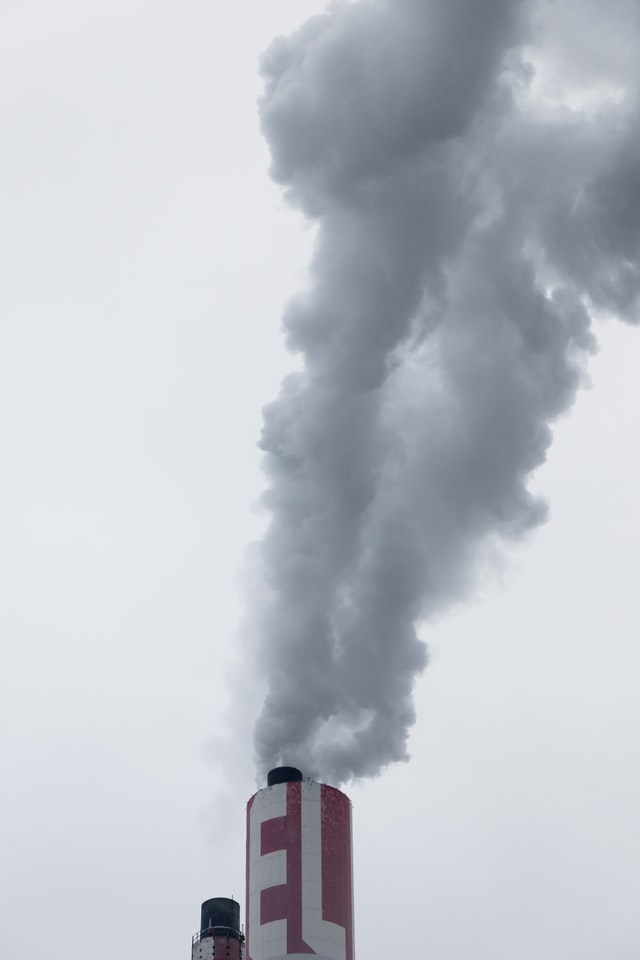
The dangerous business of dismantling America’s aging nuclear plants
By Douglas MacMillan
Washington Post
May 13, 2022
In the next two decades, licenses for over half of the nuclear power reactors in the United States will expire. While the licenses for some of the reactors will be renewed, a significant number of the reactors will be decommissioned. Douglas MacMillan’s article discusses accidents at the New Jersey Oyster Creek power plant, which has led to a call for stricter oversight of the “burgeoning nuclear-decommissioning industry.”
|
|
Attorney General Bonta, Governor Newsom, and CARB Lead Coalition in Defense of California’s Waiver for Clean Car Standards
OAKLAND – California Attorney General Rob Bonta, California Governor Gavin Newsom, and the California Air Resources Board (CARB) today led a multistate coalition in filing a motion to intervene in defense of the Environmental Protection Agency’s (EPA) decision to restore California’s waiver under the Clean Air Act for its greenhouse gas (GHG) and zero-emission vehicle (ZEV) standards. California’s standards, which 17 states have chosen to adopt, result in emissions reductions of hundreds of thousands of tons annually and are essential components of California's and other states' plans to fight climate change and protect public health. The coalition today seeks to join the EPA in defending the waiver from challenges filed by several states and industry groups.
|
|
EPA nixes Montana’s new water quality standards
Amanda Eggert
MONTANA FREE PRESS
May 16, 2022
“The Environmental Protection Agency thwarted Montana lawmakers’ attempt to loosen water quality standards on May 10, telling the state that it acted out of turn by adopting a new regulatory framework without first obtaining federal approval.
In a May 10 letter to the Montana Department of Environmental Quality, the EPA asserted that a law passed by the Montana Legislature last year runs afoul of the federal Clean Water Act. The agency said it’s concerned that the state’s repeal of numeric standards for nitrogen and phosphorus in water bodies as codified in Senate Bill 358 has led to degraded water bodies and lacks a grounding in science.
The letter says the state’s attempt to overhaul water quality standards by shifting from a numeric standard for nutrients to a more subjective narrative standard is ‘not consistent with’ requirements outlined in the Clean Water Act. It also says the shortcomings of narrative standards have been evident in DEQ’s permitting process since SB 358 went into effect.”
|
|
UTAH LAWMAKERS APPROVE BEARS EARS LAND SWAP
The Utah Legislature gave approval to the exchange of 161,000 acres of state endowment lands within the Bears Ear National Monument and the Bonneville Salt Flats for 165,000 acres of federal lands in Utah. Michelle McConkie, the executive director of the Utah School and Institutional Lands Trust Administration said the exchange “would allow SITLA to trade out of scattered lands that are surrounded by federal lands that are restrictively managed, and ... therefore bring in very limited revenue for the trust.” The land exchange still requires congressional approval.
|
|
Secretary Haaland Provides Updates on Offshore Leasing Program During Senate Testimony
“During testimony before the U.S Senate Committee on Energy and Natural Resources [last week], Secretary of the Interior Deb Haaland confirmed that, despite delays in implementation from the previous Administration, the Interior Department will release the Proposed Program - the next step in the five-year offshore energy planning process - by June 30, 2022, which is the expiration of the current program. A Proposed Program is not a decision to issue specific leases or to authorize any drilling or development.
The National Outer Continental Shelf (OCS) Oil and Gas Leasing Program, developed by the Bureau of Ocean Energy Management, establishes a five-year schedule for its oil and gas leasing program as required by the Outer Continental Shelf Lands Act.”
|
|
TEXAS SUPREME COURT HOLDS THAT DOES NOT HAVE AUTHORITY TO ADJUDICATE OWNERSHIP OF WATER RIGHTS
“Pape Partners v. DRR Fam. Props., LP, — S.W.3d —, — 2022 WL — (Tex. May 20, 2022) [21-0049]. The issue, in this case, is whether the Texas Commission on Environmental Quality has jurisdiction to adjudicate conflicting claims to ownership of surface-water rights. Pape Partners and related parties bought a 1,086-acre farm in McLennan County from Lola Robinson. The purchase included the right to divert water from the Brazos River for irrigation under a permit that TCEQ issued to Robinson years prior. Robinson had also owned an adjacent tract with appurtenant water rights, and that tract was eventually sold to DRR Family Properties. TCEQ updated its records in response to chain-of-title documentation submitted by Pape, DRR, and other nearby landowners. The updated records reflected Pape’s right to irrigate only 821 acres, which was less than the full acreage of the farm. Pape filed suit in district court, seeking a declaration that it possessed surface water rights to the entire farm. DRR filed a plea to the jurisdiction, arguing that TCEQ has exclusive jurisdiction to determine water-ownership rights. The trial court granted the plea, and the court of appeals affirmed. The Supreme Court began its analysis with the presumption in favor of district court jurisdiction and the corresponding rule that an administrative agency may only exercise those powers that the Legislature has given to it in clear and express statutory language. The Court then turned to Chapters 5 and 11 of the Water Code. DRR argued that TCEQ’s exclusive jurisdiction is provided for in Section 5.013(a), which grants TCEQ ‘general jurisdiction” over certain enumerated items, including’ water rights adjudication.’ But the Court explained that the inclusion of ‘water rights adjudication’ in Section 5.013(a) is a reference to the Water Rights Adjudication Act in Chapter 11. The provisions of Chapter 11, in turn, demonstrate that water rights adjudication is a term of art for TCEQ’s process of allocating the rights to the water of a particular source through permits. That process, which is outlined in Chapter 11, requires a district court to determine all issues of law and fact independently of TCEQ. By contrast, nothing in the statute’s plain text gives TCEQ the authority to decide conflicting claims to water rights acquired with the title to land. The Court held that TCEQ lacks jurisdiction to decide conflicting claims of ownership to surface-water rights. It reversed the court of appeals’ judgment and remanded the case to the trial court for further proceedings.”
|
|
Idaho Supreme Court Holds Water Rights Cannot Be Enlarged
3G AG LLC appealed Idaho Department of Water Resources (“IDWR“) “denial of the application of Jeffrey and Chana Duffin (“Duffin”) to transfer a ground water right that currently benefits 53.9 acres which also has an entitlement to surface water rights. The transfer application brought before [IDWR] sought to unstack these two overlapping rights by transferring the groundwater right to irrigate a different property, which would double the total number of acres being irrigated. A&B Irrigation District, Burley Irrigation District, Milner Irrigation District, American Falls Reservoir District #2, Minidoka Irrigation District, North Side Canal Company, and Twin Falls Canal Company (collectively “the Coalition”), sought to and were allowed to intervene to object to the transfer. In the ensuing administrative proceeding, the IDWR denied the transfer because, among other reasons, approving it would cause an ‘enlargement’ as proscribed by Idaho Code section 42-222(1). Duffin petitioned for judicial review, but the district court agreed with IDWR’s denial and affirmed. Duffin timely appealed to the Idaho Supreme Court. During the pendency of this appeal, 3G AG LLC (the “LLC”) acquired the water rights at issue in the transfer application and was allowed to substitute for Duffin. Ultimately, the Idaho Supreme Court affirmed the district court’s judgment that IDWR appropriately denied the proposed transfer under Idaho Code section 42- 222(1). The Court explained that approving the transfer would cause an ‘enlargement’ in use of water as prohibited by section 42-222(1). ‘Enlargement’ in use of a water right under section 42- 222(1), as set out in Barron v. Idaho Department of Water Resources, 135 Idaho 414, 18 P.3d 219 (2001), includes an increase in the number of acres irrigated as a result of a transfer. In this case, approving the transfer would permit concurrent use of the groundwater right with the surface water right, at two separate locations, to irrigate 53.9 acres. After the transfer, the rights would irrigate double the number of acres being irrigated.”
|
|
Violations of environmental standards may trigger both criminal and civil laws. What are considerations for state- and local-level prosecutors when facing a choice of enforcement route?
Join the State Energy & Environmental Impact Center at NYU School of Law, the Conference of Western Attorneys General, and the Environment & Natural Resources Division of the Department of Justice for a five-part training series specifically designed for state- and local-level prosecutors tasked with enforcement of environmental laws.
|
|
Division Chief - Public Lands & Conservation Division - Olympia
The Washington Attorney General's Office is seeking an attorney with significant management and legal experience to fill the position of Division Chief of Public Lands and Conservation Division located in Olympia, WA.
The Public Lands and Conservation Division consists of 22 attorneys and 13 professional staff. The Division represents the Commissioner of Public Lands, the Washington State Department of Natural Resources, the Board of Natural Resources, the Forest Practices Board, the Washington State Department of Fish & Wildlife and the Washington State Parks & Recreation Commission. It also represents the state in complex natural resource litigation and assists local prosecutors in the criminal enforcement of fish and wildlife laws.
For information about the position, please contact Deputy Attorney General Kristen Mitchell at (360) 584-4032 or via email at Kristen.Mitchell@atg.wa.gov.
To apply, submit a letter of interest, resume and writing sample to Deputy AG Mitchell, with a copy to Deputy AG Erika Uhl at Erika.Uhl@atg.wa.gov, and a copy to Letrice Tobin, at Letrice.Tobin@atg.wagov. The deadline for receipt of the application and supporting material is May 31, 2022.
|
|
All summaries are posted in CWAG's google docs account, accessible through the link below. Should you have any issues with the links, contact Patricia Salazar with any questions.
|
|
New Indian Law Case Summaries |
|
Yurok Tribe v. U.S. Bureau of Reclamation, ___ F. Supp. 3d ___, 2022 WL 1540029 (N.D. Cal. May 16, 2022): Tribe’s suit for declaratory relief against a federal agency’s alleged violation of Klamath Project operations plans in not providing flows allocated under those plans to facilitate a biennial tribal ceremony did not waive its immunity with respect to a crossclaim by a proposed intervenor against the agency effectively seeking to adjudicate the Tribe’s reserved water rights.
Berry v. United States, ___ Fed. Cl. ___, 2022 WL 1563663 (May 18, 2022): Suit by landowner alleging that neighboring casino development effected a compensable takings attributable to the United States by virtue of the latter’s approving a land-into-trust application and its general regulatory authority under IGRA failed to state a claim upon which relief could be granted.
Mestek v. Lac Courte Oreilles Community Health Center, ___F. Supp. 3d ___, 2022 WL 1568881 (W.D. Wis. May 18, 2022): False Claims Act retaliation suit against tribal entity and several employees in their official and personal capacities was dismissed on immunity-from-suit grounds.
|
|
Unite Here Local 30 v. Sycuan Band of Kumeyaay Nation, ___ F.4th ___, 2022 WL 1594948 (9th Cir. May 20, 2022): District court did not abuse its discretion by declining to exercise supplemental jurisdiction over a tribe’s counterclaim seeking a determination that the National Labor Relations Act preempted its labor relations ordinance. The counterclaim also constituted a defense to a suit seeking arbitration and therefore did not give rise independently to federal question jurisdiction. Arbitration was properly ordered by the district court because a valid contract existed between the plaintiff labor organization and the tribe which bound the parties to arbitrate disputes arising under the ordinance and contained a waiver of the latter’s immunity from suit.
Consumer Financial Protection Bureau v. CashCall, Inc., ___ F.4th ___, 2022 WL 1614930 (9th Cir. May 23, 2022): Application of tribal law, as opposed to otherwise applicable state law, to determine the validity of payday loan agreements pursuant to a contractual choice-of-law provision was not appropriate under federal common law given the tribe’s lack of a substantial relationship to the underlying transaction.
|
|
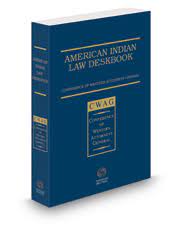
American Indian Law Deskbook |
|
Clay Smith, the American Indian Law Deskbook chief editor, summarizes Indian law decisions assigned headnotes by Westlaw to facilitate the Deskbook’s annual revision.
Editions of the Deskbook are published annually by Thomson Reuters, and the 2021 Edition was issued during the week of July 19, 2021. It is available on Westlaw in the Secondary Sources/Texts & Treatises category and in hard copy.
Please click below or reach out to Clay for questions regarding obtaining a copy of the American Indian Law Deskbook.
|
|
Western Attorneys General Litigation Action Committee
CWAG oversees and coordinates the Western Attorneys General Litigation Action Committee (WAGLAC), which consists of assistant attorneys general involved in litigation related to the environment, natural resources, public lands and Indian law. WAGLAC was formed over 40 years ago and meets three times per year to discuss the latest developments in these areas of the law. AGO staff gain important contacts throughout the country in these important areas of the law.
|
|
Contributions For WAGLAC Newsletter
We rely on our readers to send us links for the WAGLAC Newsletter. If you have or know of a recent (published in the last two weeks) case, statute or article relating to natural resources, environment, Indian law or federalism that you would like us to consider for inclusion in the Newsletter, please send it to Clive Strong. For a complete database of all previously published WAGLAC newsletters, please follow the link below.
|
|
Conference of Western Attorneys General | 1300 I Street, Sacramento, CA 95814 |
|
|
|
|
|
|