News & Updates from WAGLAC
May 3, 2022
|
|
The Summer WAGLAC meeting will be held in conjunction with the AGA/CWAG Annual Meeting in Sun Valley, Idaho June 13-16, 2022.
The WAGLAC roundtable will be held on June 15th.
All WAGLAC members received an invitation with a registration code. If you didn’t receive yours, please contact Patricia Salazar at PSalazar@agalliance.org.
The Fall WAGLAC meeting will be held October 17-18, 2022 at the Westin in San Diego, California.
Please mark your calendars. More details to follow.
|
|
Biden-Harris Administration Releases Final Guidance on New Orphaned Well Program
“The Department of the Interior . . . released final guidance to states on how to apply for the first $775 million in initial grant funding available this year for plugging orphaned oil and gas wells under President Biden’s Bipartisan Infrastructure Law. The law provides a total of $4.7 billion to clean up these environmental and safety hazards, create good-paying union jobs, catalyze economic growth and revitalization, and shut down sources of harmful methane emissions.”
|
|
SOLICITOR REINSTATES BLM AUTHORITY TO REQUIRE MITIGATION
Solicitor of Interior Robert Anderson reinstated Opinion M370390, which had been withdrawn by the prior administration. Opinion M-370390 concludes “that the Federal Land Policy and Management Act (FLPMA), 43 U.S.C. §§ 1701–1787, provides the Secretary and the Bureau of Land Management (BLM) with authority to ‘identify and require appropriate mitigation,’ and that ‘[s]uch mitigation may . . . consist of compensatory mitigation on either public lands or private lands having a connection to resources on public lands—regardless of their geographic proximity with public lands—so long as such mitigation on private lands occurs with the consent of the property owner.’”
|
|
In fight against Biden’s conservation plan, opponents bet on NEPA
By Jennifer Yachnin
E&E News
04/25/2022
“Property rights advocate Margaret Byfield’s strategy for defeating the Biden administration’s aggressive conservation pledge comes with a twist: She wants landowners to embrace the nation’s bedrock environmental law.
Byfield, the executive director of American Stewards of Liberty — and daughter of the late E. Wayne Hage, an icon of the Sagebrush Rebellion II movement — sees the National Environmental Policy Act as a cudgel in her campaign to upend the ‘America the Beautiful program.
“My father would probably roll in his grave if he heard me ever say that I actually kind of like NEPA,” Byfield mused Friday, in closing remarks at the “Stop 30×30” summit her group held last week. ‘Because we know how to use it against the environmentalists, as well, and that’s exactly what we’re planning to do.’
Byfield’s Texas-based nonprofit has led opposition to the Biden administration’s pledge to set aside 30 percent of the nation’s lands and waters within the next decade, working with local governments to pass resolutions opposing the effort.
Commonly known as “30×30,” for its 2030 deadline, the conservation plan aims to both address climate change and protect biodiversity. The administration’s version also adds a third goal of expanding access to the outdoors.”
|
|
Western states brace for worsening fire season
By Reid Wilson
THE HILL
05/01/22
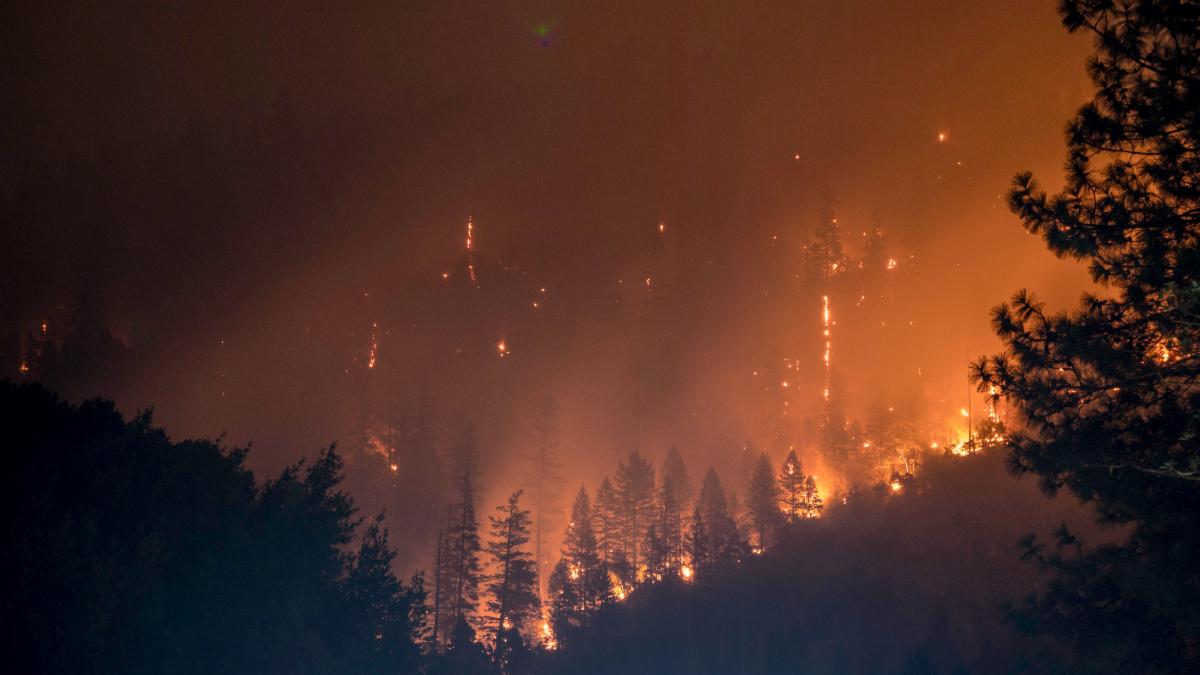
“Western state officials are sounding an early alarm about a coming wildfire season that could be exacerbated by an ongoing drought, warning that conflagrations that were once confined to hot and dry summer months are both starting earlier and continuing later into the year.
Months before the worst of fire season begins, massive blazes have already devastated parts of the West.”
|
|
STATE MOVES TO INTERVENE IN TRIBES’ LAWSUIT OVER CLAIM TO MINERALS UNDER THE MISSOURI RIVER
April 29, 2022
"BISMARCK, ND – The State of North Dakota moved to intervene in a federal lawsuit brought by the Mandan, Hidatsa, and Arikara Nation asserting ownership of the historical riverbed of the Missouri River within the boundaries of the Fort Berthold Indian Reservation.
The State claims, and the U.S. Department of the Interior Solicitor in May 2020 agreed, that the State owns title to the riverbed within the Reservation. The Tribes sued the Department of the Interior in July 2020 seeking to overturn the Solicitor’s opinion, prevent it from being implemented, and establish their title to the riverbed and to funds generated from leasing and production of minerals located therein. In February 2022, the Biden administration’s Interior Solicitor reversed the 2020 opinion, concluding the riverbed belongs to the United States in trust for the Tribes.
The State has never relinquished its claim to the historical riverbed, which it acquired at statehood in 1889 under the equal footing doctrine, which provides that a state entering the Union retains title to the beds of navigable rivers and lakes within the state, unless Congress has expressly designated otherwise. The claim applies only to the historical riverbed of the Missouri River, not the entirety of the bed of Lake Sakakawea.
Today’s motion, filed in the U.S. District Court for the District of Columbia, preserves the State’s position while also allowing discussions to continue with the Tribes and the United States to reach an amicable resolution.
While multiple Interior opinions have been issued over the years, the matter of title has never been resolved in a court of law as it must be. The State’s motion to intervene additionally seeks to ensure that any revenues generated from riverbed mineral development will continue to be held in abeyance until the legal dispute is resolved."
|
|
With historical promises in mind, justices weigh state criminal jurisdiction in Indian country
By Matthew L.M. Fletcher
SCOTUS Blog
Apr 28, 2022
“The Supreme Court heard oral argument in Oklahoma v. Castro-Huerta, which “involves the state’s jurisdiction to prosecute a non-Indian defendant’s criminal neglect of an Indian child with special needs inside of the Cherokee Nation of Oklahoma’s reservation. The case comes on the heels of the court’s monumental 2020 decision, McGirt v. Oklahoma, which reaffirmed that the reservation of the Muscogee (Creek) Nation within Oklahoma remains “Indian country.” In Indian country, state criminal jurisdiction is limited to crimes involving non-Indians only. Oklahoma courts have extended the McGirt holding to include other Indian reservations, including that of the Cherokee Nation. As a result, most of eastern Oklahoma is now understood to be Indian country — a development that, according to the state, has disrupted the criminal justice system there.
Castro-Huerta’s legal issues are narrower than those in McGirt. The case depends on whether the General Crimes Act prohibits Oklahoma’s prosecution of non-Indians who commit crimes against Indian victims in Indian country. Enacted in 1948, the GCA extended to Indian country the general federal criminal laws that apply in places where the federal government has exclusive jurisdiction (i.e., federal enclaves). The question is whether the GCA therefore prohibits concurrent state criminal prosecutions.”
|
|
Ute Indian Tribe of Uintah and Ouray Reservation v. McKee, ___ F.4th ___, 2022 WL 1231677
(10th Cir. Apr. 27, 2022)
This opinion is in an appeal from Ute Indian Tribe of Uintah and Ouray Reservation v. McKee, 482 F. Supp. 3d 1190 (D. Utah 2020). The litigation arose from the Ute Indian Tribe’s successful suit against Defendant McKee, a nonmember, in tribal court over alleged misappropriation of irrigation flows for use on his fee-owned reservation land between 1999 and 2015. When Defendant ignored the tribal court judgment—which awarded the Tribe over $142,000 in damages—the latter filed an action in federal district court to enforce the judgment. Defendant resisted the suit on the ground that the tribal court lacked subject-matter jurisdiction over him, and on cross-motions for summary judgment the district court agreed. Panel stated that while “Indian tribes can exclude outsiders from tribal land, they have no general authority over nonmembers of the tribes.” Panel affirmed the lower court’s finding that the Tribe had failed to show that the tribal court had jurisdiction under either of the two Montana v. United States exceptions.
|
|
Grand Ronde tribes call on Congress to help lift Oregon hunting and fishing restrictions
By Cassandra Profita (OPB)
April 29, 2022
“The Confederated Tribes of Grand Ronde are working to lift state restrictions on tribal fishing and hunting imposed by a controversial agreement nearly 40 years ago. Federal legislation backed by several members of Oregon’s congressional delegation would overturn a consent decree that tribal members say was forced upon them in the 1980s.”
|
|
Join Kelley Drye attorneys for an upcoming seminar to discuss the latest developments around the use, impacts, regulation, and litigation surrounding the most impactful evolving contaminants in a generation: per- and polyfluoroalkyl substances (PFAS).
This seminar has been developed exclusively for our public clients and friends, by invitation only, both virtually and in Kelley Drye’s New York office.
This full-day program will present a series of panels featuring experts and practitioners from government, outside counsel, and a variety of technical fields that will discuss the most pertinent federal and state regulations, litigation issues, and liability developments surrounding these “forever” chemicals.
Kelley Drye is an accredited provider of NY, IL, CA, & TX CLE. This non-transitional continuing legal education program will offer NY Professional Practice credit, General IL credit, CA General credit, & TX General credit. We will apply for CLE credit in other jurisdictions, upon request, but cannot guarantee approval.
Tuesday, May 24, 2022 | 9:00 a.m. - 5:30 p.m.
Kelley Drye Offices | 3 World Trade Center | New York, NY 10007
Park Avenue North/South (Room #66119 on the 67th floor)
|
|
ENVIRONMENTAL JUSTICE & CLIMATE CHANGE WEBINAR SERIES
The United States Department Justice’s National Advocacy Center is offering a virtual conference on Environmental Justice & Climate Change. The conference will focus on important concepts and considerations when litigating and negotiating settlements in cases involving environmental justice and climate change. The programming described in the links below on May 3, 5, 10, and 17 is open to State, local, and Tribal government environmental practitioners.
|
|
The Wyoming Attorney General’s Office is seeking a qualified attorney who wants to be part of our office and serve as counsel to the Wyoming State Engineer and his staff as part of the Water and Natural Resources Division.
This position advises the Wyoming State Engineer and his staff on all aspects of Wyoming water law and administration and provides advice on matters such as public records, public meetings, and agency rule-makings in consultation with the section supervisor and division deputy.
Human Resource Contact:
|
|
All summaries are posted in CWAG's google docs account, accessible through the link below. Should you have any issues with the links, contact Patricia Salazar with any questions.
|
|
New Indian Law Case Summaries |
|
South Point Energy Center LLC v. Arizona Dep’t of Revenue, ___ P.3d ___, 2022 WL 218639 (Ariz. Apr. 26, 2022): Ad valorem property tax imposed under state law on a power plant owned by a nontribal entity but located on tribal trust land leased to the entity by the United States was not expressly preempted by 25 U.S.C. § 5108.
|
|
Trenton Indian Housing Authority v. Poitra, 2022 ND 87, ___ N.W.2d ___ (Apr. 28, 2022): Defendant failed to carry her burden of establishing that an off-reservation tribal housing authority constituted a dependent Indian community so as to deprive a state court of jurisdiction to enter an eviction order.
|
|
American Indian Law Deskbook |
|
Clay Smith, the American Indian Law Deskbook chief editor, summarizes Indian law decisions assigned headnotes by Westlaw to facilitate the Deskbook’s annual revision.
Editions of the Deskbook are published annually by Thomson Reuters, and the 2021 Edition was issued during the week of July 19, 2021. It is available on Westlaw in the Secondary Sources/Texts & Treatises category and in hard copy.
Please click below or reach out to Clay for questions regarding obtaining a copy of the American Indian Law Deskbook.
|
|
Western Attorneys General Litigation Action Committee
CWAG oversees and coordinates the Western Attorneys General Litigation Action Committee (WAGLAC), which consists of assistant attorneys general involved in litigation related to the environment, natural resources, public lands and Indian law. WAGLAC was formed over 40 years ago and meets three times per year to discuss the latest developments in these areas of the law. AGO staff gain important contacts throughout the country in these important areas of the law.
|
|
Contributions For WAGLAC Newsletter
We rely on our readers to send us links for the WAGLAC Newsletter. If you have or know of a recent (published in the last two weeks) case, statute or article relating to natural resources, environment, Indian law or federalism that you would like us to consider for inclusion in the Newsletter, please send it to Clive Strong. For a complete database of all previously published WAGLAC newsletters, please follow the link below.
|
|
Conference of Western Attorneys General | 1300 I Street, Sacramento, CA 95814 |
|
|
|
|
|
|