News & Updates from WAGLAC
November 22, 2022
|
|
The 2023 Winter WAGLAC meeting will be held in mid-February in the Phoenix, AZ area. The 2023 Summer meeting will be held in conjunction with the AGA/CWAG annual meeting June 19th through June 22nd in Rancho Palos Verdes, California. The 2023 Fall WAGLAC meeting will be held in mid-October at a yet-to-be-identified location.
In addition to the roundtable discussion of natural resources, environmental, public lands, mining, energy, and Indian law matters there will be a half-day seminar during the Winter and Fall WAGLAC meetings. Attendees will receive CLE credit.
Attendance is limited to members of state attorneys general offices.
|
|
Attorney General Morrisey Leads Coalition in Support of Lawsuit Against EPA Final Rule on Electric Vehicles
“West Virginia Attorney General Patrick Morrisey is leading an amicus brief with Kansas, South Dakota, Tennessee, Virginia, and Wyoming in support of a lawsuit filed in the U.S. Court of Appeals for the District of Columbia by 16 states against the U.S. Environmental Protection Agency.
At the heart of the lawsuit is the EPA’s so-called final rule, a “regulatory scheme that tries to force people into electric vehicles while disregarding that the mandate has serious consequences.”
‘This rule, if allowed to be fully implemented, will undoubtedly cause the United States to be dependent on other nations, like China, for the supplies and materials needed for these vehicles,’ Attorney General Morrisey said. ‘This forces automakers to produce more electric vehicles based on fear of gasoline’s environmental consequences. As we mentioned in the brief, this will make the United States ‘more beholden to foreign interests who control both the rare earth materials and the electrical components that electric vehicles require.’”
|
|
ATLANTIC RICHFIELD COMPANY REQUIRED TO REMEDIATE FOR RELEASES BY SUBSIDIARY
Justia US Law
“In this case's previous trip to the [California] Court of Appeal, the Court reversed the trial court’s judgment overturning a cleanup order issued by the California Regional Water Quality Control Board, Central Valley Region (Regional Board). The cleanup order directed Atlantic Richfield Company (ARCO) to remediate hazardous waste associated with an abandoned mine in Plumas County. The mine was owned by the Walker Mining Company, a subsidiary of ARCO’s predecessors in interest, International Smelting and Refining Company, and Anaconda Copper Mining Company (International/Anaconda). The Court of Appeal held the trial court improperly applied the test articulated in United States v. Bestfoods, 524 U.S. 51 (1998) for determining whether a parent company is directly liable for pollution as an operator of a polluting facility owned by a subsidiary. On remand, the trial court entered judgment in favor of the Regional Board, concluding “[t]he record supported a determination of eccentric control of mining ‘operations specifically related to pollution, that is, operations having to do with the leakage or disposal of hazardous waste.’ ” ARCO appealed, contending: (1) the trial court improperly applied Bestfoods to the facts of this case, resulting in a finding of liability that was unsupported by substantial evidence; (2) the Regional Board abused its discretion by failing to exclude certain expert testimony as speculative; (3) the Regional Board’s actual financial bias in this matter required invalidation of the cleanup order for violation of due process; and (4) the cleanup order erroneously imposed joint and several liabilities on ARCO. Finding no reversible error to this order, the Court of Appeal affirmed the trial court.”
|
|
EPA Reestablishes Federal Water Pollution Standards for Washington
November 15, 2022
“[T]he U.S. Environmental Protection Agency (EPA) announced a final rule to reestablish federal water quality standards for the State of Washington. The agency’s final rule follows the science to help protect the health of Washingtonians and Tribal members who eat fish and shellfish caught in the state.
‘Under the Clean Water Act, EPA has taken significant action to ensure our precious waters are safe for all to enjoy,” said EPA Administrator Michael S. Regan. “This final rule utilizes the latest scientific knowledge and brings us one step closer to delivering safe swimmable, fishable bodies of water that the people of Washington deserve.’
‘For many of us in Washington, and for the Tribal communities with whom we share geography, eating fish from Puget Sound and our streams and rivers is part of our daily lives,’ said Washington Governor Jay Inslee. ‘These fish must be safe for our families to eat. By reinstating the rule repealed by the prior administration, EPA honors our shared commitment to protect and preserve clean water now and for generations to come.’”
. . . .
“Over the objections of state and Tribal leaders, the previous administration rolled back protective water quality standards established by EPA in 2016. As a result of that rollback, water quality standards being implemented in Washington were inadequate to protect human health. The final rule announced today follows through on EPA’s June 2021 and March 2022 commitments to restore protective, science-based human health criteria in the state.”
|
|
BUREAU OF LAND MANAGEMENT RELEASES POLICY TO SUPPORT HABITAT CONNECTIVITY ON PUBLIC LANDS
“The Bureau of Land Management released a new policy [on November 15th] designed to protect connections between habitats for fish, wildlife, and native plants, preserving the ability of wildlife to migrate between and across seasonal habitat, a concept known as habitat connectivity. The policy will support the BLM’s ongoing partnerships with states, Tribes, and diverse stakeholders to meet 21st-century conservation challenges.
The policy, in the form of an Instructional Memorandum, calls for BLM state offices to assess areas of habitat connectivity and conduct planning, on-the-ground management actions, and conservation and restoration efforts to ensure those areas remain intact and healthy, and able to support diverse wildlife and plant populations. Private land is not affected by this guidance, and the BLM is not designating corridors with this action, nor does it intend to.”
|
|
In 'momentous' act, regulators approve demolition of four Klamath River dams
Hayley Smith
LA Times
November 17, 2022
“In a milestone decision, federal regulators on Thursday signed off on plans to demolish four aging dams along the Klamath River, paving the way for hundreds of miles of native fish habitat along the California-Oregon border to flow freely for the first time in more than a century.
The Federal Energy Regulatory Commission's decision will see licenses of the four dams transferred from the PacifiCorp energy company — a subsidiary of Warren Buffet's Berkshire Hathaway — to the Klamath River Renewal Corporation, a nonprofit entity created to oversee the dam removal, and to the states of California and Oregon.
The vote marks the final major hurdle for what will be the largest dam removal project in the nation's history, officials said. The $500-million demolition has been championed by environmental organizations, commercial fishing groups, and tribes that spent 20 years fighting for the river's restoration.”
|
|
Judge Lets Trump’s Endangered Species Rules Stand During Rewrite
Bloomberg Law
November 16, 2022
“A California federal judge on Wednesday let stand Trump-era Endangered Species Act rules while the Interior Department revises them, sparking environmental groups’ ire.
Judge Jon Tigar of the US District Court for the Northern District of California granted the US Fish and Wildlife Service’s request for remand without vacatur two sets of rules implementing the ESA.
Those include the ESA Section 4 rules, which govern how the agency identifies imperiled plants and animals and designates critical habitat for those species, and Section 7 rules for how federal agencies must consult with Fish and Wildlife and the National Marine Fisheries Service before approving projects. The Trump administration adopted the rules in 2019.
The Trump rules scrapped the Fish and Wildlife Service’s long-standing “blanket rule,” which automatically gave threatened species the same protections as higher-priority endangered species, such as a ban on killing or harming them. The rules allow the agency to consider the economic impact of species protection when deciding whether to list an imperiled species under the ESA.”
|
|
INTERIOR SOLICITOR ISSUES OPINION AFFIRMING SECRETARY’S AUTHORITY TO TAKE LANDS INTO TRUST FOR ALASKA NATIVES AND TRIBES
On November 16, 2022, the Solicitor of Interior issued Opinion M-37076 regarding the Secretary’s authority to take lands into trust for Alaska Natives and Alaska Tribes under the Indian Reorganization Act (IRA) and the Alaska Indian Reorganization Act (Alaska IRA). The Opinion “concludes that the IRA and the provisions made applicable under the Alaska IRA provide statutory authority for the Secretary to take land into trust for Alaska Natives and Alaska Tribes and to proclaim such lands as reservations for Alaska Tribes.” The Opinion further concludes “that Section 19 of the IRA provides a stand-alone definition of ‘Indian’ applicable to tribes in Alaska, obviating the need to make a Carcieri ‘under Federal jurisdiction’ determination for such acquisitions.”
Opinion M-37076 reverses Former Solicitor of Interior Daniel Jorjani’s Opinion M-37064, which was withdrawn, which was withdrawn on by Solicitor of Interion Robert Anderson on April 27, 2021."
|
|
Ninth Circuit grants en banc rehearing in Apache Stronghold RFRA case
The dispute arose by virtue of Section 3033 of the 2015 fiscal year National Defense Authorization Act, known as the Southeast Arizona Land Exchange and Conservation Act, through which Congress authorized the USDA the exchange of land between the Government and two mining companies (collectively, Resolution Copper). The 6.7 square mile parcel (Oak Flat) is located within the Tonto National Forest. Plaintiff is an organization composed of Western Apaches who claim the land is held in trust for them under an 1852 treaty. It filed this suit in early January 2021 shortly before the United States Forest Service was scheduled to issue a final environmental impact statement (later issued on January 15, 2021 but rescinded in March 2021) and alleged violation of “1) the Religious Freedom Restoration Act...; 2) the Free Exercise Clause of the Constitution’s First Amendment; and 3) a trust obligation that Apache Stronghold claims was imposed on the United States by the 1852 Treaty of Santa Fe between the Apache the United States.” Plaintiff then requested a preliminary injunction to stop the transfer and the proposed copper mining that the court denied because a likelihood of success on the merits was not established. Plaintiff appealed, and a divided Ninth Circuit panel affirmed on June 24, 2022. Apache Stronghold v. United States, 38 F.4th 742 (9th Cir. 2022), summarized below. (Click button below).
On August 15, 2022, the panel issued an order stating that a Ninth Circuit judge had called for a vote to determine whether to rehear the case in banc and directing supplemental briefing by the parties on whether rehearing should be granted. The parties filed those briefs on September 6, 2022. Rehearing en banc was ordered on November 17, 2022, and the panel opinion was vacated. Also issued on November 17 was an order stating that oral argument en banc would take place during the week of March 20, 2023.
Links to the August 15 order, the parties’ supplemental briefs, and the November 17 orders follow.
|
|
Democrat Kris Mayes leads the attorney general’s race by about 850 votes over Republican Abe Hamadeh
By Tara Kavaler
Arizona Republic
"Arizona’s attorney general’s race is one of the closest-ever statewide races in the Grand Canyon State and is the only major contest that doesn’t yet have a winner called.
Out of approximately 2.51 million ballots cast, Democrat Kris Mayes leads the attorney general’s race by about 850 votes over Republican Abe Hamadeh as of Saturday evening. That’s a difference of about 0.034 percentage points, well within the margin of a 0.5 percent point or less difference that initiates a recount.
The results in the attorney general race are so close, analysts say, because of the down-ballot nature of the race and that voters did not link Hamadeh to Trump and election denialism in the same way they did with other Republican candidates who ultimately were unsuccessful. That’s despite Trump’s endorsement of Hamadeh, who has said Joe Biden didn’t legitimately win Arizona in 2020.
Former Secretary of State Ken Bennett said the only general election race he recalls coming this close was Proposition 112 in 2010, which would have moved up the signature deadline for ballot measures by two months. Out of the approximately 1.6 million votes cast, the ballot measure lost by 194. It went to a recount, but the outcome of the race did not change.
According to Brooks Simpson, foundation professor of history at Arizona State University, “you can’t get closer” than the 1916 gubernatorial race. Back then, Republican Thomas E. Campbell was initially declared the winner. After a recount that took almost a year, Democratic Gov. George W.P. Hunt had 43 more votes."
|
|
All summaries are posted in CWAG's google docs account, accessible through the link below. Should you have any issues with the links, contact Patricia Salazar at psalazar@agalliance.org with any questions.
|
|
|
|
San Carlos Apache Tribe v. Becerra, ___ F.4th ___, 2022 WL 17087827 (9th Cir. Nov. 21, 2022): Tribe was entitled to contract support costs under an ISDEAA contract for health care services provided through income received from third-party payors.
|
|
American Indian Law Deskbook |
|
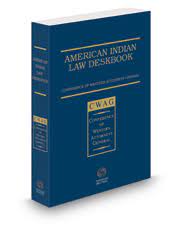
Notice: 2022 Edition of the American Indian Law Deskbook now available on Westlaw and in hard-copy and electronic formats.
Editions of the Deskbook are published annually by Thomson Reuters, and the 2022 Edition was issued during the week of May 23, 2021. It is available on Westlaw in the Secondary Sources/Texts & Treatises category, in hard copy, and in electronic format.
Please click the link below to order or reach out to Clay Smith at clay.smith@cwagweb.org with questions regarding obtaining a copy of the American Indian Law Deskbook.
|
|
Western Attorneys General Litigation Action Committee |
|
|
|
CWAG oversees and coordinates the Western Attorneys General Litigation Action Committee (WAGLAC), which consists of assistant attorneys general involved in litigation related to the environment, natural resources, public lands, and Indian law. WAGLAC was formed over 40 years ago and meet three times per year to discuss the latest developments in these areas of the law. AGO staff gain essential contacts throughout the country in these important areas of the law.
|
|
Contributions For WAGLAC Newsletter |
|
We rely on our readers to send us links for the WAGLAC Newsletter. If you have or know of a recent (published in the last two weeks) case, statute, or article relating to natural resources, environment, Indian law, or federalism that you would like us to consider for inclusion in the Newsletter, please do not hesitate to send it to Clive Strong at clive.strong@cwagweb.org.
|
|
For a complete database of all previously published WAGLAC newsletters, please click the Archive Button. |
|
|
Conference of Western Attorneys General
5050 Laguna Blvd | Suite 112-323 | Elk Grove, California 95758
|
|
|
|
|
|
|