News & Updates from WAGLAC
October 11, 2022
|
|
The Conference of Western Attorneys General cordially invites you to attend our upcoming Western Attorneys General Litigation Action Committee (WAGLAC) meeting. This year's Fall Meeting will be held on October 17-18, 2022 at the Westin San Diego.
The meeting, limited to Attorneys General and Staff ONLY, will begin Monday, October 17, 2022, at 8:30 am and end on Tuesday, October 18, 2022, at 3:00 pm.
In addition to the roundtable discussion of natural resource, environmental, and Indian law matters, there will be a seminar on how the conservative majority on the Supreme Court is reshaping environmental and Indian law. See the agenda below for more details.
Although in-person attendance is now closed, CWAG members are welcome to attend virtually via Zoom. Zoom Link will be sent later, following online registration.
Please use the link below to register for the meeting.
CWAG has applied for CLE to the following states; AK, CA, CO, HI, ID, MT, NV, NE, ND, OR, UT, WA, and WY. The number of credits requested ranges from 11.50 -14.00 General Credits. Once approved, the attendees will be emailed Certificates of Attendance following the meeting.
|
|
Opinion Can the Supreme Court navigate this clean-water swamp?
Charles Lane
Washington Post
October 5, 2022
“The not-so-simple question before the Supreme Court on [last week] was: At what point does water enter the U.S. government’s jurisdiction?
Oral argument on the first day of the court’s new term concerned Michael and Chantell Sackett’s effort to build a house on a lot 300 feet from a large lake in Idaho. They started prepping it with sand and gravel in 2007, but when the Environmental Protection Agency learned the Sacketts didn’t have a permit, it ordered them to stop and restore the land to its previous condition — or pay a fine.
. . . .
“[T]his case, which pits the Biden administration, environmental groups and blue-state governments against the Sacketts, their supporters in the business community and red states, portrays it as a test of the conservative six-justice majority’s intentions to curb federal environmental regulation.
But as questions and comments of liberal and conservative justices hinted Monday, both sides have genuinely valid interests and the case turns on more than judicial ideology. It calls on the court to deal with something pretty profound, actually: the inherent incongruity between ecological reality, which knows no boundaries, and the law, which is all about line-drawing.”
|
|
SCOTUS floats new Clean Water Act test. Lawyers ‘cringe.'
Hannah Northey, Pamela King, Ariel Wittenberg
E&E News
October 4, 2022
“Oral arguments [last week] in Sackett v. EPA centered around the case of two Idaho landowners, Michael and Chantell Sackett, who argued that applying a more narrow reading of the Clean Water Act — one posed by the late Justice Antonin Scalia in the splintered 2006 decision in Rapanos v. United States — would relieve them of EPA’s insistence that their land near Priest Lake contains a federally protected “water of the U.S.” or WOTUS . . . .
The justices during the two-hour argument homed in on the question of whether a wetland on the Sackett property is ‘adjacent’ to a lake located about 300 feet from their land — and therefore subject to federal jurisdiction. Even some of the court’s conservative justices appeared to think it was.’
But conservative and liberal justices also wondered whether EPA and the Army Corps of Engineers could do a better job of providing clarity on the limits of the Clean Water Act’s reach and whether former Justice Anthony Kennedy’s complementary Rapanos standard — the significant nexus test — was specific enough.
‘So is there another test? Not the Rapanos test, not the adjacency test, not the significant nexus test,’ Justice Sonia Sotomayor, a member of the court’s liberal wing, told Brian Fletcher, a Justice Department attorney representing EPA in the Sackett case. ’But is there another test that could be more precise and less open-ended than the adjacency test or the significant nexus test that you use?’ she asked. ‘Is there some sort of connection that could be articulated?’”
|
|
What a Supreme Court case on pigs means for renewable energy
Niina H. Farah
E&E News Energy Wire
10/07/2022
“When the Supreme Court hears oral arguments next week in a case about California’s requirements for housing pigs, an unusual audience will be paying close attention: energy lawyers.
The implications of the high court’s ruling in National Pork Producers Council v. Ross could extend beyond the pig pen to the way states set requirements for cleaner electricity, according to some observers.
The case challenges Proposition 12, a law passed by Golden State voters in 2018 that requires that pork sold in California come from facilities where sows have pens that are at least large enough for the animals to turn around and stand up.
The pork producers’ central argument is that the state law will effectively require producers in other states to follow California’s hog-housing requirements. Controlling their conduct — out-of-state producers say — violates the dormant commerce clause, which bars state laws that hinder interstate commerce.
California and its supporters, however, warn that a Supreme Court ruling in favor of the pork producers could more broadly undermine states’ rights.”
|
|
OREGON FEDERAL DISTRICT COURT INVALIDS SPOTTED OWL BIOLOGICAL OPINION
Plaintiffs challenged a 2019 Biological Opinion (“BiOp”) issued by the Fish and Wildlife Service that found Bureau of Land Management timber sales in Oregon would not likely “jeopardize the continued existence of the northern spotted owl or result in the destruction or adverse modification of northern spotted own critical habitat.” In granting the plaintiffs’ motion for summary judgment the District Court found that “the BiOp failed to analyze effects of habitat downgrade and removal on the competitive relationship between the spotted and barred owls; that the BiOp unlawfully relies on measures that are not reasonably certain to occur given the temporary nature of the barred owl removal program, and that such claim is not precluded; that the BiOps zero-take incidental take statement is arbitrary in capricious; and that Defendants failed to reinitiate consultation in light of new information concerning wildfires in and around the action area.” The District Court found that the Defendants “determination to exclude 43 home ranges from the analysis of the effects of the project was reasonable.”
|
|
Federal judge halts expansion of coal mine near Colstrip
Darrell Ehrlick
Daily Montanan
October 3, 2022
“A federal judge has halted a large coal mining project that would be used to keep the coal-fired Colstrip plant in Rosebud operational, saying the Federal Office of Surface Mining had approved the expansion without considering the impact to the environment and the Yellowstone River.
The project, known as “Area F,” would have allowed Westmoreland Resources to strip mine an additional 6,500 acres, which translates to 70 million tons of coal. Environmental groups which challenged the expansion calculated that the nearby Colstrip plant would release more than 100 million tons of greenhouse gases, and continue to divert as many as 50,000-acre-feet of water from the Yellowstone River each year.”
|
|
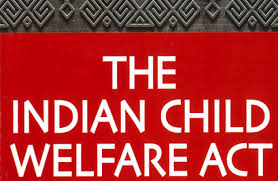
Haaland v. Brackeen challenges the constitutionality of the Indian Child Welfare Act of 1978, putting the sovereignty of Indian Nations at risk.
By Jessica Lambert
The Nation
OCTOBER 5, 2022
“This November, the Supreme Court will hear Haaland v. Brackeen—a case that could have catastrophic consequences for Indian country. The plaintiffs are challenging the constitutionality of the Indian Child Welfare Act of 1978, arguing that the law discriminates against non-Indian adoptive parents on the basis of race. More specifically, they claim that the law institutionalizes discrimination against white families in the adoption of American Indian children.
The plaintiffs’ argument fails to take into account the reasons why the ICWA prioritizes the placement of Indian children in Indian homes. American Indian identities are derived solely from the status as citizens of our Tribal Nations (that is, “American Indian” is a political status—not a racial identity).”
|
|
Session 4: Animal Welfare & Wildlife Trafficking Prosecutions
October 17, 2022 • 1:00 p.m. - 2:00 p.m. ET
|
|
Past Sessions
For recordings from our past sessions click the links below
|
|
Session 3: Workplace Safety Prosecutions
Monday, September 12, 2022
Session 3 (1:00 p.m. - 2:30 p.m. ET)
The recording will be uploaded when available.
|
|
Join Kelley Drye attorneys and guest speakers for an upcoming seminar to discuss the latest developments on the impacts, regulation, and litigation surrounding one of the most impactful emerging contaminants in a generation: per- and polyfluoroalkyl substances (PFAS).
This full-day program will present a series of panels featuring experts and practitioners from government, outside counsel, and various technical fields who will discuss the most pertinent federal and state regulations, litigation issues, and liability developments involving these “forever” chemicals.
Panel topics include; The State of PFAS Science, State, and Federal Regulatory Update, Litigation Addressing PFAS from Industrial Discharger Sites, Aqueous Film-Forming Foam Multidistrict Litigation, Damages, and Remediation.
There is no cost to register for this event.
Kelley Drye is an accredited NY, IL, CA, and TX CLE provider. This non-transitional continuing legal education program will offer NY Professional Practice credit, General IL credit, CA General credit, and TX General credit. We will apply for CLE credit in other jurisdictions, upon request, but we cannot guarantee approval.
DATE: Thursday, October 13, 2022 - 10:00 a.m. - 5:30 p.m. EST
LOCATION: Virtual
|
|
All summaries are posted in CWAG's google docs account, accessible through the link below. Should you have any issues with the links, contact Patricia Salazar with any questions.
|
|
Scotts Valley Band of Pomo Indians v. U.S. Department of Interior, ___ F. Supp. 3d ___, 2022 WL 4598687 (D.D.C. Sept. 30, 2022): Although the “restored lands” regulation in 25 C.F.R. § 292 constitutes a valid interpretation of 25 U.S.C. § 2719(b)(1)(B)(iii), an Indian Lands Opinion denying a restored tribe’s request for a 128-acre parcel to be taken into trust for gaming purposes was arbitrary and capricious because it failed to apply the Indian canon.
In re G.H., ___ Cal. App. 5th ___, ___ Cal. Rptr. 3d ___, 2022 WL 5240389 (4th Dist. Oct. 6, 2022): Parental termination order was conditionally reversed and remanded for compliance with California’s “Indian child” inquiry requirement.
|
|
Flandreau Santee Sioux Tribe v. Houdyshell, ___ F.4th ___, 2022 WL 4870417 (8th Cir. Oct. 4, 2022): State gross excise tax imposed on a nontribal general contractor supplying services and materials in connection with an on-reservation casino renovation was not preempted under the Bracker federal, tribal and state interest-balancing test by either the Indian Gaming Regulatory Act or the Indian Trader Statutes.
Urovak v. Houser, ___ F. Supp. 3d ___, 2022 WL 4957142 (D. Alaska Oct. 4, 2022): Pretrial habeas corpus petition was dismissed on Younger abstention grounds.
|
|
Ahtna, Inc. v. State, Department of Natural Resources, ___ P.3d ___, 2022 WL 4283097 (Alaska Sept. 16, 2022): ANCSA extinguished an Alaska Native corporation’s aboriginal title to a state highway right of way established under RS 2477, but the trial court was required on remand to determine which of the State’s proposed projects were reasonably necessary for and within the scope of a highway as that term was used in 1969 when the Secretary of the Interior withdrew all public lands not already reserved.
|
|
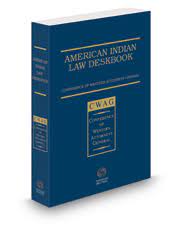
American Indian Law Deskbook |
|
Notice: 2022 Edition of the American Indian Law Deskbook now available on Westlaw and in hard-copy and electronic formats.
Editions of the Deskbook are published annually by Thomson Reuters, and the 2022 Edition was issued during the week of May 23, 2021. It is available on Westlaw in the Secondary Sources/Texts & Treatises category, in hard copy, and in electronic format.
Please click below or reach out to Clay Smith at clay.smith@cwagweb.org with questions regarding obtaining a copy of the American Indian Law Deskbook.
|
|
Western Attorneys General Litigation Action Committee
CWAG oversees and coordinates the Western Attorneys General Litigation Action Committee (WAGLAC), which consists of assistant attorneys general involved in litigation related to the environment, natural resources, public lands and Indian law. WAGLAC was formed over 40 years ago and meets three times per year to discuss the latest developments in these areas of the law. AGO staff gain important contacts throughout the country in these important areas of the law.
|
|
Contributions For WAGLAC Newsletter
We rely on our readers to send us links for the WAGLAC Newsletter. If you have or know of a recent (published in the last two weeks) case, statute or article relating to natural resources, environment, Indian law or federalism that you would like us to consider for inclusion in the Newsletter, please send it to Clive Strong. For a complete database of all previously published WAGLAC newsletters, please follow the link below.
|
|
Conference of Western Attorneys General | 1300 I Street, Sacramento, CA 95814 |
|
|
|
|
|
|