News & Updates from WAGLAC
October 4, 2022
|
|
The Conference of Western Attorneys General cordially invites you to attend our upcoming Western Attorneys General Litigation Action Committee (WAGLAC) meeting. This year's Fall Meeting will be held on October 17-18, 2022 at the Westin San Diego.
The meeting, limited to Attorneys General and Staff ONLY, will begin Monday, October 17, 2022, at 8:30 am and end on Tuesday, October 18, 2022, at 3:00 pm.
In addition to the roundtable discussion of natural resource, environmental, and Indian law matters, there will be a seminar on how the conservative majority on the Supreme Court is reshaping environmental and Indian law. See the agenda below for more details.
Although in-person attendance is now closed, CWAG members are welcome to attend virtually via Zoom. Zoom Link will be sent later, following online registration.
Please use the link below to register for the meeting.
Applications for CLE certification for the meeting will be requested from the Western States.
|
|
NO CLEAR OUTCOME AFTER TWO HOURS OF ORAL ARGUMENT IN SACKETT V. EPA
Despite multiple attempts by the Supreme Court to interpret the term “Waters of the United States” (WOTUS), there is no settled definition of the term fifty years after the enactment of the Clean Water Act (CWA). Two hours of oral argument yielded only one point of agreement – none of the Justices liked the tests offered by Sacketts or the United States.
The question in the case is whether the wetland owned by the Sacketts near Priest Lake is subject to regulation under the CWA. Sacketts argued their property is not subject to regulation under the CWA because there is no “continuous surface connection” to Priest Lake. At least six Justices expressed concern the “continuous surface connection” test is at odds with the text of the CWA. A majority of the Justices, however, expressed concern with the vagueness of the “significant nexus” test advanced by the United States.
Legal commentators listening to the oral argument have offered widely varying opinions on how the Court is likely to decide the case. What seems clear, however, is that the Court will seek to find a middle ground between the two proposed definitions of WOTUS.
|
|
Methane Might Be a Bigger Climate Problem Than Thought, Study Finds
Henry Fountain
NY Times
September 29, 2022
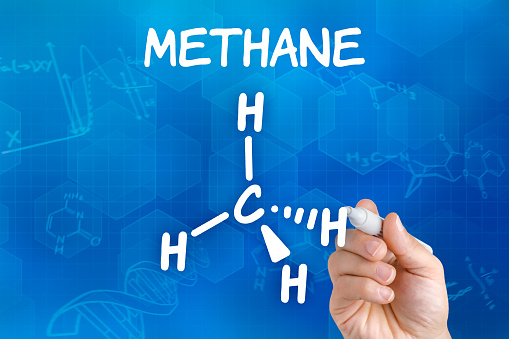
“The oil industry practice of burning unwanted methane is less effective than previously assumed, scientists said Thursday, resulting in new estimates for releases of the greenhouse gas in the United States that are about five times as high as earlier ones.
In a study of the three largest oil and gas basins in the United States, the researchers found that the practice, known as flaring, often doesn’t completely burn the methane, a potent heat-trapping gas that is often a byproduct of oil production. And in many cases, they discovered, flares are extinguished and not reignited, so all the methane escapes into the atmosphere.”
|
|
EPA Finalizes Environmental Justice Action Plan for Land Protection and Cleanup Programs
EPA
September 30, 2022
“[T]he U.S. Environmental Protection Agency’s Office of Land and Emergency Management announced it has finalized the agency’s ‘EJ Action Plan: Building Up Environmental Justice in EPA’s Land Protection and Cleanup Programs’ (EJ Action Plan). The plan highlights projects, tools, and practices to be applied to the Superfund, Brownfields, Emergency Response, Solid Waste Management, Resource Conservation and Recovery Act Corrective Action, and Underground Storage Tank programs. The plan aligns with President Biden’s commitment to elevating environmental justice to the highest levels of the federal government and advances the agency’s commitment to delivering justice and equity for all.”
|
|
States Take on PFAS ‘Forever Chemicals’ With Bans, Lawsuits
Alex Brown
Stateline
Concord Monitor
September 30, 2022
“'Forever chemicals’ are everywhere. The thousands of chemicals in the group known as perfluoroalkyl and polyfluoroalkyl substances, or PFAS, are found in cookware, packaging, cosmetics, clothing, carpet, electronics, firefighting foam, and many other products.
The chemicals, which do not naturally break down, are so widespread that they’re found in the blood of 97% of Americans. Research shows that some PFAS compounds may decrease fertility, cause metabolic disorders, damage the immune system, and increase cancer risk.
While states await regulations from the federal Environmental Protection Agency, rising awareness in recent years has prompted more than two dozen states to take the initiative to protect their residents’ health, in many cases through bipartisan legislation.”
|
|
Atlantic Richfield Company Agrees to Complete Multi-Million Dollar Cleanup of the Anaconda Smelter Superfund Site
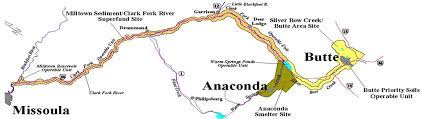
“The Atlantic Richfield Company (AR) has agreed to complete its cleanup of the Anaconda Smelter Superfund Site (Site) in Deer Lodge County, Montana, the Environmental Protection Agency and the Department of Justice announced []. The state of Montana, on behalf of the Department of Environmental Quality, is also a signatory to the consent decree that was lodged today in the U.S. District Court in Butte, Montana.
. . . .
Under the settlement, AR — a subsidiary of British Petroleum — will complete numerous remedial activities that it has undertaken at the Anaconda Site pursuant to EPA administrative orders since the 1990s. Among other actions, AR will finish remediating residential yards in the towns of Anaconda and Opportunity, clean up soils in upland areas above Anaconda and eventually effect the closure of remaining slag piles at the Site. The estimated cost of the remaining Site work, including operation and maintenance activities intended to protect remediated lands over the long term, is $83.1 million. AR will pay $48 million to reimburse the EPA Superfund Program for EPA and Department of Justice response costs and will pay approximately $185,000 to the U.S. Forest Service for oversight of future remedial activities on Forest Service-administered lands at the Site.”
|
|
Top State Judges Make a Rare Plea in a Momentous Supreme Court Election Case
Adam Liptak
NY Times
September 26, 2022
"It’s the biggest federalism issue in a long time,” Chief Justice Nathan L. Hecht of the Texas Supreme Court said on the phone the other day. “Maybe ever.’
He was explaining why the Conference of Chief Justices, a group representing the top state judicial officers in the nation, had decided to file a brief in the U.S. Supreme Court in a politically charged election-law case. The brief urged the court to reject a legal theory pressed by Republicans that would give state legislatures extraordinary power.
. . . .
The case, Moore v. Harper, No. 21-1271, will be argued in the coming months. It concerns a congressional voting map drawn by the North Carolina Legislature favoring Republicans that was rejected as a partisan gerrymander by the state’s Supreme Court. Republican lawmakers seeking to restore the legislative map argued that the state court had been powerless to act.
. . . .
‘This brief provides a rare and important opportunity for federal Supreme Court justices to receive direct input from their peers who sit on state supreme courts,’ Professor [Evan] Caminker said. ‘State justices have a central stake in this case because, in our federalist system, they typically have the final say over the meaning of state law, and here they can directly explain to their federal counterparts why their traditional state role is worthy of protection.’”
|
|
Ninth Circuit judges deal blow to bull trout recovery fight
Alanna Madden
Courthouse News Service
September 28, 2022
A U.S. Ninth Circuit Court of Appeals panel “put the kibosh on conservationist groups’ attempt to replead their case for endangered bull trout . . . , marking the end of a six-year legal battle against the U.S. Fish and Wildlife Service.” The panel “affirmed Montana’s district court judgment in favor of Fish and Wildlife, dismissing claims that the agency's recovery plan under the Endangered Species Act does not do enough to protect bull trout. “[T]he panel questioned the latter groups’ intentions for bringing a similar Oregon case to the Ninth Circuit in 2018.
‘A second adjudication is precisely what plaintiffs attempted here,” stated the opinion, adding that contrary to the groups’ argument, the Oregon district court’s dismissal of the original complaint reached the merits of those claims. Dismissal for failure to state a claim is a judgment on the merits for purposes of claim preclusion.’”
|
|
‘Good Samaritan’ bill aims to allow cleanup of abandoned, leaking mines
Emilee Miranda
Cronkite News
Sept. 29, 2022
“On September 29, the Senate Environment and Public Works Committee held a legislative hearing on the Good Samaritan Remediation of Abandoned Hardrock Mines Act (S. 3571). Witnesses included Misael Cabrera, Director of the Arizona Department of Environmental Quality, and James Ogsbury, Executive Director of the Western Governors Association (WGA). Cabrera said: “CERCLA and the Clean Water Act contain joint and several liabilities as well as other provisions that are helpful to holding responsible parties liable today; these same provisions only serve as obstacles and barriers to addressing pre-regulation AMLs where the responsible party no longer exists.” He pointed to the estimated 22,500 abandoned mine features that need “solutions not barriers.” He noted that the pilot program proposed by S. 3571 is a critical first step, particularly if coupled with funding of Section 40704 of the Infrastructure Investment and Jobs Act (IIJA). Ogsbury noted that abandoned mines are having substantial, negative effects on water supplies, the environment, and the economies of western communities. He said Western Governors have supported efforts to provide protections for Good Samaritans for nearly 30 years, and WGA Policy Resolution 2021-09, Cleaning Up Abandoned Hardrock Mines in the West, specifically supports the kind of pilot projects that S. 3571 authorizes.”
|
|
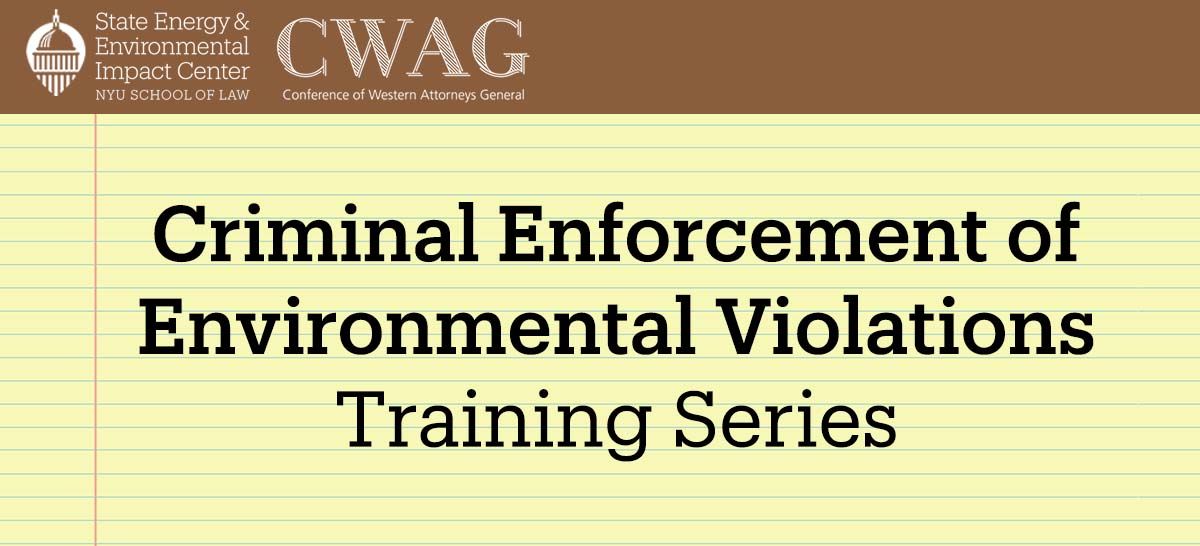
Session 4: Animal Welfare & Wildlife Trafficking Prosecutions
October 17, 2022 • 1:00 p.m. - 2:00 p.m. ET
|
|
Past Sessions
For recordings from our past sessions click the links below
|
|
Session 3: Workplace Safety Prosecutions
Monday, September 12, 2022
Session 3 (1:00 p.m. - 2:30 p.m. ET)
The recording will be uploaded when available.
|
|
Join Kelley Drye attorneys and guest speakers for an upcoming seminar to discuss the latest developments on the impacts, regulation, and litigation surrounding one of the most impactful emerging contaminants in a generation: per- and polyfluoroalkyl substances (PFAS).
This full-day program will present a series of panels featuring experts and practitioners from government, outside counsel, and various technical fields who will discuss the most pertinent federal and state regulations, litigation issues, and liability developments involving these “forever” chemicals.
Panel topics include; The State of PFAS Science, State, and Federal Regulatory Update, Litigation Addressing PFAS from Industrial Discharger Sites, Aqueous Film-Forming Foam Multidistrict Litigation, Damages, and Remediation.
There is no cost to register for this event.
Kelley Drye is an accredited NY, IL, CA, and TX CLE provider. This non-transitional continuing legal education program will offer NY Professional Practice credit, General IL credit, CA General credit, and TX General credit. We will apply for CLE credit in other jurisdictions, upon request, but we cannot guarantee approval.
DATE: Thursday, October 13, 2022 - 10:00 a.m. - 5:30 p.m. EST
LOCATION: Virtual
|
|
All summaries are posted in CWAG's google docs account, accessible through the link below. Should you have any issues with the links, contact Patricia Salazar with any questions.
|
|
Clark v. Haaland, ___ F. Supp. 3d ___, 2022 WL 4536239 (D.N.M. Sept. 28, 2022): Ex parte Young-like relief was not available against tribal officials where a declaratory judgment was sought as the meaning of federal water law and the requested remedy did not necessitate action by or restraint of those officials.
Navajo Nation v. Office of Navajo and Hopi Indian Relocation, ___ F. Supp. 3d ___, 2022 WL 4548134 (D. Ariz. Sept. 29, 2022): Three claims seeking prospective relief with respect to the ONHIR’s implementation of statutes related to the Navajo and Hopi Indian Land Settlement Act and subsequent statutes were dismissed under Fed. R. Civ. P. 12(b)(1) and/or (6), with leave to for the federal defendants to file a second motion to dismiss with respect to a fourth claim that the plaintiff clarified during the briefing process was predicated on alleged breach of trust.
|
|
Kialegee Tribal Town v. U.S. Department of Interior, ___ F. Supp. 3d ___, 2022 WL 4547528 (D.D.C. Sept. 29, 2022): Tribe’s suit challenging a decision by the Assistant Secretary-Indian Affairs that it lacked authority to enact a liquor control ordinance was denied because the “privileges and immunities” provision in 25 U.S.C. § 5123(f) does not create an implied right of action and because the challenge was barred by issue preclusion arising from a 1991 Board of Indian Appeals decision.
|
|
American Indian Law Deskbook |
|
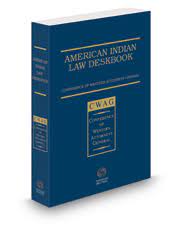
Notice: 2022 Edition of the American Indian Law Deskbook now available on Westlaw and in hard-copy and electronic formats.
Editions of the Deskbook are published annually by Thomson Reuters, and the 2022 Edition was issued during the week of May 23, 2021. It is available on Westlaw in the Secondary Sources/Texts & Treatises category, in hard copy, and in electronic format.
Please click below or reach out to Clay Smith at clay.smith@cwagweb.org with questions regarding obtaining a copy of the American Indian Law Deskbook.
|
|
Western Attorneys General Litigation Action Committee
CWAG oversees and coordinates the Western Attorneys General Litigation Action Committee (WAGLAC), which consists of assistant attorneys general involved in litigation related to the environment, natural resources, public lands and Indian law. WAGLAC was formed over 40 years ago and meets three times per year to discuss the latest developments in these areas of the law. AGO staff gain important contacts throughout the country in these important areas of the law.
|
|
Contributions For WAGLAC Newsletter
We rely on our readers to send us links for the WAGLAC Newsletter. If you have or know of a recent (published in the last two weeks) case, statute or article relating to natural resources, environment, Indian law or federalism that you would like us to consider for inclusion in the Newsletter, please send it to Clive Strong. For a complete database of all previously published WAGLAC newsletters, please follow the link below.
|
|
Conference of Western Attorneys General | 1300 I Street, Sacramento, CA 95814 |
|
|
|
|
|
|