Wisconsin Center for Wildlife May/June 2024 Newsletter | |
Welcome!
The Oxford Dictionary defines peril as “serious and immediate danger.” The Wisconsin Center for Wildlife is working to understand why certain species are in danger in Wisconsin and throughout their ranges across the United States.
In this issue of the WCW Newsletter, we explain how WCW faculty, staff, partners, and students are learning about imperiled species with the hope of aiding in the conservation of these charismatic vertebrates!
| |
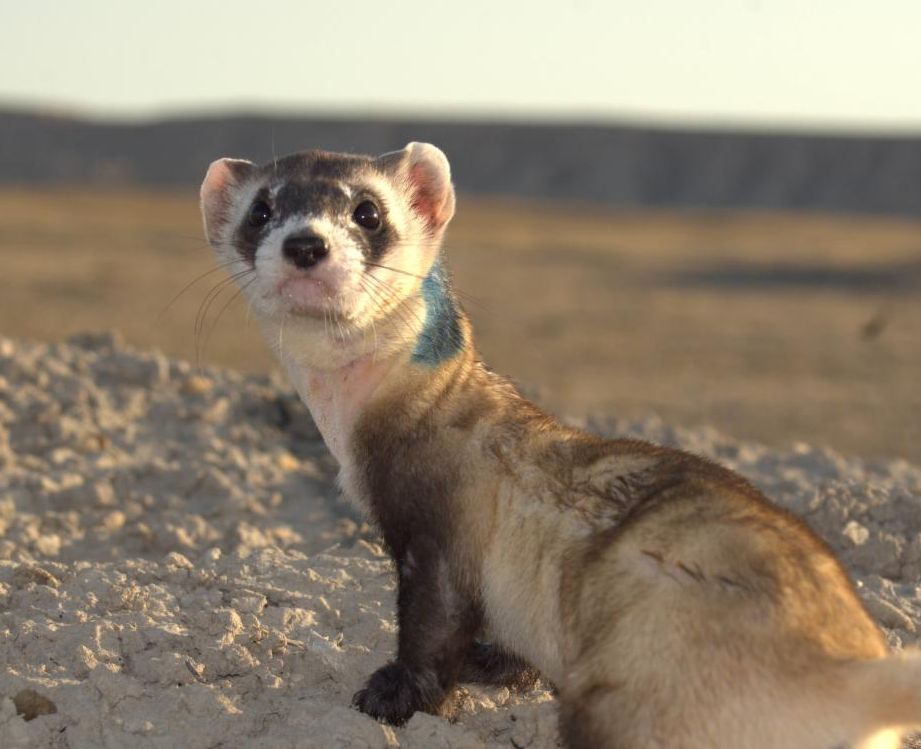
Wild black-footed ferret at Conata Basin, South Dakota. The blue mark on the neck indicates prior vaccination by Travis Livieri, Ph.D., Executive Director of Prairie Wildlife Research. | |
Prairie Wildlife Research | |
Conserving Black-Footed Ferrets and the Prairie Ecosystem | |
Travis Livieri, Ph.D.
WCW Research Partner
Founded by alumnus Travis Livieri, Ph.D, the non-profit Prairie Wildlife Research has worked tirelessly to conserve prairie wildlife species and their habitats since 2001. Livieri began his conservation journey at UW-Stevens Point where he completed a B.S. degree in Wildlife Ecology (1993) and his M.S. degree in Natural Resources – Wildlife (2007). His Master’s thesis focused on home ranges and territories of endangered black-footed ferrets. Since 2005, Livieri has been vaccinating ferrets against plague and canine distemper, two pathogens deadly to ferrets. Plague is deadly to both ferrets and prairie dogs, the primary food source for ferrets. Therefore, plague vaccination is critical to ferret recovery and Livieri is responsible for vaccinating ferrets in the largest known wild population on Earth. Learn more about this effort here:
| |
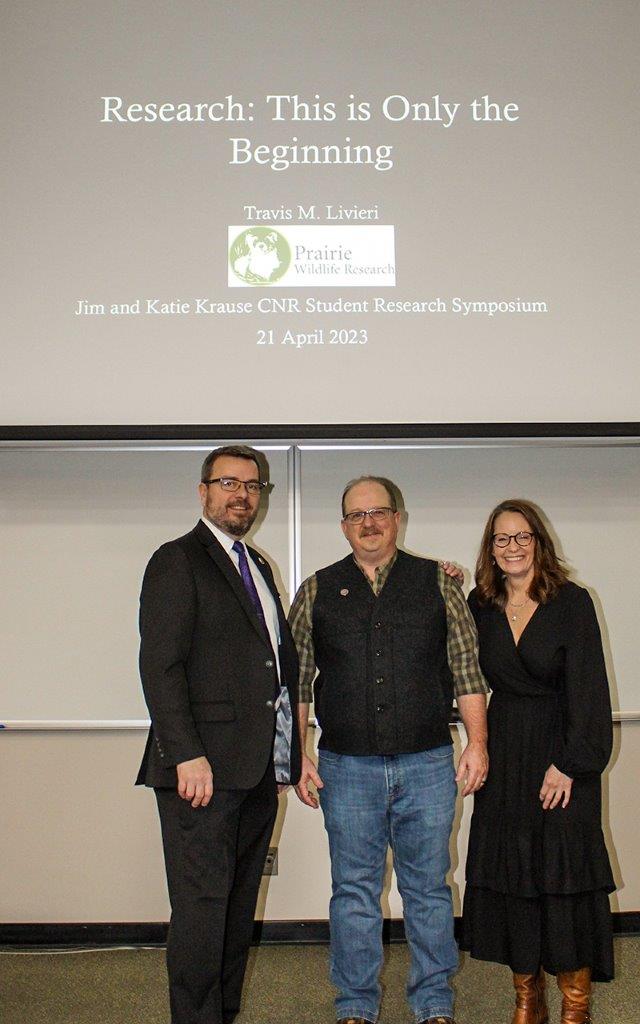
CNR Dean Brian Sloss, Travis Livieri, and Shelli Dubay at the 2023 Jim and Katie Krause Undergraduate Research Symposium. | |
|
Association of Zoos and Aquariums
Mission: AZA helps its members and the animals in their care thrive by providing services advancing animal welfare, public engagement and the conservation of wildlife.
Shelli Dubay, Travis Livieri, and Madisen Hartlaub received a Conservation grant from AZA in September 2023.
The grant will fund Hartlaub’s graduate studies (see Graduate Student Corner below) focused on factors that explain how endangered black-footed ferrets are exposed to tularemia, a bacterial disease of animals and humans.
| |
Tracking Imperiled Bats for Conservation | |
Jennifer Summers, M.S.
WCW Program Development Specialist
Jennifer Summers has been lucky enough to work with bats during her career: her master’s thesis focused on hibernating bats in Wisconsin, and she worked with the Wisconsin Department of Natural Resources (WDNR) Wisconsin Bat Program, assisting with studying northern long-eared bats. This April, Jennifer assisted WDNR Conservation Biologists Heather Kaarakka and Paul White in radio-tracking bats as they emerged from hibernation.
The WDNR sought to repeat a 2017 bat tracking effort to follow a female tri-colored bat as it emerged from hibernation. This April, WDNR biologists and Summers trapped bats in Dodge County at a hibernation site, seeking to tag female tri-colored bats or little brown bats. Because no female tri-colored bats emerged from the site, they captured, radio-tagged, and tracked two female little brown bats. The team initially lost the signal from both bats shortly after releasing them, but one of the bats was found three days later in an old building approximately seven miles away from the hibernaculum.
| |
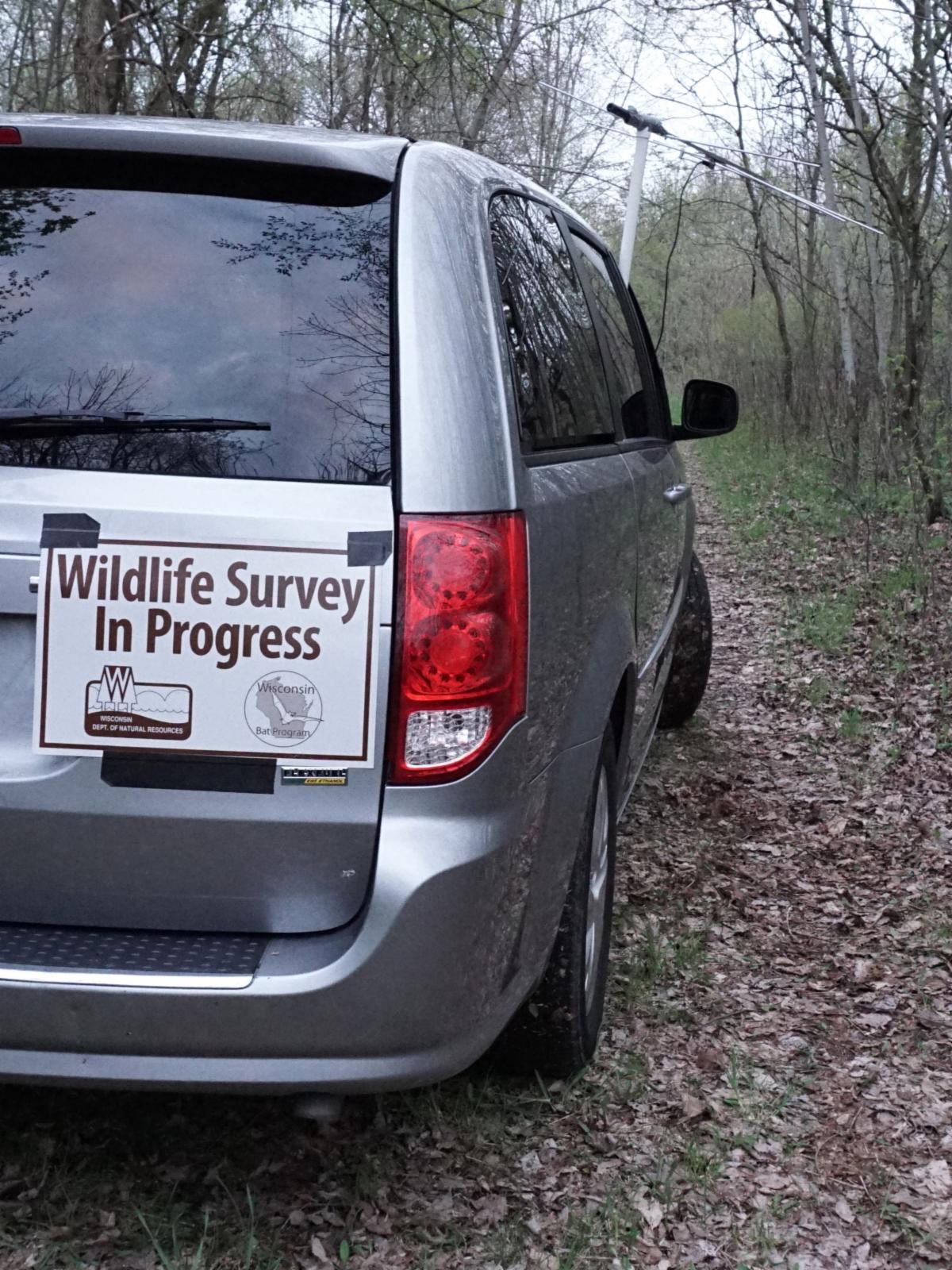
The tracking team used a vehicle with a radio-telemetry antenna attached to a pole for tracking bats on the move. | |
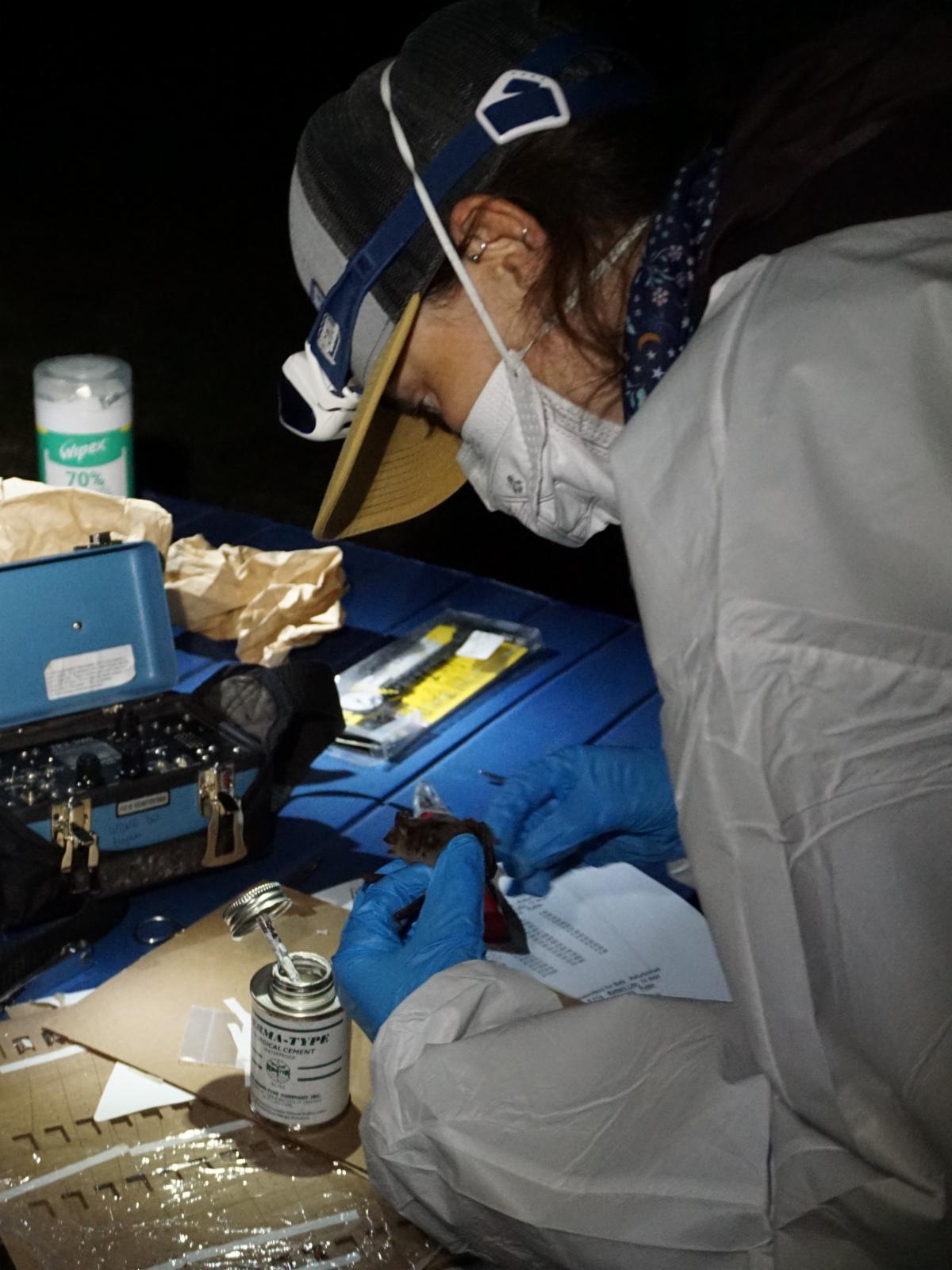
WDNR Conservation Biologist Heather Kaarakka puts a radio transmitter on a little brown bat. | |
|
All four of Wisconsin’s cave-hibernating bat species have suffered population declines because of white-nose syndrome (WNS), a deadly fungal disease that kills bats during hibernation. Tri-colored bats, northern long-eared bats, and little brown bats are state listed as threatened. The tri-colored bat has been proposed for listing as federally endangered because population declines exceeding 90% have been documented across its entire range. The little brown bat was once the most abundant bat species in Wisconsin, but its populations too have declined due to WNS. Little is known about the post-hibernation movements of any cave-hibernating species in Wisconsin.
Conservation Biologists with WDNR have worked hard to document and monitor bat hibernacula around the state and the bat species that use them. However, little is known about where bats go after they leave their winter homes. Likewise, conservation biologists do not fully understand where little brown bats in known summer colonies spend their winters. Tracking bats in real-time as they emerge from hibernation provides insight into where bats go after hibernation and how they use their summer habitats. Understanding how these imperiled bat species use the landscape for their seasonal needs is imperative for their ongoing conservation.
| |
WDNR Wisconsin Bat Program | |
The Wisconsin Bat Program is a part of the WDNR’s Natural Heritage Conservation Bureau. Its mission is to monitor and manage bat populations in Wisconsin through engaging citizen-scientists. To learn more about Wisconsin bats or to learn how to volunteer to help monitor and conserve bats in Wisconsin, check out the link below! | |
Shelli Dubay, Ph.D.
WCW Interim Director
Why should we study species in peril?
For some species, we are not sure why populations are in decline so we need to understand the problem before we can manage it. Additionally, humans have caused declines in many imperiled species so, as stewards of natural resources, we have the responsibility to find solutions to increase their populations. For example, overharvest contributed to the American marten being extirpated from Wisconsin in the 1920’s. Marten populations remain low in Wisconsin, but they are harvested as legal furbearers in Michigan and Minnesota. Research to understand why populations remain low is important for marten recovery.
| |
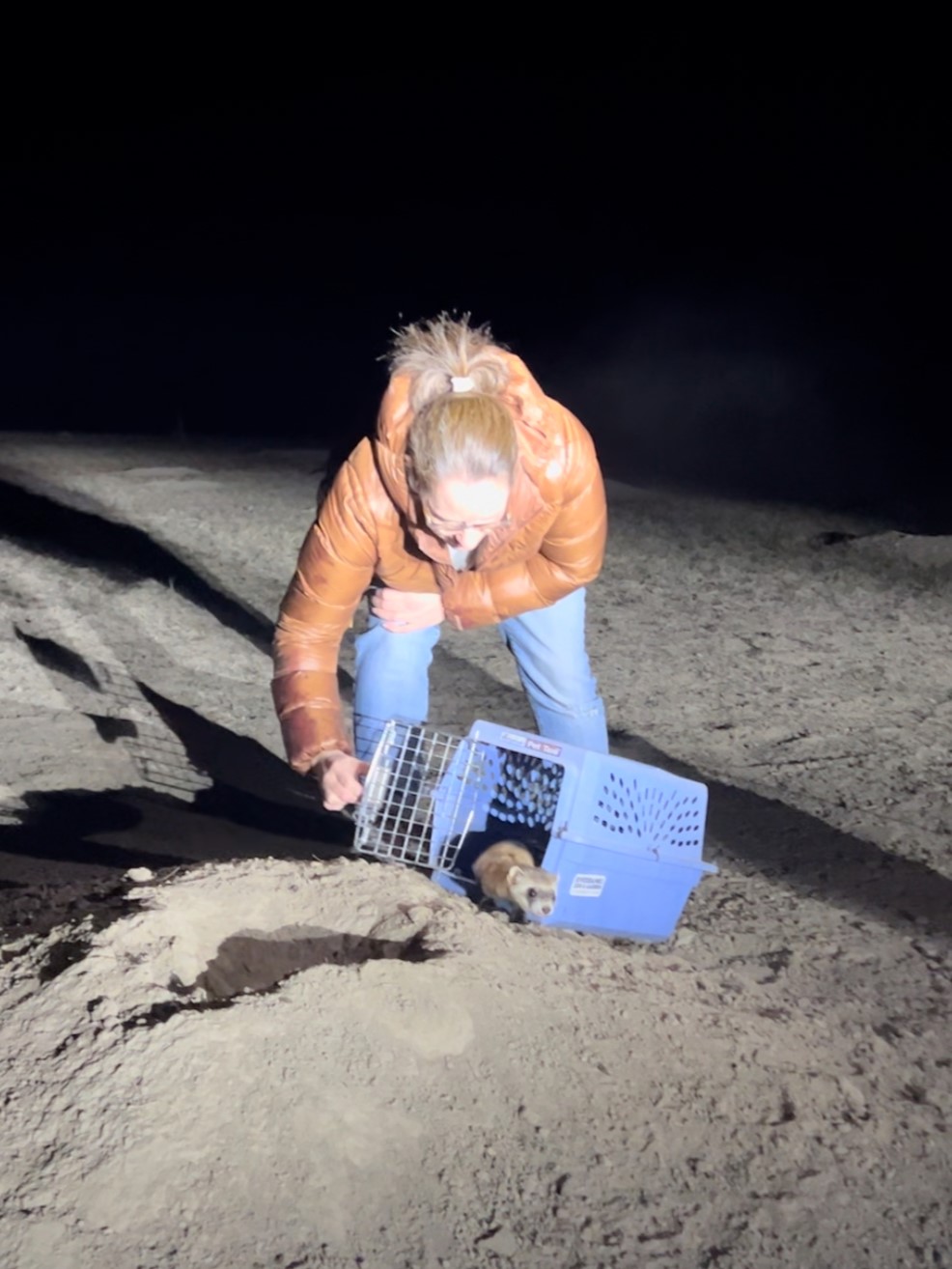
Shelli Dubay releasing a ferret into its burrow after sampling in March 2024. | |
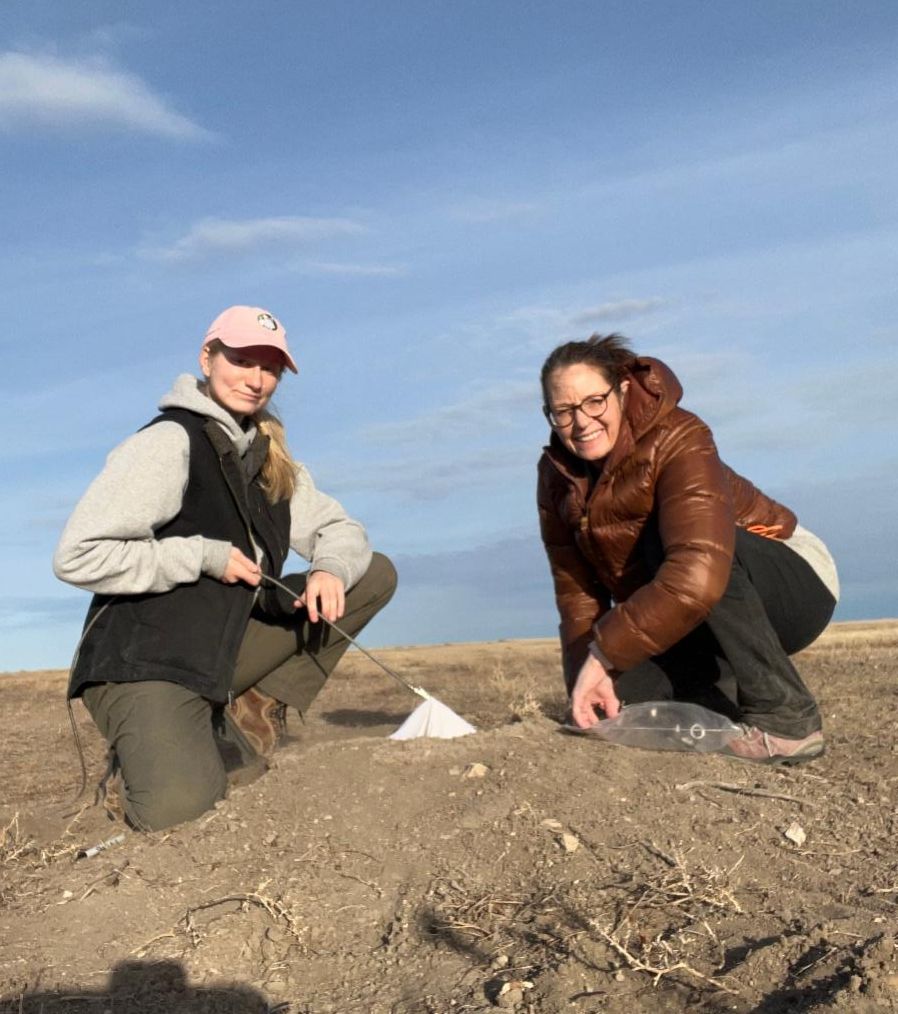
Maddie Hartlaub and Shelli Dubay swab a prairie dog burrow for fleas and ticks in March 2024. | |
|
What experiences prepared you to study organisms with small populations?
I studied diseases of deer and moose in Wyoming for my MS degree. When I finished that work in 1996, I had no idea how important understanding wildlife disease ecology would be for endangered species research and recovery. Several species are listed as threatened or endangered because diseases cause significant mortality and subsequent population decline, including northern long-eared bats, black-footed ferrets, and California condors. I was fortunate to study why Whooping cranes in Wisconsin abandon their nests at Necedah National Wildlife Refuge. A parasitic black fly drives adult cranes from nests so birds no longer incubate their eggs, so experience in wildlife health has been extremely valuable.
| |
|
What challenges are posed by studying small populations?
Well, one obvious concern is that robust studies need many samples to draw appropriate conclusions and with endangered species, we often do not have large numbers of research subjects. Management decisions must be made in a timely manner, and we rarely have “the one answer” that will solve the problem when it is needed. So, we make the best decision given the information that we have at that point in time.
| |
Maddie Hartlaub
Advised by Dubay and Livieri
Why did you decide to study wildlife health in graduate school?
I wanted to explore an interest I developed while pursuing my undergraduate degree. I was drawn to this project by the combination of field and laboratory components. It has been exciting to apply techniques I am familiar with and step outside of my comfort zone! I also think that wildlife health is an increasingly important subsection of conservation especially in terms of maintaining ecosystems and preventing zoonotic outbreaks.
Briefly explain your graduate research.
My graduate research focuses on the ecology of tularemia in endangered black-footed ferrets in the prairie dog burrow ecosystem in Conata Basin/Badlands National Park in South Dakota. Ferrets and their primary prey, prairie dogs, are susceptible to many disease threats including tularemia which is an infectious bacterial disease. In 2015, Livieri with Prairie Wildlife Research captured an adult male ferret that exhibited no outward symptoms of disease but had a growth in his neck that contained tularemia. My research was initiated to better understand how tularemia moves throughout the prairie. I am using archived serum samples from Prairie Wildlife Research to determine tularemia prevalence in black-footed ferrets over time and variables that explain exposure.
| |
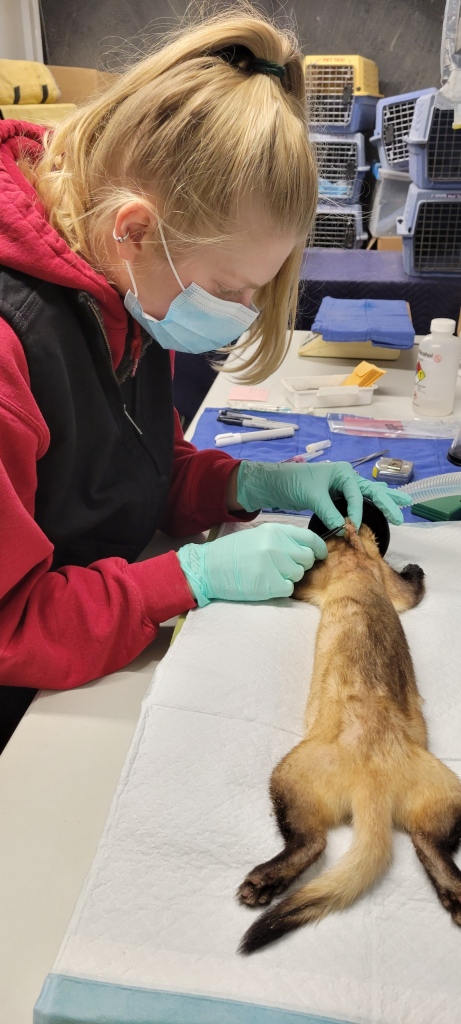
Maddie collecting ticks from an anesthetized black-footed ferret. | |
|
What have you found so far?
We sampled 881 ferrets and analyzed 1,104 sera for tularemia antibody at Wyoming State Veterinary Laboratory. Antibodies were detected in 6.4% of samples from 2002 to 2023. We have found that exposure does vary by year, and in 2015-2016, 47% of ferrets produced tularemia antibodies and survived infection indicating a possible epizootic outbreak. We are in the process of further analyzing biological and environmental factors that may influence black-footed ferret exposure.
Why is this important for conservation of small populations?
This research will aid in disease management by providing insight as to how ferrets are being exposed to tularemia and establish factors that may increase their likelihood of becoming infected. Due to the ferret’s long history with perils from disease, I aim to address questions to better understand how tularemia might impact ferrets. As ferrets are susceptible to several diseases and are reliant upon prairie dogs, the consequences of increased disease prevalence and intensity could dramatically alter recovery efforts.
| |
Zack Wilson
Doug Stephens Boone and Crockett Club Wildlife Research Fellow
(advised by Dubay and Livieri)
How did you get involved with research at UW-Stevens Point?
My first exposure to research at UW- Stevens Point was while volunteering with the ruffed grouse project with the student chapter of The Wildlife Society (TWS) during my second semester. I have always loved discovering new things about our natural world and immediately knew research was something I was passionate about. I promptly applied for a co-leader position on a few TWS Student Chapter research projects. I am now a co-leader with the flying squirrel and wild turkey projects.
Briefly explain your undergraduate research
| |
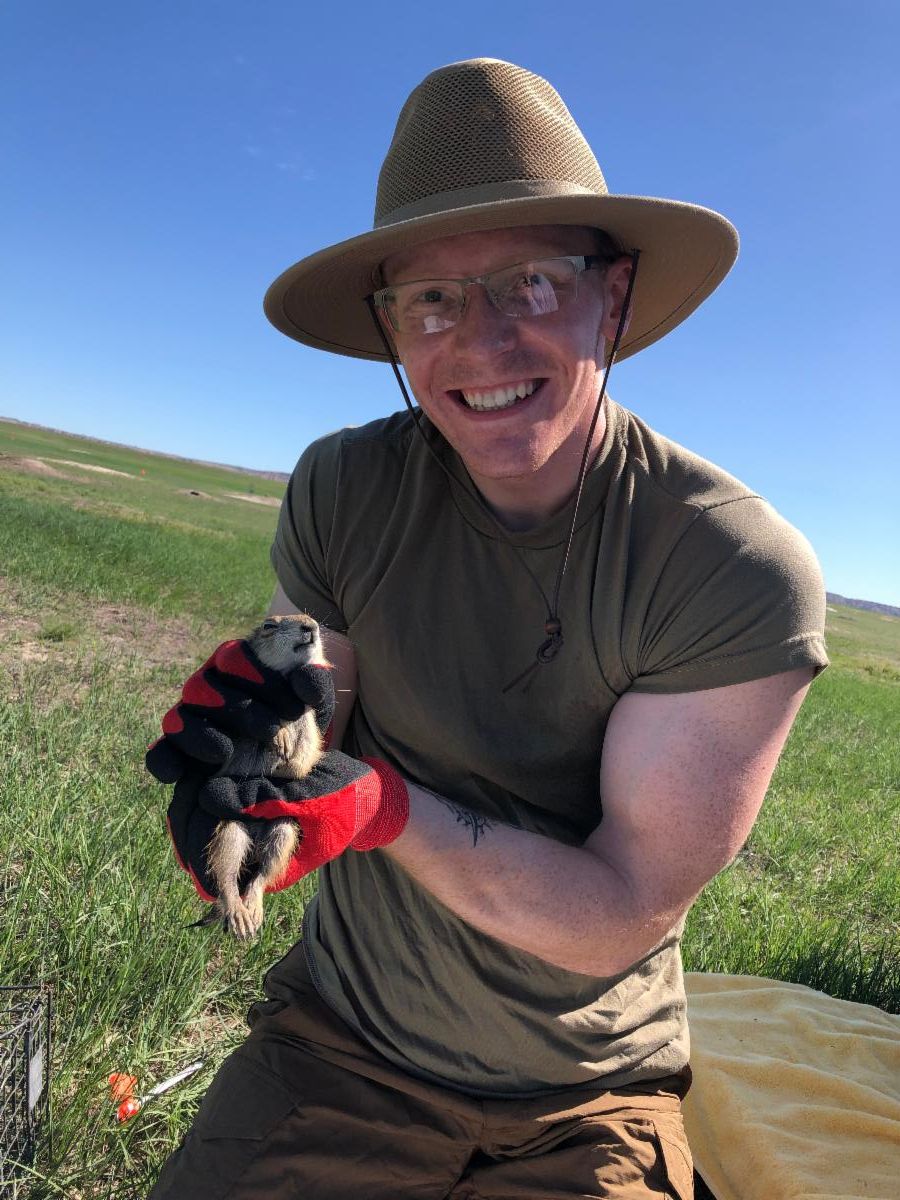
Zack Wilson with an anesthetized prairie dog in South Dakota. | |
|
We are looking into how specific tick species (Ixodes sculptus and I. kingi) could serve as bridging vectors for tularemia (Francisella tularensis), a zoonotic bacterial disease, in the grassland ecosystem. We are investigating relationships between small mammal densities, prairie dog burrow densities, and tick abundance on hosts. We think that the number of small mammals trapped and the abundance of ticks parasitizing them will be positively correlated with prairie dog burrow density in Conata Basin/Badlands National Park, South Dakota.
What advice do you have for students who wish to get involved in research?
This experience is invaluable for my future goals as I hope to one day work in the wildlife health field. Seeing firsthand the intricacies of how graduate research involving wildlife health is planned and conducted has really helped frame my mindset on what to expect as I look towards graduate school. For example, complications may come up during the project planning phase that require unconventional solutions. Additionally, I am gaining hands-on mammal trapping and handling experience that I will use for my entire career. Once the research is concluded, we will hopefully be presenting our findings to other natural resources professionals. This will give me an incredible opportunity to hone my presentation skills while presenting findings to those in similar disciplines.
|
| | | |