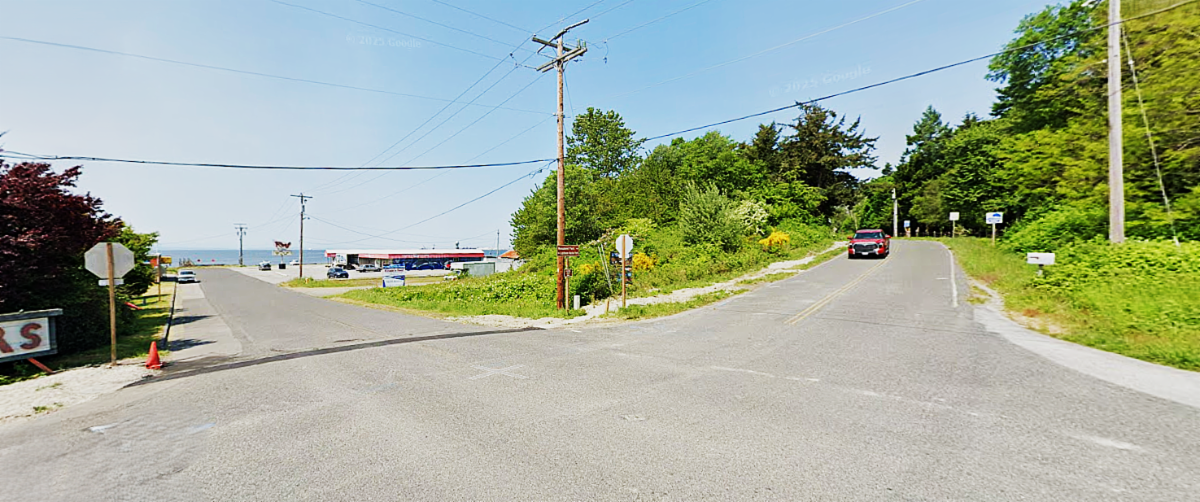
Whidbey Environmental Action Network | | Hearing Set For Point Roberts Burial Disturbances | | Image of the intersection of Gulf Road and Marine Drive in Point Roberts (2023). Whidbey Telecom trenched on Marine Drive, disturbing Lummi ancestral burial sites. Image from Salish Current (Google Maps/Maxar Technologies/USDA). | | |
A hearing is scheduled July 14 in U.S. District Court in Seattle regarding the Lummi Nation’s lawsuit against Whidbey Telecom that allegedly disturbed ancestral remains when it trenched for a broadband project in Point Roberts, which the Lummi know as Chelhtenem. Whidbey Telecom has denied the allegations.
In its 52-page lawsuit, the Lummi Nation details how Whidbey Telecom allegedly trenched through 5,000-year-old ancestral burial grounds in Point Roberts, a peninsula that extends from Canada south into U.S. waters and is part of the United States. Several sets of remains are still exposed, the lawsuit states, and a fragment from a human skull is missing.
“The disturbance itself imposes spiritual injury on the ancestors and on the living members of the nation, and it requires the nation to undertake additional ceremonial work to address what has been done,” Lummi Nation attorneys wrote in the lawsuit about the effects of burial disturbances. “That ceremonial work imposes its own emotional and cultural costs on tribal members, elders, and ceremonial practitioners.”
Text adapted from the Salish Current.
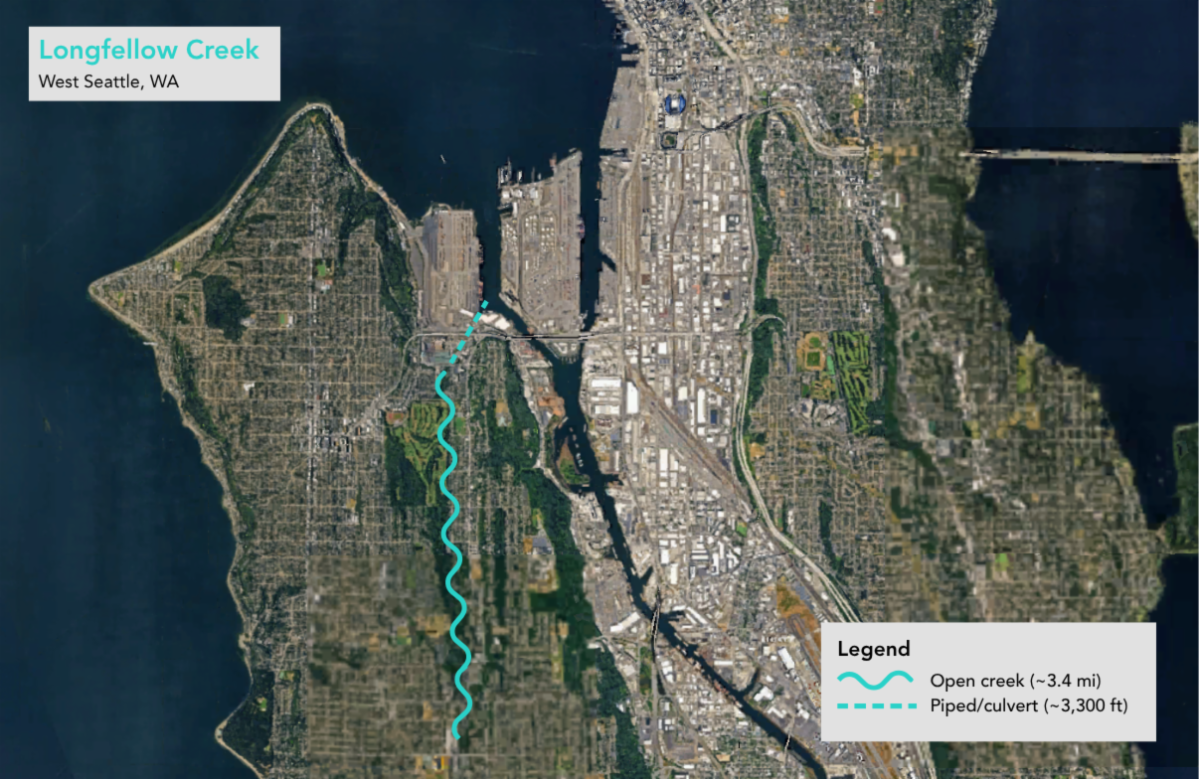
| | Tire Companies Race To Replace Deadly Tire Chemical | | Image of approximate location of Longfellow Creek which drains a 2,685-acre area in West Seattle. The stream’s pathway includes a 3,300-foot culvert that conveys water under parking lots and industrial facilities before releasing it into the Duwamish River. Image from Salish Sea Currents (Map: PSI using Google Earth imagery). | | |
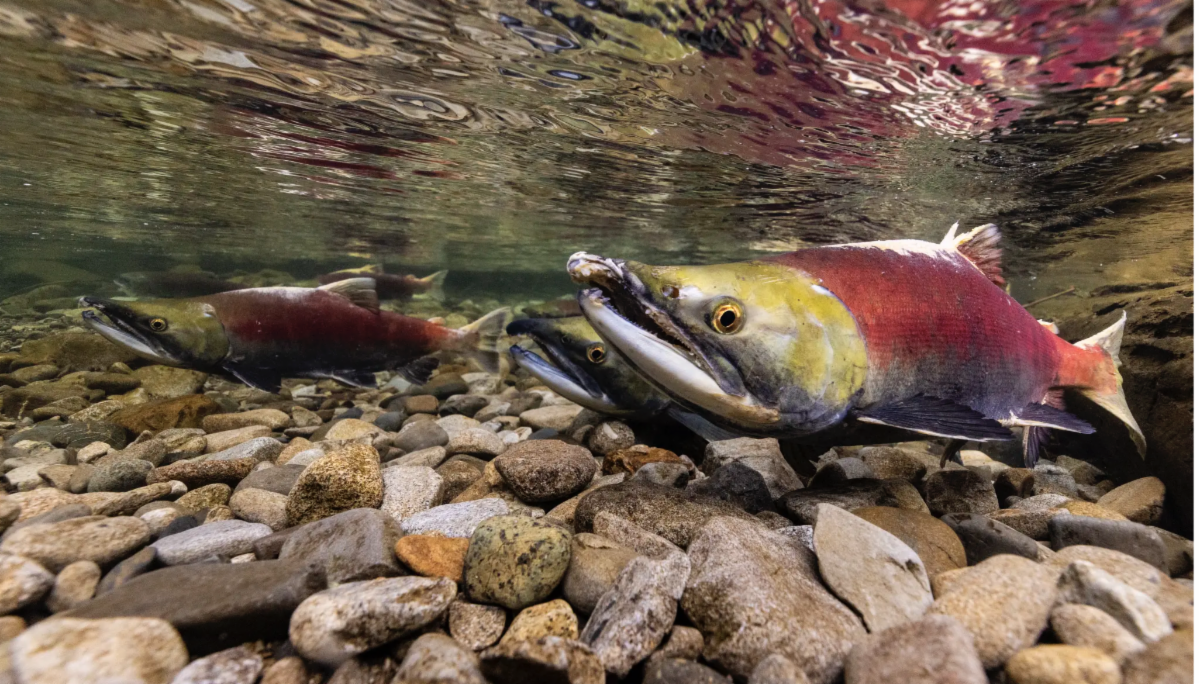
In Seattle’s Longfellow Creek, coho salmon are still dying in large numbers before they get a chance to spawn, according to observers. But now a long-term solution to the problem may be inching closer.
Just over five years ago, scientists identified a deadly chemical associated with automobile tires, 6PPD, that has been blamed on the untimely deaths of thousands of coho and other vulnerable salmonids. Such losses have been observed not only in Longfellow Creek but in urban streams throughout the Salish Sea. Based on known and suspected toxic levels, salmon may be dying in populated areas from California to Alaska, while numerous trout and char species may be experiencing problems in waterways throughout the world.
Now, getting 6PPD out of tires, and eventually out of streams, has become an all-out goal of numerous tire manufacturers, government and nongovernment scientists, as well as agencies responsible for the health of ecosystems. Outside pressure also is increasing from individuals and organizations concerned about the future of Puget Sound and other waterways.
Text adapted from Salish Sea Currents.
| | |
Mailing Address
WEAN
PO Box 293
Langley, WA 98260
| |  | |
Bayview Cash Store
WEAN
5603 Bayview Road
Langley, WA 98260
visits by appointment
| | |
Banner image of a marmot spotted in Winthrop by Marnie Jackson.
Wingless wasp snapped at Trillium Community Forest by Neil O'Sidhe.
| | | | |