Hello,
Happy August!
This month WEL PARTNERS is so pleased to be joined by Natalie Kodsi who graduated from Windsor Law and is now articling with us. We are thrilled to welcome Natalie and look forward to working and learning with her. During the pandemic it has been particularly challenging for students to experience traditional mentorship. This challenge presents for both student and mentor. COVID numbers are on the rise again just as we are all planning on back to work in the office, and therefore, thinking, teaching, and, learning creatively will continue to be the challenge.
COVID fatigue amongst the bar and bench alike, is a real phenomenon presently. I, as a firm owner, manager, lawyer, “jack & jill” of all trades, willingly admit that zoom and remote work is exhausting.
Communication remains critical. I am available to my team and encourage them to call me anytime. It is important to young lawyers to gain skill, insight, and the tools they need to carry out their trade - I will continue to do my best and I encourage others to do the same. To all of you articling students out there-persevere!
September like January is a time for new starts…back to school…back to work….I look forward to this fall and all that comes with it. Enjoy your last weeks of summer and I will catch you next month.
Enjoy the Read,
Kim
|
|
1. 2022 EDITION OF THE BEST LAWYERS IN CANADA |
For the 2022 Edition of the Best Lawyers in Canada, Whaley Estate Litigation Partners is so honoured to have 6 lawyers recognized for their work in Trust & Estates:
2022 Best Lawyers
Albert H. Oosterhoff
John E. S. Poyser
Kimberly A. Whaley
2022 Best Lawyers: Ones to Watch
Bryan Gilmartin
Daniel M. Paperny
Matthew Rendely
|
|
Kimberly Whaley is honoured to have been once again Ranked in Chambers and Partners Canada as a leading lawyer, member of a select group at the very top of the profession in the area of Private Wealth Disputes, High Net Worth Rankings, Band 1. |
|
3. CIVIL PROCEDURE AND PRACTICE IN ONTARIO |
Stay tuned! As part of WEL Partners’ continued commitment to providing accessible education on estates and trusts law, we are thrilled to be announcing our continued participation in the upcoming, soon to be released, publication, Civil Procedure and Practice in Ontario, or CPPO for short. As a University of Windsor’s Faculty of Law project directed by Professor Noel Semple in conjunction with CanLII, CPPO will be the first free, fulsome, and widely accessible annotated volume on the Rules of Civil Procedure, Courts of Justice Act, and Limitations Act . It is anticipated to revolutionize the public’s insight into to the court process while demystifying procedural aspects of the law.
Notably, WEL Partners has had the privilege of authoring three chapters for the volume on Rules 9 (Estates and Trusts), 10 (Representation Order), and 73 (Reciprocal Enforcement of United Kingdom Judgments) of the Rules of Civil Procedure.
The volume is set to launch early September online on CanLII. See you there!
|
|
OUR FIRST E-BOOK! OOSTERHOFF BLOGS ON ESTATES AND TRUSTS - VOLUME 1
|
|
We are excited to announce our first e-book publication, Oosterhoff Blogs on Estates & Trusts - Volume 1, by Albert H. Oosterhoff, which is now available to purchase via Amazon Kindle and Kobo (and soon Apple Books).
Oosterhoff Blogs on Estates & Trusts - Volume 1 is a compilation of blogs on a wide range of estate, trust and related subjects written by Albert H. Oosterhoff between 2016 and 2021.
The blogs do not simply review new cases and statutes, but usually provide extensive historical background. Case and statute critiques are provided when they run counter to established principles, or do not go far enough in reforming the law. The blogs are often of considerable length and often deal with topics that are somewhat obscure and are not otherwise easily accessible.
These blogs are now published in a convenient e-book format as a collection and the result is a unique and useful resource specific to Estate, Trust and related law.
Available for purchase for $19.99 at:
Apple Books: coming soon, we will post links to the WEL Blog when available
|
|
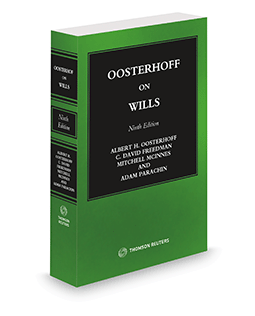
OOSTERHOFF ON WILLS, 9TH EDITION |
|
WEL congratulates Professor Albert Oosterhoff on the significant achievement of his 9th edition, Oosterhoff on Wills, which has now been published by Thomson Reuters.
|
|
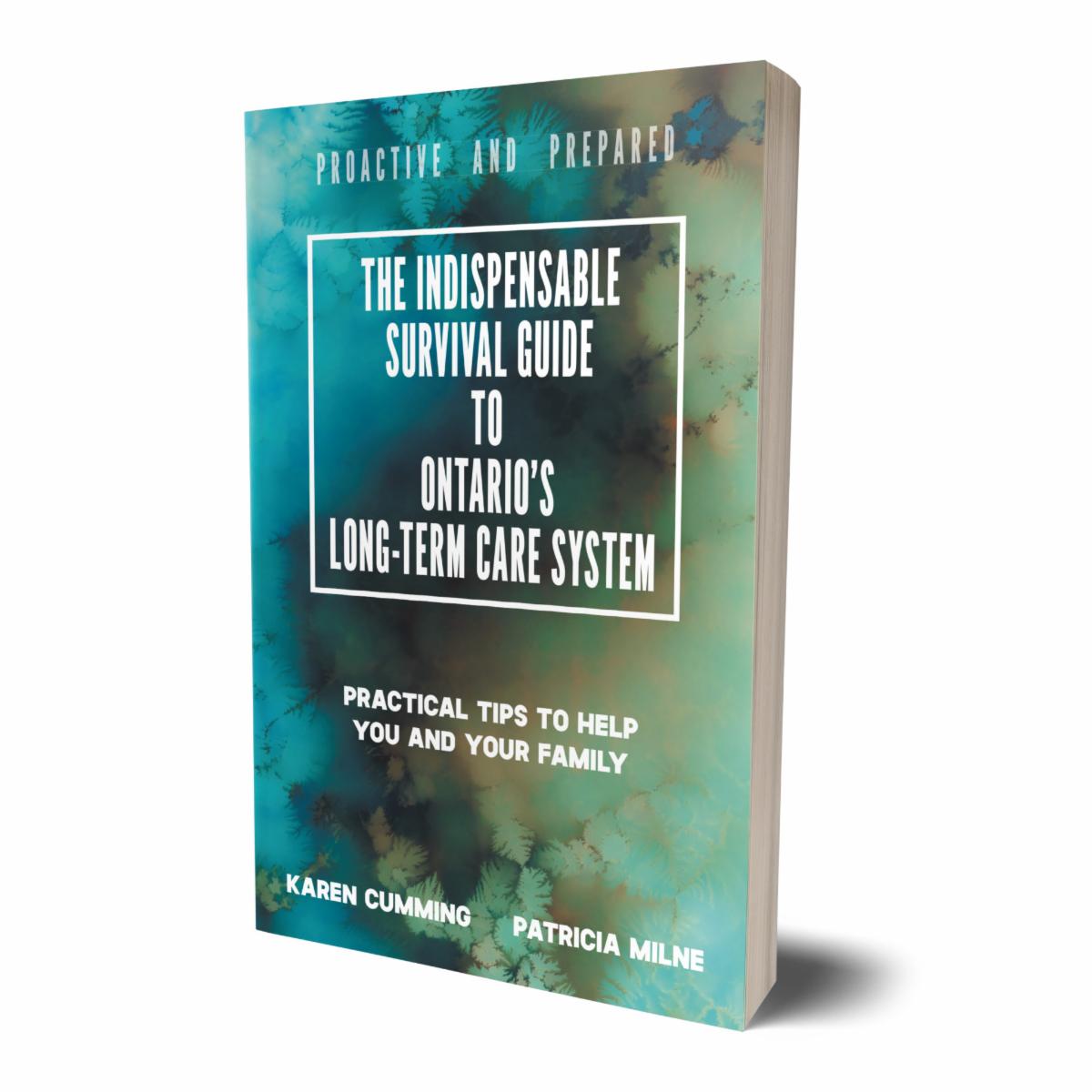
THE INDISPENSABLE SURVIVAL GUIDE TO ONTARIO’S LONG-TERM CARE SYSTEM
|
|
THE INDISPENSABLE SURVIVAL GUIDE TO ONTARIO’S LONG-TERM CARE SYSTEM: Practical Tips To Help You And Your Family, A Book By, Karen Cumming & Patricia Milne
First, a message to the authors:
Thank you, Karen, for kindly providing this wonderful resource co-authored by you and your sister, Patricia. I read your book on my summer holiday. Your mother Vera (aka the “Queen”) was so very lucky to have both of you to help navigate her way through the Ontario Long-Term Care System.
Now, to our Newsletter readers:
I want to thank these ladies for sharing their journey and creating a great, to-the-point resource, replete with some great literary quotes! I especially liked the Preface quote, “But it is a long way to the Emerald City…..you must pass through rough and dangerous places before you reach the end of your journey.”-L. Frank Baum, The Wonderful Wizard of Oz. I like the quote because it is hopeful and given the recent movement to better the neglected long-term care system (you may recall my review of Moira Walsh’s Happily Ever Older: Revolutionary Approaches to Long-Term Care in our April Newsletter) and the efforts being made in this important initiative. I sincerely hope there is an Emerald City at the end of it!
This great little tool has survival tips, links to helpful sites, and notable guides to long-term care, definitions of short form references like LHIN, OHTs, as well as important information about homes regulated by the Ministry of Long-Term Care together with statistics on how many homes there are in Ontario, how many beds, cost and details associated with need. There are so many helpful tips and listings of important resources.
Thank you for bringing this very helpful tool to my attention and on behalf of all those who could benefit and will benefit from this treasure trove-well done!
|
|
(i) REMOVAL OF TRUSTEE FOR INAPPROPRIATE USE OF DISCRETION
|
|
By Albert H. Oosterhoff
Ghag v. Ghag[1] is another example of a trustee who was removed for the inappropriate use of his discretion. The late Sukhvinder ‘Sukie’ Ghag operated a pharmacy and owned all of the 100 Class ‘A’ common shares in the business. He was married to Charmaine ad the couple had four children, Brendon, Ashton, Cheyenne, and Shaylene. Sukie was diagnosed with brain cancer and so he established the Sukie Ghag Family Trust in 2017. The trust’s main asset was the 100 Class ‘A’ common shares. The trust named Charmaine and the four children as the beneficiaries, but did not give any of them priority. It appointed Brendan as the trustee and Charmaine as the substitute trustee. The trust gave wide discretionary powers to the trustee and allowed him to exercise these powers to the same extent as if he was the sole owner of the asset. However, the trustee had to exercise them ‘in what he deems to be the best interests, whether monetary or otherwise, of the Beneficiaries’. A majority of the beneficiaries could consent to a variation of the trust and the trustee was prohibited from deleting any original beneficiary.
Charmaine and the children other than Brendan learnt about various dealings by him with the trust property. He also refused to account to them, and demanded large sums of money from Charmaine. Among other things, in 2018 Brendan transferred the sums of $100,000 and $250,000 from the pharmacy and deposited them into the trust. The next day took $100,000 out of the trust for his own use. He also transferred the pharmacy shares out of the trust to himself and his siblings in such a way that he received 55 percent of the Class ‘A’ common shares, his siblings each received 15 percent of those shares, and Charmaine received none. Brendan followed this by allotting himself 150 Class ‘B’ common voting shares of the pharmacy, which carried the same voting rights as the Class ‘A’ shares.
In 2019 Charmaine and the other children brought an application to remove Brendan as trustee and to replace him with Charmaine, for an order requiring Brendan to account, and for an order declaring that the transfer of the Class ‘A’ shares out of the trust and the issuance of the Class ‘B’ shares to Brendan were null and void.
Brendan defended his actions by alleging that he was carrying out his father’s wishes to give him control and ownership of the pharmacy and to exclude Charmaine. He alleged that these wishes were contained in a document that supposedly contained a ‘secret trust’ that Sukie, Charmaine, and he signed in 2016 four days before Sukie’s brain surgery. Charmaine denied signing it and deposed that she did not see Sukie sign it.
During the hearing, Brendan conceded that the $100,000 withdrawal from the trust was for personal purposes. So he agreed that he should be removed as trustee and would account. However, he did not agree that the transfer of the pharmacy shares out of the trust and the issuance of the Class ‘B’ shares should be declared null and void.
The chambers judge granted the declaratory relief sought by the applicants. He did stated that he did not need to comment further ‘on the alleged secret trust, nor make any findings concerning its validity’. It seems that the agreement was not produced at first instance, but apparently Brendan files separate proceedings in 2020 seeking to enforce it.[2] Tammen J. considered it sufficient to find on the evidence that Brendan took extraneous considerations, namely the ‘secret trust’, into account in administering the trust, which conflicted with the terms of the Sukie Ghag Family Trust, and further that he did not act in the interests of the beneficiaries, and breached his fiduciary duty by withdrawing the $100,000 and by refusing to account.
Brendan appealed on the ground that the chambers judge erred in declaring the share transactions void, that he lacked jurisdiction to make that order and that he should have sent that issue to trial. This is surprising in view of the evidence, which seemed to show clearly that Brendan breached the discretion reposed in him by the trust.
The Court of Appeal dismissed the appeal, holding that under the Supreme Court Civil Rules the court has power to make binding declarations in a proceeding. The court may order a trial of a matter brought by way of application, but mere evidentiary conflicts alone will not require a trial. If the facts are undisputed, the chambers judge is entitled to make inferences of fact. Moreover, a self-serving affidavit is not sufficient of itself to create a triable issue.
With respect to the breach of trust itself, the court held that a trustee is obliged to follow the terms of the trust as found in the trust instrument. Thus it is inappropriate to consider evidence of surrounding facts and circumstances if the language of the trust is unambiguous. The court rarely interferes with a trustee’s exercise of discretion, but it can do so if:
(1) the decision is so unreasonable that no honest or fair-dealing trustee could have come to that decision;
(2) the trustees have taken into account considerations which are irrelevant to the discretionary decision they had to make; or
(3) the trustees, in having done nothing, cannot show that they gave proper consideration to whether they ought to exercise the discretion.[3]
The second of these criteria was relevant in this case, because Brendan relied on the alleged secret trust and he ought not to have done so, because its terms conflicted with the express language of the Sukie Ghag Family Trust.
The court went on to hold that the chambers judge did not misdirect himself on the proper approach to take when considering whether a matter should be referred to trial. Moreover, it was open to him to find that Brendan had exercised his discretion based on extraneous or improper considerations in a way that no honest and fair-dealing trustee may do.
---
[1] 2021 BCCA 106, 65 E.T.R. (4th) 177, affirming 2020 BCSC 2136.
[2] Ibid., 2020 BCSC 2136 at para. 4.
[3] Ibid. 2021 BCCA 106, para. 47, quoting from Waters’ Law of Trusts in Canada, 4th ed. (Toronto: Carswell, 2012), pp. 989-90.
|
|
(ii) COCHRANE V. COCHRANE: A FIDUCIARY’S BLURRED LINES
|
|
By Paul M. Murphy
Overview
Cochrane v. Cochrane[1], is a recent decision (July 29, 2021) of the Ontario Superior Court of Justice that involves issues relating to a passing of accounts application, including the treatment of trustee compensation. The Applicants, Bill and Carol Cochrane (the “Applicants”) applied for the first time to pass their accounts before the Honourable Justice Davies as it relates to the administration of Benjamin’s Trust (the “Trust”), a trust arranged for their son.[2]
Benjamin’s Trust
When the Respondent/Objector, Benjamin Cochrane (the “Objector”), was twelve years old, he was hit by a car while riding his bicycle and suffered a serious brain injury. His parents, the Applicants, brought an accident benefits claim against Co-operators General Insurance on behalf of Benjamin and settled for a lump sum of $475,000 in 2000 when Benjamin was sixteen years old. The money was invested in an annuity that will make monthly payments for Benjamin’s benefit for the rest of his life.[3]
After the Court approved the settlement, the Court ordered the annuity payments to be made to “William (Bill) and Carol Cochrane in trust for the irrevocable benefit of Benjamin Cochrane.”[4] The parties agreed that the trust received $418,675.25 between September 2000 and March 2017. In March 2017, the Applicants/parents had exhausted all funds in the trust. The Applicants proceeded to file an application to pass their accounts (the “Application.”)[5]
Roles and Duties as Trustees
As trustees of Benjamin’s trust, the Applicant’s were required to spend the trust money on goods and services for Benjamin’s benefit pursuant to the Trustee Act RSO 1990, c. T. 23, s. 23.1.[6]
The blending of the roles of parents, and trustees of Benjamin’s trust blurred the lines for these fiduciaries. The Honourable Justice Davies stated at paragraph 11:
Distinguishing between their role as Benjamin’s parents and their role as trustees probably feels like an artificial exercise to Bill and Carol. However, as trustees, Bill and Carol had specific and important legal obligations to Benjamin. They had a duty to act honestly in their administration of the trust. They had a duty to act with reasonable skill and prudence: Valard Construction Ltd. V. Bird Construction Co., 2018 SCC 8, [2018] 1 S.C.R. 224 at paras 16-18. They had a duty to keep proper records and accounts for the trust. While they did not have a duty to pass accounts, they did have a duty to be in a position at all times to prove they were administering the trust in an honest and prudent manner.[7] The issue for me to decide is whether Bill and Carol lived up to their obligations as trustees, not whether they lived up to their obligations as parents.[8]
The Court’s Role
The issue for the Court was whether or not the Applicants established that the disbursements from the trust, were incurred in accordance with the terms of the trust. The Court has the ability to disallow a disbursement if it was inappropriately charged, or is inconsistent with the terms of the trust. It is within the Court’s jurisdiction to Order that funds be paid back to the trust pursuant to the Trustee Act,[9] based on the inter alia, the decisions in Irwin v. Ruberry, 2015 ONSC 1821, at para. 43; and Steven Thompson Family Trust v. Thompson, 2012 ONSC 7138 at para. 36.[10]
The Evidence Before the Court
The Application involved trust accounts that span a time frame of seventeen years and contained nearly 2208 disbursements.[11] In this case, the Application involved the arduous task of analyzing all of the transactions that were made in accordance with the terms of the trust. Fourteen days of Court time were required to hear the evidence and assess the disbursements. A detailed assessment of the accounts was made through analyzing the expenses and disbursements of the Applicants relating to academic support, caregiving expenses, tuition, accommodation, car expenses, laundry, groceries, and gas, to name a few.
The record keeping from the Applicant was described as haphazard and not in accordance with proper standards. Many of the invoices were stated to have been created after the fact, and many were inaccurate, or misleading. The Court’s review took considerable time along with questionable expenses and questionable invoices which raised credibility issues.
Based on her findings, her Honour made the determination that the Applicants accounted for only $253,144.11 of the $418,675.25 thus failing to account for $165,531.14.
Trustee Compensation and Legal Fees
As for trustee compensation and legal fees, the Applicants claimed entitlement to $131,038.42 in trustee compensation ($33,214.66 for “receipts and disbursements” and $97,823.76 for “care and management.”) which is more than 30 percent of the amount received in trust during their administration.[12] The Court was not satisfied that the Applicants were entitled to any compensation for care and management in light of the fact that the settlement funds received by the trust were invested in an annuity in 2000. The Court referred to Irwin v Robinson,[13] in addressing the care and management expected, which is intended to compensate trustees for the time and effort they spent managing and investing the capital assets of the trust. In this case, the Applicants, as trustees, were stated to have simply withdrawn the monthly payments as needed. In the Court’s reasoned decision, the Applicants were disentitled to any care and management fee.[14]
With respect to the receipts and disbursements claimed by the Trustees totaling $33,214.66, the Court found that this figure was unreasonable given the fact that they failed to discharge their primary duty to account for trust funds they received for Benjamin. A modest amount of $15,000 was awarded to the Applicants in this regard.[15]
In addition, the Court did not approve the Applicants claims to legal fees as it relates to the Application. The Court found that the Applicants, as trustees failed to discharge their duty to keep proper accounts. The records were stated to have been not transparent and not straightforward. The Court relied on Zimmerman[16] and denied the Applicant’s their legal costs as it was deemed unfair to require Benjamin, as the beneficiary of the trust, to cover the trustees’ legal fees.[17]
Conclusion
Justice Davies heard evidence with respect to how the Applicants were loving and supporting parents to Benjamin, and that they have supported Benjamin throughout his life. No matter how close and loving a relationship can be, the nature of the relationship has no bearing on the standard required under law as prudent and responsible trustees.[18]
Justice Davies stated,
The issue at this trial is not whether Bill and Carol are or were good parents to Benjamin. The issue is whether they discharged their legal obligations as the trustees of Benjamin’s trust.[19]
Based on the findings of Justice Davies, this case again illustrates the importance and need for trustees to keep good records. The decision also focusses on the importance of separating trust business from family expenses.
Lawyers representing trustees or fiduciaries should also be diligent when providing advice to clients with respect to the duties and the standards required under law.
In the event the parties have failed to reach an agreement with respect to costs, it will be interesting to see how the Court will treat this issue when the decision is released.
---
[1] Cochrane v. Cochrane 2021 CarswellOnt 11132, 2021 ONSC 5228.
[6] Trustees Act RSO 1990, c. T. 23.
[7] Zimmerman v McMichael Estate, 2010 ONSC 2947, at para 31; Class v. Smith, 2018 ONSC 623, at
para. 49; Tarantino v. Galvano, 2017 ONSC 3535, at para. 47; Wall v. Shaw, 2018 ONCA 929, at
para. 23.
[8] Cochrane v. Cochrane 2021 CarswellOnt 11132, 2021 ONSC 5228, para 12.
[9] Trustee Act RSO 1990, c. T. 23, s. 23.1(2).
[10] Cochrane v. Cochrane 2021 CarswellOnt 11132, 2021 ONSC 5228, para 6.
[13] Irwin v Robinson, 2007 CanLII 41900 (Ont. S.C.) at para 69.
[14] Cochrane v. Cochrane 2021 CarswellOnt 11132, 2021 ONSC 5228, para 268.
[16] Zimmerman v McMichael Estate, 2010 ONSC 2947 at para 125
|
|
Toronto Police
Elder Abuse Investigator’s Course
Civil & Criminal Remedies
September 3, 2021
Speakers: Matthew Rendely and Bryan Gilmartin
LSO Administration of Estates
Limitation Periods and Advising Executors
September 23, 2021
Speaker: Daniel Paperny
CBA Elder Law Symposium
Panel Discussion: Ensuring Your Power of Attorney is recognized Across Borders
September 24, 2021
Moderator: Kimberly Whaley
GTAAN/GTAFN
October 22, 2021
Trusts and Estates Webinar
Speakers: Kimberly Whaley, Daniel Paperny, Matthew Rendely, Albert Oosterhoff, Paul Murphy, Mark Handelman, John Poyser, Laroux Peoples, Mark McCabe and Dr. Ken Shulman
International Federation of Ageing – 15th Global Conference on Ageing November 9-12, 2021
Speakers: Daniel Paperny and Matthew Rendely
Ontario Police
Elder Abuse Investigations 2021
November 16, 2021
Speakers: Bryan Gilmartin and Paul Murphy
Canadian Lawyer Co-Branded Webinar
November 24, 2021
Speakers: Kimberly Whaley and Ian Hull
Estate Planning and Litigation Forum
April 10-12, 2022
LESA 53rd Annual Refresher: Managing Wills & Estates Matters
April 30-May 2, 2022
Decisional Capacity: A Wills & Estates Context
Speaker: Kimberly Whaley and John Poyser
|
|
Check out our recent Feature Series which are posted on our Blog:
|
|
VIII. IN CASE YOU MISSED IT - RECENT BLOG POSTS |
|
Do you follow us on social media? Do you subscribe to our blog? We invite our subscribers to read our blog on-line or via a feed reader using our blog's RSS feed and to follow us on social media.
Newsletter Archive
WEL Blog
Online Connections
Sign Up for Our Newsletter
WEL Directory
|
|
|
|
|
|
|