WEL NEWSLETTER August 2025, Vol. 15, No. 5 | | |
Hello,
Well, I’ll start by saying, I thought summer would last longer somehow if I were working remotely from a lake in a more serene, less hectic habitat, but no, instead, it seemed to go by even quicker! Why is it that when you are older, and busier, that time flies by so rapidly? When I was a kid, I remember for example, school summer holidays seemed like an eternity, passing from one grade to the next, felt like it lasted forever, and I never thought I would ever reach the age of 18?!
So, it’s the end of August as we know it, and though you know I love fall, I am sad to see the summer days dwindling.
I will share with you, some of my reflections on working from the north: I was struck by all the people this summer that used Sammi’s Library (her book box) and who dropped by to see just who Sam was to have such a flourishing little library. Such a fun initiative and it’s a going concern on the Lake!
| | |
I was struck by the ability to see the change of seasons so subtly every day, as opposed to just on weekends. It was a hot one this summer, with next to no rain, obviously, causing all sorts of tragic events. I am not such a huge fan of the extreme heat, but I will take it over winter any day and not complain-not even about the rain!
I started in on my annual iPhoto book: Faces & Places 2024/2025, such a fun hobby and I hope to finish it, as well as a travel book, before the month is through. Very behind on this initiative!
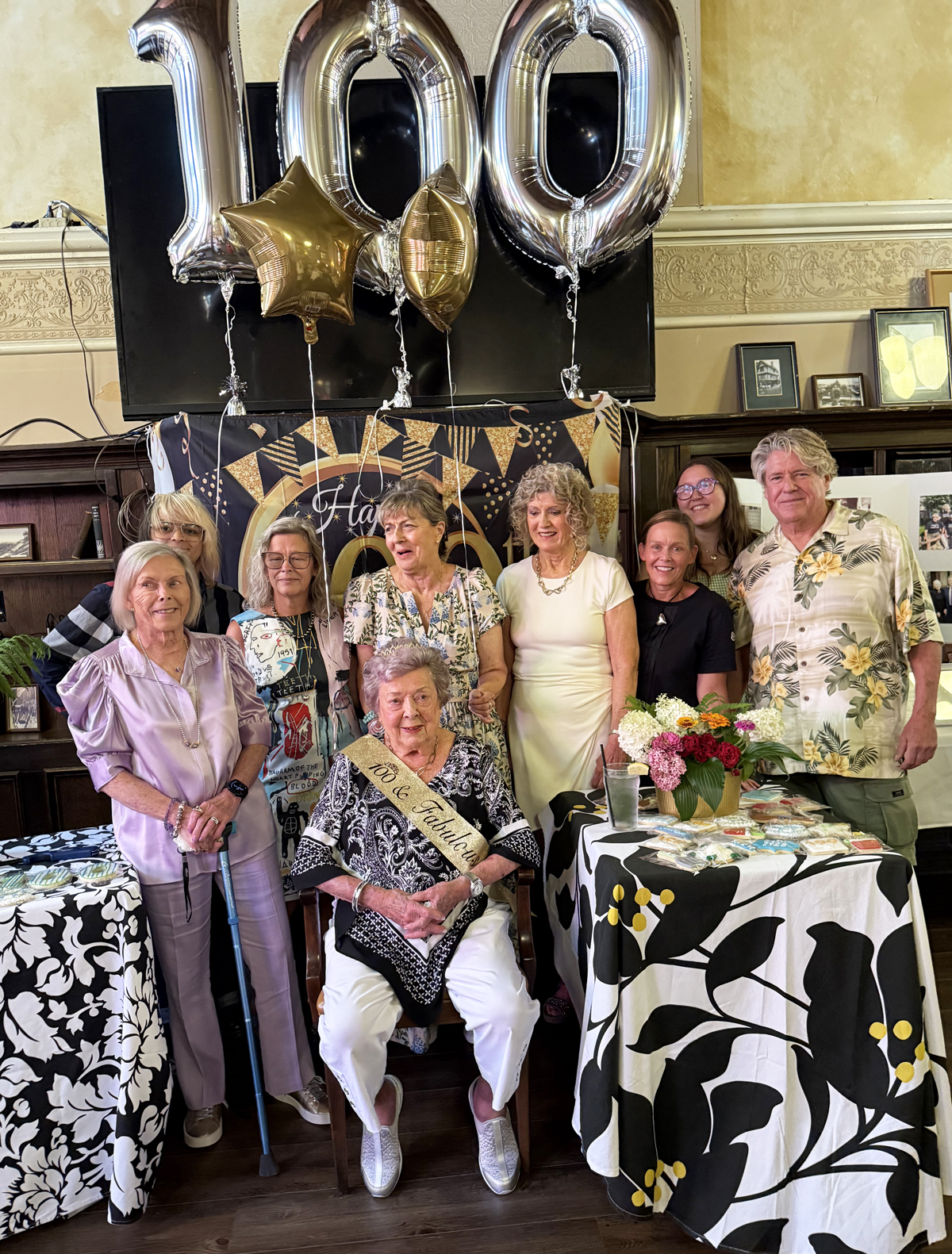
I just went to my great Aunt’s 100th birthday party in Hamilton, what a fun celebration! For real, this lady might be 100 and with all the lived experiences that comes with that, but she is living it well, healthy, thriving and happy! Happy Birthday Mildred!
| | Charlie turned into a real water dog this summer. The heat might account for this, but whatever the reason, she was living her best life on the water, often jumping on the lily pad mat and swimming. I am certain she will be depressed when she leaves the freedom of this summer’s adventure. | | |
Soon, September and all the usual fall commitments will be upon us. The routine of the 3rd quarter, already the presentations are accruing and all the opportunities to engage with our peers and clients will soon fill our days with renewed focus through Christmas.
I did not get through my summer reads, but I attribute that to having done so much summer entertaining! I actually never had a moment to myself to enjoy the solace of a book to completion. Soon I will have the chance, I hope, and report on the two I started, Cher: Part One, Gwyneth Paltrow, Gwyneth: The Biography.
Finally, I am about to take an Arbitration Course from September through April and want to reflect a bit on mediation and my mediation practice. I had the good fortune of working remotely from a lake for much of the summer, and as such, conducted my mediations virtually in July and August. What I want to share with our readers is that since 2020, I have been routinely conducting mediations virtually. I had always been a proponent of in-person mediations when having my own client matters mediated. I however, have come to realize in the past 5 years, that these matters have, in my view, a much greater likelihood of success when conducted virtually. In circumstances where the parties are mostly estranged, or aggrieved participants as amongst each other, and do not want to get in a room, a building, or indeed the same space as one another, and taboo, have to try to behave, and mask anxiety, and, inevitably succumb to deep seeded feelings, emotions, and demons, virtual mediations provide a degree of removal from these circumstances which I have come to see as a net positive.
The safety of a virtual mediation, the security it affords in such circumstances, enhances the mindset of settlement. There is no fresh wound being inflicted. The stress and discomfort of being amongst legal professionals is reduced. The comfort of staying in one’s home and having access to usual and familiar facilities and food etc. helps the mediation atmosphere and in easing the minds of participants. I am not suggesting that every mediation is appropriate for virtual mediation however, I would say that most are, and it’s a great accommodation for those struggling with the hurdles of in person events.
As ever, I am grateful for mediation retainers. I enjoy mediation. I thank you for putting your trust in me. I prepare seriously and thoroughly for these because I know what an effort it has taken to get everyone to the same spot, including the cost and emotional turmoil that came along with it. When I took the Harvard Mediation course more recently, having mediated for in or about 26 years and having had formal mediation training many years ago, I was able to sit back and contemplate its structure, the interactions, its benefits, and the limitations. Distrust drives so many of the disputes. Levelling the playing field with venue and process often presents the perfect climate for resolution. Experimenting with technique has provided learning and growth in approach. Developing tools in the right circumstances, for instance, in the use of all counsel meets during a mediation, or entire group sessions throughout the process and refereeing the rules associated with same, can yield great results.
Please enjoy the rest of your summer and I will be back at you next month!
Until then,
Kim
| | 1. UPCOMING WEBINAR: ASSESSING CAPACITY: INSIGHTS AND ANALYSIS FROM MEDICAL & LEGAL EXPERTS | |
On Wednesday September 10, 2025, Canadian Lawyer, Hull & Hull LLP, and WEL Partners, welcomes you to join a panel of globally recognized medical doctors, international experts, academics, and senior capacity lawyers for an in-depth discussion on capacity assessments. In this live webinar, you’ll gain practical tools and expert guidance to confidently navigate both contemporary and retrospective assessments - ensuring you can best serve your clients when capacity is in question.
For more information and to register for this event, please click the following link:
https://us02web.zoom.us/webinar/register/6917545790938/WN_y98sDLyTQtWAn3EDNs4cWQ#/registration
| | 2. THE ROLE OF THE MEDICAL EXPERT IN ESTATE LITIGATION: CALLING ALL MEDICAL PROFESSIONALS….. | |
From September 11 to 12, 2025, Kimberly Whaley and Bryan Gilmartin will be joining esteemed clinician experts and estate litigators for a two (2) day course that will provide a comprehensive understanding of the responsibilities of physicians acting as experts in contested will and estate court proceedings. This course will focus on the introduction to estate litigation and capacity law, the approach to retrospective and contemporaneous assessment of testamentary and related capacities (e.g., Power of Attorney), as well as crafting an opinion and preparing medicolegal reports. The course has been developed by doctors, for doctors, who are wishing to become medical experts.
For more information, or to register for the event, please see the following link: https://sunnybrook.ca/calendar/event.asp?e=1848
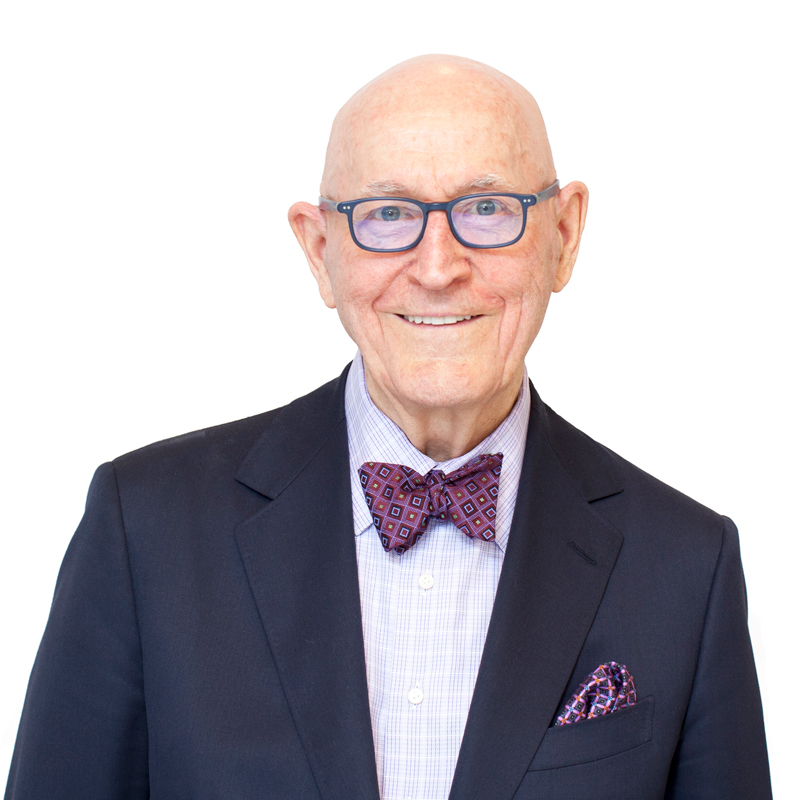
| | II. WEL SHOUT OUTS & CONGRATULATIONS | | SHOUT OUT TO BARRY CORBIN | | I want to personally congratulate Barry Corbin on his (almost) retirement. Barry has been the definition of Mentor and all-round epitome of a patient, and generous colleague, who ALWAYS helps. Whatever the issue, of course estates and trusts related, Barry has always listened and helped talk through a complex situation. Barry and I first met at Borden & Elliot in 1998. He has been in practice for more than 43 years. I asked Barry what he was doing in his retirement days that would take him away from all of us, well, at the very least, me. He told me, he and his wife, will be biking more, and travelling to some ambitious and adventurous destinations, immersing himself into his hobbies, grandchildren, charitable endeavours and more! I feel fortunate to have had Barry in my orbit. I am grateful for his wisdom and his friendship. I know he will be more than busy in his retirement days and would not be surprised if he still did an opinion or two!! Well done Barry on an accomplished and extraordinary career. Please keep in touch occasionally, we can’t go cold turkey! | | RBC WEALTH MANAGEMENT: WOMEN’S BRAIN HEALTH INITIATIVE | | |
WEL Partners warmly congratulates Leanne Kaufman, President and CEO of RBC Wealth Management, Royal Trust, on her appointment to the Women's Brain Health Initiative’s (the “WBHI”) Board of Directors. WEL Partners recognize Leanne’s commitment in protecting the brain health of women, caregivers, and families through this Canadian and U.S. charitable foundation. We extend our sincerest congratulations on this appointment and her ongoing support for aging Canadians and their families.
For information on the Initiative, please see the following link: https://womensbrainhealth.org/
| | STEP AUSTRALIA: EXCELLENCE AWARDS | | |
WEL Partners wishes to extend our warmest congratulations to the winners of the 2025 STEP Australia Excellence Awards! A huge congratulations to Esterina Azzi TEP for winning the Excellence Award and to Angela Cornford-Scott TEP for being awarded the Masters Award. These awards recognise exceptional and outstanding Australian TEPs and celebrate excellence among solicitors, lawyers, accountants, barristers, bankers, trust managers and financial advisors. Congratulations again, Esterina Azzi TEP and Angela Cornford-Scott TEP!
For more information on the awards, please see the following link: https://stepaustralia.com/step-excellence-award/?doing_wp_cron=1755538812.5121610164642333984375
| | III. MATURE MATTERS BLOG SERIES | | |
By Emily Caza
As Ontario’s population ages, protecting the health, dignity, and rights of older adults, especially those living in long-term care and retirement homes, has become a matter of urgent public concern.
This blog series will explore existing and emerging legislation and jurisprudence aimed at protecting those amongst society’s most vulnerable, older adults in residential care. I will analyze our current legal safeguards, proposed reforms, and the evolving landscape of elder care law in Ontario. Join me as I learn how our laws strengthen and support accessible, equitable, and high-quality home and community care services in Ontario.
PART 2: WHAT ONTARIO’S SENIORS NEED TO KNOW ABOUT CARE HOMES
In the realm of elder law, safeguarding the rights of older adults, particularly those living in care homes, is a matter of growing legal and social concern. Seniors in care homes are often among the most vulnerable members of our communities, relying on landlords not only for housing, but also for access to essential services such as meals and personal care services.
When these services come at a cost, and when those costs go up, the law must strike a careful balance between the rights of the landlord to adjust fees and the tenant’s right to transparency, stability, and fair treatment.
This post explores how the Residential Tenancies Act, 2006 (“RTA”) governs increases to charges for care services and meals in care homes, and how tenants, often elderly and potentially facing cognitive or physical impairments, can be protected from abrupt changes in their living situation.
Notice Requirements for Increasing Charges
Under Section 150 of the RTA, landlords of care homes must provide at least 90 days' written notice before increasing charges for care services or meals. This notice must be given using the N3 Form approved by the Landlord and Tenant Board (the “LTB”).
But there’s an exception: if the tenant and landlord mutually agree to add a new service or increase an existing one (e.g., more hours of therapeutic care), the 90-day notice is not required.
No Legal Limit on Increase Amount or Frequency
One of the most concerning features of Section 150 from an elder protection standpoint is that there are no restrictions on:
-
How much a landlord can increase charges for meals or care services;
-
How often these charges can be increased.
Unlike rent, which is subject to guideline limits and annual timing, these essential service charges can be adjusted with far more flexibility. The N3 Instructions Form and case law (EAT-67878-17 (Re), 2018 CanLII 42899) confirm this: the increases are not limited in amount or timing.
This legal gap makes it even more important for seniors and their advocates to be vigilant when it comes to these increases.
Care Charges Must Be Kept Separate from Rent
Landlords are strictly prohibited from bundling rent together with care service or meal charges. These amounts must be listed separately on the N3 Form.
Why? Because care services and meals are excluded from the legal definition of “rent” under section 2(1) of the RTA. Including them as part of rent could be seen as a backdoor way to circumvent Ontario’s rent control laws, which provide important protections for tenants.
The Care Home Information Package: A Prerequisite to Any Increase
Before issuing an N3 notice to increase charges, a landlord must have already provided the tenant with a Care Home Information Package (CHIP).
This package gives tenants vital details about the services they are entitled to receive and the costs associated with their care. The law is clear: a landlord cannot raise charges if this package was never provided when the tenancy began.
No Requirement to Explain the Increase
Unlike some other LTB forms, the N3 does not require landlords to justify or explain why charges are increasing. This is particularly concerning in the elder law context, where transparency is crucial.
In EAT-67878-17 (Re), a landlord increased care charges and simply stated the rise was due to “increasing operating costs.” No further detail was provided, and the LTB accepted the notice as valid. There’s currently no obligation to provide a detailed breakdown or rationale.
What If a Landlord Acts Prematurely or Improperly?
When landlords fail to follow proper procedures—such as trying to act on an increase before it takes effect, or entering a unit to remove belongings—tenants have powerful tools under the RTA to assert their rights.
A T2 Application About Tenant Rights may be filed in cases where the landlord has:
- Illegally entered the unit;
- Interfered with the tenant’s reasonable enjoyment of the home;
- Withheld or disrupted care services or meals.
This kind of interference is not only distressing, but potentially unlawful, particularly for seniors who may be physically or mentally unable to advocate for themselves.
Remedies Available to Vulnerable Tenants
The T2 Application allows the Landlord and Tenant Board to order a wide range of remedies, including:
- Compensation for moving or storage costs;
- Return of the tenant’s possessions;
- Rent abatement;
- Orders requiring the landlord to stop unlawful activity;
- Reinstatement of tenancy, if the tenant has been improperly displaced.
These remedies can play a critical role in restoring stability and protecting the dignity of elderly tenants who are at risk of being exploited or displaced without due process.
Proposed Changes: Bill 23, Protecting Seniors' Rights in Care Homes Act, 2025
In response to the growing number of seniors opting for retirement residences, Ontario legislators have introduced Bill 23, titled "Protecting Seniors’ Rights in Care Homes Act, 2025." This Bill aims to amend the RTA, and the Retirement Homes Act, 2010, including placing restrictions on fee increases, mandating that a charge can be increased only once every 12 months and must align with broader RTA stipulations, including rent increase guidelines.
Final Thoughts: Protecting Seniors Through Legal Awareness
Increases to charges for meals and care services in Ontario’s care homes may seem like a routine administrative step, but for elderly tenants, these changes can be deeply disruptive—especially when they are not handled transparently or lawfully.
Ontario’s elder law framework depends on tenants, family members, and legal advocates knowing what the RTA does, and doesn’t require. While landlords have broad discretion to increase care-related fees, they are still bound by clear procedural obligations, and tenants have legal avenues to respond to abuses.
By understanding Section 150 of the RTA and the remedies available through a T2 application, we can better ensure that the law protects not just tenancy rights, but the well-being and autonomy of Ontario’s seniors.
| | (i) NO EXPRESS OR RESULTING TRUST | | |
By Albert H. Oosterhoff
1. Introduction
The recent case, May v Alsousi et al[1] raises questions about the requirements for creating an express inter vivos trust and for the existence of a purchase money resulting trust. It also raises the interesting issue of the ‘clean hands’ doctrine.
2. Facts
Mr. Qasem Mahmud signed a declaration of trust on 14 September 1988, which declared that he ‘will be holding in my name’ an identified condominium unit (the ‘Property’) it Nepean, Ontario, ‘on behalf of the Islamic School of Ottawa’ (the ‘School’). He did not own the Property on that date but purchased it two weeks later. The deed indicates that he held the property ‘in trust’ but without any reference to the beneficiary. When he purchased the property, Mr. Mahmud did not sign a new declaration of trust, but he did take out a mortgage. He renewed it in 1993, and it was discharged in 2007. In 2007 the Islamic School of Ottawa changed its name to the Arabic and Islamic Education Foundation of Ottawa (the ‘Foundation’). Mr. Mahmud dies intestate in June 2017. Otessa May was appointed the Administrator of the estate and brought this Application to determine whether Mr. Mahmud held title to the property for the Foundation. The Foundation and two individuals were the respondents. The Respondents occupied the property since Mr. Mahmud’s death.
3. Analysis and Judgment
3.1 Issues
Justice M. Flaherty noted that the Application raises three issues:
-
Whether there is an express inter vivos trust in favour of the Foundation.
- Whether there is a purchase money resulting trust in favour of the Foundation.
- Whether the respondents were precluded from relying on equitable remedies because they lacked clean hands.
3.2 Express Inter Vivos Trust
Her Honour described the four requirements of an express trust by reference to Rubner v Bistricer:[2]
- the parties must have capacity;
- three certainties must be satisfied, namely. intention to create a trust, certainty of subject matter, and certainty of objects;
- the trust must be constituted; and
- the prescribed formalities must be satisfied.
Her Honour held first, again by reference to Bistricer,[3] that there was no trust because when Mr. Mahmud signed the declaration of trust, he did not own the Property and it is impossible to settle future property, i.e., property that the settlor does not yet own, in a trust.
She held further that since the subject matter of the trust was land, section 9 of the Statute of Frauds[4] applies. It requires that all declarations of trusts of land must be proved by a writing signed by the party entitled by law to declare the trust. The documents submitted by the Respondents merely identified Mr. Mahmud as holding the Property in trust and did not satisfy section 9.
Moreover, the documents failed to identify the object of the trust, that is, the Foundation. so that the requirement of certainty of objects was not satisfied. And while the documents often refer to the Property, they do not clearly identify it as the subject of the trust.
Accordingly, her Honour found that there was no valid inter vivos trust because the prescribed formalities were not satisfied.
3.3 Purchase Money Resulting Trust
The law is clear that when a person pays money to contribute to the purchase price of property but does not take title to the property, equity presumes that the person who advanced the funds has a beneficial interest in the property in proportion to the contribution under a resulting trust.[5] The presumption can be rebutted if it is shown on a balance of probabilities that the person making the contribution intended at the time the funds were advanced to make a gift to the person who takes the title, the time in italicised clause being of the essence.[6]
Justice Flaherty noted that the Respondents failed to establish that they contributed to the purchase price when it was acquired, the italicised words being of the essence. The Respondents submitted a number of documents, such as bank statements which indicated that once in 1991 and between 1995 and 2007 the respondents paid amounts equal to the monthly mortgage payments. However, those payments cannot give rise to a purchase money resulting trust. Only payments made toward the purchase price as the time of the purchase can do so. Thus, while the Respondents might perhaps be able to raise other claims with respect to those payments, they did not raise a presumption of resulting trust.
3.4 Clean Hands Doctrine
If a party is guilty of misconduct or wrongdoing, a court of equity may conclude that the party does not come to court with ‘clean hands’ and deny it equitable remedies otherwise available to it.
Since Justice Flaherty had found against the Respondents, it was not really necessary to consider this issue, but she did so briefly.
The Applicant alleged that the Respondents failed to make complete financial disclosure because they did not provide complete bank statements, However, Justice Flaherty found that they provided all financial information available to them. Thus, their failure to supply complete bank statements did not mean that they came to court with unclean hands. The applicant also argued that the action of one of the individual Respondents who changed the locks on the Property because he believed that the Applicant intended to sell the Property was objectionable behaviour. Her Honour found, however that in the circumstances this action was not sufficient to deny equitable remedies to the Respondents if they had established a beneficial interest in the Property.
---
[1] 2025 ONSC 795.
[2] 2019 ONCA 733, para 49.
[3] Ibid., para 58.
[4] RSO 1990, c S.19.
[5] Nishi v Rascal Trucking Ltd, 2013 SCC 33, [2-13] 2 SCR 438, para 1.
[6] Andrade v Andrade, 2016 ONCA 368, para 63.
| (ii) PERFECTED INTER VIVOS GIFT? | | |
By Albert H. Oosterhoff
1. Introduction
We all know that for an inter vivos gift to be valid, the donee must prove three criteria: the donor’s intention to make the gift, delivery of the subject matter of the gift, and acceptance by the donee.[1] If one of these criteria is not satisfied, the gift fails. But there is an old rule that can sometimes save an intended gift, namely, the rule in Strong v Bird.[2] In its initial form the rule says that if a creditor formed the intention to forgive a debt owed by a debtor, continued to hold that intention until his death, and named the debtor as his executor, the debt is released. The rule applies even if the debtor is named as one of two or more executors,[3] and it has been extended beyond the forgiveness of a debt to an intended gift of personal property such as bonds.[4] It has even been extended to the case of the debtor being appointed the administrator of the donor/creditor’s estate.[5] But this has been rightly criticized. Applying the rule to an executor is one thing; he was chosen by the creditor. And therefore, there is some reason to apply the rule in that case. Extending it to an administrator is quite another matter; she was not chosen by the creditor but was appointed to that office by the court when the creditor failed to appoint an executor, so there is little reason to apply the rule in that case.
The rule was raised also in Hugginson v Hugginson.[6]
2. Facts
The testator, Glenn Poole (‘Glenn’). died in December 2022. His wife Evelyn predeceased him in August 2022, but Glenn’s two stepdaughters, the applicant Heather Hugginson (‘Heather’) and the respondent Sandra Hugginson (‘Sandra’), both daughters of Evelyn, survived him. Glenn’s will, made in 2013, appointed Sandra his executor as well as his attorney for property and personal care. Glenn’s investment advisor, Tracey Greenwood (‘Tracey’) of IG Wealth Management (‘IG Wealth’), knew that Sandra was Glenn’s executor and attorney.
Early in September 2022, Glenn asked Sandra to arrange a meeting with Tracey, which she did. Sandra alleges that this was because Glenn wanted to give her $400,000. No specific instructions were discussed between Glenn and Tracey in the meeting but Tracey informed Sandra that she would need to meet again with Glenn to get his instructions for the gift.
Tracey emailed Sandra telling her that Glenn should speak to a lawyer about the gift. That meeting occurred early in November 2022. The lawyer drafted a letter outlining Glenn’s intentions. It was addressed to Sandra but contained no specific instructions to make a gift and it did not mention a specific amount.
Tracey then emailed Sandra that she needed to meet again with Glenn to get his instructions for the gift, but she was unable to meet with him before he died. No transfer of money from Glenn to Sandra was made before he died. Sandra admitted that she did not know for certain what Glenn’s intentions were regarding the gift.
In July 2023 IG wealth wrote Sandra to tell her that it would arrange the transfer of $400,000 to her after she signed and returned a full and final release. Sandra did so and deposited the money into her personal investment account.
Heather brought an application for a declaration that the alleged $400,000 inter vivos gift was invalid, and for an order that it be returned to the Estate.
The application raised three issues:
-
Whether the gift of $400,000 was a valid inter vivos gift?
- If it is not, whether it was perfected when Sandra became executor?
- What weight should be given to Sandra’s evidence regarding IG Wealth’s investigation and about Glenn’s intention regarding the gift?
3. Analysis and Judgment
3.1 Inter Vivos Gift
Considering the criteria mentioned above, it was clear that Sandra failed to prove that there was a valid gift. First, there was no clear evidence of Glenn’s intention to make a gift or of the amount from Tracey’s notes, from the gift letter drafted by the lawyer, or from IG Wealth’s letter. Second, there was no physical transfer of the money to Sandra while Glenn was alive. Nor was there constructive delivery, since Glenn did not do everything in his power to give up all control over the gift.[7] And therefore the incomplete gift was nothing more than an intention to give.[8]
3.2 Possible Perfection of the Gift
The second issue concerned the Rule in Strong v Bird, outlined above. The court held that this rule could not be applied for two reasons. First, Sandra had to prove Glenn’s continuing intention to give her the money, but she could not do so because she could not even prove a specific intention to make the gift. Second, the Rule has been applied to cases in which the donor exhibits a continuing intention to give a specific piece of personal property until he dies and appoints the donee his executor. But it has not been extended to a gift of money.[9]
3.3 IG Wealth File
The court concluded that Sandra’s evidence regarding IG Wealth’s investigation and Glenn’s intention regarding the gift should receive limited weight. Section 13 of the Evidence Act[10] requires that in an action by or against the estate of a deceased person, a living person’s evidence must be corroborated by other independent material evidence. No one within IG Wealth provided such evidence. Nor could Tracey’s notes be admitted as a business record under section 35 of the Act, because they consisted only of opinions or impressions.
---
[1] McNamee v McNamee, 2011 ONCA 533, para 43.
[2] (1874), LR 18 Eq 315.
[3] Re Harvey (1932) 41 OWN 420.
[4] Re Stewart, [1908] 2 Ch 251.
[5] Re James, [1935] Ch 449.
[6] 2025 ONSC 1797. For a detailed discussion of the rule, see Oosterhoff on Trusts, 10th ed by Albert H Oosterhoff, Robert Chambers, and Mitchell McInnes (Toronto: Thomson Reuters, 2024) §4.27.
[7] Citing Teixera v Estate of Markgraf et al, 2017 ONCA 810, paras 42-43.
[8] Citing Kavanagh v Lajoie, 2014 ONCA 187, para 13.
[9] Citing Morton v Brighouse, [1927] SCR 118, 1927 CarswellBC 99.
[10] RSO 1990, c E.23.
| | (iii) MUSCAT v. MUSCAT ESTATE, 2025 ONCA 518 (CANLII): COURT OF APPEAL FOR ONTARIO UPHOLDS JUDGEMENT REMOVING ESTATE TRUSTEES, AND CORRESPONDING COSTS ORDER | | |
By Joanna Weiss
In the Court of Appeal for Ontario’s (the “Court”) recent decision, Muscat v. Muscat Estate, the Court dismissed the appeal brought by the Appellants Ilinka Armstrong (“Ms. Armstrong”) and Dean Tully (“Mr. Tully”, collectively, the “Appellants”) in respect of the Honourable Madam Justice ten Cate’s (the “Application Judge”) Judgement and related costs Order wherein they were removed as Estate Trustees of Dan Muscat’s (the “Deceased”) Estate (the “Estate”), and were ordered to pay the Respondent, Alexander Muscat’s (the “Respondent”) costs personally, on a partial indemnity basis in the amount of $56,693.01.[1]
Background
The Respondent (the son of the Deceased), was 16 years old at the time of his father’s passing, and the sole residual beneficiary of the Estate. [2]
The terms of the Deceased’s Last Will and Testament appointed the Appellants as Estate Trustees and required that the Respondent’s share of the Estate be held in trust until he reached the age of 25.[3]
The Estate consisted primarily of a jewelry business, the building in which it was located (collectively, the “Business”), and a property located in Haliburton, Ontario which was not at issue in the underlying litigation.[4]
The Appellants had sought and obtained valuations of the Business which was valued at $515,000. In or around February of 2023, Ms. Armstrong’s romantic partner, Steve Malizia (“Mr. Malizia”), offered to purchase the Business for $400,000.[5] Concerns were raised by the Respondent’s legal counsel regarding Ms. Armstrong’s apparent conflict of interest, and they requested that she resign as Estate Trustee.[6]
Through counsel for the Estate, Ms. Armstrong refused to do so, citing that whether she and Mr. Malizia were in a relationship was irrelevant. The Respondent was given 10-days to accept Mr. Malizia’s “final offer” to purchase the Business, and counsel to the Estate recommended that he accept the offer.[7]
While the Respondent, through his counsel, requested additional time to consider the above, this request was denied. The Respondent then commenced an application seeking the removal of the Appellants as Estate Trustees.[8]
Notably, when the Respondent sought and obtained his own valuations of the Business, it was estimated that it could be worth as much as $911,550.[9]
The Application Judge’s Findings
Citing that the test to remove Estate Trustees is high, and that the courts do not lightly interfere with a testator’s choice in this regard,[10] the Application Judge found that it was necessary to remove the Appellants as Estate Trustees to ensure the proper management of the trust, and to protect the Respondent’s interests.[11]
In finding that the Appellants had breached their fiduciary duty to the Estate and the Respondent, the Application Judge noted the following:
i. Ms. Armstrong was in a conflict of interest because she “stood to benefit from the sale of the Business to her romantic partner;”
ii. Neither she, nor Mr. Tully disclosed or acknowledged the conflict of interest; and
iii. The Appellants “failed to undertake any due diligence on Mr. Malizia’s offer,” or make any “effort to ascertain the then fair market value of the Business.”[12]
The Court’s Reasons for Decision
In dismissing the appeal, the Court determined that the Application Judge had correctly found that Ms. Armstrong was in a conflict of interest, and had incorrectly maintained
that any romantic relationship she might have with Mr. Malizia was irrelevant to her position as Estate trustee. Ms. Armstrong’s claim that she was not in a conflict because the respondent was aware of her relationship with Mr. Malizia is unfounded. Regardless of the respondent’s knowledge of the relationship between Ms. Armstrong and Mr. Malizia, the trustees never disclosed the existence of the relationship to the respondent. A fiduciary’s breach of duty cannot be excused by the beneficiary becoming aware of the breach from other sources and as occurred here, requesting the trustee’s resignation as a result.[13]
The Court rejected the Appellants’ claim that they had no duty to assess the reasonableness of Mr. Malizia’s offer and were entitled to merely convey it to the respondent for his approval. A trustee’s duty of loyalty requires that they manage trust assets with honesty and integrity and in the best interests of the beneficiaries. A trustee cannot abdicate that duty and responsibility by purporting to require the beneficiary to approve an offer that places the trustee’s interests ahead of those of the beneficiary. It is also telling that the appellants did not merely passively convey the offer to the respondent for his consideration, but recommended acceptance as the “best available option for purposes of the greatest return for the Estate”, knowing there had been significantly higher valuations, and that time did not permit the respondent to obtain other valuations.[14]
The appellants had no basis for making the claim that this was “the best available option”, since they had failed to undertake any due diligence on Mr. Malizia’s offer, much less investigate any alternative options available to the Estate. They were simply doing so to attempt to insulate themselves from future consequences.[15]
In denying the Appellants’ application for leave to appeal costs, the Court noted that
[a]n estate trustee may be ordered to pay costs personally where they have acted unreasonably or in substance for their own benefit, rather than for the benefit of the estate: Westover Estate v. Jolicouer, 2024 ONCA 81, at para. 14. The application was made necessary because of the appellants’ steadfast denial of any conflict, and their unjustified refusal to resign in the face of a clear and unequivocal request that they do so. The application judge’s costs order was thus consistent with the modern approach to fixing costs in estate litigation, one that seeks to ensure estates are not depleted through the costs of unnecessary litigation and the assets of an estate are not treated “as a kind of ATM bank machine from which withdrawals automatically flow to fund their litigation”: Salter v. Salter Estate (2009), 2009 CanLII 28403 (ON SC), 50 E.T.R. (3d) 227 (Ont. S.C.), at para. 6; Johnson v. Johnson, 2022 ONCA 682, 81 E.T.R. (4th) 7, at para. 21, leave to appeal refused, [2022] S.C.C.A. No. 444.[16]
The Appellants were ordered to pay the Respondent’s costs of the appeal on a partial indemnity basis in the all-inclusive amount of $22,703.44.[17]
--
[1] Muscat v. Muscat Estate, 2025 ONCA 518 (CanLII) [“Muscat v. Muscat Estate”], at paras. 1, 11-12.
[2] Ibid., at para. 2.
[3] Ibid., at para. 3.
[4] Ibid., at para. 2.
[5] Ibid., at para. 4.
[6] Ibid., at para. 5.
[7] Ibid., at paras. 6-7
[8] Ibid., at para. 8.
[9] Ibid.
[10] Chambers Estate v. Chambers, 2013 ONCA 511, 367 D.L.R. (4th) 151, at paras. 95-96
[11] Muscat v. Muscat Estate, supra., at para. 9.
[12] Ibid., at para. 10.
[13] Ibid., at para. 15, and para. 20.
[14] Ibid., at para. 16.
[15] Ibid., at para. 17.
[16] Ibid., at paras. 19-20
[17] Ibid., at para. 20.
| | (iv) BUDAY v. BUDAY: ONTARIO SUPERIOR COURT CONFIRMS INFORMAL GIFT OF REAL PROPERTY | | |
By Oliver O’Brien
In Buday v. Buday (“Buday”),[1] the Ontario Superior Court of Justice considered whether a transfer of property occurred between father and adult son in the absence of a Deed of Gift or formal documentation. In determining there was a valid transfer, the court considered the legal criteria for a valid gift and the presumption of resulting trust.
Facts
Buday concerned an application brought by Brian Buday (the “Applicant”), who purported that in October 1989 his late father, Paul Buday (the “Deceased”), gifted him real property in Thunder Bay, ON (the “Thunder Bay Property”). Notwithstanding, the Deceased never formally executed a Deed of Gift and legal title to the property was never formally transferred to the Applicant. At the time of the transfer, the Thunder Bay Property was in a state of disrepair and not regularly used by the family.[2]
One of the respondents to the Application was the Deceased’s other son, Glen Buday (the “Respondent”), who opposed the relief sought. The Respondent’s position was that the Deceased would never make such a transfer without formal documentation.[3]
Prior to his passing, the Deceased executed a holograph Will document appointing the Applicant and the Respondent as co-Estate Trustees. Given the inherent conflict in the positions of the parties, the litigation proceeded without a litigation administrator being appointed on behalf of the Deceased’s Estate.[4]
Legal Issues
The primary legal issue in Buday was whether the Deceased gifted the Thunder Bay Property to the Applicant.
The Law
Intention to Gift
The Ontario Superior Court of Justice, presided over by Justice S.J. Wojciechowski, relied on the applicable legal criteria for gifts elucidated by the Ontario Court of Appeal:
[51] John’s position is that his late father completed a valid inter vivos gift, intended to take effect when his father was still alive.
The essential elements of such a gift are well-settled: “There must be:
(1) an intention to make a gift on the part of the donor without consideration or expectation of remuneration,
(2) an acceptance of the gift by the donee, and
(3) a sufficient act of delivery or transfer of the property to complete the transaction [Footnote omitted]”.[5] [emphasis added]
Presumption of Resulting Trust
Moreover, Justice Wojciechowski cited the applicable principles of the presumption of resulting trust:
[52] In a circumstance such as this, where a parent is alleged to have gratuitously transferred property to an adult child, the analysis required is as follows:
1) Begin with the presumption that the child holds the property on a resulting trust for the parent: see Pecore v. Pecore, 2007 SCC 17, [2007] 1 S.C.R 795, at para. 36 [Pecore].
2) The adult child to whom the property was transferred has the onus of proving, on a balance of probabilities that the parent’s intentions were to transfer the property as a gift: see Foley v. McIntyre, 2015 ONCA 382, 125 O.R (3d) 721 (C.A.), at para. 26 [Foley].
3) All of the evidence must be weighed in an effort to determine the actual intention of the parent at the time of the transfer: see Pecore, at para. 44; and Foley, at para. 26.
[…]
[54] Consideration can be given to the transferor parent’s post-transfer conduct, as long as it is relevant to the parent’s intention at the time of the transfer. The reliability of evidence as to post-transfer conduct must be assessed and a determination made as to the weight to be given to that evidence. A trial judge is to guard against such evidence that is self-serving or that tends to reflect a change in intention: Pecore, at para. 59.[6] [emphasis added]
Disposition
Justice Wojciechowski ruled in favor of the Applicant, finding that the Deceased had gifted the Thunder Bay Property to him, effectively rebutting the presumption of resulting trust. In so doing, the criteria for a valid gift were considered as follows:
Intention
The court found a clear intention from the Deceased to benefit his children with gifts and through informal means. Contemporaneous with the gift of the Thunder Bay Property, the Deceased gifted the Respondent his Auto Sales business. Both of these acts were completed without formal documentation and reflected his testamentary intentions to benefit both children equally.[7]
Acceptance
An acceptance of the gift was found through the Applicant’s conduct, including his subsequent investments in the Thunder Bay Property and exclusive use of same. The evidence demonstrated that significant improvements were made to the property after October 1989. As a skilled contractor, the Applicant demonstrated how these increased the value of the property by over $800,000.[8]
Act of Transfer
Lastly, His Honour found the available evidence, including the conduct of the Deceased, highlighted an act of transfer. Despite having significant tax obligations, the Deceased did not use the Thunder Bay Property to settle them after 1989. Moreover, in completing various loans for his Auto Sales business, the property was not used as collateral, whereas it has been for prior loans.[9]
Concluding Comments
Justice Wojciechowski ordered that the property be vested in the Applicant’s name, recognising his ownership and the validity of the gift.
In conclusion, the court's decision in Buday underscores the importance of clear evidence in establishing a valid inter vivos gift and the ability to rebut the presumption of a resulting trust.
--
[1] Buday v. Buday, 2025 ONSC 3385 (“Buday”).
[2] Buday at paras 2, 3, 14 and 15.
[3] Buday at para 67.
[4] Buday at paras 12 and 13.
[5] McMurtry v. McMurtry, 2017 ONCA 296.
[6] Ibid.
[7] Buday at para 51.
[8] Buday at paras 3, 21 and 20.
[9] Buday at paras 79.
| | (v) IS THERE A PROHIBITION AGAINST THE DELEGATION OF TESTAMENTARY POWER? | | |
By Gabriella Banhara
The delegation of testamentary power occurs when a testator authorizes a trustee to dispose of the testator’s assets at the trustee’s discretion. Instead of specifying bequests or the division of the estate in their will, the testator grants the trustee full control to distribute the estate.[1]
Professor Oosterhoff asserts in his text “Oosterhoff on Wills” that the court’s decision to generally prohibit the delegation of testamentary power is of “recent vintage”.[2] Both Professor Oosterhoff and the court in Tassone v. Pearson, 2012 BCSC 1262 (“Tassone”) discuss whether the delegation of testamentary power is truly prohibited, since various exceptions exist to this purported “rule”. Common exceptions to the rule against the delegation of testamentary power include “select charities, general and special powers of appointment”, as well as valid powers conferred in a deed.[3]
In Easingwood v. Easingwood Estate, the Court of Appeal acknowledged a general prohibition against delegation of testamentary power, noting that an attorney may not make a testamentary disposition as it would contravene the Wills Act, R.S.B.C. 1996, c. 489, and prevent the safeguarding of the testator’s true wishes.[4]
Meanwhile, Justice Krever in Re Nicholls, 1987 CanLII 4398[5] expressed that a general power of appointment is entirely valid, and not does violate the prohibition against the delegation of testamentary power.[6]
In Tassone,[7] the court reviewed various decisions from the House of Lords, emphasizing that a testator cannot delegate their will-making authority to another person. Below are excerpts from these decisions, highlighting the reasoning behind this principle.[8]
“The fundamental principle is that the testator must by the terms of his will himself dispose of the property with which the will proposes to deal.”[9]
In addition, Lord Simonds states the following:
“…It is a cardinal rule, common to English and to Scots law, that a man may not delegate his testamentary power: to him the law gives the right to dispose of his estate in favor of ascertained or ascertainable persons. He does not exercise that right if in effect he empowers his executors to say what persons or objects are to be his beneficiaries. To this salutary rule there is a single exception: a testator may validly leave it to his executors to determine what charitable objects shall benefit, so long as charitable and no other objects may benefit…”[10]
The court in Tassone, echoing Professor Oosterhoff’s writing, asserted that a prohibition against the delegation of testamentary powers is not likely to be valid because “whether a trust power or a mere power” (which provides delegation) there must be certainty. On this basis “the cases which hold that a power offends the rule against delegation are in fact cases which offend the rule against certainty of objects and, hence, could be decided on that ground alone”.
In other words, Professor Oosterhoff is doubtful that there is in fact a rule prohibiting the delegation of testamentary power.[11]
--
[1] Oosterhoff, A. H., Freedman, C. D., McInnes, M., & Parachin, A. (2016). Oosterhoff on Wills (Eighth edition.) [“Oosterhoff on Wills”] at page 146.
[2] Ibid at para 146
[3] Ibid at para 146
[4] Easingwood v. Easingwood Estate, 2013 BCCA 182
[5] Re Nicholls, 1987 CanLII 4398 [“Re Nicholls”]
[6] Ibid at Re Nicholls
[7] Tassone v. Pearson, 2012 BCSC 1262 [“Tassone”]
[8] Ibid at para 37
[9] Ibid at para 41
[10] Ibid at para 41
[11] Oosterhoff on Wills at page 147
|
| |
Ontario Police College Elder Abuse Course
Ontario Provincial Police, Orillia, ON
September 10 - 19, 2025
Speaking: Joanna Weiss and Oliver O’Brien
Canadian Lawyer Webinar – Assessing Capacity - Perspectives and Analysis from Medical and Legal experts
September 10, 2025
Speaking: Kim Whaley, Suzana Popovic-Montag, Bryan Gilmartin, Ian Hull, LSM, Dr. Kenneth Shulman, Dr. Sara Mitchell, Dr. Julia Kirkham, Dr. N. Hermann, Professor R. Jacoby, University of Oxford, and Professor C. Peisah, University of New South Wales
Info & registration
University of Toronto: Medical Experts Course
The Role of the Medical Expert in Estate Litigation: A Program for Medical Professionals
September 11-12, 2025
Speaking: Kimberley Whaley, Bryan Gilmartin, Ian Hull, and Suzana Popovic-Montag
https://sunnybrook.ca/calendar/event.asp?e=1848
Law Society of Ontario Practice Gems: Probate Essentials 2025
Searching for Wills, Searching for Witnesses, Proving Signatures
September 26, 2025
Speaking: Kim Whaley and Kathleen Robichaud
https://store.lso.ca/practice-gems-probate-essentials-2025
Canadian Lawyer Webinar: AI in an Estate Practice
October 16, 2025
Speaking: Kimberly Whaley, Ian Hull, Suzana Popovic-Montag, Bryan Gilmartin
TBD
Colloquium Legal Education Conference: Sudbury 2025
October 16 to 17, 2025
Speaking: Bryan Gilmartin & Kimberly Whaley
https://www.colloquiumsudbury.com/
LSO Estate Summit
October 22 to 23, 2025
Speaking: Bryan Gilmartin
https://store.lso.ca/28th-estates-and-trusts-summit-day-one?utm_campaign=Fall25-WE1022&utm_medium=webbanner&utm_source=lsostore
Thunder Bay Law Association
October 29 to 30, 2025
Chair: Suzana Popovic- Montag - Hull & Hull LLP
Panelists: Jordan Atin, Kim Whaley, Ian Hull LSM - Hull & Hull LLP
https://tbla.ca/tbla-fall-conference/
Osgoode Certificate in Estate Litigation
Locating Missing Beneficiaries and Capacity Proceedings
November 11 to 12, 2025
Speaking: Kimberly Whaley
https://osgoodepd.ca/professional-development/certificates/estate-litigation/
Osgoode Certificate in Estate Litigation
Costs in Estate Litigation
November 11 to 12, 2025
Speaking: Bryan Gilmartin
https://osgoodepd.ca/professional-development/certificates/estate-litigation/
Financial Planning Canada
Care, Capacity, and Complexity: Planning for Vulnerable Clients
November 17, 2025
Speaking: Kimberly Whaley, Karine Diedrich (CHPCA), Carol Lynde (Bridgehouse), and moderated by Tamara Center
https://www.fpcanada.ca/CE-courses
| | VI. IN CASE YOU MISSED IT - RECENT BLOG POSTS | | WEL NEWSLETTER August 2025, Vol. 15, No. 5 | | | | |