WEL NEWSLETTER July 2023, Vol. 13, No. 4 | |
|
Dear Kenneth,
I hope you are enjoying the summer heat and summer fun!
Since last newsletter, I attended the STEP National Conference. It was great to finally connect with STEP colleagues in-person and to catch up on life and the law! It was a wonderful celebration for STEP Canada’s 25th Anniversary!
On June 22nd my family enjoyed an 80th birthday party for my mom on a beautiful sunny day in my backyard. Mom visited with all her friends & family, had a Sicilian Chef make a delicious brunch and she had a smile a mile wide all day long! I am so grateful to have shared a special birthday with a special lady!
I was invited to speak at the B’nai Brith Inaugural Advocacy Symposium on Ageism. Cheryl Landy, Director, Community Engagement B'nai Brith Canada was a fantastic host. For more information about the good work of B’nai Brith: https://www.bnaibrith.ca/; https://www.bnaibrith.ca/b_nai_brith_foundation/
It was a fun afternoon with some really engaged individuals discussing elder law issues, frauds targeted at older adults, and ageism. I had the pleasure of joining Alex Procope, David Coffey of the Toronto Police and Lynn Davis (in absentia) of the Ontario Police, Anti-Fraud Center who has shared with us some important resources mentioned within.
I finally had a bit of holiday time and have been reading 'OUTLIVE, THE SCIENCE & ART OF LONGEVITY' by Peter Attia, MD with Bill Gifford. I will keep you posted…not enough holiday to finish it!
I will be attending my daughter’s law school graduation in Bristol, UK shortly. She reminds me she did not get a graduation at Western, so we will make up for lost graduations and found graduations! Her surprise, now, not a surprise grad gift - Taylor Swift Tickets June 2024 London, Wembley! A friend described these tickets as “Gold Dust”. I concur!!
Our WEL team are pleased to welcome an addition to our litigation support team, Sharon Lovell.
Thanks to all of you for your support and confidence in our team.
As ever, enjoy the read,
Kim
| |
1. THE CANADIAN JOURNAL OF PSYCHIATRY | |
Albert Oosterhoff and Kimberly Whaley were contributing authors to the following article: Kirkham JG, Oosterhoff AH, Whaley KA, Akbary F, Shulman KI. "Predatory Marriage: An Emerging Medicolegal Issue.", The Canadian Journal of Psychiatry, 2023 (Online First).
https://journals.sagepub.com/doi/abs/10.1177/07067437231182564
| |
2. STEP CANADA 25th NATIONAL CONFERENCE, JUNE 19-20, 2023 | |
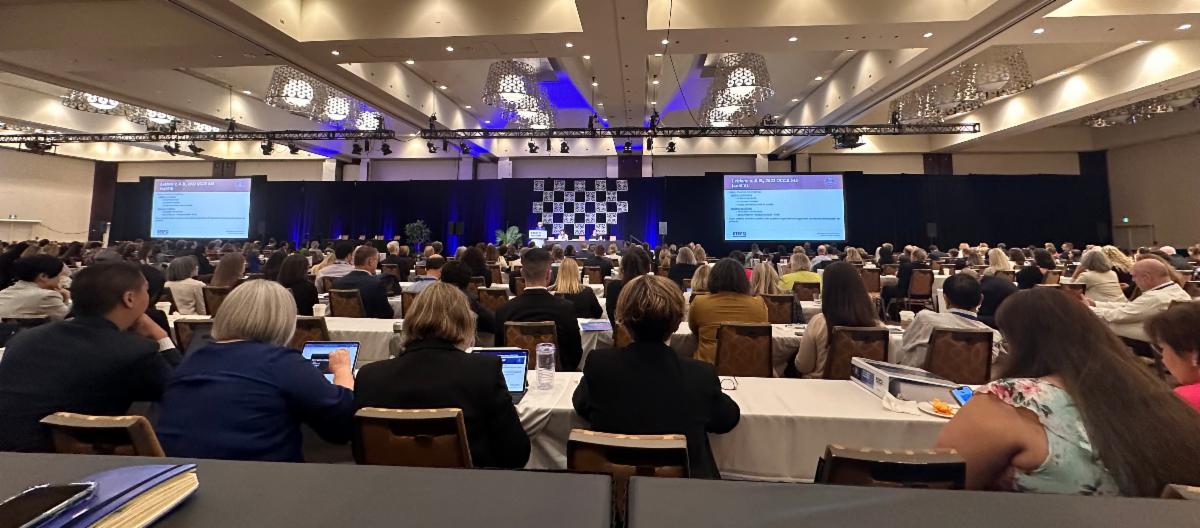
On June 19th and 20th, WEL Partners was honoured to join STEP Canada and its delegates who registered for STEP Canada’s first in-person event in four years. The National Conference, celebrating its 25th year was a must-attend event for domestic and international practitioners and partnering sponsors. This year’s Conference was conveniently located in Toronto’s financial district on Queen Street at the Sheraton Centre Toronto Hotel.
WEL Partners proudly participated in the Conference as a sponsor. Law students Oliver O’Brien and Brett Book were on hand to greet attendees at the WEL Partners table, which provided information on the areas of dispute resolution offered by the firm and a complimentary copy of our monthly newsletter. Many of the attendees were excited to leave the Conference with some fun gifts from the firm including beach balls and frisbees for summer activities and a fun and functional set of pens that became the star of the show.
WEL Partners Kimberly Whaley and Bryan Gilmartin attended the Conference which provided excellent opportunities for networking, business development, continuing education, and meeting up with friends and colleagues. The Conference provided an excellent learning opportunity and delegates were eligible to receive up to 21 hours of CPD.
| |
|
On the opening Monday, delegates celebrated STEP Canada’s 25th Anniversary in style at The Carlu, one of Toronto’s most historic spaces. There, delegates were treated to an exciting evening featuring a networking reception with beverages and hor d’oeuvres, followed by a three-course meal with wine, special remarks, and lively entertainment from Toronto’s hottest cover band, Dwayne Gretzky, who had delegates dancing the night away.
Many thanks to the 2023 National Conference Program Committee, Janis Armstrong and Michael Dodick for all their hard work in putting this event together. We are all excited to attend next year’s Conference!
| |
3. B'NAI BRITH'S INAUGURAL ADVOCACY SYMPOSIUM, CANADIAN ACTION NOW (CAN), JULY 5, 2023 | |
Most people will agree that both ageism and age discrimination are harmful to older adults. However, while ageism and age discrimination must be discouraged, conversations about, and the need for protections for older and vulnerable adults cannot be ignored.
To highlight this need, on July 5th, Kimberly Whaley was invited to present at the Canadian Action Now (“CAN”) Symposium, hosted by B’nai Brith Canada. The CAN Symposium was held at the Park Hyatt in Toronto and featured leading experts who addressed concerning issues that matter to the Jewish community and to all Canadians. The panels focused on fraud prevention, fighting hate in the era of social media, aging considerations, access to information laws, considerations in navigating the “healthcare labyrinth”, and influence peddling and foreign meddling.
Kim’s presentation highlighted the need for protections while identifying social themes and theories contributing to ageism. Her discussion identified key challenges in the law, the dissemination of knowledge, and education and awareness concerning the individual needs of particular persons in society, which include older adults and those suffering from illnesses, abuses, disability or those who otherwise may require protection.
The focus of Kim’s discussion was on ageism, its inception, and the evolution of our understanding of its societal impact. Her presentation addressed laws prohibiting ageism in Ontario, Canada, and Internationally within the scope of human rights legislation and existing criminal and civil remedies. Additionally, Kim’s presentation reviewed the need to balance the protection of older adults while preventing ageist beliefs, capacity and decision-making, and the statutory protection of older adults before concluding on improvements necessary for protection remedies.
A link to Kim’s updated paper entitled Concepts of Ageism: Arguments in Favour of the Need for Protections can be found here on our website.
| |
4. CLARK WILSON LLP, VANCOUVER B.C. | Thank you to our friends and colleagues at Clark Wilson LLP for the wonderful gift of Purdy’s chocolates - my favourite! We look forward to our continued relationship. Clarke Wilson is a B.C. law firm: https://www.cwilson.com/ | |
5. ESTATES TRUST AND PENSIONS JOURNAL, 41st EDITION | |
On April 25, 2023, M. Jasmine Sweatman and Kimberly A. Whaley’s article Incapable and Capable Rights: The Rights of Adults in Vulnerable Circumstances – Sledgehammer v. Swiss Army Knife was republished in the 41st edition of the Estates Trusts and Pensions Journal.
Through the lens of Ontario’s legislative regime introduced in the 1990’s, the article takes a comprehensive look at the evolution of capacity, consent, and the principle of “making choice,” as well as the development and interpretation of various tools created by the courts in the wake of legislative change.
The co-authors argue that retrospectively, the passage of time has not been kind as courts, clients, and practitioners alike are frustrated with tools that are merely ‘satisfying’ the fundamental principles of ‘making choice’ with diminishing practical success.
In the article one will find an examination of the vulnerabilities that have emerged since the introduction of Ontario’s substitute decision making legislation: mainly, the disjointed effect that has developed and the legislative reform necessary to modernize the statutory framework and guide court processes.
The article is an important contribution because older adults are often subjected to ageist beliefs, which include the erroneous notion that because people are older, they must have cognitive impairment. Dispelling this notion, the authors argue that change in the form of coordination and refocus is needed by all communities affected by incapacity planning. Incapable and Capable Rights, therefore, takes a closer look at what is missing: the overall legislative framework to adequately codify the rights and factors to be considered, making the presumption of capacity more robust, and developing guidance for older adults who may have some cognitive decline but are not legally incapable to ensure their rights continue to be protected.
| |
6. CANADIAN ANTI-FRAUD CENTRE | |
The Canadian Anti-Fraud Centre has released a Seniors Fraud Booklet to assist in recognizing common types of fraud in Canada.
View and download a PDF copy from our website
| |
7. CHAMBERS AND PARTNERS - HIGH NET WORTH CANADA, PRIVATE WEALTH DISPUTES RANKINGS, 2023 | |
WEL Partners is proud to be recognised by Chambers and Partners - High Net Worth Canada, Private Wealth Disputes Rankings, 2023.
FIRMS - BAND 1
Whaley Estate Litigation
INDIVIDUALS - BAND 1
Kimberly Whaley
| |
OBA ELDER LAW SECTION, SECRETARY 2023-2024 | |
WEL congratulates Kimberly Gale, Gale Law Professional Corporation, on being selected as the Secretary for the OBA Elder Law Executive Team for 2023-2024. | |
(i) REVOCATION CLAUSE AND BENEFICIARY DESIGNATIONS – UPDATE | |
|
By Albert H. Oosterhoff
1. Introduction
In January 2022 I posted a blog on the decision at first instance in Alger v Crumb.[1] I am delighted that the Ontario Court of Appeal has now affirmed that decision,[2] and so it behoves me to give an update of my earlier blog.
2. Facts
In 2019 the testator made beneficiary designations that directed payment of funds in her RRIF and TFSA accounts to each of her children, Sherri, Teresa, Robert, and Karen in equal shares. Thereafter, on the same day, she signed her Will. It contained the following revocation clause:
I HEREBY REVOKE all Wills and Testamentary dispositions of every nature and kind whatsoever made by me heretofore made [sic].[3]
She named Robert and Karen her executors (the ‘Executors’) and left $20,000 bequests to each of Sherri and Teresa and the residue equally to Robert and Karen. The testator died in 2020.
Sherri and Teresa (the ‘Respondents’) brought an application for an order directing the Executors to pay them the amounts to which they were entitled under the beneficiary designations. However, the Executors took the position that the revocation clause in the Will revoked the designations. If that was so, the funds in the plans would fall into the residue and would redound to the benefit of the Executors. Thus, the issue was whether the phrase ‘and Testamentary dispositions’ in the revocation clause had the effect of revoking the beneficiary designations.
Justice Verner considered sections 50-52 of the Succession Law Reform Act,[4] as well as the following two cases, Laczova Estate v Madonna House,[5] and Ashton Estate v South Muskoka Memorial Hospital.[6] She decided not to follow Ashton Estate because it was plainly wrong. I shall not discuss her Honour’s reasons further since I did so earlier. In any event, they are covered in detail in the reasons of the Court of Appeal.
3. Analysis and Judgment
Justice Feldman wrote the Court of Appeal’s reasons for judgment, while Zarnett and Copeland JJA concurred. Her Honour began by setting out the relevant provisions of the SLRA. She noted that under section 51(1) a participant[7] may designate a beneficiary in one of two ways: (1) by signed instrument, or (2) by will. However, section 51(2) provides that if the designation is made by will, it is effective only ‘if it relates expressly to a plan, either generally or specifically’. Section 52 then goes on to deal with revocations of designations. These can also be made either by signed instrument or by will. However, section 52(1) provides that a revocation in a will ‘is effective to revoke a designation made by instrument only if the revocation relates expressly to the designation, either generally or specifically’. It is significant, as her Honour pointed out, that while section 51(2) requires that the designation by will must relate expressly to a plan, section 52(1) requires that a revocation in a will relate expressly to the designation.[8]
Her Honour then discussed Laczova. The will in that case referred to certain plans. The participant in that case had made beneficiary designations under the plans. However, the court found that there was no ‘designation’ of anyone as a beneficiary in the will, as required by sections 51(2) and 52(2). Further, the court rejected the argument that the scheme of the will impliedly revoked the original designations by instrument because section 52(1) requires that a designation by will must relate ‘expressly to the designation, either generally or specifically’ and the will in that case did not do so.
Justice Feldman then confirmed, by reference to MacInnes v MacInnes[9] and Amherst Crane Rentals Ltd v Perring,[10] that a designation of beneficiary is a ‘testamentary disposition’, and thus the designations of beneficiaries of the two plans fell under the general revocation clause in the Will.
However, the question remained whether the general revocation clause had the effect of revoking the designations. Her Honour concluded that it did not because the revocation clause did not relate ‘expressly’ to the designations in the sense that it refers specifically, explicitly, or deliberately to them. Thus the revocation did not comply with section 52(1) of the SLRA and therefore did not revoke the designations.
Finally, her Honour agreed with the finding of Justice Verner that the interpretation of the general revocation clause in Ashton Estate should not be followed, since the judge in that case did not consider the requirement that a revocation clause must relate expressly to the designation, whether generally or specifically.
The appeal thus effectively overrules Ashton Estate and that is a welcome result. In my earlier blog I suggested that for the time being we should modify the general revocation clauses in wills by stating expressly that the testator is not revoking beneficiary designations previously made. Although this now no longer seems necessary, it cannot hurt.
In the earlier blog I also recommended that we should amend the SLRA to include certain definitions contained in section 1(1) of the Wills, Estates and Succession Act.[11] This Act recognizes that a beneficiary designation is a ‘testamentary instrument’ but excludes it from the definition of ‘will’.
---
[1] 2021 ONSC 6076. See https://welpartners.com/blog/2022/01/effect-of-a-wills-revocation-clause-on-beneficiary-designations/.
[2] Alger v Crumb, 2023 ONCA 209.
[3] The duplicate language in the clause was not an issue in the case.
[4] RSO 1990, c S.26 (‘SLRA’).
[5] 2001 CarswellOnt 4438, 207 DLR 4th 341 (CA).
[6] 2008 CarswellOnt 2592, 40 ETR 3d 153 (SCJ).
[7] Section 50 defines ‘participant’ as ‘a person who is entitled to designate another person to receive a benefit payable under a plan on the participant’s death’.
[8] Emphasis in the original.
[9] [1935] SCR 200.
[10] (2001) 241 DLR 4th 176 (Ont CA), leave to appeal to the SCC refused [2004] SCCA No 430.
[11] SBC 2009, c 13.
| |
(ii) A PROBATE DOCTRINE OF LACHES? | |
|
By Albert H. Oosterhoff
1. Introduction
A recent English High Court case, James v Scudamore,[1] a decision of HHJ Paul Matthews, sitting as a judge of the High Court, poses the above question and answers it in the affirmative. This is rather unusual and for that reason the case deserves to be blogged.[2]
2. Facts
Ivor Percy James (‘Ivor’) died in 2010. He left a will made in 1998 and a codicil made in December 2002. The will gave a life interest in the matrimonial home to Ivor’s second wife, Christine, with remainder to his two sons by his first marriage to Dianne, Martyn and Raymond. The codicil changed this provision by giving the matrimonial home absolutely to Christine. Christine proved both the will and the codicil in 2011.
Christine died in 2018. By her will she appointed her niece, Lorraine, executor, who proved Christine’s will. Christine’s will left 30% of her estate to Martyn’s children and 70% to her (Christine’s) sister, Diana, Lorraine’s mother. However, Diana died six months after Christine. By her will she appointed her husband executor and named him her universal legatee. He is the third defendant in these proceedings. By chain of representation, Lorraine is now the personal representative of Ivor’s estate.
The attesting witnesses to the 2002 codicil were Dawn Buckley and her husband Noel Buckley. He died in 2017, so Dawn is the only surviving witness. Dawn is the mother of Dianne James, who is the former partner of Martyn and they together had the children to whom Christine left 30% of her estate.
In 2020 Martyn filed a claim in which he seeks revocation of the probate of Ivor’s will and codicil granted to Christine, and the grant of a fresh probate of the will alone. He alleges that the codicil is invalid because: (a) the witnesses attested it before Ivor signed it; (b) the witnesses signed on a different date than the one stated on the face of the codicil; (c) Christine gave all the instructions for the preparation of the codicil, and she completed Ivor’s signature since he was suffering from the after-effects of a stroke at the time. Lorraine denies that the codicil was not properly executed, and that the claim should be dismissed for laches. An earlier practice direction did not give permission for any expert evidence about the handwritten signatures to be adduced. However, a copy of the codicil was produced at trial.
The witnesses included Martyn, Dawn Buckley, Dianne James, and Lorraine.
In 2013 Martyn consulted solicitors about the possible invalidity of the codicil. After investigation and consultation with family members, Dawn in particular, the solicitors wrote to Christine that in their opinion the codicil was formally invalid. She wrote back to the solicitors with her account of the execution of the codicil and it complied with the instructions given by her and Ivor’s solicitors. Dawn disputed Christine’s account but Justice Matthews concluded that she and other family members did not tell the truth
3. Analysis and Judgment
3.1 Validity of Codicil
Having heard the testimony of the witnesses, Justice Matthews concluded that he did not trust the evidence of Martyn and would put no weight on it unless it was independently corroborated. He took a similar view of the testimony of Dawn Buckley, the grandmother of Martyn and Dianne’s children, stating that in his opinion she was telling him her part of a concocted story He also disbelieved the testimony of Dianne, Martyn’s former partner and the mother of their children. On the other hand, he accepted the evidence of Lorraine, as she was an intelligent and transparently honest witness.
Justice Matthews made an important point about the evidence of the witnesses regarding handwritten signatures. He stated that witnesses who are not experts cannot compare specimen signatures with disputed signatures. However, they can give evidence of the identity of a person, or familiarity with a signature since those are not regarded as expert opinion. He also found that Raymond had been estranged from Ivor for some time.
Justice Matthews concluded that the codicil was signed and attested properly and, having examined Ivor’s signature on the codicil, that it appeared to be in his hand and not in Christine’s hand. Then he considered the statutory requirements for execution of a testamentary document.[3] Although there have been suggestions in England that the 1982 amendments removed the concept of time sequencing of the signatures of the testator and witnesses, he opined that it is still the law that the testator’s signature must be on the will before a witness can attest. Then, applying the presumption omnia rite et solemniter esse acta,[4] he concluded that the codicil had been properly executed and attested.
3.2 A Probate Doctrine of Laches?
Justice Matthews then turned to the question whether there is a probate doctrine of laches – the main reason for this blog. We are all familiar with the doctrine of laches as an equitable doctrine, but it can serve to bar only a claim to equitable relief.[5] And a claim to revoke letters probate or letters of administration is not a claim to equitable relief.
3.2.1 Modern English Cases
Some modern English cases discussed by Justice Matthews note that equitable laches can come into play if the claimant seeks to revoke probate in order to pursue some underlying equitable claim that can be pursued only if the probate is revoked. In that case, if the equitable laches must bar that claim, the court will refuse the revocation.[6] On the other hand, if the claim is to revoke probate so that the claimant can contest the validity of the will, this is not an equitable claim, but it can be defeated for delay if it is sufficiently long.[7] Some courts have also suggested that if the plaintiff can achieve no real advantage from the proceeding, the court can hold it to be frivolous and vexatious and dismiss it.[8] Similarly, in Re Flynn[9] Slade J said:[10]
… the court will never strike out an action to revoke a grant of probate or letters of administration on the mere ground of delay in instituting it, unless it is satisfied that the claim is otherwise frivolous or vexatious or is for other reasons an abuse of the process of the court.
So also, in Re Langton’s Estate[11] Diplock LJ noted that in probate matters the High Court is the successor to the Prerogative Court of Canterbury and that the law developed in that court continues to apply unless changed by legislation or rules of court. Then he went on to say:[12]
… it was the practice of the Prerogative Court to permit any person claiming an interest in the estate of the deceased, whose rights could be affected by the grant applied for, to intervene in the action at any stage… As a corollary to this right of intervention, the Prerogative Court applied the rule that a person interested in the estate of the deceased who was in fact cognizant of a suit with respect to the validity of a will by which his interest was to his knowledge affected and who stood by and took no part in the suit was nevertheless bound by the decree pronouncing in favour of the will… This rule differs from the common law rule of estoppel per rem judicatam. It is peculiar to the probate jurisdiction of the court and is a rule of substantive law…
3.2.2 Cases from the Prerogative Courts
Since none of the modern cases definitively recognized a probate doctrine of laches, Justice Matthews turned to old cases decided in the Prerogative Courts, which had probate jurisdiction in relation to personalty until the creation of the Court of Probate in 1857,[13] when the Prerogative Courts were abolished, and their jurisdiction was transferred to the new court. The Supreme Court of Judicature Act 1873[14] abolished the Court of Probate and transferred its jurisdiction the High Court of Justice. While there were a number of subsequent statutory changes,[15] the jurisdiction of the High Court over probate continued and it continued to apply the law of probate as it used to be administered by the Prerogative Courts.[16]
In an article a few years ago I traced the history of the law of probate in England and explained how we inherited that law as administered by the Prerogative Courts in Canada. I also explained how that law survived the abolition of the Surrogate Courts in Ontario and the transfer of their jurisdiction to the Superior Court of Justice.[17] Thus, reference to the older Prerogative Court cases is legitimate.
3.2.3 Analysis
Justice Matthews found that none of these cases uses the word ‘laches’.[18] These cases hold that if the claimant was fully cognizant of the facts from the outset but failed to bring proceedings to revoke probate for several years, and he was not otherwise prevented from doing so because of disability or other reason, the claim may be barred.
The claimant argued that these cases are examples of what we would now call abuse of process, but Justice Matthews did not accept that argument. He said:[19]
Acquiescence, waiver and estoppel are not examples of abuse of process, but quite separate doctrines operating to bar claims in limne. In such cases the cause of action embarked upon is not in itself improper or abusive. It simply does not lie in the circumstances. In Re Estate of Langton[20] the Court did not ascribe the failure of the second claim or the appeal to an abuse of process, but to a rule of probate law, distinct from the common law rule of estoppel per rem judicatam. I accept than in some cases the facts that give rise to a defence of acquiescence, waiver or estoppel may also demonstrate that the claim is also an abuse, but the two things are and remain conceptually distinct. Moreover, it is established that ‘mere delay in pursuing a claim, however inordinate and inexcusable, does not without more constitute an abuse of process’.[21]
Consequently, Justice Matthews considered the following propositions were warranted:[22]
(1) Where a person having a right to intervene in existing probate proceedings is aware of those proceedings and of that right, but deliberately abstains from joining in them, he or she is bound by the result.
(2) Explicable delay, even when coupled with taking a legacy under a will proved in common form, is not generally enough to bar a claimant from taking probate proceedings.
(3) But unjustified delay, possibly on its own … and certainly when coupled with acts amounting to waiver of the claimant’s right, will bar the claim.
(4) Similarly, where the delay has led to others’ detrimental reliance on the inaction, such as the distribution of the estate.
He went on to state that whether the third and fourth propositions should be referred to as a probate version of laches or under some other name does not really matter. Whatever they are called, they represent the probate law applicable to this case.
3.2.4 Application to Facts
Justice Matthews then applied the law to the facts. He noted that Lorraine, the executor, obtained probate of the will and codicil in 2011, and then administered the estate. In 2013 the claimant instructed solicitors to explore the question whether the codicil was invalid. But, having received their advice, he did not take the matter further. He brought this claim only in 2019 and tried to justify the delay but Justice Matthews did not accept the justification. Moreover the claimant waited until Christine herself died and also after one witness had died while the only surviving witness was his former partner’s mother and the grandmother of his children. As noted above, Justice Matthews found that the claimant, the former partner, and her mother concocted a story about how the codicil was executed, which he rejected.
Thus he felt himself entirely justified, applying the probate authorities discussed above, in concluding that the claimant is barred by what he called the probate doctrine of laches from bringing his claim.
He went on to note that if he were wrong about the probate doctrine of laches, the equitable doctrine of laches would apply equally to bar the underlying intended claim to recover moneys from the beneficiaries of Christine’s estate. In that case, the claim would be ‘utterly academic’ and should be struck as without purpose.
He stated further that if he were wrong about that, he would hold that the evidence was inadequate to overcome the presumption of validity. But even if it was overcome, he was satisfied on the evidence that the codicil was properly executed.
3.2.5 Application to Canada?
In Canada we have also encountered situations in probate in which a claimant, fully cognizant of the facts had delayed inordinately in bringing her claim. The following are four examples.
Re O’Reilly (No 2).[23] A testator died in 1945 leaving a life interest in his farm to his wife with remainder to his nine children. The will was not probated. The wife died in 1957 and three children remained on the farm. They claimed title by adverse possession. The other children obtained letters of administration with will annexed but the trial judge held that their rights were extinguished by limitations. However, he went on to state that if that were incorrect, he would acknowledge the equitable defence of laches and acquiescence and hold that the other children were estopped or otherwise barred from claiming their interests in the farm. So this case seems to have assumed that equitable defences could have been used to bar the plaintiffs’ claim.
Oestreich v Brunnhuber.[24] The testator left her entire estate to her husband and appointed her daughter her executor. The daughter never probated the will. The husband then entered into a common law relationship with Hedwig Oestreich and by his will left her his house and the residue to his children. The children moved for summary judgment, claiming that their mother’s will was invalid for lack of capacity. They had made no inquiry about their mother’s will but assumed that their father was entitled to live in the house and that they would inherit it on his death. Hedwig moved for summary judgment declaring that the children were estopped from contesting the validity of their mother’s will. Justice Haley referred to Re O’Reilly (No 2) discussed in the previous paragraph. She agreed with counsel’s argument that the equitable doctrine of laches applies only in cases in which an equitable remedy is sought. However, she felt that the court is not limited by strict differentiation between law and equity when considering whether a claimant has inexcusably delayed in bringing her claim to the detriment of another party. She concluded that this was not a proper case for summary judgment and dismissed the motions for. Thus in this case the court seems to have contemplated a concept of laches in probate.
Bermingham v Bermingham Estate.[25] Jeanette Bermingham died in 1998 having appointed her lawyer her executor in her will. Apart from the disposition of Jeanette’s personal effects and some legacies, the residue was left in trust for Jeanette’s three grandchildren, Diane, Linda, and Cathy, the children of her only surviving daughter Mary. In 2006 on motion by Mary the court ordered a trial with respect to the validity of the will. The respondents were the executor and the three grandchildren. Linda then moved to have Mary’s motion dismissed for lack of standing. Mary had notice of the appointment of the lawyer and raised no objections to the appointment. She did seek legal advice six months after the appointment of the lawyer about contesting the will but the lawyer she spoke to was not prepared to act on a will challenge. She alleged that she has been clinically depressed at the time of her mother’s death and since then and that she felt that she could not proceed with a will challenge without signing a retainer agreement with a lawyer and she was unable to do that because she lacked significant income and was on social assistance. Meanwhile the executor proceeded with the administration of the estate. Mary’s motion was brought, inter alia, pursuant to Rules 75.04 (revocation of certificate of appointment), and 75.05 (motion for return of certificate). Justice Perell noted that the issue was when a court should exercise its jurisdiction under those rules. His Honour concluded that Mary’s motion for revocation or recalling of the certificate was not brought promptly and her explanation for the delay was weak. Although she had the benefit of legal advice and was aware of her rights, Mary failed to bring these proceedings for almost eight years. In those circumstances, His Honour refused to exercise his discretion under Rules 75.04 and 75.05 and dismissed Mary’s motion.
Re Prong Estate.[26] The testator made her will in 2007 and died in that year. The court granted a certificate of appointment to the named executors in 2008. They then proceeded to administer the estate and made several interim distributions. In 2010 some beneficiaries moved for an order returning the certificate to the court and directing that the will be proved in solemn form. The court noted that administration of the estate was substantially complete, the will appeared to have been executed properly, and the beneficiaries had sufficient information to move forward with their concerns in 2008. But they delayed in bringing the motion for approximately two and a half years and the reason they gave for the delay was weak. In those circumstances the court dismissed the motion.
Clearly, therefore, Canadian courts have allowed applications to revoke probate for delay, although they did not recognize the delay as raising a possible defence because of a doctrine of laches in probate.
So where does that leave us? Should we in Canada adopt the name ‘probate doctrine of laches’? My inclination is to say, Yes, we should. As I have just shown, in Canada our courts will refuse to allow a probate claim to proceed for inordinate delay when the claimant had full knowledge of the facts. The cases do not use the term laches, but why not give such a defence an appropriate name, i.e., laches, being careful of course to distinguish it from equitable laches.
We have had experience distinguishing other probate defences from equitable ones. Thus, for example we distinguish the probate doctrine of undue influence from the equitable doctrine with the same name, and it is now well known that in probate the onus of proof of undue influence always remains on the person who attacks a will on that ground, even if the person was in a position to exercise undue influence over the testator and was instrumental in preparing the will or giving instructions for it.[27] In contrast in the equitable sphere, for example, in the context of inter vivos gifts, if the person who receives a gift was in a position to exert undue influence over the donor and stood in a fiduciary or confidential relationship to her, equity raises a presumption of undue influence.[28]
Thus we can distinguish between the different defences and other doctrines in probate and equity. So again, when a claimant is fully cognizant of the facts but delays too long in bringing proceedings to revoke probate, why not say that this attracts the probate doctrine of laches. A name takes the mystery out of a concept.
3.2.6 Effect of Limitations
However, in Canada we have an additional problem and that is limitation of actions. Legislation in several provinces imposes a two-year limitation period for claims. In Ontario, for example, section 4 of the Limitations Act 2002[29] imposes a general two-year limitation period for bringing a proceeding in respect of a claim, subject to the discoverability principles outlined in s 5. However, s 16(1)(a) provides that there is no limitation period with respect to a proceeding for a declaration if no consequential relief is sought. In Leibel v Leibel,[30] followed by many subsequent cases, Justice Greer held that the section 4 two-year limitation period applies to will challenges. In Leibel a beneficiary not only sought an order revoking the grant of Certificate of Appointment of Estate Trustees with a will, but also an order removing estate trustees, an order requiring the estate trustees to pass their accounts, and an order appointing an estate trustee during litigation. Justice Greer held that these additional orders amounted to consequential relief and therefore she held that the claim was barred under s 4. However, in the later case of Neuberger v York[31] the Ontario Court of Appeal stated: ‘Nothing in these reasons is to be taken as having decided whether the Limitations Act applies to the bringing of an application under Rule 75.’ Does this mean that unless or until the court decides that issue such applications are exempt from the Act?
For cases in which the applicant sought only a declaratory order to which the Limitations Act does not apply, see Piekut v Romoli[32] and Kyle v Atwill.[33] However, in the latter case the court noted that if consequential relief is sought in subsequent proceedings after the declaratory order has been granted, it will be subject to the Act.
At the risk of repeating myself, a number of Canadian cases dealing with probate claims speak of laches as an equitable defence. They note, rightly, that an equitable defence can be raised only in respect of an equitable remedy.[34] But they fail to realize that there may also be a probate doctrine of laches that that can serve as a defence to a probate remedy. Nevertheless, considering the restraint imposed by limitations legislation such a probate doctrine may be of limited utility.
We shall leave this to the creative litigators among us!
---
[1] [2023] EWHC 996 (Ch).
[2] I acknowledge the assistance of my colleague, Nima Hojjati on limitation issues.
[3] Wills Act 1837, 7 Will 4 & 1 Vict, c 26, s , as amended by the Administration of Justice Act 1982, c 53 (UK), s 17.
[4] The expression means that all things are presumed to have been done correctly. The phrase et solemniter is often omitted when a court refers to the presumption.
[5] See, eg, Fisher v Brooker, [2009] 1 WLR 1764 (HL), paras 64, 79, per Lord Neuberger.
[6] See, eg, Mohan v Broughton. [1899] P 211, affirmed [1900] P 54 (CA); Re McElroy, [2023] EWHC 109 (Ch).
[7] See Williams v Evans, [1911] P 175, in which Horridge J stated that a claim to revoke probate can be denied for laches, but did not find the delay sufficiently long. As Matthews J notes in James v Scudamore, para 133, Horridge must have been referring to the parallel doctrine of laches in the law of probate.
[8] See, eg, Re Coghlan, [1948] 2 All ER 79 (CA) per Evershed LJ., discussed in James v Scudamore at paras 140 and 143; Re Langton’s Estate, [1964] P 163 (CA)
[9] [1982] 1 WLR 310.
[10] Ibid, p 318.
[11] Footnote 8, supra.
[12] Ibid. paras 178-79.
[13] By the Court of Probate Act 1857, c 77.
[14] 36 & 37 Vict, c 31.
[15] See, eg, Land Transfer Act 1897, 60 & 61 Vict, c 65, s 1, pursuant to which probate could thereafter be granted of real property as well as of personal property. In Ontario the surrogate courts acquired jurisdiction over wills of real property some thirteen years earlier, by s 4(1) of the Devolution of Estates Act. SO 1886, c 22.
[16] See Supreme Court of Judicature (Consolidation) Act 2025, c 27 (UK), s 20; and Supreme Courts Act 1981, c 54, s 25 (now the Senior Courts Act 1981), which replaced the 1925 Act.
[17] Albert H Oosterhoff, ‘The Discrete Functions of Courts of Probate and Construction’ (2017), 46 Adv Q 316, §2.
[18] The cases considered by Justice Matthews are: Hoffman v Norris (1805), 2 Phill 230n; Newell v Weeks (1814), 2 Phill 224; Bell v Armstrong (1822) 1 Add 367; Braham v Burchell (1826), 3 Add 243; Merryweather v Turner (1844), 3 Curt 802; Ratcliffe v Barnes (1862), 2 Sw & Tr 486.
[19] James v Scudamore para 196.
[20] Footnote 8, supra.
[21] Asturion Foundation v Alibrahim, [2020] 1 WLR 1627, para 47, per Arnold LJ (with whom Ryder and Leggatt LJJ agreed).
[22] James v Scudamore, para 197 (case references omitted).
[23] (1980, 28 OR 2d 481, affirmed (1981), 33 OR (2d) 352 (CA).
[24] 2001 CarswellOnt 273 (SCJ).
[25] 2007 CarswellOnt 2033 (SCJ).
[26] 2011 ONSC 632.
[27] See Seguin v Pearson, 2018 ONCA 355. To the same effect, see Naidoo v Barton, [2023] EWHC 500 (Ch).
[28] See, eg, Goodman Estate v Geffen. [1991] 2 SCR 353.
[29]SO 2002, c 24.
[30] 2014 ONSC 4516.
[31] 2015 ONCA 191, para 113, footnote 14.
[32] 2020 ONCA 26.
[33] 2020 ONCA 476.
[34] See M(K) v M(H), 1992 CarswellOnt 841. [1992] 3 SCR 6, para 98, where the court quotes with approval from Meagher, Gummow and Lehane, Equity Doctrines and Remedies (2ne ed, 1984), p 755. And see also text at footnote 5, supra.
| |
(iii) RECENT APPLICATIONS OF ONTARIO’S VALIDATING PROVISION IN S. 21.1 (1) OF THE SUCCESSION LAW REFORM ACT | |
|
By Brett Book
Recent changes to the Succession Law Reform Act[1] which came in through Ontario’s Bill 245, Accelerating Access to Justice took force and effect on Feb. 16, 2021.[2] However, it was nearly two years before a representative case was brought before Ontario courts. Earlier this year, I wrote about that unreported decision in an article which can be found here.
To briefly recap, section 4 [2] of the SLRA deals with the valid execution of a will and requires that a will is not valid unless it is signed by the testator (or someone else in his/her presence or direction), in the presence of two or more attesting witnesses at the same time and that two or more of the attesting witnesses also subscribe the will in the presence of the testator.[3]
Section 21.1(1), a validating provision, allows courts the discretion to declare a will valid and fully effective despite its non-compliance with the aforementioned section 4 [2].
In the February 1, 2023 decision in Grattan v. Grattan, an unsigned and unwitnessed draft will was declared valid and fully effective. Following this decision, three more decisions dealing with s. 21.1(1) were released by the Ontario Superior Court of Justice. All of these decisions were released in June and all were decided by the Honourable Mr. Justice FL Myers. The cases are as follows:
1) Cruz v. Public Guardian and Trustee[4]
In Cruz, the deceased had prepared his own will. The will was clearly drafted and clearly expressed the testamentary intentions of the deceased; however, the will was unsigned and unwitnessed.
In determining whether s. 21.1(1) could be utilized to validate this will, Myers J. looked to the British Columbia decision in Estate of Young[5] and was ultimately satisfied that the document in question “records a deliberate or fixed and final expression of intention as to the disposal of the deceased’s property on death.”[6] In determining that the will in question is valid and fully effective, Myers J. held that “[f]ixing this type of mistake is precisely what s. 21.1 seems to be for.”[7]
2) White v. White[8]
In White, section 21.1(1) was addressed but not plead after an applicant seeking directions to obtain access to the files of his late mother’s lawyer brought an application under Rule 75.06 (1) of the Rules of Civil Procedure.[9] The applicant, who was trying to consider whether he might mount a will challenge, was not objecting to the certificate of appointment of estate trustee.
In White, the Applicant’s counsel argued that the draft will being prepared might be an expression of the Applicant’s mother’s testamentary intention to revoke or alter her 2014 will and that if so, the court might recognize the draft will under s. 21.1(1) of the SLRA.
According to the Applicant, he engaged a lawyer in 2021 to help his mother update her will. As such, he emailed a lawyer on July 10, 2022 to book a consultation appointment. Several conversations took place over the ensuing weeks concerning the updating of his mother’s will. Between August 9 to 12, three emails were sent to the lawyer in an attempt to book an appointment to finalize the will. An appointment was set for August 16, 2022. On the morning of the appointment, the deceased suffered a stroke and was hospitalized. The lawyer attended the hospital for formal execution but the mother was unable to sign. She died six days later on August 22, 2022.
Myers J. was dubious that s. 21.1(1) could apply on these facts and noted that the email on August 16, 2022 between the lawyer and the deceased only referenced that she wanted to have a telephone conversation with the deceased. His Honour did not believe this sounded like a will was ready to be signed.
Notwithstanding the aforementioned, in White, Myers J. looked at the decision in Estate of Young, for the need for a court-ordered will to record “a deliberate or fixed and final expression of intention as to the disposal of the deceased’s property on death.”[10] Myers J. held that “It is hard to see how a draft will can meet that threshold.”[11] Importantly, it was also noted by the court that because this was not an application under s. 21.1(1), His Honour did not need to decide if the new unsigned, unreviewed, draft will or the solicitor’s notes are an effective will-equivalent.
The endorsement of Myers J. in White included some thoughts for consideration on the development of the law. Particularly, His Honour questioned whether section 9 of the Estates Act[12], a section designed to help beneficiaries find and obtain a deceased person’s will, could apply as well to a document that one hopes might qualify as a will-equivalent under s. 21.1.[13] His Honour later went on to say that the availability of a pre-lawsuit discovery order requires an argument based on research and that, “in light of the novelty of s. 21.1, the relief requested may have a far broader reach than just this case.”[14] The Applicant was urged to return to a case conference to propose a process to have this matter heard with researched legal argument.
3) Vojska v. Ostowski[15]
In Vojska, the deceased died on September 9, 2022. Prior to this, a will was prepared on October 7, 2011. The deceased and her husband attended a lawyer’s office on this day to sign new wills and powers of attorney. Each spouse signed a will and two power of attorney documents. A lawyer and a law clerk witnessed the signing ceremony. The lawyer, however, in the midst of the six documents to be signed, failed to sign the deceased’s will.
Myers J. in holding that the will dated October 7, 2011 is as valid and fully effective as the will of the deceased as if it had been properly executed or made remarked how “it is hard to imagine a more textbook example of a case for which the new power was intended.”[16]
In Vojska, Myers J. with the benefit of hindsight, provided a thorough analysis which included the previous two decisions His Honour rendered. Myers J. opined how in Cruz, he mentioned the test out of Western Canada, requiring “a deliberate or fixed and final expression of intention as to the disposal of the deceased’s property on death.”[17]
Interestingly, Myers J. discussed the decision in White, and remarked how he “mused in obiter dictum about whether an unsigned draft will can ever be sufficiently fixed and final for the purposes of that section. His Honour went on to ask, will the phrase “not properly executed” in s. 21.1 include “unexecuted” (i.e. unsigned) documents.”[18]
Concluding Thoughts on the Development of the Law
I have previously written on s. 21.1(1) in my article on the unreported Grattan decision.[19] In that article, much like the obiter comments of Myers J., I queried whether an unsigned draft will could represent a fixed and final testamentary intention. In that article, it was suggested that decisions from Alberta, which, unlike British Columbia and Manitoba, require a signature to represent a fixed and final intention might have been worthy of consideration.
It will also be interesting to see how this s 21.1 decisions continue to develop and in light of some of the considerations addressed by Myers J. in White.
We have now had four decisions and we are all watching!
---
[1] R.S.O. 1990, c. S.26 [SLRA].
[2] See Professor Albert Oosterhoff, “Welcome Amendments to Ontario’s Succession Law Reform Act” (2021), WEL Partners Blog, accessed online: https://welpartners.com/blog/2021/02/welcome-amendments-to-ontarios-succession-law-reform-act/
[3] SLRA, supra at s. 4 [2].
[4] 2023 ONSC 3629 [Cruz].
[5] 2015 BCSC 182 [Estate of Young].
[6] Estate of Young, supra at para. 35.
[7] Cruz, supra at para. 9.
[8] 2023 ONSC 3740 [White].
[9] R.R.O. 1990, Reg. 194.
[10] Estate of Young, supra note 6.
[11] White, supra at para. 18.
[12] R.R.O. 1990, c E.21.
[13] In White at para. 36, Myers J.
[14] White, supra at para. 34.
[15] 2023 ONSC 3894 [Vojska].
[16] Vojska, supra at para. 12.
[17] Ibid., at para. 21.
[18] Ibid., at para. 22.
[19] See Brett Book, “Interpreting Ontario’s Validating Provision in Grattan Estate” (April 10, 2023), WEL Partners Blog, accessed online: https://welpartners.com/blog/2023/04/interpreting-ontarios-validating-provision-in-grattan-estate/
| |
(iv) DETERMINING DEPENDANTS’ SUPPORT IN BOLTE V. MCDONALD ESTATE | |
|
By Brett Book
The decision in Bolte v. McDonald Estate dealt with an appeal of the March 28 Superior Court decision of Nicholson J. (2022 ONSC 1922) to the Divisional Court. The facts of the case concern competing claims for dependant’s support brought by the common-law spouse of the deceased in addition to claims brought on behalf of the estate of his late-daughter for support of her and her three children (the “Grandchildren”).
Section 76 of the SLRA provides that an appeal from Part V of the Succession Law Reform Act[1] lies with the Divisional Court:
76 An appeal lies to the Divisional Court from any order of the court made under this Part. R.S.O. 1990, c. S. 26, s. 76.
In spite of the appeal being dismissed, the decision of the Divisional Court provides valuable guidance on the determination of financial provision for a dependant claimant and the legal criteria used to determine whether there has been a ‘settled intention’ to treat, in this case, Grandchildren as children.
For an in-depth analysis of dependants’ support generally, WEL Partners has produced a helpful reference guide book, 'WEL Partners on Dependants' Support'. A PDF copy of which can be found here on our website.
Background
This case concerned the twenty-year plus common-law relationship between Ms. Bolte (the “Spouse”) and Mr. Barbara (the “Deceased”). Together, the couple had no children and intended to fund their retirement with the Deceased’s pension from the Ontario Power Generation.
Unfortunately, before they could enjoy retirement, the Deceased died intestate on April 27, 2020 at the age of 61. As a result, the matrimonial home was sold for $300,000 and the proceeds placed in trust. The Deceased also had a pension, which was valued at approximately $915,000. The Spouse was named as beneficiary for the purposes of the pension’s survivor benefits.
The Deceased had a daughter from a previous relationship, Ms. McDonald (the “Daughter”). The evidence indicated that throughout her lifetime she struggled with addiction issues and had infrequent contact with the Deceased although periodically, the Deceased provided the Daughter with small sums of money when he saw her. The Deceased had a life insurance policy worth $53,000 naming the Daughter as sole beneficiary. On June 30, 2021, the Daughter passed away at the age of 30, leaving behind three small children with special needs.
The Spouse brought a dependant’s support application (the “Application”). The Application was opposed by the daughter’s mother, acting in her capacity as the daughter’s Estate Trustee. On March 28, 2022, Nicholson J. released his reasons for decision which awarded the entirety of the estate to the Spouse.
The Daughter’s estate appealed that decision on the grounds that the application judge erred by:
-
Excluding the Daughter’s residual legal entitlement to the intestate estate from the factors in s. 62 of the Succession Law Reform Act (SLRA);
- Ruling the Deceased owed no moral duty to his Grandchildren; and
- By treating the Spouse’s dependency claim as having the paramount entitlement to the estate.
The Superior Court decision
The application’s judge outlined the legislative framework applicable to the decision. First, the court reviewed intestacy under Part II of the SLRA, particularly under s. 44 (where a person dies intestate and is survived by a spouse and no children, the spouse is entitled to the estate property absolutely).
The application’s judge noted that to meet the definition of a spouse for the purposes of Part II of the SLRA, one must be married.[2] It was also noted that under Part V of the SLRA, “spouse” is defined as set out in s. 29 of the FLA, to include persons who have cohabited continuously for a period of not less than three years.
The application’s judge reviewed s. 47 of the SLRA and concluded that on an intestacy without a spouse, the property is to be distributed equally among the deceased’s children. Additionally, the application’s judge reviewed Part V of the SLRA, which permits a dependant to make a claim for support where a deceased has not made adequate provision for the proper support of his or her dependants.
Importantly, the application’s judge reviewed s. 62 of the SLRA which prescribes 19 factors a court ought to consider when determining support for a dependant, including a thorough review of the governing jurisprudence.[3]
The application’s judge also quoted the divisional court in Quinn v. Carrigan[4] referring to it as setting out the appropriate legal test when determining financial provision for a dependant:
1. Identify all of the dependants’ who may have a claim on the estate;
2. Tentatively value the claims of those dependants’ by considering the factors set out in the legislation and the legal or moral obligations of the estate to the dependants’;
3. Identify those non-dependants’ who may have a legal or moral claim to a share of the estate; and,
4. Attempt to balance the competing claims to the estate by taking into account the size of the estate, the strength of the claims, and the intentions of the deceased in order to arrive at a judicious distribution of the estate.
Using this analysis, the application’s judge determined that the Spouse was a dependant for the purposes of Part V of the SLRA. Additionally, the application’s judge concluded that the daughter was not a dependant due to the fact that the Deceased was not providing her with any support. While there was evidence that the Deceased provided the Daughter with small sums of money, the application’s judge quoted Bilacs v. Hirjak[5] and Bormans v. Estate of Bormans et al.,[6] supporting the proposition that periodic transfers of money do not necessarily amount to dependency under the SLRA.
Where it concerned the Grandchildren, the application’s judge did not consider them dependants either. In support of this conclusion, the application’s judge looked to the decision of Kruzick J., in Pigott Estate v. Pigott[7] where a test was adopted to determine whether there was a ‘settled intention’ to treat grandchildren as children of a family. In that case, the court looked at the following factors:
a) Cohabitation with the children;
b) Treatment of the children on an equal footing with the deceased’s own children;
c) Decision making power with respect to the children’s names, schooling, discipline;
d) Continued access or visitation; and,
e) Contribution financially to day-to-day needs.
At the second stage of the analysis, the application’s judge valued the Spouse’s legal and moral claims at $1,415,000. The court then considered non-dependant’s claims and excluded the Daughter’s residual claim, holding that the Deceased owed no legal obligation to provide for her while he was alive as she was an adult who was not dependent on him.
While the application’s judge accepted that the Daughter had a moral claim, he held that it cannot approach the claim of the Spouse who was in a common-law relationship with the Deceased for over two decades.
Finally, the application’s judge applied the balancing portion of the four-part test, noting that in Tataryn[8], the Supreme Court of Canada described that claims based on both legal and moral obligations would take priority while the moral claims of independent adult children are more tenuous.
The application’s judge also considered the impact his decision would have upon the Grandchildren. While the court recognized the harsh result from the perspective of the Grandchildren, it ultimately concluded that the decision must turn on a balancing between the claims of the Spouse and the Daughter, not the Spouse and the Deceased’s Grandchildren.
Analysis
Any relief sought under Part V of the SLRA is discretionary.[9] On an appeal, the standard of review for a discretionary decision is one of deference, and is based upon whether the application’s judge reasonably informed his or her decision.[10]
On the issue of the Daughter’s claim of legal entitlement and s. 62 of the SLRA, the general argument advanced by counsel for the Daughter’s estate was that the application’s judge committed an error in law by failing to consider the Daughter’s residual legal entitlement to the estate within his s. 62 analysis.
The Divisional Court considered the application’s judge’s reasons with respect to all said claims. The Court noted that counsel for the Daughter’s estate conceded in oral argument that “she is not contesting the application judge’s finding that neither the Daughter nor the Grandchildren were dependants of the Deceased.”[11] The Divisional Court felt this concession was ultimately dispositive of the Daughter’s and the Grandchildren’s putative claims under s. 62 of the SLRA.
The Divisional Court despite this concession, went through the exercise of analysing s. 58 which deals with support for dependants, and, s. 62 factors to be considered when hearing a motion brought under s. 58 of the SLRA in addition to considerations from the Ontario Court of Appeal’s decision in Cummings.
The court concluded that someone must be a ‘dependant’ under the SLRA to engage a s. 62 SLRA analysis, and that, therefore, the application judge committed no error when he applied the logic in Cummings and dismissed the Daughters and Grandchildren’s dependant claims.
Similarly, in the analysis of the Spouse’s entitlement, despite recognizing the Daughter was entitled to residue, the application’s judge engaged the analysis in Quinn v. Carrigan and found that the Spouse was the Deceased’s only dependant, and that the value of her claims exceeded the value of the estate.
Where it concerned the issue of the moral duty owing to the Grandchildren, the Divisional Court held that the application’s judge was correct in finding the Deceased owed no moral duty and that “an exercise of discretion is entitled to deference.” Furthermore, the Divisional Court held that the finding that the Deceased, having no relationship with Grandchildren, owed them no moral duty was consistent with the factors described in Pigott Estate.
The issue of the paramountcy in claims in favor of the Spouse was not considered an error. The Divisional Court carefully analyzed the facts considered by the application’s judge in coming to a reasonable balancing of interests.[12] Likewise, the Divisional Court held that nothing in the application’s judge’s reasons suggests that he failed to adequately consider the principles in Tataryn, and Cummings, or, otherwise fettered his discretion.
Concluding Comments
The Divisional Court noted that the decision of the application’s judge to exclude the Grandchildren as dependant’s was, on its face, a harsh result given that the Daughter died at a young age, leaving behind her children with special needs. However, the facts of the case also demonstrated that the value of the Spouse’s dependant support claim found to have exceeded the value of the estate.
The application’s judge and the Divisional Court in this case ultimately recognized the claim of the Deceased’s Spouse of over twenty years in the face of the tenuous competing claims of the Deceased’s independent adult Daughter with whom the Deceased had little contact and provided no support to.
---
[1] R.S.O. 1990, c. S.26 [SLRA].
[2] See Family Law Act, R.S.O. 1990, c. F.3 at s. 1 [FLA].
[3] See Cummings v. Cummings (2004), 69 O.R. (3d) 398 [Cummings]; and Tataryn v. Tataryn Estate, 1994 CanLII 51 (SCC) [Tataryn].
[4] [2014] O.J. No. 4589 [Quinn].
[5] 1986 CarswellOnt. 1684, [1986] W.D.F.L. 734, A.C.W.S. (2d) 325 [Bilacs].
[6] 2016 ONSC 428 (CanLII).
[7] 1998 CarswellOnt 2875, 25 E.T.R. (2d) 12, 71 O.T.C. 201, 81 A.C.W.S. (3d) 397 [Pigott Estate].
[8] Tataryn, supra at page 823.
[9] See Cummings, supra at para. 56.
[10] See Housen v. Nikolaisen, 2002 SCC 33, [2002] 2 S.C.R. 235; and Quinn v. Carrigan, supra at paras. 68 and 69.
[11] Bolte, supra at para. 32.
[12] The application judge considered the following facts: The Daughter had a residual legal interest to the estate; the Daughter was not a dependant under the SLRA, but had a moral claim to support; the estate was not large enough to provide for the Spouse’s needs during her lifetime; the Daughter had already received $53,000 in a life insurance policy; and, the Daughter’s claim was weak given the lack of contact between the Deceased and the Daughter.
| |
(v) WILLS, FRAUD AND FORGERY: POLICE OFFICER AND EX-EMPLOYEE OF THE PGT FOUND GUILTY OF DEFRAUDING ESTATE OF $800,000 | |
|
By Oliver O’Brien
In June 2023, police Constable Robert Konashewych (“Mr. Konashewych”) and his girlfriend Adellene Balgobin (“Ms. Balgobin”), were found guilty by a jury of fraud and breach of trust by fabricating a Last Will and Testament. The purported testator of the Will in question was the late Heinz Siegfried Sommerfeld (“Mr. Sommerfeld”).[1]
The decision represents a strong example of when fraud is alleged and proved in relation to a Will challenge but in a criminal matter.
Background
Mr. Sommerfeld never married or had children and lived alone for most of his life. In his later years he was diagnosed with Alzheimer’s disease and was placed into a long-term care home. Mr. Sommerfeld was also estranged from his family and did not make a Will prior to his passing.
Mr. Konashewych has served with the Toronto Police Service since 2008. In an affidavit he filed during probate, Mr. Konashewych asserts that he met Mr. Sommerfeld in 2005 and the two become close friends.
Due to Mr. Sommerfeld’s Alzheimer’s, he received assistance from the Office of the Public Guardian and Trustee (“PGT”). Ms. Balgobin worked as a senior client representative with the PGT and was entrusted with overseeing Mr. Sommerfeld’s affairs after he was placed in a nursing home. At this time, Ms. Balgobin and Mr. Konashewych were in a relationship.[2]
Impugned Will
On June 17, 2017, Mr. Sommerfeld passed away intestate at his long-term care home.
A week later, Mr. Konashewych contacted the PGT claiming he was in possession of Mr. Sommerfeld’s true Last Will and Testament. In doing so, Mr. Konashewych was audacious enough to present the Will, dated 2006, with the names of two witnesses that do not exist. Further still, the Will appointed Mr. Konashewych as the executor and made him the sole beneficiary of Mr. Sommerfeld’s estate, valued at approximately $834,000.[3]
Suspicious circumstances
Mr. Konashewych received his inheritance of $834,000 in 2018. It was his ex-partner, Candice Dixon (“Ms. Dixon”) who unearthed the fraud when opening two letters addressed to him at her home, where he used to reside. Ms. Dixon subsequently contacted the authorities and following an investigation Mr. Konashewych was arrested on July 9, 2020 and the monies seized from his bank account.
During the trial, prosecutors raised their suspicions as to why a reclusive 66-year-old man would leave the entirety of his estate to a 22-year old man he met only a year prior. The understanding from prosecutors was that Ms. Balgobin worked together with Mr. Konashewych by feeding him information pertaining to Mr. Sommerfeld and his signature in order to create the fraudulent will.[4]
Conclusion
Sentencing for Mr. Konashewych and Ms. Balgobin is scheduled for October 12, 2023. They each face potential sentences of 14 years in prison, the maximum penalty allotted for fraud over $5000 and breach of trust.[5]
It is concerning that those placed in positions where society expects utmost trust and confidence, being the police and those caring for our elderly and incapable, have been found to act dishonestly and fraudulently. Sadly, this case is a stark reminder of a wider trend across Canada and countries with aging populations, where those who have diminished capacity are taken advantage of for financial gain.
---
[1] Betsy Powell, “Toronto cop guilty of faking will to steal dead man’s $834,000 estate”, accessible at: https://www.thestar.com/news/gta/toronto-cop-guilty-of-faking-will-to-steal-dead-man-s-834-000-estate/article_6bb00872-b285-52fc-b3fa-709fa290668a.html?
[2] Michele Mandel, “Suspended cop’s reality show fraud case nears an end”, accessible at: https://www.healthing.ca/news/local-news/mandel-suspended-cops-reality-show-fraud-case-nears-an-end
[3] Supra note 1
[4] Ibid
[5] Ibid
| |
(vi) CANADIAN ANTI-FRAUD CENTRE ISSUE GUIDANCE TO SENIORS ON HOW TO RECOGNISE AND REPORT FRAUD | |
|
By Oliver O’Brien
The Canadian Anti-Fraud Centre (“CAFC”) is Canada’s foremost agency and service for fraud and identity theft. They provide crucial assistance to law enforcement agencies by identifying fraudulent activities and act as a repository for fraudulent claims. Worryingly, the CAFC is seeing an increase in the amount of money lost due to fraud each year. As an example, in 2022 alone approximately $530 million dollars was lost due to fraud.
As technology has progressed, it has made it easier for fraudsters to target the elderly. In response, the CAFC has produced a handy guide to help seniors recognise common types of fraud in Canada. The three highest types of fraud for the elderly in 2022 involved investments, romance scams, and service scams. Investments were by far the largest area of financial loss, totalling $79 million dollars.
Investment scams
These scams are perpetrated by fraudsters who advertise investment opportunities that offer higher than normal or true monetary return, the likely outcome of which is losing most or all of your investment money. The highest proportion of investment scams that the CAFC received notice of involve crypto currencies, an emerging area of investment in Canada.
The CAFC guide highlights several red flags that are indicative of investment scams, including: unsolicited messages via social media or email, displays of urgency not to ‘miss out’ on an investment, or internet strangers convincing you to invest your money.
Emergency grandparent scams
Recently, the CAFC has issued warnings about to rise of so-called ‘grandparent scams’, which occur when fraudsters target the elderly by pretending to be a loved one in financial trouble who need money urgently. These fraudsters will also attempt to steal the identify of those to open fake accounts and will do so by gaining information about people over the phone or via email or text.
The CAFC advises that people should be wary of unsolicited e-mails, texts or phone calls asking for your personal or financial information and should regularly check their credit reports, bank and credit card statements and to report any irregularities.
We thank Lynn Danis of the Ontario Provincial Police for providing us with this information. Lynn has worked alongside CAFC’s operational support unit since 2015. For more information on the CAFC and the work that they do, you can access their website at: https://www.antifraudcentre-centreantifraude.ca/index-eng.htm
| |
(vii) IMPORTANT CHANGES TO ONTARIO’S PROBATE APPLICATION FORMS | |
|
By Evan Pernica
The Ministry of the Attorney general has recently enacted important changes to the probate application process in Ontario that are intended to reduce errors, increase guidance, and simply the process for both parties and court staff alike.
In force as of July 6, 2023, Regulation. 194 under the Courts of Justice Act (Rules of Civil Procedure) amends 3 probate application forms, Forms 74A, 74.1A and 74J to, amongst other things, provide additional guidance in respect of instructions and required disclosures; increase the compatibility of separate sections; allow for certain direct answers to be provided without the need for an attached schedule; streamline the process for submitting certain documents such as consents, renunciations, and orders appointing estate trustees without the necessity for posting a bond; and provide additional information to beneficiaries.
The Regulation also introduces a further temporary transition subrule, 1.06(3) to permit service and filing of the previous Forms 74A and 74J until August 8, 2023, while the previous Form 74.1A may be served until October 2, 2023 and filed until November 3, 2023.
For a more detailed view of the specific amendments set out under Regulation 194., a detailed chart prepared by the Ontario Courts can be found here:
https://www.ontariocanada.com/registry/view.do?postingId=45088&language=en
Manitoba Court Practice Direction on the Use of AI
In a relatively novel approach for Canadian courts, Manitoba’s Court of King’s Bench enacted a practice direction on June 23, 2023 to address the use of Artificial Intelligence (“AI”) in court proceedings.
Recognizing the developing landscape and immense uncertainty created by the rapidly emerging technology, the June 23, 2023 requires parties to inform the court about whether AI technology was used in the preparation of court submissions, and if so to provide an explanation of how it was used, rather than endorsing or restricting AI in any specific capacity. One notified, the court will then take an individualized approach to assess whether the AI generated information is permissible, verifiable, and reliable for its intended court process.
As described by King’s Bench Chief Justice Glenn Joyal, the goal of the June 23, 2023 practice direction as is to allow courts to better inform themselves on how AI technology is being used, to assess the merits and pitfalls, and to develop consensus regarding permissible use.[1]
While Manitoba has certainly been proactive in implementing policy that addresses the uncertainty created by unprecedented developments in AI, this trend appears consistent across the country with The Canadian Judicial Council, chaired by Supreme Court of Canada Chief Justice Richard Wagner, currently developing guidelines on the use of AI technology and considering the implementation of a practice direction regarding same.
---
[1] https://www.law360.ca/articles/48095/manitoba-court-of-king-s-bench-issues-ai-directive
| |
|
Canadian Lawyer Webinar
October 10, 2023
- The Role of the Medical Expert in Estates Practice
- Societal context and demographics – a brief overview
- Clarity on capacity
- The role of the medical expert witness or assessor
Speakers: Kimberly Whaley and Ian Hull
LSO Estates and Trust Summit
October 19, 2023
Intersection of Criminal Law and Estates Law
Speaker: Kimberly Whaley
Colloquium Legal Education Conference
October 19, 2023
Chair & Speaker: Bryan Gilmartin
Law Society of PEI CLE
October 24, 2023
Incapacity Assessments
Speaker: Kimberly Whaley
Elder Law Conference, Vancouver
November 9 -10, 2023
Co-chair: Kimberly Whaley, Hugh McLellan and Geoffrey White
Speaker: Bryan Gilmartin
https://www.bcli.org/sectors/ccel/
| |
Check out our recent Feature Series which are posted on our Blog:
| |
VI. IN CASE YOU MISSED IT - RECENT BLOG POSTS | |
Do you follow us on social media? Do you subscribe to our blog? We invite our subscribers to read our blog on-line or via a feed reader using our blog's RSS feed and to follow us on social media.
Newsletter Archive
WEL Blog
Online Connections
Sign Up for Our Newsletter
WEL Directory
| |
WEL NEWSLETTER July 2023, Vol. 13, No. 4 | | | | |