WEL NEWSLETTER July 2025, Vol. 15, No. 4 | | |
Dear Kenneth,
Since our last newsletter, we have been settling into summer at WEL. Emily Caza started with us, and we are thrilled to have both Oliver and Emily as our newly qualified Estate Lawyers. Both have already appeared in court. They are keen, clever, and hard-working, and clients are appreciating their efforts thus far. We are excited about the new initiatives, goals and objectives that our team are involved in for the next coming months and will keep you updated on each as they are revealed. We are working on a couple of impending WEL practice books and several continuing legal education initiatives. Fall is shaping up to be very busy.
Bryan and I are excited to be representing WEL in attending the STEP Private Client Gala Awards in London in September having had the honour of being named for a second time, as a finalist, this time in the category of Boutique Law Firm of the Year. The other finalists in the various categories can be viewed here: https://pca.step.org/finalists-2025 Congratulations to all the finalists on this prestigious recognition and good luck in September.
My summer reads include…BORN TO RUN, BRUCE SPRINGSTEEN, and CHER, and I will tuck into one at the cottage on holiday this month. I will report back on whether they satisfied the reading immersion.
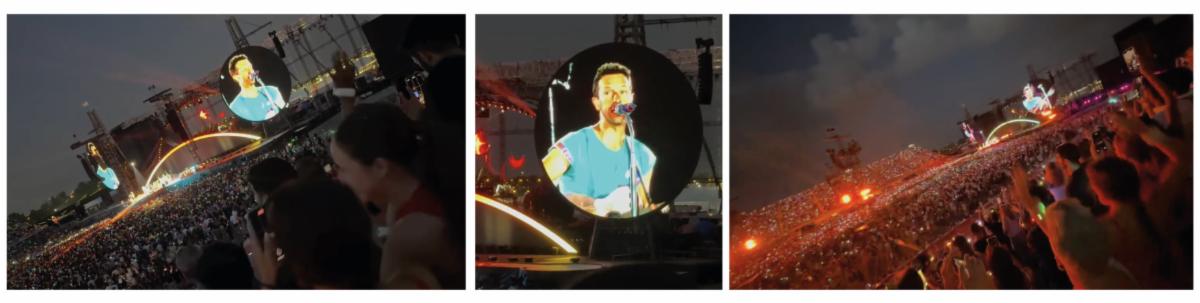
The highlight of July so far, has been the Coldplay concert at the Rogers Stadium, Downsview. It was amazing despite all the stadium and travel criticism and more importantly it was a spectacular night. I saw Coldplay in Budapest last August and it was magical then and did not disappoint now. Love this band!
| | I have had the delightful pleasure of working remotely at the cottage for most of July and am loving every minute of the view. I love waking up to the water, it is peaceful and calm in what can be a not so peaceful practice area. I am grateful for the balance. I should also mention that Charlie is also loving the remote work, though she misses all her friends at WEL. | | |
Bryan is an incoming Member at Large for the CBA Wills, Estates and Trusts section. Nima has also been newly elected to be an Executive member of the OBA’s Elder Law Section. I know they will do great work and make meaningful contributions. I look forward to seeing their contributions in action.
Finally, thank you for all your continued support and faith in our team. We appreciate your referrals and entrusting us with your client matters. We take our commitments seriously and do not underestimate the power of the relationships we build.
As ever,
Enjoy the Read,
Kim
| | 1. STEP PRIVATE CLIENT AWARDS GALA | |
WEL Partners is delighted to be a finalist for the 2025 STEP Private Client Awards in the Boutique Firm of the Year (legal) category. We look forward to celebrating with all nominees and finalists at the awards ceremony in London on September 18, 2025.
A complete list of finalists is available on the STEP Private Client Awards website: https://pca.step.org/finalists-2025
| | 2. CANADIAN BAR ASSOCIATION MEMBER AT LARGE | WEL Partners is thrilled to announce that Bryan Gilmartin is an incoming Member at Large for the Canadian Bar Association’s Wills, Estates and Trusts section. We are excited that Bryan has joined the CBA Executive Committee! | | 3. WEL PRESENTATIONS: ONTARIO BAR ASSOCIATION’S ESSENTIAL EVIDENCE SERIES FOR ESTATE LITIGATORS | | |
On July 15, 2025, WEL Partners’ Bryan Gilmartin, had the opportunity to present at the Ontario Bar Association’s Essential Evidence Series for Estate Litigators, on the topic of Preparing and Using Will-Say Statements. Bryan’s presentation focused on the importance of Will-Say Statements, the main components of Will-Says, and what things to consider when thinking about the use of Will-Say statements.
For more information on the OBA’s Evidence Series for Estate Litigators, see the following link: https://www.cbapd.org/details_en.aspx?id=ON_ON25TRU11V
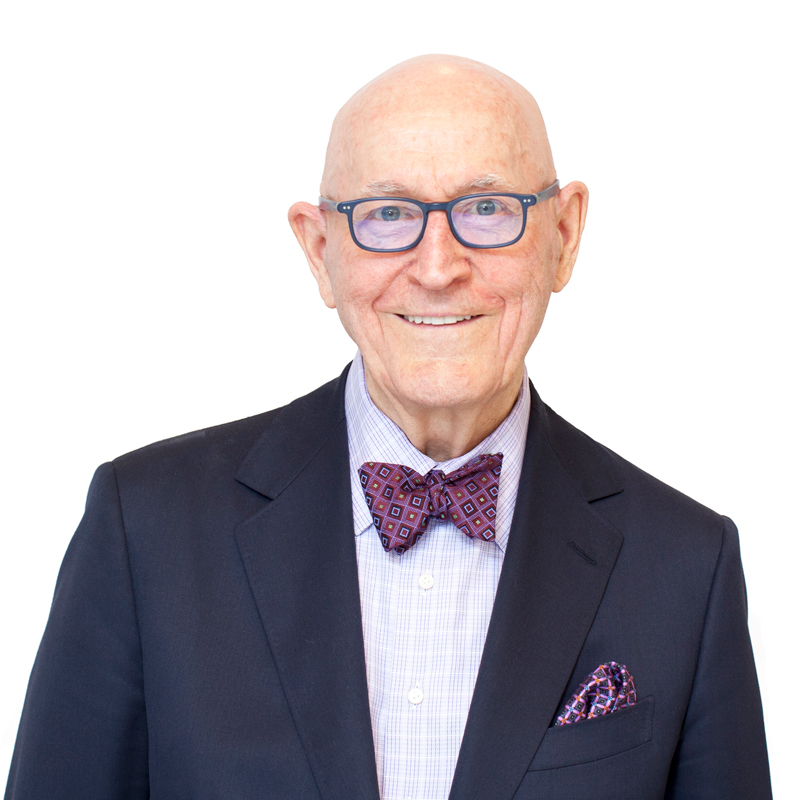
| | 4. CHAMBERS HIGH NET WORTH GUIDE 2025 - CANADA - PRIVATE WEALTH DISPUTES | | WEL Partners & Kimberly Whaley are proud to be recognized in Band 1 in the 2025 Chambers High Net Worth Guide - Canada - Private Wealth Disputes. | | II. WEL SHOUT OUTS & CONGRATULATIONS | | OSGOODE HALL LAW SCHOOL, ADJUNCT FACULTY AWARD | | |
WEL Partners congratulates Howard Black as a recipient of the 2025 Teaching and Faculty Awards at Osgoode Hall Law School. The awards recognise outstanding contributions to student learning, legal scholarship, and service to the academic community. Howard has advanced the quality of legal education at Osgoode and beyond. Congratulations to Howard and all the recipients of the 2025 Teaching and Faculty Awards. Howard has been teaching this course for many years and for which he wrote a curriculum text in association with. Every once and awhile, Howard invites me as a guest lecturer which is both enjoyable for me and provides me the opportunity to see just how much fun Howard has with his students, and how they engage with him. Well done, Howard!
For more information on the award, and celebrating the excellence in teaching, research, and service at Osgoode, please click the following link: https://www.osgoode.yorku.ca/news/celebrating-excellence-in-teaching-research-and-service-at-osgoode/
| | DEMETRE VASILOUNIS & RACHEL BLUMENFELD PUBLISH IN STEP TOOLKIT | | III. MATURE MATTERS BLOG SERIES | | |
By Emily Caza
As Ontario’s population ages, protecting the health, dignity, and rights of older adults, especially those living in long-term care and retirement homes, has become a matter of urgent public concern.
This blog series will explore existing and emerging legislation and jurisprudence aimed at protecting those amongst society’s most vulnerable, older adults in residential care. I will analyze our current legal safeguards, proposed reforms, and the evolving landscape of elder care law in Ontario. Join me as I learn how our laws strengthen and support accessible, equitable, and high-quality home and community care services in Ontario.
PART 1: WHAT ONTARIO’S SENIORS AND CAREGIVERS SHOULD KNOW ABOUT THE SUPPORT FOR SENIORS AND CAREGIVERS ACT, 2025
Many seniors live with complex conditions like dementia, rely heavily on caregivers, and require culturally sensitive, regulated support systems.
In May 2025, the Ontario government reintroduced the Support for Seniors and Caregivers Act, 2025, a legislative reform aimed at improving care standards, enhancing resident protections, and recognizing the essential role of caregivers. The Act proposes changes to both the Fixing Long-Term Care Act, 2021 and the Retirement Homes Act, 2010.
This blog highlights the most important things seniors, and their caregivers need to know about the proposed reforms, and what they may mean for long-term care, retirement living, and caregiving in Ontario.
Key Provisions
1. A Right to Dementia-Specific Care
Under the new legislation, every long-term care home would be required to provide an organized dementia care program, developed and supervised by qualified staff.[1] This change reflects a growing recognition that over 60% of Ontario’s long-term care residents are living with dementia, and that structured, evidence-informed programs are no longer optional.
Care homes would need to tailor these programs to the cognitive, emotional, and physical needs of residents, with an emphasis on individualized treatment plans and therapeutic engagement.[2]
2. Legal Recognition of Caregiver Support
One of the most significant changes proposed is the formal recognition of caregiver access rights. Seniors in both long-term care and retirement homes would have the legal right to receive ongoing support from caregivers, family members, or chosen support persons, even during outbreaks or operational restrictions.[3]
In retirement homes specifically, these rights would be enshrined in law to prevent isolation and ensure consistent emotional and social support, which is essential to seniors’ well-being.
3. Cultural, Religious, and Linguistic Inclusion
The Act introduces a requirement that care homes establish cultural, religious, and linguistic programming, ensuring that all residents, regardless of background, feel respected and understood.[4] This includes enhanced provisions for French-language services and the development of care models that reflect Indigenous, immigrant, and minority identities.[5]
These new obligations reflect Ontario’s diversity and respond to longstanding calls for culturally appropriate elder care.
4. Stronger Protections Against Abuse and Neglect
A cornerstone of the Act is the introduction of new offences for abuse, neglect, or failure to provide adequate care.[6] These are supported by expanded enforcement tools such as stronger inspection and investigation powers,[7] and the ability to prosecute operators who fail to meet safety and care standards.[8]
These legal tools aim to hold facilities accountable and give families and residents a clearer path to justice when care breaks down.
5. Clinical Oversight in Long-Term Care Homes
The Act proposes that every long-term care home must appoint a Clinical Director: a registered nurse in the extended class or a physician.[9] Currently, a Clinical Director must be a physician.[10] Broadening the scope of those authorized to hold this position is intended to bolster interprofessional care from those with specific expertise in aging.
For seniors and families, this change promises improved leadership, improved care planning, and a safeguard against disorganized or unsafe clinical practices.
A $114 Million Commitment Behind the Legislation
Legislation without funding is often symbolic. The Ontario government has paired this bill with a $114 million investment, including $80 million over 3 years to expand dementia programming.[11]
This financial backing suggests the government’s intent to support institutional care for Ontario’s aging population.
A Step Forward, But Not the Finish Line
The Support for Seniors and Caregivers Act, 2025 is a positive and long-overdue shift toward better dementia care, caregiver inclusion, and culturally safe services in Ontario’s long-term care and retirement homes.
Despite this progress, Ontario’s current systems have long been plagued by chronic underfunding, staff shortages, inconsistent regulatory oversight, and inadequate enforcement of care standards. The COVID-19 pandemic tragically exposed just how vulnerable these systems are, with many facilities failing to provide even basic levels of safety, hygiene, and emotional support. Reports of neglect, isolation, and culturally inappropriate care have been disturbingly common, pointing to systemic issues that require more than just legislative promises – they demand ongoing accountability.
Whether you are a senior, caregiver, health professional, or advocate, staying informed about your rights will remain a key part of ensuring that Ontario’s laws treat the systems that elders are growing increasingly reliant on with dignity and safety… Stay tuned for more.
---
[1] Bill 14, An Act to amend the Fixing Long-Term Care Act, 2021 and the Retirement Homes Act, 2010, 1st Sess, 44th Leg, Ontario, 2025, at schedule 1, cl 2 [Bill 14].
[2] Ontario, Legislative Assembly, Hansard, 43rd Leg, 1st Sess, No 192 (5 December 2024) at 10 [Legislative Assembly, Hansard].
[3] Bill 14, supra note 1 at schedule 2, cl 1.
[4] Ibid at schedule 1, cl 3.
[5] Ibid at schedule 1, cl 15; Legislative Assembly, Hansard, supra note 2 at 11–12.
[6] Bill 14, supra note 1 at schedule 1, cl 5.
[7] Ibid at schedule 1 cl. 11–12.
[8] Ibid at schedule 1, cl 5.
[9] Ibid at schedule 1, cl 7
[10] Ibid at schedule 1, explanatory note.
[11] Ontario Taking Action to Support Seniors and their Caregivers, online: Ontario Newsroom <Ontario Taking Action to Support Seniors and their Caregivers | Ontario Newsroom>.
| | (i) DISCLAIMER AND CONTRARY INTENTION | | |
By Albert H. Oosterhoff
1. Introduction
‘No man is bound to take an estate against his will’ said Kelly CB in Bence v Gilpin.[1] Thus, if you do not wish to accept a benefit left to you in a will or to which you are entitled on a person’s intestacy, you may disclaim it. The disclaimer has the effect of avoiding the benefit, so it is treated as though it never existed.[2] The question then becomes, what happens to the property that is the subject matter of the gift or benefit? If the disclaimer is of a share of an intestate estate, its effect is to augment the shares of the other next-of-kin.[3] On the other hand, if the gift is testamentary and is specific, if falls into residue, but if it is a gift of residue, it goes out on intestacy.[4] However, in the case of testamentary gifts, this is subject to a contrary intention in the will. In other words, the testator may direct that if a beneficiary disclaims the subject matter of the gift will be redirected to other beneficiaries. But it seems to be unusual for a testator to refer to a possible disclaimer. The typical language is, ‘if the gift fails …’ That then raises the question whether a gift fails if the beneficiary disclaims it.
Wills legislation in common law jurisdictions all contain a lapse provision which states that except when[5] a contrary intention appears by the will, a devise or bequest ‘that fails or becomes void’ because the devisee or donee, dies ‘in the lifetime of the testator, or by reason of the devise or bequest being contrary to law or otherwise incapable of taking effect’, it falls into the residuary devise or bequest, if any, in the will.[6]
Ontario appears to be the only jurisdiction that includes disclaimer in its lapse provision. It states that if property included in a devise or bequest ‘that fails or becomes void by reason of (a) the death of the devisee or donee, in the lifetime of the testator; or (b) the devise or bequest being disclaimed or being contrary to law or otherwise incapable of taking effect’, the property falls into residue.[7]
The question whether a reference to a failed gift applies also to a gift that is disclaimed arose in a recent English case, White v Williams.[8]
2. Facts
The testator, Elfed Williams, left the residue of his estate in trust in six equal parts to named persons. One of those persons was his son Keith. Keith was estranged from his father during the latter’s lifetime. He told the estate’s solicitors repeatedly that he wanted nothing to do with the estate, so they sent him a Notice of Disclaimer, but Keith did not provide them with a signed copy. The executor then brought proceedings to determine what should happen to the property left to Keith. Master Clark made an order to the effect that by his conduct Keith had shown an intention to disclaim his entitlement under the Will.
The Will contained two substitutionary gifts. The first was part of the gift to Keith in clause 6(a)(v). It provided that if Keith predeceased the testator, his share would be held in trust for his children who survived the testator. Keith had no children. The second substitutionary gift was contained in clause 6(b). It provided that if ‘if at any time’ any of the shares in clause 6(a) ‘should fail then from the time of failure that share … shall accrue to the other share or shares (and equally if more than one) the trusts of which have not at that time failed’.
3. Analysis and Judgment
Master Clark stated that in the circumstances the issue was whether Keith’s share should devolve either on the five remaining residuary beneficiaries under clause 6(a), or on a partial intestacy to the intestacy beneficiaries. The Master ordered that the claimant, who had identified the intestacy beneficiaries, inform them of his position and whether they wished to claim an entitlement to Keith’s share. They affirmed that they did.
The Master stated that at common law, in the absence of a substitutionary clause, a disclaimed gift passes under the rules of intestacy. Legislation introduced in 2011 made possible changes to this rule. However, the Master was of opinion that it was not necessary to address the effect to the legislation to decide the case.
The Master considered first what should happen if Keith is not to be treated as having predeceased the testator. In that case, his disclaimer would cause a partial intestacy, unless the Will provides otherwise. The Will does provide otherwise in clause 6(b), which states what happens when a trust fails, and the Master held that the natural and ordinary meaning of the italicized word extends to a disclaimer, even though it does not take place at the date of the testator’s death but at a later time.
The Master then considered what should happen if Keith is to be treated as having predeceased the testator. In that case, the substitutionary gift to his children in clause 6(a)(v) would fail since he had none. Clause 6(b) would then apply so that his share would devolve upon the other residuary beneficiaries named in clause 6. Consequently, the intestate heirs’ claim failed.
---
[1] (1868), LR 3 Exch 76 at 82.
[2] Biderman v R, 2000 DTC 6148 (Fed CA).
[3] Re Scott; Widdows v Friends of Clergy Corp, [1975] 1 WLR 1260, [1975] 2 All ER 1033.
[4] Re Stuart, 1964 CarswellBC 60, and many other cases. However, Manitoba cases have taken the view that the provision applies to both specific and residuary gifts. See, e.g., Cera Estate v Wolfe (1986), 25 ETR 68 (Man QB).
[5] Statutes (and indeed lawyers) invariable use the spatial adverb ‘where’ in such a context, rather than the temporal adverb ‘when’. I have fulminated against this aberrant usage on other occasions.
[6] Manitoba cases have taken the view, contrary to cases like Stuart, ibid., that this provision applies to both specific and residuary gifts. See, e.g., Cera Estate v Wolfe (1986), 25 ETR 68 (Man QB).
[7] Succession Law Reform Act, RSO 1990, c S.26, s. 23. I am pleased to note that s 23 uses the correct temporal adverb ‘when’.
For a detailed discussion of the law of disclaimer, see Oosterhoff on Wills, 9th ed by Albert H Oosterhoff, C David Freedman, Mitchell McInnes, and Adam Parachin (Toronto: Thomson Reuters, 2021, §14.11. And see also my blog, ‘Disclaimer’, https://welpartners.com/blog/2021/12/disclaimer/ .
[8] [2025] EWHC 115 (Ch).
| (ii) INTERPRETATION OF CHARITABLE TESTAMENTARY GIFT | | |
By Albert H. Oosterhoff
1. Introduction
Unfortunately, testators often draft their own wills, and that can cause interpretive problems down the road. That is what happened in the recent case, Gruber v Hebrew University of Jerusalem.[1]
2. Facts
The testator, Yaacov Glickman, died in June 2022. He had no children and was predeceased by his wife in December 2021. The testator, who was an academic, prepared and executed his own will in 2003. It names his friend, the Applicant Moshe Gruber, his executor, who obtained probate. The Will directs the executor that on the testator’s wife’s death he shall ‘use the residue of my estate to establish an endowment at the Hebrew University of Jerusalem’ (emphasis supplied). But the next paragraph states, ‘my entire estate shall be bequeathed to the Hebrew University of Jerusalem for the purpose of creating a foundation’ (emphasis supplied).
The Will continues with the following statement:
That my entire estate shall be bequeathed to the Hebrew University of Jerusalem for the purpose of creating a foundation in memory of my parents …. The proceeds resulting from the investment of this money (and whatever sums of the principal deem [sic] appropriate by the Trustee) that come under the jurisdiction of the Foundation shall be designated for the sole support of an academic project that shall be judged as instrumental in “educating Jews and Arabs to live in peaceful coexistence”. The following are basic assumptions that must guide the allocation of funds for the purposes of this project (emphasis supplied).
This is followed by ten paragraphs of the basic assumptions.
By way of an affidavit by a representative of the University, the Hebrew University of Jerusalem declared that it is prepared to accept the gift and apply the guidelines and basic assumptions.
The Applicant brought the application because he is concerned that the language of the bequest may be internally inconsistent, ambiguous, and vague. He raises the following specific questions:
- Whether there is a meaningful difference between ‘the residue of my estate’ and ‘my entire estate’.
- Whether there is a meaningful difference between ‘establishing an endowment’ and ‘bequeathing my entire estate to create a foundation’.
- Whether, in naming the Applicant a ‘Trustee’, he was to act as a formal trustee or in some other capacity, such as an academic advisor.
- What happens if the ‘assumptions’ cannot be met or if they can be interpreted as conditions.
3. Analysis and Judgment
Justice Papageorgiou began her analysis with a statement of the principles that court should follow in interpreting a will. I have a concern with what she says in paragraph 13: ‘Therefore, while the court may choose not to consider surrounding circumstances to determine a testator’s intention beyond the plain language of the will, the general approach in Canada is to take the surrounding circumstances into consideration, even when the will’s language is not ambiguous’.
Just as Canadian courts are now required to interpret contracts in light of their factual matrix, that is, they must take surrounding circumstances into account, they have extended that approach to the interpretation of wills. Thus, for example, In Zindler v The Salvation Army[2] Beard JA concluded:
[10] Given that both contracts and wills are now to be interpreted in the context of their factual matrix, I am of the opinion that the analysis of the application of the Housen[3] principles to the interpretation of contracts, as set out in King[4] (see paras. 19-29) and Sattva[5] (see paras. 42-55), applies equally to the interpretation of a will. To the extent that the interpretation of a will is to be done in the context of the surrounding circumstances, that involves a question of mixed fact and law, as explained in Housen, unless there is an extricable point of law, which is then subject to a correctness standard. (See King at para. 21.) Thus, the applicable standard of review regarding the interpretation of a will is now that of palpable and overriding error.
Appellate courts have adopted this approach in, for example, Hicklin Estate v Hicklin,[6] Ross v Canada Trust Company,[7] and Hipkins v McDonald.[8] Therefore, in my opinion courts do not have an option whether to consider evidence of surrounding circumstances when the language of a will is unambiguous. They must do so. In fact, Justice Papageorgiou concluded that the Will clearly demonstrates that the Testator intended to make a gift to the Hebrew University. She states that this is consistent with the plain and ordinary meaning of the words used, and then she goes on to say, ‘If required, it is also consistent with the surrounding circumstances’. Her Honour also relied in the presumption that a testator does not intend to die intestate, which means that if a will is capable to two constructions, one of which leads to an effective disposition of all or part of the estate, while the other would result in an intestacy, the court will prefer the first construction.
Her Honour then addressed the Applicant’s questions.
For the first, she held that there was no meaningful difference between ‘residue’, and ‘bequest’ of the ‘entire estate’ in the Will, since the University gets the entire Estate.
For the second question, she noted that an ‘endowment’ is a gift of money or property to an institution for a specific purpose, such establishing a fund to maintain a public institution, charity, college, or another purpose. A ‘foundation’ is a fund established for charitable, educational, religious, research, or other benevolent purposes. In this case she concluded that the Will makes an outright gift to the University and does not create a foundation as a trust or nonprofit corporation under the Income Tax Act.[9] She also held that the use of the word ‘assumptions’ that are to ‘guide’ the allocation of the funds is precatory, because the assumptions recognise that there has to be flexibility in their use because of potential changes in the Middle East and the State of Israel. Since they are precatory, there is no certainty of intention that is necessary to create a trust. Moreover, since the Testator, a lay person, made the will himself, he used the terms ‘foundation’ and ‘endowment’ colloquially and interchangeably. Further, since he is a graduate of the University it is understandable that he intended the University to manage the fund rather than through a trust. In any event, the Will gives no specific direction for the creation of a trust.
With respect to the third question, Justice Papageorgiou noted that while the Will calls the Applicant a Trustee of the gift to the University, it does not make provision for a formal trust structure. The words ‘bequeath’ of the ‘entire estate’ to the Hebrew University suggests the absence of a trust. The list of assumptions does state that a committee which selects proposals must be shared by the ‘designated Trustee’ of the Will. But in that context the phrase appears to refer to an academic context rather than to the management of the fund. This is clear also from the fact that the Applicant is able to delegate duties to his representative, which he would not be able to do if he were a formal Trustee.
With respect to the fourth question, her Honour held that the Will did not speak of binding ‘conditions’. Rather it creates an outright gift that is accompanied by precatory, non-binding wishes.
Consequently, Justice Papageorgiou made an order that the Applicant must distribute the residue of the Estate to the Hebrew University of Jerusalem; that the University shall comply with the guidelines in the Will; and that the Applicant as ‘Trustee’ is authorized to appoint a representative, including the University itself, without restriction to the length of time or permanence of the appointment.
---
[1] 2025 ONSC 3088.
[2] 2015 MBCA 33.
[3] Housen v Nikolaisen, 2002 SCC 33, para 46.
[4] King v Operating Engineers Training Institute of Manitoba Inc, 2011 MBCA 80
[5] Sattva Capital Corp v Crestin Moly Corp, 2014 SCC 53, paras 42-55.
[6] 2019 ABCA 136, paras 90-104.
[7] 2021 ONCA 161, paras 30-34.
[8] 2025 SKCA 34, paras 43-45.
[9] RSC 1985. c 1 (5th Supp).
| | (iii) NO DIGITAL WILLS FOR VALIDATION: THE ELECTRONIC DOCUMENT EXCEPTION OF SECTION 21.1 OF THE SLRA | | |
By Nima Hojjati
In Madhani v. Fast, 2025 ONSC 4100, Justice Sanfilippo delivered a clear ruling: an unsigned Word document prepared by a will drafting lawyer falls under the electronic document exception and cannot be validated under Section 21.1 of the Succession Law Reform Act, RSO 1990, c S.26 (“SLRA”).
This decision involved a testator who passed away on the very morning they were scheduled to attend their lawyer’s office to sign a new will.[1] The estate trustee (under a previous will) brought an application to validate the unsigned draft will. A key piece of evidence relied upon was an email sent to the drafting lawyer by a non-beneficiary, who confirmed that the testator “went over the will” and everything “look[ed] good”.[2]
Despite finding that the draft will fell under the electronic document exception, Justice Sanfilippo nonetheless applied the prevailing test for testamentary intentions from the Manitoba Court of Appeal in George v. Daily, 1997 CanLII 17825 (MB CA). His Honour concluded that the applicant failed to prove, on a balance of probabilities, that the draft Word document represented the testator's deliberate or fixed and final expression at the time it was created.[3] As such, court-ordered validation was unavailable on two grounds: the statutory exception and a failure to meet the substantive test.
Notwithstanding that the relief sought was unopposed, Justice Sanfilippo held that the nature of the authority granted by the SLRA obligates an Application Judge to ensure that the requirements for Section 21.1 are satisfied by the evidence.[4] Although the application was not successful, Justice Sanfilippo noted that the evidence in support was credible, corroborated, and tendered without self-interest.[5] Costs were ordered in favour of the estate trustee on a full indemnity basis from the estate’s capital, as Justice Sanfilippo noted that “the identification of the valid and effective will for probate is a proper task for the executor and trustee and material to the administration of the estate”.[6]
Statutory Exception
Justice Sanfilippo held that by operation of section 21.1(2) of the SLRA and Section 31(1)(1) of the ECA, a proposed document for court-ordered validation “cannot be an electronic document but rather must be in physical form”.[7]
In arriving at this conclusion, Justice Sanfilippo cited Allison v. McBride, 2025 ONSC 2828 and White v. White, 2023 ONSC 7286. In both cases, Justice Myers previously raised the issue of the statutory exception for electronic documents in obiter dictum (specifically, in two footnotes).[8]
Section 21.1(2) of the SLRA states:
No electronic wills
(2) Subsection (1) is subject to section 31 of the Electronic Commerce Act, 2000. 2021, c. 4, Sched. 9, s. 5.
Section 31 of the Electronic Commerce Act, 2000 (“ECA”) states:
Documents to which Act does not apply
31 (1) This Act does not apply to the following documents:
1. Wills and codicils.
2. Trusts created by wills or codicils.
3. Powers of attorney, to the extent that they are in respect of an individual’s financial affairs or personal care.[…]
Additionally, Justice Sanfilippo noted that “the provisions of the ECA that validate electronic documents as equivalent to a document in writing, such as ss. 4 and 5, do not apply to wills, codicils and trusts created by wills and codicils”.[9]
Substantive Analysis
Beyond the electronic document exception, Justice Sanfilippo, for completeness, still undertook a substantive analysis of the draft will and observed that the emerging principles for court-ordered validity can be summarized as follows:
(a) “A determination of whether to exercise the court’s curative power with respect to a non-compliant document is inevitably and intensely fact-sensitive.”
(b) Two issues must be established. First, the document or writing must be shown to be authentic. “The second, and core, issue is whether the non-compliant document represents the deceased’s testamentary intentions, as that concept was explained in George.”
(c) The non-compliant document must record a “deliberate or fixed and final expression of intention as to the disposal of the deceased’s property on death.”
(d) The deliberate or fixed and final intention need not be irrevocable, as valid and effective wills are revocable until the death of the testator. “Rather, the intention must be fixed and final at the material time, which will vary depending on the circumstances.”
(e) The factors that might inform whether the document embodies the deceased’s testamentary intentions include “the presence of the deceased’s signature, the deceased’s handwriting, witness signatures, revocation of previous wills, funeral arrangements, specific bequests and the title of the document”.
(f) The greater that the document departs from the formal statutory requirements, the harder that it may be for the court to be satisfied that it embodies the deceased’s testamentary intention.[10]
Justice Sanfilippo noted that “there is a reason for heightened caution when considering an unsigned document or writing said to express testamentary intentions” – testators do change their minds.[11]
Ultimately, Justice Sanfilippo found no reliable evidence that the testator had either instructed the drafting lawyer or considered the draft will to be a deliberate or fixed and final expression of their intentions.[12] His Honour concluded:
Expressions of intentions as to how a testator would like their property to be disposed of after death are not testamentary intentions. Expressions of intentions, alone, are insufficient to ground a valid will.[13]
---
[1] Madhani v. Fast, 2025 ONSC 4100 at para 3.
[2] Madhani v. Fast, 2025 ONSC 4100 at para 20.
[3] Madhani v. Fast, 2025 ONSC 4100 at para 59.
[4] Madhani v. Fast, 2025 ONSC 4100 at para 40; citing Hejno v. Hejno, 2025 ONCA 249, at paras. 2 and 9.
[5] Madhani v. Fast, 2025 ONSC 4100 at para 8.
[6] Madhani v. Fast, 2025 ONSC 4100 at para 61.
[7] Madhani v. Fast, 2025 ONSC 4100 at para 45.
[8] Allison v. McBride, 2025 ONSC 2828, at para 11 and footnote 2 and White v. White, 2023 ONSC 7286, at para 32 and footnote 6.
[9] Madhani v. Fast, 2025 ONSC 4100 a para 44.
[10] Madhani v. Fast, 2025 ONSC 4100 at para 33.
[11] Madhani v. Fast, 2025 ONSC 4100 at para 55.
[12] Madhani v. Fast, 2025 ONSC 4100 at para 57.
[13] Madhani v. Fast, 2025 ONSC 4100 at para 59.
| | (iv) WHAT IS THE CY-PRÈS DOCTRINE? | | |
By Gabriella Banhara
The Cy-Près doctrine is a legal principle used in the context of charitable trusts in Ontario when the original purpose of a charitable gift becomes impossible or impractical to fulfill. Under the Cy-Près doctrine, the court has the authority to direct the gift to an alternate recipient or purpose that closely resembles the original intent of the donor. This is particularly applicable when the original charitable objective cannot be carried out due to changes in circumstance, such as the dissolution of the intended beneficiary organization.[1]
The court may invoke the Cy-Près doctrine to redirect a gift in a Will to a different institution or organization than the one originally specified if:
A. The gift in the Will is impractical or impossible;
B. The testator manifested a general charitable intention in making the gift in the Will; and
C. The gift to the alternative institution or organization would be a gift resembling the initial purpose of the gift in the Will.[2]
Professor Oosterhoff writes in his text, “Oosterhoff on Wills,” that the Cy-Près doctrine:
“Allows the court to vary a gift so as to prevent the failure for perpetuities if none of the other remedies included in the legislation save the gift”.[3]
In Romanic v. La Fabrique de la Paroisse Sainte-Sophie,[4] 2020 ONSC 3524, the court directed a gift to an alternate recipient after the original beneficiary, a parish, was dissolved prior to the death of the testator. This decision demonstrates the court's application of the Cy-Près doctrine when a beneficiary ceases to exist.[5]
In Dors et al. v. The Public Guardian and Trustee[6], 2023 ONSC 1503, the court also applied the Cy-Près doctrine. The testator had strong ties to Sainte-Sophie parish, but the Mission named in the will no longer existed. The court found a general charitable intention and directed the residue to the Sainte-Sophie parish to resemble the initial purpose of the gift under the Will.[7] In this case, the court established that the application of the Cy-Près doctrine, based on charitable intent, is determined by the following criteria:
- The bequest is a bequest without limitation to an institution which was admittedly a charitable institution;
- The bequest is a residuary bequest;
- Provision has already been made for the next of kin in para. 6(c) of the will of the testatrix; and
-
All the beneficiaries mentioned in para. 6(d) of the will are admittedly charitable institutions (as compared to para. 6(b) of the will where only some of the legatees are charitable institutions).[8]
In order for the Court to apply the Cy-Près doctrine, there must be a finding that a testator’s Will “manifested charitable intention”.[9]
---
[1] Corporate and Practice Manual for Charities and Not-for-Profit Corporations
CARTERCP-WL § 19:17
[2] Dors et al. v. The Public Guardian and Trustee, 2023 ONSC 1503 (“Dors”) at para 20
[3] Oosterhoff, A. H., Freedman, C. D., McInnes, M., & Parachin, A. (2016). Oosterhoff on Wills (Eighth edition.) [“Oosterhoff On Wills”] at page 777
[4] Romanic et al v. La Fabrique de la Paroisse Sainte-Sophie et al., 2020 ONSC 3534
[5] Ibid at para 19
[6] Dors at para 21
[7] Ibid at para 15
[8] Ibid at para 16
[9] Ibid at para 21
| | (v) FEDERAL COURT CITES ONTARIO CASE RE: AI HALLUCINATIONS | | |
By Jaclyn Holdsworth
In a previous blog post, I described a recent case in Ontario Superior Court of Justice that got sidetracked by AI hallucinations.[1] The case, Ko v Li,[2] was a new data point for anyone hoping to map out the possible consequences of accidentally submitting an AI hallucination to the Courts.
Now, we have another data point.
Lloyd's Register Canada Ltd. v Choi[3]
LRC v Choi was a proceeding before the Federal Court, to decide whether a Motion Record should be removed from the court file.[4] The respondent (Choi) was self-represented, and he used AI to draft the Motion Record in question.[5] The applicant claimed that the Motion Record was scandalous, frivolous, vexatious, and an abuse of process.[6] Notably, one of the cases the respondent relied on in the Motion Record was apparently a hallucination.[7]
The Court seems to think this case was more egregious than the circumstances in Ko v Li.[8] For one, the respondent in LRC v Cho has a history of (mis)using AI. The respondent was also a party in a proceeding before an administrative tribunal, where almost all of the 30+ references in his reply submissions were AI hallucinations.[9] Additionally, the respondent in LRC v Cho did not take full responsibility, unlike the party at fault in Ko v Li. Rather, the respondent in LRC v Cho admitted to using AI for drafting and research but denied that the citation error was a hallucination. The court did not accept the respondent’s alternate explanation for how the faulty citation was included.[10] Finally, LRC v Cho took place in the federal court, where practice directions require all parties to include a written declaration if they use AI to generate materials for litigation.[11] The respondent did not submit a declaration, even when reminded by the Court to do so.[12]
The Court gave what they considered a “modest” sanction under the circumstances.[13] The respondent requested leniency due to his self-represented status and mental health issues. However, the Court decided to remove the respondent’s Motion Record to maintain the integrity of the judicial process. Additionally, although the applicant did not request solicitor-client costs, the Court still awarded the applicants $500 in costs.[14] The Court noted that “A party who assists the Court in ensuring the orderly administration of justice should not have to suffer costs.”[15]
AI Hallucination take-aways
Even with the greater “latitude” Courts afford self-represented litigants, AI hallucinations can get a motion thrown out and can result in a cost order.
---
[1] Growing Professional Obligations Surrounding AI Hallucinations – It’s time to talk about AI, but do you know what you’re talking about? | WEL Partners Blog
[2] Ko v Li, 2025 ONSC 2766 (CanLII), <https://canlii.ca/t/kbzwn>.
[3] Lloyd's Register Canada Ltd. v. Choi, 2025 FC 1233 (CanLII), <https://canlii.ca/t/kd4w2>
[4]Ibid
[5]Ibid.
[6]Ibid
[7]Ibid.
[8]Ibid
[9]Ibid
[10]Ibid.
[11] CJ P.S. Crampton, May 7, 2024, NOTICE TO THE PARTIES AND THE PROFESSION
[12]Lloyd's Register Canada Ltd. v. Choi, 2025 FC 1233 (CanLII)
[13]Ibid.
[14]Ibid.
[15]Ibid.
|
| (vi) COURT TREATMENT OF CAPACITY ASSESSMENT: DUFFY V. MCDANIEL, 2025 ONSC 2899 | | |
By Oliver O'Brien
Duffy v. McDaniel (“Duffy”),[1] concerned a Motion to remove the Public Guardian and Trustee (“PGT”) as a party’s Litigation Guardian. Upon consideration of all the available evidence and a capacity assessment, the court dismissed the motion to remove the PGT.
Duffy highlights how the court will carefully consider and scrutinize capacity assessments, including how the assessment was conducted, the instructions provided to the assessor and ultimately the evidence considered and relief upon to form the opinions.
Facts
In February 2021, Stephen Duffy (“Stephen”) was struck by a car and suffered traumatic brain injuries. In April 2021, Stephen, as well as his daughter Adriana, commenced an Action against the drivers of the car. The PGT acted as litigation guardian for Stephen and Adriana.[2]
In May 2022, Stephen underwent a capacity assessment conducted by Ms. Nicole Robert (“Ms. Robert”), a designated capacity assessor (the “2022 Assessment”). Ms. Robert concluded that Stephen was incapable of managing his property within the meaning of section 6 of the Substitute Decisions Act (“SDA”).[3] Accordingly, the PGT also became his statutory guardian of property. This 2022 Assessment was conducted at the request of Stephen’s counsel.[4]
In May 2023, a tentative settlement was reached in the Action which required court approval on Stephen and Adriana's behalf in accordance with Rule 7 of the Rules of Civil Procedure (the “Rules”).[5] In late 2023, Stephen brought a motion for the approval of a contingency fee retainer agreement, the settlement, the management of the net settlement funds for Stephen’s benefit and proposed solicitor-client accounts for Stephen and Adrianna.[6]
In March 2024, the court approved the motion but required additional evidence to consider the proposed management of the net settlement funds for Stephen’s benefit and the fee portion of the proposed solicitor-client accounts. At this time Stephen expressed an interest in having his capacity to manage property re-assessed in order to have the PGT removed as his litigation guardian.[7]
In October 2024, Ms. Robert once again assessed Stephen’s capacity (the “2024 Assessment”). Her conclusion was that Stephen was capable of managing his property within the meaning of the SDA.[8]
Legal Issue
The primary legal issue in Duffy was whether Stephen was capable of continuing the legal action without a litigation guardian. To appoint or remove a litigation guardian requires the court to determine if the party is under disability. Under Ontario’s Rules, a ‘person under disability’ is defined in Rule 1.03 as either:
- A minor;
-
Someone who is mentally incapable pursuant to section 6 or section 45 of the SDA; or
-
An absentee pursuant to the Absentees Act.[9]
Section 6 and section 45 of the SDA provide the statutory criteria for determining the capacity to manage one’s property and personal care, respectively. Section 6 of the SDA provides as follows:
Incapacity to manage property
6 A person is incapable of managing property if the person is not able to understand information that is relevant to making a decision in the management of his or her property or is not able to appreciate the reasonably foreseeable consequences of a decision or lack of decision.[10]
In Duffy, the court made a distinction between the evidence required on guardianship application and, in this case, the removal of a litigation guardian which requires that the court is “satisfied that the earlier disability has been remedied and that it is appropriate that the individual no longer be represented by a litigation guardian”.[11]
Court Analysis of Capacity Assessment
Overall, the court was critical of the 2024 Assessment and the information available to Ms. Robert in forming her opinion as to Stephen’s capacity. In this regard, the court noted the following issues:
-
No application of capacity criteria: the court found that Ms. Robert did not demonstrate an application of section 6 of the SDA and its applicability to the Action. Specifically, she did not assess whether Stephen was able to understand information relevant in making a decision, or if he was able to appreciate the reasonably foreseeable consequences of a decision regarding the issues in the Action. In other words, Ms. Robert did not address the meaning of ‘disability’ within the meaning of the Rules.
- Lack of Relevant Evidence: the court found the 2024 Assessment lacked grounding in the pertinent documents related to the Action, including reference to the various pleadings, the settlement agreement and proposed solicitor-client accounts. This absence of information meant Ms. Robert could not evaluate Stephen’s capacity to understand and appreciate the consequences of decisions related to the litigation.
- Unsupported Conclusions: The court found that several opinions expressed in the 2024 Assessment were unsupported. For example, Ms. Robert found Stephen displayed the ability to appraise the risk and potential outcome of a decision or lack thereof, without reference to any matters reviewed. Moreover, Stephen had no impairment in logic when making future plans despite no evidence of discussions concerning what those future plans were.
Concluding Comments
The court found that, on the balance of probabilities and following consideration of the available evidence, the burden of proof had not been met to conclude that Stephen was no longer a party under disability.[12]
Duffy highlights that it is of utmost importance that a capacity assessor is provided with all the relevant information to a legal matter for them to make a fully informed decision. The lack of said information and the conclusions that flow will be criticized by the court.
---
[1] Duffy v. McDaniel, 2025 ONSC 2899 (“Duffy”).
[2] Duffy at paras 5 – 7.
[3] Substitute Decisions Act, 1992 SO c 30 (”SDA”), section 6.
[4] Duffy at para 8.
[5] Rules of Civil Procedure, RRO 1990 Reg 194, Rule 7.
[6] Duffy at para 9-10.
[7] Duffy at para 11.
[8] Duffy at para 12.
[9] Absentees Act, RSO 1990 c. A.3.
[10] SDA, section 6.
[11] Duffy at para 4, citing 626381 Ontario Ltd. V. Kagan, Shastri, 2013 ONSC 4114.
[12] Duffy at para 16.
|
| |
Ontario Police College Elder Abuse Course
Ontario Provincial Police, Orillia, ON
September 10 - 19, 2025
Speaking: Joanna Weiss and Oliver O’Brien
Canadian Lawyer Webinar – Assessing Capacity - Perspectives and Analysis from Medical and Legal experts
September 10, 2025
Speaking: Kim Whaley, Suzana Popovic-Montag, Bryan Gilmartin, Ian Hull, LSM, Dr. Kenneth Shulman, Dr. Sara Mitchell, Dr. Julia Kirkham, Dr. N. Herrmann, Professor R. Jacoby, University of Oxford, and Professor C. Peisah, University of New South Wales
University of Toronto: Medical Experts Course
The Role of the Medical Expert in Estate Litigation
September 11-12, 2025
https://sunnybrook.ca/calendar/event.asp?e=1848
Law Society of Ontario - Practice Gems: Probate Essentials 2025
Searching for Wills, Searching for Witnesses, Proving Signatures
September 26, 2025
Speaking: Kim Whaley and Kathleen Robichaud
https://store.lso.ca/practice-gems-probate-essentials-2025
Canadian Law Webinar: AI in an Estate Practice
October 16, 2025
Speaking: Kimberly Whaley, Ian Hull, Suzana Popovic-Montag, Bryan Gilmartin
TBD
Colloquium Legal Education Conference: Sudbury 2025
October 16 to 17, 2025
Speaking: Bryan Gilmartin & Kimberly Whaley
https://www.colloquiumsudbury.com/
LSO Estate Summit
October 22 to 23, 2025
TBD
Thunder Bay Law Association
October 30 to 31, 2025
Chair: Suzana Popovic- Montag - Hull & Hull LLP
Panelists: Jordan Atin, Kim Whaley, Ian Hull LSM - Hull & Hull LLP
https://tbla.ca/tbla-fall-conference/
Financial Planning Canada
Care, Capacity, and Complexity: Planning for Vulnerable Clients
November 17, 2025
Speaking: Kimberly Whaley, Karine Diedrich (CHPCA), Carol Lynde (Bridgehouse), and moderated by Tamara Center
| | VI. IN CASE YOU MISSED IT - RECENT BLOG POSTS | | WEL NEWSLETTER July 2025, Vol. 15, No. 4 | | | | |