WEL NEWSLETTER November 2024, Vol. 14, No. 8 | |
|
Dear Kenneth,
This month we celebrated with our friends at Goddard Gamage LLP, commemorating 25 years of practice at their firm. Jan Goddard, founder, and Nimali Gamage who joined a few years later have had a robust and well-regarded practice in Trusts, Estates & Elder Law. We had a great evening seeing our colleagues and friends. Congratulations on your successes!
| |
|
Ian Hull, Suzana Popovic-Montag, Bryan Gilmartin and I presented for Canadian Lawyer Webinar Series giving a 2024 Case Law Update of notable cases across Canada replete with litigator takeaways.
David Oswald gave a wonderful Lunch & Learn to our WEL Team this month on digital asset tracing and investigations. Thank you, David. (view presentation)
My Mom had an unfortunate fall this month and broke her left hip. She was in hospital for a week and is on the mend thankfully. The hospital staff were wonderful despite all the healthcare issues we are facing right now in Ontario-their team at St. Joseph’s Healthcare Hamilton were amazing. Interestingly, one of the Geriatricians who spoke to my mom, and I knew Judith Wahl. In fact, unsolicited the doctor raised Judith with me, stating that ACE came out and spoke with their team and provided education to them. The doctor spoke very highly of Judith, another testimonial to the lasting talent of Judith Wahl. We miss you, Judith! Thank you also to the team at Elder Caring Inc., Audrey Miller and Lori Eisen for helping us out in Mom’s after care while she gets back on her feet literally!
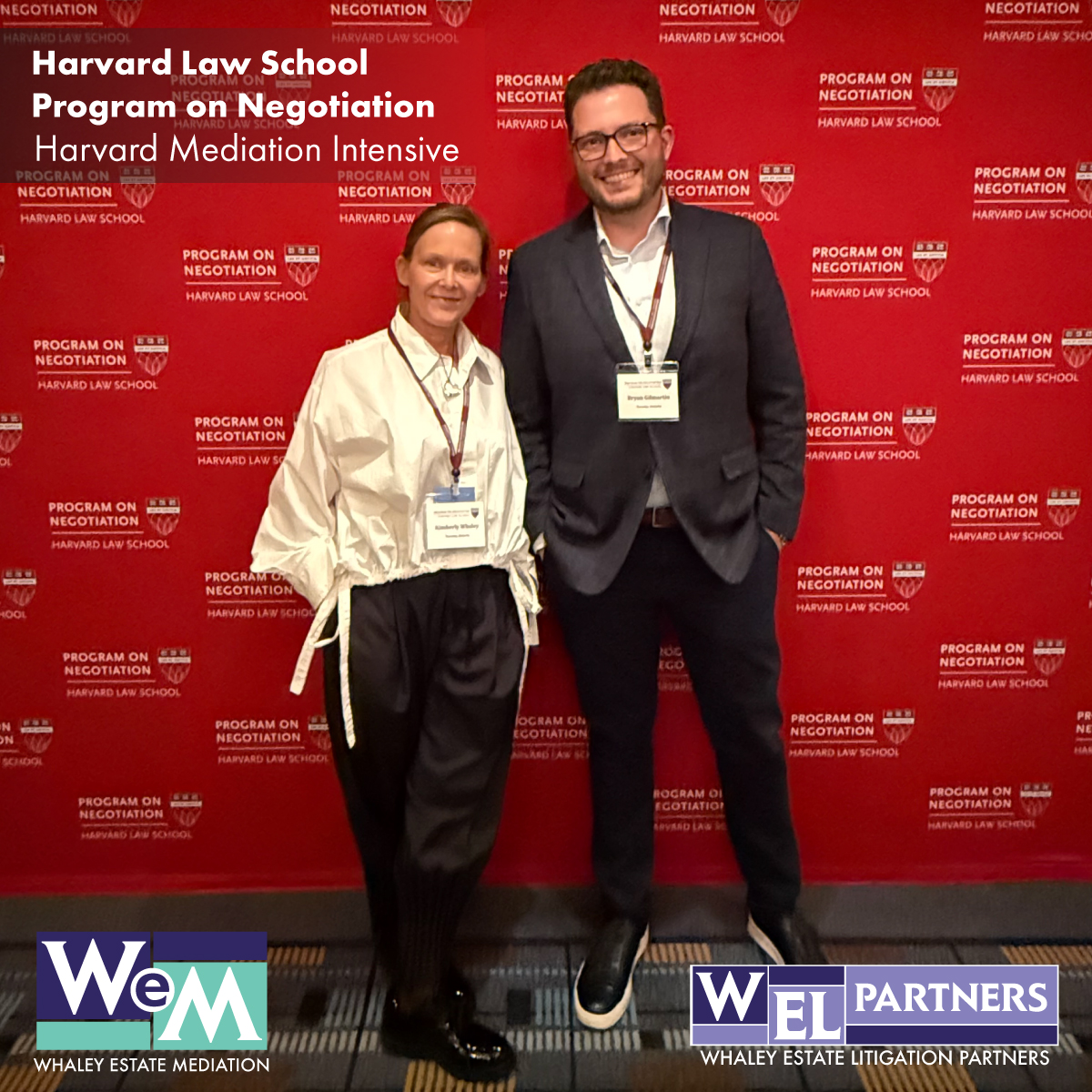
Notably, Bryan and I went to Harvard this month and we attained a further certification in advanced mediation skills. There were international participants from across the globe, including many from Canada. We conducted a great deal of role-play and redress of principles and approach. Ethics were examined as well as concepts of neutrality and impartiality and what such concepts really mean within the mediation context. We examined independence, confidentialities, equity and fairness, respect for the law and more. We have a new resource to read, “MEDIATION: NEGOTIATION BY OTHER MOVES”, the authors, ALAIN LEMPEREUR (our instructor), JACQUES SALZER, AURELIEN COLSON, MICHELE PEKAR, EUGENE B. KOGAN. Alain is Alan Slifka Professor and Director of the Conflict Resolution Program, Brandeis University, and Affiliate Faculty of the Program on Negotiation at Harvard Law School. Alain is a crisis mediator.
| |
|
Boston is a fantastic city to spend at University for a wekk, and we enjoyed some great seafood after work each day. We also met up with friends I met in Cayman in September for drinks-that was fun. Always great to meet nice people and to stay in touch. On the day we left, it was the famous Yale-Harvard football game, and I saw a friend from high school, Willa Berghuis who left BSS, went to Harvard and has worked for 36 years at JPMorgan in New York. Willa is now Vice Chairman at JPMorgan. She looks exactly the same-it was such a nice surprise after all these years….like 40 years!
We said goodbye to two of our team members this month, Evan Pernica and Fabiana Kennedy. Both have joined other law firms. We wish them every success in their continued careers. Oliver O’Brien and Chhavi Monga wrote their bar exams this month, and we look forward to learn of their successes.
Sammi and I went to NYC for my birthday weekend and saw 3 shows: McNEAL with Robert Downey Jr; ROMEO & JULIET; and LEFT ON TENTH with Julianna Margulies, and Peter Gallagher. Much food and fun were had. This time we stayed at The Roxy and caught some Jazz on the recommendation of Bryan!
Heading into December, I am back in London for STEP WORLDWIDE COUNCIL meetings and looking forward to my STEP collaborations. I am also looking forward to presenting at the Advocates’ Society on Arbitration in an Estate Practice.
Until next month, as ever,
Enjoy the read,
Kim
| |
1. CANADIAN LAWYER WEBINAR: 2024 DECISIONS THAT HAVE CHANGED THE CANADIAN ESTATE LITIGATION LANDSCAPE | |
On November 6, 2024, Kimberly Whaley and Bryan Gilmartin had the opportunity to engage in a panel discussion alongside Ian Hull, and Suzana Popovic-Montag on a webinar presented by Canadian Lawyer. The presentation focused on recent court rulings, and how these rulings have shifted the landscape of estate litigation in Canada. Decisions discussed demonstrated court impact on fiduciary duties, will rectifications, and claim limitations. The presentation also focused on how developing changes are crucial for legal professionals to understand as they redefine key aspects of estate disputes.
Link to Presentation: https://welpartners.com/resources/CL-WEL-HULL-2024-Cases-Webinar.pdf
Link to Video of the Webinar: https://www.youtube.com/watch?v=cZ7p_f9xvy0
View other WEL Partners archived Webinars & Videos: https://welpartners.com/resources/videos
| |
2. JOANNA WEISS AND GABRIELLA BANHARA SPEAK AT THE ONTARIO POLICE COLLEGE | On November 19, 2024, Joanna Weiss and Gabriella Banhara had the opportunity to speak on Civil & Criminal Remedies in the context of elder abuse at the Ontario Police College’s Investigations Involving Older Adults (Elder Abuse Investigations) course. The session touched on issues surrounding capacity, the vulnerability of older adults, equitable remedies, and criminal sentencing considerations. For more information, see the following resources: Paper – Elder Abuse: Civil and Criminal Remedies, and WEL Checklist – Civil vs. Criminal Remedies – Elder Financial Abuse. | |
3. THE ADVOCATES' SOCIETY - MEDIATION AND ARBITRATION: TRANSFORMING ESTATES LAW | |
On December 2, 2024, Kimberly Whaley will be on a panel at The Advocates' Society's Mediation and Arbitration: Transforming Estates Law program, discussing, “New Character Alert: The Rise of Arbitration.” The presentation will focus on the use of Mediation and Arbitration in Estates law, the Legal Framework in Ontario, types of Estate Disputes Suitable for Arbitration, Procedure, Benefits and Challenges of Arbitration, as well as Addressing & Preventing Situations of Bias in Arbitration.
Information & registration:
https://www.advocates.ca/TAS/Events/Showcase_Pages/Mediation_and_Arbitration_Transforming_Estates_Law.aspx?EventKey=ESTATES24
| |
|
On December 5, 2024, Professor Albert Oosterhoff has the privilege of presenting at the Ontario Bar Association’s Trusts and Estates Law Program, where he will be speaking on Trustee Decisions, Discretions and Powers: What You Need to Know. Alongside Corina Weigl, Thomas Grozinger and Brad Jesson, the presentation will focus on the lengths and limitations of trustee decision-making, key considerations for drafting trustee powers in trusts and wills, advice for advising trustee clients who are administering a trust, and best practices for managing conflict among trustees and/or beneficiaries who may take issue with trustee decisions.
Information & registration:
https://www.cbapd.org/details_en.aspx?id=ON_ON24TRU33X
| |
5. LSO RELEASES NEW GUIDE TO NAVIGATING CLIENT CAPACITY CONCERNS | |
The Law Society of Ontario (LSO) has published a new guide to assist lawyers and paralegals navigate the complex issues of capacity in the context of a legal retainer. The new guide is split into 8 sections, and provides information on:
- The Law Society’s requirements
- Understanding legal capacity
- Recognising duress and undue influence
- Conducting capacity assessments
- Addressing red flags
- Recommended steps
- Related resources
- Practice area guidance
The purpose of the guide is to provide legal practitioners with basic foundational information and support to navigate concerns regarding a client’s capacity to provide instructions or make decisions in the context of a legal matter. It is not a substitute for a licensee’s own legal judgment, rather it is a helpful resource which expands upon guidance already found in the LSO’s Rules of Professional Conduct regarding the lawyer-client relationship and a client’s capacity.
The LSO’s new guide is practical, concise and will be of considerable assistance to lawyers who do not typically encounter capacity issues with their clients or who are new to understanding legal capacity. Moreover, many licensees in Ontario are sole practitioners and do not have ready access to subject matter experts to point them in the right direction when these issues arise.
The Guide to Navigating Client Capacity Concerns is accessible on the LSO website at: Guide to navigating client capacity concerns - Lawyer | Law Society of Ontario
| |
6. WEL OUTINGS – SHIRLEY VALENTINE AT THE PAPERMILL THEATRE | |
By: Chhavi Monga
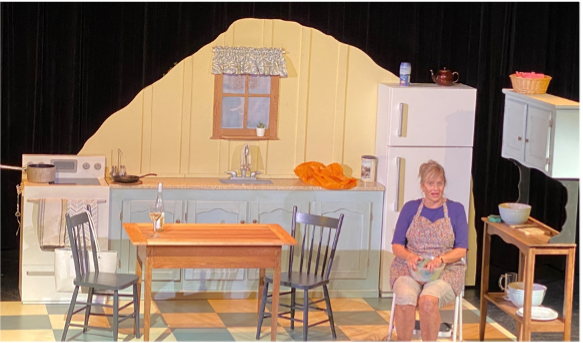
This week, several members of the WEL firm had the pleasure of attending Shirley Valentine, a brilliant one-woman show performed by the talented Kristin Sixt. This exceptional production by the Firefly Collective, directed by the skilled Myrna McBrien, offered a captivating evening of theatre that combined humour, and heartfelt storytelling.
Written by Willy Russell, Shirley Valentine takes audiences on a journey through the life of an ordinary middle-class English housewife. As she prepares chips and eggs for dinner, Shirley reflects on her life, her family, and a life-changing invitation to Greece.
Proceeds from this production were pledged in support of The Law Society Foundation's Toronto Lawyers Feed the Hungry program which provides meals to those struggling with food insecurity through community programs and partnerships with local law firms and volunteers.
The evening was filled with laughter, reflection, and a shared sense of connection. The humour in Shirley’s anecdotes about family life, her past, and the weight of her dreams was perfectly balanced by the emotional weight of her realizations about what it means to truly live. It was a poignant reminder that it’s never too late to embrace life’s possibilities.
Kristin brought Shirley to life with a depth of emotion and sharp comedic timing that kept the audience hooked from start to finish. Her ability to shift seamlessly between humour and deep introspection was remarkable, creating a performance that was both hilarious and deeply moving at times.
The production delivered moments of humour alongside profound emotional resonance, reminding us all of the importance of rediscovering ourselves and truly living. It was a great experience overall, and we commend Firefly Collective for bringing this timeless story to life with such passion.
Bravo to the entire team behind Shirley Valentine!
| |
7. WHAT WE WILL BE WATCHING: A MAN ON THE INSIDE | |
By: Joanna Weiss
A Man on the Inside, starring Ted Danson, has just dropped on Netflix. The series centers around Ted Danson’s character Charles, a recently widowed retired professor. Stuck in a regimented routine and facing increased isolation, his life takes a turn when he responds to a classified ad from a private investigator and goes undercover in a nursing home to investigate the suspected theft of a family heirloom. The series, which features older actors and centers around older characters, depicts circumstances that many of us see in our personal and professional lives, such as children having to care for their ageing parent(s), and ageing persons finding new leases on life. We’re looking forward to watching.
For more, see 'A Man on the Inside': Ted Danson leads new Netflix show pushing against our 'youth obsessed' culture
| |
GODDARD GAMAGE LLP CELEBRATES 25 YEARS! | |
WEL Partners wishes to congratulate Jan Goddard, Nimali Gamage, and all the members at Goddard Gamage LLP on their 25-year anniversary of their law firm! Over the last quarter century, Goddard Gamage LLP has been dedicated to excellent work in Estate and Elder Law. The firm has been chosen six times as a Top Wills, Estates and Trusts Boutique Firm by Canadian Lawyer Magazine, and two Best Lawyers in Canada™ awards. Congratulations again, Goddard Gamage LLP! | |
THE HONOURABLE JUSTICE SPEIGEL RETIRES | |
WEL Partners wishes to congratulate the Honourable Madam Justice Gertrude (“Gertie”) Speigel on her retirement, and on her successful legal career. Justice Speigel was appointed to the Superior Court of Justice (Ontario) in 1990, became a member of CBA Council from 1987 to 1991, was a member of Joint Committee on Court Reform 1988 to 1990, and was a member of Family Law Rules Committee 1990 to 2001. Justice Speigel was also a Member of Canadian Judges Forum of the OBA, a life member of the Women’s Law Association, and honorary member of Arbitrators Institute of Canada (Ontario) Inc. Her Honour has been a dedicated lawyer and Judge in the initiatives of settlement of legal disputes. Justice Speigel has worked hard with a long history of commitment to the furtherance of justice in Canada. Thank you for your service. | |
(i) TESTAMENTARY AND INTER VIVOS UNDUE INFLUENCE AND INCAPACITY | |
|
By: Albert H. Oosterhoff
1. Introduction
I have hesitated to write a blog on the recent case, Abbruzzese v Tucci,[1] a decision of Madam Justice C. Gilmore, because it is very long. It runs to 325 paragraphs spread over 82 printed pages. But I decided to blog it nonetheless, because the reasons are most excellent and discuss the indicators that suggest undue influence, as well as those that suggest lack of testamentary capacity. Thus, in my opinion, the case is well worth a read.
2. Facts
The case concerns proceedings between two sisters, the Applicant, Angela Abbruzzese (’Angela’), and the Respondent, Bernadette Tucci (‘Bernadette’). Angela brought an application in which she challenged the 2016 Will of her mother Maria, on the grounds that she lacked capacity and was subjected to undue influence by Bernadette. Angela also challenged the 2016 inter vivos transfer of Maria’s house into the joint names of Maria and Bernadette.
Maria was a first-generation Italian immigrant. She had very little formal education, never learned to read or write English and did not speak English fluently. She and her husband Carlo bought their house in 1961. Carlo died in 2005, and Maria continued to live in the house until she died. Bernadette is 64 years old. When her first marriage ended, she married again and moved to Texas with her new husband. However, she and her husband later separated, she moved back to Toronto in 2009 and has lived with her mother ever since. Bernadette has not been gainfully employed. She has two children, Tamara and Stefan. Angela is 71 years old, was a teacher and continues to work part time. She and her husband had three children, one of whom died in 2000.
Carlo and Maria did not believe in investing their moneys but kept them in both a checking and a savings account. Whenever she needed money, Maria would go to the bank, and she always paid for everything in cash. The parents had been very generous to both daughters, giving them significant moneys to buy homes when they married. Maria was a homebody and did not go out very much. But by all accounts, she was mostly independent in all respects until 2012.
After her husband died, Maria went to her solicitor, Mr Tanzola, to make a new Will and Powers of Attorney. The Will, made in 2007, left her estate equally to her two daughters and named them jointly as her attorneys for property and personal care. Angela and Bernadette were aware of the terms of the Will.
In 2012 Maria was diagnosed with polymyalgia rheumatica (‘PMR’) and thereafter her health declined, and she needed assistance for household tasks. Her doctor referred her to a social worker, Ms. Stark, for a geriatric assessment in May 2014. Bernadette accompanied her to translate questions into Italian. Ms. Stark noted that Maria was very much dependent on Bernadette for her daily tasks. Maria got a low score on a Mini Mental State Exam and displayed poor insight into her declining cognition and memory.
In September 2014 Bernadette and Angela had a serious disagreement in which they made various allegations against each other. Thereafter, Bernadette did not allow Angela to visit often with her mother, and Angela alleged that Bernadette was keeping information about their mother from her and was cloistering her from the rest of the family.
Maria had surgery in September of 2015 for a hip replacement after a fall, but Bernadette failed to inform Angela about the surgery for five days. Then Angela visited her mother in the hospital and cared for her there. She discovered that her mother’s head was covered in lice. Bernadette also did not inform Angela about her mother’s discharge from hospital. But she told hospital staff that Angela had not seen her mother for 18 months. Maria returned to hospital in December of 2015. A former common law partner of Stefan, Bernadette’s son, informed Angela that Bernadette was planning to have Maria’s 2007 Will changed, that Angela would receive less under the new will, and that Bernadette had brainwashed Maria not to talk to Angela.
In March 2016 Bernadette arranged for two bank employees to see Maria at home and to change her banking arrangements. They presented her with a bank power of attorney, which Maria signed, and which named Bernadette as her attorney. One of the employees described Maria as being capable of giving instructions for the power of attorney and described her as being ‘on the ball’ and ‘very sharp’. The other employee had known Maria as a banking customer for years.
Also, in March 2014 Maria arranged for Maria to see a different lawyer, Mr. Vumbaca. In evidence, she claimed that she did not know the lawyer who prepared the 2007 Will. Maria told the lawyer that she had a strained relationship with Angela, and that she wanted to transfer title to her house into joint names with Bernadette. Mr. Vacumba’s notes indicated that Maria was very coherent and appeared to understand everything. The new Will was signed in April 2016. It appointed Bernadette as the executor and the attorney under the new Power of Attorney for Property and Power of Attorney for Personal Care. Then Maria signed the transfer of the house into joint names.
In May 2016 Maria had a second hip operation and was diagnosed with dementia among other conditions. Angela was able to visit her mother in hospital, but her Power of Attorney was rejected because of the more recent one. Angela videotaped her mother during some visits. During the videotapes, Maria could not remember signing the new Powers of Attorney. She assured Angela that her money was in the bank, that Bernadette could not touch it, and that the moneys, as well as the house, belonged to both daughters. However, by June 2016 Angela became aware that large amounts of money had been taken out of the bank accounts. In fact, Bernadette withdrew most of the funds from her mother’s accounts within three months after Maria signed the Bank Power of Attorney. During that period, the moneys in the account were reduced from some $80,000 to about $3,000.
Angela had brought earlier proceedings to force Bernadette to pass her accounts. In 2023 Gilmore J., ordered Bernadette to bring an application to pass accounts for the period of 1 January 2015 to the date of Maria’s death on 5 March 2018 and her Honour ordered Bernadette to repay some $60,000 to her mother’s estate. Angela brought this application in August 2016.
3. Analysis and Judgment
3.1 Evidence
Justice Gilmore considered the evidence of a large number of witnesses, both non-party and expert witnesses. Of the former, some testified that Maria lacked capacity and may have been subjected to undue influence; others countered that evidence. One of those witnesses was Joseph Nazzicone whom Bernadette dated for six years and who remained a friend. Of particular interest was the evidence of Section 3 Counsel, who testified that she had a sense that there might have been some undue influence because Bernadette seemed to have been coaching her mother about what to say. Her Honour considered the evidence of Joseph Nazzicone to be entirely unreliable because he attempted to influence Maria against Angela and was acting in concert with Bernadette.
There were two expert witnesses. The first, Dr Bruto, was a certified Clinical Neuropsychologist. She relied on Maria’s medical records and prepared eight reports, consisting of contemporaneous assessments of Maria’s capacity to name attorneys for personal care and property, of her ability to manage her personal care and her finances, and an assessment of Maria’s testamentary capacity. She testified that much of what Maria said did not make sense. She thought her statements were ritualistic because she could not explain why she was making them. The second expert, Dr Mitchell, had postgraduate and specialty training in behavioural neurology and neuropsychiatry. She never met Maria but was of opinion that Maria had capacity at the relevant times.
Justice Gilmore began her analysis with the following statement:
187 Maria Iannarelli was the subject of a plan by her daughter Bernadette. Through coercion, persuasion and indoctrination, over time she convinced her mother that her sister Angela was undeserving and absent. Through repetition and coaching at a time when her mother was vulnerable, she persuaded her mother that her caregiving efforts were worthy of her receiving almost the entire family estate. What was left to be divided between Bernadette and her sister was then conveniently dissipated to almost nothing by Bernadette by their mother’s date of death.
She agreed (para 188) that the parties conduct toward each other and toward their mother was at times ‘shameful, vengeful and shocking’. However, the Judge stated, ‘in the end I accept that had it not been for Bernadette’s influence over her mother at a time when her mother was most vulnerable, the Estate would have been divided between the parties as originally intended by the testator’. Her Honour preferred the evidence of Angela when there was a conflict in the evidence, and found Bernadette to be a less credible witness. She found that Bernadette was instrumental in proclaiming that Angela was a bad person who had little contact with her mother, and that she attempted to minimize Angela’s contact with her mother. In consequence, Bernadette had Maria sign a new Will and Powers of Attorney, for which she did not use the original lawyer.
Her Honour then turned to the legal issues of undue influence (testamentary and inter vivos), and testamentary capacity.
3.2 Testamentary Undue Influence
On this issue her Honour relied on the indicia of undue influence set out in Gironda v Gironda:[2]
(a) where the testator is dependent on the beneficiary for emotional and physical needs;
(b) where the testator is socially isolated;
(c) where the testator has experienced recent family conflict;
(d) where the testator has experienced recent bereavement;
(e) where the testator has made substantial pre-death transfer of wealth to the respondent;
(f) where the testator has made a new will not consistent with prior wills;
(g) where the testator has failed to provide a reason or explanation for unexpectedly excluding a family member;
(h) where the testator uses a lawyer previously unknown to him or her and chosen by the respondent.
She noted that all these indicia were present in this case, but added that there may also be another indicium, namely, when the influencer gives instructions directly or indirectly to the testator’s solicitor. She found that: (1) Maria was dependent on Bernadette; (2) Bernadette physically isolated her mother; (3) Maria was aware of the conflict between her daughters; (4) Maria continued to be greatly affected by her husband’s death even though that occurred some years ago; (5) Maria transferred her wealth to Bernadette before her death; (6) She made a new Will in 2016 that was inconsistent with her 2007 Will; (7) Maria’s reasons for rewarding Bernadette were delivered in a ritualistic manner and later she did not recall that she wanted both her daughters to be her attorneys; and (8) She repeated in a rote-like manner what Bernadette had told her to say to the new solicitor.
By reference to Banton v Banton,[3] her Honour stated that, in addition to the Gironda indicia, the court may also consider the effect of the testator’s physical and mental condition on her vulnerability. Her Honour found that Maria’s physical constraints, coupled with the evidence of cognitive deterioration, meant that she was vulnerable and fully dependent on Bernadette, particularly after she was discharged from hospital in October 2015.
When she considered whether the evidence met the test, her Honour noted, rightly, that there is no presumption of undue influence for testamentary undue influence. While there was no evidence of overt threats, her Honour stated, ‘it is clear that Maria was changing her Will for reasons that were ‘programmed’. Moreover, there was evidence that Maria had no choice but to do what Bernadette asked of her. Thus, her intentions were not her own, and she was unable to explain why she made those programmed statements. Consequently, Justice Gilmore concluded that the 2016 Will had to be set aside for testamentary undue influence.
3.3 Inter Vivos Undue Influence
Her Honour noted that there are two types of undue influence in connection with inter vivos transfers: actual and presumed. Actual undue influence consists of actual and provable coercion. Presumed undue influence when there is a relationship between the parties that has the potential for domination. Thus, the presumption may arise if the relationship between parent and child is one of dependency. Indicia may include fear of the child, isolation of the parent by the child, and reliance on the child for companionship, help in the home, and assistance with the parent’s financial and business matters. Her Honour found that all these indicia were present in this case, so that the presumption was triggered. Consequently, the onus fell on Bernadette to rebut the presumption. Her Honour concluded that Bernadette failed to adduce sufficient evidence to rebut the presumption of undue influence. She went on to say that if she was wrong, there was sufficient evidence to find that the house was held on a resulting trust for the estate based on testamentary undue influence.
3.4 Testamentary Capacity
Her Honour noted that not only was Maria vulnerable with respect to dependency and her relationship with Bernadette, but that vulnerability was exacerbated by the fact that Maria was incapable when a contemporaneous assessment was done in 2017 and when she executed the new Will, Powers of Attorney, and the transfer document of the house. On this issue her Honour accepted the evidence of Dr. Bruto, who interviewed Maria personally and testified to her cognitive disabilities, which was supported by other medical and non-medical evidence. She rejected the evidence of Dr. Mitchell, who had been unable to interview Maria in person.
Her Honour agreed with Dr. Bruto that the totality of Maria’s health records led to the ineluctable conclusion that when she signed the new Will, Powers of Attorney, and the real property transfer, she had at least slight dementia. Moreover, Maria’s mood issues, depression, and other significant comorbidities would have affected her cognition. In addition, it was questionable whether Maria really understood the nature and extent of her assets when Mr. Vumbaca interviewed her. She did not know whether she had an RRSP and stated that she had $80,000 in the bank when that was not the case, since Bernadette had already withdrawn significant moneys from the accounts. There were also concerns about whether Maria truly understood the effect of what she was doing, and her Honour questioned why Maria named Joseph Nazzicone as her alternative attorney, instead of her grandson, and why she left nothing to her grandchildren in her will. Consequently, Justice Gilmore accepted Dr. Bruto’s findings and held that Maria lacked testamentary capacity when she gave instructions for and executed the 2016 Will.
Justice Gilmore made the following orders:
(1) She allowed the claims in Angela’s Application.
(2) She directed that Maria’s house be listed for sale immediately.
(3) The amounts owed by Bernadette from the Passing of Accounts Application and any costs owed to Bernadette from this Application should be paid out of Bernadette’s share of the sale proceeds.
(4) The costs payable to Bernadette for preparing the accounts for the Passing of Accounts should be paid from the joint sale proceeds.
(5) She would entertain the appointment of a neutral executor, since it was unlikely that the sisters would be able to work together.
(6) She encouraged the parties to come to an agreement on costs.
---
[1] 2024 ONSC 957.
[2] 2013 ONSC 4133, paras 77, 113.
[3] (1998), 164 DLR 4th 176 (Ont SC).
| (ii) CAN A DISBARRED LAWYER BE APPOINTED AN ADMINISTRATOR? | |
|
By Albert H. Oosterhoff
1. Introduction
Re James Estate[1] is an unusual case. It concerns a disbarred lawyer who made an application to be appointed administrator for the estate of a deceased person and an order dispensing with the requirement that he post security. The application was referred to the court for a decision, and Justice Graeme Mew dismissed the application.
2. Facts
The testator died in April 2023. He made his will in September 2022. On the back sheet of the Will, where one would normally find the name and address of the drafting solicitor, there appeared the name and address of the applicant, William J Bishop, ‘Consultant’. Bishop is a disbarred lawyer.
After a hearing in 2012, the Law Society of Ontario found Mr. Bishop guilty of professional misconduct for participating in, or knowingly assisting in dishonest and fraudulent conduct by his vendor/purchaser clients and others in obtaining mortgage funds under false pretenses in connection with 14 transactions. The Law Society Appeal Tribunal Division and the Divisional Court upheld the decision.[2] The Divisional Court stated in its decision that there did not appear to be any real concern that Mr. Bishop would repeat the impugned conduct, but held that this did not detract from ‘the pressing need to send a consistent message that engaging in fraudulent conduct by a lawyer is a matter that will not be tolerated because of its impact on the profession as a whole’.
The named executor renounced two days after the testator died, and on 30 April 2023 the heirs of the estate signed consents to Mr Bishop’s application. Moreover, by notice of motion in October 2023 the heirs asked the court to permit Mr Bishop to be appointed administrator and to waive the requirement that he post security. In support of their motion the heirs stated that Mr Bishop is a family friend of many years, and a long-term friend, confidant and advisor of the testator, that the testator never lost confidence in Mr. Bishop despite the disbarment, that Mr Bishop continued to advise the testator and the family, and that they, the heirs, are of opinion that Mr. Bishop is the most trusted and qualified person to be the administrator of the estate. However, the heirs did not attach an affidavit in support of their notice of motion. And the applicant did not bring his own motion or file any evidence, so there was no evidence before the court.
In September 2023 the application judge issued an endorsement (‘the ‘September Direction’), which stated that the application had been referred to him by the registrar under Rule 74.14(4) of the Rules of Civil Procedure,[3] to consider whether it raised an issue that should be determined by a judge. The application judge invited the applicant, or any other person who would be affected if the court rejected the application to bring a motion for directions. The applicant did not respond to the invitation.
3. Analysis and Judgment at First Instance
Justice Mew noted that, as a matter of practice, courts are reluctant to interfere with a testator’s choice of executor. Further, case law holds that past misconduct of an executor is not a basis for interfering with the testator’s choice, unless it is probable that the interests of the estate are likely to be endangered, or that the estate will not be administered properly.
On the other hand, his Honour stated that former lawyers are prohibited from providing legal services, and under the Law Society Act,[4] legal services include preparing testamentary and other documents that relate to the estate of a person. His Honour stated that it was not his role to decide whether Mr. Bishop’s involvement with the drafting of the will and the settling of the testator’s estate amount to the unauthorized practice of law. But he noted that the facts certainly raise questions about the nature and extent of Mr. Bishop’s involvement and relationship with the testator and his family.
His Honour noted that Mr. Bishop has been held to have participated, or knowingly assisted, in dishonest and fraudulent conduct, and has had his licence to practice law revoked. In its decision, the Divisional Court noted (para 519) the importance of ‘the need to maintain among members of the public a well-founded confidence that any solicitor whom they instruct will be a person of unquestionable integrity, probity and trustworthiness’. Besides, the testator did not name Mr. Bishop executor and therefore he is not aided by the presumption in favour of the testator’s choice of executor.
His Honour found:
25 The circumstances, while not indicative of any future conduct on Mr. Bishop's part which would injure the interests of the Estate, do raise a concern that aspects of his involvement with the late Mr. James and his estate at the very least skirt around the fringes of the unauthorised practice of law, and quite possibly cross the line completely. And Mr. Bishop has offered no evidence to allay the court's concerns regarding his involvement with this estate. This weighs heavily against his application.
He held that the court cannot allow the application simply because the heirs want it, for he has lost the privilege of practicing law and cannot provide legal services. He went on to hold:
27 The Law Society Act requires the Law Society, as the regulator of lawyers and paralegals in Ontario, inter alia, to ensure standards of learning, professional competence and professional conduct, and to protect the public interest. That, coupled with this court's responsibility to maintain the rule of law and promote confidence in the administration of justice, militates against the court becoming an accessory to conduct which undermines the public interest in having effective regulation of the legal profession and prohibiting disbarred lawyers from providing legal services.
28 Considering all of the circumstances, this is one of those rare cases where the court should invoke its inherent discretion to decline an application for the appointment of an estate trustee.
Consequently, he dismissed Mr. Bishop’s application.
The applicant appealed.
4. Analysis and Judgment on Appeal
Justice S. Gomery wrote the judgment on behalf of the court.
Motion to Introduce Fresh Evidence
Her Honour first dismissed the appellant’s motion to introduce fresh evidence because it did not meet the established test. The appellant’s affidavit filed in support of his motion consists of evidence that could have been adduced earlier, namely, after Justice Mew’s invitation to the appellant to bring a motion for directions. She held that the denial of the appellant’s application cannot be considered to be punishment, since no one has a right to be granted administration of an estate.
Discretion to Refuse the Appointment Even Though it Was Unopposed
Under s 7(1) of the Estates Act,[5] the Superior Court of Justice is responsible for granting probate and letters of administration, and that requires the court to determine applications for appointment. The court’s role for this purpose is not simply adjudicatory, it is also inquisitory.[6] This means that the court can dismiss an application if there is no evidence to support it, even if the beneficiaries support it.[7] Moreover, Rules 74 and 75 of the Rules of Civil Procedure confirm the court’s supervisory role in estate matters. The court also has inherent jurisdiction to remove a trustee when necessary.
Justice Gomery held that this inherent jurisdiction empowers a Superior Court judge to refuse to appoint a trustee, and semble, also to refuse an application for probate or administration. While the appellant concedes that the court may refuse an application in specific circumstances, he argued that this jurisdiction is limited by s 29 of the Estates Act. Section 29(1) lists the persons who may be appointed as ‘in the discretion of the court seems best’. Subsection (2) provides that the persons listed in subsection (1) may request that someone else be appointed if the named executor renounces or is unwilling or unable to act, but the court is not obliged the grant the request. Moreover, both subsections are subject to subsection (3). It states that the court is not required to appoint a person who would have been entitled to be appointed if subsection (3) had not been passed. ‘But the court may appoint such person as it thinks fit’.
Her Honour held that the court may exercise its discretion even if an application is unopposed. That is because of its inquisitorial jurisdiction, and its gatekeeping and oversight role with respect to the trustees, and semble, executors and administrators. Thus, she concluded that the application judge had an inherent jurisdiction to dismiss the applicant’s application, even though the beneficiaries supported it.
Did the Application Judge Err in Exercising His Discretion
The exercise of the judge’s inherent discretion leads to a determination involving mixed fact and law and, as such, is entitled to deference. The range of matters the judge may consider is broad and is not restricted to the welfare of the beneficiaries. The application judge’s consideration of ‘the overarching responsibility of the court to promote confidence in the administration of justice and uphold the rule of law’ is another relevant factor, as are the wishes of the heirs. Since the applicant had not submitted any evidence to allay the court’s concern that he might be engaged in the practice of law, and after weighing competing considerations, the application judge dismissed the application.
Justice Gomery concluded that the application judge’s concerns were legitimate in the circumstances, having regard to the applicant’s professional history, his apparent involvement in drafting the deceased’s will after his disbarment, the resignation of the named executor only two days after the testator died, and the appellant’s act of securing the beneficiaries consent to his application.
Consequently, her Honour held that it was reasonable for the application judge to conclude that public confidence in the administration of justice would be undermined if he were appointed administrator. She also rejected the appellant’s argument that the application judge’s focus was on the appellant’s disbarment. His concern was principally with his activities in and about the estate.
Justice Gomery also found that the application judge identified legitimate concerns about the possible unlicensed practice of law by the appellant and the impact on the public’s perception on the administration of justice if he was named administrator. These concerns were based on the public record. Hence it was open to the application judge to reach the decision he did.
Was There a Reasonable Apprehension of Bias?
Judges are presumed to act impartially.[8] To rebut the presumption, a party must adduce clear and cogent evidence to show that a reasonable person would conclude that the judge was biased. The appellant did not rebut the presumption of impartiality.
The argument that the referral of the application to the application is inherently suspicious is groundless. Under Rule 74.14, the registrar must refer an application to a judge for determination ‘if, in the registrar’s opinion, the application raises an issue that requires determination by a judge’ The appellant suggested that the registrar made the referral because it was well-known in the community that he was a disbarred lawyer.
However, there is another clear explanation for the referral, namely, that the appellant was asking for an order that only a judge can grant. Rule 74.14(1)(a) provides that the registrar may grant an appointment if satisfied that the application contains all the evidence and supporting documents required by the Rules or a statute. Otherwise, under Rule 74.14(1)(b), the registrar can only issue a certificate ‘if directed by a judge’. Under Rule 74.14(1) an application for appointment must include any security required by the Estates Act, and under s 35 of that Act a person who seeks to be appointed administrator must give a bond to the judge of the court that makes the grant. The appellant did not provide proof that he had obtained a bond. He also did not comply with Rule 74.11(6) by filing an affidavit setting out the deceased’s debts and a proposal about their payment. Therefore, the registrar had no choice but had to refer the matter to a judge. In any event, the appellant sought a waiver of the bond requirement and that must also be referred to a judge, since only a judge can waive the requirement under s 37(2) of the Estates Act.
Justice Gomery also dismissed the appellant’s argument that the application judge’s reasons show that he had made up his mind at the time of the September Direction that the applicant was not fit to be appointed administrator. Her Honour took the view that it was legitimate for the application judge to scrutinize the application more closely in light of the appellant’s professional history. Besides, she found that the reasons ‘do not read as an ex post facto justification for a decision that he made prior to issuing the direction. Besides the application judge could not have closed his mind to evidence and arguments that were never presented to him. They were not presented to him because the applicant chose not to respond to the September Directive and the heirs failed to support their notice of motion with supporting evidence.
---
[1] 2023 ONSC 6432, affirmed 2024 ONCA 623.
[2] 2014 ONSC 5057 (Div Ct).
[3] RRO 1990, Reg 194.
[4] RSO 1990, c L.8.
[5] RSO 1990, c E.21.
[6] Citing Otis v Otis (2004), 7 ETR 3d 221 (Ont SC), paras 22-24, per Cullity J, and Neuberger v York, 2016 ONCA 191, paras 67-68.
[7] Citing Otis v Otis, ibid, and McLaughlin v McLaughlin, 2015 ONSC 3491, paras 31-36.
[8] Citing R v Teskey, 2007 SCC 25.
| |
(iii) TRUSTS FOR INDIVIDUALS WITH DISABILITIES – A CLOSER LOOK AT HENSON TRUSTS | |
|
By Oliver O’Brien
Henson Trusts are a type of discretionary trust established and designed to benefit a disabled individual who relies on publicly funded social assistance benefits. The core principles of a Henson Trust were aptly described by the Supreme Court of Canada in S.A. v. Metro Vancouver Housing Corp.[1] as one where:
“the trustee is given ultimate discretion with respect to payments out of the trust to the person with disabilities for whom the trust was settled, the effect being that the latter (a) cannot compel the former to make payments to him or her, and (b) is prevented from unilaterally collapsing the trust”.[2]
The Supreme Court of Canada confirmed that to achieve the Henson effect, there must be a remainder (or gift over) of trust funds not expended during the lifetime of the trust; otherwise, the rule in Saunders v. Vautier,[3] might permit the recovery of the entire trust fund by the beneficiary.[4]
A Henson Trust enables a disabled individual to receive social assistance benefits as well as private monies held in a trust given, they have no enforceable right to receive any property from the trust. Unless and until the trustee exercises their discretion in that person’s favour the interest he or she has is not generally treated as an ‘asset’ for the purposes of means-tested social assistance programs.[5]
Henson Trusts in Ontario
In Ontario, consideration of Henson Trusts often considers a beneficiary’s entitlement to Ontario Disability Support Program (ODSP) benefits. As such, these matters are typically heard before the Social Benefits Tribunal (the “Tribunal”).
Ontario Regulation 222/98[6] (the “Regulation”) prescribes asset limits for ODSP recipients. Specifically, section 27(1) prescribes a $40,000 asset limit for a benefit unit that includes a single adult with no dependents and no spouse. Should a spouse or dependents be included in the benefit unit, this limit can increase by $10,000 for the spouse and $500 “for each dependant other than a spouse”.[7]
Section 28(1) of the Regulation prescribes the manner by which assets are determined and creates a large number of exemptions. In Guy v. Northumberland (County) Administrator, Ontario Works,[8] that court found that monies held in a trust were not considered to be assets for the purposes of determining eligibility for financial assistance.
The Tribunal in 1110-08605 (Re),[9] 2014 ONSBT 29 summarizes this principle well stating that:
In Ontario Works all funds held in trust are considered to be assets for the purpose of determining eligibility for financial assistance unless the Administrator is satisfied they are not available because they were out of reach of the recipient under the terms of the trust. In the Guy case, Ms. Guy’s two sons were beneficial owners of trust funds given to them through their grandmother’s will. Ms. Guy and her brother were trustees of the Will. They had discretion to use the funds for the benefit of the sons until they reached the age of 24 years. The amount of the funds was $8,588.12 (emphasis added).[10]
In 1804-02565 (Re),[11] the Tribunal affirmed the decision of the Director of the ODSP in cancelling benefits where the recipient exceeded the asset limits under the Regulation. The Director’s decision was on the basis that the recipient had $300,000 in a non-exempt GIC. The recipient was of the position that her assets did exceed allowable limits under the Regulation given the monies were being held in a Henson Trust and were therefore exempt.
However, the Tribunal found that the trust document and testimony put forward by the recipient did not demonstrate that the monies in questions were held in the sole discretion of the trustee and were sufficiently ‘out of reach’ for the purpose of calculating ODSP benefits.
Concluding Comments
The Henson Trust is a valuable mechanism for permitting disabled individuals to receive private monies for their benefit on top of ODSP assistance. A Henson Trust requires careful drafting and specific language to ensure the trustee’s power over income or capital permits them to determine how much, when and if the beneficiary is to receive trust monies.
---
[1] S.A. v. Metro Vancouver Housing Corp., 2019 SCC 4 (CanLII), [2019] 1 SCR 99 (“Metro Vancouver Housing Corp”).
[2] Ibid. at para 2.
[3] Saunders v. Vautier, [1841] EWHC J82.
[4] Metro Vancouver Housing Corp at para 2. The rule in Saunders v. Vautier permits beneficiaries of a trust (who are adults of full capacity) to call upon the trustee to terminate the trust and distribute the trust property.
[5] Ibid.
[6] O. Reg. 222/98: GENERAL (the “Regulation”).
[7] The Regulation at s.27(1).
[8] Guy v. Northumberland (County) Administrator, Ontario Works, [2001] O.J. No. 2166.
[9] 1110-08605 (Re), 2014 ONSBT 29.
[10] Ibid. at para 21.
[11] 1804-02565 (Re), 2019 ONSBT 2071 (CanLII).
| |
(iv) THE CHALLENGES OF CURING A DEFECTIVE WILL UNDER WESA | |
|
By Chhavi Monga
The case of Veronica Elizabeth Reid offers a compelling glimpse into the complexities of estate litigation, particularly when an estate relies on a non-compliant testamentary document to determine the deceased's intentions. This case revolves around a handwritten note purported to represent Veronica’s will and the legal challenge brought under section 58 of WESA.[1]
The Background
The case is about Veronica Reid, who passed away in November 2021, predeceasing her three brothers – Gregory, Allan and David, and their children. Allan is the father of Katie, whose mother Anita Horner brought forth this petition on behalf of her daughter Katie, to have the handwritten will cured and pronounced as the valid will of Veronica.
If successful, Katie would inherit Veronica’s estate in trust until age 30. Otherwise, the estate, valued modestly at $80,000, would be distributed according to intestacy laws.[2]
The Handwritten Document: Authenticity vs. Testamentary Intentions
The court determined that the handwritten document was indeed authentic, as confirmed by Veronica’s longtime friend, Deborah McIntosh. However, authenticity alone does not suffice in such a scenario.[3] For the court to "cure" a non-compliant will under section 58, it must represent the deceased’s fixed and final testamentary intentions.[4]
Here, the court found the document lacking in several critical respects:
-
Ambiguity and Vagueness: The document contained unclear phrasing, such as "first option Ellesmere Island" for scattering ashes, and lacked provisions for an executor or trustee.[5]
-
Incompleteness: Ms. McIntosh also deposed that in September 2021, Veronica told her she was working on a will questionnaire with a lawyer in Yukon, and had planned to change her will, which does not support the contention that the handwritten document expressed Veronica’s fixed and final testamentary intentions.[6]
-
Contextual Contradictions: When Veronica’s eldest brother Gregroy visited her at the hospital due to her failing liver Veronica reportedly told him that she did not have a will. This undermined the argument that she considered the handwritten will to be a valid document.[7]
The Role of Section 58
Section 58 of WESA allows the court to recognize documents that do not meet formal will requirements if they express testamentary intentions. However, as this case illustrates, the threshold is high. Courts evaluate:
- The document’s content and structure.
- Evidence of the deceased's intent at the time of writing.
-
External circumstances, including verbal declarations and subsequent actions.[8]
In this case, though Veronica's handwriting and affection for her niece Katie are all undisputed, the handwritten document failed to demonstrate the requirement of fixed and final intent as per the law.
Lessons from the Reid Estate
This case underscores the challenges of relying on informal or non-compliant documents in estate planning. While section 58 of WESA provides a remedy for curing defective wills, the threshold for proving testamentary intent is quite high. Here are some key takeaways:
-
Formal Wills Are Essential: This case highlights the risks of failing to prepare a formal will. A properly executed will ensures that the deceased’s intentions are clearly documented, minimizing the potential for disputes.
-
The Importance of Testamentary Intentions: Courts require clear evidence that a document represents the deceased’s fixed and final intentions. Ambiguities, contradictions, and evidence of ongoing deliberation in such a situation can undermine an application to cure a defective will.
-
Gathering Evidence in Disputed Estates: For litigators, this case demonstrates the importance of collecting comprehensive evidence, including testimony about the deceased’s state of mind, actions, and verbal declarations. However, courts are cautious about hearsay evidence and give greater weight to testimony from disinterested parties.
-
Section 58 Powers Are Not Unlimited: While section 58 gives courts the discretion to cure non-compliant documents, its application is fact sensitive. The further a document departs from the statutory requirements, the harder it is to establish testamentary intent.
Concluding Comments
The Reid case serves as a cautionary tale for both estate planners and beneficiaries. Informal estate planning creates uncertainty and increases the likelihood of litigation. For beneficiaries, the case illustrates the difficulty of proving testamentary intent when a document is incomplete or ambiguous. For legal practitioners, it reinforces the importance of guiding clients through the process of creating formal wills to avoid potential disputes amongst beneficiaries of the estate.
---
[1] Reid Estate, 2024 BCSC 1932 (CanLII), at para 3
[2] Reid Estate, 2024 BCSC 1932 (CanLII), at para 3 & 4
[3] Reid Estate, 2024 BCSC 1932 (CanLII), at para 5 & 8
[4] Reid Estate, 2024 BCSC 1932 (CanLII), at para 17
[5] Reid Estate, 2024 BCSC 1932 (CanLII), at para 29 & 30
[6] Reid Estate, 2024 BCSC 1932 (CanLII), at para 7
[7] Reid Estate, 2024 BCSC 1932 (CanLII), at para 11
[8] Reid Estate, 2024 BCSC 1932 (CanLII), at para 15
| |
(v) IS A VICTIM’S ESTATE ENTITLED TO THE FUNDS OF A RESTITUTION ORDER? | |
|
By Gabriella Banhara
Restitution in Canada is defined as an order requiring the offender of a crime to repay the victim for the financial losses it suffered due to the damages brought on by the offender.[1] According to the Canadian Bill of Rights, a victim may move to enforce their right to a restitution order, if they are not paid, by having the order entered as a civil court judgement.[2]
When dealing with the intersection of criminal law and estate law, particularly in the area of Elder Law, one may ask if an offender must continue to pay a restitution order to a victim once they have passed away. Does the restitution payment redirect to the victim’s estate? Is it the estate trustee’s duty to ensure the restitution payment is received or sought if there were ongoing legal proceedings prior to the victim’s death? There are many questions pertaining to this area of the law that are not avidly discussed.
For the purpose of providing the reader with a brief background, according to the Succession Law Reform Act[3] the “SLRA”), an estate trustee has a duty to pay the outstanding debts of the testator, including claims from a creditor.[4] The order in which an estate trustee has to pay the owing liabilities of a creditor are outlined in the SLRA.[5] Typically, a Dependant Support claim will be paid before a creditor, and creditors are entitled to payment before the estate is distributed to the estate’s beneficiaries.[6]
In the circumstance that a restitution order has been made to a victim who passes away, and such order was not paid in full, the estate trustee has a duty to the beneficiaries to ensure this debt owed to the estate is paid. According to s.48(2) of the Trustee Act, an estate trustee has the following duty:[7]
Security and settlement
48(2) A personal representative, or two or more trustees acting together, or a sole acting trustee, where, by the instrument, if any, creating the trust, a sole trustee is authorized to execute the trusts and powers thereof may, if and as they may think fit, accept any composition or any security, real or personal, for any debt or for any property, real or personal, claimed, and may allow any time for payment for any debt, and may compromise, compound, abandon, submit to arbitration or otherwise settle any debt, account, claim or thing whatever relating to the testator’s or intestate’s estate or to the trust, and for any of these purposes may enter into, give, execute, and do such agreements, instruments of composition or arrangement, releases, and other things as seem expedient without being responsible for any loss occasioned by any act or thing done in good faith.[emphasis added]
In other words, an estate trustee has the right to accept security for an outstanding debt. A restitution order may be viewed as an outstanding debt.[8] In Carmichael Estate v. George Weston Ltd, 1994 CanLII 370 (“Carmichael”) , a decision from the Supreme Court of British Columbia, the court ruled that the estate of an elderly woman who died before receiving her settlement payment, was owed the entirety of such funds.[9] Despite the court in Carmichael directing it’s analysis to an action regarding personal injury, it importantly notes the following regarding owed settlement funds to an estate:
The position of the Estate is analogous to that of the recovery of a debt barred by the technicality of a limitation, but otherwise justified as a repayment, or in the case of the Carmichael Estate as compensation for an injury and a detriment previously incurred; such cannot be classified as a windfall. The merits of the foregoing have been recognized in England and apparently in Ontario where statutory provision has been made cutting down the common law rule to permit the estate to bring or continue and maintain an action for recovery for pain and suffering.[10]
In summary, a victim who has received a restitution order is entitled to the proceeds of such order after they pass. The proceeds of the restitution order will pass to the estate as a recovery of a debt. Lastly, an estate trustee is entitled to seek the repayment of such restitution order for the benefit of the beneficiaries.
---
[1] Government of Canada, Victims’ Rights in Canada
[2] Ibid at s.17.
[3] Succession Law Reform Act, RSO 1990, c s.26
[4] Ibid at s.31 and s.32
[5] Ibid
[6] s. 57(1)
[7] Trustee Act, RSO 1990, c T.23 at s.48(2)
[8] Carmichael Estate v. George Weston Ltd., 1994 CanLII 370 (BC SC) at para 28
[9] Ibid
[10] Ibid at para 28.
| |
(vi) WEL’S LUNCH AND LEARN WITH DAVE OSWALD | |
|
By Chhavi Monga
As part of WEL’s latest Lunch & Learn event on November 7, 2024, we were fortunate to be visited by Dave Oswald from Forensic Restitution.
Forensic Restitution is a fraud investigation and forensic accounting company based in the Greater Toronto Area and who serve clients across Canada and the globe. They specialize in forensic accounting, cyber fraud and data analytics, assisting clients with the recovery of critical evidence, and supporting lawyers in litigation.
During the presentation, Dave highlighted the challenges and issues associated with managing crypto currency in Estate planning, including the common pitfalls of managing cryptocurrency assets, the various techniques they use to uncover financial fraud, theft or mismanagement of property. He also delved into the advanced techniques used to uncover these issues and addressed the legal and regulatory complexities surrounding digital assets. This included discussions on unique cases, such as tracing funds concealed through cryptocurrency and digital wallets, and navigating the intricate dynamics of multi-jurisdictional and international transactions.
Cryptocurrency in estate planning poses some unique challenges. As though it is highly secure, it requires specialized knowledge for access and transfer and without proper documentation, security, and fraud prevention, assets risk being lost or mishandled permanently. One of the most common scenarios this plays out is the client’s failure to disclose cryptocurrency holdings, and the lack of clear instructions for executors and beneficiaries. Due to it’s decentralized and anonymous nature, cryptocurrency is an appealing target for fraud and this fraud could mean lost inheritance for beneficiaries in estate litigation, as about 40% of individuals using cryptocurrency have reported to forgetting their passwords for their crypto accounts.
Forensic Restitution has encountered numerous cases where cryptocurrency was used for money laundering, with fraudsters commingling illicit crypto funds with millions of legitimate transactions in a single digital wallet, effectively obscuring their origin. This practice complicates the tracing process, especially in matters like divorce proceedings, where individuals may attempt to hide assets in cryptocurrency. Despite these challenges, Canadian courts have the authority to issue orders for tracing cryptocurrency, providing a valuable tool for individuals dealing with estate disputes involving digital assets.
Estate and trust litigators frequently face complex cases involving mismanagement of funds, necessitating analytical precision and independent verification. Collaboration between lawyers and forensic accountants could be pivotal to successful outcomes in such cases. Companies like Forensic Restitution play a critical role in assisting estate litigators when there is suspicion of financial misappropriation from trusts or estates. By conducting audits and comprehensive financial reviews, they help ensure that fiduciaries, such as trustees, are meeting their legal obligations.
Additionally, forensic accountants provide valuable services in asset valuation disputes, whether related to real estate, business interests, or investments, and with the crypto fraud on the rise. Their involvement is instrumental in safeguarding the integrity of estate administration and ensuring equitable outcomes for all parties involved.
View presentation
| |
|
The Advocates' Society
Mediation and Arbitration: Transforming Estates Law
December 2, 2024
New Character Alert: The Rise of Arbitration
Speaker: Kimberly Whaley, Panelist
https://www.advocates.ca/TAS/TAS/Events/Showcase_Pages/Mediation_and_Arbitration_Transforming_Estates_Law.aspx?EventKey=ESTATES24
The Ontario Bar Association
Trustee Decisions, Discretions, and Powers
December 5, 2024
Speaker: Albert Oosterhoff
https://www.cbapd.org/details_en.aspx?id=ON_ON24TRU33X
Osgoode Professional Development – Elder Law Certificate
Predatory Marriages
February 12, 2025
Speaker: Kimberly Whaley
https://osgoodepd.ca/professional-development/certificates/the-osgoode-certificate-in-elder-law/
STEP Global Congress, Rome
February 25 - 26, 2025
Attending: Kimberly Whaley
https://congress.step.org/
LESA
April 12, 2025
Jointly Held Assets
Speakers: Kimberly Whaley, Nancy Lynn Golding KC, Helen R. Ward KC, Jennifer R. Lamb, Les Scholly
https://www.lesaonline.org/program/lesas-refresher-2025-wills-and-estates-victoria/
Osgoode Passing of Accounts & Fiduciary Accounting
April 15, 2025
Chair: Kimberly Whaley
Speakers: Albert Oosterhoff and Tracey Phinnemore
Cambridge Forum on Estate Planning & Litigation
April 27-29, 2025
Kimberly attending
https://www.cambridgeforums.com/forums/eplf/
Osgoode Powers of Attorney and Guardianship
April 29, 2025
Speaker: Kimberly Whaley
TIAETL – Greece
May 18 - 22, 2025
Kimberly Whaley
| |
VI. IN CASE YOU MISSED IT - RECENT BLOG POSTS | |
WEL NEWSLETTER November 2024, Vol. 14, No. 8 | | | | |