WEL NEWSLETTER November 2025, Vol. 15, No. 8 | | |
Hello,
November is almost at an end, and the highlight was not the snow! Winter woes have started early for me. What will keep me focused I hope is STEP Cayman in January-the sun awaits me as well as the Sham Trusts talk! Admittedly, I will reluctantly concede that the snow revealed a pretty picture to see the trees still laden with colourful leaves covered in snow. As an fyi, if you have not seen our Sham Trusts blogs by Grant Swedak and I - take a look: https://welpartners.com/blog/category/sham-trusts-series/
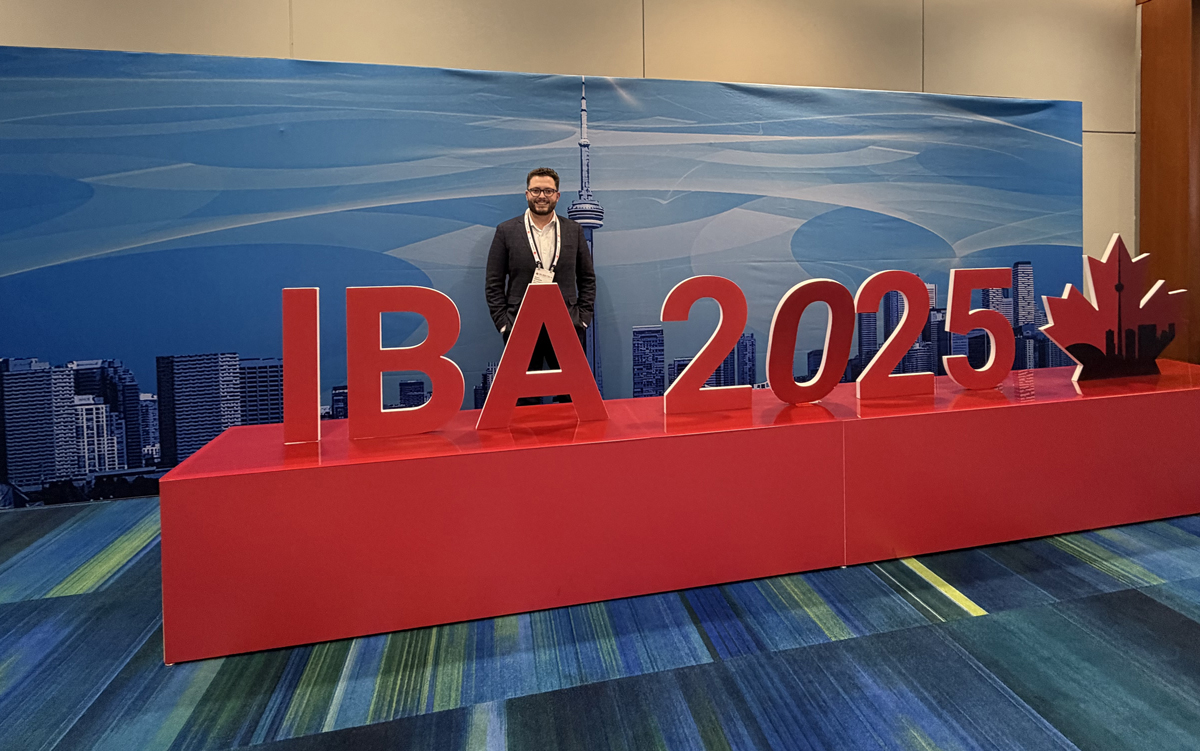
Bryan and I attended the IBA 2025 Conference in Toronto with nearly 6,000 other attendees. What a truly top-notch conference with the benefit of collaboration from lawyers throughout the world. We were pleased to meet up with the lawyers from Browne Jacobson U.K. for a (pre-last Blue Jays game) dinner and drinks. The last game saw fans filled with hope and support for this incredible team. Baseball is a game of skill, strategy, and luck, or lack thereof. Our team was spectacular, and I, like all Canadians are so very proud of their tenacity. That they did not quite get there is irrelevant-they were our champions. They were a unified, collegial, supportive team who came together and fought so very valiantly to the bitter end with injury and fatigue. It was an incredible world series journey. Thank you, Blue Jays.
Ok getting back to the IBA, we co-hosted with Browne Jacobson, a fabulous dinner at Lee with lawyers and colleagues from many countries. The food and friends made for a perfect evening. Bryan and I were also invited to a dinner at SOHO House by our friends from Browne Jacobson where we met some cool professionals from all over Europe and extending to Africa. What a truly fun night!
| |
We saw some very charismatic and interesting speakers including, Bob Woodward, the Honorable Rosalea Silberman Abella, Mark Ellis, Jeff Skiles and more. There were insightful and thought-provoking discussions on the Rule of Law, Democratic Principles, the US democracy and risk, Human Rights, AI, War, Globalism and Economic Health across the world.
Since Halloween I have had the opportunity to present and present some more…including at the: Professional Advisory Committee (PAC) through the Jewish Foundation of Greater Toronto and the UJA Federation of Greater Toronto. I had the good fortune of also listening to the amazing Benjamin Tal, Deputy Chief Economist, CIBC Capital Markets and our friend, Jamie Golombek as well as Saul Plenar, Ron Bernbaum, Janice Benatar, and Brandon Wiener. What a wonderful breakfast with many friends and colleagues.
| |
I saw Sabrina Carpenter with Sammi at the Scotiabank Arena -the kiddo sang every word to every song, and we had a good laugh. Sabrina is a going concern for sure-funny, talented, witty and colourful.
Bryan and I also presented at Osgoode on 4 topics, Missing Beneficiaries, Capacity Proceedings, Evaluation of Costs, and Applications or Motions for Directions.
I also presented at FP Canada, Financial Planning Conference on the ETHICS Panel addressing case scenarios concerning complex planning in complex circumstances. The panel consisted of Tamara Center, me, Karine Diedrich, and Carol Lynde. It was an insightful learning experience.
I am still plugging away at my Arbitration Course-this week preparing for a Procedural Meeting to set procedural next steps.
The WEL team were out at the Pilot on Saturday night to see our very talented Law Clerk, Jordan Atkinson, in the Hot Pockets-his band’s 3-year birthday or anniversary-anyway you look at it- it has been 3 years of musical fun and laughter. Here are a few pics of our Rock Star and team having such a great evening!
| |
I had a birthday this month and on this day I always remember my friend Rodney Hull, KC, since we share the same birthday. Rodney, wherever you are, I cheers you with a Martini!
Finally, I am about to attend STEP Council in London and the Branch Chair Meetings-it will be a good 3-4 days of learning and participating in the development of STEP’s future initiatives and goals as well as networking and sharing time with colleagues and friends. I will report next month.
See you at Christmas,
Until then,
Enjoy the Read,
Kim
| | 1. LAWYERS FEED THE HUNGRY | | |
This month, WEL Partners was once again proud to sponsor the Lawyers Feed the Hungry program at the Law Society of Ontario. The Lawyers Feed the Hungry programme is sponsored by members of the legal community who also assist in serving food to those in need from the kitchens at Osgoode Hall. The programme has been running for almost three decades and serves almost 1,200 meals a week.
Six members of WEL Partners volunteered, including: Christin, Emily, Joanna, Jordan, Sam, and Oliver. Those involved thoroughly enjoyed interacting with and serving the wider Toronto community. If you have not already sponsored them, please consider it, the experience is a rewarding one.
https://lso.ca/the-law-society-foundation/our-work/hunger-relief-efforts#toronto-5
| | 2. ONTARIO POLICE COLLEGE ELDER ABUSE COURSE | On November 14, 2025, Oliver O’Brien and Joanna Weiss were fortunate to attend in-person at the York Regional Police training and education facility in East Gwillimbury for the Ontario Police College’s Elder Abuse Course. The session focused on the financial abuse of older persons, the misuse and abuse of Power of Attorney documents, predatory marriages, and the available civil and criminal remedies when an older person has fallen victim to financial abuse. WEL Partners once again thanks the Ontario Police College for the opportunity to engage with the police on such important issues. | | 3. KIMBERLY PRESENTED AT THE JEWISH FOUNDATION’S PROFESSIONAL ADVISORY COMMITTEE | |
On November 6, 2025, Kimberly Whaley had the honour of joining colleagues at the Adath Israel Synagogue for breakfast. There was a full room of professionals engaged in learning and networking with the Jewish Foundation’s Professional Advisory Committee. PAC was joined by esteemed speakers, Jamie Golembek, Benjamin Tal (Deputy Chief Economist, CIBC Capital Markets) and Brandon Wiener (Partner, Thorsteinssons LLP), the group touched on the economic and policy landscape in respect of investment planning and estate planning. For more information on the event, see the below link:
https://www.jewishfoundationtoronto.com/professional-advisors/2025-pac-seminar
| | 4. 2025 IBA ANNUAL CONFERENCE | |
Kimberly Whaley and Bryan Gilmartin attended the 2025 International Bar Association Conference at the Metro Toronto Convention Center between November 2 – 7, 2025. The annual event, which connects approximately 5,500 delegates from 130 jurisdictions around the world, covered an array of topics, consisting of the importance of upholding and advancing the rule of law, the climate crisis and climate justice, the integration and regulation of artificial intelligence (AI) as well as related ethical issues around the world. For more details on the 2025 IBA Conference, please see the below link:
https://www.ibanet.org/IBA-Toronto-what-you-may-have-missed-or-would-like-to-see-again-from-the-2025-Annual-Conference
| | 5. OSGOODE CERTIFICATE IN ESTATE LITIGATION | |
On November 11 and 12, 2025, Kimberly Whaley and Bryan Gilmartin had the privilege of presenting at Osgoode Hall Law School’s Certification Course. Kimberly focused on the topic of Capacity Proceedings and Missing Beneficiaries, while Bryan discussed Costs in Estate Litigation, and Applications or Motions for Directions. For information on the course, or to look review upcoming events at Osgoode, please see the link below:
https://osgoodepd.ca/professional-development/certificates/estate-litigation/
| | 6. FINANCIAL PLANNING CANADA | |
Kimberly Whaley was pleased to participate in the FP Canada Financial Planning Conference on November 17, 2025, as part of their 30th-anniversary celebration. The panel discussion, titled Care, Capacity: Complexity of Planning for Vulnerable Clients featured Kimberly alongside Karine Diedrich (CHPCA) and Carol Lynde (Bridgehouse), and was moderated by Tamara Center. We extend our warmest congratulations to FP Canada on 30 years. For more information on the conference, please see the following link:
https://www.financialplanningweek.ca/2025/en/home
| | 7. WEL PARTNERS WELCOME’S MARK POLESE AS A LAWYER | |
Mark Polese recently joined WEL Partners in October. Mark earned his Juris Doctor from Queen’s University in 2022 and completed his articles before being called to the bar in British Columbia in 2023. Before embarking on his legal career, Mark earned a Bachelor of Music from Queen’s University, where he studied classical guitar, jazz bass, and musical theatre.
For more information on Mark, please see the following links:
https://welpartners.com/resources/WEL_polese_bio.pdf
https://welpartners.com/resources/WEL_polese_cv.pdf
| | 8. 'TIS THE SEASON AT THE WEL OFFICE | | With the Holiday Season upon us, the WEL team gathered to deck the halls of our office and set up our Christmas Tree! | | II. WEL SHOUT OUTS & CONGRATULATIONS | | WEL CONGRATULATES THE HONOURABLE ROSALIE ABELLA ON RECEIVING THE RULE OF LAW LIFETIME ACHIEVEMENT AWARD | | The Honourable Rosalie Silberman Abella, a former Justice of the Supreme Court of Canada was presented with the Berell Ferencz Rule of Law Lifetime Achievement Award at the IBA opening conference evening presented by IBA President, Jaime Carey. Her Honor delivered a moving keynote speech which was very befitting of the award she received. | | STEP: NEXT GENERATION SCHOLARSHIP IN TRUSTS & ESTATES RESEARCH | | |
Congratulations to STEP Canada for launching the “Next Generation Scholarship in Trusts & Estates Research”, supporting the next generation of thought leaders in advanced legal research within the field of trusts and estates. The award, which is the first of its kind in the country, provides $15,000 per year, to one student per award cycle. The award is open to students in research-based LLM or PhD programs in Law at recognized Canadian universities (English or French).
For full details, deadlines, and terms and conditions, reach out to education@step.ca
| | 2026 TLA AWARD OF DISTINCTION RECIPIENT: TOM CURRY | | |
WEL Partners wishes to congratulate Tom Curry on receiving the 2026 TLA Award of Distinction. The Award of Distinction recognizes a lifetime of excellence and contribution to the integrity and worth of the law and the legal profession. Throughout his career, Tom has become widely regarded as a top trial and appellate counsel, advising clients on a wide range of matters, including class actions, professional liability, business litigation, and intellectual property. Congratulations Tom, on this well-deserved award.
For information on the event and to register, please see the following link: https://www.tlaonline.ca/?pg=events&evAction=showDetail&eid=309909
| | III. KIM’S ARBITRATION CORNER: A SNAPSHOT FROM KIM ON HER LEARNINGS FROM TCAS | | |
I am soon to embark upon Lesson Number 7 which will involve Arbitration jurisdiction. Last week we addressed procedure and procedural orders. Having acted as a Mediator for many years, I was struck by the very different approach to the process. The Arbitrator really is tasked with moving the parties along in a swift manner; after all the goal of the parties at first instance was likely moving the matter to resolution in a timely way and not being prevented from doing so through court delay. In that regard, the Arbitrator is tasked with getting the parties to agree to process and orders and to work to swift deadlines and to turnaround interim awards in a very efficient and timely way so as to get to the ultimate hearing and resolve the dispute. The resources available to the participants of the TCAS course are vast and robust. I enjoyed poking about William Horton’s website which is full of useful resources. What a gift to the profession! If you are new to Arbitration and even if you are not, you must look at the excellent articles on Mr. Horton’s website: https://www.wgharb.com/ As promised-a few highlights from another Arbitration court decision: Halliburton Company v Chubb Bermuda Insurance Ltd & Ors, [2018] EWCA Civ 817, on impartiality, bias and fairness.
In Halliburton Company v Chubb Bermuda Insurance Ltd [2018] EWCA Civ 817, the Court of Appeal addressed important principles concerning impartiality and disclosure in commercial arbitration under the Arbitration Act 1996.
The Court reaffirmed that under sections 1, 24, and 33 of the Act, arbitrators are under a continuing duty to act, “fairly and impartially as between the parties” and may be removed where “circumstances exist that give rise to justifiable doubts as to impartiality.” The applicable test, drawn from Helow v Secretary of State for the Home Department [2008] 1 WLR 2416, is whether “the fair-minded and informed observer, having considered the facts, would conclude that there was a real possibility of bias.” This is an objective standard, requiring a balanced and informed assessment rather than the subjective view of the party alleging bias.
The Court clarified that the mere acceptance of multiple appointments in related or overlapping arbitrations involving one common party does not, without more, give rise to an appearance of bias. Citing AMEC Capital Projects Ltd v Whitefriars City Estates Ltd [2005] 1 WLR 723, the Court emphasised that arbitrators, like judges, are presumed to act with integrity and independence, deciding each case solely on the evidence before them. The “something more” required to establish apparent bias must be “something of substance,” such as conduct suggesting partiality, reliance on extraneous information, or improper communication. The Court recognised that while overlapping references may give rise to legitimate concerns regarding “inside knowledge,” these concerns do not, in themselves, justify an inference of bias unless accompanied by other significant factors.
Regarding disclosure, the Court held that, as a matter of good practice and law, arbitrators should disclose any facts or circumstances known to them which “would or might” lead the fair-minded and informed observer to conclude that there was a real possibility of bias. Failure to make such disclosure, though a relevant consideration, does not automatically establish apparent bias unless accompanied by additional substantive factors suggesting partiality. Non-disclosure “colours the thinking of the observer,” but an honest oversight is insufficient to justify removal. Ultimately, the Court concluded that while the arbitrator in question, “M,” ought to have disclosed his subsequent appointments involving Chubb as a matter of good practice, his non-disclosure and continued participation did not give rise to a real possibility of bias. The Court thus affirmed that impartiality under English arbitration law is grounded in both the objective perception of fairness and the practical expectation that arbitrators will disclose potentially relevant connections to preserve confidence in the arbitral process.
| | (i) TRUSTEE OF DISCRETIONARY TRUST IN CONFLICT OF INTEREST | | |
By Albert H. Oosterhoff
1. Introduction
Moghadam v Moghadam[1] addresses the consequences of an unusual estate plan that ultimately resulted in a trustee being in a conflict of interest, requiring her removal.
2. Facts
Rafie Moghadam immigrated to Canada in 1967 and became a successful business owner. In 1983 he and his wife Zahra established a luggage storage, handling, and transportation business at the Ottawa airport, now operated by a corporation. Rafie and Zahra each owned 50 common shares in the corporation.
Rafie and Zahra had four children, Saied, Majid, Soraya, and Sohaila. Saied was the operations manager of the corporation and managed its day-to-day affairs. He was also a director and the treasurer.
Soraya, who is a physician and a senior officer in the Canadian armed forces, became more involved in the operation of the corporation in 2022, and her parents appointed her corporate secretary and signing officer. In 2023 a dispute arose between her and Saied because of financial irregularities on his part. Soraya alleged that he paid certain employees in cash without statutory deductions or remittances, provided corporate vehicles to his wife and stepdaughter, and made loans to corporate employees for non-business purposes.
In May 2023 Rafie and Zahra resigned as directors and appointed Soraya as the sole director. Saied was removed as director and treasurer. This put Soraya in control of the corporation. It was expected that Soraya would supervise the finances, and sign cheques and paperwork. However, the expectation was that Saied would continue to oversee day-to-day operations but without signing authority.
Soraya alleges that Saied refused to follow her directions, threatened her physically, and continued to engage in unauthorised financial transactions. She terminated his employment in July 2023. The corporation brought proceedings to recover its property, and the court directed Saied to return all corporate property.
Soraya testified that she has not been taking compensation from the corporation herself but has ensured that income continues to be paid to Zahra in the form of a monthly dividend.
Rafie and Zahra made new primary and secondary wills, as well as powers of attorney in 2021. The wills were mirror wills and were made in consultation with an experienced estate lawyer. The shares of the corporation were to pass under the secondary wills.
Rafie’s secondary will provided that his 50 shares in the corporation would vest in a trust of which Soraya would be the trustee. The wills also appointed her as executor. The trust provision stated that Rafie’s 50 shares were to be held in trust for Zahra during her life. On her death, Soraya was to continue to hold the shares in trust ‘to ensure that the business of the corporation is run prudently and successfully’. It went on to state:
When the business of the corporation is sold, or twenty (20) years after the date of my death, the net proceeds from the sale of such shares shall be divided in the discretion of my said daughter to benefit primarily my son, SAIED MOGHADAM, who has been working in the business with the remainder of the proceeds from the sale of the business to be divided equally among my other three (3) children, namely: SORAYA, MAJID and SOHAILA, as shall then be living.
Rafie’s health began to deteriorate in 2018. In 2023 he was diagnosed with Fahr’s Disease, and he began dialysis. He also developed mobility issues required attendant care. The family agreed that he would live with Soraya. She funded the costs of his care from her own resources, but Zahra reimbursed a portion of the total amount. Soraya agreed to continue to pay the costs of Rafie’s care and Zahra and other family members agreed that she could recover at least part of the costs from Rafie’s life insurance. The agreement between Zahra and Soraya was put in writing in 2024. Rafie died in that year.
Soraya brought an application (the ‘Insurance Application’) for an order reimbursing her for the expenses of Rafie’s care from the proceeds of his life insurance. Zahra brought another application (the ‘Business Application’) for an order removing Soraya from her position of control over Rafie’s estate and the corporation. The court heard the two matters together.
The fact that Soraya and Zahra each owned or controlled 50% of the shares of the corporation meant that the corporation is deadlocked
3. Analysis and Judgment
3.1 The Proceeds of Insurance
Justice MacLeod noted that the evidence clearly showed that the family assured Soraya that she would be paid the insurance proceeds and that Zahra agreed with this in writing. His Honour therefore had no doubt that the family had given Soraya the assurances and that she, relying on the assurances continued to fund Rafie’s expenses from her own resources without demanding a significant financial contribution from other family members. His Honour further found that the promise was made and relied upon and was intended to be binding. Thus, it was appropriate to enforce it either on the basis of offer, acceptance, and consideration, or upon detrimental reliance and unjust enrichment.
3.2 The Validity of the Trust
The parties obviously discussed the terms of the trust with each other and with their lawyer before they made their wills. This meant that they agreed that Zahra continues to own her own shares and may dispose of them as she wishes. Further. they agreed that Rafie’s shares would be held in trust for her benefit during her life but that she would never inherit them.
Although the trustee would have to hold the shares for the benefit of Zahra while she lives, there were a number of uncertainties in the trust. For example, what does the word ‘primarily’ in the clause ‘to benefit primarily my son, SAIED MOGHADAM, who has been working in the business’ mean. However, Justice MacLeod held that this uncertainty does not invalidate the trust. He noted rightly that in a discretionary trust the trustee is typically given wide discretion and that does not invalidate the trust. Moreover, the three certainties (intention, subject matter, and objects) are satisfied, and so are its purposes. Accordingly, the trust is valid.
3.3 The Validity of the Will
Justice MacLeod found that there is no basis for challenging the validity of Rafie’s wills since there is no evidence to suggest that he lacked capacity when he made them or that he made them under undue influence by Soraya. Both Rafie and Zahra received legal advice and were seen by the solicitor independently from Soraya.
3.4 Removal of Soraya as Trustee Executor, or Director
As director, Soraya has a fiduciary duty to the corporation to act in its best interests, rather than acting in the interest of an individual shareholder or following her wishes. Soraya’s evidence indicates that she brought the business back into compliance with its legal and financial obligations. Justice MacLeod did not accept Zahra’s argument that this was unfair to her or that it amounted to a breach of responsibilities that Soraya had assumed. Moreover, his Honour held that the evidence did not support use of oppression remedies to remove Soraya as director. She did not exercise her authority as director in a manner that is ‘oppressive or unfairly prejudicial to or that unfairly disregards the interests’ of Zahra in her capacity as a shareholder.[2]
Justice MacLeod concluded that Soraya could continue in her roles as executor and director. However, Soraya’s position as trustee of Rafie’s shares in problematic. While she is not guilty of any wrongdoing, she has used her control of the shares to block her mother’s motion to replace her as director and has not paid dividends on the shares to Zarah. This means that Soraya is in a conflict of interest, and she cannot remain as trustee but must be replaced. In his Honour’s opinion the best solution is to permit the parties to agree to a substitute trustee but if they cannot agree his Honour will hear further submissions.
--
[1] 2025 ONSC 4695.
[2] Citing Canada Business Corporations Act, RSC 1985, c C-44, s 102(1).
| (ii) EFFECT OF A WILL SUBJECT TO A LETTER OF WISHES | | |
By Albert H. Oosterhoff
1. Introduction
Re Maurer Estate[1] covers a lot of ground. It involves a will and a letter of wishes (‘LOW’). The will directs the trustee to distribute the residue of the estate in accordance with the LOW to several charities. Issues raised include the date the LOW was signed, whether it can be incorporated by reference in the will, and whether it is precatory. Other issues include whether the residue clause is a pour-over clause, whether the will creates a half-secret trust, and whether the court should order the will to be rectified. Thus, there are a potpourri of issues and something of interest to everyone.
2. Facts
The testator, Erna Maurer (‘Erna’) died on 20 August 2020, leaving a will executed 21 June 2019. The Will appointed Solus Trust Company Limited (‘Solus’) as her executor and trustee and instructed it to distribute the residue of the estate in accordance with a letter of wishes. The LOW was executed on the same day as the Will.
Erna had made two previous wills in which she left large sums to charitable and non-charitable organizations to be determined by her executor, but she left the remainder in trust for her two adult children, the respondents, Paula and Paul. She did not leave the residue to her children in the 2019 Will, but she did make specific bequests to her children and others. In the Will, she also she described two inter vivos trusts under which she had a life interest, and in which the children and their descendants were named beneficiaries of the remainder.
In Article 4 of the 2019 Will Erma directed that Solus should distribute the remainder of her property ‘among those charitable and non-charitable organizations and individuals identified by me in the most recent letter of wishes to the Trustee signed by me at such time after my death, in the amounts and for the charitable purposes which I have stated in my letter of wishes to the Trustee’.
Article 4.1(b) provided that the Trustee should distribute the residue of the estate among the charitable and non-charitable organizations and individuals that the testator identified in her most recent letter of wishes.
The LOW began by stating:
I have signed a Will dated June 21, 2019 (”my Will”) which requires that the residue of my estate be distributed among the charitable and non-charitable organizations and individuals which I have identified to the Trustee in my latest letter of wishes as of my death. I have signed this letter of wishes dated June 21, 2019, to identify my current chosen charitable beneficiaries which I want to receive a portion of the residue of my estate according to my Will. I may update this letter of wishes from time to time.
It is my wish that the residue of my estate be divided into TWELVE (12) equal shares and that the following beneficiaries will receive the shares or fractions of shares listed below for each of them:
This was followed by a list of 14 charities and an indication whether each should be paid a full, half, or quarter share of one of the twelve shares.
Although Erna considered making further estate planning changes, she did not prepare a new Will or LOW after 21 June 2019.
Questions arose about the operation of Article 4 of the Will, so Solus brought a petition in March 2025 seeking the opinion, advice, or direction of the Court. Paula and Paul responded. They took the position that the LOW was not part of the Will, and they should receive an equal share of the residue. In their response in May 2025 Paula and Paul argued that the residue should be distributed to them as intestate successors.
3. Analysis and Judgment
3.1 Issues
Justice Forth stated that the case raised the following issues:
- Is the Letter of Wishes “precatory”?
- Is Article 4 of the Will a pour-over clause?
- Is the Letter of Wishes incorporated by reference into the Will such that it is fully effective as though it had been made as part of the Will?
-
Should an order be granted pursuant to s. 58 of the Wills, Estates and Succession Act,[2] that the Will be rectified to provide that the residue of Erna’s estate be distributed to the beneficiaries set out in the Letter of Wishes?
-
Should an order be granted pursuant to s. 46 of WESA, if the Letter of Wishes is not valid and enforceable, then the reside of the estate is to be distributed pursuant to s. 4.1(e) of the Will?
-
Should an order be made to rectify the Will to include the Letter of Wishes pursuant to s. 59 of WESA?
- Should an order be granted that Solus holds the residue of Erna’s estate subject to a half-secret trust for the benefit of the beneficiaries identified in the Letter of Wishes?
- Should an order be made that Solus holds the residue of Erna’s estate subject to a charitable trust for the benefit of the beneficiaries identified in the Letter of Wishes?
3.1.1 Is the LOW precatory?
The respondents argued that the LOW is precatory and therefore unenforceable because it fails to satisfy the certainty of intention requirement to create a trust.
Justice Forth referred to case law[3] to conclude that language expressing a wish, hope, or confidence is often precatory. However, in every case the court must ascertain whether the language does indeed only create an unenforceable moral obligation or whether the evidence establishes that the testator clearly intended to create an enforceable trust. She found that Erna’s intentions were clear and could be gathered from Article 4 of the Will and the LOW. Those intentions were that Solus should distribute the residue of Erna’s estate to specific named charities in the proportions she specified. Thus, she held that the Letter of wishes was not precatory.
3.1.2 Is Article 4 of the Will a pour-over clause?
Justice Forth noted that a pour-over clause directs that part or all of the estate should be added to the corpus of an existing trust. Regrettably, as distinct from American law, under Canadian law, the clause will be valid only if the trust is not subject to revision or is revocable, even though those powers were not exercised.[4]
Justice Forth held, rightly, I believe, that Article 4 is not a pour-over clause because it does not add property to an existing trust, whether amendable or revocable or not. Moreover, she noted that the LOW only applied when Erna died and did not take effect during her lifetime.
3.1.3 Incorporation by reference
The doctrine of incorporation by reference permits a document in existence when the will is made to be incorporated in the will, provided that the testator intends that to happen.[5]
Justice Forth noted that Erna clearly intended the LOW to be read together with Article 4 of her Will. However, she held that that the evidence failed to show that Erna intended to incorporate the LOW in the Will. Thus, the LOW could not be incorporated.
Nonetheless, Justice Forth went on to find that it was clear from the circumstances, including the fact that drafting lawyer, Ms.Cathcart, deposed that it was her invariable practice to have documents such as an LOW signed before a will, that the LOW was in existence when the Will was executed. She also found that LOW was clearly identified in the Will.
3.1.4 Application of sections 58, 46, and 59 of WESA
Section 58 is a validating power that the court can use to validate a will that does not comply with the statutory formalities. Justice Forth noted that under section 58(2)(a) the LOW could be deemed to be incorporated in the Will if it represents Erna’s testamentary intentions. However, the intentions must be ‘deliberate, fixed and final’ as of the date of her death, not on the date the Will was signed. Her intentions were not fixed and final because the LOW contemplated that it could be updated from time to time. Accordingly, she held that the LOW could not be cured by section 58.
Section 46 provides that if a gift cannot take effect for any reason, including the fact that a beneficiary predeceases the testator, the gift will pass to the alternative beneficiary. Justice Forth concluded that the Will does not make a gift but instead constitutes a direction to the trustee. Accordingly, section 46 does not apply.
Section 59 is a rectification provision that the court can use to rectify a will if the will fails to carry out the testator’s intentions for a number of reasons. Justice Forth concluded that there was no failure to carry out Erna’s intentions and therefore section 59 could not be applied.
3.1.5 Is there a half-secret trust?
Justice Forth noted that a half-secret trust arises when the will creates a trust that leaves property to a named trustee but does not disclose the beneficiaries. She followed the generally accepted view that while the testator may communicate the trust obligation for a fully secret trust to the intended trustee at any time before she dies, for a half-secret trust the communication must take place before or at the time the will is made. She found that the trust established in Article 4 is a half-secret testamentary trust, Erna should have communicated her intention to Solus before or at the time the Will was made. She did not do so because Solus did not receive a copy of the Will until several days after the Will was made. Thus, Justice Forth held that Article 4 does not constitute a valid half-secret trust.
This is a regrettable conclusion in my opinion. In Oosterhoff on Trusts, 10th edition,[6] we explain that the distinction on the basis of the time of communication between fully secret trusts and half-secret trusts is based on dicta in Blackwell v Blackwell,[7] and is caused by the fact that courts have wrongly confused half-secret trusts with the doctrine of incorporation by reference.[8] For incorporation by reference to happen, the document must indeed be in existence when the will is made. But there is no valid basis for requiring the communication for a half-secret trust to take place before the will is made. I also draw attention to a later passage in Oosterhoff on Trusts,[9] in which we argue that the secret trust is best understood as a constructive trust to perfect intentions and protect detrimental reliance.
3.1.6 Does Solus hold the residue subject to charitable trust for the benefit of the organizations listed in the LOW?
Justice Forth found that it was clear from Article 4 as a whole that Erna wanted to leave the residue for charitable purposes, even though she did mention ‘non-charitable organizations’ in Article 4.1(b). Moreover, the extrinsic evidence supports her intention to make gifts to charitable purposes.
Justice Forth then went on to consider whether the organizations listed in the LOW are indeed charitable and found that they are, she held that Erna ‘expressed a general charitable intent in the Will and that Article 4 of the Will created a charitable trust for the entities listed in the Letter of Wishes’. Further, she held that the three certainties of intention, subject matter, and objects were satisfied. Accordingly, she directed that Solus holds the residue of Erna’s estate for the benefit of the beneficiaries listed in the LOW.
--
[1] 2025 BCSC 1539.
[2] S.B.C. 2009, c. 13 (‘WESA’).
[3] Including Bergler v Odenthal, 2020 BCCA 175 at para 28, and Glasspool v Glasspool Estate, 1998 CarswellBC 649, affirmed 1999 BCCA 30.
[4] See, e,g., Kellogg Estate v Kellogg, 2023 BCSC 2292, additional reasons 2014 BCSWC 1541, 2014 BCSC 1556, and 2014 BCSC 2056, affirmed 2015 BCCA 203; Re Quinn Estate, 2018 BCSC 365, affirmed sub nom Quinn Estate v Rydland, 2019 BCCA 91; Re Waslenchuk Estate, 2020 BCSC 192. And see Vilenski v Weinrib-Wolfman, 2022 ONSC 2116, which followed the BC cases, but see also Re MacCallum Estate, which held a pour-over trust valid because the trust’s amending powers had not been exercised. For a critical analysis of the cases, see Oosterhoff on Trusts, 10th ed by Albert H Oosterhoff, Robert Chambers, and Mitchell McInnes (Toronto: Thomson Reuters, 2024, Notes and Questions to §12:14.
[5] For a full list of the prerequisites of the doctrine, see Quinn Estate v Rydland, supra, footnote 4, para 19.
[6] Supra, footnote 4, §12.14
[7] [1929] AC 318 (HL) at 319
[8] See also Waters Law of Trusts in Canada, 5th ed by Donovan WM Waters, Mark R Gillen, and Lionel D Smith (Toronto: Thomson Reuters, 2021), pp 302-308.
[9] Supra, footnote 4, §12:15.
| | (iii) HOW MUCH DAMAGE CAN THERE BE? EXPLORING THE BOUNDARIES OF EQUITABLE COMPENSATION AND EQUITABLE DAMAGES | | |
By Grant Swedak
A right is only as good as its remedy, and when fiduciary obligations are breached, Equity answers with tools far more flexible than ordinary damages. This piece previews how equitable compensation departs from common law logic to deliver a remedy shaped by trust, hindsight, and the full measure of what should have been.
Equitable Compensation and Common Law Damages
Equitable compensation is, unequivocally, different to that of common law damages. From Southwind v Canada,[1] citing from Canson,[2] the Supreme Court reiterates that, “It [equitable compensation] differs from common law damages because of the “unique foundation and goals of equity”.[3]
In Canson, McLachlin J. stressed the differences between equitable remedies and common law damages, explaining that the purpose of equity is to enforce the trust which lies at its heart.[4] In McLachlin’s concurring analysis she, along with Lamer C.J.C and L’Heureux-Dube, find that analogy with common law damages may not be appropriate given the misalignment between the purpose of fiduciary obligations and obligations through tort and contract.[5]
In short, common-law damages, whether contract or tort, tend to employ either a reliance-based approach or an expectation-based approach. Reliance based approaches, take a backward-looking approach. They are commonly awarded in contract and tort cases as a secondary remedy, aiming to compensate for the harm caused by a defendant’s breach of duty via a dollars-and-cents figure. Similarly, Expectation damages are the primary remedy in breach of contract cases, reflecting a forward-looking approach. Their purpose is to place the plaintiff in the position they would have been in had the contract been fully performed. This remedy recognizes the plaintiff’s right to the benefits anticipated from the contract and seeks to provide them with what they reasonably expected to receive.
While these approaches are functional within the context in which they operate, wherein the parties are taken to be independent and equal operating according to their own self-interest, it does not translate well to the fiduciary relationship where one party pledges themselves to act in the best interests of another.[6]
Is There a Substantive Difference Between Equitable Damages and Equitable Compensation?
Equitable damages may be awarded when other equitable remedies, such as specific performance or a mandatory injunction, cannot be granted due to practical difficulties.[7] These practical difficulties may include challenges in supervision or the potential impact on the rights of non-parties.[8] In such a circumstance, equitable damages allow for compensation where the more traditional equitable remedies, or common law remedies for that matter, might not fully readdress the harm done to the claimant.
Equitable compensation, on the other hand, is typically awarded where there is a breach of an equitable duty, such as a breach of trust, fiduciary duty, or confidence. It is a form of restitutionary relief meant to compensate the claimant for harm caused by the breach of an equitable duty.
Basic Principle of Equitable Damages
The notion of equitable damages finds its foundation in Lord Cairns' Act,[9] which permits courts to award damages in circumstances where a claim for damages could not typically be pursued at common law.[10] Today this is reflected by section 99 of the Court of Justice Act, which states:
Damages in substitution for injunction or specific performance
99 A court that has jurisdiction to grant an injunction or order specific performance may award damages in addition to, or in substitution for, the injunction or specific performance.[11]
Within Equity, however, the core principle of compensation remains more elastic than those of the Common Law.[12] While the goals between both remain compensatory, aiming to place the innocent party in the same position they would have been, Equity, operating in personam, could order the wrongdoer to make restitution or compensate the claimant by putting him in as good a position pecuniarily as he would have been before the breach.[13]
For instance, in Johnson v. Agnew,[14] Lord Wilberforce emphasized that while the principle of compensatory damages generally leads to assessment at the date of the breach, courts may use discretion to set a different date if following the standard rule would lead to injustice.
Equitable Compensation
Prior to Southwind, there had been some debate over whether equitable compensation should be classified as damages, since the remedy may not always involve a monetary payment. Previous decisions examining equitable remedies flowing from breach of fiduciary duty, such as Guerin[15] and Hodgkinson,[16] assessed that where possible the Court should aim restore the claimant’s assets in specie via an accounting for profits or constructive trust.[17] While the return of a claimant’s assets in specie is preferred by Equity, where this is not possible, Southwind suggests that equitable compensation may be available.[18]
How is Equitable Compensation Calculated?
Equitable compensation is not meant to be a mathematical exercise; rather, it is a flexible and discretionary remedy. The primary goal is to:
- Compensate the injured party to the best extent possible.
- Deter further breaches of fiduciary duty.
In Stirrett v. Cheema[19], the Ontario Court of Appeal explained that compensation for the breach of fiduciary duty is typically assessed based on restitutionary principles. The idea is not only that the claimant should be placed in the position they would have been in had the breach not occurred, but also to restore the lost opportunity caused by the fiduciary’s breach.[20] Here, Equity assesses the loss at the date of trial and with the benefit of hindsight, compensating for lost opportunity caused by the breach, with the benefit of hindsight, regardless if that opportunity could have been foreseen at the time of breach.[21] While already generous in this principle, Equity goes a step further to presume that the claimant would have made the most favourable use of the trust property.[22]
Concluding Comments
In closing, the jurisprudence makes clear that equitable compensation is not simply an alternative label for common law damages, but a fundamentally distinct remedy rooted in the protective, deterrent, and restorative aims of equity. Where the common law focuses on measurable loss and predictable consequences, equity responds to the breach of a relationship of trust with remedies that are flexible, hindsight-driven, and oriented toward restoring the beneficiary’s position and the integrity of the fiduciary obligation itself.
The divergence is not merely conceptual; it reflects equity’s longstanding commitment to ensuring that those who assume fiduciary responsibilities are held to the highest standards of loyalty and prudence.
--
[1] Southwind v. Canada, 2021 SCC 28 (CanLII). (“Southwind”)
[2] Canson Enterprises Ltd. v. Boughton & Co., 1991 CanLII 52 (SCC). (“Canson”)
[3] Ibid., at para 61.
[4] Ibid, at para 61; Southwind, at para 71.
[5] Canson, at para 75.
[6] Canson, at para 61.
[7] See Jeffrey Berryman, The Law of Equitable Remedies, 2d ed (Toronto: Irwin Law Inc, 2013), at pp 476. (“Berryman”)
[8] Semelhago v. Paramadevan, 1996 CanLII 209 (SCC), [1996] 2 SCR 415, at para 11.
[9] Chancery Amendment Act 1858 (U.K.), 21 & 22 Vict., c. 27.
[10] Canson, at para 21.
[11] Courts of Justice Act, R.S.O. 1990, c. C.43, at section 99.
[12] Canson, at para 29.
[13] Canson, at para 29.
[14] Johnson v Agnew [1980] AC 367.
[15] Guerin v. The Queen, 1984 CanLII 25 (SCC). (“Guerin”)
[16] Hodgkinson v. Simms, 1994 CanLII 70 (SCC). (“Hodgkinson”)
[17] Southwind, at para 68; Guerin, at para 50; Hodgkinson, at para 93.
[18] Southwind, at para 126.
[19] Stirrett v. Cheema, 2020 ONCA 288 (CanLII)
[20] Southwind, at para 70.
[21] Ibid., at para 74.
[22] Ibid., at para 79.
| | (iv) SECURING YOUR ONLINE LEGACY: WHY YOUR WILL NEEDS A TECH UPGRADE | | |
By Mark Polese
In today's digital age, our daily lives are increasingly becoming more and more virtual. From banking and entertainment to shopping and even drafting Wills, many activities can now be completed entirely from the comfort of our own homes. While there is debate over whether this shift is beneficial or whether it is responsible for an increasingly polarized society, one undeniable outcome is the growth in digital assets we each own. As these assets multiply, it becomes more crucial than ever to include them in estate planning, just as we would with physical assets like houses or cars. Failing to do so can result in unexpected costs, fraud, and even outright litigation when it comes to the administration of an estate.
The term “digital asset” can refer to a broad selection of properties. A digital asset can be defined as any digital item with value, ownership, and discoverability that can be stored electronically. A key distinction regarding these types of assets is the difference between a digital asset and a digital device. For example, a laptop or computer may clearly belong to an estate, but access to the accounts and software contained therein could be restricted by privacy laws or company policies. This distinction partly explains why digital assets are often overlooked during traditional estate planning. Some key digital assets to consider include:
- Online banking and investing accounts
- Cryptocurrency wallets
- Online gambling accounts
- Social media accounts
- Email accounts
- Software
- Digital photos, videos, and cloud storage
While some of these may seem obvious to include in one’s Will, such as an online banking account, other types of assets, like social media accounts, are often forgotten. When a Will is silent on the specific intention of the testator/testatrix regarding these types of assets, then they are often included as part of the residue of the estate or otherwise would be governed by the laws of intestacy. However, due to the unique nature of these assets, any ambiguity regarding them could cause problems for executors.
The Legal Framework Governing Digital Assets
Unfortunately, the rate at which technology is evolving considerably outpaces the speed of our legislative process and as a result, our statutes are not always able to keep pace with emerging issues. As such, there exists some legal grey area regarding the transfer of digital assets that can potentially result in delays and unexpected costs for an estate trustee should these digital assets not be adequately accounted for in estate planning.
There is currently no comprehensive legislation in Canada that specifically governs and addresses access to the digital assets of a deceased person. Therefore, the current estate administration legislation must be read alongside privacy legislation to understand the roles and requirements that go along with digital assets in estates law.
The Estate Administration Act[1] imparts onto executors’ broad authority to manage and control a deceased person’s property. This in theory imparts them control over all digital assets as well, although this is not always entirely clear. For example, it is not entirely clear whether social media and email accounts are even considered to be “property” in the traditional sense. Some recent case law suggests that court treat these accounts as assets subject to contractual rights, licensing, or possessory interests.[2] However, courts have also noted the lack of clear ownership or understanding as to when a personal account becomes the property of an employer, especially when accounts are used both personally and for business purposes.[3] The unclear status of these types of accounts could potentially provide some ambiguity with respect to how they are dealt with by an executor should they not be sufficiently considered in the Will.
Another potential legal ambiguity that can arise out of these types of digital assets lies in the tension between estate law and digital platforms’ own terms of service agreements. Many social media platforms have their own unique procedures for dealing with accounts of deceased users. However, most terms of service agreements prohibit third parties from accessing accounts, and this could result in significant delays for even executors who would have legal authority to access these. If not planned for, it could prove to be difficult and time consuming to gain access to these accounts that could ultimately require specific proof including a death certificate, proof of executor status, and even court orders in order to access these accounts. Even if court direction is warranted, jurisdictional concerns can arise, especially when dealing with companies like Google or Meta, whose main office are in foreign countries. During these potentially significant delays in access, the accounts may sit online unattended, leaving them vulnerable to identity theft and fraud.
From a privacy and access perspective, despite federal privacy legislation such as the Personal Information Protection and Electronic Documents Act (PIPEDA),[4] courts may grant personal representatives access to a deceased’s social media records if necessary for determining the deceased’s circumstances at the time of death. Though I will pause to note that the digital privacy rights protected under PIPEDA do not generally extend to deceased persons and their estates. This is why it is all the more pressing to ensure that these accounts are adequately planned for during the estate drafting period, as their privacy rights are largely unprotected.
Cryptocurrencies also bring along with them a whole slew of potential legal issues and ambiguities should they not be adequately planned for. While Canadian courts have formally recognized cryptocurrency as digital assets that can be subject to preservation orders and Mareva injunctions,[5] they present a number of issues in the context of estates law. One such issue lies in the fact that holdings of cryptocurrencies often present difficulties in terms of tracing, recovering, and establishing control over them. As such, it can often be difficult to track down and access these accounts. Moreover, the constant flux and instability innate to the crypto market can also make valuations of estates difficult to determine, which could have significant impacts on litigation decisions.
Best Practices
Despite the potential problems that digital assets could impose in an estate administration, there are a number of steps that can be taken to ensure that these issues don’t manifest themselves:
- Create an inventory of your digital assets including online bank accounts, cryptocurrency wallets, social media accounts, and online subscriptions;
- Document access information for each digital asset in a secure place like a password manager;
- Include specific instructions in your Will regarding the handling, access, and distribution of each asset, clearly designating beneficiaries in order to avoid any uncertainty and ambiguity;
- Regularly backup important digital assets to ensure that they are not lost and can be easily accessed by your beneficiaries.
Final Thoughts
Technology is constantly changing, and while the laws governing technology change along with it, legislation is not always able to keep up. Identifying potential ambiguities or problems with digital assets ahead of time is paramount to ensuring that an estate is dealt with expeditiously and frictionlessly. Any uncertainty at all in an estate plan can lead to lengthy and costly litigation so getting ahead of the problem can save you and your loved ones the time, cost, and headache.
---
WEL Paper: Keeping Pace with Digital Assets: Preparing for the Future
WEL Checklist: Digital Assets
---
[1] Estates Administration Act, R.S.O. 1990, c. E.22
[2] Jerger et al. v. Kaloti et al, 2023 CarswellOnt 12083; 2023 ONSC 4544
[3] Silvercore Advanced Training Systems Inc. v. Beer, 2025 CarswellBC 873; 2025 BCSC 538
[4] Personal Information Protection and Electronic Documents Act, SC 2000, c 5
[5] Li et al. v. Barber et. al., 2022 CarswellOnt 2019; 2022 ONSC 1176
| | (v) WHEN AN ESTATE TRUSTEE WON’T ACT: CONFLICT ALLEGATIONS AND COURT APPOINTMENT OF A SUCCESSOR IN RAIMUNDO V. ANDRADE, 2025 ONSC 6278 | | |
By Emily Caza
Estate administration can become paralyzed when an appointed trustee refuses to act, especially where beneficiaries are in conflict and no substitute trustee is named in the will. Raimundo et al v. Andrade et al.[1], 2025 ONSC 6278, provides a clear and practical application of the Court’s authority to remove an unwilling estate trustee and appoint a neutral professional replacement, despite the objections of a single beneficiary.
Justice Di Luca’s endorsement addresses two issues:
- Whether the named estate trustee, Shannon Durno, should be removed or passed over; and
-
Whether Aleksandr Bolotenko (“Mr. Bolotenko”), a lawyer with estate administration experience, should be appointed as succeeding estate trustee.
Background
Zelia Maria Andrade (the “Deceased”) died on May 25, 2024, leaving a will dated October 11, 2018 (the “Will”), naming Shannon Durno (“Ms. Durno”) – a lawyer who drafted the Will – as her estate trustee. No alternate trustee was provided.[2]
After the death, Ms. Durno retained Aleksandr Bolotenko Professional Corporation (“ABPC”) to assist with administration, engaged in correspondence with beneficiary Fernando Andrade (the “opposing beneficiary”), and defended against his will challenge.[3] Out of caution, Ms. Durno later terminated ABPC and retained LawPRO counsel.[4] Separately, the applicant beneficiaries retained ABPC to vacate Fernando’s notice of objection.[5] That objection was ultimately dismissed by Justice Speyer, with costs against Fernando.[6]
Throughout, Ms. Durno consistently expressed that she did not wish to act as estate trustee.
Most beneficiaries supported appointing Mr. Bolotenko as the successor. The opposing beneficiary objected, raising concerns about conflict, rearguing issues from the will challenge, and indicating dissatisfaction with the result of prior proceedings. [7]
Analysis
1. Removal of the Estate Trustee
Intermeddling and the inability to renounce
Justice Di Luca found that Ms. Durno had taken more than de minimis steps in the administration: retaining counsel, corresponding with beneficiaries, and participating in litigation related to the will.[8] Applying Chambers Estate v. Chambers[9], 2013 ONCA 511, the Court held that she had “intermeddled” and therefore could not simply renounce.
Court’s jurisdiction to remove an unwilling trustee
Justice Di Luca reaffirmed the Court’s authority under Trustee Act, ss. 37(1), 5 and jurisprudence including Evans v. Gonder Estate[10], 2010 ONCA 172 and Pierce v. Zock[11], 2019 ONSC 4156 to remove a trustee who is unwilling or unable to act.[12] The court “cannot force an unwilling estate trustee to act.”[13]
Given Ms. Durno’s unequivocal refusal to act, Justice Di Luca ordered that she be removed.
2. Appointment of a Succeeding Estate Trustee
The need for a replacement
Where a trustee is removed, the Court must appoint a replacement to ensure proper estate administration.[14] All parties, except the opposing beneficiary, supported appointing Mr. Bolotenko, who practices in estates and has experience serving as an estate trustee.[15]
The conflict-of-interest objection
The opposing beneficiary asserted that Bolotenko was conflicted because his firm had previously:
- assisted Ms. Durno briefly at the outset of administration
- represented the applicants in the proceeding to vacate his notice of objection.
The Court carefully analyzed whether any disqualifying conflict existed.
Relying on Sasso v. Sasso[16], 2021 ONSC 3259, Justice Di Luca emphasized that conflict arises where a trustee’s personal interests are at odds with their fiduciary duties.[17] Here:
-
Mr. Bolotenko is not a beneficiary[18];
-
Mr. Bolotenko cannot misuse confidential information as the opposing beneficiary was never a client of ABPC. There was no risk of Mr. Bolotenko acting against a former client or misusing confidential information [19];
-
Mr. Bolotenko is not in a duty of loyalty conflict. Mr. Bolotenko would owe a duty to all the beneficiaries equally. ABPC would also continue to have a duty of loyalty to the firm’s former clients, the applicants. While this could conceivably create challenges, Justice Di Luca was satisfied that there was a negligible risk of conflict here[20]; and
-
Mr. Bolotenko will act as estate trustee, not as counsel. His role is to administer the estate to the equal benefit of all beneficiaries[21].
Thus, no personal conflict existed.
Failure of the objecting beneficiary to propose an alternative
All the estate’s beneficiaries – save for one – were comfortable with Mr. Bolotenko’s appointment.[22] Mr. Bolotenko was an experienced estates lawyer, understood his role, and would be accountable to the Court.[23]
Notably, the opposing beneficiary declined to propose any alternative estate trustee, and his objections appeared tied to displeasure with the earlier will-challenge decision.[24]
3. Appointment Granted
Justice Di Luca concluded that “little, if any, risk of conflict in these circumstances” existed.[25] Bolotenko was therefore appointed as succeeding estate trustee.
Final Thoughts
Raimundo reinforces the Court’s pragmatic approach to ensuring estates continue to move forward even in the face of interpersonal conflict, mistrust, or litigation fatigue. It confirms that removal of an unwilling trustee is possible even where intermeddling has occurred, and that allegations of conflict must be grounded in fact, not suspicion.
The decision also highlights the Court’s willingness to appoint professional trustees particularly estate lawyers, where doing so will stabilize administration, protect beneficiaries, and reduce the risk of further litigation.
---
[1] Raimundo et al v. Andrade et al, 2025 ONSC 6278 [Raimundo].
[2] Ibid at para 4.
[3] Ibid at para 5.
[4] Ibid at para 6.
[5] Ibid at para 8.
[6] Ibid at para 9.
[7] Ibid at paras 2-3.
[8] Ibid at paras 12-13.
[9] Chambers Estate v. Chambers, 2013 ONCA 511.
[10] Evans v. Gonder Estate, 2010 ONCA 172
[11] Pierce v. Zock, 2019 ONSC 4156.
[12] Ibid at para 14.
[13] Raimundo, supra note 1 at para 15.
[14] Ibid at para 16.
[15] Ibid at para 18.
[16] Sasso v. Sasso, 2021 ONSC 3259.
[17] Raimundo, supra note 1 at para 20.
[18] Ibid at para 21.
[19] Ibid at para 22.
[20] Ibid at para 24.
[21] Ibid at para 25.
[22] Ibid.
[23] Ibid.
[24] Ibid at para 26.
[25] Ibid at para 25.
|
| (vi) APPLICANT’S CLAIMS BARRED BY 2-YEAR LIMITATION PERIOD | | |
By Gabriella Banhara
Simko v. Pirner, 2025 ONSC 6397 (“Simko”), addressed the applicable limitation period for an application to set aside transactions made by a deceased individual to family members on the basis of the presumption of resulting trust. [1]
Background
Anna passed away on January 9, 2022, and was predeceased by her two adult children, Thomas (the “Applicant”), Diane (the “Respondent”), and the Respondent’s daughter, Samantha. Pursuant to Anna’s Last Will and Testament executed on June 19, 2018, the Applicant and Respondent were jointly appointed as Estate trustees of Anna’s Estate (the “Estate”) and were also the sole beneficiaries. [2]
The Applicant filed two applications: one to remove Diane as estate trustee and another to challenge various transactions made by Anna to the Respondent and to the Respondent’s daughter, Samantha.[3]
The Applicant alleged that Diane had made transfers worth a total of $689,000 throughout 2016 – 2019. The Applicant also argued that there were various transfers made to Samantha between 2009 – 2016 that were also subject to the presumption of resulting trust.[4] The Applicant did not argue that Anna had any issues surrounding capacity at the time these transfers were made.[5]
In Simko, two motions were brought before the court. The first motion involved the Applicant seeking disclosure, while in the second motion, the Respondent sought a declaration that the Applicant’s claims were barred by the applicable limitation period.[6]
The Parties' Positions
The Respondent argued that the Limitations Act, 2002, S.O. 2002, c. 24, Sch. B (the “Limitation Act”), applied because all the disputed transactions were known to Anna when she made them, and there was no issue of discoverability. On this basis, the Respondent submitted that the limitation period had expired.[7]
The Applicant contended that section 38 of the Trustee Act, R.S.O. 1990, c. T. 23 (The “Trustee Act”), affords an estate trustee two years from the date of death to advance a claim relating to the Deceased’s personal property and that, on this basis, his applications were timely. [8]
Analysis
The court determined that the Applicant’s claims were subject to the two-year limitation period under the Limitations Act because the transactions were known to Anna during her lifetime, and no discoverability issue was raised.[9] On this basis, the Trustee Act did not apply.
The court stated that had Anna passed away within two-years of the impugned transactions, ss. 38(1) and ss.38(3) of the Trustee Act would’ve applied, allowing the Applicant, as Estate trustee, to pursue claims on the Estates behalf.[10]
The court noted that transfers of property occurring through the right of survivorship trigger the limitation period at the time of the transfer, as recognized in the landmark decision of Pecore v. Pecore, 2007 SCC 17.[11] The court went on to state the following:
[53] My determination grants repose for estate trustees such that they need not conduct exhaustive backwards investigations into the deceased’s financial affairs seeking to undo every transaction that occurred within the ultimate limitation period before the estate can be wound up. In my view, this determination accords with the policy considerations described by Roberts J.A. in Ingram. Estates can be administered with the same level of finality and in this instance, the estate is precluded from creating indefinite claims in its favour as against those who have long since completed their transactions with the deceased.[12]
The court also asserted that if Anna’s capacity had been lacking or in doubt at the time of the transfers, fraudulent concealment could have been raised by the Applicant, and therefore the discoverability principle would’ve applied.[13] However, those facts were not present in Simko.
The court dismissed the Applicant’s claims regarding the impugned transfers as statute-barred by the two-year limitation and, on that basis, found it unnecessary to address the Applicant’s disclosure request.
Concluding Comments
Simko confirms that where inter vivos transactions were known to the deceased, issues of capacity were not alleged, and no issues of discoverability were present, the two-year limitation under the Limitations Act may govern.
---
[1] Simko v. Pirner, 2025 ONSC 6397
[2] Ibid at para 3
[3] Ibid at para 4
[4] Ibid at para 7
[5] Ibid at para 13
[6] Ibid at para 5
[7] Ibid at para 11
[8] Ibid at para 12
[9] Ibid at para 21
[10] Ibid at para 44
[11] Ibid at para 52
[12] Ibid at para 53
[13] Ibid at para 60
|
| (vii) THE IMPORTANCE OF CORROBORATED EVIDENCE IN A DEPENDANT’S SUPPORT CLAIM: WATSON V. LOPES | | |
By Oliver O'Brien
In Watson v. Lopes,[1] the Ontario Superior Court considered a dependant’s claim for support from the Estate from their spouse, and a related resulting trust claim.
Facts
Watson concerned the Estate of Suzanne Talbot Crawford (the “Deceased”) who died on October 21, 2021. The Deceased was survived by her common law spouse of over 26 years, 71-year-old Kenneth James Watson (the “Applicant”) and an adult daughter from a separate relationship, Kerri-Ann Lopes (the “Respondent”).[2]
Prior to the Deceased’s passing, she cohabited with the Applicant in a property in Ajax, ON (the “Ajax Residence”). The Ajax Residence was owned by the Deceased and the Respondent as joint tenants with rights of survivorship.[3]
The Deceased died with a Last Will and Testament appointing the Respondent as her Estate Trustee and naming her as the sole residuary beneficiary. The Will directed that the Applicant be permitted to live in the Ajax Residence for one year following the Deceased’s death.[4] Outside of the Estate, the Applicant received the balance of a joint bank account held with the Deceased, in the amount of $8,000.[5]
For 10 months after the Deceased’s passing, he resided at the Ajax Residence. Following which he left to move in with his daughter in British Columbia.[6]
On or about June 17, 2022, the Respondent received a Certificate of Appointment of Estate Trustee pursuant to the Deceased’s Will. Following her appointment, the Respondent listed and sold the Ajax Residence with net proceeds of $743,265.09. Apart from the Ajax Residence, the Deceased owned various bank accounts, chattels and life insurance policies with a total value of $284,853.65.[7]
In or around November 2022, the Applicant commenced an application for dependant’s support and sought an order declaring he had a beneficial interest in the Ajax Residence based on resulting trust. In 2020, the Applicant retired from a career working as a driver and loader with the City of Toronto. Since that time, he resided at the Ajax Residence rent-free. Accordingly, he posited that the Deceased provided him with shelter and that he did not have adequate means to support himself.[8]
The application was opposed by the Respondent, who took the position that the Deceased did not make greater provision for the Applicant in her Will because he had the means to support himself, and had been doing so since her passing. In this regard, there was evidence that the Applicant held significant proceeds from a cottage property he owned and had a residence in British Columbia, which had not been disclosed. Moreover, she was entitled to the full proceeds from the sale of the Ajax Residence by rights of survivorship. There was arguably no resulting trust claim given the Deceased did not transfer any interest without consideration.[9]
Legal Issues
The Honourable Justice Dietrich determined there were three key issues to determine on the dependant’s support claim, namely:
-
If the Applicant was a “dependant” of the Deceased pursuant to the Succession Law Reform Act (“SLRA”)[10];
- If yes, whether the Deceased made adequate provision for the Applicant’s proper support; and
- If no, what amount of support should the court order, if any.
Was the Applicant a dependant of the Deceased?
Section 57 of the SLRA defines a “dependant” to include the spouse of the deceased, “to whom the deceased was providing support or was under a legal obligation to provide support immediately before his or her death”.[11] In the same section, “spouse” is defined as having the same meaning as in section 29 of the Family Law Act (the “FLA”), [12] and in addition, includes either of two persons who were married to each other by a marriage that was terminated by divorce.[13]
Moreover, section 29 of the FLA includes in the definition of “spouse” two persons who are not married to each other and who have cohabited, continuously, for a period of not less than three years.[14]
There was no dispute that the Applicant was a dependant of the Deceased. It was conceded by the Respondent that the Deceased was providing support to him immediately prior to her death.[15]
Did the Deceased make adequate provision for the Applicant’s proper support?
Section 58(1) of the SLRA provides that:
Where a deceased, whether testate or intestate, has not made adequate provision for the proper support of his dependants or any of them, the court, on application, may order that such provision as it considers adequate be made out of the estate of the deceased for the proper support of the dependants or any of them.[16]
Regarding the amount and duration of support, section 62(1) of the SLRA directs the court to consider all the circumstances of the application, including several factors listed in that section. In Cummings v. Cummings,[17] the Court of Appeal for Ontario described the factors listed in section 62(1) as “a mélange of criteria based not only on needs and means, but also on legal and moral or ethical claims”.[18]
Pursuant to section 72 of the SLRA, for the purposes of Part V, the capital value of certain transactions is deemed to be part of a deceased person’s estate. Such value shall be included as testamentary dispositions as of the date of death of the deceased and shall be deemed to be part of his or her net estate for purposes of ascertaining the value of his or her estate and being available to be charged for payment. Such transactions include any disposition of property made by a deceased whereby property is held at the date of his or her death by the deceased and another as joint tenants.[19]
Resulting Trust claim
The Applicant claimed a beneficial interest in the proceeds from the sale of the Ajax Residence, asserting that he contributed financially to the property, which he argues entitles him an award based a resulting trust. In this regard, the Applicant claimed, without providing corroborated evidence, that he:
- made mortgage payments towards the Ajax Residence between 2003 and 2020
- paid for property taxes, utilities and other expenses for the Ajax Residence, including phone, cable and internet; and
-
Contributed towards the significant renovations to the Ajax Residence’s kitchen, bathroom and floors.[20]
Justice Dietrich was mindful of section 13 of the Evidence Act,[21] which provides as follows:
In an action by or against the heirs, next of kin, executors, administrators or assigns of a deceased person, an opposite or interested party shall not obtain a verdict, judgment or decision on his or her own evidence in respect of any matter occurring before the death of the deceased person, unless such evidence is corroborated by some other material evidence.[22]
Based on the evidentiary record, Justice Dietrich found that the Applicant had not met the onus to demonstrate he had a beneficial interest in the Ajax Residence based on his alleged contributions to it. Further still, he adduced zero evidence to support claims that he renovated the property, including any invoices for goods and services.[23]
The Applicant’s need for shelter
The Applicant argued that since Ms. Crawford's death, his living situation had been precarious, submitting that he was forced to divide his time between living with his daughter in British Columbia and his sister near Sudbury, Ontario, and that he could not afford to pay rent or buy a home in either location. He claimed reliance on the Deceased for shelter during their relationship and asserted that he was a dependant.[24]
Justice Dietrich examined in detail the ownership and nature of a residence at 3726 Haslam Road, Port Alberni, British Columbia (the "BC Residence"). Title documents showed the Applicant as the legal owner of this property, a fact he did not dispute. The Applicant asserted that the BC Residence belonged to his daughter and that he was only on title and the mortgage as a formality to help her qualify for financing. However, the only evidence of the mortgage arrangement showed the Applicant as the sole applicant, with his own name on title, and no signed agreement or documentation supporting a trust arrangement with his daughter was provided. The court found these explanations and supporting evidence lacking credibility, noting inconsistencies between the Applicant’s testimony, his daughter's testimony and the documents presented.[25]
Her Honour noted that the Applicant’s precise ownership of the property was unclear, as was the disclosure of all his assets during the litigation. On this basis, the court was not persuaded that the Applicant did not have shelter of his own or the means to provide for his own shelter.[26]
Moral Obligation to provide adequate support
The court concluded that, beyond any legal obligation, the Deceased had a moral obligation towards the Applicant due to their 26-year relationship and the significant care the Applicant provided for her, including maintenance of the residence, housekeeping, and personal care, given the Deceased could not perform these tasks herself owing to mental and physical illnesses, which prevented her from working. The Respondent did not dispute this evidence.[27]
The court determined that, based on society’s expectations of what a judicious person would do in the circumstances, the Deceased’s provision to the Applicant was inadequate from a moral standpoint. As a result, the court found it just and equitable to award the Applicant a lump sum of $50,000 on account of the Deceased’s moral obligation to him.[28]
Concluding Comments
Watson underscores the factors and evidentiary considerations a court will consider on a dependant’s support claim. Whereas in this instance the Applicant’s claim to an interest in the Ajax Residence failed for lack of corroboration, the court was minded to award him support considering the Deceased’s moral obligations as a spouse.
---
[1] Watson v. Lopes, 2025 ONSC 5934 (“Watson”).
[2] Watson at paras 1, 3 and 8.
[3] Watson at paras 9 and 10.
[4] Watson at para 14.
[5] Watson at para 15.
[6] Watson at para 16.
[7] Watson at paras 17, 18, and 21.
[8] Watson at para 4.
[9] Watson at paras 33 – 38.
[10] Succession Law Reform Act, R.S.O. 1990, c. S.26 (the “SLRA”).
[11] SLRA, section 57.
[12] Family Law Act, R.S.O. 1990, c. F.3 (the “FLA”).
[13] Watson at para 40.
[14] FLA, section 29.
[15] Watson at para 50.
[16] SLRA, section 58(1).
[17] Cummings v. Cummings, 69 O.R. (3d) 398 (C.A.).
[18] Ibid. at para 34.
[19] SLRA, section 72(1)(d).
[20] Watson at para 63.
[21] Evidence Act, R.S.O. 1990, c. E.23.
[22] Ibid. at section 13.
[23] Watson at paras 64, 65 and 70.
[24] Watson at paras 30, 78 – 89.
[25] Watson at paras 90.
[26] Watson at paras 86, and 90.
[27] Watson at paras 95 – 97.
[28] Watson at para 98.
|
| |
RBC: Royal Trust Regional Conference
December 9, 2025
Speaking: Kimberley Whaley
In-Person: 80 Cooperage Street, Toronto, ON from 10:30 a.m. to 11:15 a.m.
Estate Planning Council of Canada
Fiduciary Accounting & Passing of Accounts Program
Speaking: Kimberly Whaley, Bryan Gilmartin, Albert Oosterhoff, Joanna Weiss, Tracey Phinnemore, and Oliver O’Brien
December 9 to 12, 2025
Details: TBD
Alzheimer Society Research Program
Stranger Than Family: Decision-Making and Ethics of Substitution for People Living with Dementia Going it Alone
December 12, 2025
Attending: Oliver O’Brien
STEP Cayman Islands
The Sham Showdown: Is Dishonesty the Wrong Test?
January 21 to 23, 2026
Speaking: Kimberly A. Whaley, Shân Warnock-Smith, Toby Graham, and Moderated by Andrew Miller
https://stepcayman.com/events/step-cayman-islands-conference-2026
Cambridge Forum: Asia-Pacific Wealth Advisors
February 8 to 10, 2026
Attending: Kimberly Whaley
https://cambridgeforums.com/forums/fawa
Osgoode Hall Law School: Managing Consent & Capacity
March 11, 2026
Chair: Kimberly Whaley
Details: TBD
Capacity Australia 9th International Conference: Marrakesh, Morocco
Predatory Marriage solutions from a Lawyer's Perspective and Ageism.
April 6, 2026
Speaking: Kimberly Whaley & Bryan Gilmartin
https://capacityaustralia.org.au/product/capacity-australia-9th-international-conference/
2026 Cambridge Forum on Estate Planning & Litigation
April 26 – 28, 2025
Cambridge, ON
https://www.cambridgeforums.com/forums/eplf/
| | VI. IN CASE YOU MISSED IT - RECENT BLOG POSTS | | WEL NEWSLETTER November 2025, Vol. 15, No. 8 | | | | |