WEL NEWSLETTER October 2023, Vol. 13, No. 7 | |
|
Dear Kenneth,
It’s the Halloween Edition - yippee!
Halloween is and always has been my favourite. I loved it as a child, but it was the best during Sammi’s school years right through high school and even afterwards she would come home from Western, and with friends and their kids continued the tradition of a decorating the house, making a special Halloween dinner, trick-or-treating, giving out treats and of course dressing up! Happy Halloween Everyone! When the whole world seems to be out of control, it is important to take control of some happy time and happy space. Enjoy.
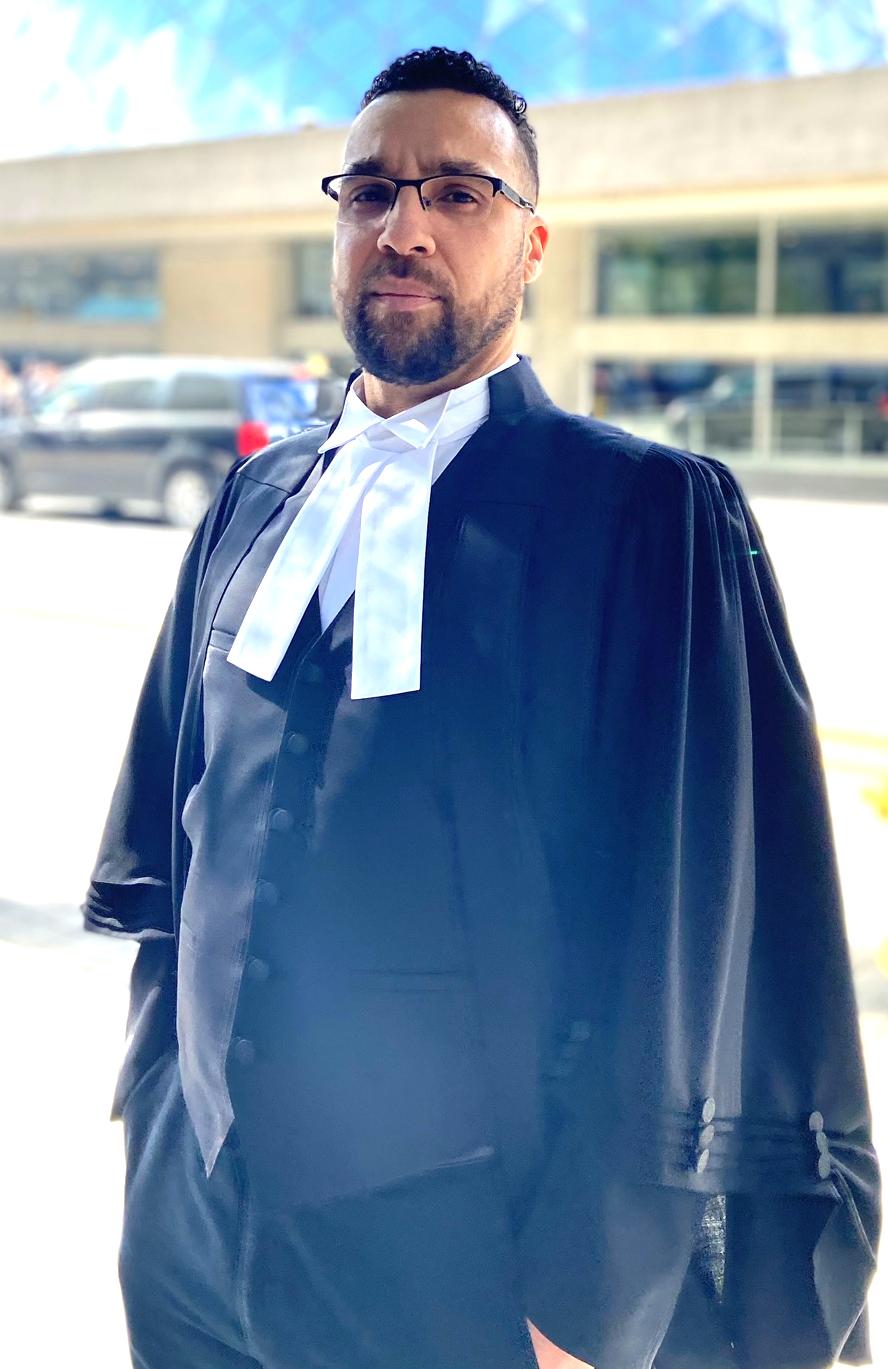
This month, Brett Book was called to the Ontario Bar, and we congratulate Brett on this significant achievement. Brett has been working with us for a few good years now during his law school years. Brett worked hard as a mature student to carry out his goals. Sadly, and fairly suddenly, he lost his dad this year, but his dad knew he crossed the goal line. Well done! Fabiana Araujo M. S. Kennedy, a qualified lawyer from Brazil, was also called to the Ontario Bar and started as a lawyer at WEL this month. See more on Fabiana within. There are more announcements coming, all in good time.
I met up with Sammi in Copenhagen for a few days of fun after her Oxford internship and before her UCL Masters commenced. We toured as much as could possibly have been seen in 4 days including a 5-hour food tour-was much fun.
We had 2 WEL Eats events, but I will leave that to the professionals to detail within.
There were a few presentations this month that our team members were involved in at the Law Society of Ontario, and of PEI, the Canadian Lawyer, Sudbury Colloquium, and the Toronto Police. It was great to be involved in these important events.
Our team has reflected on the continuing tragic and devastating atrocities arising from acts of terrorism, of war, or other descriptives, and we, like many in our community are shocked, saddened and at a loss to understand such reckless disregard for life, humanity and the losses suffered by our friends, family, and communities. We send our heartfelt condolences and send our wishes and prayers for peace, and healing.
Enjoy the Read,
Have a Spooky All Hallows’ Eve
Kim
| |
1. WELCOME FABIANA ARAUJO M.S. KENNEDY | |
WEL welcomes Fabiana who joined our team this month as a lawyer. Fabiana has LLMs from Osgoode Hall Law School in Business Law, 2016, and in Canadian Common Law, 2021, and was previously a practicing lawyer in her native Brazil following her Brazilian Bar Admission in 2007. She was called to the Ontario Bar on October 10, 2023. Fabiana is fluent in Portuguese.
https://welpartners.com/people/kennedy
| |
2. BRETT BOOK, CALL TO BAR | |
WEL congratulates Brett, who was called to the Bar on October 10, 2023. Brett continues his work with WEL as a lawyer.
https://welpartners.com/people/book
| |
3. CANADIAN LAWYER WEBINAR, OCTOBER 10, 2023 | |
Kimberly Whaley, Bryan Gilmartin, Ian Hull, Dr. Ken Shulman presented at the Canadian Lawyer Webinar on The Role of the Medical Expert in Estates Practice, which was attended by registrants across Canada.
View a recorded version: https://www.canadianlawyermag.com/multimedia/the-role-of-medical-experts-in-an-estates-practice/380471
| |
4. 2023 COLLOQUIUM SUDBURY, OCTOBER 18-20, 2023 | Bryan Gilmartin chaired the Estates section of the 2023 Colloquium Legal Education Conference, in Sudbury, Ontario on October 19, 2023. We are so pleased to be involved in this conference. | |
5. LSO ESTATES & TRUST SUMMIT, OCTOBER 19, 2023 | |
Kimberly Whaley presented at the LSO Estates and Trust Summit on a panel addressing: The Intersection of Criminal Law and Estates Law.
Link to Kim & Brett’s paper: https://welpartners.com/resources/WEL-LSO-Intersection-of-Criminal-Estates-and-Elder-Law.pdf
| |
6. LAW SOCIETY OF P.E.I. – CLE WEBINAR, OCTOBER 24, 2023 | |
Bryan Gilmartin and Kimberly Whaley presented on, Decisional Capacity with a focus on P.E.I. at the LSoPEI CLE Webinar on October 24, 2023.
WEL paper: https://welpartners.com/resources/WEL-LSPEI-Webinar-Decisional-Capacity.pdf
| |
7. STEP JOURNAL, ISSUE 5, 2023 | |
Kimberly Whaley’s and Bryan Gilmartin’s article: “Ontario’s new will validation legislation: execution and intention” was published in STEP Journal, Issue 5, 2023.
View issue: https://issuu.com/thinkpublishing/docs/stepjournalissue52023
| |
8. MARK HANDELMAN – PODCAST | |
Firm counsel, Mark Handelman appeared on Dr. Marcia Sirota’s podcast for a freewheeling discussion of mental health law, substitute decision-making, end of life decisions and Medical Assistance in Dying.
Podcast link:
Podcast 147 – The Most Important Decisions We Have to Make in Our Lives with Mark Handelman – Marcia Sirota (marciasirotamd.com)
| |
9. THE ADVOCACY CENTRE FOR THE ELDERLY 2023 AGM | |
Kimberly Whaley was invited and attend the ACE’s 2023 Annual General Meeting on October 24, 2023 listening to speakers on the Guest Panel on the timely and topical issue of Mortgage Scams.
To learn more about this and other schemes targeting seniors, check out ACE's web page: WARNING: Scams Targeting Seniors
| |
10. STEP MENTAL CAPACITY GLOBAL SPECIAL INTEREST GROUP STEERING COMMITTEE | Kimberly Whaley has been newly elected as a committee member of the Mental Capacity Global SIG Steering Committee with her term commencing January 2024. | |
11. EASTER SEALS DROP ZONE, OCTOBER 4, 2023 | |
WEL/Hull Rappelitors rappelled down the side of 175 Bloor Street East in Toronto to raise funds for Easter Seals Canada on October 4, 2023. Easter Seals and our team thanks those who donated (both with names and anonymously), including my mom. We are still shy of our team goal and there is still time for those who still wish to help us to help support children living with disabilities.
If you have yet to make donation but wish to do so, please visit our team donation page. Every contribution, no matter the size, brings us one step closer to achieving our goals and makes a real impact.
| |
II. ALBERT’S WORD OF THE MONTH | |
|
Albert’s Occasional Interesting Words
Spoonerism, n.
Recently I had occasion to use this word at the firm and it was new to my colleagues. Perhaps it’s unknown to others as well. So let me explain it.
A spoonerism occurs when a speaker transposes consonants, vowels, or morphemes between two words in a phrase or a sentence.
For example, you may wish to tell a fellow student, “You have missed the history lesson”. But what you actually say is, “You have hissed the mystery lesson”. Or you may want to ask, “Is it customary to kiss the bride?” But what comes out of your mouth is, “Is it kisstomary to cuss the bride?” Or you can say, “This is the pun fart”, when you meant to say, “this is the fun part”. You can find these examples and many similar ones online.
The word is named after the Oxford don and ordained priest William Archibald Spooner, the dean of New College Oxford in the second half of the 19th century. On the occasion of one of Queen Victoria’s birthdays, he wanted to ask his colleagues to raise three cheers “to our dear old Queen”. What he allegedly said was, “Let’s raise three cheers to our queer old dean”. Whether he actually said that is debatable. It may be apocryphal, but if so, it is an excellent example of a spoonerism.
You will appreciate that the best spoonerisms are those that are unintentional. I confess that I once made an embarrassing spoonerism in one of my lectures. I wanted to use the well-known aphorism, “A bird in the hand is worth two in the bush”. But what I actually said, totally innocently I assure you, was, “A hand in the bush is worth two…” At which point I stopped. My head turned several shades of red, and I wanted the floor to swallow me up. But I survived.
Albert’s Word of the Month
Cruciverbalist, n.
To help you figure out its meaning, consider that cruci- has something to do “cross”, as in “crucifixion”. And -verbalist obviously has something to with words.
So, a cruciverbalist is a person who does crossword puzzles.
| |
|
https://dashatoronto.com/
For this month’s iteration of WEL EATS, the team visited DASHA, one of the ambitious additions to the city by world renowned chef Akira Back.
Playing harmoniously into the chef’s signature style of embracing traditional Asian cuisines while applying his own western spin, DASHA showcases the chef’s foray into approaching Chinese flavors and culture.
Tucked down an otherwise unassuming laneway in the city’s fashion district, the restaurant’s opulent character and undertones are immediately evident from first glance.
Sprawling greenery and whimsical Chinese lanterns drape around the restaurant’s exterior, pulling you into the space’s grand and meticulously put together interior that reflects the “Big House” translation behind the term DASHA.
Once inside, contrasts of brick finishing, authentically inspired Chinese woodwork, and strong stone fixtures highlight the restaurant’s clear dedication to high end sophistication. At the same time, the charming bright accents, neon lights, scriptures, and imaginative decorations throughout showcase the restaurant’s clear intention and commitment towards the whimsical and playful side of things.
This dedication to small details and high-quality execution transcended beyond the space itself, and remained consistent through to the dining experience with a curated tasting menu that was as equally as mindful and cohesively put together as the space itself.
At the outset, an immediate standout dish was pork belly bao. Bursting with rich traditional flavors, wrapped in delicate pastry, and stuffed with fresh premium ingredients, the dish was perfectly embracing of an elevated take on the traditional cultural staple.
This unwavering commitment to fresh and high-quality ingredients remained consistent through the experience, with dishes including truffle fried rice, tenderloin, peaking duck, and wasabi prawns that continuously exceeded expectations.
Admittedly, we would be remiss not to mention the creative and imaginative approach that DASHA also takes towards cocktail preparation, as the restaurant places a strong emphasis on pairing beautiful presentation and immersive experiences with unique and creative flavors.
Finally, while the dining experience itself was enough to warrant an eager return to the space, our experience continued to the second floor where private and charming karaoke rooms await. Playing further into the restaurant’s commitment towards immersively, embracing culture, the spaces are a playful ode to the experiences that are commonly seen and enjoyed abroad.
While a stomach filled with decadent eats and a bowl of lychee punch may not seems like the most obvious aperitif for a rendition of karaoke, the paring seemed to bring even the most reserved singers to the floor.
As a modern, elevated, and playful twist on Chinese cuisine, DASHA truly leaves an impression that stands apart and finds a welcome place in the city.
| |
This unwavering commitment to fresh and high-quality ingredients remained consistent through the experience, with dishes including shishito peppers, truffle fried rice, tenderloin, peaking duck, and wasabi prawns that continuously exceeded expectations. | |
Admittedly, we would be remiss not to mention the creative and imaginative approach that DASHA also takes towards cocktail preparation, as the restaurant places a strong emphasis on pairing beautiful presentation and immersive experiences with unique and creative flavours. | |
|
Finally, while the dining experience itself was enough to warrant an eager return to the space, our experience continued to the second floor where private and charming karaoke rooms await. Playing further into the restaurant’s commitment towards immersively, embracing culture, the spaces are a playful ode to the experiences that are commonly seen and enjoyed abroad.
While a stomach filled with decadent eats and a bowl of lychee punch may not seems like the most obvious aperitif for a rendition of karaoke, the paring seemed to bring even the most reserved singers to the floor.
As a modern, elevated, and playful twist on Chinese cuisine, DASHA truly leaves an impression that stands apart and finds a welcome place in the city.
| |
|
https://yamatorestaurant.ca/
For a bonus edition of WEL EATS, our team recently visited the Toronto icon and neighbourhood staple, Yamato Japanese Restaurant.
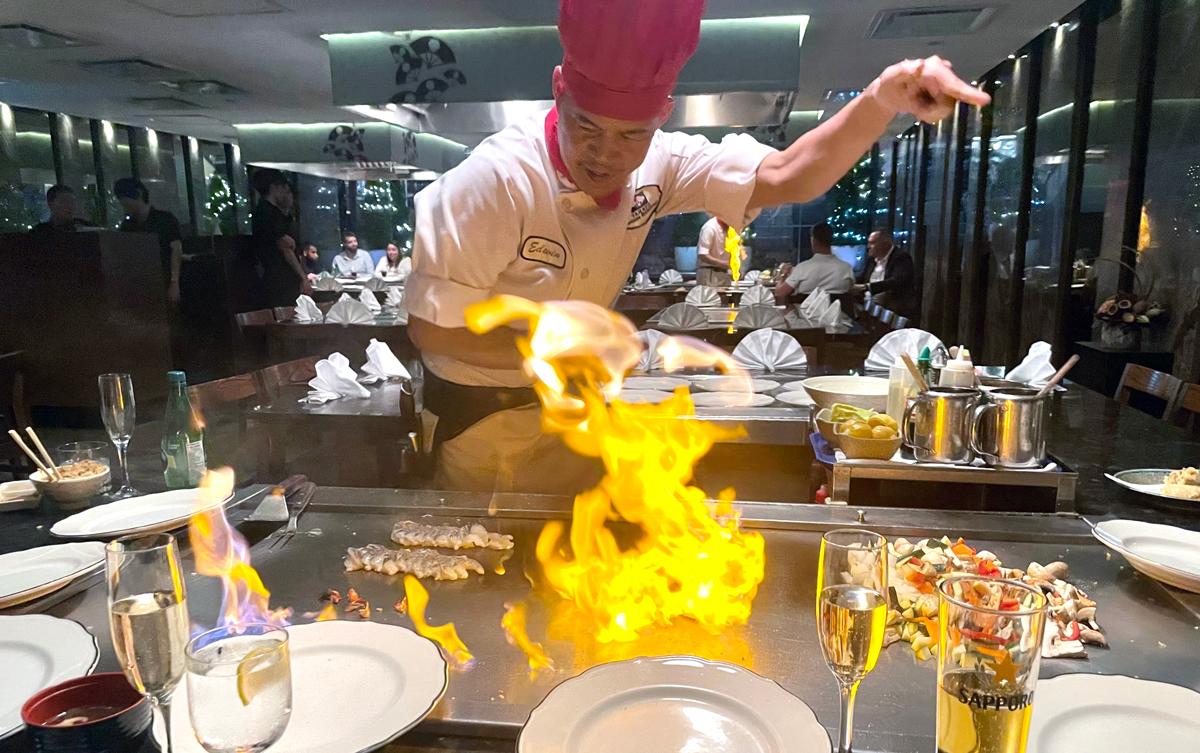
Located in the heart of Yorkville since first opening in 1983, Yamato was one of the city’s first restaurants to offer an authentic teppanyaki experience.
For those who may not be familiar with the term “teppanyaki”, it refers to the Japanese style of cooking where iron cooktops are built into your table and chefs prepare the meal before your eyes.
| |
|
While the space is divided into two rooms, one providing a more standard dining experience with traditional Japanese menu items, we were treated to the teppanyaki experience that fills the space’s second room with an almost puzzle-like configuration.
Within the teppanyaki experience are choices of different proteins that include cuts of beef, chicken, and fish, and are accompanied by classic side dishes such as fried rice and grilled vegetables. While these ingredients and dishes may seem simple, the charming performance of the chefs, whimsical excitement of the roaring flames, and shared experience for everyone at the table elevates the otherwise delicious meal into something truly memorable.
For anyone seeking out their next destinations for dinner and a show, why not consider Yamato and get a dinner that is a show.
| |
SHOUT OUT TO OUR FRIEND, NORMAN BOWLEY | |
|
Norman is a now retired lawyer, a writer, speaker, consultant, communications specialist, and likely so much more. I met Norm by phone many years ago now when I was chair of the OBA Estates & Trusts Section. He randomly called me at my office and asked (well actually he yelled and reprimanded me) why there exists an OBA Evening with the Estates List Judges that does not include an Ottawa Judge, or why doesn’t the OBA have a similar event in Ottawa - not everything is about Toronto in other words.
Much as Norm really was having a go at me as if the issue he spoke of began and ended with my obvious failure - I agreed with him and together we made the Ottawa event also exist. From then on, I took a great interest in learning from this curious, engaging, gifted lawyer-gentleman. I visited his office when I was next in Ottawa. I wonder if he even remembers this. I met his lovely wife who worked with him, and it was a professional and collegial friendship we forged for years to come. In Norm’s retirement he continued to learn and give back to the profession. Every Friday in my inbox I receive the FRIDAY BRIEFING. I love it - I read it - Norm really makes me think and he has uniquely used his experience and insight in a way so as to impart wisdom, practical and sensible advice. He connects with his reader. He connects people. I love that Norm every so often drops me a note about my newsletter, but more than that I love receiving his Friday Briefing and relating my experience to his and his sage, wise, advice.
If you have not already, sign up for Norm’s Friday Briefing, you will not be disappointed.
Thank you Norm - you are a gift that sincerely keeps on giving.
View Norm’s FRIDAY BRIEFING ARCHIVES
Norm’s LinkedIn Profile: https://www.linkedin.com/in/norman-bowley/
| |
WEL CONGRATULATES LOUISE LEWIS | |
|
Each year, the Berks, Bucks and Oxfordshire Law Society in the U.K., has a ‘Lawyer of the Year’ Award and this year Louise Lewis, STEP colleague, friend, and joint head of the Oxford Trusts, Estates and Tax team and Partner at Freeths, won! Louise is a passionate advocate who strategically navigates complex issues concerning vulnerable persons with care and wisdom. Louise is tenacious and resolute in advocating for all her clients.
https://www.freeths.co.uk/people/louise-lewis/
| |
(i) PRESUMPTION OF REVOCATION OF A WILL | |
|
By Albert H. Oosterhoff
1. Introduction
There is a well-recognized common law presumption of revocation of a will that arises in certain circumstances. It was described as follows by AF Wilson J in Haider v Kalugin:[1]
If a Will last known to be in custody of testator is not found at his death, the presumption is that the testator destroyed it with the intention of revoking it (“animo revocandi”). However, that presumption may be rebutted by evidence, written or oral, of the facts. The strength of the presumption will depend on the character of the custody which the testator had over the Will.[2]
Moreover, statutory provisions regarding revocation also address the matter. Thus, for example, section 55(1) of the Wills, Estates and Succession Act[3] provides in part:
A will … is revoked only in one or more of the following circumstances:
. . .
(c) by the will-maker, or a person in the presence of the will-maker and by the will-maker's direction, burning, tearing, or destroying all or part of the will in some manner with the intention of revoking all or part of it.
The issue of the presumption of revocation of a will arose in the recent case, Re Galloway Estate,[4] in rather unusual circumstances, which I shall summarize below.
2. Facts
The father, Jack Galloway, was predeceased by his wife, Patricia. They had two children, Joan, and James. They purchased a townhouse in 2003, and James moved into the property to live with them in 2010. In 2011 Patricia, who had developed dementia, moved into an extended care facility. In November 2014 Jack made a new Will. In it he named James as the primary executor and Joan as substitute. He split his estate equally between the two children. Under his prior Will Joan her children would have received 80% of his net estate.
In 1994 the parents had given powers of attorney to Joan. She used the powers to transfer title from Patricia to Jack and then from Jack over to her son, Christopher, an Arizona lawyer. In March 2015 Jack and Patricia began proceedings to undo Joan’s actions. James was also a party to the proceedings Patricia died in July 2015. In the litigation Joan made several very serious allegations against James. The court found them to be scurrilous and found most to be without substance. In August 2015 the court ordered the title to the property to be retransferred to Jack. Jack and James both applied for special costs and the court granted their applications. Jack had made a new Will in 2015, in which he left his entire estate, including the house and his entitlement to the special costs, to James. Jack died in March 2019.
During the litigation, Ms. Darnell, counsel to Jack, Patricia, and James, told James that if he died without a will, all his estate would go to Joan. Ms Darnell’s firm prepared a Will for him, which he executed. The witnesses were a lawyer and a legal assistant at the firm. The firm gave James the signed Will to keep in his possession in a safe place at his house. At about the same time, James told Sharon Strelaeff that she was his sole executor and sole beneficiary. Patricia was Sharon’s godmother and Sharon had known the Galloway family her entire life. James was friends with another owner in the condominium, Ms. Kreitz. He gave her a key to his property and permission to enter it if necessary. In October 2021 Ms Kreitz became concerned because she had not seen James for some time. So, she entered his property, discovered his body in bed, and called the police. It was determined that James had died around 1 September 2021, some six weeks before Ms. Kreitz discovered the body. The police contacted Joan as James’ next of kin. They told her that because of the decomposition of the body, she would have to engage a specialty cleaning service to make the property safe to enter. She engaged SAH Disaster Restoration Services (‘SAH’) The employees of SAH worked on the property for a considerable period of time. Among other things, they filled and disposed of 20 double-bagged garbage bags.
After SAH finished its work, Joan entered the property to look for significant documents and removed a number of documents but did not find a will. Sharon also attested that a diligent search was done of all reasonable places and that no will was found.
Sharon presented the copy of the Will she obtained from Ms. Darnell’s law firm to the court and sought probate of it. Joan objected to the petition and relied on the presumption of revocation.
3. Analysis and Judgment
Madam Justice Tucker noted that section 55(1)(c) of WESA has two elements: (1) the will must have been destroyed; and (2) the testator must have intended the destruction to revoke the will. She also noted that the presumption is based on a ‘logical inference that a person of ordinary prudence would keep safe an original document as important as a will, and that failure to find such an important document after a person’s death is presumptive evidence that it was intentionally destroyed by the prudent person’.
Joan argued that the burden on Sharon as executor to rebut the presumption of revocation is very heavy. But Justice Tucker disagreed. She quoted from the judgment of the Supreme Court of Canada in FH v McDougal,[5] which states that there is only one civil standard of proof at common law and that is proof on the balance of probabilities.
Justice Tucker then considered the evidence. Joan objected to the evidence of a number of witnesses as insufficiently reliable. But Justice Tucker held that she could reach a conclusion of the issue of revocation without having to rely on the disputed evidence. Significantly, Joan did not challenge Ms. Darnell’s evidence of her advice to James that his estate would pass to Joan if he died intestate. Joan also did not dispute Mr Magnus’ evidence about the fact and timing of James’ complaints to the Arizona Bar about Christopher. Ms. Darnell also testified that at no time did James ever mention that he had any intention of changing his Will. Justice Tucker held that that evidence was not hearsay and was, therefore, admissible. She also held that it was not necessary to allow Joan to cross-examine the Sharon, Ms. Darnell, Mr Magnus, and Ms. Kreitz on their affidavits, since the undisputed evidence was ample to persuade her that the Will was inadvertently lost. She was satisfied on the evidence that James was not fastidious or well-organized by nature. Joan testified that she was advised that it is the policy of SAH not to remove any documents from the premises that are engaged to clean. But there was no evidence of such a policy. Nor was there any evidence that SAH made an inventory of what they removed from the property or that they followed a protocol when they discovered documents among the effects that had become a biohazard. However, Justice Tucker noted that it was not necessary to find that SAH knowingly threw out recognizably important documents, since the property was in a state of disorganization.
Justice Tucker then considered the following factors:
(a) James was not neat or organized by nature;
(b) Since he did not have a home safe, James probably placed the Will somewhere on the property;
(c) SAH disposed of garbage bags of contaminated household effects before any searches for the Will were conducted;
(d) In light of previous acrimonious litigation and the animosity between James and Joan; the fact that James knew that Joan would get his estate if he died intestate; and the fact that Sharon was a rational choice of beneficiary since she was Patricia’s goddaughter; the terms of the Will were reasonable;
(e) There were no relationship issues between James and Sharon after the execution of the Will;
(f) Mr Magnus had standing instructions to pursue the special cost awards against Joan and to collect them; and
(g) there was no evidence of a reconciliation with Joan
Moreover, Justice Tucker noted that James knew that if he died intestate Joan would inherit the property he and his parents sought to reclaim in the litigation, and further that his intestacy would also relieve Joan of her obligation to pay the special litigation costs awards. In addition, it would make very little sense for James intentionally to destroy the Will because he decided to die intestate, while not instructing Mr Magnus to desist in his pursuit of the special costs.
Accordingly, Justice Tucker found that the presumption of revocation was rebutted. Then she went on to find that the Will had been properly executed and attested, and thus she granted probate of the copy of the Will in solemn form to Sharon. She also directed Joan to transfer all documents and belongings of James to Sharon’s counsel, and also to transfer all access to estate accounts to Sharon. Since the proceedings were necessitated by James’s failure to keep the Will safe, Justice Tucker held that it was appropriate to award special costs out of the estate to both parties.
---
[1] 2008 BCSC 930, para 9.
[2] Sugden v Lord St Leonards (1876), 1 P.D. 154 (CA).
[3] SBC 2019, c 13 (‘WESA’).
[4] 2023 BCSC 1204.
[5] 2008 SCC 53, para 40.
| |
(ii) USE OF EXTRINSIC EVIDENCE IN INTERPRETING A WILL | |
|
By Albert H. Oosterhoff
1. Introduction
It is now well-established that a court asked to interpret a will may and indeed should have regard to extrinsic evidence that enables it to ascertain the testator’s subjective intention. The rule has been recognized in Canadian jurisprudence for several decades, and it was confirmed in what has become the leading modern case on point, Hicklin Estate v Hicklin.[1] The Alberta Court of Appeal has recently re-confirmed that case in Re Strafford Estate,[2] in which it dismissed an appeal from a decision of Madam Justice Kirker.[3] The appeal decision is brief. The court agreed with the decision of Justice Kirker, held that she properly considered extrinsic evidence to give effect to the testator’s subjective intention, as required by Hicklin, and concluded that she did not commit any palpable or overriding errors. In the circumstances the appellate decision would not normally warrant a blog. But the facts are particularly interesting because they involve a testamentary direction to the executor to purchase an annuity for one beneficiary who survived the testator but who died before the executor could obtain probate or purchase the annuity. This is not an issue that is much discussed in modern cases and therefore it deserves closer examination, particularly because cases have reached divergent views on the question whether the estate of the intended annuitant is entitled to the capital sum to be used to purchase the annuity. To examine this issue, I shall focus principally on the judgment at first instance.
2. Facts
The testator, Dr Barrie Strafford died on 25 April 2016. He named his daughter Roxanne his executor. The Will directed that the executor should divide one-half of the residue of his estate ‘into four equal shares and to pay or transfer one such share to each of my children’, Roxanne, Sheree,[4] Lisa, and Miles. But he immediately followed this with the following: ‘I direct that the Share that is to be transferred to my daughter [Sheree] to be used to purchase an annuity giving her a monthly income of at least $3,500, said amount to be indexed to and increase with the rate of inflation as reported by the Bank of Canada. The Will directed that the other half of the residue be paid to the Brenda Strafford Foundation. Brenda was the testator’s late wife, and he established the foundation in her honour. The Will also provided that beneficiaries had to survive the testator by 20 days. Sheree survived her father by 20 days but died of a drug overdose on 31 August 2016, before Roxanne was able to obtain probate or purchase the annuity.
Sheree’s death raised the question whether the capital sum intended to be used to purchase an annuity now belonged to testator’s estate, or whether Sheree’s estate was entitled to it. Roxanne brought an application to interpret the will and took the view that the amount belonged to the testator’s estate. The personal representative of Sheree’s estate, who was the mother of Sheree’s late husband, argued that it had vested in Sheree and therefore belonged to her estate.
Justice Kirker considered affidavits and heard oral evidence from Roxanne, Lisa, Norma Jackson, a long-time friend and business associate of the testator, and the personal representative of Sheree’s estate. She also considered two affidavits from Robert Schuett, the lawyer who drafted the Will but who died before the trial. And she heard evidence from Alison Jenner, an expert witness on the issue of how annuities are used and purchased for estate planning purposes.
3. Analysis and Judgment
Justice Kirker began her analysis by referring to section 26 of the Wills and Succession Act,[5] which states, ‘[a] will must be interpreted in a manner that gives effect to the intention of the testator’, noted that this is the cardinal principle, of which the Alberta Court of Appeal stated in Hicklin, ‘[n]o other principle is more important than this one’. She focused particularly on the court’s right to consider extrinsic evidence of the testator’s intention.
Justice Kirker accepted the evidence of Roxanne and Lisa that their father was a loving and supportive father. He was supportive of Sheree, but his relationship with her was strained because of her use of drugs, her failure to maintain employment, and her tendency to spend more money than she made. She also accepted Mr Shuett’s affidavit evidence that supported the evidence of Roxanne and Lisa. She accepted Mr Shuett’s evidence that the testator did not want to give Sheree a lump sum because she would dissipate her inheritance. That is why he decided to make provision for an annuity for her instead. Justice Kirker also accepted the evidence of Ms Jackson who confirmed the testator’s concerns and wishes. The personal representative of Sheree’s estate never met the testator and therefore could not give any evidence of his circumstances or testamentary intentions.
Justice Kirker accepted that the testator had concerns about Sheree that led to his testamentary decision about her. Therefore, although the will provided that if any beneficiary should predecease him, the share given to that beneficiary should be paid to the beneficiary’s estate, this could not be interpreted as showing that the testator intended Sheree to have a one-eighth share of the residue when he died. To reach such a conclusion would be at odds with his intention to provide an annuity for Sheree. Thus, in the context of the Will as a whole, Justice Kirker found that the testator intended that the executor purchase a ‘non-commutable, non-assignable annuity’ for Sheree that would provide her a monthly income for her life.
Justice Kirker then considered the general principle of the law that when a testator bequeaths a sum of money to purchase an annuity, the annuitant is entitled to have the capital sum, since the annuity can be sold immediately by the annuitant.[6] A number of cases have held therefore that if the intended annuitant dies before the annuity can be purchased, the annuitant or her estate is entitled to take the value of the annuity in cash: Robbins v Legge,[7] Lotzkar v McLean,[8] and Ker Estate v Stevenson[9] and others. In Lotzkar the court quoted a passage from Jarman on Wills,[10] which states the general principle. However, Justice Kirker noted that the quote omitted a footnote, which states, ‘A direction to set aside a fund to secure an annuity does not give the annuitant the right to have the value of the annuity paid to him.[11] [In contrast, a] discretionary power to invest in the purchase of an annuity authorizes the trustees to pay the sum to the annuitant’.[12] She distinguished Lotzkar and Ker on the ground that while the testators in those cases evinced an intention that the proposed annuitant be prohibited from taking the value of annuity in lieu of income payments, the wills also gave the executors broad discretion to purchase annuities as they thought fit. However, other cases have held that if the testator’s intention is that the annuitant is entitled only to an income for life, rather than a lump sum, the general principle stated above does not apply. See, e.g., Jensen v Wutzky.[13]
Justice Kirker held that since Sheree died before the testator’s will could be probated and the annuity purchased, it would be inconsistent with the testator’s intentions to hold that Sheree’s estate became entitled to the capital sum. However, it was entitled to retain the $7,000 paid to Sheree by the executor to meet her immediate needs and to honour the testator’s intentions.
---
[1] 2019 ABCA 136, 46 ETR 4th 1. See also my blog on this case, http://welpartners.com/blog/2019/05/admissible-evidence-in-construing-wills/, posted 7 May 2019.
[2] 2023 ABCA 99.
[3] Re Strafford Estate, 2021 ABQB 417.
[4] The name was misspelt in the Will but nothing turned on that.
[5] SA 2010, c W-12.2
[6] Justice Kirker noted that in Canada this principle is subject to the rule that if the direction is to purchase a Government of Canada annuity, the annuitant cannot claim the money because the Government Annuities Act, RSC 1970, c G-6, s 10(1) makes the property in the annuity or the benefits under it inalienable.
[7] [1907] 2 Ch 8 (CA).
[8] (1979), 15 BCLR 259.
[9] 2009 ONCA 345
[10] 8th ed, vol 2 (London: Sweet and Maxwell, 1951), p 1109.
[11] Wright v Callender, 2 DM&G 652.
[12] Messeena v Carr, LR 9 Eq 260.
[13] [1947] 1 DLR 66 (Sask CA). And see similar cases mentioned in paragraph 64 of the Strafford judgment at first instance.
| |
(iii) ESTATE TRUSTEE’S ACCESS TO MEDICAL RECORDS INCLUDES INCIDENT REPORTS PREPARED BY LONG-TERM CARE HOME | |
|
By Evan Pernica
A recent decision by the Ontario Information and Privacy Commissioner (the “OIPC”) affirmed 3 important principles concerning an estate trustee’s authority to access personal health records:
1. The Personal Health Information Protection Act, 2004, SO 2004, c 3, Sch A (“PHIPA”) governs requests for personal health records, where applicable;
2. Records of “personal health information” as defined by s.4 of PHIPA should be given a “broad interpretation,” and include reports about incidents between patients and staff members of a long-term care facility; and
3. An Estate Trustee has authority to access the personal health information of a deceased under s.52(1) of PHIPA despite the section failing to include language explicitly authorizing an estate trustee or substitute decision-maker to do so.
Background
Following the death of a resident (the “Deceased”) in a long-term care home in Sudbury, Ontario (the “LTC Home”), the deceased’s appointed estate trustee (the “Estate Trustee”) requested access to all the deceased’s records of personal health from the LTC Home under PHIPA.
More specifically, the Estate Trustee’s request included access to all the Deceased’s records involving two identified incidents at the LTC Home, the associated witness statements and RN/RPN notes, and certain records about the deceased’s health during a specified time frame.
Surprisingly, the custodian for the LTC Home (the “Custodian”) denied the Estate Trustee access to any such records of personal health and instead took the following positions:
-
some of the information requested by the Estate Trustee, including the incident reports concerning the Deceased and LTC Home staff members, did not qualify as personal health information for the purposes of a request made under PHIPA;
-
the relevant disclosure requirements are set out in s.38(4) of PHIPA and do not allow for the release of any records requested by the Estate Trustee; and
-
the Estate Trustees has the opportunity to bring a further freedom of information request under the Municipal Freedom of Information and Protection of Privacy Act, R.S.O. 1990, c. M.56, (“MFIPPA”) for access to the requested records.
The Custodian’s refusal was then met by the daughter of the Deceased acting on behalf of the Estate Trustee bringing a complaint under PHIPA to the Ontario Information and Privacy Commissioner (“OPIC”) who considered 3 issues:
1) Does PHIPA or MFIPPA, or both, apply in the circumstances of the complaint?
2) Does each record at issue contain “personal health information” as defined under PHIPA?
3) Does the Estate Trustee have a right of access to the Deceased’s personal health information under section 52(1) of the PHIPA?
1. Does PHIPA or MFIPPA, or Both, Apply in the Circumstances of the Complaint?
The OIPC was clear that the request for records of the Deceased’s personal health information during a specified time when they were a resident at the Custodian’s facility is governed by PHIPA.
2. Does Each Record at Issue Contain “Personal Health Information” as Defined in Section 4 of PHIPA?
Considering the scope of information captured by personal health information as defined by s.4 of PHIPA, the OIPC first affirmed the existing approach that a “broad interpretation” be given.
The OIPC then further considered and confirmed that the records requested by the Estate Trustee are captured by the definition of personal health information for reasons including that:
- The requested records contain information identifying the Deceased with information that relates to his physical and mental health, including his health history;
-
Such information, falls within paragraph (a) of the definition of personal health information set out in s.4(1) of PHIPA; and
- The requested records also contain information identifying that the Deceased was receiving health care from the Custodian, which qualifies as personal health information as defined in paragraph (b) of the definition.
Further speaking to the disputed issue of records concerning incidents between the Deceased and staff members of the LTC Home, the OPIC was clear that such information does meet the necessary definition of personal health information:
In fact, I find on my inspection of the records that they relate primarily to the deceased – specifically an incident involving him, and that these records were maintained for the purpose of documenting an incident involving the provision of health care to the deceased.
3. Does the Estate Trustee Have a Right of Access to the Deceased’s Personal Health Information Under section 52(1) of the PHIPA?
In respect of the Estate Trustee’s authority to access personal health information under s. 52(1) of PHIPA, the Custodian raised an interesting contention that s. 52(1) of PHIPA does not contain language authorizing any person aside from the individual themselves to access personal health information.
For this reason, the Custodian contended that rather than the personal access rights provided for in s.52(1) of PHIPA, the Estate Trustee’s request is governed by the third-party disclosure provisions captured by s.38(4) of PHIPA, and s.38(4) of PHIPA does not permit for the release of the records requested by the Estate Trustee.
On this point, the OIPC acknowledged that while the plain language of s.52(1) exclusively provides authority to access personal health records to the individual about whom the records relate, the consent provisions provided for in s.23(1) must be further read in:
If this Act or any other Act refers to a consent required of an individual to a collection, use or disclosure by a health information custodian of personal health information about the individual, a person described in one of the following paragraphs may give, withhold, or withdraw the consent:
…
If the individual is deceased, the deceased’s estate trustee or the person who has assumed responsibility for the administration of the deceased’s estate, if the estate does not have an estate trustee.
Viewed through the lens of Estate Trustees being empowered to consent on a deceased’s behalf, the OPIC found that the Estate Trustee was empowered to access the requested health records under s.52(1) and was not confined to the disclosure requirements set out by s.38(4) of PHIPA.
The Need to Know your Rights as an Estate Trustee
Despite the reality that Estate Trustee’s are virtually empowered to step into the shoes of a deceased individual as if they were still alive, this decision speaks to the resistance that can still be faced when dealing with independent institutions.
For this reason, rather than blindly relying upon the representations and refusals that an Estate Trustee may encounter when carrying out their duties, it is crucial that Estate Trustee’s independently understand their rights and the extent of their authority when acting.
| |
(iv) WHEN CAN A CREDITOR SEIZE PROPERTY HELD IN JOINT TENANCY? | |
|
By Oliver O’Brien
Earlier in the year, an interesting decision came out of the Ontario Court of Appeal which concerned the rights of a creditor to seize the property of a non-debtor joint tenant. This was examined in Senthillmohan v. Senthillmohan, 2023 ONCA 280.[1]
Facts
In Senthillmohan, the parties were Sockalingam Senthillmohan (the “husband”), Subhathini Senthillmohan (the “wife”), and 2401242 Ontario Inc. (the “Creditor”). The husband and wife were married but are now separated and together they owned a matrimonial home in joint tenancy.
In January 2020, the wife commenced an application seeking a division of the parties’ net family property and a sale of the matrimonial home. In January 2021, the court granted an order directing for the sale of the home and for the net proceeds of sale to be held in trust pending a separation agreement between the husband and wife.[2]
In September 2021, the Creditor obtained a default judgment against the husband because of a previous civil action and a writ was filed on the home. In October 2021, the husband and wife sold the matrimonial home and the creditor consented to temporarily lifting the writ to facilitate the sale.[3]
In November 2021, the wife brought a motion seeking to sever joint tenancy to the home. This motion was granted, and the court issued an order (the “November 2021 Order”) that title to the home be held by the husband and wife as tenants in common. The order was silent on the effective date of the severance and did not address the default judgment against the husband.[4]
The sale of the home was completed in February 2022. Following the sale, the wife brought a motion to release her 50% interest in the proceeds of sale which were held in trust. The Creditor sought to enforce the writ against her interest in the proceeds, despite not being a debtor.[5]
The Creditor submitted that both the husband and wife were joint tenants at the time the default judgment was obtained, and the writ filed. Therefore, the Creditor had priority over the wife’s interest in the proceeds of sale. The motion judge rejected this argument and found that joint tenancy was severed retroactively by the time the Creditor obtained default judgment, through the November 2021 Order.[6]
The Law
On appeal the question for the court was, can the Creditor seize the interest of the wife, despite the fact the default judgement was not obtained against her? The Court of Appeal decided in the negative; the Creditor was not entitled to the wife’s interest in the proceeds of sale.
Of central importance in the court’s decision was section 9(1) of the Execution Act, R.S.O. 1990, c E.24, which provides:
9(1) The sheriff to whom a writ of execution against lands is delivered for execution may seize and sell thereunder the lands of the execution debtor, including any lands whereof any other person is seized or possessed in trust for the execution debtor and including any interest of the execution debtor in lands held in joint tenancy. (emphasis added)
The act of seizure and execution on debts pursuant to the Execution Act only allows for execution against the debtor’s interest in the land. When steps are taken to seize property, joint tenancy is severed and as a result a creditor has no claim to the whole property. The same principle applies when a creditor seeks a debtor’s interest in property held as tenants in common.[7]
Moreover, the court highlighted section 10(6) of the Execution Act which states that a writ “binds the lands against which it is issued”[8]. When read in conjunction with section 9(1) and the right of survivorship, the court interpreted this to mean that a writ can affect only a seizure of the debtor’s interest in land held in joint tenancy.[9]
The right of survivorship provides that when property is owned jointly in joint tenancy and one owner dies, their interest automatically flows to the other owners. This is distinguishable from tenancy in common, whereby two or more persons may hold property jointly, but each have a distinct share. The right of survivorship does not apply in this instance and on the death of one of the owners, their share does not automatically flow to the other owners.
Comment
The legal issue posed in Senthillmohan is somewhat unique. In coming to their decision, the Ontario Court of Appeal noted how little jurisprudence exists to guide them. So, Senthillmohan, provides helpful guidance on the rights of creditors and joint tenants.
It is important to note that the rules that govern creditor rights in respect of seizure and execution against non-debtors differ across Canadian provinces. For instance, in Manitoba The Real Property Act, C.C.S.M c. R30, prioritises the payment of creditors over joint tenants in a default judgment scenario.[10] Thus, if Senthillmohan, were decided in Manitoba, the Creditor’s writ would need to be paid out before any remaining surplus is paid to the wife.
---
[1] Senthillmohan v. Senthillmohan, 2023 ONCA 280 (“Senthillmohan”)
[2] Senthillmohan at para 1.
[3] Senthillmohan at para 2.
[4] Senthillmohan at para 4.
[5] Senthillmohan at para 5.
[6] Senthillmohan at para 6.
[7] Senthillmohan at para 14.
[8] Section 10(6) of the Execution Act, 1990
[9] Senthillmohan at para 14; citing Power v. Grace [1932] O.R. 357 (Ont. C.A)
[10] Section 136(3) of The Real Property Act, C.C.S.M, c. R30.
| |
(v) CAPACITY ASSESSMENTS IN ONTARIO | |
|
By Brett Book
In October, Kim Whaley and Bryan Gilmartin were busy discussing decisional capacity across the country. On October 10th they presented on a Canadian Lawyer Magazine panel on the role of the medical expert in an estates practice[1] and on October 24th they presented to lawyers in Prince Edward Island on decisional capacity and the process of capacity assessments. I thought this was a better time than ever to discuss how capacity assessments operate here in Ontario.
Capacity represents an area of enquiry where medicine and law collide. In this nexus, legal practitioners are often interacting with clients who are experiencing medical and cognitive challenges. Medical practitioners are frequently called on to apply legal concepts in the context of their clinical practice or review evidence retrospectively to determine whether an individual had the requisite capacity to complete a specific task or make a specific decision at a particular point in time.
The assessment of capacity, however, is a less-than-perfect science, both from a legal and medical perspective. As a result, capacity determinations are notoriously complicated and involve not only relevant professional and expert evidence but lay-person evidence as well.
In Ontario, the Substitute Decisions Act[2] mandates who can act as a capacity assessor as well as the circumstances which may require that a legal assessment of capacity be conducted.
To facilitate the training of assessors on the legislation and the guidelines for assessing capacity, the Capacity Assessment Office (“CAO”) was created. In addition to training assessors, the CAO maintains a public list of qualified assessors, and also provides ongoing support and education to assessors in addition to monitoring the quality assurance requirements of assessors.
An Overview of Capacity Assessors
Some assessors may have specific skills and experiences working with people who have certain types of disability such as dementia, mental illness, brain injuries, and intellectual disabilities. But who is entitled to act as an assessor?
In Ontario, an assessor can be a member in good standing of one of the following colleges:
- Physicians and Surgeons of Ontario;
- Psychologists of Ontario;
- Social Workers and Social Service Workers Ontario;
- Occupational Therapists of Ontario; and
- Nurses of Ontario (RN or RN-Extended Class)
Most assessors successfully complete a CAO/Ministry of the Attorney General training program. In addition, assessors must comply with the ongoing Quality Assurance regulations and carry $1 million in professional liability insurance. To remain qualified to do assessments of capacity, an assessor is required to do at least five assessments during the two-year period following their qualification date and there-after during each two-year period.[3]
A capacity assessor will generally engage with potential clients by screening calls (to determine if the person’s needs can be met in other, less intrusive ways), collecting background information, meeting the person to be assessed, providing rights advice, and if the person does not refuse, assessing their capacity.[4]
The total cost of a capacity assessment will depend on numerous factors including the complexity and nature of the condition of the person to be assessed, the assessor’s experience in conducting assessments, the time needed to complete the assessment and related documents, and the assessor’s expenses (including travel). Capacity assessors set their own hourly or flat rates, however, typically, this cost can run anywhere from $500 to over $2,000 per capacity issue but varies widely depending on how complex the matter is. Generally, the person requesting the assessment is responsible for its cost. Where payment is an issue, financial assistance may be available through the CAO.[5]
How is capacity assessed?
Capacity assessments can be contemporaneous, which are assessments made when the person whose capacity is being assessed is still alive or they can be retrospective which are assessments conducted looking at a previous period in time, and often, yet not always, postmortem.
In conducting an assessment, an assessor will try to determine whether the person being assessed has a factually accurate understanding of the issues.[6] The assessor will assist the person being assessed by providing information relevant to the process and assessing the individual to determine the extent to which they can retain, interpret, and manipulate information. The individual’s responses are then appraised to determine whether they demonstrate an understanding of the information being discussed.[7] The assessor will evaluate the person’s capacity to appreciate the consequences of their choices in the context of that person’s particular lifestyle, values, and beliefs. Assessors will not infer incapacity based on the unusual choices of the person being assessed. A capable person is entitled to make choices that may seem “bad” to others: the only relevant issue for a capacity assessor is the person’s level of cognitive functioning and their ability to reason and process information.
There is an expectation that capacity assessors will follow a fair process and should not use terminology or technical language but rather, should gear their questions to the education level and abilities of the individual being assessed.
Notably, there are certain types of assessments that capacity assessors do not perform. This is because the law provides for a different way for them to be done. For example, the Health Care Consent Act[8] holds that if medical treatment is proposed for a person, it is up to the healthcare professional proposing the treatment to decide whether the person is capable of giving or refusing consent to treatment or for entry to a long-term care facility. These health professionals are known as evaluators under the HCCA.
The Utility of Capacity Assessments
A capacity assessment, performed by a qualified assessor, can be useful in determining whether someone is incapable of managing their property, or of granting or revoking a power of attorney. It can also be used retrospectively to determine whether an individual had testamentary capacity, for example, to make a will or a codicil to a will.
Capacity assessments may be used to create a statutory guardianship for property for the PGT to become an incapable person’s guardian.[9] Capacity assessments may also be necessary to terminate a statutory guardianship for property,[10] to make a power of attorney appointment effective,[11] or to give or revoke a power of attorney for personal care “with special provisions.”[12] Such assessments are also be used for court appointed guardianships where a finding of incapacity is required by the legislation.
Requesting a capacity assessment
Unless court ordered, to request an assessment for yourself or someone, you must contact an assessor, or a lawyer could make arrangements. The CAO’s list of capacity assessors can be found here.
The assessment cannot be performed if the person to be assessed refuses, however, if the assessment is court-ordered, it will override that person’s refusal.[13]
Requesting a capacity assessment may require one to engage in the following steps:
1. Consider an assessor in your geographic location and contact them directly, asking about their availability, fees, and any areas of expertise;
2. Clearly explain to the assessor what kind of assessment you want them to conduct:
a. Whether they need to examine the person’s ability to make property decisions, personal care decisions, or both;
b. If the assessor will need to consider whether the person can grant a power of attorney;
c. If the purpose of the assessment is to provide evidence in a court proceeding; and,
3. If the assessment is for property under section 16 of the SDA, complete the “Request for a Capacity Assessment” form and give it to the chosen assessor.[14]
What will the assessor need?
When retaining a capacity assessor or expert for an opinion on capacity, they will need to have access to all information and documentation available that may shed light on the timeline for capacity/incapacity. This could include such documents, such as clinical notes and records of treating physicians. If the assessment is for the purposes of litigation, the proposed expert should be provided with all pleadings and potentially affidavits filed (depends on unique circumstances), any available transcripts of examinations for discovery (or cross-examinations), the files and notes of the drafting lawyer (if available), and access to any witnesses who knew the deceased.
The expert will also require a detailed description of the sources of information which were relied on to form an opinion of testamentary capacity, including the specific persons interviewed and a comment on the reliability of those individuals and the validity of their information. Also, it may be necessary to provide, if available, any evidence for the presence of a medical or psychiatric disorder based on an available date.[15]
The Expert and the Court
Where it concerns an expert opinion on capacity for litigation purposes, the expert is under a special duty to the court. To guide this duty, the Supreme Court of Canada in R. v. Mohan,[16] set out a four-part threshold test for the use of expert evidence. This test is structured in two components: first, four threshold requirements that the proponent of evidence must establish for proposed evidence to be admissible:
1. relevance;
2. necessity in assisting the trier of fact;
3. absence of any exclusionary rule; and,
4. a properly qualified expert.
The second component established in Mohan refers to the gatekeeping function of the trier of fact to exclude expert evidence on the grounds that its probative value is overborne by its prejudicial effect.
In White Burgess Langille Inman v. Abbott and Haliburton Co.,[17] the Supreme Court of Canada cited Mohan with approval and endorsed the approach to be taken as established by the Ontario Court of Appeal in R. v. Abbey.[18] In Abbey, the first step the proponent must establish is the threshold requirements of admissibility (the four factors from Mohan) and in addition, where opinion is based on novel or contested science, the reliability of the underlying science for that purpose. The second step requires a judge to balance any potential risks and benefits of admitting the evidence to decide whether the potential benefits justify the risks.
Experts’ have a special duty to the court to provide fair, objective and non-partisan assistance. White Burgess held that a proposed witness who is unable or unwilling to comply with this duty is not qualified to give expert opinion evidence and should not be permitted to do so.
In 2010, the Rules of Civil Procedure[19] were amended to add new Rule 4.1.01, dealing with the duty of an expert. This rule codified the requirement for an expert to provide opinion evidence that is fair, objective and non-partisan and to provide opinion evidence only related to matters within the expert’s area of expertise but also, to provide such additional assistance as the court may reasonably require to determine a matter in issue.
In addition, rules 53.03 (1) and (2) were also amended to require expert witness reports to be served not less than 90 days before the pre-trial conference & responding expert reports to be served not less than 60 days before the pre-trial conference. Further, rule 53.03 (2.1) was also added to set out in detail what each expert’s report must contain.[20] Notably, a report must include an acknowledgment of the expert’s duty (Form 53), which has been signed by the expert.[21]
Where the proposed expert is a medical practitioner, there must be compliance with section 52 of the Ontario Evidence Act[22] which holds that medical reports obtained by or prepared for a party to an action and signed by a practitioner are admissible as evidence with leave of the court and after at least 10 days notice given to all other parties.
The key principles regarding the preparation and use of expert reports under Rule 53.03 of the Rules was summarized in Moore v. Getahun,[23] which held that the well-established practice of lawyers meeting with expert witnesses to review draft reports is acceptable, so long as the report reflects the expert’s genuine and unbiased opinion. The decision in Moore also held that preparatory discussions and drafts of expert reports are not subject to automatic disclosure in litigation – a party seeking these must show reasonable ground to suspect that counsel communicated with the expert in an improper way and that written reports that are not entered as exhibits in evidence and on which there was no cross-examination cannot be used by the trier of fact to discredit or contradict the expert’s viva voce evidence given at trial.
Concluding Thoughts
Capacity assessments have become an important piece of the puzzle in the legal and medical determination of the requisite capacity to make a certain decision. While this area is inherently complex and the process is not perfect, Ontario’s capacity assessment regime features a significant level of training, oversight, and support.
Engaging an expert requires the requesting party to exercise due diligence and to be thorough in informing the expert and providing them with the necessary information to make a proper determination. Parties and experts should both be aware of the duty owed to the court and the rules which pertain to the use of expert reports and timelines for service of same.
---
[1] The exclusive webinar can be found at https://www.canadianlawyermag.com/multimedia/the-role-of-medical-experts-in-an-estates-practice/380471.
[2] S.O. 1992, c. 30.
[3] O. Reg. 460/05, s. 6.
[4] Capacity Assessment Office, “Presentation to Elder Abuse Ontario,” November 4, 2015 https://www.eapon.ca/wp-content/uploads/2015/12/EAO-Conference-2015-Capacity-Assessment-Office-1-1.pdf
[5] This assistance is only available if the kind of assessment required cannot, by law, be completed by anyone other than a designated capacity assessor; if the person or their family requests and assessment and that person will not refuse attendance; and if the person requesting the assessment meets the CAO’s financial criteria.
[6] For example, in an assessment about the capacity to manage finances, an assessor will determine whether an individual can accurately identify their income, assets, debts, and other financial information.
[7] This includes the discussing the choices the person is making (or not making) to assess whether the person realizes the consequences of the choices and can explain the rationale for making said choices.
[8] SO 1996, c 2 Sch A [HCCA].
[9] SDA, supra at s. 16.
[10] Ibid, at s. 20.
[11] Ibid, at s. 9 (3) which holds that if the continuing power of attorney (“CPOA”) does not provide a method of determining when the CPOA comes into effect, the CPOA will be effective when the attorney is notified in the prescribed form by an assessor who has performed an assessment of the grantor’s capacity, finding them incapable of managing property; See also, s. 49 (2) which holds same for personal care.
[12] Ibid., at s. 50 (1) which holds that a POA for personal care may contain one or more special provisions but that a provision is not effective unless the grantor made a statement in the prescribed form indicating they understood the effect of the provision and with 30 days after the execution of the POA, an assessor made a statement in the prescribed form indicating that after the POA was executed the assessor performed an assessment of the grantor’s capacity and at the time, the grantor was capable of personal care and was capable of understanding the effect of the provision.
[13] Ibid., at section 79 (1) which holds that if the court is satisfied reasonable grounds exist to believe the person is incapable, the court may on a motion or its own initiative, order the assessment; section 79 (2) permits the court to make an order for the person to submit to the assessment or permit entry to their home or attend such other places for the purpose of the assessment; section 81 allows the court to order the apprehension of a person for the purpose of enforcing an assessment order.
[14] Form 4, Request for Assessment of Capacity under section 16 can be found here.
[15] Complete with a specific and detailed description of the history and mental status examination with reference to delusions or cognitive dysfunction that are relevant to the disposition of the estate.
[16] [1994] 2 S.C.R. 9, 1994 CarswellOnt 66 at para. 23 [Mohan].
[17] 2015 SCC 23 (SCC)
[18] (2009), 2009 ONCA 624, 2009 CarswellOnt 5008.
[19] R.R.O. 1990, Reg. 194.
[20] Each report must contain the expert’s name, address and area of expertise; the expert’s qualifications, employment, and educational experiences in their area of expertise; the instructions provided to the expert in relation to the proceeding; the nature of the opinion being sought and each issue in the proceeding to which the opinion relates; the expert’s opinion respecting each issue; the expert’s reasons for his/her opinion.
[21] See O. Reg. 438/08, s. 48; Form 53 can be found here.
[22] R.S.O. 1990, c. E.23.
[23] 2015 ONCA 55.
| |
|
Elder Law Conference, Vancouver
November 9 -10, 2023
Co-chairs: Kimberly Whaley, Hugh McLellan and Geoffrey White
Speakers: Bryan Gilmartin, Kimberly Whaley
https://www.bcli.org/sectors/ccel/
OBA – Estate Planning in the Modern Era
November 16, 2023
Electronic Documents and Electronic Signatures
Speakers: Kimberly Whaley and Bryan Gilmartin
Ontario Police Seminar
November 20, 2023
Civil and Criminal Remedies
Speakers: Kimberly Whaley and Brett Book
STEP 2023-2024 Bundle Program
February 22, 2024
A Cross-Provincial Examination of Capacity Issues
Moderator: Kimberly Whaley
| |
Check out our recent Feature Series which are posted on our Blog:
| |
VIII. IN CASE YOU MISSED IT - RECENT BLOG POSTS | |
Do you follow us on social media? Do you subscribe to our blog? We invite our subscribers to read our blog on-line or via a feed reader using our blog's RSS feed and to follow us on social media.
Newsletter Archive
WEL Blog
Online Connections
Sign Up for Our Newsletter
WEL Directory
| |
WEL NEWSLETTER October 2023, Vol. 13, No. 7 | | | | |