WEL NEWSLETTER October 2025, Vol. 15, No. 7 | | |
Hello,
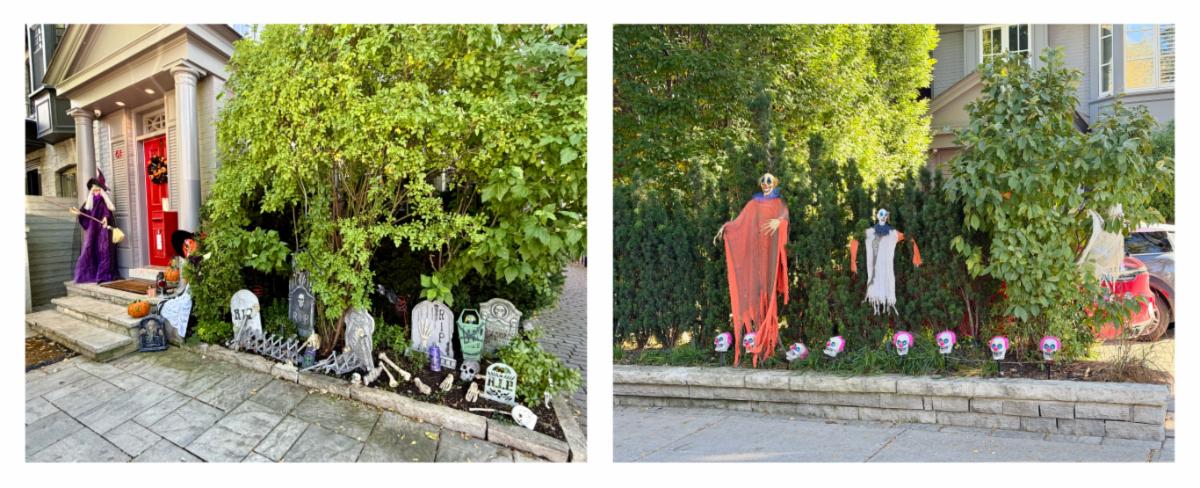
I hope everyone had a lovely Thanksgiving filled with good food, family connections and fun with friends. The main event however, as you know, is Halloween. Happy Halloween from all of us at WEL! You know this by now; Halloween is my favorite. The lead up includes rewatching all the spooky films and then a spooky feast while giving out candy to the little spooksters! The house was decorated this year by Thanksgiving Monday! Enjoy-Be Safe!
| | Some of our team, including me, were fortunate enough to see the Ontario North in full colour, travelling to Sudbury, and then to Thunder Bay for presentations in the local continuing law associations and their professional development programming. Thank you for the invites and our materials will be linked within. It is always so enjoyable to engage in meaningful dialogue with professionals in different communities and jurisdictions. In Thunder Bay, I enjoyed joining my colleagues from Hull & Hull-what a robust day of learning. Thank you for including me. In Sudbury, we had a lovely dinner at the Cavern, at Science North-spectacular! What a great presentation of our natural resources and Canadian Shield. | | |
We were all completely smiling when we learned of the Top 10 Canadian Lawyer Magazine Estates & Trusts Boutique Recognition. Thank you to our peers, colleagues and of course, Canadian Lawyer Magazine. While on accolades, we also received Chambers Band 1 and the Local Toronto Post recognitions. We appreciate the support and the recognition. View Canadian Lawyer recognition - View Chambers profile
Suzana Popovic-Montag hosted a Cambridge Forum mid-term meeting on AI in the estates & trusts practice which was well received and informative. Thank you Suzana! On that note, we jointly together presented a Canadian Lawyer Webinar on AI and the Estates & Trusts Practice as amongst Hull & Hull & WEL PARTNERS. View archived webinar on YouTube
I spoke at STEP Toronto: After the Diagnosis together with colleagues, my power-points: https://welpartners.com/resources/WEL-STEP-Toronto-Capacity-1025.pdf
I was pleased to be invited to the retirement reception at Osgoode in celebration of the career of the Honorable Justice Alison Harvison Young of the Ontario Court of Appeal. We wish Her Honor a long, enjoyable, and happy retirement.
Finally, I am enrolled in the Toronto Commercial Arbitration Society, (TCAS) Gold Standard Arbitration Course which runs from September through April. I have to say, I am already finding it challenging with workload, and life, to fit in the classes, readings and assignments. But hey, free time and relaxation surely must just be over-rated! I chose to take the course since several stakeholders I have been involved with in mediations have asked if I would be willing to do a Med-Arb. Though in theory the answer is that I am not opposed, I however want to consider all the ins and outs in a focused way before agreeing. In just 4 classes I can report that I am happy to have done so, since there is a little more involved than it may appear at first blush. I would only consider conducting arbitrations within the areas that I practice for start, which often do not arise out of an arbitration clause but those arbitrations that do arise out of such a clause may be fraught with some upfront hurdles unless the clause is carefully crafted. I anticipate that most arbitrations I could be involved in would be domestic within my area; but I recently read a brilliant book called, THE ARBITRATION OF TRUST DISPUTES by Lucas Clover Alcolea (what a great resource) online (hardcopy purchase - ebook purchase) and the place, or seat of such a dispute could be limitless in terms of jurisdictional considerations. As part of my course work, I have had to read some caselaw though arbitration is not conventionally thought of as a legal process. I will review some of the case points in the coming months in the newsletter to share with you some of my learnings.
As Ever,
Enjoy the Read
Kim
| | 1. CANADA’S TOP WILLS, TRUSTS & ESTATES LAW BOUTIQUES OF 2025 / 2026 | | 2. STEP TORONTO, BRANCH BUNDLE OCTOBER 9, 2025 | |
On October 9, 2025, WEL Partners attended, STEP Toronto’s Branch Bundle Session, “After the Diagnosis: Estate & Incapacity Planning for the Client with Neurodegenerative Disease,” followed by a lively social filled with great conversation, snacks, and refreshments.
The expert panel brought together a diverse group of professionals – social workers, accountants, physicians, and lawyers – each offering unique and thoughtful perspectives on the complex, interdisciplinary challenges that arise when supporting clients living with neurodegenerative conditions. Panelists included Matthew Cho, CPA, CA, TEP, Alex Lee, CPA, CA, MTax, Audrey Miller, MSW, RSW, Dr. Sara Mitchell, MD, FRCPC, MPH, and Kim Whaley, CS, LLB, LLM, TEP.
Before the panel began, Emily Caza opened the event with a timely case comment on Francois v. Francois, 2025 ONSC 589, highlighting key lessons in guardianship litigation and the risks of inadequate incapacity planning.
WEL Partners is proud to be a Gold Sponsor of STEP Toronto. We look forward to the next Branch Bundle and to continuing these important conversations on the intersection of law, health, and professional practice.
View materials:
https://welpartners.com/resources/WEL-STEP-Toronto-Capacity-1025.pdf
https://welpartners.com/resources/WEL-STEP-Toronto-Litigation-Context-1025.pdf
| | 3. LSO 28TH ESTATES & TRUSTS SUMMIT, OCTOBER 22, 2025 | Bryan Gilmartin, along with Andrea Hill of TMA Law, and Alexander Procope of Perez Procope Leinveer LLP, had the honour of presenting at the 28th Estates & Trusts Summit of the Law Society of Ontario, on their topic of Power of Attorney Litigation Issues. | | 4. SUDBURY COLLOQUIUM LEGAL EDUCATION CONFERENCE, OCTOBER 17, 2025 | |
Bryan Gilmartin chaired the Estates section of this year’s Sudbury Colloquium Legal Education Conference. During the Estates section, Bryan and Kim spoke on the complexities surrounding joint ownership in Ontario. Oliver O’Brien explored and discussed five of the key Estates and Trusts decisions released in 2025.
Link to WEL materials:
https://welpartners.com/resources/WEL-250923-Colloquium-Joint-Assets.pdf
https://welpartners.com/resources/WEL-251005-Colloqium-2025-Caselaw-Update.pdf
| | 5. THUNDER BAY LAW ASSOCIATION 2025 FALL CONFERENCE | |
On October 30, 2025, Kimberly Whaley had the honour of participating as a panelist at the Thunder Bay Law Association’s 2025 Fall Conference, focusing on the Complexities of Joint Ownership in Canada. Kim joined colleagues, Suzana Popovic-Montag, Ian Hull of Hull & Hull LLP, Jordan Atin, Ray Leclair and Justice Gillese. Ian moderated all of us through a full day panel discussion on a variety of topics.
Link to WEL materials:
https://welpartners.com/resources/WEL-250923-Thunder-Bay-Joint-Assets.pdf
| | 6. ONTARIO BAR ASSOCIATION'S TRUSTS AND ESTATES LAW PROGRAM | On October 16, 2025, Nima Hojjati of WEL Partners joined the Ontario Bar Association's Trusts and Estates Law program on, "Working Effectively with Banks and Trust Companies". The program was chaired by Michelle Wen Xiao Kang from Yang Wang Law PC, with speakers including Ian Lebane from TD Wealth, Shruthi Raman from Synergys Law, and Hannah Zip from Scotia Wealth Management. The discussion focused on working effectively with financial institutions, highlighting the importance of understanding different types of Continuing Power of Attorney for Property documents, including bank-specific requests. Panelists also provided guidance on addressing pre-litigation and post-litigation issues, including dealing with frozen assets and the limitations of financial institutions as arbiters of disputes. This program contained 1h 30m of Substantive CPD content and can be viewed on-demand on the OBA’s website. | | 7. ONTARIO BAR ASSOCIATION'S ELDER LAW PROGRAM | On December 3, join Nima at the Ontario Bar Association's Elder Law program on “Client Capacity: Your Practical Guide”. The program will address the complexities of evaluating a client's capacity, including capacity to instruct counsel in the context of fiduciary decision disputes. Key topics will include assessing capacity, the role of capacity assessments, and documenting determinations in the context of litigation. The panelists will also discuss how to identify "red flags," considerations for disability accommodations, and navigating legal steps when a client is incapable. The program promises practical advice and insights, particularly beneficial for lawyers dealing with vulnerable clients. This program contains 1h 30m of Substantive CPD content and registration are now open on the OBA’s website. | | 8. DIANE KEATON REPORTEDLY LEAVES A $5-MILLION TRUST FUND FOR HER GOLDEN RETRIEVER | |
Soon after beloved and decorated actress Diane Keaton passed away on or about October 11, 2025, it was reported that she had left a $5-million trust fund for her golden retriever, Reggie. This small fortune is purportedly earmarked for the lifelong care of her treasured pooch and is reflective of her known dedication to animal rights and advocacy.[1] Already an inspiration to many, this apparent aspect of her estate planning only serves to elevate Keaton’s iconic status.
A great overview to understand Ontario’s Laws on Pets and Inheritance can be reviewed here:
https://www.rbcwealthmanagement.com/en-ca/insights/is-your-pet-in-your-will-four-tips-for-your-estate-plan
Another fantastic piece on animal rights, Paw-Tential Ways to Enhance the Legal Protection of Companion Animals in Ontario in the Context of Wills and Estates, 95 ETR-CAN-ART 441, written by Tristan Montag, can be read here:
https://welpartners.com/resources/ETP-Paw-Tential-Ways.pdf
[1] “Hollywood Heartbreak: The $5 Million Question in Diane Keaton's Will,” Finance Monthly, published online on October 22, 2025, <https://www.finance-monthly.com/hollywood-heartbreak-the-5-million-question-in-diane-keatons-will/>.
| | 9. FUN & GAMES AT THE REC ROOM ROUNDHOUSE | Our team enjoyed a great afternoon of fun, games, and team building at the Rec Room Roundhouse on October 22. There was some fierce competition and lots of laughs! | | CONGRATULATIONS TO THE HONOURABLE ALISON HARVISON YOUNG ON HER RETIREMENT | | |
Justice Harvison Young, a mainstay of the Court of Appeal for Ontario, retired from the Court earlier this month, after having become supernumerary in 2023.
First appointed to the Ontario Superior Court of Justice (“SCJ”) in 2004 from her post as the Dean of Queen’s University’s Faculty of Law, Justice Harvison Young served on the SCJ for fourteen years, until being appointed to the Court of Appeal for Ontario in 2018.
Justice Harvison Young had an illustrious academic and judicial career, wherein her breadth of expertise, passion for the law, commitment to justice, and dedication to mentoring new generations of students, lawyers and judges were widely known and duly recognized. Her contributions to the law in Ontario ought not to be understated.
WEL Partners wishes The Honourable Harvison Young a wonderful retirement, and fantastic next chapter.
| | CONGRATULATIONS TO THOSE NAMED BY CANADIAN LAWYER MAGAZINE AS TOP 10 IN WILLS, TRUSTS & ESTATES LAW BOUTIQUES | | |
WEL Partner wishes to congratulate all those named as the Best Law Firms for Wills, Trusts, and Estates | Top 10 Wills, Trusts, and Estates Law Boutiques 2025-26. These ten (10) law firms, recognized by Canadian Lawyer Magazine, represent the highest standard of excellence in wills, trusts, and estates law in Canada. Their expertise focuses on litigation, tax, and administration.
For more information on the winners, please see the following link:
https://www.canadianlawyermag.com/rankings/best-law-firms-for-wills-trusts-and-estates-top-wills-trusts-and-estates-law-boutiques-2025-26/393094
| | III. KIM’S ARBITRATION CORNER: A SNAPSHOT FROM KIM ON HER LEARNINGS FROM TCAS | | |
As promised, I will provide a snapshot of some of the more interesting components of arbitration practices and processes that I am learning in my TCAS Arbitration Course. As part of the materials, I am reviewing case law addressing some issues that can come before our courts for resolution, yet arising out of private arbitration, arbitration clauses within contracts to arbitrate, and arbitration agreements. Throughout the next several months of my course, I will provide comments on some of the cases which give guidance to arbitrators, to parties participating in arbitrations, and those drafting and negotiating arbitration clauses, with some tools to consider in negotiating their terms, processes and procedures. Some of the salient points gleaned from 3 notable cases are provided below.
1) Uber Technologies Inc. v. Heller, 2020 SCC 16, concerned the validity of the arbitration clause and arbitration agreement.
Brief Facts: To become a driver for the defendant, the plaintiff had to accept the terms of the defendant's standard form services agreement which required the plaintiff to resolve any dispute with the defendant through mediation and arbitration in the Netherlands — The plaintiff started class proceedings against the defendant for violation of the Employment Standards Act, 2000 — The defendant brought a successful motion to stay proceedings in favor of arbitration — The Court of Appeal reversed the order, determining that the arbitration agreement was unconscionable — The defendant appealed and the appeal was dismissed.
Court Outcome: In this instance, the court found that the employment disputes were covered by the Arbitration Act, 1991, and not the International Commercial Arbitration Act, 2017 — The Court found it appropriate to resolve the arguments raised by the plaintiff since the plaintiff had made a genuine challenge to the validity of the arbitration agreement and there was a real prospect that if stay was granted, then the plaintiff's genuine challenge may never be resolved — The fees imposed a brick wall between the plaintiff and resolution of any claims levelled against the defendant — The Arbitration clause was found to be unconscionable and therefore invalid.
2) Maisonneuve v. Clark, 2022 ONCA 113, concerned limitation periods for arbitration.
Brief Facts: This case concerns a business dispute between two cousins who were shareholders in various companies, including Eastern Ontario Real Estate Investors Inc. ("EOREI"). Their relationship deteriorated, and in 2016, they referred their disputes to arbitration. A settlement was reached in September 2016, except for one issue regarding the payment of EOREI-related expenses. The settlement agreement stipulated that this unresolved issue would be referred to arbitration if negotiations failed.
The Arguments:
-
Appellants: Argued that the arbitration was time-barred under the two-year limitation period in the Limitations Act, 2002, which they claimed began in September 2016 when the settlement agreement was signed. They also contended that the application judge erred in distinguishing the case from precedent and in interpreting the arbitration clause.
-
Respondents: Maintained that the limitation period began on January 31, 2018, when the appellants' lawyer indicated that no further negotiations would occur. They argued that arbitration was not "appropriate" under the Limitations Act, 2002, until negotiations had failed.
Court Outcome: On Interpretation of the Arbitration Clause: The application judge correctly distinguished the case from Markel Insurance Company of Canada v. ING Insurance Company of Canada since the arbitration clause in this case was part of a negotiated agreement rather than a statutory provision. The clause's wording, including the use of "then," introduced a temporal and conditional element, making informal resolution a prerequisite to arbitration. The application judge's interpretation was entitled to deference.
- On the Commencement of the Limitation Period: The application judge found that the limitation period began on January 31, 2018, when the appellants' lawyer indicated that no further negotiations would occur. This finding was based on the specific wording of the arbitration clause and the context of the parties' negotiations. The Court of Appeal found no palpable and overriding error in this conclusion.
- On Precedent and Uncertainty: The appellants' argument that the decision created uncertainty regarding limitation periods for arbitration clauses was rejected. The Court emphasized that the parties are free to draft arbitration clauses with clear preconditions or timelines. The decision was based on the specific facts and wording of the clause in this case.
3) Magna International Inc. v. Granite Real Estate Inc., 2022 ONSC 2200, concerned competence and autonomy of the parties.
Court Outcome: The court reaffirmed the central arbitration principles of competence-competence and party autonomy under the Arbitration Act, 1991, SO 1991, c 17. Myers J., held that, consistent with Trade Finance Solutions Inc. v. Equinox Global Ltd., 2018 ONCA 12, courts must defer to the arbitrator’s jurisdictional determination unless the invalidity or inapplicability of the arbitration agreement is “clear”. Where an arbitration clause is arguably valid, the court’s proper course is to appoint an arbitrator and allow them to determine their own jurisdiction, thereby giving full effect to the competence-competence principle and the parties’ choice to resolve disputes through arbitration rather than litigation.
Interpretation of Permissive Arbitration Clause:
-
The Court also addressed arguments concerning the validity and enforceability of the arbitration clause itself. The respondent had argued that the clause was invalid because it was permissive rather than mandatory, and because it failed to specify a seat or applicable procedural rules. Myers J., rejected these objections, observing that modern Canadian law favours an interpretation that gives efficacy to the parties’ evident intention to arbitrate rather than one that frustrates it. The Court found that the phrase, “may be referred to arbitration” could reasonably be construed as making arbitration mandatory once either party issued a notice to arbitrate, thereby aligning with the commercial objective of ensuring an efficient and final determination.
Absence of Procedural Details:
- Finally, the Court clarified that the absence of express procedural details (designated seat or reference to specific arbitration rules) does not render an arbitration clause invalid. Such procedural determinations fall within the arbitrator’s jurisdiction and can be resolved in consultation with the parties. Myers J. underscored that arbitration is founded on contractual autonomy, and courts should be slow to interfere where the parties have agreed to a process for resolving their disputes. In appointing the arbitrator, the Court reinforced the pro-arbitration stance of Ontario law—emphasizing deference to arbitral competence, pragmatic construction of arbitration agreements, and respect for the efficiency and finality that arbitration is intended to achieve.
| | (i) IRREGULARITY IN EXECUTION OF WILL | | |
By Albert H. Oosterhoff
1. Introduction
Dunham v Dunham[1] is a noteworthy case. It concerns an irregularity in the execution of the Will, as well as a misdescription of one of the beneficiaries, a charity.
2. Facts
The Testator died in 2024 and left no spouse or children. Her parents predeceased her but her only living family member, her brother, the Respondent, Clarence, survived her. However, the uncontroverted evidence showed that she and her brother had been estranged since at least 2010.
On the other hand, the Testator and the Applicant had been close friends for many years, as had their parents.
The Applicant found a photocopy of a Will executed by the Testator in 2012, as well as her Will executed in 2021 (the ‘Will’). A Word copy of the will was found on her computer. The attestation page of the Will was original, but the first two pages appeared to be photocopies.
The Testator’s co-worker testified that he was present together with a second witness when the Testator executed the Will, after which the two witnesses attested her signature.
The Will named the Applicant her executor. She left her brother the small sum of $100, a gift of $100,000 to Windsor Essex County Cancer Foundation (Registration No, 890493562RR0001), another gift of $100,000 to the Shriners Hospitals for Children, and the residue to the Applicant. The 2012 Will left the same amount to her brother, and it also named the same two charities. The Testator also designated the Applicant the beneficiary of several financial products.
There is no charity bearing the name Windsor Essex County Cancer Foundation but there is one named Windsor Cancer Centre Foundation.
The Testator left detailed written instructions to the Applicant in August 2024 about her funeral arrangements. The notes stated that the Respondent and his family should not have part of her estate or be involved in her funeral arrangements. And they stated that the original copy of her Will was in her safety deposit box at the Royal Bank of Canada (‘RBC’). While the Applicant does not have access to the safety deposit box, the branch manager at RBC has confirmed that the safety deposit box does not contain the Will or a more recent will.
The Respondent demanded that the Applicant request the access history to the safety deposit box, but the Applicant has refused to do so.
The Applicant brought an Application for: (1) an order that the Will be found valid as if properly executed; (2) an order granting him Probate; and (3) a declaration that the beneficiary named in the will as Windsor Essex County Cancer Foundation be deemed to be the Windsor Cancer Centre Foundation.
3. Analysis and Judgment
3.1 Production of RBC Access Records
Justice Kalajdzic first addressed the Respondent’s request for the production of the RBC access records. The Respondent argued that the court should treat the Will as lost because the original will could not be found. For that. the Applicant must prove several things, one being the rebuttal of the presumption that the will was destroyed by the testator with the intention of revoking it. In determining whether the Applicant has rebutted the presumption, the court may consider a large number of factors, which her Honour then proceeded to do.
Her Honour found, first, that the terms of the Will are reasonable, because the Will is consistent with the 2012 will and with the designation of the Applicant as beneficiary of several financial products.
Second, she noted that the Testator’s relationship with the beneficiaries were good until the date of her death.
Third, she found that there was little evidence showing that the Testator’s Will was destroyed before the search for the Will.
Fourth, the Testator took great care of her personal effects, as evidenced by her written notes in August 2024.
Fifth, there were no dispositions of property to other beneficiaries that contradict the terms of the Will.
Sixth, while the Respondent’s wife called the Testator three times before she died, there was no suggestion that the Testator intended to change her Will. Nor was there any evidence of any reconciliation with the Respondent, or of any contact between the Testator and the Respondent’s daughter.
Seventh, the Testator was a person who stored valuable papers herself. She did not store the Will in her safety deposit box but kept it among her papers together with detailed notes for the Applicant.
Eighth, there was no evidence about the Testator’s understanding of the consequences of not having a will. But the evidence showed that she knew how to make a will and that she intended to leave bequests to the Windsor Cancer Centre and the Shriners, and the residue to the Applicant, at least since 2012.
And ninth, the Testator stated on several occasions that she had a will.
Consequently, her Honour concluded that these factors do not, on a balance of probabilities support a finding that the Testator intended to revoke her Will. Further, if the Applicant has met his burden to prove a lost will, the RBC access records are irrelevant and do not have to be produced.
3.2 Validity of the Will
Justice Kalajdzic next considered the issue whether the Will is valid in this context she considered the validation provision in section 21.1 of the Succession Law Reform Act,[2] which empowers the court to validate a Will that was not executed in strict conformity with Act. She noted the two-part test adopted by the case law that permits application of section 21.1, namely, (1) whether the document is authentic, and (2) whether it reflects the ‘fixed and final intention’ of the testator.
Her Honour found that the Applicant has met this two-part test. There was unchallenged evidence from a witness who stated that he witnessed the Testator sign the Will. And there was no suggestion that the Testator’s signature was inauthentic. Further, there was overwhelming evidence of the Testator’s fixed and final intention about the disposition of her property on her death. The original signature page was attached to the Will; the August 2024 notes were retained, and they contained several references in which she stated her disapproval of her brother; the Applicant and residuary beneficiary was also the designated beneficiary of financial product; and the Testator and the Applicant continued to be friends until her death, and he was her emergency contact. Accordingly, her Honour concluded that the Will is authentic.
However, she makes a very interesting point, namely, that the interplay between the rules governing lost wills and the procedure governing the application of section 21.1 has not yet been addressed by the courts. In particular, she notes that while the four-part test to prove a lost will overlaps with the two-part test used under section 21.1, the former is more extensive than the latter and focuses on evidence tending to show that the testator revoked the will. Her Honour applied both tests in reaching her conclusion that the Will is authentic.
3.3 Misnomer of Charity
The next issue Justice Kalajdzic considered is the misdescription of the Windsor Essex County Cancer Centre Foundation and the fact that no such charity exists. However, her Honour was satisfied that this was simply a case of misnomer. The Testator did include the correct charitable institution registration number for the Windsor Cancer Foundation, and therefore it was deemed the correct beneficiary.
3.4 Costs
The Applicant did not claim costs, but the Respondent sought substantial indemnity costs on the ground that the request for the RBC access record was reasonable. However, her Honour, having found that that requested document was not relevant, declared that the Respondent’s request was just a fishing expedition and denied the claim.
3.5 Orders
The court ordered that: (1) the Will is fully valid and effective as if it had been properly executed; (2) that Probate be granted to the Applicant; and (3) that the misnamed charity be deemed to be the Windsor Cancer Centre Foundation.
--
[1] 2025 ONSC 3449.
[2] RSO 1990, c S.26 (the ‘SLRA’).
| (ii) TIMELY EXERCISE OF TESTAMENTARY OPTION | | |
By Albert H. Oosterhoff
1. Introduction
Pendlebury v Pendlebury[1] is a recent case that explores the question whether the grantee of an option granted in a will exercised it within the time period specified in the will.
2. Facts
The Testator, James Leslie Pendlebury, died on 1 January 2023, survived by four children, including the Applicant, Mary Frances Pendlebury, and the Respondent, Mark Christopher Pendlebury. The Testator left a Will made in 2015 in which he appointed the Applicant and Respondent his executors and trustees.
The Testator owned a townhouse in Barrie and in paragraph 6 of his Will he provided that if his daughter Mary Frances (‘Francie’) resides in it on his death, his Estate Trustee shall allow her, if she wishes, to purchase the house from the Estate for $94,000. That price was below market value, Paragraph 6 continued:
FRANCIE shall have sixty (60) days from the date of my death to enter into an enforceable agreement to purchase the house on the terms set out above. Failing agreement within sixty (60) days, the rights to purchase same given to FRANCIE shall be null and void. If FRANCIE purchases the house, all expenses related to its transfer to FRANCIE, including all solicitors’ costs and any taxes shall be borne by FRANCIE. If FRANCIE then fails to complete the purchase of the house which she has agreed to purchase in accordance with the terms set out above within a reasonable time, such time to be determined by my Estate Trustee in the exercise of an absolute discretion, the right to purchase given to FRANCIE shall be null and void.
On 23 January 2023, that is, 22 days after the Testator died, the Applicant (who had been living in the house since at least 2012 and continued to live there) sent an email to the Respondent confirming her intention to purchase the Property in accordance with the terms of the Will. On 24 January the Respondent replied by email stating that the Applicant needed to supply a written contract. On 3 February 2023 the Applicant’s lawyer wrote to the Respondent confirming the Applicant’s intention to purchase the Property. The Respondent responded to the lawyer stating that he had already agreed to the Applicant’s purchase of the Property and that he was waiting for a written contract. On 10 March 2023 the Applicant’s lawyer delivered a standard agreement of purchase and sale (the ‘APS’) regarding the purchase to the Respondent. Four weeks later, the Respondent took the position that the Applicant was not entitled to exercise the option because the APS was delivered more than 60 days after the Testator’s death.
The Applicant brought an Application for the court’s advice and direction on the question whether the actions taken by her and the Respondent resulted in an enforceable agreement made within 60 days of the Testator’s death to purchase the Property.
3. Analysis and Judgment
Justice Dietrich began her analysis by noting that the court must focus on the subjective meaning of the words used by the Testator and must consider the words used in the context of the surrounding circumstances that existed at the time the Will was made, and which might reasonably be expected to influence the testator in disposing of his property.
Since the issue raised concerned the formation of an enforceable contract, by reference to Quality General Contractor’s Inc v Wu[2] her Honour listed the five elements that must be satisfied, namely, offer, acceptance, consideration, certainty of essential terms, and intention to create a legal relationship.
Her Honour found that the Applicant exercised her option within 22 days of the testator’s death by emailing the Respondent stating that she would purchase the property in accordance with the terms of paragraph 6 of the Will and agreed to pay the required consideration. On 17 February the Respondent asked the Applicant’s lawyer to send him a written agreement, and the Respondent confirmed that he had already agreed to the purchase by the Applicant.
Accordingly, Justice Dietrich held that the Respondent’s agreement with the Applicant’s email correspondence satisfied the requirement in paragraph 6 that the Applicant had to enter into an enforceable agreement to purchase the Property within 60 days of the Testator’s death. Moreover, the Applicant had satisfied the other elements of an enforceable contract, i.e., offer, acceptance, and intention to create a legal relationship Although the Respondent requested a written agreement and the Applicant instructed her lawyer to prepare one, the Testator did not require a written agreement. Thus the written agreement was not necessary, for in any event the parties had already reached an agreement and thus there was a meeting of the minds or consensus ad idem, which is all that is a required to create a legal relationship.[3] Thereafter, the onus was on the Respondent to fix the closing date, as required by paragraph 6.
Although the Applicant’s lawyer in his letter to the Respondent on 3 February 2023 that he would ‘shortly comply with her obligations in paragraph 6 of the Will’, and the documents were received by the Respondent beyond the 60-day period, the Respondent could not rely on that statement by the lawyer, since the parties had already reached an agreement within the 60 days. Further, the Respondent’s argument that his agreement was conditional on a formal agreement and that therefore the parties had only reached an agreement to agree, was invalid because the Will did not require such a formal agreement. The Respondent also argued that the agreement was unenforceable for lack of certainty of the terms, such as the closing date, the payment of a down payment, the engagement of a real estate agent and the agent’s commission, whether fixtures or chattels were to be included, whether inspections were necessary, and whether there were any financing conditions. However, none of those terms were essential to the enforceable agreement and were not required by paragraph 6 of the Will.
Accordingly, Justice Dietrich issued an order declaring that there was an enforceable agreement between the parties in accordance with paragraph 6 of the Will and directing the Respondent to complete the transfer in accordance with paragraph 6.
---
[1] 2024 ONSC 4667.
[2] 2024 ONSC 2909, para 32.
[3] Citing UBS Securities Canada Inc v Sands Brothers Canada Ltd, 2009 ONCA 328, para 47.
| | (iii) MATURE MATTERS BLOG SERIES PART 4: AGING AT HOME: RIGHTS, REALITIES & LEGAL PROTECTIONS IN ONTARIO’S HOME-CARE REGIME | | |
By Emily Caza
Most older Ontarians say the same thing: if it’s possible, they want to grow old in their own homes. National polling consistently shows ~9 in 10 Canadians 45+ prefer in-home care over moving to long-term care, and 95% agree aging in place preserves independence, comfort, and dignity.[1]
This concluding post pulls together the themes from Parts 1 to 3 of my Mature Matters Blog Series – system reforms, tenants’ rights, and COVID-era accountability – into the less visible terrain of home and community care: who can get it, under what terms, what protections exist, and where the gaps remain.
While Ontario legislation does not promise that every person will receive home care, it legally defines what “home and community care services” are; protects clients through a Bill of Rights; provides recourse through complaints and tribunal appeals; and empowers the government to enforce compliance.
Ontario’s Home & Community Care Law: The Short Version
For decades, home care ran under the Home Care and Community Services Act, 1994, S.O. 1994, c. 26, and was delivered regionally first by Community Care Access Centres[2], then Local Health Integration Networks[3]. Under this structure, most service standards and eligibility criteria were set by policy rather than statute, resulting in significant regional variation and limited legal recourse for clients.
In 2020, Ontario passed Bill 175, Connecting People to Home and Community Care Act, 2020, S.O. 2020, c.13 to modernize the framework by building home-care rules into the Connecting Care Act, 2019, S.O. 2019, c. 5, Sched. 1 (“CCA”).
On May 1, 2022, the 1994 statute and its regulations were repealed and the new regime within the CCA came into force, supported by O. Reg. 187/22, Home and Community Care Services (“O. Reg. 187/22”). The rules formerly set out under the 1994 statute have been consolidated within the CCA and O. Reg. 187/22, creating a single, province-wide legislative framework that replaces region-by-region policy with uniform, rights-based standards and centralized oversight.
The New Model
Home-care standards and client rights are now defined in statute and regulation, creating a consistent, enforceable system governed by Ontario Health rather than 14 separate regional bodies.
Key elements of the new model include:
Defined Service Categories - The law now expressly defines which services fall within Ontario’s publicly funded home- and community-care system.[4] They are:
- Professional services – Including nursing, physiotherapy, occupational therapy, speech-language pathology, dietetics, and social work.
- Personal support services – Assistance with personal hygiene, dressing, ambulation, toileting, feeding, and routine activities of daily living.
- Homemaking services – Meal preparation, light cleaning, laundry, and other domestic tasks necessary to maintain a safe home environment.
- Community support services – Programs such as adult day services, meal delivery, transportation, respite and caregiver relief, palliative and bereavement supports.
- Indigenous services – Indigenous healing and wellness programs designed and delivered by or in partnership with Indigenous communities, ensuring culturally safe and community-driven care.
- Care co-ordination services – The assessment of client needs, development of individualized care plans, and ongoing monitoring, case management, and system navigation.
- Home and community care services that include residential accommodation – Supportive living or congregate care settings (for example, assisted living programs) where both accommodation and care are integrated.
By explicitly enumerating these categories, the regulation provides a clear baseline of what services clients may request and what providers are funded and obligated to deliver, reducing discretionary or regional differences.
Client Bill of Rights - O. Reg. 187/22 codifies a Home and Community Care Bill of Rights that applies to every person receiving services under the Act.[5] It guarantees, among other things, the right:
- To be treated with dignity and respect;
- To receive care free from abuse or discrimination;
- To participate in assessments and in the development, evaluation, and revision of their plan of care;
- To receive information about their home and community care services; and
- To give or refuse consent to any service.
These provisions align with the Health Care Consent Act, 1996, S.O. 1996, c. 2, Sched. A and the Human Rights Code, R.S.O. 1990, c. H.19, embedding person-centred and consent-based values directly into the home-care regime. Providers must post the Bill of Rights prominently and ensure all staff and contractors are trained on its content.
Complaints & Appeals - Every funded provider and Ontario Health Team must maintain a documented, transparent complaints process. Clients may file complaints about any aspect of service delivery, quality, or staff conduct, and providers must respond within defined timelines.[6]
Where a client is found ineligible, has services reduced or discontinued, or disagrees with an assessment or plan of care, they may escalate the matter to the Health Services Appeal and Review Board (HSARB). The HSARB, an independent adjudicative tribunal established under the Health Insurance Act and empowered by the CCA, can confirm, vary, or rescind the service decision and may direct that services be provided, continued, or increased. This creates a meaningful, quasi-judicial avenue of review that did not previously exist under the policy-based framework.[7]
Accountability & Oversight - Responsibility for system-wide performance now rests with Ontario Health, which integrates home care within the broader continuum of hospitals, primary care, and community agencies. Ontario Health:
-
Allocates funding and enters into accountability agreements with Ontario Health Teams and service providers[8];
-
Monitors compliance with the CCA and regulations through investigators and audits[9]; and
-
Can issue compliance orders or recommend ministerial directives or supervision where client safety or systemic failure is at risk[10].
Investigators appointed under the CCA have statutory authority to enter premises, examine records, and interview staff or clients to ensure compliance.[11] This framework gives the home-care system real enforcement power, something notably absent under the earlier regional model.
Together, these measures move home care from a discretionary, policy-based program to a rights-based, legislated service model governed by uniform duties, transparent processes, and centralized accountability.
The Stakes: Demand, Risk & Unmet Need
Ontario’s population is aging faster than any point in its history. The proportion of residents aged 65 and over will nearly double by 2046, while the number of those 75+ – the group most reliant on home care – will more than double by 2051.[12]
Yet more than 475,000 Canadians currently report unmet home-care needs, and Ontario’s system remains constrained by workforce shortages and regional inequities.
The challenge is clear: without robust legal and operational enforcement, the promise of “aging in place” risks becoming aspirational rather than attainable.[13]
What It Takes to Age at Home: Legally & Practically
Aging at home isn’t just about passing new laws. It’s about whether those laws translate into real, reliable care. Ontario’s new framework puts the pieces in place, but making it work depends on how they come together in practice.
1. Comprehensive, appropriate services
Real “aging in place” means the full mix: personal support hours that actually meet daily needs, nursing and rehab care that prevent hospital readmissions, and community supports like meals, transportation, and culturally safe or Indigenous programs. The legal categories now exist, the challenge is resourcing them so people can build real care plans, not patchwork schedules.
2. Continuity and responsiveness
Home care must evolve as people do. When needs change, the system should adapt, not stop, wait, or reset. True continuity means clients and families co-creating care plans that shift naturally with health, mobility, and circumstance, rather than restarting from scratch after every reassessment.
3. Rights with recourse
A Bill of Rights only matters if people can use it. The promise of complaints and appeals isn’t about bureaucracy; it’s about fairness and accountability when services are cut or delayed. For older adults, the ability to challenge a decision can make the difference between staying home safely and entering care prematurely.
4. Public accountability
Oversight isn’t punitive, it’s protective. When inspectors, compliance orders, and sanctions exist, they remind everyone in the system that home care is a public responsibility, not a favour. Legal “teeth” reinforce trust: that care standards mean something, and that failure has consequences.
5. Awareness and equity
Rights are only as strong as people’s ability to claim them. Even with modernized rules, success depends on outreach, staffing, and equitable access, especially in rural, northern, and underserved communities. For many families, navigating the system still requires persistence, advocacy, and sometimes, luck. Awareness, not just legislation, is what makes home care real.
Final Thoughts
Aging at home is more than a preference, it’s a structural challenge that law must underwrite. Ontario’s modernized framework, the CCA and O. Reg. 187/22, now names the services, protects client rights, mandates complaints/appeals, and backs it all with enforcement. The remaining work is about capacity and clarity: making sure every senior and caregiver knows these rights, that providers meet them consistently, and that oversight bodies act when they don’t. If Ontario gets that right, “aging in place” moves from aspiration to lived, lawful reality.
Closing the Circle — From Institutions to Independence
Over this series, we have traced Ontario’s evolving elder-care landscape:
-
Part 1 examined the Support for Seniors and Caregivers Act, 2025 and the modernization of care governance;
- Part 2 clarified the housing and tenancy rights of seniors in care homes;
- Part 3 analyzed the post-COVID accountability regime; and
- Part 4, here, anchors the discussion in the right to care at home, where most Ontarians wish to remain.
https://welpartners.com/blog/category/mature-matters/
Together, these developments reveal a common thread: a move toward dignity, autonomy, and legal enforceability across every setting of aging. Ontario’s new home-care framework extends that promise beyond institutions and into the community, affirming that safety, respect, and recourse belong wherever a person calls home.
---
[1] Ipsos, “Nearly All Canadians 45+ Years Want to Age at Home, But Only 1 in 10 (12%) Say They Can Afford the Cost of a Personal Support Worker” (19 May 2022) online: <Nearly All Canadians 45+ Years Want to Age at Home, But Only 1 in 10 (12%) Say They Can Afford the Cost of a Personal Support Worker | Ipsos>.
[2] Regional agencies established under the Home Care and Community Services Act, 1994 to coordinate and deliver publicly funded home and community care and long-term care placement services.
[3] Crown agencies that replaced Community Care Access Centres in 2017 under the Patients First Act, 2016, S.O. 2016, c. 30 - Bill 41, assuming responsibility for planning and coordinating home and community care services until their functions were transitioned to Ontario Health in 2021 under the new regime.
[4] O. Reg. 187/22, at s. 1.
[5] Ibid at s. 9(1).
[6] CCA, at s. 43.10.
[7] O. Reg. 187/22, at ss. 30, 31.
[8] CCA, at s. 22.
[9] Ibid at ss. 24, 26.
[10] Ibid at ss. 20, 43(5).
[11] Ibid at s. 26(6).
[12] Ontario, “Ontario population projections” (updated 01 August 2025) online: <https://www.ontario.ca/page/ontario-population-projections>; Ontario, “Ontario’s Long-Term Report on the Economy” (2020) online: <https://eapon.ca/wp-content/uploads/2021/09/Ontario-long-term-report-book-2020-06-03-en.pdf>.
[13] Arthur Sweetman, PhD, “The Impact of Ontario’s Aging Population on the Home Care Sector” (February 2024) online: <KraljSweetman-Home-Care-Ontario-Report-06Feb2024.pdf>.
| | (iv) RESULTING TRUSTS COMMENTARY | | |
By Grant Swedak
A parent adds a child’s name to a bank account. A friend helps buy a property. Years later, the question arises: who really owns it? The answer often lies in the doctrine of resulting trusts - where equity informs the story of ownership.
Types of Resulting Trusts
The resulting trust, as well as the constructive trust, is a trust structure which arises by operation of law; they are validated by court order. In principle, the presumption of resulting trust, which remains rebuttable in a majority of circumstances, arises whenever legal or equitable title to property is in one party’s name, but that party is under an obligation to return it to the original title owner, or to the person who paid the money to purchase it.[1] This definition is quite efficient because it captures both sub-categories of resulting trust; those being:
(1) Resulting trusts arising from gratuitous transfer; and
(2) Resulting trusts arsing on exhaustion, or failure of an express trust.
Resulting trusts may occur on the exhaustion/ failure of an express trust, in favour of the settlor - these sorts of resulting trusts have been deemed by the courts to automatically arise.[2] As such, this branch of the resulting trust is relatively straightforward and will not be the focus of this blog.
Gratuitous Transfer Resulting Trusts
Gratuitous transfer resulting trusts, on the other hand, arise by one of two way: either through a purchase money resulting trust,[3] or by voluntary (gratuitous) transfers of property directly into the name of another person[4]. It is important to keep in mind that, the following situations detailed below give rise to a presumption of resulting trust and the court will weigh the evidentiary record to determine whether the presumption may be rebutted.
(1) Purchase Money Resulting Trusts
A purchase money resulting trust arises where person “A” purchases property in the name of person “B”. Person “B” is then deemed to have been holding title as resulting trustee of the property.[5] This category of resulting trust can trace its origin/ lineage to the rule from Dyer v Dyer, 1788[6], which holds,
“… a trust of legal estate, whether freehold, copyhold, or leasehold, whether taken in names of the purchasers and other jointly, or in the names of others without that of the purchaser; whether in one name or several; whether jointly or successive, results to the man who advances the money.”[7]
The rule from Dyer v Dyer has since been affirmed by the Supreme Court of Canada in Nishi v Rascal. In this case, Nishi, who was assisted by Rascal in the purchase of 2 acres which was foreclosed on due to tax arrears accrued by Rascal, argued that a purchase money resulting trust doctrine should be abandoned in favour of an approach based on unjust enrichment and that no unjust enrichment occurred here.[8] Rothstein J., delivering judgement for the Supreme Court, provided the following definition of purchase money resulting trusts:
…The purchase money resulting trust is a species of gratuitous transfer resulting trust, where a person advances a contribution to the purchase price of property without taking legal title. Gratuitous transfer resulting trusts presumptively arise any time a person voluntarily transfers property to another unrelated person or purchases property in another person’s name (D. W. M. Waters, M. R. Gillen and L. D. Smith, eds., Waters’ Law of Trusts in Canada (4th ed. 2012), at p. 397).[9]
The court then immediately cited Kerr v. Baranow[10] for the following proposition:
[the category of trust] “…has been settled law since at least 1788 in England (and likely long before) that the trust of a legal estate, whether in the names of the purchaser or others, ‘results’ to the person who advances the purchase money”.[11]
The remaining analysis largely relied on Pecore to examine the following:
(1) whether a purchase money resulting trust arose; and
(2) whether Nishi could rebut the presumption, how, and on what standard.
(2) Gratuitous Transfer Resulting Trusts
Pecore v Pecore, 2007 SCC 17, is the authoritative case examining voluntary (gratuitous) transfers, which thereby give rise to the presumption of resulting trust. Pecore has gone on to be the leading case, and it was heavily relied upon in Nishi v Rascal.
In this case, a bank account was transferred directly into the name of another person and was held in joint tenancy. The court began surveying the law as it pertains to donative transfers generally. The court found that the presumption of resulting trust stands as the general rule for gratuitous transfers, but this varies depending on relationship between the transferor and transferee.[12] For example, in cases of a parent gratuitously transferring property to a dependent child, there will be a presumption of advancement which stands.[13]
This still remains true and has been historically true in two circumstances: (1) where the transferor is a husband and the transferee is his wife[14] and (2) where the transferor is a father and the transferee is his child.[15]
The court reasoned that the latter category ought to be expanded to applying to mothers as well,[16] but should not be expanded to apply between parents and independent children for two reasons. Firstly, the principal justification for presumption of advancement is parental obligation to support dependent children.[17] Secondly, it is common for ageing parents to transfer assets in joint tenancy with adult children for assistance in managing assets.[18]
Rebutting the Presumption
The court then established the standard necessary to rebut the presumption, finding that the civil standard, a balance of probabilities, is applicable to rebut the presumptions.[19]
Insofar as what evidence may be considered in determining intent, the court found that where a gratuitous transfer is being challenged, the trial judge must begin the inquiry by determining the proper presumption to apply and then weigh all the evidence relating to the actual intention of the transferor to determine whether the presumption has been rebutted.[20] Additionally, evidence subsequent to the transfer ought to be viewed with suspicion as the traditional rule is that evidence adduced to show the intention of the transferor at the time of the transfer “ought to be contemporaneous, or nearly so”, to the transaction.[21] Further, the court in Pecore finds that the relevant intention is the intention of the person who advanced the funds at the time of the contribution to the purchase price.[22]
Final Remarks
Resulting trusts continue to play a critical role in Canadian law by ensuring that property transferred without clear donative intent remains subject to equitable obligations. Whether arising from the historic purchase money or the presumption of resulting trust in gratuitous transfers, the doctrine remains firmly rooted in the principle that equity looks to intent and presumes bargains as opposed to gifts.
For further reading on resulting trusts, check out the following links:
- Rebutting the Presumption of Trust | WEL Partners Blog
- Vested Interest – Probing a Purchase Money Resulting Trust in Falsetto v. Falsetto | WEL Partners Blog
- The Complexities of Joint Ownership in Canada, Kimberly A. Whaley, Estates, Trusts & Pensions Journal Volume 44, No. 2 September 2025
--
[1] Mark R Gillen et al., The Law of Trusts: A Contextual Approach, 4th ed (Toronto: Emond Publishing, 2021), at pp 372. (“Gillen et al.,”)
[2] See Poirier v. Brulé, 1891 CanLII 23 (SCC), 20 SCR 97 & Schmidt v. Air Products Canada Ltd., 1994 CanLII 104 (SCC), [1994] 2 SCR 611.
[3] See Nishi v. Rascal Trucking Ltd., 2013 SCC 33 (CanLII), [2013] 2 SCR 438. (“Nishi v Rascal”)
[4] As seen in Pecore v. Pecore, 2007 SCC 17 (CanLII), [2007] 1 SCR 795. (“Pecore”)
[5] Gillen et al., at pp 374.
[6] Dyer v Dyer, (1788) 2 Cox Eq Cas 92, 30 ER 42. (“Dyer v Dyer”)
[7] Ibid. at 43.
[8] Nishi v Rascal, at para 20.
[9] Ibid. at para 21.
[10] Kerr v. Baranow, 2011 SCC at para 12.
[11] Nishi v Rascal, at para 21.
[12] Pecore, at para 27.
[13] Ibid. at para 36.
[14] As seen in Hyman v. Hyman, 1934 SCC at p 538.
[15] Pecore, at para 28.
[16] Ibid. at para 33.
[17] Ibid. at para 34.
[18] Ibid. para 36.
[19] Riordan v. Mellon, 2000 CanLII 5739 (ON CA), at para 13. Also indexed as Burns Estate v. Mellon
[20] Pecore, at para 44.
[21] Clemens v. Clemens Estate, Crown Trust Co. et al., 1956 CanLII 3 (SCC), [1956] SCR 286, at para 56.
[22] Pecore, at para. 59.
| | (v) WILL CHALLENGE GOES TO TRIAL IN GORSKA ET AL V. ZAWADZINSKI, 2025 ONSC 5447 | | |
By Gabriella Banhara
The decision in Gorska et al v. Zawadzinski, 2025 ONSC 5447 (“Gorska”), concerned the validity of a Will, raising questions about testamentary capacity and undue influence.
Background
On September 20, 2023, Janina (the “Deceased”) passed away at the age of 95. She was survived by her two adult children, Andrew and Maria, and other family members, including her niece Yolanta (the “Respondent”).[1] Andrew suffered from epilepsy and was disabled. As a result, Andrew and his spouse, Debra, had been residing with the Deceased at her house until the Deceased moved into a retirement home in September of 2021.[2]
The Wills: In March 2019, the Deceased executed a will appointing Bozena (the “Applicant”) and the Respondent as estate trustees.
In September 2019, the Deceased executed a will (the “2019 Will”) solely appointing the Applicant as the Estate Trustee.
On May 13, 2022, the Deceased executed a will (the “2022 Will”), appointing the Respondent as the sole estate trustee.
The 2022 Will differed significantly from the 2019 Will. The 2022 Will provided the Respondent with an additional $100,000, and the Respondent’s daughter, Jadwiga, with $50,000. Maria, the Deceased’s daughter, had her cash gift increased to an additional $500,000. Consequently, despite being disabled and described by the Deceased as likely needing care, Andrew had his overall gift reduced by approximately $800,000.[3]
The POA litigation
In 2021, litigation was commenced by the Applicant pertaining to the Deceased’s power of attorney documents (the “POA litigation”). The court held that the Defendant had, by unduly influencing the Deceased when her cognition had diminished, procured the power of attorney documents (“POAs”), appointing herself as her attorney. [4]
The court relied on evidence showing that at the time the Deceased signed the POAs, she had scored 3/30 on a MOCA test conducted the previous month, and the Respondent had been isolating her from her family. Throughout the POA litigation, the Deceased was appointed section 3 counsel.[5]
In Gorska, the Respondent relied on the same evidence from the POA litigation. However, the Respondent provided new evidence from three different individuals, supporting that the Deceased had testamentary capacity and was not unduly influenced.[6] Additionally, in the within Application, the Respondent retained counsel, whereas in the POA litigation, she was self represented.
This case summary will focus on the main issue presented to the court by the Applicant, which was whether suspicious circumstances were present when the 2022 Will was executed.
Law
The court noted that there is a rebuttable presumption of knowledge and approval of testamentary capacity when a will is duly executed with the requisite formalities.[7] However, this presumption can be rebutted by evidence of suspicious circumstances, which may include issues surrounding the will’s preparation, questions about the testator’s capacity, or evidence of coercion or fraud.[8]
Suspicious circumstances may also include changes in the will that deviate significantly from previous versions, the testator's mental and physical condition, and the involvement of beneficiaries in the will's preparation.[9]
When suspicious circumstances are present, the propounder must prove that the testator had knowledge, approval, and testamentary capacity, meeting a civil standard proportionate to the gravity of the suspicion. [10] In Gorska, the propounder was the Respondent, as she sought to uphold the 2022 Will.[11]
The burden of proving undue influence lies with the party challenging the will, which in Gorska, was the Applicant. [12] Factors supporting undue influence include the testator's dependency on a beneficiary, social isolation, recent family conflict, or substantial pre-death wealth transfers. In Gorska, the 2022 Will was read to the Deceased and executed with the necessary formalities. This created a rebuttable presumption that the Deceased understood and approved the 2022 Will’s contents and that she had the requisite testamentary capacity.[13]
Analysis
The Applicant argued that there was sufficient evidence of suspicious circumstances to challenge the 2022 Will, citing previous findings of undue influence by the Respondent in the POA litigation. Additionally, the 2022 Will significantly altered the distribution of the Deceased’s estate to the Respondent and her daughter, raising further suspicion. The Respondent, however, contended that she acted in the Deceased’s best interests and that the changes in the 2022 Will reflected the Deceased’s wishes.
The court found that the evidence presented was inconsistent and had to proceed to trial due to unresolved conflicts in evidence and credibility issues. The new evidence provided by the Respondent in Gorska included medical reports demonstrating that the Deceased was not mentally impaired, contrary to the findings in the POA litigation.[14]
The court in Gorska also asserted that the trial will address whether the findings from the POA litigation were binding.
Concluding Comments
Gorska demonstrates that when suspicious circumstances are present, the burden shifts to the propounder to prove the testator's knowledge, approval, and capacity, highlighting the critical role of evidence in will disputes.
---
[1] Gorska et al v. Zawadzinski, 2025 ONSC 5447 at para 5.
[2] Ibid at par a 5
[3] Ibid at para 24
[4] Ibid at para 24
[5] Ibid at para 24
[6] Ibid at para 36
[7] Ibid at para 15
[8] Ibid at para 19
[9] Ibid at para 18
[10] Ibid at para 19
[11] Ibid at para 19
[12] Ibid at para 18
[13] Ibid at para 21
[14] Ibid at para 55.
| | (vi) COOKE FAMILY TRUST V. DIOGUARDI ET AL.: COURT DISMISSES NEGLIGENCE ACTION AGAINST DRAFTING SOLICITOR FOLLOWING GRANT OF PROBATE | | |
By Oliver O’Brien
Cooke v. Dioguardi,[1] involved a summary judgment motion where the central issue was whether a negligence action against a drafting solicitor could proceed where the court had already granted probate through a Certificate of Appointment of Estate Trustee with a Will.
Background
James Cooke (“James”) passed away on March 16, 2018. He was survived by his wife, Patricia Cooke (“Patricia”) who at the time suffered from dementia. She would survive James by six years, passing away in May 2024.[2]
James and Patricia had three children, namely: James Cooke (“James Jr.”), Alan Cooke (“Alan”) and Jonathan Cooke (“Jonathan”). They also had two grandchildren, Alan’s children, Elizabeth and Charlie.[3]
In 2018, James retained the defendant, solicitor Paul Dioguardi (“Mr. Dioguardi”) to prepare a Last Will and Testament. James subsequently executed a 2018 Will (the “2018 Will”).
The 2018 Will appointed James Jr. as the Estate Trustee. The dispositive provisions of the 2018 Will contemplated how James’ Estate would be distributed in the event Patricia predeceased him or died within 30 days of him. In such a case, the residue would be distributed directly to his sons James Jr., Alan and Jonathan. It also provided that part of the residue would flow into two testamentary trusts established for Elizabeth and Charlie.[4]
Crucially, the 2018 Will did not account for Patricia surviving James by more than 30 days, leading to a partial intestacy of the residue.[5]
On April 24, 2018, James Jr. applied for probate, on notice to all of the beneficiaries. On May 16, 2018, the court issued James Jr. with a Certificate of Appointment of Estate Trustee with a Will (“CAETW”).[6]
In March 2020, Alan commenced a negligence action against Mr. Dioguardi, claiming the 2018 Will’s drafting deprived his children Elizabeth and Charlie of their intended inheritance through the testamentary trusts.[7]
In October 2022, Alan commenced an application for directions, seeking the court’s declaration that the intestacy provisions outlined in sections 45 and 46 of the Succession Law Reform Act, governed the distribution of the Estate’s residue.[8]
Issue
Alan contended that the CAETW issued to James Jr. did not preclude him from advancing the negligence action. Mr. Dioguardi, meanwhile, contended that the CAETW was a court pronouncement as to the validity of the 2018 Will and Alan’s action therefore constituted a ‘collateral attack’ on the court’s order.
To determine the issue at hand, the Honourable Justice Kaufman elucidated the key principles governing probate in Ontario.
Governing Law – the legal effect of probate
The court’s jurisdiction in matters of probate is inquisitorial. Their function and purpose is to ascertain which documents constitute the testator’s last will and testament.[9]
As such, a CAETW is a court pronouncement affirming the validity of a Will, and that:
(1) the Will was executed in accordance with the statutory requirements;
(2) the testator knew and approved of the Will’s contents;
(3) the Will was not affected by mistake; and
(4) the testator had the requisite testamentary capacity.[10]
The court highlighted that subject to the remedies of revocation and rectification, a grant of probate is conclusive regarding both the appointment of the estate trustee and the validity and contents of the Will. If the application for probate is uncontested and the Last Will and Testament appears in good order, some of the matters required to be proved will be presumed.[11]
For the purposes of the negligence action, the court clarified that the grant of probate is binding, and operates in rem, affecting third-party rights.[12]
Analysis
Ultimately, the court found that advancing the negligence action constituted a collateral attack on the grant of probate and contradicted its pronouncement regarding the 2018 Will’s validity.[13]
Alan argued that there is no good or sensible reason for a person preparing a Will to intentionally leave a partial intestacy, and that a competent lawyer would advise against such an outcome. While the court found these submissions compelling, it noted that Alan’s course of action should have been to oppose probate and apply for rectification of the 2018 Will. In this regard, he was on notice to James Jr.’s application for probate but did not file a Notice of Objection.[14]
The court reasoned that if the negligence action would be allowed to occur, it would require the court to make findings of fact that directly contradict findings of fact made in a previous proceeding, thereby undermining the credibility of the judicial process. In this regard, it cited the Supreme Court of Canada’s decision in Danyluk v. Ainsworth Technologies Inc.,[15] for the judicial policy favouring finality.[16]
Concluding Comments
The court allowed Mr. Dioguardi’s motion for summary judgment, awarded him his costs, and dismissed Alan’s negligence action.
The decision in Cooke v. Dioguardi contends that a negligence action against a drafting solicitor is effectively barred following a grant of probate. For this reason, it will be interesting to watch the development of cases post Cooke as to how Ontario courts will approach this issue and the inter-related issues of limitation periods, and the principle of discoverability.
---
[1] Cooke Family Trust v. DioGuardi et al., 2025 ONSC 370 (“Cooke”).
[2] Cooke at paras 2 and 3.
[3] Cooke at para 4.
[4] Cooke at para 5.
[5] Cooke at para 6.
[6] Cooke at paras 7 and 8.
[7] Cooke at para 9.
[8] Cooke at para 10.
[9] Cooke at para 18.
[10] Cooke at para 17.
[11] Cooke at 19; citing WEL Partners’ Albert H. Oosterhoff, C. David Freedman, Mitchell McInnes, Adam Parachin, Oosterhoff on Wills, 9th ed. (Toronto: Thomson Reuters, 2021) at pg. 205.
[12] Cooke at para 18.
[13] Cooke at para 23.
[14] Cooke at paras 27 – 28.
[15] Danyluk v. Ainsworth Technologies Inc., 2001 SCC 44 at para. 20.
[16] Cooke at para 30.
| | V. “THAT’S SO HIGHSCHOOL” | | |
MONTH TWO OF WORKING AS A CO-OP STUDENT AT WEL PARTNERS
By Davis Faulkner
WEL Partners once again has shown me how great the co-op program can be for the development of your skills and the opportunity to be surrounded by people who have achieved what you strive for. My Name is Davis Falkiner. I have been a grade 11 co-op student for around two months now, and I have learned so much. Whether it’s about law, work ethic, or simply office etiquette, I continue to learn something new every day at WEL Partners. By working with experienced Lawyers who have a thorough understanding of the law, I’m learning how the legal system functions, and I am given the opportunity to understand how estate law works in our day-to-day world.
WEL Partners allowing me to also sit in on meetings and work with the team, has given me a new understanding of how a workplace runs. A real office environment is nothing like how it is portrayed in the media, and I would never have known this at 16 if I had not had the opportunity to do co-op at WEL Partners. It’s also an advantage to understand this now, which will help me thrive in future workplace environments. If you had told me two months ago that a co-op program would teach me this much, I might not have believed you. While school helps with certain topics, this co-op has helped me prepare for the future and truly gave me an understanding of how a workplace functions.
Working as a co-op student has been great for my development as a student and hopefully a future lawyer. By experiencing a challenging new environment, I have prepared for my future and created opportunities - all thanks to such a great co-op environment. Over the next few months of work at WEL, I hope to learn more about estate law and further develop my skills.
| | |
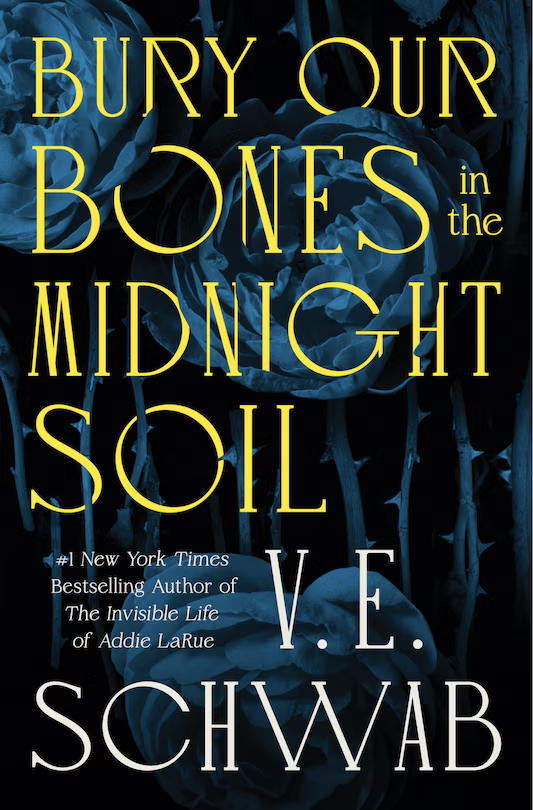
A REVIEW OF BURY OUR BONES IN THE MIDNIGHT SOIL BY V.E. SCHWAB
By Sam Henderson-Whaley
I’ll begin this book review with a few confessions for context. The first is that V.E. Schwab is my favourite author. I have seen her in conversation on many of her book tours, I have read almost everything she has ever written. I remain in awe of her originality and the meticulous care with which she approaches each of her stories. I am undoubtably predisposed to approach a V.E. Schwab novel favourably, which may have positively influenced my experience of this book. My second confession is… try not to hold this against me… I love vampire media. We can perhaps blame Twilight, Vampire Academy, The Vampire Diaries, Dracula, Interview with the Vampire, or even True Blood. Whoever the culprit may be, I am eternally drawn in by the promise of bloodthirsty fanged immortals. That said, if a new V.E. Schwab novel weren’t enough to sell me on this book, Schwab had me at vampires. Finally, I will confess, that I have been sitting on this review since I finished reading Bury Our Bones in the Midnight Soil in July. I could say I was waiting for spooky season to be upon us, but really, I was procrastinating because I can’t possibly think of how to do justice to this story in one short review. But alas, all a girl can do is try. So here it goes:
This is a story of three women separated by centuries but united by circumstance.
María lives a life of few choices. With a wild and free spirit, the expectations of propriety, deference, and, eventually, marriage, are a fate worse than death. When presented with an opportunity to liberate herself from a life she never wanted, for the first time in her life she makes a real, independent, and defiant choice… and she loves the way it tastes.
Charlotte lives the life of a dreamer stuck in a world of practicalities. When Charlotte follows her heart in a moment of unguarded and forbidden intimacy, she finds herself sent to London to shop for a husband. Uninspired by the preening masses of gentlemen, Charlotte finds comfort in a mysterious widow who offers her the chance to take what she wants and live the way she always dreamed she would. The cost? Her life.
Alice is starting her new life away from the trappings of her previously introverted, cautious, and unfailingly responsible self. Moving to the U.S. from Scotland and beginning her studies at Harvard University means a fresh start, and… a new Alice? When one night of throwing caution to the wind and having a mysterious one-night stand leaves Alice with a newfound hunger she sets out on a quest for answers, but as her cravings deepen and her rage simmers, she finds herself more interested in seeking revenge.
This novel so perfectly encapsulates the intrinsic nature of rage, hunger, love, restlessness, and power. It took me weeks to determine how I felt about these characters and their stories, and then a few more weeks to examine my interpretation and sentiment of the ending. These characters each fall victim to conditions of femininity and sexuality across time periods, and in the midnight soil their perceptions and desires have each grown to become warped and gnarled in different manifestations. There are no good people in this novel, as V.E. Schwab warned there wouldn’t be on her book tour. Regardless, you may find, as I did, that you root for some of these characters all the same. Charlotte, in particular, is perhaps one of the most fascinatingly complex characters I have read in quite some time. She is manipulative, kind, vicious, loving, naïve, and lonely, all wrapped into one irresistibly compelling package. There are so many ways to interpret the ending of this novel, so be prepared to have unanswered questions. If you do end up reading Bury Our Bones in the Midnight Soil, I would be so curious to hear your interpretation of the ending and overall thoughts, it has been such a varied response amongst my friend group, so please email me at samantha@welpartners.com or dm me on my bookstagram @iamsamreads with any thoughts!
https://www.indigo.ca/en-ca/bury-our-bones-in-the-midnight-soil/9781250320520.html
| | |
I missed a few newsletter book reviews over the summer, so I thought I’d do a little extra for October (my favourite month)! Below are my top 10 recommendations (in no particular order) for autumn reading. These are books that feel like fall, whether it be the setting, the subject matter, or just the overall tone, in these stories the air is crisp, and the leaves are falling.
1. Babel by R. F. Kuang
http://indigo.ca/en-ca/babel-or-the-necessity-of-violence-an-arcane-history-of-the-oxford-translators-revolution/9780063021433.html
Right off the bat I’ll warn you that this book is an undertaking. It’s dense, complex, and long, but so rewarding, and perfect for those chilly autumn evenings. This story follows Robin Swift, a young boy who was orphaned in Canton, brought to London by the influential and shrewd Professor Lovell, and trained to study languages at the famous Royal Institute of Translation at Oxford University, also known as ‘Babel’. At Babel, translation is more than a tool of communication, it is the key to the entire magic system that has made Britain it’s fortune. As a student, Robin’s translation skills are honed, and he gets a taste of the type of life his talents might buy him. Friends, freedom, money, comfort, and respect, are all at his fingertips. But there is always a cost, and Robin soon discovers that the cost of his participation at Babel is the betrayal of his homeland. Babel is a fantasy novel that expertly investigates very real events in our history, it is a story where systems of magic and fictional characters are used to address some of the realities of colonization and profiteering. R.F. Kuang is masterful in her creation of this world, the magic system, the characters, who I came to love, and her critical assessment of our past.
2. Bury Our Bones in the Midnight Soil by V.E. Schwab
https://www.indigo.ca/en-ca/bury-our-bones-in-the-midnight-soil/9781250320520.html
This one is hopefully self-explanatory after my review above! Vampires… need I say more?
3. Rizzio by Denise Mina
https://www.indigo.ca/en-ca/rizzio-a-novella/9781643138459.html
For those of you who love historical fiction… and even those who don’t (believe me, I fall into the latter category) Rizzio is the perfect book to add to your fall reading agenda. In stark contrast with the previous two recommendations, this is a small and manageable speed-read novel. Rizzio tells the true and disturbing tale of the murder of David Rizzio, the private secretary of Mary, Queen of Scots in 1566. Told through a modern lens, this is a story about power, love, envy, and survival. This was my first time reading Denise Mina, and I am now a proud repeat customer. Mina’s writing style is captivating and fabulously suspenseful.
4. Emily Wilde’s Encyclopaedia of Faeries by Heather Fawcett
https://www.indigo.ca/en-ca/emily-wildes-encyclopaedia-of-faeries/9780593500132.html
This cozy fantasy follows Emily Wilde, a professor and researcher at the University of Cambridge who specialises in, and studies, faeries. In her quest to complete her Encyclopaedia of faeries, Emily must travel to a small remote town in Arctic Norway to study the faeries that dwell there. Emily is prepared for field research, she is accustomed to confrontations with dangerous, conniving, and volatile fae. What she is certainly not prepared for, however, is that she might actually require the knowledge and assistance of the nearby townsfolk. This necessitates, as a pre-requisite, the ability to casually socialize, a baseline interest in people, and a warm, open demeanour, none of which Emily has ever been any good at. If the circumstances weren’t dour enough, it turns out that Emily’s irritating, narcissistic, and frivolous colleague, Wendell Bambleby, has followed her on this academic quest and is insisting on inserting himself in her research… and her lodgings. Emily doesn’t want help, from anyone. But as the stakes get higher and her field study twists itself into a life and death adventure, Emily will need all the help she can get. This novel is whimsical, gripping, witty, sweet, and magical. The characters are so rich and original, I found myself rooting for Emily from the very first page. If you like books about faeries or folklore, this is for you. Aside from Holly Black, no one does faeries quite as well.
5. Before the Coffee Gets Cold by Toshikazu Kawaguchi
https://www.indigo.ca/en-ca/before-the-coffee-gets-cold-a-novel/9781335430991.html
In 2022, after having not successfully completed a novel in several months, I picked up Before the Coffee Gets Cold for some light reading. I tore through it and ended up finishing the last chapter on a flight home for winter break, where I silently cried in my aisle seat, fogging up my glasses and soaking the inside of the collar of my hoodie as I tried to hide my tears from any nearby passengers. It had been so long since I’d had a good cry over a book that I was starting to worry I couldn’t do it anymore – cry over a fictional story, that is (one of my most favourite pastimes). If you are hoping to read something that is unique, cozy, genuine, and unabashedly human, not to mention short and sweet, then this is the book for you. This short novel is sectioned into four parts, following four different protagonists as they confront deeply meaningful moments in their lives. Each protagonist will visit a small café, tucked away on a nondescript street, behind an unassuming shopfront, where people say they have travelled through time. Each protagonist desperately wants to visit someone: their lover, husband, sister, or daughter. Each has something they’d like to change. And each will only have until the coffee gets cold to live in their past.
6. The Hollow and the Haunted by Camilla Raines
https://www.indigo.ca/en-ca/the-hollow-and-the-haunted-the-first-of-the-hollow-and-the-haunted-duology/9781803369976.html
I received a copy of this book a little over a year ago at BookFest in London as a proof prior to its publication. Last September, I picked it up hoping to finish it before it was officially published in October 2024, and from the moment I read the first page I was hooked, I was thinking about this book at least 16 hours a day until I finished. It has everything you could ever want in a novel for spooky season: a family of psychics, a gothic secluded mansion in Washington state, a mysterious decades-old feud between magically gifted families, and a truly chilling premonition. When sixteen-year-old Miles Warren meets Gabriel Hawthorne, he knows he has seen him before. That shouldn’t be an ominous statement, but Miles hasn’t just seen Gabriel around town, or at school, no, Miles has been having increasingly vivid and violent premonitions of Gabriel’s death. Reluctantly, Miles and Gabriel must deceive their feuding families and form an alliance, their goal: solve Gabriel’s murder before it happens and save his life. This spooky fall read is a race against the clock, a tenuous alliance that fosters genuine understanding and connection, and a thoroughly enjoyable and atmospheric twisted tale.
7. The Cousins by Karen M. McManus
https://www.indigo.ca/en-ca/the-cousins/9780525708032.html
There is nothing spookier than a large estate and disgruntled disinherited beneficiaries, am I right? Well, I suppose it depends on who you ask, but this is certainly the audience for this sort of whodunnit novel. The cousins: Milly, Aubrey, and Jonah Story, are virtual strangers. Saying the Story family isn’t close would be the understatement of the century. Years before the cousins were born, their grandmother disinherited their parents. After that, their grandmother fell off the map, no one has heard from her, and left to their own devices, the Story family has fractured, allowing a rift to grow wide and strong between them all. When the cousins receive an invitation from their reclusive grandmother to spend the summer working at her island resort, it comes as a shock to everyone. The cousins are suspicious, but with parents whose eyes have filled with dollar signs, there is no argument to be brokered, Milly, Aubrey, and Jonah must accept their invitations. What follows is a sinister summer of uncovering decades worth of family secrets… that perhaps were better left buried. Karen M. McManus knows her way around a mystery. Best known for One of Us Is Lying, McManus has become my favourite author of young adult thrillers and mysteries, and The Cousins has been my favourite of her novels yet. Full of stomach dipping twists, chilling family politics, and surprisingly likeable characters, this is a brilliant old-fashioned mystery to cozy up with this fall.
8. Sadie by Courtney Summers
https://www.indigo.ca/en-ca/sadie-a-novel/9781250267139.html
This is a darker mystery-thriller, a story that is meant for those who are fascinated by true crime and enjoy the examination of unsolved mysteries. This is the story of Sadie, a teenaged girl who has singlehandedly raised herself, and her younger sister Mattie. When Mattie is found dead, and the investigation is woefully mismanaged, Sadie decides to take matters into her own hands. This is the story of Sadie as told by West McCray, a radio personality who creates a serial podcast investigating the disappearance of a young girl named Sadie. Sadie hopes to find her sister’s killer. West McCray hopes to find Sadie before it’s too late. This novel lives up to the genre title ‘thriller,’ keeping me quite literally on the edge of my seat as I read it. I have never stopped thinking about this book. Sadie is a complex and haunting character; her story is both familiar and unique. The dual perspective with alternating chapters created the perfect reading experience, giving you the feeling that you are both asking the questions alongside West McCray and observing the reality of a story like Sadie’s through little snippets of her perspective.
9. Pumpkinheads by Rainbow Rowell
https://www.indigo.ca/en-ca/pumpkinheads/9781626721623.html
This is for anyone who just wants a cute, fluffy, feel-good graphic novel for the fall. Pumpkinheads is a story about friendship, growing up, nostalgia, and goodbyes. This short tale follows two teens, Deja and Josiah, who have spent every fall season for the past three years working together at the local pumpkin patch. In their last season together, and their last shift, they must find a way to say goodbye to their beloved pumpkin patch, and to each other. As it turns out, there are many different ways to approach a goodbye. A dreaded finish line. A loss. A turning point. An adventure. An opportunity. In Pumpkinheads, Deja and Josiah will discover that sometimes a looming ending can make the present even sweeter, and, ultimately, that sometimes goodbye is just the beginning. This is a one-sitting mood-boosting piece of pure fall joy. I recommend reading this somewhere where the leaves are colourful and crunchy on the ground with a steaming cup of chai!
10. Six of Crows by Leigh Bardugo
https://www.indigo.ca/en-ca/six-of-crows/9781250076960.html
I think recent events at the Louvre have reminded the public how entertaining we find a good old-fashioned heist. The success of the Ocean’s Eleven franchise proves the very same. In discussing her writing process for Six of Crows, Leigh Bardugo referenced Ocean’s Eleven as inspiration for this prison heist tale. Six unlikely crewmembers band together to plan an incredible heist, each with their own secrets and motivations: a convict, a sharpshooter, a runaway, a spy, a thief, and a heartrender Grisha who uses her magic to survive. Six of Crows is an expertly crafted complex narrative lush with magic and fantastical world building. This is a tale of survival, corruption, loyalty, and revenge. Six of Crows is a feat of worldbuilding, intricate plotting, and detailed character development. The cast of characters form an unforgettable found family that I think of often… that is my favourite trope, after all. Perfect for long, dark, rainy nights, this novel feels like mid-November to me.
| | |
The Jewish Foundation’s Professional Advisory Committee
November 6, 2025
Speaking: Kimberly Whaley
https://www.jewishfoundationtoronto.com/professional-advisors/2025-pac-seminar
Osgoode Certificate in Estate Litigation
Module 2: Capacity Proceedings
Module 3: Locating Missing Beneficiaries, Costs in Estate Litigation
November 11 & 12, 2025
Speaking: Kimberly Whaley (Capacity Proceedings/ Missing Beneficiaries) and Bryan Gilmartin (Costs in Estate Litigation) Applications or Motions for Directions)
https://osgoodepd.ca/professional-development/certificates/estate-litigation/
Financial Planning Canada
Care, Capacity, and Complexity: Planning for Vulnerable Clients
November 17, 2025
Speaking: Kimberly Whaley, Karine Diedrich (CHPCA), Carol Lynde (Bridgehouse), and moderated by Tamara Center
https://www.fpcanada.ca/CE-courses
Estate Planning Council of Canada
Fiduciary Accounting & Passing of Accounts Program
Details: TBD
STEP Cayman Islands
The Sham Showdown: Is Dishonesty the Wrong Test?
January 21 to 23, 2026
Speaking: Kimberly A. Whaley, Shân Warnock-Smith, Toby Graham, and Moderated by Andrew Miller
https://stepcayman.com/events/step-cayman-islands-conference-2026
Cambridge Forum: Asia-Pacific Wealth Advisors
February 8 to 10, 2026
Attending: Kimberly Whaley
https://cambridgeforums.com/forums/fawa
Osgoode Hall Law School: Managing Consent & Capacity
March 11, 2026
Chair: Kimberly Whaley
Details: TBD
Capacity Australia 9th International Conference: Marrakesh, Morocco
Predatory Marriage solutions from a Lawyer's Perspective and Ageism.
April 6, 2026
Speaking: Kimberly Whaley & Bryan Gilmartin
https://capacityaustralia.org.au/product/capacity-australia-9th-international-conference/
| | VIII. IN CASE YOU MISSED IT - RECENT BLOG POSTS | | WEL NEWSLETTER October 2025, Vol. 15, No. 7 | | | | |