Volume 294 | October 16, 2024 | |
"Fighting for Change in Iran" featuring Dr. Fariba Parsa | |
|
Fighting for Change in Iran
Tomorrow from 3:30-5:00pm | RSVP
Elliott School of International Affairs (1957 E St.), Room 214
Tomorrow, from 3:30-5:00pm, Dr. Fariba Parsa will deliver a talk on her newest book Fighting for Change in Iran: Women, Life, Freedom Philosophy against Political Islam. This book embodies a growing philosophy and culture deeply entrenched in liberal, secular democratic ideals, championed by women and young men across Iran. This book provides insights into the cultural context that fueled the Iranian uprising under the banner of “Women, Life, Freedom,” illustrating how this new philosophy challenges the existence of Political Islamic ideology in Iran.
About the Speaker
Fariba Parsa, Ph.D., is the author of the book, Fighting for Change in Iran, Woman-Life, Freedom Philosophy against Political Islam, and specializes in Islamic political ideologies and democracy and civil movements in Iran. She worked as an assistant research professor at George Mason University, has conducted research at Harvard University and the University of Maryland, and was previously a Non-Resident Scholar with MEI's Iran Program. Dr. Parsa was born and raised in Iran. She lived in Denmark for several years and has worked with Danish national and grassroots organizations on human rights and democracy. Dr. Parsa is the founder and president of Women’s E-Learning in Leadership (WELL), a nonprofit organization with the mission of empowering women to become leaders to make a positive change in their communities, through online education, mentorship, and global networking.
Donate to WELL online. For those interested in connecting with WELL, as an intern, or as a volunteer, email WELL.
| |
|
Congratulations to Professor Wright who recently had a creative nonfiction article published in Frontiers: A Journal of Women’s Studies called, "Ancestral Stiles: Caribbean Abolitionist Home Practices." In this article, Professor Wright discusses the complexities of both noting the harm of the religious spaces in their upbringing and still acknowledging the importance of familial lessons that contributed to their understanding of abolition in terms of community care, spiritual nourishment and maintaining intimate bonds.
Way to go, Professor Wright!
Pictured: Professor Akae Wright
| |
Other Upcoming WGSS Events | |
Save the Date: Abolitionism, Revolution, and Afro-Feminism in Practice | |
|
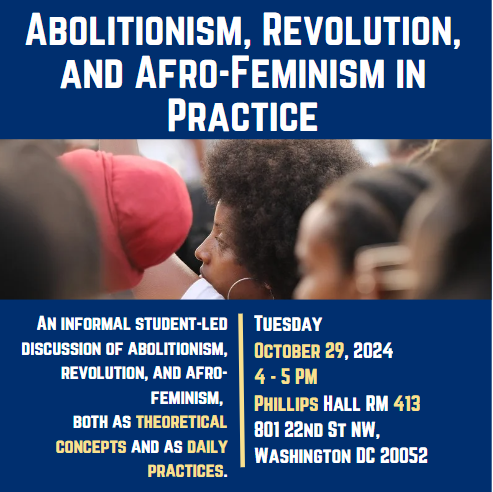
Abolitionism, Revolution, and Afro-Feminism in Practice
Tuesday, October 29th | 4:00-5:00pm | PHIL 413
RSVP
Join moderators and WGSS peers on Tuesday, October 29th, from 4-5 pm in Phillips Hall 413 for an informal discussion of abolitionism, revolution, and Afro-feminism, both as theoretical concepts and as daily practices. This is a student-led event, moderated by undergraduate student Ye Gang Lee and e-board members of GW's Black Defiance.
This event will put real-world context to theoretical concepts. Examples include care ethics seen via Palestinian encampment as an act of revolution, revolution as collective individualism instead of a unified front, and abolitionism and mobilizing vs. organizing.
| |
"Ukrainian Feminisms, Resistance, and Psychologies of National Decolonization" by Professor Yakushko
| |
|
Ukrainian Feminisms, Resistance, and Psychologies of National Decolonization
October 17th, 3:30-5:00pm | Register
1776 G St., Room C117
Join us on Tuesday, November 19th from 3:30-5:00 pm to hear from Professor Oksana Yakushko (Program Director of Professional Psychology and Professor of Clinical Psychology) on her research concerning Ukrainian history of feminist and gender-based traditions of resistance. Professor Yakushko will discuss how this has been shaped by responses to Russian imperialism and state-sponsored violence over the past century. In this presentation an introduction to histories/herstories related to Ukrainian women's role in shaping national identity and national liberation experiences will be connected to the psychological praxis of decolonization (one the most commonly discussed terms in Ukrainian social and scholarly spaces). Ukrainian women as poets, political leaders, scholars, Gulag survivors, liberation fighters, human rights activists, war crimes documentors, and volunteers will be noted in relation to global feminist movements.
About the Speaker
Oksana Yakushko, Ph.D., ABPP is a licensed clinical psychologist and certified psychoanalyst. She is a published scholar, consultant and educator in areas related to immigration, the history of psychology, contemporary psychoanalysis, intergenerational dynamics and trauma. She is an author of over 80 peer-reviewed scholarly publications, including articles, special issues, books and book chapters. She received numerous awards for her contributions to psychology, including recent awards for her work in global psychology, research and leadership in the psychology of women.
| |
In Case You Missed It: "The Art and Ethics of Disability Culture" by Rosemarie Garland-Thomson | |
Pictured: guest speaker, Rosemarie Garland-Thomson | |
|
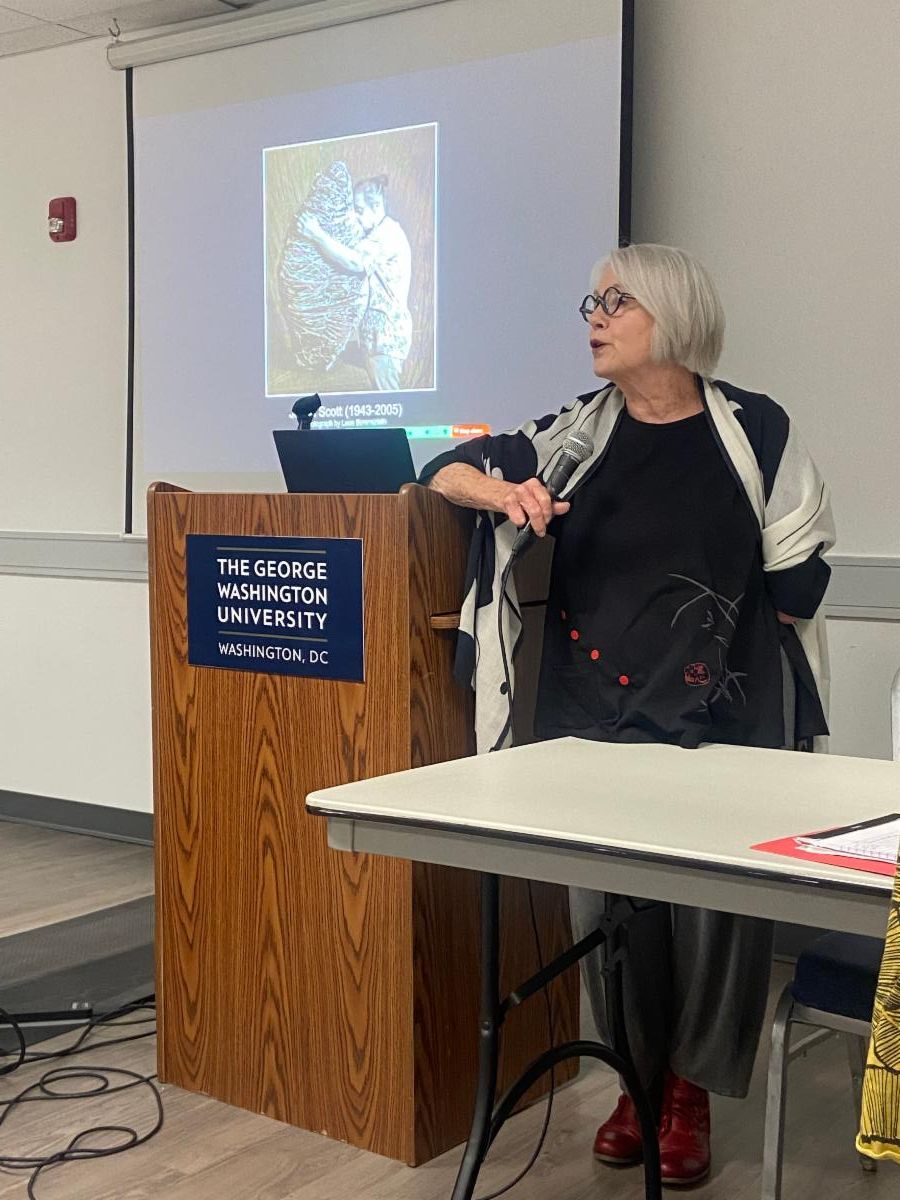
Thanks for joining us last week for Dr. Rosemarie Garland-Thomson's talk on the art and ethics of disability culture! Dr. Garland-Thomson discussed how disability generates culture, enhances accessibility, and promotes human enterprise. She provided a brief history of the political attention paid to disability in the United States, starting with the launch of the 1948 United Nations Declaration of Human Rights that addressed the parameters of what can and cannot be done to humanity, which was a direct response to the Holocaust. She also provided examples of notable public protests that took place in the United States in the 1970s and 1990s for disability rights. As part of the historical context, Professor Garland-Thomson mentioned two important pieces of legislation: the 1990 Americans with Disabilities Act (ADA) that was updated in 2009, and the 2006 UN Convention on the Rights of Persons with Disabilities (CRPD). She explained how both have facilitated the increased presence of disabled people in the public sphere.
Later in her talk, Dr. Garland-Thomson addressed the following questions: "Who are disabled people?" and "How does disability shape what we make?" This part of the talk started with Sophocles’ Oepidus The King. “Oepidus,” which means “the broken foot,” suggests that disability is a prompt that gives meaning to human narrative. Other examples of the cultural generativity of disability include the works of John Milton, the visually impaired author of Paradise Lost; Beethoven’s symphonies, which he composed while deaf; the songs of three famous blind black musicians: “Blind Tom” Wiggins, Ray Charles, and Stevie Wonder; and in acting and literary production the multi-faceted roles of actor Peter Dinklage and Temple Grandin’s book Thinking in Pictures (1995).
Her concluding examples of what disability makes included the portraits of disabled people by the artist Riva Lehrer and inventions to promote accessibility by the engineer Hugh Herr.
| |
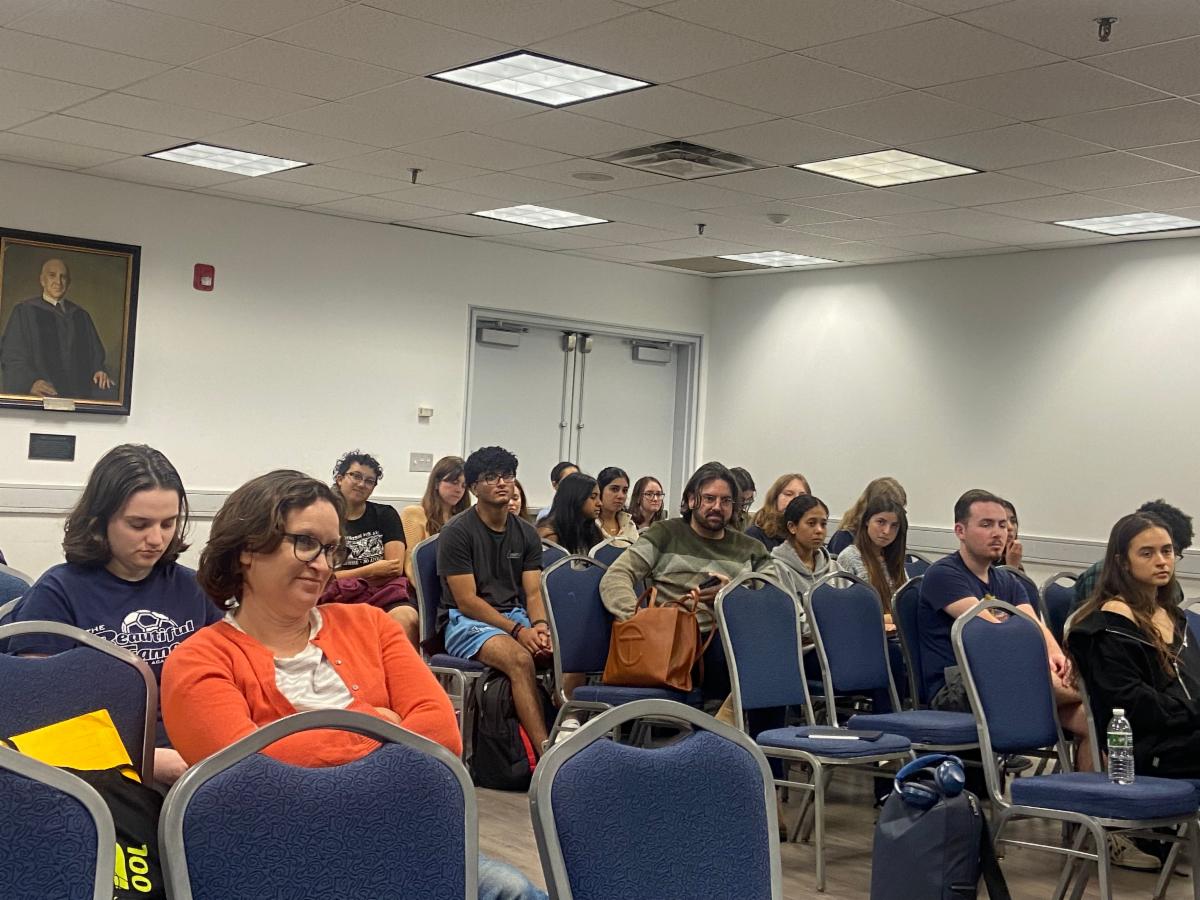
Pictured: a few attendees of the event | |
|
Spring 2025 registration is almost here! Check out WGSS Spring 2025 courses to add to your schedule and see a list of other WGSS-related courses below:
CTAD 1015 Understanding Dance
Instructor Anna Kimmel
CRN 25271
TR 11:10AM-12:25PM
Course Description
Understanding Dance theorizes dance practice and performance as vital means through which we embody, produce, and challenge both cultural meaning and artistic expression. As an introduction to dance studies, this course surveys the significant methodologies, debates, and voices within the academic study of dance. It frames the dancing body through lens of analysis including gender, race, sexuality, (dis)ability, and (trans)nationality. Together, we will discuss questions of canonicity, citationality, and appropriation; dance’s ephemerality and archival potential; the ethics of looking, critiquing, and theorizing; and what it means to study dance in relation to colonial legacies and globalized futurities. Across these frames, we ask: what does it mean to move and to be moved?
Some course themes include:
• Spectatorship, Analysis, and Criticism
• Worlding Dance? Global and Intercultural Perspectives
• Dancing History, between archival remembrance and ethnographic site
• Embodiment, Kinaesthesia, and Improvisation
• Choreography, technique, and discipline
| |
|
CTAD 4595 Queer Aesthetics in Contemporary Dance and Performance
Professor Brendan Drake
CRN 28411
MW 11:10-12:25 Building J (down)
Course Description
This course will examine modes of queer performance in the United States from the 1970’s onward. We will examine an expanse of queer productions and practices situated in various settings, from public protests, experimental theater, Ballet and Contemporary Dance, Hip Hop and House cyphers, mainstream concert stages and LGBTQ nightlife. We will profile an array of of Dance and Performance artists in tandem with Queer Theories and Methodologies, including but not limited to: Tracking Queer Temporality and Futurity through Choreographic World-Building; Assimilation politics in Ballet; Cross-cultural explorations of Camp; Notions of Queer Minstrelsy and Trans Misogyny; Drag Evolutions; Choreographies of Protest and Social Power Dynamics within Queer Nightlife.
Through class discussions, lectures, student presentations and assignments (short essays/performance reviews/creative projects), students will become more familiar with methods and theories from queer and performance studies and learn to apply them both in their individual creative research and in critical analysis of live performance. As a class, we will question and interrogate how “queer” as a blanket term can describe both an identity and ways of being/doing. Where do notions of queerness account for, or evade intersections of gender, sexuality, race, disability, and/or ethnicity? Within this class, we will unpack how “queer” is deployed within the work we examine, as well as within our own individual processes.
All Sexual and Gender expressions welcome.
Course Content
Performance Artists: Jack Ferver, Julie Tolentino, jumatatu m. poe, Jamile Kosoko, Rupaul, Act Up, Sister Spit, Eddie Izzard, Cole Escola, Ballez, Queen Amour, Willi Ninja, Miguel Gutierrez, Ita Segev, Tom Rubnitz, John Kelly and DanceNoise, Ishmael Houston-Jones.
Writers and Theorists: Maggie Nelson, Audre Lorde, Billy Ray Belcourt, Jules Gill Peterson, Torrey Peters, Tommy Pico, Jack Halberstam, Judith Butler, Jose Esteban Munoz, Adrienne Marie Brown, Terell Alvin McCraney, Doron George, Thomas DeFrantz.
| |
|
The Studio Arts and Design Research + Practice conversation series invites acclaimed artists, writers, critics and scholars to the Corcoran School throughout the year. The talks are free to the public, providing both the community and our students access to thought-provoking examples of contemporary research and practice and a chance to engage with leading cultural figures. Speakers are nominated and selected by the Studio Arts and Design programs, hosted by students and faculty at the historic Beaux Arts Flagg Building in Washington, D.C.
All events will be Wednesday nights, 6:30pm-8:00pm in Hammer Auditorium
Upcoming events in the series are below:
10/16/2024: Kin Kelley-Chung, Screening and discussion with filmmaker of "Free the People: The Docutriology of DC's 2020 Movement for Black Lives", hosted by 2 Photojournalism Students.
Learn more about the film.
10/23/2024: Siobhan Rigg + Josh T. Franco AWAITING CONFIRMATION, hosted by 2 Graduate Fine Arts Students.
10/30/2024: Katty Huertas + Guest AWAITING CONFIRMATION, hosted by 2 Design Students.
| |
|
REND: A Staged Reading by Kenneth Reams
October 19th, 5:00-7:00pm | Register
Flagg Building
Join GW faculty members Dr. Anna Jayne Kimmel and Sidney Monroe Williams, MFA, for a staged reading of REND, a new play authored by Kenneth Reams. Stitching together testimonies from death row, REND amplifies the interconnected stakes of mental health, boyhood, and masculinity. The play continues a larger project of Reams' to interrogate the ethics, impact, and legacy of U.S. capital punishment through artistic and aesthetic intervention. Coordinated in affinity with the World Day Against the Death Penalty in October, REND will be followed with a discussion among a panel of artists, activists, and academics, including representation from Voices Unbarred.
Sponsors include the Honey W. Nashman Center for Civic Engagement and Public Service, Corcoran School of Arts & Design, Program in Theatre and Dance, University Seminar Series Fund and Voices Unbarred.
| |
|
Insider Perspectives on the PhD Application Process
October 21st, 1:00-2:00pm | Register
Are you considering applying to a PhD program? This webinar panel will offer the perspectives of GW faculty members on what it takes to assemble a successful PhD application. Learn tips on writing a strong statement of purpose, asking for letters of recommendation, and managing timelines. Bring any questions you may have for the interactive Q&A session. Whether you’re already working on your PhD applications or just starting to explore the possibility, this webinar will provide valuable insights into the process.
Panelists include:
Prof. Michelle Stock, Director of Graduate Studies for Applied Social Psychology, and Prof. David Mitchell, Director of Graduate Studies for English.
The panel will be moderated by Chad Heap, Associate Dean of Graduate Studies.
Email the Office of Graduate Studies if you have any questions.
| |
|
The Politics of Reproduction: Surrogacy in Literature, Film, Visual Art, and Social Media
October 25th, 9:20am-5:00pm | Register
Contact Event Organizer: Dr. Laura Lazzari
The GW Romance, German, and Slavic Studies (RGSS) Department invites you to participate in a Virtual Global Symposium on Surrogacy. Surrogacy has become a crucial and complex controversial issue in today’s society. It is a process fraught with ethical implications and consequences that concern, among many others, reproductive justice, women’s bodies and health, human rights, social class inequality, feminism, motherhood, masculinity, parenthood and the concept of the family. While surrogacy is currently banned in several countries, its literary, cinematographic and artistic representation has flourished in the past 20 years, contributing to stimulating debates that concern both the humanities and the medical humanities.
Organizers
Organized by Dr. Laura Lazzari (GW RGSS) and Dr. Giulia Po DeLisle (UMass Lowell) with the collaboration of the Department of World Languages and Cultures at the University of Massachusetts Lowell, The Sasso Corbaro Foundation for the Medical Humanities (Switzerland), The Department of Romance, German, and Slavic Languages and Literatures at George Washington University, and The Medical Humanities Initiative at Georgetown University.
| |
|
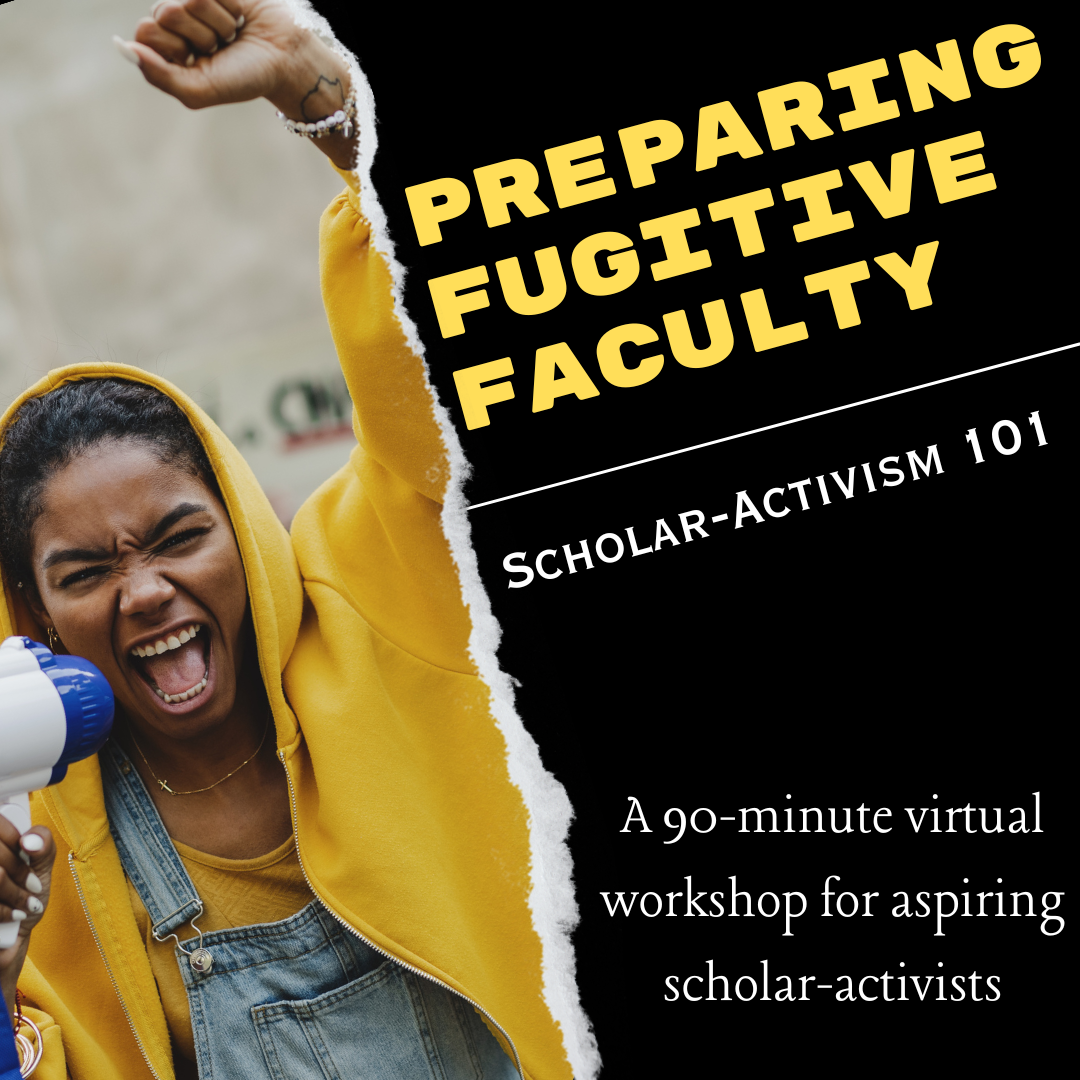
Preparing Fugitive Faculty: Scholar-Activism 101
October 18th | 2:00-3:30pm EDT on Zoom
($15 for grad students, $20 for faculty)
Purchase Tickets
"We didn't beat the activist out of you yet?" ~ Preparing Future Faculty professor's interruption
Many young people of minoritized backgrounds, especially communities of color, trans and queer people, and first-gen and working-class people are drawn to academia's supposed potential for making a positive change in the world, especially one's own disadvantaged community(ies). Once in graduate school (and beyond), we are confronted with academic professional socialization that demands that we renounce (or hide) our activist commitments, and even downplay our identities in our interactions, pedagogy, and scholarship. But, "trading power for patronage" leaves us disempowered, isolated, inauthentic, and detached from the very values that drew us to the ivory tower in the first place.
“[O]ne could not be a calm, cool, and detached scientist while Negroes were lynched, murdered, and starved.” ~ W.E.B. DuBois
This interactive workshop will identify the ways in which mainstream academic professional socialization undermines our individual and collective power as activists. Next, we will explore what it means to become a "fugitive scholar," committing to going against norms like objectivity, professionalism, elitism, and "inclusive excellence" that serve to reproduce the academic status quo. We'll necessarily brainstorm strategies to guard against the predictable backlash that often comes from students' claims of a bias classroom, colleagues' accusations of me-search, and external attacks on scholar-activists from the public/media/politicians.
Facilitator Bio: Denise! Denise! Ph.D. (they/she) is a proud mixed-Black fat queer non-binary femme with invisible disabilities. Denise is a former tenured liberal arts sociology & gender + sexuality studies professor, having co-authored anthologies Counternarratives from Women of Color Academics: Bravery, Vulnerability, and Resistance and recently Conditionally Accepted: Navigating Higher Education from the Margins. They founded Sociologists for Trans Justice in 2016, which they co-led until 2018. It took a suicide attempt in 2021 to finally leave a deeply cissexist, white supremacist liberal arts college in Richmond, Virginia. She is now a full-time soloproneur as an academic justice consultant and anti-racist trans liberation consultant.
| |
GWU2: George Washington University Graduate Workers Union | |
|
GWU2 is the George Washington University Graduate Workers Union. GWU2 are graduate student workers from various departments and schools who aim to support and represent graduate student workers across GWU. They have chosen to affiliate with SEIU Local 500 to build power with other workers on GW’s campus and across the city.
What is the GWU2 fighting for?:
- Transparency and respect from GWU with regards to our general treatment and wages.
- A living wage for all student workers with annual cost of living adjustment (COLA).
- Improved access to healthcare, including vision, dental, and mental health coverage.
- Free-to-students UPass that stays on year round.
- Standard work assignments (consistent hours, even expectations for TAships across departments and schools, etc.).
- Paid leave (sick days, vacation, parental, etc.).
- Office space for all PhD students.
- Increased campus protections for international students.
Visit the GWU2 website for more information and ways you can make impact. GWU2 also sent an open letter to GW administration. GW faculty and staff can also support GWU2 by signing the open letter online.
| |
PhD Project at Linköping University, Sweden
| |
|
PhD position at the Department of Thematic Studies: Technology and Social Change, Linköping University, Sweden
Applications due: October 31st
This PhD position is part of the research project "Biomedicine, Clinical Knowledge, and the Humanities in Collaboration: A Novel Epistemology for Radically Interdisciplinary Health Research and Policy-Work on Post-Covid-19 Syndrom," and specifically the subproject "A Novel Model for Policy-Work."
The aims of this subproject are to examine what is assessed as relevant knowledge for health care recommendations and policies, regionally, nationally, and internationally; how this assessment is done, and which epistemic presuppositions the assessment rests on. Another aim is to create a model for knowledge assessment that makes it possible to include research results from within randomized clinical trials as well as hermeneutically oriented qualitative research and other studies in medical humanities. PostCovid is used as an example. Medical sociology, science and technology studies, phenomenological philosophy and analytic philosophy perspectives are combined within analyses in this subproject.
The PhD project is part of the subproject ‘A Novel Model for Policy-Work’. Within it, the PhD candidate is expected to analyze assessment methods that are used in the development of health care recommendations and policies (such as GRADE or other models for assessment of research), with a focus on how epistemic assumptions and choices of models for assessment help constitute what get to be perceived and understood as relevant knowledge for health care recommendations. This could, for example, be done from a phenomenological perspective that examines the epistemic presuppositions underlying the constitution of criteria in healthcare recommendations. Again, postCovid-19 syndrome is used as the example.
Qualifications
- Master’s degree or completed courses with a minimum of 240 credits, at least 60 of which must be in advanced courses.
- Those who have knowledge equivalent to 90 higher education credits in any subject of central importance to the subject have special eligibility.
- Relevant education for the advertised position is, for example, philosophy, science and technology studies (STS) or related subjects.
- Documented scientific skill in phenomenological philosophy is meritorious.
- Documented scientific skill in working interdisciplinary is meritorious.
- Good knowledge of spoken and written English.
For more information, read the full description of this position.
For questions, you may write to:
Kristin Zeiler, Professor, Department of Thematic Studies; Technology and Social Change
Dick Magnusson, Head of Division
Carin Ennergård, Senior Coordinator
Camilla Junström Hammar, HR Partner
| |
Jobs, Internships, Fellowships, and Scholarships | |
|
Fellowships
The PPIA Program at Harvard Kennedy School is now accepting applications for the 2025 Junior Summer Institute (JSI@HKS), which will be held on our campus in Cambridge, Massachusetts from June 16–August 1, 2025.
This fully funded, seven-week program prepares rising undergraduate seniors for graduate studies and careers in public service. Applications for JSI@HKS are being accepted until November 1, 2024 through the PPIA application portal.
For additional information, visit the JSI@HKS website.
| |
|
The Honey W Nashman Center for Civic Engagement and Public Service
The Honey W Nashman Center for Civic Engagement and Public Service at GW is hiring FWS students and volunteers. Apply for Math Matters, Jumpstart, engageDC, and SMARTDC tutoring and leadership open positions at the Nashman Center. Work directly with DC Public Schools and community organizations, making a real impact in the community.
Read full job descriptions and apply online. Contact the Nashman Center via email with any questions.
| |
Research Funding Opportunities | |
|
The Russell Sage Foundation is offering research funding for the below programs
Program 1: Future of Work
Purpose: To support innovative research on the causes and consequences of changes in the quality of jobs for low- and moderately paid workers and their families in the U.S.
Program 2: Social, Political, and Economic Inequality
Purpose: To support original research on the factors that contribute to social, political, and economic inequalities in the U.S., and the extent to which those inequalities affect social, political, psychological, and economic outcomes, including educational and labor market opportunities and consequences, social and economic mobility within and across generations, and civic participation and representation.
Program 3: Promoting Educational Attainment and Economic Mobility among Racially, Ethnically, and Economically Diverse Groups after the 2023 Supreme Court Decision to Ban Race-Conscious Admissions at Colleges and Universities
Purpose: To support innovative research on the aftermath of the 2023 Supreme Court decision striking down race-conscious college and university admissions policies. The initiative focuses on ways to promote educational attainment and economic mobility among racially, ethnically, and economically diverse groups following the court’s ruling that the declared that use of race-conscious admissions policies violates the Equal Protection Clause of the 14th Amendment and was, therefore, unconstitutional.
Funding: up to $200,000 (trustee grants/15% indirect); up to $50,000 (presidential awards/no indirect; if project involves original data collection or gaining access to restricted-use data, capped at $75,000)
Key Dates:
- LOI due: October 29, 2024
- Proposal due: February 19, 2025
- Funding decision by: June 2025
- Grant start date: August 1, 2025
More details can be found at the Russell Sage Foundation's website. Considering applying or have questions? Please email Hyunjin Cho, GW's Associate Director of Foundation Relations, for additional information.
| |
|
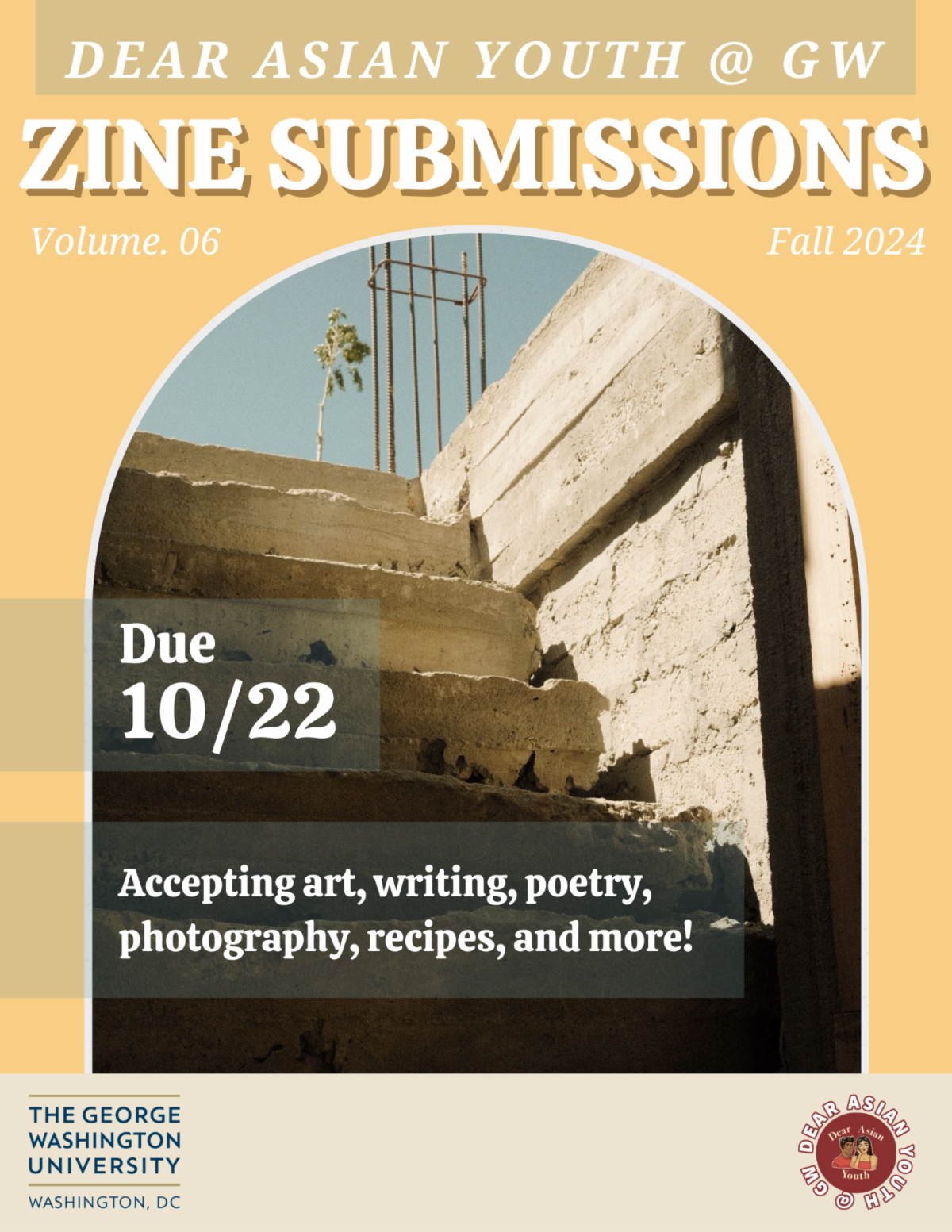
Dear Asian Youth Literary Arts Magazine
Submissions due October 22nd
Submit work for consideration at DAY @ GW Literary Arts Magazine Submission
Dear Asian Youth at GW is an on-campus organization for Asian youth and non-Asian allies to work together to enact social change and bring awareness to the Asian narrative through our Bi-Annual Literary Arts Magazine. Submissions for the next edition of ZINE are now open. The deadline to submit is Tuesday, October 22 at 11:59 PM EST.
Access and submit online via the application. Submissions can take the form of artwork, poetry, prose, recipes, stories, photography, etc. - the possibilities are endless! This is a great opportunity to showcase your talents and get published.
Review previous issues by semester: Spring 2024 ZINE, Fall 2023 ZINE, Spring 2023 ZINE, Fall 2022 ZINE, Summer 2022 ZINE.
Questions may be directed via email.
| |
Breaking the Silence: Digital Narratives of Trauma Among Immigrant and Refugee Women
Kennesaw State University
Proposals due October 27, 2024
Immigrant communities facing displacement and trauma have increasingly turned to social media as a platform to share their testimonies, connect to their communities, and build new support networks. Due to existing structural inequities, women face unique challenges, such as discrimination and violence, human trafficking, economic deprivation, and conflicting cultural norms. This is particularly true in the case of immigrant and refugee women from the Global South.
This edited volume seeks to explore the intersection of trauma, displacement, and digital activism, focusing specifically on the use of social media among immigrant women, refugees, asylum seekers, and other displaced women from the Global South. Topics of interest include but are not limited to:
• Digital Testimonies and Storytelling: using social media platforms as venues to share personal narratives, testimonies, and lived experiences of trauma and displacement.
• Community Building: the use of social media in immigrant communities to forge connections, build solidarity, and create supportive networks with others facing similar challenges.
• Activism and Advocacy: case studies or analyses of digital activism campaigns led by displaced women to raise awareness, advocate for their rights, and challenge systems of oppression.
• Digital Ethnography: Research on the online experiences and interactions of displaced women through social media platforms.
• Social media as an emerging platform to share challenges related to motherhood and womanhood for women who have experienced migration, asylum-seeking, and displacement. How women immigrants from the Global South leverage social media to establish agency.
All interested authors must consult the guidelines for manuscript submissions and propose a Chapter online.
| 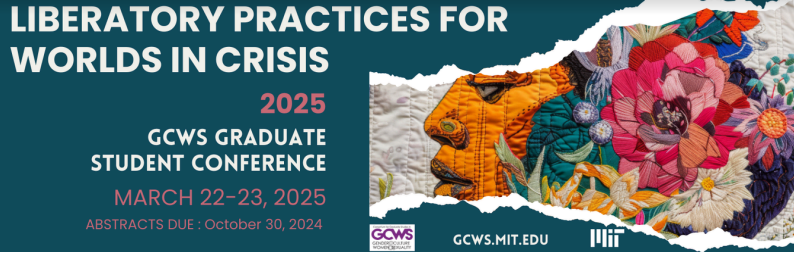 | |
Liberatory Practices for Worlds in Crisis
March 22-23, 2025 | Massachusetts Institute of Technology
Submissions due October 30, 2024
The Graduate Consortium in Gender, Culture, Women, and Sexuality invites graduate student scholars, activists, and practitioners to examine what it means and has meant to survive in a world in crisis. What do we mean by crisis? How do historical experiences of crisis inform our understanding of present crises? What is the meaning and purpose of "liberatory practices" in the historical and contemporary world? How do Indigenous, feminist, queer, trans, disability or other lenses offer alternative understandings of crisis? What world is possible after a crisis? By exploring these and more questions, we hope to consider how new methods of study and care practices in our scholarship might allow us to imagine different worlds, develop resilience in a crisis-laden world, become "undisciplined" academically, and/or form more caring and collaborative communities.
Papers should be submitted online. Read the full description of the Call for Proposals.
|  | |
Spring 2025 issue of gnovis
Papers due January 3, 2025
Book pitches due November 8th; reviews due January 3, 2025
The Georgetown University Graduate School of Arts and Sciences is currently accepting research papers and book reviews for the Spring 2025 issue of gnovis, a student-operated, peer-reviewed academic journal.
About the Journal
gnovis is devoted to promoting interdisciplinary scholarship that reflects broad interests at the intersection of communication, culture, and technology. Our mission is to provide a forum for graduate students from around the globe to share their original research and foster a spirit of curiosity, collaboration, and conversation among emerging scholars. We are proud to feature some of the best graduate scholarship from across the country, with past submissions accepted from institutions such as Georgetown University, NYU Steinhardt, Northwestern University, Indiana University, Tufts University, and the University of Texas, Austin.
Call for Papers
gnovis welcomes submissions of original research papers from current graduate students. Papers may address a wide range of subjects and historical periods, including, but not limited to: science and technology studies, cultural criticism, cultural identity and politics, new media and elections, nationalism and religion, visual art and emerging technology, mediated communication and digital representation, and more. Submitted papers should be approximately 3,000-8,000 words in length, include a brief abstract, and employ author-date APA Style citations.
Papers must be emailed as a Word document no later than January 3, 2025 at 11:59 pm EST. Please include in the body of the email your name, contact information, and school affiliation. Learn more about our research paper submission guidelines online.
Call for Book Reviews
gnovis is keen on publishing book reviews that reflect the diverse interests of its authors and invites contributors to select their own book to review, so long as the book addresses one of the foregoing topics. Interested contributors can pitch their chosen book to gnovis by filling out the Google Form by November 8, 2024. If the pitch is approved, potential contributors will be contacted by the gnovis editorial team to write the full review, to be submitted no later than January 3, 2025. Learn more about our book review submission guidelines online.
View previous issues online. Any further questions and concerns may be emailed.
| |
26th Southeast Conference for Languages, Literatures, and Film (SCFLLF)
February 22-23, 2025 | DeLand, Florida
Abstracts due November 15, 2024
The 26th SCFLLF will be held in DeLand, Florida, on February 22-23, 2024, hosted by Stetson University, with the support of Western Carolina University and the University of South Florida . The SCFLLF welcomes papers on all aspects of literature, linguistics, culture, philosophy, cultural history, film, applied linguistics, second language acquisition, and pedagogy pertaining to non-English languages (ancient and modern). Submissions are encouraged (but not limited to) addressing the conference theme: "Disputed Realities: Recalibrating the Real" in its broadest understanding. The Humanities have always dealt with imaginary worlds and how they are connected to and/ or influencing our conception of the real. In the present cultural climate where facts are more and more presented as disputed realities the humanities are repositioning themselves as a way to navigate, assess but also influence the political and the personal.
Some suggestions of topics and their representations in methodology, philosophy, literature, visual and online media, and art include:
- reality and perception in literature, art and film
- constructing reality in film and literature
- reassessing what is real
- the reality of trauma, how it is expressed, perceived, believed or not
- disputed facts in methodology
- the reality of what’s happening in the classroom
- the contested reality of culture
- The broader influence of imaginary worlds in film, literature and the visual arts
Submit a proposal online (of no more than 250 words) for a single paper or a full panel (max. of 3 presentations). Only proposals submitted online will be accepted.
| |
|
2025 Melvin Van Peebles Symposium
Ohio Wesleyan University | March 27-30, 2025
Submissions deadline: October 30, 2024
The 2025 symposium theme is "Disruption! Signal Fires, Reckoning, and Jubilee Through Black Art." This symposium aims to celebrate emerging artists/artistry that extend our longstanding Black radical tradition of disruption. In doing so, we invite diverse proposals engaged in thought, action, and cultural production around political themes within Black arts today and/or in the Harlem Renaissance in fields including but not limited to, film, theater, dance, music, visual art, literature, and business.
Diverse proposals engaged in thought, action, and cultural production around political themes within Black arts today and/or in the Harlem Renaissance in fields, including but not limited to, are invited:
- Film
- Theater
- Dance
- Music
- Visual Art
- Literature
- Business
For more details on submission guidelines, please refer to the symposium's webpage. For questions, email Dawn Chisebe.
| |
Space and Place| University of Virginia's English Department Graduate Symposium | April 4, 2025
This year, the University of Virginia’s Graduate Symposium invites graduate students studying arts and humanities across Virginia and Washington, D.C., to consider how space and place affect their research and the communication thereof. How do our physical locations influence our scholarship and pedagogy? What does it mean to move between institutions as an academic while pursuing the same line of scholarly inquiry? How can we acknowledge the specificities of our spaces and places while building expansive intellectual communities? And how should we articulate our sense of institutional belonging when those institutions depart from our values?
Potential topics to be addressed may include:
• Regional and national relationalities
• Diaspora, forced migration, and climate-related mobility
• Disability and movement
• Environmental humanities and natural space
• Material culture and the built landscape
• De facto vs. de jure understandings of place
• Language, linguistics, and location
• Decolonial and postcolonial thought
• Place-conscious pedagogies
• First-person criticism
Presentations should be no longer than 15-20 minutes. In addition to accepting traditional academic papers, we also encourage submissions featuring creative work with academic components (such as creative nonfiction, documentary poetics, or multimedia presentations). Please specify in your submission whether any alternative categories apply to your paper and if you would require AV equipment.
Abstracts and a brief bio should be submitted online before 11:59 P.M. on Friday, January 3, 2025.
Email any questions or concerns to Graduate Symposium co-chairs: Gabby Kiser or Spencer Grayson.
| |
|
The Department of Women's & Gender Studies (WGS) at Southern Connecticut State University (SCSU) invites applications for a tenure-track Assistant Professor position beginning in Fall 2025. The candidate must be committed to teaching in a vibrant public regional university and demonstrate the potential for excellence in teaching, mentoring, and research. All faculty at SCSU share in academic advising and participate in department and university service. Faculty members' typical teaching load is 12 credits per academic semester, which may include teaching, service responsibilities, and reassigned time for scholarship.
Required Qualifications
Applicants must have a PhD by August 31, 2025, in Women's, Gender, & Sexuality Studies, Indigenous, Native, or First-Nations Studies, or related field.
Preferred Qualifications
We welcome applicants with a PhD in Women's, Gender, and Sexuality Studies or Feminist Studies, with ability to teach cross-listed courses with other departments. Applicants with a PhD in other fields employing an intersectional lens on gender, sex/uality, race, class, power, indigeneity, ethnicity, and ability will also be considered. We are particularly interested in applicants with demonstrated excellence in teaching and expertise in Indigenous Studies, Black Feminist/Womanist Studies, Latin/a/o/x/e Studies, Queer and Trans* Studies, Transnational Studies, Critical Disability Studies, and/or centering gender, race, and class in the study of environmental justice, education, and/or science and technology.
Application Process
Review of applications will begin on November 15, 2024. The position will remain open until filled.
To apply, please submit a cover letter (outlining how your experience and interests align with the mission and strengths of SCSU and the SCSU WGS Department), CV, statement of teaching philosophy, evidence of teaching excellence, and the contact information for three references to Dr. Yi-Chun Tricia Lin with the subject line "WGS Faculty Search."
| |
|
The Department of Gender, Women’s, + Sexuality Studies (GWST) at the University of Maryland, Baltimore County (UMBC) invites applications for a tenure-track Assistant Professor to begin August 2025. The successful candidate should have a demonstrated record of scholarship and teaching core courses in the field of Gender, Women’s + Sexuality Studies at the undergraduate and graduate levels, as well as a commitment to and experience in fostering inclusive excellence. The ideal candidate will have a Ph.D. in Gender, Women’s and Sexuality Studies or a closely related field and research and teaching expertise in gender, women’s and sexuality studies as they relate to either Black Diasporic experiences or Arab/Muslim experiences. The position is fully located in the Gender, Women’s, + Sexuality Studies Department, with the possibility of teaching courses cross-listed with other campus units. The teaching load is 2-3. The salary range is $80,000-$88,000.
The Gender, Women’s, + Sexuality Studies Department at UMBC is an interdisciplinary academic unit committed to transnational and intersectional understandings of how gender and sexuality and their intersections with race, nation, class, religion, and ability make a difference in individual lives and in the practices and institutions of human societies and cultures. The program currently has five faculty lines and more than 30 affiliate faculty. It enrolls approximately 70 undergraduate students in its undergraduate major, minor, certificate, post-baccalaureate certificate in gender and women’s studies, and its critical sexuality studies minor programs, and is one of nine participating departments and programs in the Language, Literacy and Culture Ph.D. program. The department is deeply collaborative, with a coordinating committee of core and affiliate faculty that jointly manage the curriculum of core and cross-listed courses. We are deeply engaged in campus DEIA activities and social justice issues on campus and in Baltimore area communities.
Applications should be addressed to Dr. Vrushali Patil and should be submitted online through Interfolio. Applications should include a 1) cover letter outlining interest in the position, research experience, and future research plans, 2) CV, 3) a statement of experience with and commitment to diversity, equity, inclusion, and accessibility, 4) a teaching portfolio, and 5) a list of three references. Review of applications will begin October 1, 2024 and will continue until the position is filled.
| |
|
The WGSS program at American University is seeking an adjunct instructor to teach “Gender in Society” (WGSS 125) in Spring 2025. Dates and times of the class TBD. There are 19 students in the course. The pay is $4,750 per class for instructors with a Ph.D, $4,158 per class without a Ph.D.
This is for an immediate hire. A successful launch could well lead to further teaching opportunities with the WGSS program. ABD’s and completed M.A.’s are encouraged to apply, as well as those candidates who have completed their PhD’s. The WGSS program is the largest of six interdisciplinary programs which make up the broader department of Critical Race, Gender, and Culture Studies at American University.
If you are interested in this opportunity, email the Director Amy Barber with a brief introduction and CV.
| |
|
The University of Georgia (UGA) Department of History and Institute for Women’s Studies invite applications for a tenure-track assistant professor. The Department seeks a specialist in gender and the history of medicine. This is a joint appointment between the two units on campus; the tenure home will be in the Department of History. Anticipated start date is August 1, 2025. Applicants must have their PhD in History, Women’s and Gender Studies, or a related field conferred by July 30, 2025.
The successful candidate is expected to maintain an active research agenda in gender and the history of medicine. Competitive applicants will demonstrate evidence of training, expertise, and commitment to women’s and gender studies. The successful candidate will teach undergraduate and graduate courses related to their specializations and the curricular needs of both units. The standard teaching load is four courses per year (two in each unit). The successful candidate also will participate in activities related to the academic mission of both units and the university, including service on committees, graduate student advising, and recruitment.
To apply, read the full job description and apply online. Applicants should include a cover letter detailing how the applicant's credentials and experience meet the needs, responsibilities, and qualifications stated above; C.V.; writing sample (article or chapter); teaching statement; and the names and contact information for at least three references. Letters of reference and other supporting materials may be requested from a smaller pool of applicants at a later date.
Applications received by November 1, 2024 will receive full consideration; however, the position will remain open and applications may be considered until the position is filled.
| |
|
The Department of Women’s, Gender, and Sexuality Studies at the University of Massachusetts Boston invites applications for a tenure-track Assistant or Associate Professor faculty position beginning September 1,2025 in the areas of native/indigenous feminisms and human rights. Applicants should be accomplished researchers and experienced instructors who are committed to teaching in an urban university setting and to thinking and practicing in collaborative and interdisciplinary ways. Tenure stream faculty are expected to teach two courses each semester. A major focus of the position would be contributing to the growth of the department's thriving undergraduate minor in Human Rights. Candidates will have opportunities to collaborate with a number of ethnic and global studies programs and departments in the College of Liberal Arts and beyond including the Critical Ethnic & Community Studies MS, Conflict Resolution, Human Security & Global Governance, the Native American and Indigenous Studies Minor, the Institute for New England Native American Studies, The Consortium for Gender, Security and Human Rights, and the Boston area Consortium for Graduate Studies in Gender, Culture, Women, & Sexuality.
Minimum requirements: receipt of Ph.D. in Women’s, Gender, & Sexuality Studies, Indigenous, Native, or First-Nations Studies, or related field by August 31, 2025.
Review of applications will begin on October 15, 2024. The position will remain open until filled.
Application instructions: Read the full job description and apply online. Applicants should submit a CV with a cover letter describing in detail your research and teaching interests, one writing sample, and three letters of references.
| |
|
The Department of Feminist Studies at UC Santa Barbara invites applications for lecturers in Feminist Studies. Lecturer will teach FEMST 171A (Winter) and FEMST 171B (Spring). The successful candidate will be expected to teach this two quarter course sequence that integrates field-work experience with an academic seminar focusing on the historical, sociological, and political issues surrounding community services for women. Each student will be placed as an intern in a community agency for 1-2 quarters. The Program is especially interested in candidates who can contribute to the diversity and excellence of the academic community through teaching and service.
Applicants must possess a minimum of a Master’s degree or equivalent foreign degree in Feminist Studies, or a related field. Additional qualifications include having had two years of teaching experience in a college or university (required at the time of start). Applicants with a doctoral degree in Feminist Studies or related field are preferred, experience teaching upper division feminist studies courses and/or engaged learning courses and experience in online teaching and learning, teaching underrepresented minorities and inclusive classrooms will also be considered.
Apply online by December 1st.
| |
|
The Gender, Sexuality, and Women’s Studies Program at Bowdoin College invites applications for a full-time tenure-track faculty appointment at the assistant professor level in transnational/global feminisms broadly defined. The position will begin July 1, 2025. Applicants should be interdisciplinary scholars working at the intersections of gender, race, and social justice and focusing on sub-Saharan Africa, the Middle East, or Asia or who incorporate transnational or diasporic approaches to these regions. Applicants can contribute to both gender and sexuality aspects of the curriculum and address student interests in social movements, law, health/medicine, climate justice, environmental studies, government and political science, technology, or science in society. The teaching load is two courses per semester. A Ph.D. is required at the time of appointment. The Program is particularly interested in candidates with a strong commitment to undergraduate liberal arts education.
Read the full job description and apply.
| |
Master of Arts in International Migration & Refugees at Georgetown University | |
|
The 18-month program, organized by Georgetown University’s Institute for the Study of International Migration and within the highly-regarded School of Foreign Service, offers students a chance to concentrate in either Migration Analytics or Humanitarian Practice.
Rigorous academic coursework is complemented by a required summer practicum with a refugee- or migrant-serving organization in another country or in the US and a capstone project with another agency. Drawing on the expertise of Georgetown University’s faculty and the broader Washington DC community, the program offers a rich variety of course work and extra-curricular activities that will prepare students for further work in this field – whether advising private sector companies about migration or working directly with displaced populations in the world’s hotspots or advocating for immigration policies with an NGO or research institute. Consultations with a range of potential employers indicated keen interest in hiring graduates with specialized expertise in migration and humanitarian practice.
There are upcoming Zoom information sessions for prospective students: 8th November, and 4th December. Register online to attend.
| |
PhD Program in Cultural Studies at George Mason University | |
|
The Cultural Studies PhD program is hosting a Virtual Open House and Alumni Panel for prospective students on Thursday, October 24, 2024 from 4:00-6:30pm on Zoom! An international leader in the field of Cultural Studies and drawing on faculty from ten different units at George Mason, our PhD program offers a cohesive curriculum examining dialectical relationships among media and new media, social institutions like gender and race and the class character of capitalist societies.
Virtual Open House Schedule:
- 4:00-4:30pm: Information Session with faculty and current students on the Cultural Studies PhD program, our courses and funding opportunities!
- 4:30-5:30pm: Alumni Panel (monthly Colloquium series) on non-academic paths for Cultural Studies graduates!
- 5:30-6:30pm: Q & A!
For more information please contact Interim Director of Cultural Studies Dr. Lisa Rabin via email.
For details on the Cultural Studies PhD and monthly Colloquium series, visit their website.
| |
PhD Program in Theatre and Performance Studies at Tufts University | |
|
The Theatre and Performance Studies PhD program is now accepting applications for a Fall 2025 cohort. The application deadline is December 1st. The Theatre and Performance Studies PhD curriculum is especially strong in supporting research focused on archival materials, 20th century Black performance, ethnography, globalization, gender and sexuality studies, religion, race, and Indigeneity in the Americas. Many of our students come from interdisciplinary backgrounds in American studies, English, Theatre studies, History, Gender/Sexuality studies, Sociology, Anthropology, and Art History.
In Fall 2025, the program will be joined by two new graduate faculty members: Black performance studies historian, Paige McGinley, and theatre architecture historian and
philosopher, Pannill Camp. Students interested in 20th century Black performance, public humanities, theatre architecture and histography will garner rich insights from their teaching and scholarship.
There are a number of production opportunities as well as facilitate engagement with arts and arts advocacy organizations in greater Boston. The current student cohort features students working as playwrights, directors, lighting designers, dramaturgs, and nightlife organizers. These students are simultaneously completing MA and PhD projects about the history of unionization and performance tactics, HIV/AIDS activism, queer Asian diasporic ancestral knowledges, Jewish actresses on the Indian screen, and Black and Indigenous feminist performances.
While in the program, students have the opportunity to train for a variety of career paths. They teach their own courses and we train scholar-artists who find employment and excel in a variety of colleges and universities across the United States. We are especially proud to have developed a signature “Pedagogy and Professional Development” seminar that prepares students to imagine careers in and beyond the university.
Best of all, each of the qualified PhD students admitted into the program receives five years of fellowships and teaching assistantships with an annual stipend of $34,500, secured through the graduate student union collective bargaining agreement. In addition, Tufts offers dissertation fellowships, student health insurance, annual travel support, and tuition remission for a total financial package valued at over $250,000.
For questions about this program, email Lilian Mengesha, PhD
(she/they), Assistant Professor and Director of Graduate Study, AY 2024-25,
Department of Theatre, Dance, and Performance Studies.
| | |
|
|
GW Mutual Aid Spreadsheet
Created by GW students for GW students, this resource serves as a connecting point for those who are providing or seeking aid. Areas of support include housing, health care, food, transportation, storage, pet/child/plant care, and more.
| |
|
Online Therapy Resources for the LGBTQ+ Community
Online therapy is a resource that offers a plethora of different types of virtual therapy for the LGBTQ+ community. Online therapy makes it easier to access mental health care and to engage in therapy on your own terms. Find more resources that can be helpful for navigating the coming-out process, strengthening your relationships, and learning how to be true to yourself as an LGBTQ+ individual.
| |
Contribute to the WGSS News Digest | |
|
Would you like your event, announcement, or news to be featured in our news digest? There is a process! Please fill out the below form by Thursdays at 4:00 PM to have your event featured in our upcoming digests.
Submit additions to the digest. We look forward to hearing from you!
| |
|
Image Caption: A woman, with additional sets of arms and legs, juggling multiple responsibilities like a laptop, a baby, cooking, and cleaning with a broom, while wearing different outfits.
(Image Credit: Growingslower.com)
| |
|
The Institute for Family Studies' article "We Need a New Feminism that Embraces Motherhood as Meaningful Work" argues that "feminism needs a makeover" and suggests that the current feminism principles "... in its attempt to liberate those unhappy with traditional roles, it shifted judgment onto those who found fulfillment in raising children as meaningful work."
The article addresses myths of the feminist movement like all women are oppressed victims of men and that every woman wanted to join the workforce. The feminist movement also promoted the idea that men had a better life than women, and for women to lead satisfying lives, they needed to become more like men. It suggested that going to an office all day was more fulfilling than raising the next generation of healthy, emotionally stable children.
This article causes readers to see motherhood as a privilege rather than something to be cast aside for "more important work."
Read the entire and its arguments for reshaping feminism.
| | | | |