|
Why Forestry and Forest Products Matter to Wisconsin
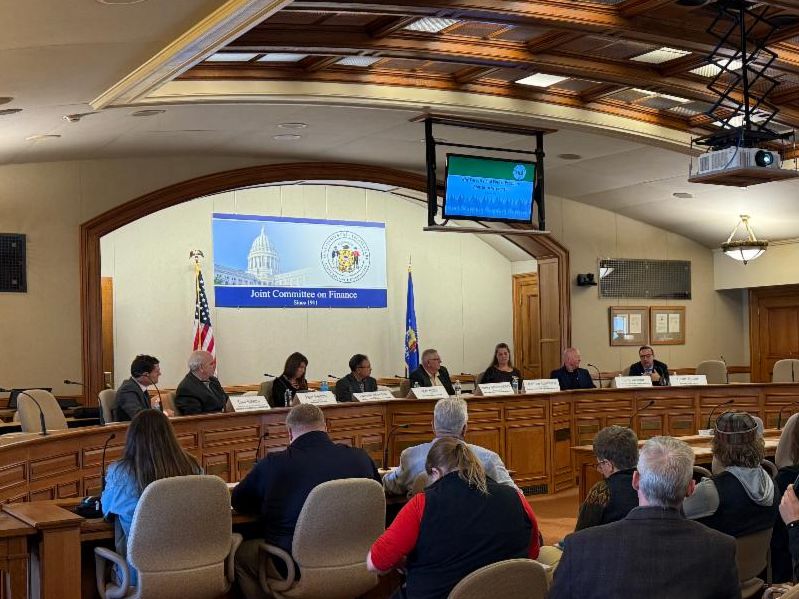
Wisconsin Forest Products Week opened at the Wisconsin State Capitol in Madison, where leaders from government, industry, and forestry joined in a spirited conversation about why forestry and forest-based industries are a vital cornerstone to Wisconsin’s economy, environment, and communities. The two-hour panel explored Wisconsin’s forestry heritage and the partnerships needed to sustain it into the next century.
A Heritage Rooted in Stewardship
For more than 150 years, forestry has shaped Wisconsin’s people, landscapes, and culture. At one point in the state's history, early settlers cleared the great forests for farmland; by 1915, only 500,000 acres of forests remained. The panelists recounted how early 20th century visionaries and leaders championed initiatives that helped the state's forests grow to nearly 17 million acres of forest—a testament to generational commitment to stewardship and renewal.
Those early state and local leaders built in measures for fire control, reforestation, and the creation of the County Forest and School Forest programs that remain community pillars today. Speakers emphasized that forestry in Wisconsin is a story of resilience and balance: harvesting responsibly while ensuring that future generations inherit healthy, thriving forests.
Economic Backbone of Rural Wisconsin
The panel underscored the forest products industry’s central role in Wisconsin’s economy, especially in rural communities. The sector contributes billions of dollars annually through papermaking, logging, transportation, and manufacturing—supporting family-sustaining careers that anchor small-town economies. Even as global markets evolve and mills modernize, Wisconsin remains the nation’s leading paper-producing state. Panelists celebrated that success while calling attention to the need for reinvestment in infrastructure, technology, and skilled workers to keep rural economies strong and competitive.
These skilled workers present an urgent need for the industry, panelists said. Attracting and preparing the next generation of forest professionals is a critical objective; Wisconsin’s workforce is aging, with many seasoned foresters and mill technicians nearing retirement.
Panelists applauded opportunities like UW–Stevens Point College of Natural Resources programs, and technical college training. They also appreciate outreach efforts by Trees for Tomorrow and LEAF: Wisconsin’s K12 Forestry Education Program but the leaders stressed that these must grow in scale and funding to meet tomorrow’s demand. Educating young people early—through school forests, field trips, and internships—was seen as key to inspiring lifelong interest in forest stewardship and related sciences.
Understanding Circular Economies in Forestry
Several speakers voiced concern that the public often misunderstands forestry, equating tree cutting with deforestation rather than sustainable management. Proper forest management is essential for forest health, recreation, and industrial purposes, but many turn to building materials that are plastics or bamboo, when Wisconsin wood is a renewable resource. Paper products, timber, wood flooring, and railroad ties are all part of a sustainable resource loop that has been well managed for generations.
They called for a unified marketing campaign—akin to the “Got Milk?” campaign—to promote wood as renewable, recyclable, and carbon-friendly, in an effort to raise awareness that counters the narrative against cutting trees. In addition to educational opportunities that bring new professionals into the forest products industries, the panelists highlighted opportunities to educate children, residents, and policymakers who live in the southern third of the state, many of whom may not have the opportunity to experience and appreciate forests and their cultural and economic impact for northern Wisconsin neighbors.
Bridging that divide through education, outdoor recreation, and storytelling will be crucial for public support of sound forest policy.
Innovative Approaches to Forest Products and Forestry
New technologies can also help lead the way in public support. Wisconsin’s growing innovative wood-fiber technologies are unlocking products from cross-laminated timber and biodegradable packaging to carbon-capturing building materials and even aerospace composites. Research at the U.S. Forest Products Laboratory, Wisconsin Institute for Sustainable Technology, universities, and private companies are expanding wood’s role in sustainable design and advanced manufacturing. Panelists agreed that these innovations, paired with carbon markets and recreation-based economies, will diversify revenue streams while reinforcing the state’s environmental goals.
Looking Ahead
While Wisconsin’s forestry sector is strong, it faces practical obstacles that limit its growth. Long timelines in permitting, inconsistent truck-weight limits, and declining rail service were cited as pressing competitiveness issues. Panelists appealed for targeted policy reforms to streamline project approvals, restore rail hubs, and ensure forestry funds are reinvested directly in forestry programs.
The conversation ended on a strong note of collaboration and optimism. Panelists praised the new statewide strategic forest-industry plan—a two-year effort led by the Wisconsin Council on Forestry and supported by public and private partners—as a timely opportunity to chart a unified vision. They emphasized that the future depends on cooperation among industry, educators, landowners, and policymakers. By working together and speaking with one voice, Wisconsin can continue to lead nationally in sustainable forest management and forest-based innovation.
The message that resonated throughout the event was simple yet profound: Wisconsin’s forests are the foundation of its economy, environment, and way of life. Sustaining that legacy will require renewed investment in people, innovation, and communication—and an unwavering commitment to collaboration. As the panelists affirmed, the next century of Wisconsin forestry can be even stronger, more sustainable, and more inclusive than the last.
Forest Products Week is being celebrated by many state groups. Wisconsin Institute for Sustainable Technology (WIST) has partnered with Wisconsin Forestry Center (WFC); Learning, Experiences, and Activities in Forestry program (LEAF); and various industrial, governmental, and community organizations to highlight the importance of Forest Products Week 2025. WIST, WFC, and LEAF are part of the College of Natural Resources at the University of Wisconsin-Stevens Point (UWSP).
|