|
DATCP Resources on New World Screwworm
Check out these online resources to help stay aware and ahead of New World Screwworm (NWS).
New World Screwworm (Cochliomyia hominivorax/NWS) is a parasitic fly whose larvae feed on living tissue. After being eradicated from the U.S. in 1966, NWS has re‑emerged in Central America and Mexico. According to the U.S. Department of Agriculture (USDA), NWS has been detected in the U.S. and in animals near the U.S.-Mexico border. USDA is working with affected states to respond with sterile fly releases, surveillance, and movement controls. At this time, NWS has not been detected in Wisconsin.
See Links Below:
| | |
What is the Emerging Tick-Borne Livestock Disease Research Prioritization Act? | |
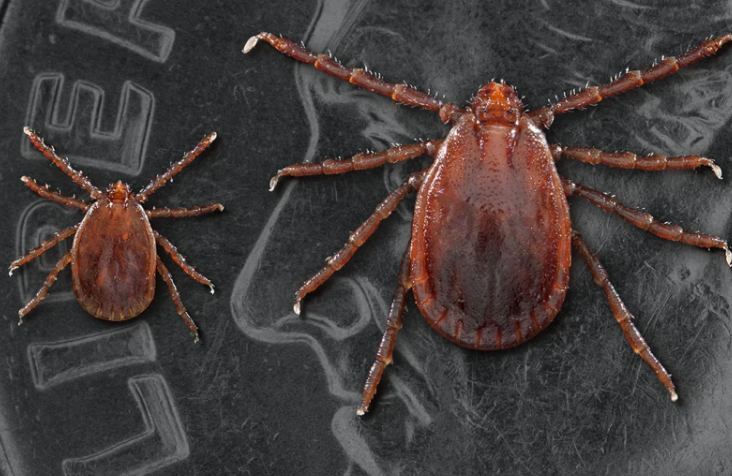
The U.S. Senate has introduced bipartisan legislation to address a growing threat to the American livestock industry: the invasive Asian longhorned tick (ALHT). Led by U.S. Sen. Eric Schmitt, R-Mo., along with Sens. Roger Marshall, R-Kan., and Jim Justice, R-W.Va., the Emerging Tick-Borne Livestock Disease Research Prioritization Act seeks to fast-track scientific solutions for devastating vector-borne diseases.
“Missouri is one of the nation’s leaders in livestock production and our farmers and ranchers work too hard to have their livelihoods threatened by emerging tick-borne diseases,” says Schmitt. “Invasive species like the Asian longhorned tick pose a growing risk to our livestock industry and the families who depend on it. By elevating the need for critical research into tick-borne livestock disease, we’re helping ensure producers have the tools they need to protect their herds, strengthen our food supply, and keep America’s agriculture industry competitive.”
Why the Asian Longhorned Tick Threatens U.S. Cattle
ALHT has spread aggressively throughout Midwest and East Coast pastures. This invasive pest transmits a bloodborne parasite that causes theileriosis, a disease that leads to severe anemia, weakness, reproductive failure, and death in livestock.
Because there are currently no approved vaccines or highly effective treatments for theileriosis in the U.S., a single infected animal can cost livestock producers thousands of dollars.
This threat emerges at a critical time. The national cattle herd size is currently at its lowest level in 75 years, putting unprecedented economic pressure on farmers and ranchers.
| |
Too Many Plants, Not Enough Cattle: Inside the Beef Packing Capacity Squeeze | |
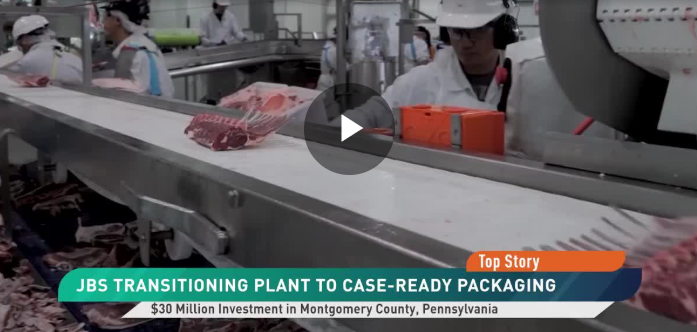
JBS USA’s decision to inject $30 million into its Souderton, Pa., facility — reversing a planned closure to transition the historic site from a slaughterhouse into a case-ready packaging plant — is far more than an isolated corporate pivot. Instead, it exposes a painful industry reality: A severe beef capacity squeeze. Squeezed by a 75-year-low cattle supply on one side and skyrocketing operating costs on the other, packers nationwide are realizing that current slaughter capacity simply no longer fits the math of today’s market.
JBS first announced it would halt harvesting cattle at Souderton in June. This week the company announced it would convert the facility to value-added processing instead — the $30 million investment will save roughly 400 jobs and keep the company’s footprint on the East Coast intact.
“I think when any packer closes a plant, it’s always been the possibility,” says John Nalivka, Sterling Marketing Inc. president. “I think what’s happening with these plants is they look at what they can do to make it not just be a slaughter plant and fight through this capacity issue, but the real drive and the real direction is on value added.”
The Math Behind the Squeeze
Nalivka, who authors the weekly Profit Tracker, says average utilization across all fed cattle plants is currently running around 78%, and while that ticked up to 81% recently, he attributes the bump to lower cattle numbers rather than stronger demand for capacity. Cow slaughter plants are in worse shape.
| |
FDA Issues Emergency Use Authorization for Drug to Treat New World Screwworm in Dogs and Puppies | |
The U.S. Food and Drug Administration today issued an Emergency Use Authorization (EUA) for Simparica TRIO (sarolaner, moxidectin, and pyrantel chewable tablets) for the treatment of New World screwworm (NWS) infestations (myiasis) in dogs and puppies.
Currently, most dogs in the U.S. are at low risk of NWS exposure due to their geographic location. However, dogs that live in, travel to, or return from areas where NWS infestations have been identified by state or federal animal health officials, as well as certain countries south of the U.S. border, should be closely monitored for signs of infestation, such as visible maggots or foul odors in wounds or body openings (eyes, ears, nose, mouth). Seek immediate veterinary care for infested dogs.
For up-to-date U.S. case information, see the U.S. Department of Agriculture’s dashboard of Confirmed Detections of New World Screwworm. At present, NWS has only been detected in specific areas of Texas and New Mexico.
“The FDA continues to authorize products to give veterinarians and pet owners multiple treatment options, in the unlikely event animals under their care become infested with New World screwworm,” said Acting FDA Commissioner Kyle Diamantas, J.D.
| | |
SPECIAL FEATURES, including industry market news and features on WLIC members:
| |
| |
Become a WLIC Individual Member and receive a 10% discount on all eartags purchases through the WLIC Online Store. | | | |
Being a small non-profit, WLIC relies on memberships and sponsorships to further academic programs and events to educate on livestock traceability, identification, and premises ID. We sincerely thank our Industry and Individual partners for their continuous support of WLIC. | | |
Dairy Farmers of Wisconsin (DFW)
| |  |
Professional Dairy Producers of Wisconsin (PDPW)
| | |
Allflex Livestock Intelligence | | | |
Equity Cooperative Livestock Sales Association | | | |
|
AgCountry Farm Credit Services
FarmFirst Dairy Cooperative
Johnsonville Sausage LLC
Nicolet National Bank
Semex USA
Wisconsin Beef Council
| | |
|
Wisconsin Cattlemen's Association
Wisconsin Farm Bureau Federation
Wisconsin Pork Association
Wisconsin Veterinary Medical Association
World Dairy Expo
| | WLIC | Toll-Free: 88Like8-808-1910 | Fax: 608-848-4702 | jlegge@wiid.org | www.wiid.org | | | | |