|
The latest State of the Beef Industry insights reveal a rare paradox for U.S. cattle producers: Historic profitability and strong demand are clashing with persistent drought, labor shortages and rising biosecurity threats. Across interviews with producers, economists and industry stakeholders, a clear theme emerges: The future belongs to those who pair resilient herds and deep customer awareness with robust data and deliberate succession plans.
“What shape herd expansion takes is the biggest factor to watch,” says Josh Maples, Mississippi State University associate professor and assistant Extension director. “Additionally, strong beef demand will be key, and what happens in grain markets will be a major driver. Cattle markets have benefited from ample corn supplies and relatively affordable feed in recent years.”
A Slow, Intentional Rebuild
Patrick Linnell, CattleFax director of market research, describes the beef industry as standing at a transition point in the cattle cycle. After years of liquidation, drought and elevated cow slaughter, he sees room for expansion — but not a rapid surge. He projects a slow rebuild of the national cow herd, with an eye toward roughly 30 million head by 2030, assuming weather and economics cooperate.
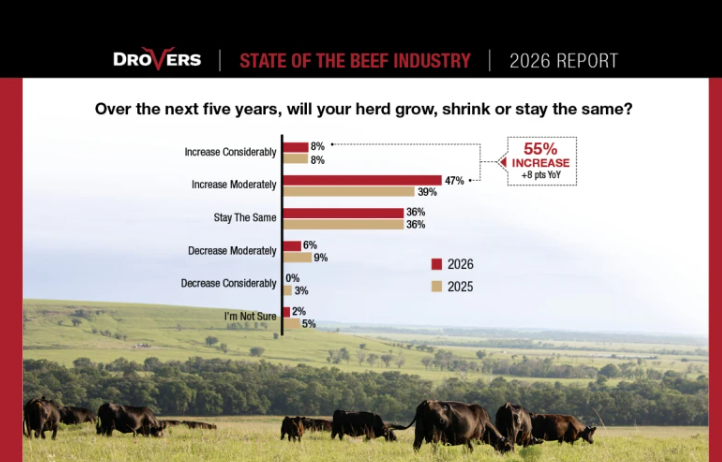
That cautious pace reflects the reality on the ground. In the 2026 survey, 55% of respondents say they plan to increase cow numbers in the next five years, but their optimism is tempered by drought, land costs and lingering memories of past downturns.
|