Weekly eNewsletter

September 28, 2026

Vol. 432

This Week's Top Stories:


Upcoming Events:

Submit your event to WLIC!

Trivia:


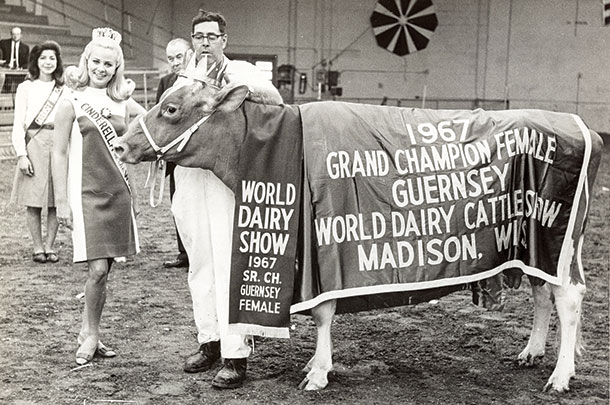
When did the first World Dairy Expo take place?  


First Fall Avian Flu Case A Reminder To Check Biosecurity Procedures

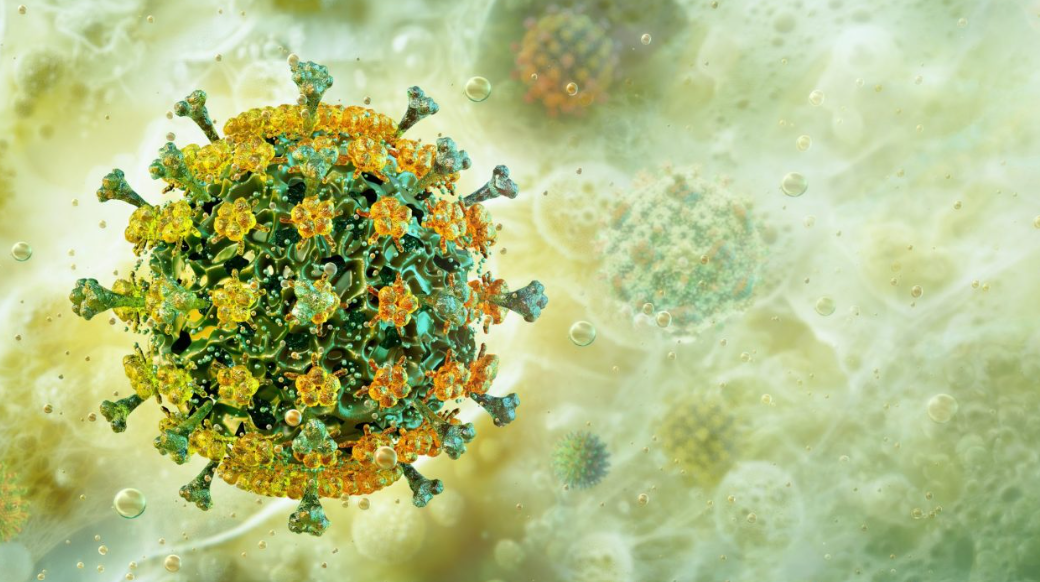
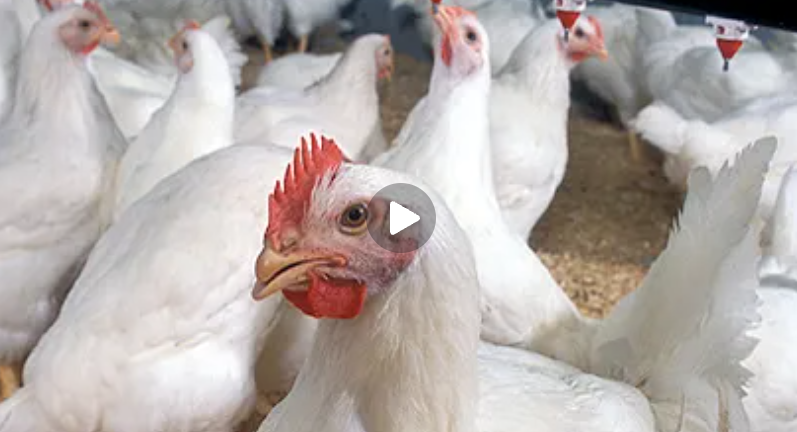
Wisconsin just confirmed its first fall case of highly pathogenic avian influenza (HPAI) at a turkey farm near Rice Lake. With the fall bird migration underway, state officials urge farmers to immediately tighten their biosecurity procedures.


Cool weather and migrating flocks significantly increase the HPAI risk for domestic birds. Dr. Keith Poulsen of the Wisconsin Veterinary Diagnostic Laboratory spoke to the Mid-West Farm Report about the state’s new case.


“Hopefully, with the harvest going on time or maybe even a little bit early when it’s dry, and especially where it’s dry up north, hopefully, those birds will move through and move through quickly. We know that we have multiple different strains that are circulating in our migratory waterfowl, and unfortunately, Wisconsin has seen our first case. It happens to be in an area that’s pretty dense for poultry producers, so we’re working with our poultry clients and the Department of Animal Health to make sure that we have our surveillance and testing for permitted movement, and then working through the depopulation, cleaning and sanitation on the affected premises.”


Poulsen notes a single strain of HPAI frequently infects chickens, turkeys, and even lactating dairy cattle.


“Our highly pathogenic influenza strains cause mortality and morbidity, depending on the species, and the H5N1 has been the predominant strain for at least the past five years. Sometimes we see different H numbers and N numbers, and that’s really for the epidemiologists, but it’s been our H5N1s and further sub-types down the line as influenza viruses change all of the time.”

No-Cost RFID Eartags and RFID Readers Available


If you are a swine producer or work with swine producers, consider sharing this great opportunity to receive no-cost RFID eartags and RFID readers. Click the links below to learn more about each opportunity.


Two counties account for 98% of Wisconsin bird flu losses between since 2024

Because Wisconsin sits along the Mississippi Flyway, one of North America's busiest migration corridors, more than 11 million birds can be passing through the state during the spring and fall migrations, creating ongoing opportunities for avian influenza viruses to infiltrate both commercial and backyard poultry flocks.


The Wisconsin Department of Agriculture, Trade and Consumer Protection [DATCP] announced Sept. 14 that a commercial meat turkey facility in Rice Lake tested positive for highly pathogenic avian influenza, or bird flu. The flock of 79,088 birds has already been depopulated to prevent further spread of the disease.


Although backyard flocks accounted for nearly half of the outbreaks since 2024, they represented less than 0.5% of the total birds lost. A handful of massive commercial poultry outbreaks have driven Wisconsin's bird flu losses above 8 million birds during that time, with Jefferson County emerging as the state's hardest-hit area.


Data from DATCP show 14 bird flu outbreaks affecting approximately 8.1 million birds between Jan. 1, 2024, and Sept. 14, 2026. While outbreaks have been reported in 10 counties during that period, nearly all losses were concentrated in a few large commercial operations.


Jefferson County accounted for the overwhelming majority of affected birds, recording four commercial outbreaks that impacted more than 6.4 million birds. The county's largest outbreak, reported Sept. 24, 2025, affected more than 3 million birds. Additional outbreaks affecting 493,298 birds in 2025 and more than 2.8 million birds in early 2026 pushed Jefferson County's total to nearly 80% of all birds affected statewide during the three-year period.


Walworth County ranks second, with a single outbreak in March 2026 affecting nearly 1.5 million birds. Together, Jefferson and Walworth counties account for roughly 98% of all birds affected in Wisconsin since the beginning of 2024.


Santa Teresa Livestock Port Set to Reopen Sept. 24

The Santa Teresa Livestock Port of Entry is scheduled to reopen Thursday, Sept. 24, following stringent containment protocols against the New World screwworm (NWS).


The reopening restores operations at the southern border’s highest-volume cattle crossing, which historically inspects 43% of all Mexican cattle imported into the U.S. Following more than a year of heightened biosecurity and strict containment of NWS, federal and New Mexico state officials are finalizing on-the-ground infrastructure to ensure cattle flow safely to the U.S.


“Livestock ports of entry on our southern border have played a very historic and critical role in the American cattle trade for more than 120 years,” says U.S. Secretary of Agriculture Brooke Rollins during a press briefing in New Mexico following a roundtable with local livestock producers. “Imports from Mexico make their way to U.S. feedlots. In fact, most of the cattle who cross at this port make their way to Texas feedlots, eventually ending up on dinner tables across America.”


Strict Traceability and EID Infrastructure

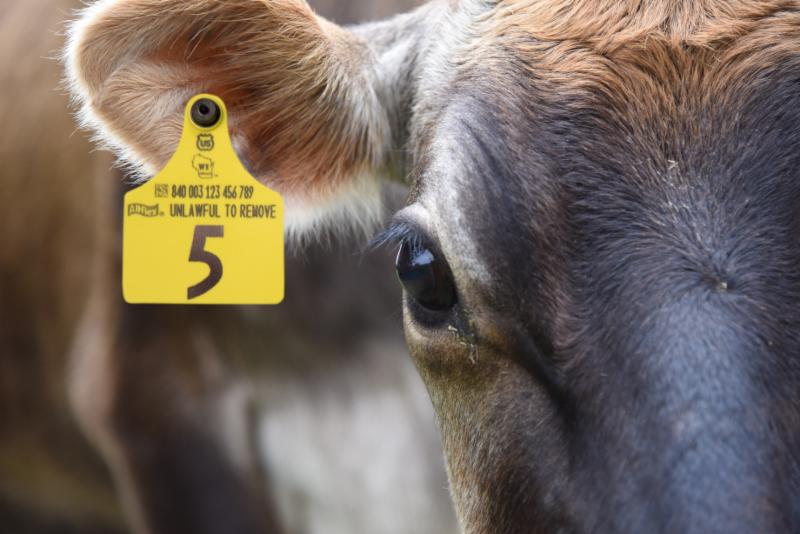
A key focal point ahead of the Sept. 24 reopening is electronic identification (EID) traceability to satisfy the import requirements of receiving states across the country.


“The main thing is we’re trying to make sure that the American side of the port is up to speed on collecting the electronic IDs, so that we can meet the requirements of the receiving states,” explains New Mexico State Veterinarian Dr. Samantha Holeck. “With the acceptance of electronic ID as the official ID, that gives us a huge advantage on traceability of these cattle that we haven’t had in the past. That level of traceability is something that has never really been requested in the past to this degree, and so we’re working pretty intensively to get that infrastructure in place.”


Evaluating the Pathways and Probabilities of U.S. Swine Disease Eradication

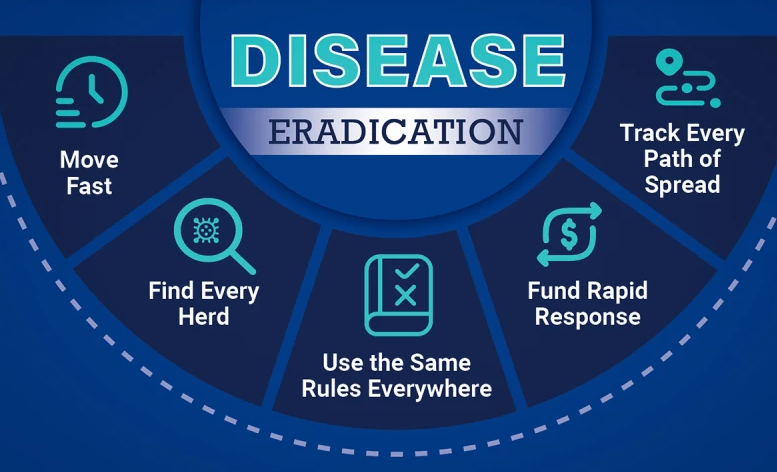
In 1999, veterinarian Dr. Tim Loula reflected on pseudorabies eradication during the Allen D. Leman Swine Conference. He shared five valuable lessons for the next eradication effort.


  1. Move faster once tools are proven effective.
  2. Identify every herd in a geographic area, no exceptions.
  3. Enforce rules consistently across state lines.
  4. Fund emergency indemnity so producers can act fast.
  5. Track every transmission route: pigs, people, wildlife, trucks and rendering.

Loula’s own “wish list” for the next eradication targets named porcine reproductive and respiratory syndrome virus (PRRSv) specifically, shared Dr. Joe Connor at the 2026 Allen D. Leman Swine Conference. Loula called out PRRSv as the most expensive and difficult-to-combat disease to ever hit the U.S. swine industry.


Few would argue that 27 years later.


As state and national health improvement initiatives enter into the early stages of implementation, experts say it’s imperative to define the processes and quantify the probability of success for each of the pathogens under consideration. From Minnesota Pork’s Mycoplasma hyopneumoniae (Mhp) elimination initiative to the National Swine Health Strategy’s goal to eliminate PRRS and porcine epidemic diarrhea virus (PEDV), what does the industry need to do to move these initiatives forward?


SPECIAL FEATURES, including from many WLIC members:

 
ENJOY 10% OFF!
 

Become a WLIC Individual Member and receive a 10% discount on all eartags purchases through the WLIC Online Store.

Trivia:


When did the first World Dairy Expo take place?   


Answer:


In 1966. Since its beginning, World Dairy Expo has grown to become one of the best trade shows and dairy cattle expositions around the globe.


Have you renewed your livestock premises yet?

Renew today here!


Total premises

renewed in 2026:

2,701


WLIC online offers tags, readers, taggers, and more to help you fit your production needs.


Upcoming Events:

September 29-October 3 -

World Dairy Expo


October 10-11 - Badger Poultry Breeders Club Show


December 4-7 - Wisconsin Farm Bureau Annual Meeting and YFA Conference


WLIC Members
Being a small non-profit, WLIC relies on memberships and sponsorships to further academic programs and events to educate on livestock traceability, identification, and premises ID. We sincerely thank our Industry and Individual partners for their continuous support of WLIC.
Gold
 
Dairy Farmers of Wisconsin (DFW)

Professional Dairy Producers of Wisconsin (PDPW)

 
Silver & Bronze
 
 
Allflex Livestock Intelligence
Compeer Financial


Equity Cooperative Livestock Sales Association


Corporate Plus
 

AgCountry Farm Credit Services

FarmFirst Dairy Cooperative

Johnsonville Sausage LLC

Nicolet National Bank

Semex USA

Wisconsin Beef Council


Wisconsin Cattlemen's Association

Wisconsin Farm Bureau Federation

Wisconsin Pork Association

Wisconsin Veterinary Medical Association

World Dairy Expo

Like Wisconsin Livestock Identification Consortium on Facebook!

WLIC | Toll-Free: 88Like8-808-1910 | Fax: 608-848-4702 | jlegge@wiid.org | www.wiid.org

Facebook  Linkedin