|
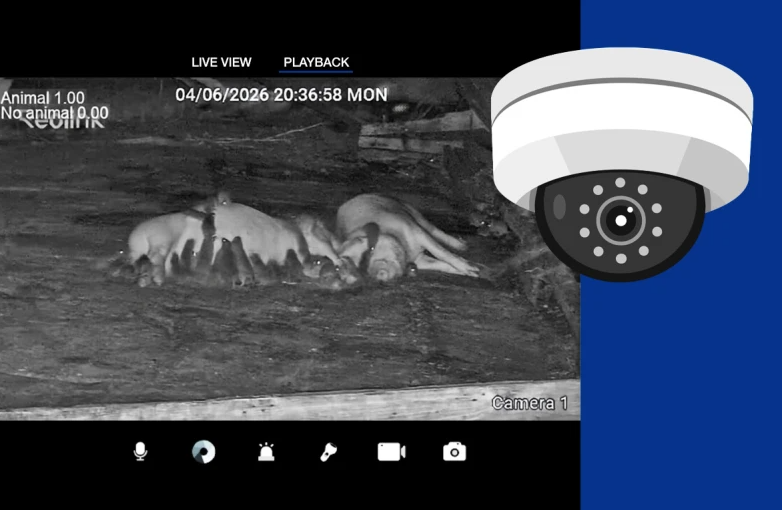
When the lights go out and the pigs go to sleep, the nightlife cranks up at a different part of the farm – the deadboxes and composting structures. A farm can enforce detailed biosecurity protocols, but at 2 a.m., none of those rules apply to a hungry coyote.
“We can make management strategies and tell our workers to shower in and shower out, but we can’t tell a coyote to do that,” says Gabriella Cattani, a student at the University of Minnesota College of Veterinary Medicine. “He’s just going to do what he’s going to do.”
Across the livestock industry, mortality is routinely handled using compost piles, rendering areas or deadboxes. While essential, these sites act as an open buffet for scavenging wildlife. At a time when wild-wild-animal-borne threats like African swine fever (ASF) and Highly Pathogenic Avian Influenza (HPAI) loom, unmonitored visitors represent a biosecurity blind spot.
“Wildlife have a strong potential to transport pathogens mechanically—whether that’s carrying disease from the carcass to the wild, or from the wild back to the carcass,” Cattani explains.
|