WMU Newsletter

3.15.2024

"변화와 창조의 주역, WMU"


President's Message


The First and Second Commandments 


"And God spoke all these words, saying,

‘I am the Lord your God, who brought you out of the land of Egypt, out of the house of slavery.

You shall have no other gods before me.’" (Exodus 20:1-3)


After many trials and difficulties, the Israelites finally reached Mount Sinai. Sinai was the first and decisive destination of the Exodus, the place where God revealed Himself and established His covenant with Israel. Israel’s special status among the nations did not come from any particular merit of their own but solely from God’s love in choosing them. God first delivered Israel (Exodus 14), protected them, and walked with them (Exodus 16–17). Now, the question is that the entire life of this people must become a response to God’s actions (the covenant).


Be a Holy People

Not all Israelites were required to become priests, but in terms of obeying God’s commandments, a life wholly devoted to serving God—like that of a priest—should be the ideal for Israel. In this way, Israel becomes a holy people, a people belonging to the Holy God. While all nations belong to God, Israel was chosen to be His most precious possession.


Consecrate the People

Moses was to consecrate the people according to God’s command, preparing them to encounter the Holy God. This included tasks such as washing clothes and practicing ritual purity. According to ancient understanding, God’s holiness filled the mountain, accessible only to those specially called. Moses had to remind the people firmly of what to observe. Even Moses may have thought this was extreme, but God insisted it was necessary. God’s holiness must not be treated lightly. Declaring a mountain holy meant that the mountain was sacred and that no one should enter it carelessly.


The First Commandment

The Ten Commandments do not aim to arbitrarily restrict human freedom; rather, the “free life” is a precious gift from God meant to be protected. God first highlighted the foundational event in Israel’s history. Obeying the commandments is a way of acknowledging and giving thanks for God’s acts on behalf of His people and sharing that gratitude with others.


The temptation for Israel to worship other gods arose primarily when basic sustenance and livelihood were at stake. Surrounding nations relied on their natural gods to provide these necessities (fertility rituals). In what appeared to be a godless world, Martin Luther emphasized that the First Commandment is always practical: “Whatever you expect your life from, whatever you trust in, that is your God and your idol.” Some catechisms phrase it: “Whatever you set your heart upon and rely on, that is your God.”


The Second Commandment

The second commandment prohibits representing Israel’s God in any form. The prohibition of idolatry is already included in the first commandment. This next step expands the scope, forbidding all forms of representation, because once a form is made, it can easily be misused and lead to idol worship. God commands that no image of Him or anything else be made. As is further explained in the instruction not to bow down to them, even the images of other gods are problematic. The prohibition of God’s image is to prevent people from manipulating God—or appearing to manipulate Him—through such representations.


Reflection

Now, God becomes the God of Israel, and Israel becomes His people. At Mount Sinai, the covenant with the chosen people is established, and the broad outlines of the Old Testament law are given to sustain it. These laws define the basic principles of life for Israel as a chosen people, not as a conditional bargain, but as unilateral and absolute commands established by God according to His holy will. Though these laws were given as part of the Sinai covenant, they are not merely mutual contractual terms; rather, they serve as God’s standards for the proper life of His chosen people.


These commandments represent the minimum conditions God set to ensure that Israel maintains the covenant, continues to enjoy the blessings of being His chosen people, and, more broadly, that His people live true lives marked by love and peace with God and one another, flourishing in joy and prosperity.


Religious and Culture #2 [Prof. Jae Hyun Chung]

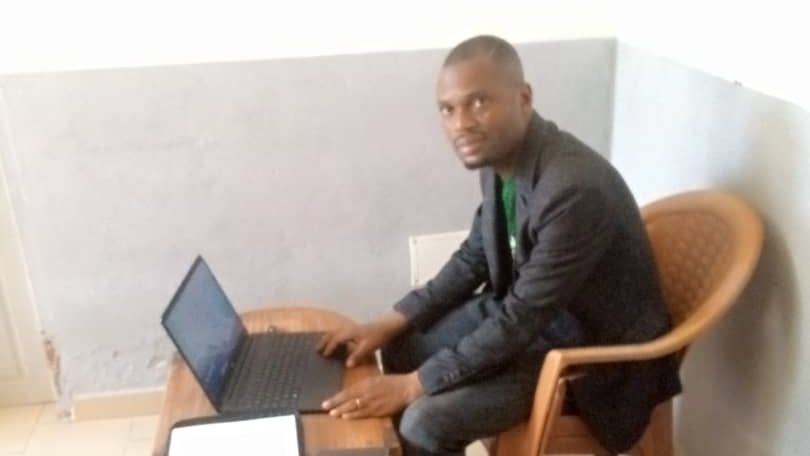
A Ministry photo and a thank you letter from Anselme

A Letter from a Cote d Ivoire Student


ANSELME KADJA


Dear WMU Family,


I don't have the words to express all my gratitude to you because I am filled with emotions as I write this note. May God simply bless these generous hands who gave me this computer and better thanks to that I was able to benefit from and participate in this biblical training. Before these studies, I was considering planting a church in another city in my country. And it must be said that the course on mission and evangelization boosted my faith. Thanks to all this training received from all these emeritus professors, I have currently started the mission in this locality. I feel more confident, ready to brave the trials and I believe that all this acquired knowledge will make me the leader that the Lord desires thanks to the HOLY SPIRIT.


Sincerely,

ANSELME KADJA, Ivory Coast


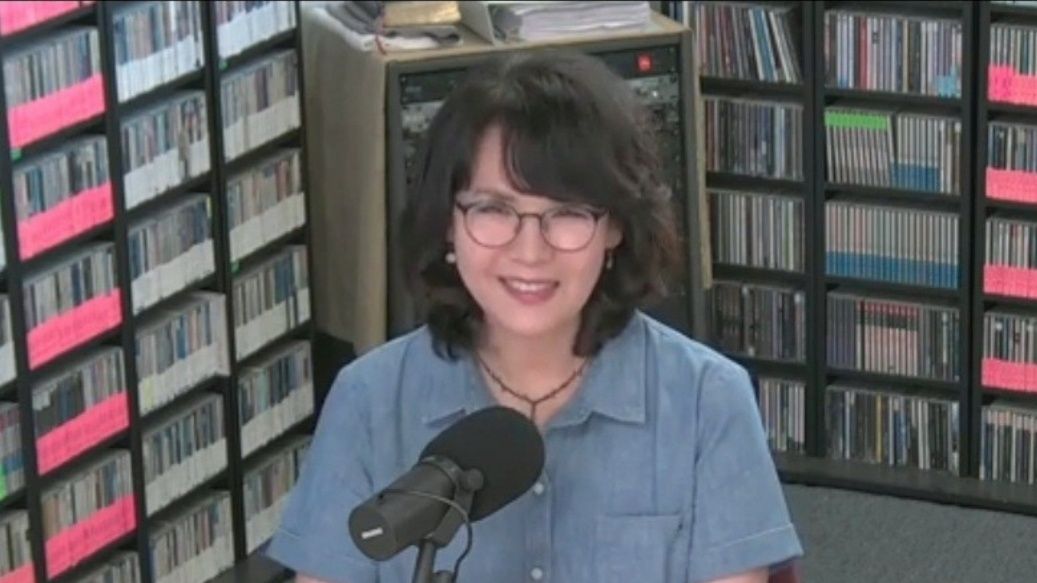
I am currently serving as a host at GBC America Gospel Broadcasting. I also work as a YouTuber, creating 2-minute videos and shorts using Proverbs 365 Devotional (authors: Beom-eui Lee, Dae-kyung Lee, Hyo-jae Lee).


My family includes two sons, two daughters-in-law, and a granddaughter, all living in Orange County. I live with my husband, who retired last year, in the La Cañada area.


Before marriage, I worked as a flight attendant at Korean Air for four years and six months. While raising my two sons, I realized that the education system they would face was not much different from what I experienced—intense private academies, high tuition costs, the pressure of entrance exams, and rote memorization. I did not want to raise my sons under such conditions, and I reflected on why God allowed me to travel and experience many countries. I wanted my sons to study in the United States, a country with freedom of expression, rational thinking, and abundant educational and personal opportunities. I prayed for immigration, and God opened the way, allowing us to arrive in the U.S. on July 4, 2001.


In Korea, I was introduced to Deacons Seungmok Park and Youngja Park, who were affectionately called the “Angels of LA.” Following them, I began attending Youngnak Church of Los Angeles. At that time, the newly appointed Pastor Hyungchun Lim was initiating many ministries under the motto “Feed My sheep,” emphasizing the church’s purpose in the community. Since my eldest son was in 10th grade, I served as the head of the PTA for the education department, which began a weekly ministry feeding children. Occasionally, I would listen to and counsel female students. Seeing how much they appreciated it, I felt that studying counseling could help me give even better guidance.


By chance, I met the wife of a junior pastor, who had studied theology, and she encouraged me to study as well. Four years later, I moved from the education department to the pastoral care ministry. Together with my husband, who was then a cell group leader, we revitalized our district, creating one of the first model districts split into multiple cells, and my husband even shared a testimony during the main service. At that time, I was already known for evangelism and was sometimes called an evangelist. Around the same time, a pastor living in the apartment next door also encouraged me to study theology—this was the second confirmation.


I have always believed that any important decision required three confirmations. So I prayed a seemingly impossible prayer, telling God that if such a thing could happen—that a lay deacon like me at a large church of over 8,000 members could study theology—it would have to be 100% His will. A few months later, I received the third confirmation from Pastor Lim. Hallelujah!


However, while waiting for opportunities that had not yet opened, a new environment arose when my niece in Korea, going through adolescence, came to the U.S. to study. With my husband’s final approval, I remembered World Mission University from my daily Life of the Spirit devotionals, and I reached out to the school, starting one or two online courses. I initially thought I would only complete the undergraduate program, but in 2013 I continued on to the M.Div. in Pastoral Studies, which led me into church ministry. After two years of ministry, I was encouraged to serve as the student body president of the seminary, so I resigned from church ministry to focus entirely on seminary work.


One year later, after completing my term, I briefly worked at Christian Herald, then returned to church ministry. Later, God led me to GBC America Gospel Broadcasting, where I began working as an announcer in August 2021, even though I had no prior connections there. God knew my gift for networking and placed me in a position to host live interview broadcasts, inviting precious guests to share their lives and ministries. During the pandemic, alumni pastors, evangelists, missionaries, and deacons from our school also appeared on the broadcasts, allowing us to showcase active ministry even in challenging times.


Regarding the new ministry I mentioned earlier, I use Proverbs 365 Devotional (authors: Beom-eui Lee, Dae-kyung Lee, Hyo-jae Lee), published in 2009, to create 2-minute YouTube videos. My mission is to share “life wisdom learned through the Word,” transcending time and space, to inspire life changes guided by Scripture. I diligently produce these videos every day, knowing that God will use His Word to transform lives and the world. Just as I was called to participate in this precious ministry, I hope to continue serving in ways that bring joy to God.