|
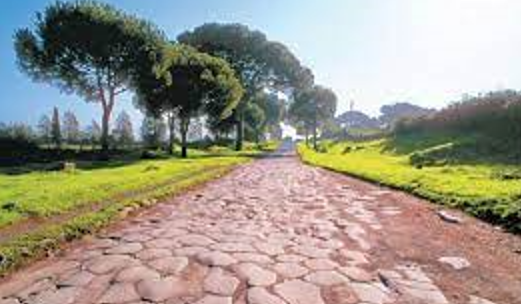
The Journey Toward Rome
“Now after these events Paul resolved in the Spirit to pass through Macedonia and Achaia and go to Jerusalem, saying,
‘After I have been there, I must also see Rome.’” (Acts 19:21)
Just as Acts 1:8 foreshadows the entire book of Acts, Acts 19:21 foreshadows the contents of the major final section of Acts, 19:21–28:31. Paul is preparing to go to Rome by way of Jerusalem. He chooses a route that passes through Macedonia and Achaia in Europe, which had been his previous mission fields. Up to this point, he has walked a path of suffering and death. This had already been foreseen when God chose him. It can be assumed that Paul sent ahead two people he could trust, Timothy and Erastus, in order to prepare for the collection for Jerusalem.
The Riot of Demetrius
The temple of Diana in Ephesus was one of the Seven Wonders of the ancient world. Diana is the Latin word corresponding to the Greek Artemis. However, in Ephesus this name did not refer to the virgin goddess of the hunt but to the “Great Mother,” the goddess of fertility of Asia Minor. The image used in their worship stood in the innermost part of the temple. Therefore, reproducing this idol, which anyone could easily possess, was a major business. This recalls the false prophet Bar-Jesus in the region of Paphos mentioned in Acts 13:6–8, who linked his religion with his occupation. In verse 27, the author of Acts subtly mocks idols and the religious businessmen associated with them through ironic expression.
Religious Businessmen and the Manipulation of Crowd Psychology
When Paul warned about the seriousness of the idol-making business in this region and taught how futile it was, the so-called members of the idol trade gathered a crowd in order to silence Paul and protect their business. Repeating Paul’s words exactly—“gods made with hands are not gods”—they incited the people by claiming that he was shaking the very foundation of their long-held faith in Artemis.
When all the crowd agreed with them and the whole city was filled with confusion, they seized Paul’s companions Gaius and Aristarchus and dragged them into the theater of Ephesus. This theater could hold more than 24,000 spectators. It was a place where people came to express their complaints loudly when they were dissatisfied.
A Helping Hand in the Midst of Danger
Paul wanted to enter the theater to defend the two men, but through the restraint of the disciples and some friendly officials, he was spared from entering the scene of the riot and suffering harm. The people who had gathered at the riot did not know exactly why they had come together. Seeing them say different things reveals the harm caused by mob mentality. In the midst of this, the Jews, fearing that they too might be attacked along with the Christians since they also opposed idol-making, put forward a man named Alexander. But the uproar was so great that he could not make any defense, and instead the riot became even more intense simply because the Jews were present. The crowd kept shouting, “Great is Artemis of the Ephesians!” for about two hours, without knowing the reason.
The city clerk of Ephesus quieted and persuaded the crowd. The city clerk was the title of a high-ranking official of the city. He warned that Roman authority over public order could be invoked against their riotous behavior (v. 40). Ephesus bore the honorable title of “temple guardian of the goddess Artemis.” The clerk warned the crowd not to act unreasonably, since legal procedures were available to pursue proper lawsuits. The judgment the clerk rendered concerning the Christians and the entire situation was regarded as significant in Luke’s eyes, because it repelled the wrongful practice of repeatedly charging Christians with rioting in order to harm them.
Points for Reflection
The scope of mission that God commanded in Acts 1:8 continues to expand day by day. Paul also keeps moving forward through many twists and turns. At times the situation may seem so desperate that nothing can be seen ahead, while at other times God’s helping hand becomes visibly evident. Now he is moving forward toward Rome. Even while foreseeing that difficulties will certainly come, he advances boldly. With what kind of heart are we participating in the missionary journey of the apostle Paul and his companions?
President Sung Jin Lim
|