|
President's Message
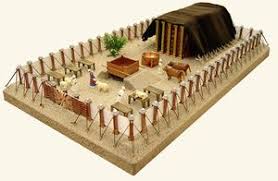
The Construction of the Tabernacle
“Thus all the work of the tabernacle of the tent of meeting was finished. And the Israelites did according to all that the LORD had commanded Moses; so they did. Moses examined all the work, and behold, they had done it as the LORD had commanded; so Moses blessed them.”
(Exodus 39:42–43)
The construction of the tabernacle at Mount Sinai by the people of Israel can, broadly speaking, be divided into the following four stages.
The first stage was when Moses went up Mount Sinai to receive the first two stone tablets of the Ten Commandments and, during forty days of fasting and prayer, received from God the command to build the tabernacle, centered on revelations concerning the design of each piece of furniture and the regulations for the priestly garments (chapters 25–34).
The second stage was when Moses conveyed the LORD’s command to build the tabernacle to the people, and the Israelites prepared for its construction by offering the materials required for the work (35:1–36:7).
The third stage followed, in which the prepared materials were used under the leadership of Bezalel and Oholiab, whom God Himself appointed, and many willing volunteers came forward to complete the various furnishings of the tabernacle (36:8–39:43).
Finally, the fourth stage was the initial assembly and dedication of the tabernacle, a portable, prefabricated sanctuary. With the completion of all the work, a dedication ceremony was held, and the process concluded with divine approval as the pillar of cloud—the sign of the manifestation of God’s glory—descended upon it (chapter 40).
The Sabbath Regulation
As God gave instructions for the construction of the tabernacle, He placed special emphasis on the observance of the Sabbath. Even while working in the sanctuary for the building of God’s holy dwelling, the Sabbath regulation was to be applied without exception. In many places in Scripture, the Sabbath is understood as the unbreakable sign of the covenant between God and His people, and through this sign the whole world would recognize the special status of Israel. Now, just before the full-scale preparation for building the tabernacle was completed and the work began, the command to rest on the Sabbath was firmly reiterated.
The Sabbath and God’s Tabernacle
Only a people who have been made “holy” by God through honoring the holy day can build a dwelling place for the holy God. Yet keeping the Sabbath holy goes beyond being merely a condition; true rest opens space for the holy God to dwell among His people, just as God intends to dwell in the “dwelling place” that is now to be established. Thus, after the destruction of the temple, the Sabbath became for Israel an expression revealing that God continues to dwell among His people as the One who grants salvation.
Voluntary Offerings for the Construction of the Tabernacle
It is emphasized that the people willingly and voluntarily brought offerings for the construction of the tabernacle.
Built According to God’s Instructions
Moses constructed the tabernacle exactly as he had been instructed by God. The detailed descriptions recorded in Scripture make it clear that what Moses carried out was precisely what he had received from God. Though the account may appear lengthy, its vivid and direct narration makes it evident, almost as if seen with one’s own eyes, that the tabernacle being built corresponded in every detail to what God had commanded.
The Manifestation of God’s Presence
When the tabernacle was covered by the cloud and the glory of the LORD filled it, God revealed that He now dwelt in His own dwelling place. The radiance of His glory filled the tabernacle and prevented anyone from entering it. This may be understood as a one-time event that truly sanctified the sanctuary built by human hands in accordance with God’s instructions (as was the case at the dedication of Solomon’s temple). In the form of the pillar of cloud and the pillar of fire, God had led His people to Mount Sinai, the mountain of revelation.
Reflection
The presence of God’s glory in the tabernacle placed at the very center of the Israelite camp signifies that God Himself dwelt directly among His people and ruled over them. Furthermore, it means that within human history—fallen because of sin—God’s direct reign for salvation and restoration had begun. The tabernacle is the place where God dwells. What matters is not the materials used or the manner in which it was built, but whether God dwells there or not. In this sense, the Apostle Paul said that each believer in whom the Spirit of God dwells is God’s temple (1 Corinthians 3:16–17). If we live holy lives worthy of being God’s tabernacle according to His will, God will honor us more than anyone else in this world and will clearly reveal His living presence through our lives. The church of the New Testament no longer requires a sanctuary like the tabernacle, but must itself become “a dwelling place of God in the Spirit.”
|