|
President's Message
Why Paul Desired to Go to Rome
"So I am eager to preach the gospel to you also who are in Rome."
(Romans 1:15)
Paul planned his visit to Rome with two primary purposes in mind. First, he sought to cultivate a deeper spiritual fellowship with the Roman church through the mutual sharing and reception of spiritual gifts (Romans 1:11-12). Here, Paul emphasizes not a one-sided act of giving, but a reciprocal, communal spiritual bond where both parties encourage and edify one another through faith. This demonstrates that his ministry is not founded on a purely provider role but on the humility of partnership. The phrase “sharing spiritual gifts” reflects Paul’s expectation of receiving spiritual benefit from the Roman believers, underscoring his humility and respect for the faith community.
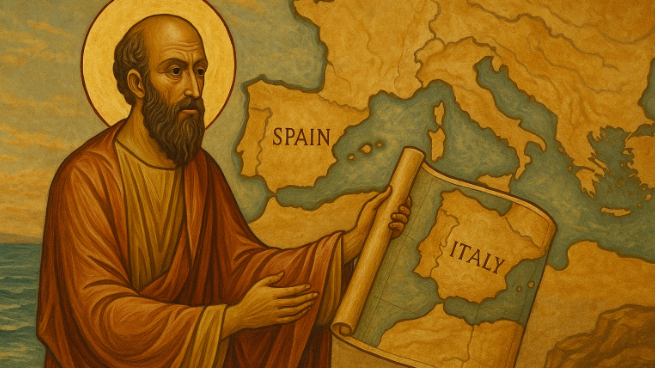
Second, Paul aimed to fulfill his apostolic mission of proclaiming the gospel (Romans 1:13; see also 15:14-24). He did not view Rome merely as a stop on his journey but as a strategic base for the westward expansion of the gospel. His ultimate goal was to reach Hispania (modern-day Spain) with the gospel, extending it to the farthest western regions of the Mediterranean world. Thus, his visit to Rome was connected not simply to evangelism, but to the broader mission of spreading the gospel geographically.
Furthermore, Paul was confident that the gospel breaks down not only religious barriers between Jews and Gentiles, but also cultural barriers between Greco-Roman civilization and those considered “barbarians” (Romans 1:14). The term “barbarians” generally referred to the uneducated or uncultured, highlighting Paul’s belief that the gospel transcends social and cultural boundaries. In this regard, Rome represented a fitting starting point for the gospel and aligned with Paul’s apostolic vision of extending the message from the center of the world to its peripheries.
Although Paul had never been to Rome in person, the gospel had already reached the city. Scripture does not specify who brought it or by what route, but this is not essential. Jews were dispersed throughout the Roman Empire, including a substantial community in Rome, many of whom traveled to Jerusalem for major festivals and likely returned home having encountered new teachings. This context suggests that the Roman church had formed independently of Paul’s direct ministry, yet it also explains his motivation to unite with them in the gospel.
The gospel transcends race, culture, education, and religious background. Paul’s declaration, “to Greeks and barbarians, to the wise and the foolish, I am a debtor” (Romans 1:14), affirms that all are recipients of the gospel. Even today, the church must recognize the cultural and social barriers that persist before the gospel and courageously work to dismantle them.
|