|
President's Message
Breach of the Covenant and Punishment
“The LORD plagued the people, because they made the calf, the one that Aaron made” (Exodus 32:35)
It has already been pointed out that the chosen relationship between God and Israel, though repeatedly doubted and betrayed by Israel whenever opportunities arose, was maintained fundamentally by God’s love and grace, who never abandons the people once chosen, even while He sometimes disciplined them severely.
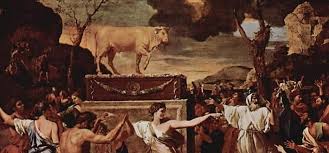
Exodus chapters 32–34, in a total of nine paragraphs, consecutively report the account of one of the most decisive acts of national betrayal and rebellion against God: the so-called “Golden Calf idolatry at Mount Sinai.” This incident took place when the entire nation of Israel, living in a parched wilderness without even water or food, was wholly dependent on God’s provision and grace, and while Moses was receiving the revelation regarding the Tabernacle on Mount Sinai as the symbolic dwelling of God’s presence, which heightened both the shock and the abomination of the event.
The Golden Calf Image
Before Moses even brought the words of God inscribed on the tablets to the people, the Israelites turned away from the invisible God and made an idol. God had demonstrated His faithfulness throughout the entire Exodus, yet the people did not trust His promises. They desired a more concrete guarantee. Consequently, Israel fell into the temptation derived from neighboring nations, worshiping visible natural forces as gods. Aaron explained the calf as a form of God, but the people, by treating the LORD as comparable to the calf, turned the image into an idol. Their feast for the god degenerated into sexual orgies, revealing the true nature of the deity they served.
Moses’ Prayer for the People
As in the case of Noah’s flood, God here demonstrates that He does not observe human behavior without feeling. When creatures fail to respond properly to God’s love, it causes God anguish, and He even regrets creating them, experiencing all forms of disillusionment—but ultimately, God’s love prevails. Moses clings to God, reminding Him of His promises and acts of salvation, bringing God to confront Himself. Moses intercedes, pleading that God’s love extend grace once again to the people.
Moses Breaks the Covenant Tablets
Now Moses reveals a different aspect before the people: in holy anger, he breaks the covenant tablets and destroys the idols. Grinding the golden calf into powder and making the people drink it recalls the ritual recorded in Numbers 5, which was used to determine a woman’s fidelity. To avoid responsibility, Aaron excuses himself, claiming he was merely an instrument carrying out the will of the people. He speaks as if the emergence of the idol were a miracle, saying he only assisted so that the miracle could appear (“this calf has appeared”). God’s anger is manifested in allowing Moses to break the covenant tablets.
The People Are Punished
Because Aaron failed in his role, Moses appeals to the remaining faithful to serve as an example. The Levites, showing no mercy even to their own kin, carry out a bloody execution, demonstrating that they are fit for the priestly office. This narrative seems to reflect later confrontations surrounding the priesthood.
Moses Prays for the People
Moses does not mention how the penalty for the people’s sin should be paid; he prays only for their cleansing and forgiveness. The expression “how sad it is” reflects Moses’ sorrow and intercession before God on behalf of the people, who have sinned and seek mercy. Since the Israelites sinned by worshiping the golden calf, Moses’ prayer—“Forgive them for My name’s sake”—shows his sacrificial willingness to give even his own life for the salvation of the people. This also prefigures Christ’s self-sacrificial act on the cross for the redemption of humanity.
God’s acceptance of Moses’ intercession is shown when He instructs Moses to descend immediately and lead the Israelites. While their sins are forgiven, God does not personally go with them as before but appoints an angel to accompany them instead.
Reflection
God forgave the collective sin of Israel but punished those who made and actively worshiped the golden calf. That is, sin can be forgiven upon repentance, but the punishment is not entirely removed. This retribution is partially realized on earth but not fully completed. Nevertheless, the text uses a perfect tense for “upakādi” to indicate the completeness of God’s action, pointing toward eschatological judgment and reward. Complete judgment and recompense will be given after Christ’s return. Knowing this, one cannot help but recognize God’s strict justice and strive to live a holy life.
|