WMU Newsletter

7.11.2025

"WMU, a Leader of Change and Innovation"


President's Message


Justification by Faith Alone (Romans 3:21–31)


"For all have sinned and fall short of the glory of God, and all are justified freely by his grace through the redemption that came by Christ Jesus." (3:23–24)


Paul continues the affirmative declaration he began in Romans 1:16–17. There, he spoke of “the righteousness of God” (which Luther translated as “the righteousness that is recognized before God”) as being revealed in the present proclamation of the gospel. Here, Paul emphasizes that God’s righteousness has been fundamentally manifested once and for all in the event of Christ, accomplished without the cooperation of the law and nullifying its condemning power. The Hebrew Scriptures—the Law and the Prophets—clearly point to this coming act of salvation by God.


Paul develops his doctrine of justification: the “righteousness of God” (that is, the aspect of God’s righteousness that accomplishes salvation) applies to all who entrust their lives entirely to God’s faithfulness and goodness through faith in Jesus Christ. This righteousness is revealed in Jesus’ life and death. God’s care and salvation apply impartially to all believers, just as all are revealed as sinners without distinction. Verse 23 states, “All have sinned and fall short of the glory of God.” Paul draws on the Jewish notion that humanity, before the Fall, shared in God’s glory.


The consequence of sin is the loss of fellowship with God. To be justified (verse 24) means not only being absolved from guilt but also being received back into restored relationship with God. This occurs solely by grace, freely, as a gift—through God’s saving action accomplished in the life and death of Jesus. Verses 25–26 further elaborate on this act. Paul likely draws on a Jewish-Christian confession regarding the significance of Jesus’ crucifixion. The repeated statements in the latter half of verse 25 and the first half of verse 26 (“to demonstrate his righteousness… at this time to demonstrate his righteousness…”) reflect a dual emphasis: Jesus’ death serves as the atoning sacrifice ordained by God for human sin (the Greek term for “atonement” also refers to the mercy seat over the Ark of the Covenant; cf. Ex. 16:14–16; Luther translated this as “the throne of grace”).


Through the shedding of Jesus’ blood, God forgives human sins and redeems the lost life of humanity (cf. Mark 8:37), thereby demonstrating his righteousness. This righteousness is not punitive—requiring punishment to prove itself—but salvific, manifesting God’s faithfulness. By forgiving human fault and canceling its consequences, God liberates humanity from the prison of death and leads them into the reality of divine forgiveness. Paul reiterates this point in the latter half of verse 26.


God demonstrates that he is just and true by justifying those who entrust themselves completely to him in faith, receiving them into restored fellowship.


Paul concludes succinctly: verse 27 highlights human existence before God, whose sole foundation is faith. Verses 28–29 show the scope of God’s act: it applies equally to Jews and Gentiles alike. Verse 31 serves as a bridge to chapter 4. The proclamation that one is justified by faith alone is not contrary to the Law, but, as verse 21 states, it establishes the Law and fulfills God’s will.


Hello, my name is Ji Hyun Lee, and I am currently enrolled in the Master of Pastoral Studies program.


I grew and was nurtured in the Word for 20 years at Muljulgi Church in Gangseo-gu, Seoul. In the year the church celebrated its 20th anniversary, I was appointed as an evangelist and began my pastoral ministry. Muljulgi Church is a community of people who live out the Word in their daily lives and proclaim it, enabling the flow of God’s Word and grace in their own hearts to resonate in the hearts of those who hear it. Our church carries out a mission of compiling our pastor’s sermons—whether from expository series or sermon collections—into books, which are then distributed free of charge to communities locally and globally.


Although I am still learning and growing, since March of last year, I have been teaching an expository series on 1 Kings once or twice a month whenever the opportunity arises. I hope, one day, to compile the messages I preach into evangelistic booklets for wider distribution. Our church is small, with fewer than 100 regular attendees, but through online ministry and printed materials, our sermons reach people around the world. This has inspired us to study and proclaim the Word so that we may have a positive impact even on those we cannot see.


My family consists of my husband, my son in 10th grade, and my daughter in 6th grade—we affectionately call ourselves the “Kirin Family” (after Kichan and Chaerin). When I first began ministry, my husband welcomed it, saying, “The time has finally come,” and has been very supportive. Initially, it was an adjustment for the children, suddenly having their mother step into a pastoral role, but now they have adapted well, showing maturity by caring for the younger children at church. I often remind myself, “I just need to do my part well,” and take each day one step at a time.


As a pastor, my life is not fundamentally different from when I was a layperson, except for the added responsibility of caring for souls. I still feel a deep sense of regret for not being more faithful before God and for not doing more in my ministry. I strive to live each day as one who stands humbly before God, filling my life with His Word so that I am not spiritually thirsty and so that those who receive the Word I share may be abundantly nourished. I pray to be well-prepared in this way. Through my studies at WMU, I hope to grow in areas where I am lacking and to serve as a pastor recognized and affirmed by both God and people.


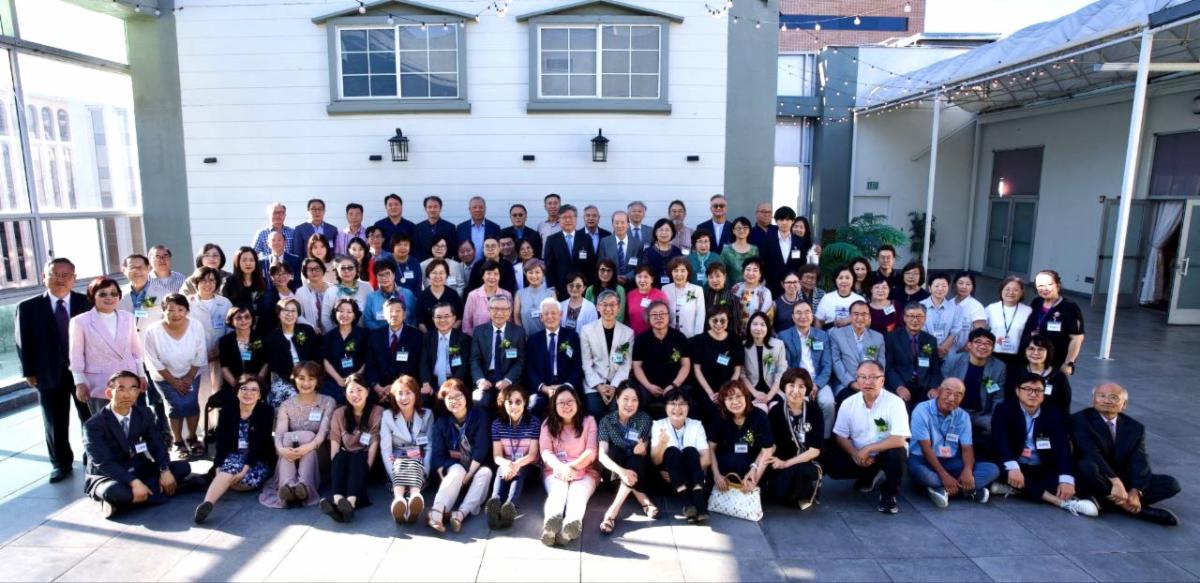
The World Mission University Alumni Association held a meaningful gathering on June 29, 2025, to welcome new alumni and facilitate with current and former faculty. With over 100 attendees, the event provided a valuable opportunity to strengthen the bonds of our faith community and to reflect together on WMU’s missionary calling.


During the event, stories from alumni serving in diverse fields were shared, leaving a profound impact. Testimonies from those faithfully serving God in ministry, missions, counseling, music, coaching, social work, worship, nursing, special ministries, and senior ministry offered new alumni both encouragement and deep inspiration to follow God’s calling in their own lives.


The Alumni Association plans to continue building a “missionary network across generations,” implementing programs to support new alumni in settling in, growing in their vocations, and fostering strong connections among all alumni.


2025 Commencement Highlight