|
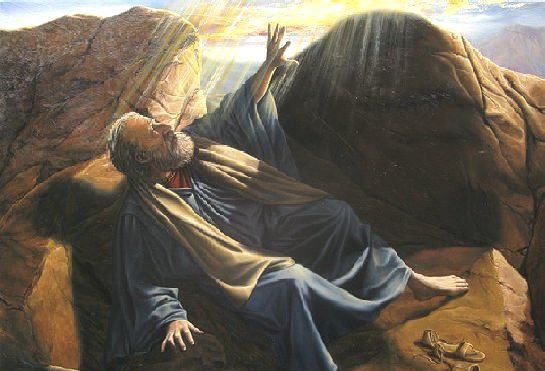
The Calling of Moses
“Now therefore, I will send you to Pharaoh, so that you may bring My people, the sons of Israel, out of Egypt.”
(Exodus 3:10)
God called Moses—who had now reached the age of eighty and had become physically weak, and who, after forty years of life in exile, was socially marginalized—living as a humble shepherd in Midian, a remote border region of the international world at that time. God called him as a great servant to carry out the mighty work of liberating His chosen people Israel, establishing a chosen nation, and conquering Canaan. God forcefully entrusted Moses with this calling. Truly, God always works decisively when granting His salvation or calling to each individual life.
At Mount Horeb
While tending the flock of Jethro, Moses arrived at Mount Horeb without any particular intention. “Horeb” is the same mountain as Sinai, presumed to be Jebel Musa, known as “the Mountain of Moses,” located at the southern end of the Sinai Peninsula. It is called “the mountain of God” because this is the place where God appeared and, through Moses, gave the Law to the people of Israel (chapter 20). God usually appears in majesty that causes people to tremble in fear, but this time He did not. Therefore, someone first had to make Moses aware that God was near. God revealed Himself through His messenger.
God Who Came to Help Israel
God informed Moses that He is the God of the ancestors, the God who has come to help His people. God leaves His heavenly dwelling to personally lead His people out of Egypt and to be near them. Although Moses does not see God, hearing only His voice, he covers his face out of reverence and fear. This shows that God sent Moses before Pharaoh, the king of Egypt, with a special mission. At that time, Egypt was the most powerful nation in the ancient Near East, and the command to go to Pharaoh and lead Israel out of the land of Egypt was, for Moses, a matter that risked his life.
Moses’ Reluctance and God’s Assurance
When God called Moses as the one who would save the people of Israel, Moses humbly confessed the inadequacy of his own ability. Many prophets showed such humility when they were called by God. God gave him the assurance, “I will certainly be with you,” and also, “You shall worship God at this mountain with this people,” and Moses had to be satisfied with this promise.
Assurance by God’s Name
In a world that believed in many gods, God needed to reveal Himself by declaring His name. A name is more than a simple mark of distinction; it reveals the essence of the one who bears it. The name of the God of Israel (still often called “Jehovah”) is likely closer in original pronunciation to “Yahweh.” Its meaning can be understood as “He will be,” or more fully, “He will always be there (for you).” God revealed Himself for the first time through this name. In the name “Yahweh” is expressed the confession of faith that Israel exists solely because of the God who led them out of Egypt, and also the assurance that just as God acted in this saving work, He will “always be there” for His people in the future as well.
Reflection
God gives believers a special mission and sometimes requires them to go to places where their lives may be threatened. Even so, we must not be afraid, but trust in God, obey Him, and boldly go to the place to which we are sent (Deut. 13:4; Heb. 5:9). God introduced Himself as “the God of your ancestors,” emphasizing His deep covenant relationship with them from the past, and showing that He will be the God of His people eternally, not only in the past but also in the future. We must not make the mistake of thinking of God as one who existed only in the past. God works in the same way today as in biblical times, and He is the eternal One who will dwell with us even in the future when we become citizens of heaven.
|