WMU Newsletter

4.12.2024

"WMU, a Leader of Change and Innovation"


President's Message


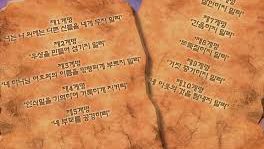
The 3rd and 4th Commandments 


"You shall not take the name of the LORD your God in vain, for the LORD will not hold him guiltless who takes His name in vain. Remember the Sabbath day, to keep it holy." (Exodus 20:7-8)


Before the fall of humanity in the Garden of Eden, even though humans were in a relatively equal relationship with God, all biblical covenants—except the Edenic prohibition of the tree of knowledge of good and evil—were not established between equals. Rather, they were grace covenants unilaterally given by God to sinful humanity. These grace covenants were fundamentally agreements between parties of different status, often resembling the suzerainty treaties common in the ancient Near East between a central emperor and regional rulers. The Sinai covenant is no exception. Thus, the Sinai covenant laid out the basic principles of life for Israel as God’s chosen people, as a condition for the unilateral grace by which God chose Israel.


The 3rd Commandment

People call upon God’s name (YHWH) in prayer, in legal testimony, or in everyday speech. Using God’s name arrogantly, falsely, or deceitfully constitutes taking God’s name in vain. In Western Christianity, this commandment is often understood primarily as prohibiting frivolous or blasphemous speech using God’s name. God clearly declares that those who misuse His name or invoke it for deception and lies will be judged. Misusing God’s name is a grievous offense because it disrespects His authority and dishonors His glory—the greatest sin humanity can commit against the Creator.


The 4th Commandment

The Sabbath inherently conveys the meaning of rest. Observing the Sabbath is a recognition of God as Creator and a celebration of His saving power. In Deuteronomy 5:15, the Sabbath is emphasized as a holy day belonging to God. By resting on this day, humans honor the Creator.


Does this mean all human activity must cease on the Sabbath? Not necessarily. Jesus, the Son of God and co-giver of the Sabbath command, healed the sick, saved lives (Matt 8:14; John 5:5-18), and even allowed His disciples to pluck and eat grain (Matt 12:1-8) on the Sabbath. Therefore, the prohibition concerns occupational labor, selfish pursuits, or worldly pleasures undertaken for personal gain. In contrast, good works, devout practices to deepen one’s relationship with God, and activities that preserve life and nourish the soul are ways of participating in God’s rest, and thus fully observe the Sabbath in a positive sense.


Reflection

Exodus explains the origin of the Sabbath in connection with God’s creation, while Deuteronomy links Sabbath observance to the commemoration of Israel’s salvation from Egypt. The difference in explanation between Exodus and Deuteronomy does not indicate a contradiction between the two books. Rather, it highlights that, primarily, the Sabbath is related to the creation of the heavens and the earth, and furthermore, it is connected to the Exodus event, deepening the meaning of the Sabbath.


This interpretation harmonizes with the overall message of Scripture. Observing the Sabbath on earth ultimately points to the eternal rest that believers will enjoy after the Lord’s return. At that time, as Exodus teaches, we will rest with God after completing all earthly labor, and, as Deuteronomy emphasizes, our salvation will be fully realized.


Religious and Culture #4 [Prof. Jae Hyun Chung]

A photo and a thank you letter from Agnemel

A Letter from a Cote d’lvoire Student


Akpa AGNEMEL


Dear WMU Family,


Je voudrais par ce message remercier tous ceux qui de près ou de loin, par leur soutien financier et prières, m’ont offert l’opportunité de prendre par a cette étude de théologie.

L’enseignement était de qualité tout au long de l’année scolaire avec des enseignants qui ont beaucoup de connaissance de la Bible.

Cette étude a répondu a beaucoup de questions que je me posais sur certains passages et évènements de la Bible et m’a permise aussi d’acquérir de nouvelles connaissances assez profondes.

J’ai particulièrement aimé les modules sur le « Old Testament Survey » et le « New Testament Survey ». Ces deux modules m’ont permis de comprendre comment la Bible entière a été écrite et les livres qui la composent. Sans toutefois oublier toutes les autres matières comme la « Sociologie » et la « Communication » etc.

En somme tous les sujets étaient de qualité de très instructifs. Je sors de ce cours avec beaucoup de nouvelles notions apprises que je compte utiliser dans ma vie chrétienne en premier, et dans mon ministère. 

Je compte aussi revisiter mes notes et relire ou le matériel des cours pour me ressourcer et me rappeler des notions apprises.

Donc encore une merci aux Sponsors, au Missionnaire Jang, et ultimement au Seigneur Jésus-Christ qui a permis tout cela. Que Le Seigneur vous bénisse tous et vous comble au centuple et qu’Il vous donne encore les moyens de continuer cette bonne œuvre qu’Il a commencée en vous! Philippiens 1 :6.


Sincèrement,


Le frère Agnemel


Hello,

I have been serving in Indigenous missions on Vancouver Island, Canada, for 20 years, and my husband and I have three sons and one daughter. Before coming to Canada, I served for about 18 years in Korea as a missionary and worship dance leader with ANM (All Nations Worship & Praise) from its early days.


Over the years, we have ministered in protective communities, including worship services, Indigenous theological training, youth and children’s ministry, and relief work. Last year, we planted a church in downtown Comox with Indigenous students who recently graduated from seminary.


The Indigenous communities we serve have a beautiful communal culture. However, Canadian Indigenous communities commonly face challenges such as alcohol and drug addiction, family breakdown, and high suicide rates, which are the result of abuse and policies during European colonization. Among these, the most negatively impactful was the Residential School System, which forcibly removed children from their parents at age four and placed them in boarding schools as part of assimilation policies. The inability to form normal attachment relationships with parents has profoundly affected the emotional and psychological development of these children and continues to impact their lives.


Additionally, Indigenous languages and cultures were prohibited in schools, and students suffered various forms of physical, corporal, and sexual abuse. This oppressive system was in place for six to seven generations, destroying the God-given parent-child relationship and family structure, and its effects continue in Indigenous communities today.


Sadly, these residential schools were operated by Catholic and Protestant Christian organizations, and the forced conversions and abuses were often carried out by priests or Christian teachers. As a result, Indigenous communities harbor negative feelings toward Christianity, and many survivors of the residential schools remain closed and even hostile to the gospel.


The Lord has called us to minister with a counter-spiritual approach to bring healing to Indigenous people who experienced a distorted gospel and abuse under colonial and Eurocentric Christian missions. Therefore, our spirit of ministry is grounded in humility and honor toward the Indigenous people.


Ministry video: https://youtu.be/geuPVQABIYQ?si=OTlQOX-ELuNtRr3f