|
President's Message
Bitter Water and Sweet Water
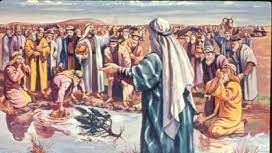
“Moses cried out to the LORD, and the LORD showed him a piece of wood. He threw it into the water, and the water became sweet.” (Exodus 15:25)
By leading Israel into a perilous situation and ultimately destroying the Egyptian army, God completely subdued Pharaoh’s lingering determination to pursue Israel. At the same time, He firmly established Israel’s trust in the LORD, which would be essential for the wilderness journey ahead. Having witnessed an utterly unimaginable miracle, Moses praised God. Israel joyfully exalted the majesty of the LORD, even as they could not deny the deep awe that filled their hearts. As they confessed God’s holiness and greatness, they came to experience the love of the Savior who shows mercy. Miriam also took a tambourine in her hand and, together with the women, praised God who had led them to victory in battle. Their praise of the LORD as mightier than chariots was especially meaningful, for at that time they had no weapon capable of standing against chariots.
Entering the Wilderness of Shur
After crossing the Red Sea—a journey marked by tension, fear, and exultation—the place Israel encountered was the wilderness. The crossing of the Red Sea became a decisive turning point through which Israel completely shook off the remnants of Egypt. The fear of military pursuit was gone, and with it any lingering desire to return. Now they marched forward with hope, anticipating the glory awaiting them in the Promised Land of Canaan. Yet the reality before them was the wilderness. The Wilderness of Shur, also called the Wilderness of Etham, stretched widely from the Mediterranean Sea to the Red Sea, making it an unavoidable passage for travel from Egypt to Canaan.
The Bitter Water of Marah
After passing through the Red Sea and offering praise to God led by Moses and Miriam, the people journeyed for three days. The place where Moses sang praise was near a region with water known as “Ain Musa,” meaning “the Spring of Moses.” From there to Marah was about 53 kilometers. Although not an especially great distance, it took three days because a multitude of nearly two million people—including the elderly, women, and children—were traveling together with livestock, provisions, and household goods. After three days of travel through a region scorching by day and cold by night, they were utterly exhausted, and their supply of water had been completely depleted. In their state of collapse, what they encountered was a well of bitter water called Marah.
Before the joy of their praise in response to the miracle of the Red Sea had even faded from their lips, complaints and grumbling burst forth due to physical exhaustion and thirst. In essence, Israel’s complaints against Moses were ultimately complaints against God. When faced with suffering, people naturally cry out for help or erupt in anguish. Moses himself, burdened and distressed, cried out to God. Though there may have been frustration toward the people who had forgotten God’s grace and dissatisfaction with God for allowing such circumstances, Moses cried out in faith, believing that only God could resolve the situation.
God heard Moses’ prayer and once again provided a solution. He instructed Moses to throw a piece of wood into the waters of Marah, and when he did so, the water became fit to drink. The wood itself possessed no inherent power; it was merely an instrument through which God chose to display His power. It was God who performed the miracle (cf. 2 Kings 2:19–22). Through this sign, God revealed Himself as the one and only healer who heals the suffering and pain of Israel.
Reflection
As the events unfold from this point forward, the relationship between God and Israel follows a recurring pattern. Although the Israelites professed to trust in God, they repeatedly complained whenever they became thirsty or hungry. They effectively ignored the fundamental and blessed purpose of the Exodus—to put an end to their life of slavery in a foreign land, to conquer Canaan, the ideal land flowing with milk and honey, and to establish an everlasting nation of God’s chosen people.
Yet God, in order to keep His promise to make Israel His chosen people, patiently endured to the end. He continued to provide them abundantly with everything they needed and faithfully guided them along the way. This pattern is not only the story of Israel throughout its history, but also the basic pattern of all humanity—beginning with Adam—and one that can be found in every believer, including myself.
|