|
President's Message
Covenant Renewal and the People’s Duty
“Observe the Festival of Unleavened Bread… celebrate the Feast of Weeks, the firstfruits of the wheat harvest, and the Feast of Ingathering at the year’s end” (Exodus 34:18, 22)
Although God, in response to Moses’ plea, spared the Israelites from the punishment for their idolatry, He declared that He would carry out His guidance through His angel rather than personally leading them. However, through Moses’ earnest entreaty, God promised to accompany them Himself (Exodus 33:14). By turning His face toward Moses, God assured His love and attention would be directed to Israel.
New Tablets of the Covenant
God commanded the making of new stone tablets and wrote the Law on them, renewing the covenant with the people. Before Moses, God declared in a loud voice, “The Lord, the Lord, the compassionate and gracious God,” proclaiming the meaning of His name. Even after experiencing Israel’s unfaithfulness and instability (Exodus 32), God emphasized His mercy, compassion, and faithfulness, detailing these attributes. This declaration about Himself became a central theme throughout the Old Testament.
The People’s Duty
God addresses all the Israelites collectively as “you” and establishes the covenant with them. He promises to lead them to the Promised Land through mighty and unexpected deeds and, in turn, expects them to follow His commandments. As Israel settles in Canaan, new challenges arise. By adopting the agricultural culture of the land, the Israelites are increasingly tempted to accept the gods they believe ensure the land’s fertility (such as Baal, Asherah, and other local deities). God cares for His people fully and, correspondingly, expects their complete loyalty.
In Exodus 34, unlike the Ten Commandments in chapter 20, God provides regulations focused purely on worship. Here, worship is understood as being enacted concretely within daily life. By observing these regulations, the people acknowledge God as the one who provides all that is necessary for life.
Observance of the Three Festivals
The three festivals required of the Israelites are the Feast of Unleavened Bread (v. 18), the Feast of Firstfruits–Weeks (v. 22), and the Feast of Ingathering (v. 22). Here, the Feast of Unleavened Bread is mentioned instead of the Passover, although it is usually combined with the Passover. By eating bread made only from new grain, Israel worships God as the giver of the new harvest. In the final stage of bread-making, the leaven used (yeast) still contains old grain (unleavened bread). Just as God allowed the Israelites a new beginning through the Exodus, He enables them to start a new life.
The Feast of Firstfruits is also called the Feast of Weeks (a harvest festival). During this festival, the first fruits of the field are offered to God and it is referred to as the Festival of Weeks or Pentecost. The Feast of Ingathering commemorates Israel’s time in the wilderness and is called the Feast of Booths or Tabernacles. According to Israel’s religious calendar, from the 15th day of the seventh month, the people built and lived in temporary booths for seven days to remember their wilderness dwelling. The festival is called the Feast of Ingathering because it was observed at the end of the year when all the harvest was completed and the crops were stored.
During all the festivals, the people were not to appear empty-handed; they were to bring offerings of thanksgiving from the harvest to present to God. While the men went up to Jerusalem, God would protect the land so that neighboring nations could not take it from Israel.
Reflection
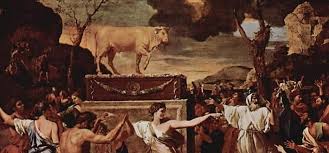
Finally, God renewed the covenant that had been broken due to Israel’s sin, together with Moses representing the people, and inscribed the Ten Commandments on new tablets as a sign. Here, God gave the Law as a condition for the covenant renewal with Israel. This Law not only testifies to God’s unchanging nature and the truth of His word, as it did when first given, but also serves as proof that this covenant renewal restores the covenant broken by Israel’s sin. In particular, the prohibition against idolatry is reiterated and emphasized more than other laws, as a warning to the Israelites who had caused the golden calf incident.
|