|
Washington’s 2025 Legislative Session is well underway, and the WORC Legislative Committee continues to track bills that impact our membership. Please keep an eye on your inboxes for extra e-blasts, flagging potential impacts and when relevant, taking a position and potentially providing testimony. As a reminder, we recommend that WORC members track the following underway:
-
HB 1154: This bill amends chapter 70A.205 RCW and requires Ecology approval of proposed solid waste landfilling permits. This bill also establishes new authority for JHDs and Ecology to enforce compliance with applicable rules and permit conditions for all types of permitted solid waste facilities.
-
Recent Update: A substitute bill was passed and referred to Appropriations. The House Committee on Appropriations will host a public hearing on February 13th.
-
SB 5033: This bill amends the biosolids regulation to require Ecology to start testing biosolids for PFAS (per- and polyfluoroalkyl substances, aka “forever chemicals”). Once the testing has started Ecology will need to analyze the results, report them publicly and come up with a plan.
-
Recent Update: The Senate Committee on Environment, Energy, & Technology hosted a public hearing on February 7th.
-
HB 1150: This bill establishes an extended producer responsibility program for packaging and paper products (Packaging EPR). Producers of consumer-packaged goods fund the collection and processing of their residential recyclable packaging and paper products. This includes compostable products.
-
Recent Update: The House Environment and Energy committee has an executive session on February 11th at 4:00pm.
-
HB 1497: This bill is the next iteration of the organics management law. It touches several parts of the organics management supply chain, including a statewide consumer education and behavior change campaign, bin lid color standardization for residential and commercial solid waste bins, updates to Food Center grant protocols, updates to enforcement authorities and tools specific to the business organics requirements, actions that support the collection of organics in multifamily buildings, and increased focus of food waste in OSPI and WSDA programs.
-
Recent Update: The House Committee on Environment and Energy hosted an Executive Session on February 6th, and a substitute bill passed. The substitute bill does not make substantial changes to the requirements and outcomes as addressed in the original law. It provides clarifying language to direct implementation and adjusts timelines. This bill will now move onto the Rules Committee. Stay tuned for future updates.
| |
|
Compost Procurement Ordinance
Reporting Due March 31st, 2025
| |
|
Enacted into legislation in 2022 through the WA Organics Management Law, each city and county required to have Compost Procurement Ordinance must develop ways to collect and report data to the WA Department of Ecology every March 31st starting in 2025. The first report is due on March 31st, 2025 for compost procurement activities during 2024.
Data required to be reported includes:
- Total tons of organic materials diverted from landfill
- Where organic materials were processed
- Total volume, total cost, and source(s) of compost purchased
For help and directions to access the reporting platform, please visit WA Department of Ecology’s CPO and Report website.
| |
A Reminder: Rulemaking in Process | |
|
We urge our WORC members to track and participate in Ecology’s rulemaking specific to potential amendments of Chapter 173-905 WAC. These amendments will consider standards to address contamination in organic waste and finished products such as compost. Ecology is also considering amendments that cover additional organic materials management practices such as pre-processing and depackaging. This rulemaking could be extremely impactful to our state’s organics management system and will address current inequities and existing challenges. There is an informal comment period running from January 14th - March 31st, with a public meeting on February 6. We expect more discussion on this important issue in the coming weeks and months.
Stay abreast of rulemaking updates by signing up with Ecology’s “Organics Materials Management Rulemaking” listserv. If you already subscribe to any of Ecology’s solid waste management listservs, you may have to select “Subscriber Preferences” to reach the rulemaking option.
|
|
EPA Publishes New Calculator for Methane Emissions Avoided by Diverting Food Waste from Landfills | |
The EPA Avoided Landfilled Food Waste Methane Emissions Calculator is now available. The calculator can be used to estimate the methane emissions avoided per ton of food waste by diverting food waste from landfills over time. The calculator uses the same food waste and landfill characteristics as the 2023 EPA report on methane emissions from landfilled food waste, and also uses factors from EPA’s Waste Reduction Model (WARM). Anyone can download and use the calculator, including state, Tribal and local governments, institutions, NGOs and private companies, and results may be useful for grant applications, program planning, and reporting. |
|
|
New EPA Report:
Environmental Value of Applying Compost
| |
|
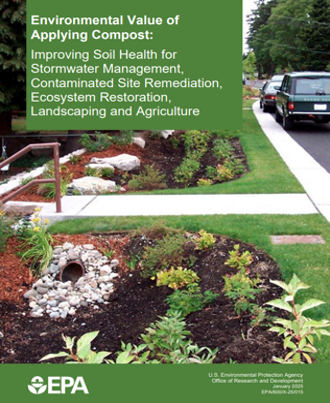
The US EPA released a new report titled The Environmental Value of Applying Compost: Improving Soil Health for Stormwater Management, Contaminated Site Remediation, Ecosystem Restoration, Landscaping and Agriculture. The report synthesizes the published science on the benefits of compost use in various sectors and examines potential benefits of increasing use of compost at scales that better align with the volume of organic materials (e.g. food waste) available for composting. Read the full report and visit the new webpage on the benefits of using compost for additional resources.
| |
COMPOST25: A Recap from WORC Leadership | |
|
Another year, another great COMPOST Conference hosted by the US Composting Council! From January 27th - 31st, hundreds of composters from around the world converged on Phoenix, AZ to enjoy four days of tours, talks, workshops, and equipment demonstrations. Representatives from many of WORCs members were in attendance including Lenz, Cedar Grove, LRI, Brady Trucking, Green Mountain Technologies, Engineered Compost Systems, Seattle Public Utilities, Lautenbach Recycling, Barr-Tech, Natural Selections, Sustainable Generation, and PacWest to name a few.
Jasmine Crowe-Houston, founder and CEO of Goodr, gave an ovation-worthy Keynote addressing the food waste crisis. Her company, Goodr, works to connect surplus edible food directly with people in need of fresh and nutritious meals. Since its founding in 2017, Jasmine and Goodr have delivered more than 35 million meals to people in need, while further connecting inedible surplus food with animal feed and composting operations.
Though individual presenter topics were highly diverse, a few topics of concern rose to the top of the list:
- Pending PFAS lawsuits and research on PFAS health risks
- Preventing and managing inbound contamination
- Integrating compostables into an operation and ensuring degradation
All speaker presentations were recorded and will be available this month through USCC’s Compost University.
| |
New Board Member Spotlight | |
|
Welcome Jasmine Kamdar, Engineer, Green Mountain Technologies
As an engineer for Green Mountain Technologies, I work on designing and implementing composting systems that make composting the best choice for organic waste. I travel to sites to commission and repair systems, gaining insights on ways to make composting simpler and more efficient for people. Outside of work, I enjoy spending my time outdoors- backpacking, mountain biking and rock climbing.
What drew you to the organics industry?
I was drawn to the composting industry when I realized how beautifully simple composting works to solve so many critical issues we are facing today, including nurturing our depleted soils, improving our air quality and reducing greenhouse gases and landfill inputs.
What excites you about joining the WORC Board?
I’m excited to work with people that are all driven to create a world with more composting and less organic waste! There’s not a better way to get moving on these initiatives than to put all the people who care so deeply about this in a room together.
What is your favorite organics fun fact?
Not really a fun fact but I was pretty blown away when I saw my coworker put his lunch in a compost pile at a facility an hour before he wanted to eat it so he could have a warm lunch.
|
|
Thank You to Our Outgoing President | |
|
Kate Kurtz, Organics and Landscape Resource Conservation Program Lead, Seattle Public Utilities
Since 2016, Kate Kurtz has helped to lead and support the Washington Organics Recycling Council through her dedication as a board member and executive officer. For the last two years, Kate served as the WORC Board President, providing her charismatic leadership and notable expertise to the board. Her commitment to the organics recycling industry is exemplary, and her work for SPU and WORC have improved the utilization and public understanding of compost across the state of Washington. As a returning board member, Kate continues to serve the WORC community through her contributions to the Legislative, Webinar, and Soils for Salmon committees. Kate’s advocacy for compost is creating a state that’s cleaner, more sustainable, and more climate resilient one watershed and garden bed at a time. Thanks a million, Kate!
|
|
Congratulations to the 2025 Board Officers | |
|
President
Dave Keeney
King County
Vice President
Kelsey Bailey
King County
Treasurer
Liv Johansson
Engineered Compost Systems
| |
|
Secretary
Caullen Naumoff
WA Department of Ecology
Immediate Past President
Kate Kurtz
Seattle Public Utilities
| | | | |