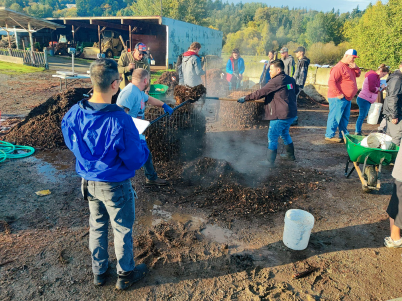
Compost Facility Operator Training | | |
Scholarships
Four scholarships (two partial, two full) are available for individuals who wouldn’t otherwise be able to attend CFOT, including post-graduate students, non-profit composters, and emerging industry professionals. Applications for scholarships are due by June 27th through our online application form.
Scholarship applicants will be notified of their acceptance status by July 10th, and are welcome to enroll in CFOT starting on July 14th if they do not receive a scholarship this year.
| | |
WORC is thrilled to host another series of webinars diverse in speakers and topics in and around the compost industry. Please join us and register for our remaining dates - Individual and whole series options are available.
- Member Pricing: $60 for all six sessions, or $20 each.
- Non-Member Pricing: $160 for all six sessions, or $35 each.
Note: Those who register for the whole series (all six sessions) have access to recordings of previous sessions.
(Past) PFAS Regulatory Updates and EPA’s Draft Risk Assessment
Sally Brown of University of Washington and Jimmy Slaughter of Beveridge & Diamond
May 13th | 12:00PM - 1:00PM
(Past) Centering Diversity in Outreach for Better Solid Waste Outcomes
Reingard Reiger of Tilth Alliance and Liz Erickson of City of Vancouver
June 12th | 12:00PM - 1:00PM
Demystifying and Exploring Opportunities with Offal Composting
Sarah Lemon and Dr. Rachel Wieme
July 16th | 12:00PM - 1:00PM
Research Considering Compost Applications on Western Rangelands
Dr. Eva Stricker of the University of New Mexico
August 13th | 12:00PM - 1:00PM
Biochar & Composting: A Synergistic Pairing
Researchers from WSU
September 2025 (exact day and time coming soon)
20 Years of Composting Food Waste in the PNW, A Case Study
Cedar Grove Composting
October 22nd | 12:00PM - 1:00PM
| | |
Industry professionals from across the region recently gathered in May at the Northern Quest Resort & Casino outside of Spokane, WA for the annual WORC Conference. This year’s joint event was co-hosted with WSRA (Washington State Recycling Association) and NextCycle Washington.
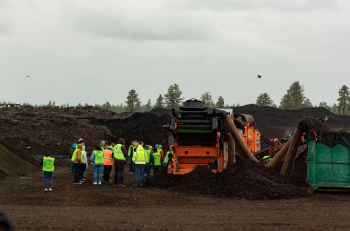
While organics were a central theme, attendees benefited from a broad range of discussions covering various aspects of material recovery and waste prevention. A highlight was the compelling presentation by WORC Member, Pierce Louis of Dirt Hugger, who shed light on the pervasive issue of contamination within organics streams. Louis powerfully demonstrated how even minor amounts of contamination can significantly diminish the value and usability of the final compost product, underscoring the need to keep the material out of the feedstocks. Some attendees also had the opportunity to tour Barr-Tech Compost, thanks to WORC Member, Scott Detharage.
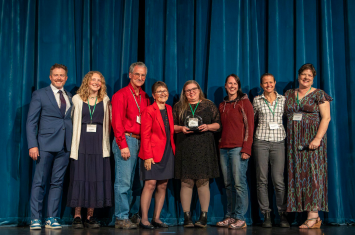
| | Congratulations to WORC Member, Robbette Smith of Winton MFG in Leavenworth, for receiving a Recycler of the Year Award! | | |
Beyond the technical insights, the conference also offered unique cultural perspectives, with engaging presentations from members of the Kalispel Tribe, who graciously hosted the event on their grounds.
Furthermore, a crucial plenary session provided a comprehensive overview of recently enacted state legislation impacting the recycling and organics sectors. This discussion also served as an important reminder of the often-lengthy and complex journey a new law undertakes from conception to implementation.
| | |
The joint conference served as a vital platform for knowledge exchange, connecting professionals dedicated to fostering a more sustainable and circular economy in Washington State.
| | |
The Washington State Department of Ecology is currently undertaking a rulemaking process to update rules for Chapter 173-350 WAC, the state's Solid Waste Handling Standards. Ecology, directed by RCW 70A.205.540, will address current contamination limits, for both incoming feedstocks and finished compost, and determine if and how they should be adjusted. These regulatory updates could influence facility operational costs, jurisdiction investments and market access for various segments of our industry.
The WORC legislative committee has been regularly discussing the rulemaking during meetings. The WORC Legislative Committee requested and held a meeting with Ecology specifically about the rulemaking process on May 15. Additionally, WORC held a roundtable discussion that included some Ecology representatives during the Annual Conference. These are important actions to ensure WORC members understand the ramifications of the regulatory updates and how to help inform regulatory changes.
| | Ecology will be hosting their next public meeting on the topic on Monday, June 30th from 1:00pm - 3:00pm. Draft rule concepts on some sections of the existing standards will be presented. Meeting materials will be made available online prior to the meeting and links to those materials will be distributed during the presentation. | |
| |
Stay Informed and Engaged
For those members who haven't been deeply involved in the rulemaking process yet, now is the time to start paying attention. This update highlights the significant changes under consideration that could affect your operations. Our organization is closely monitoring the process and will continue to provide updates when relevant. We encourage all of our membership to visit the Ecology rulemaking website and leave comments to make your voice heard.
The legislative committee will continue discussing the rulemaking. Any member who would like to stay up-to-date, should join the legislative committee by emailing Mike Oechsner at Mike@aminc.org and letting him know that you’d like to be added to the invite list.
|
| |
Composting Training Program Survey
We Want to Hear from You
| | The Washington Organics Recycling Council (WORC) is developing a composting training program for Washington's regulatory community— and we want your input to help us create a curriculum that meets the needs of WA’s compost facility regulators, inspectors, and technical service providers. | |
| Whether you're new to composting regulations or an experienced professional, please take five minutes to share your training priorities. Please forward this survey to colleagues who regulate, inspect, or provide technical assistance for organics management operations. | | News from Washington State | | |
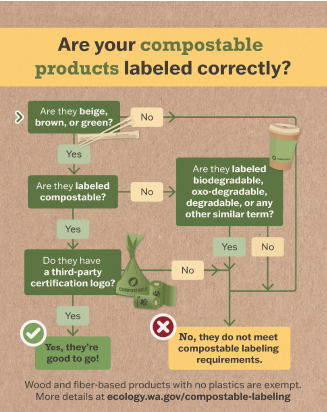
The Washington State of Ecology (ECY) is proud to launch the new outreach toolkit for the state’s compostable products and labeling law (chapter 70A.455 RCW). Material include:
- Flyers for restaurants and food businesses that has details about labeling and the obligations of the business, as well as a decision tree checking if an item has the correct labeling.
- Banners and graphics showing the allowed uses of green, beige, and brown on compostable versus non-compostable items.
-
Social media posts and an outreach toolkit with content on learning the labels and color standards, reporting mislabeled products to ECY, and checking local lists of accepted products before you put compostables in your bin.
| | | |
WSDA Pauses Compost
Reimbursement Program
| | |
The Washington State Department of Agriculture’s (WSDA) Compost Reimbursement Program (CRP) will come to an end June 30th, 2025, although participating farmers already enrolled in the program this year will still be reimbursed. This voluntary, farmer-direct grant program was first funded by the Washington State Legislature in 2023; however, it did not receive funding in the 2025–2027 state operating budget.
The loss of program funding after June 30th means that WSDA will no longer be able to provide grants to farmers to encourage the application of compost on commercial farms and conduct soil testing and data analysis to evaluate the long-term impact of compost application on soil health. Over 200 Washington commercial farms participated during the two years the program operated, receiving access to grant funding and soil health profiles.
Please note that grantees for the current year will still be reimbursed, provided they meet their contract obligations and get their signed invoice submitted to WSDA by June 30th, 2025. Questions about existing CRP contracts should be directed to compost@agr.wa.gov.
WSDA would like to thank everyone who applied for, participated in, or helped spread the word about this program and for their work on improving soil health.
| | A Note to WORC Members: This loss of program funding in the 2025-2027 state operating budget does not mean the Compost Reimbursement Program has to be shut down forever. This program is in statute and can be restored if there are appropriations in the budget for a future biennium. The WORC Legislative Committee aims to work with our policy colleagues to make sure we can advocate for the return of this critical program in upcoming years. If you would like to participate in this effort, please email Legislative Committee Chair, Cullen Naumoff at cule461@ecy.wa.gov. | | New Board Member Spotlight | | |
Welcome Stephanie Kraus
Marketing and Communications Manager at Sustainable Generation
Stephanie Kraus is an accomplished Marketing and Communications Manager with over 18 years of experience in marketing and sales. She has worked with startups and global corporations, excelling in project management, strategy development, and digital marketing.
What drew you to the organics industry?
The organics industry aligns with my passion for creating a sustainable future and driving meaningful environmental impact. I am inspired by the potential to support composting solutions that empower communities to reduce waste and promote soil health.
What excites you about joining the WORC Board?
Joining the WORC Board is an exciting opportunity to collaborate with like-minded professionals passionate about advancing sustainability and organics recycling. I look forward to contributing my marketing expertise to help expand awareness of WORC's fantastic work.
What is your favorite organics fun fact?
My favorite organic fun fact is that composting can improve soil's ability to retain water, reducing the need for irrigation. Composting supports healthier plants by enriching the soil with organic matter and helps conserve a vital resource—water!
| | | | |