December 2024 Markets Newsletter | |
|
In this issue:
- "Happy Holidays! Rewind, Reflect, and Write" by Ashley Harris
- Calls from Editors: Pitches, Submissions, Freelance Gigs
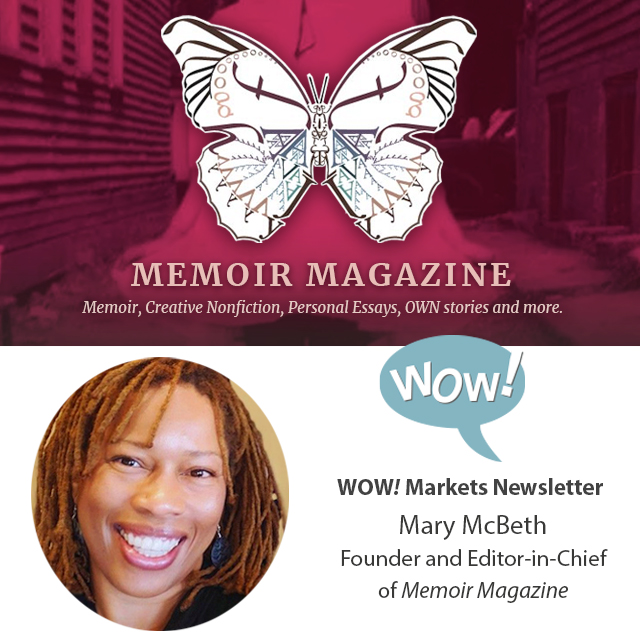
- "On Submission with Mary McBeth, Founder and Editor-in-Chief of Memoir Magazine" interview by Angela Mackintosh
- December Deadlines: Poetry, Fiction, Nonfiction, Screenwriting, Books, Multigenre, Just for Fun
- Craft Corner: "Writing Trauma: How to Write Trauma Without Traumatizing Yourself or Your Reader" by Cindy Skaggs
- Recent posts and features
| |
For busy writers, the holidays present a much-needed opportunity to relax, celebrate faith traditions, and connect with family and friends. This is also a great time to make new memories and recall fond ones. It’s no wonder that the holidays sparkle with inspiration for writers of all genres. | |
|
Get your pen and a mug of hot chocolate ready, because there are multiple markets seeking your holiday stories, whether fiction, nonfiction or poetry. But here’s the challenge. By the time you’re reading this newsletter, the deadlines may have already passed! In fact, to publish holiday content by year’s end, many editors prefer receiving submissions by early fall, and sometimes even by the end of summer. Yikes! Holy icicles!
No need to despair. To my fellow procrastinators and early birds, don’t let this wrinkle keep you from writing! Write something now for future deadlines, and you’ll be ahead of the game. Don’t put off writing in the hopes that you’ll recall all the juicy details later. Jot down your musings in the moment and use the extra time in the coming year to revise and polish your piece word by word.
Take a break from the hustle and bustle of the holidays and treat yourself to a mini writing retreat. The seven questions below should help generate stories from your own memories.
| |
|
1. How do you celebrate your faith? Why is it important to you? As a Christian, I enjoy reading stories in Guideposts and The Christian Century, which both pay for faith-related content year-round. Writers of all faiths with an interest in Jewish traditions might enjoy writing for Tablet, which accepts pitches on the holidays, belief, community and more. Write your own story of faith and research the best markets now, so that you will be prepared when the time comes.
2. What is your earliest holiday memory as a child? Good and bad memories are equally inspirational. I remember so many things, from sharing orange slice candy with my great-grandfather to fighting over the Sears Wish Book with my brother. One of my saddest memories was my first Christmas without my grandmother Wilma, whose tradition of making stollen, or German yeasted fruit bread, made the holidays extra sweet. Local newspapers or regional publications (such as the “I Remember” column in Carolina Country in my state) often pay for memories as well as photographs.
| |
3. Which food do you most remember? Forgive me, but I’m still musing about my answer to the last question, which conveniently brings me to this one. I can’t smell yeast bread without thinking of Wilma’s stollen, which was one of the most delicious pastries in the world. She had her own recipe, which didn’t include the usual almond paste, but she made stollen uniquely her own by studding it with dried cherries and pineapple and frosting it with a creamy milk glaze. If you have an unusual angle on a holiday food, consider pitching a piece to Saveur.
4. Have you had a holiday disaster? Did someone in your family catch Santa Claus in the act? Did your three-layer cranberry torte turn into a tart? Did a good intention crash and burn? One of my biggest holiday fails was taking my three-year-old niece Bailey to the Build-A-Bear store in the mall. What I thought would be a smashing success turned into a catastrophe when the mascot bear sidled up to her and scared her to death. Screaming, poor Bailey insisted on being held while I hastily finished assembling the bear-in-progress with one hand. Only a scoop of her favorite ice cream saved the day, and she reluctantly forgave me. Today, this is a memory we both laugh about, and now that she is an adult this experience would add terrific backstory to a reflective essay about our very special relationship in a publication such as The Rumpus (with reading periods for essays three times each year).
5. What is the funniest thing that ever happened to you during the holidays? Beware, the last prompt can lead to comedy because with a little perspective, a disaster might actually turn out to be funny. “Modern Conveniences,” an essay drawn from a holiday cooking calamity, made it into Pinestraw, a statewide magazine. I drafted and refined this essay in a class led by beloved WOW instructor Chelsey Clammer and successfully pitched it as a holiday piece two years later. Humor is welcomed by nearly all publications, so if something disastrous happens to you over the holidays, laugh about it and look at it as the gift that it is.
6. Have you ever made a sacrifice for the holiday? One of the most famous Christmas stories of all time is O. Henry’s Gift of the Magi. This is the story of a poor married couple who each give up something they love in order to afford a gift for the other one. In the end it is what they already possess—their love—that turns out to be the most valuable gift of all. Think of a time when you sacrificed something to make the holidays better for someone else. How did it go and what did you learn? Now write a holiday-themed short story that you’ll have on hand for submission later.
| |
|
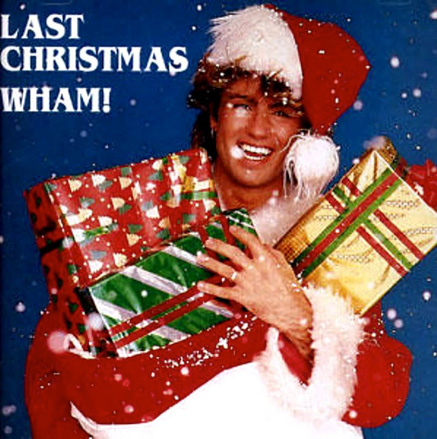
7. What were you doing when you first heard “Last Christmas” by Wham? This proud Gen Xer was 16 when “Last Christmas” debuted, and it remains one of my most favorite holiday tunes. (I must confess I’m listening to it right now!) Hearing this song makes me think of holiday romance and my first crushes. Which holiday song makes you long to canoodle with someone special? Let these thoughts inspire a short fictional romance, maybe with a fireside setting and marshmallow kisses.
Now that you’re in the writing mood, I’ve got a little surprise for you. WOW welcomes holiday stories year-round! Critique editors like me love nothing more than reading a holiday story in the heat of July, by the way. Nonetheless, you can write something now and submit it within the next week or month because we have two deadlines coming up very soon. P.S. Write about the holidays if you like but please note that WOW contests are open-themed and any subject is fair game.
| |
|
And WOW is having a holiday sale! Get 50% off regular contest entries, now through November 30th.
The Fall 2024 Flash Fiction Contest with guest judge Literary Agent Quressa Robinson closes November 30th. Enter your best fiction between 750 words or fewer for a chance to win over $1,350 in cash prizes! Note: the fiction contest may close early if we reach 300 submissions.
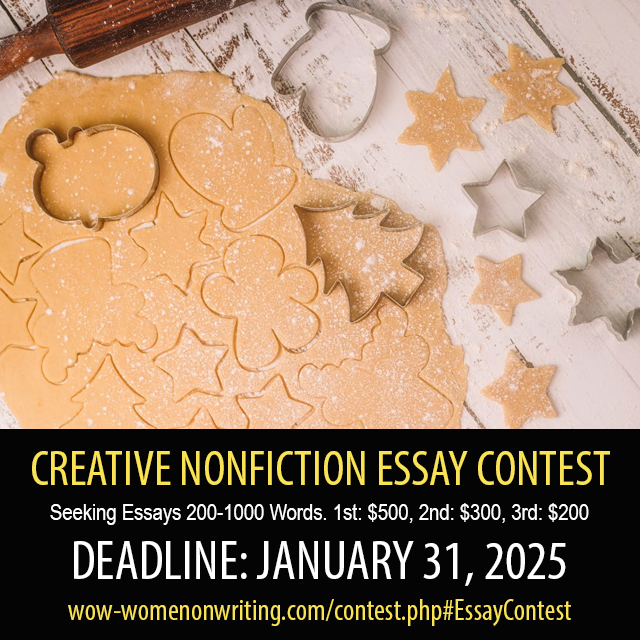
The deadline for the Q2 Creative Nonfiction Essay Contest is January 31, 2025. Take advantage of the 50% off sale, purchase an entry now, and submit your essay of 1,000 words or fewer before the deadline. There are over $1,175 in cash prizes, and first prize wins $500. Both contests allow reprints!
*
| |
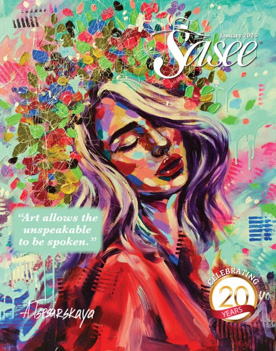
Hot Holiday Tip: Sasee Magazine, which pays $0.10/word, is already calling for holiday-themed works of 600-1,000 words for next year. Sasee seeks unpublished, first-person, non-fiction material that is for or about women, specifically, essays, humor, satire, and personal experience. Submit by September 15, 2025 (for a November issue on the theme of “A Slice of Thanks”) and October 15, 2025 (for a December issue on the theme of “Mirrorball Magic” and holiday traditions). And if you can’t wait that long, consider submitting a love story for their February 2025 “Love and Marriage” issue with a deadline of December 15, 2024. Email all submissions with a 30-word bio to editor Haley Brandon at haley@sasee.com, and please put the month of consideration in the subject line.
There’s nothing “Grinchy” about this month’s newsletter, which bulges like that messy present wrapped by your favorite aunt. Weren’t the messiest wrappers the best gift givers? This edition overflows with tips, inspiration and markets for your writing. WOW's Angela Mackintosh interviews Mary McBeth, founder and editor-in-chief of Memoir Magazine, and Cindy Skaggs offers the craft article, “How to Write Trauma Without Traumatizing Yourself Or Your Reader.” And as always, read on for a “garland” of markets just waiting to read your work.
All of us at WOW encourage you to finish 2024 on a strong note and keep writing until the very end. In the meantime, we wish you and your family a joyous holiday season!
| |
|
Ashley Harris is a regular contributor to WOW and Healthline’s Bezzy MS column, where her essay, “How Studying Fine Art Helps Me Find Strength in My Life with MS” was just published, and her essay, “Year of the Acorns” just appeared in the Fall 2024 online issue of North Carolina Literary Review. She lives in southwestern Randolph County, North Carolina, with her Hamlet-obsessed husband, and is currently being bossed around by her corgi, who will soon make her a grandmother. For more, see ashley-harris.com.
| |
|
Season's greetings!
If you'd like to advertise your workshop, contest, product or service in this section, please email us, for current specials.
If you're an author, check out our book promotion services.
| |
Partner: Reedsy's How to Write a Novel | |
|
Your story matters. Join Tom Bromley for a writing master class and finish your first draft in 101 days. The course is designed for writers of all levels, backgrounds, and genres.
- 20hrs+ high-quality video master classes
- 12-month access to Reedy's forum
- Weekly webinars with coaches & authors
- Accountability and critique as you write
- Support that empowers you to finish writing your first draft in just 3 months
Next Class Starts January 6th!
For WOW Subscribers:
Get 10% Off ($125 off) with the code WOW2024.
Valid through November 2024.
Course Details
| |
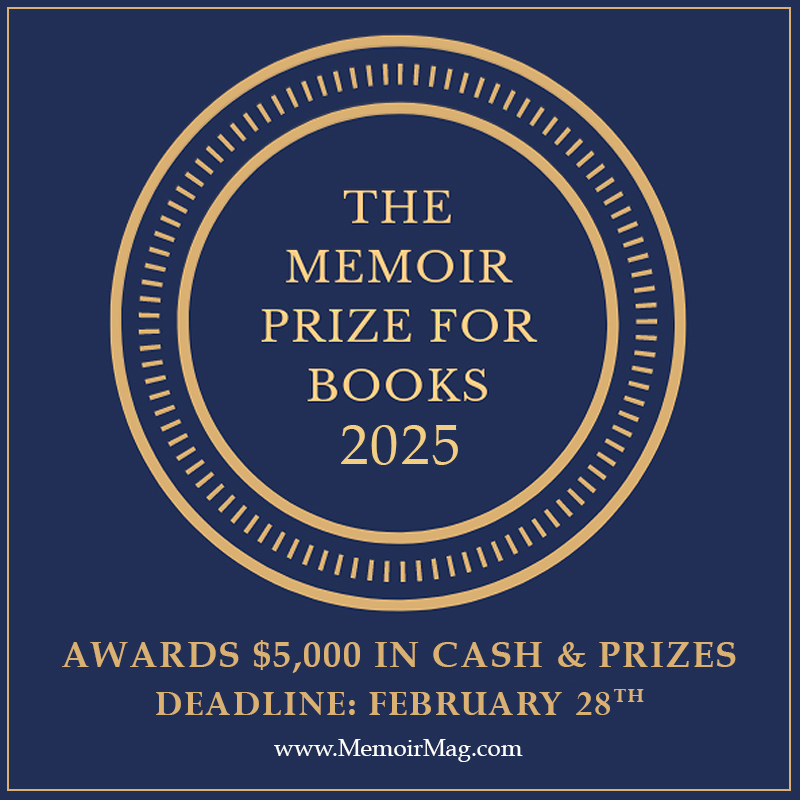
Partner: 2025 Memoir Prize for Books | |
|
Now open for submissions!
Now in its 5th year, the Annual Memoir Prize awards Memoir and Creative Nonfiction book-length works of exceptional merit in the categories of traditional, self-published, and previously unpublished prose.
Prizes: $5,000
You may submit a full-length book of memoir or creative nonfiction, a collection of essays, or a graphic narrative as a single entry. There are no restrictions on subject matter, page count, age of the author, type of publisher, year of publication, or quantity of authors.
Deadline: February 28, 2025
www.MemoirMag.com
| |
|
The Magazine Antiques - Poetry
themagazineantiques.com
The Magazine Antiques is America's premier publication on antiques and visual arts. Editor and poet Eve Grubin is accepting poetry submissions for a creative new feature which pairs a poem with a crossword puzzle on the same theme. The poem must consider antiques, art, or collecting and, ideally, reflect subject knowledge. Pay: $50 per poem. Send 1-3 unpublished poems, 30-50 lines each. Send submissions in a single document with your name as the title to Eve at evegrubinantiques@gmail.com, with a brief cover letter.
HuffPost Personal – Holiday Essays
huffpost.com/section/huffpost-personal
Editor Noah Michelson is taking pitches for personal essays related to the holidays and other topics. Stories about: grieving at the holidays, parenting at the holidays, relationships and sex at the holidays, seeing (or refusing to see) family that voted differently than you, creating new holiday traditions, and other topics. He needs to see a draft to know if it’s a fit. Essays should be 1,000 – 2,000 words and contain some kind of perspective/takeaway for the reader at the end. Pay: $150 - $200 per essay. Pitches to Noah.Michelson@HuffPost.com.
Food and Wine - Travel
foodandwine.com
Editor Stacey Leasca is seeking pitches on a rolling basis for Food and Wine’s “Travel Journal,” focusing on US destinations and “Where to Go Next” features for 2025. She’s looking for 400 words-ish pieces for diaries and 1,000 words for where to go. Pay: $1 per word. Pitches to stacey@staceyleasca.com.
Sit Write Here – Fiction Editors
aprildavila.com/editors
April Davila is looking for editors to join the Sit Write Here team! Monthly work includes meeting with 3-6 clients, reading submissions of up to 13,000 words, and writing an editorial letter with your feedback. Must have formal experience editing novels. Editors are paid $0.03/word for the deliverables, and $50 per 60-minute Zoom meetings. Apply via form.
Insider – Things to Do in a Big City or National Park
businessinsider.com/lifestyle
Do you live near in/near a big city or national park? Lifestyle/Entertainment Editor Stephanie Pitera Statile is looking for pitches about the best things to do in these areas! Pay: $240 per piece. Pitch via form.
Insider – Grief of Never Being a Grandparent and Pressure as an Only Child to Have Kids
businessinsider.com
Deputy Editor Conz Preti is looking for pitches on: the grief of knowing you'll never be a grandparent (because your kids are not having kids); and feeling the pressure as an only child to have kids so your parents can be grandparents. Pay: $240 per piece. Pitch cpreti@insider.com.
Insider – Teachers Who Switched Careers
businessinsider.com
Deputy Editor Conz Preti is also looking for essays from teachers who switched careers. For example, she's currently editing a story from someone who left teaching to stock shelves at Costco and is happier. Pay: $240 per piece. Pitch her at cpreti@insider.com.
Insider – Child Independence
businessinsider.com
Senior Editor Jessica Orwig is looking to publish a few stories about child independence. She wants to know if you allow your child(ren) a lot, or a little, independence and why. Perhaps you’ve changed your mind about how much independence to allow your aging offspring. Pay: $200+ for personal essays. Pitches to jorwig@businessinsider.com.
Campus Dispatch Series
rewirenewsgroup.com/campusdispatch
Editor Natasha Roy is taking pitches for Rewire News Group’s Campus Dispatch series for next year. If you're a high schooler, college student, grad student, or recent grad, she wants to hear from you! She’s specially interested in pitches on IVF, contraception, abortion, and trans rights. Pay: reported feature rate is $500; op-ed rate is $350. Pitches to roy.natasha@rewirenewsgroup.com.
Fodor’s Travel
fodors.com
Senior Digital Editor Nikki Vargas is looking for travel pitches. Pay: $250 - $400 per story. Check out their writer’s guidelines and send your pitches to pitches@fodors.com.
Litworth – Freelancer to Create Pitching Course for Writers
litworth.com
Litworth is seeking an experienced freelance writer to create a 7-day mini-course on the art and craft of pitching editors of publications. The course is for writers who are brand new to freelance writing, and want to learn the basics of getting published. Each day of the course should cover one key concept, and include a short activity. The course should culminate in the student sending their first pitch. Send proposals, including rates, to Jacob Jans: support@litworth.com. Include links to clips of previous publications, as well as relevant qualifications. Bonus if you can include a pitch you wrote that landed publication.
Slate – Science and Health
slate.com
Features Editor Shannon Palus is seeking pitches on science and health features, especially about big, unexpected and counterintuitive ideas like this one. Pay: $500 to $750 for features of 1,000 to 1,500 words. Check out their pitch guide and send your pitches to shannon.palus@slate.com.
Inews - Unusual Lifestyle Stories
inews.co.uk/category/inews-lifestyle
Editor Maybelle Morgan is looking to commission interesting/unusual UK lifestyle pitches around relationships, finances, family, homes, and work. Pay reports: 25p per word. Pitches to maybelle.morgan@inews.co.uk.
Today Show – Personal Essays
today.com
Editor Rheana Murray is always seeking pitches for personal essays on a variety of topics—health, parenting, relationships—around 1,000 words. Pay: $350+ per essay. Pitches to Rheana at TODAYEssays@nbcuni.com.
Hub City Writers Project – Book Transcription
hubcity.org
Executive Director/Publisher Meg Reid is seeking a freelancer to transcribe a manuscript of around 50k words by the end of the year. If you do this professionally, please send her your resume and rate to jobs@hubcity.org.
Louder - Music
loudersound.com
Louder is a publication for alternative music coverage and the home of iconic rock brands Classic Rock, Metal Hammer and Prog. Editor-in-Chief Briony Edwards is on the hunt for writers. She’s particularly interested in hearing from new and aspiring writers who may still be developing their voice, from backgrounds typically underrepresented by the alternative music press. Pay: 10p per word. If you’d like to get involved, please send a 200-word review of your album of the year to briony.edwards@futurenet.com.
Rascal – Tabletop Role-Playing Games
rascal.news
An independent outlet for journalism about tabletop roleplaying games and the people who make them. The editors are seeking pitches from across the breadth of the TTRPG ecosystem, from personal essays to reviews to investigations. Pay: $300 per piece. Check out their guidelines and pitch pitches@rascal.news with PITCH in the subject line, followed by your proposed or potential headline.
Current Affairs – Animal Welfare and The Environment
currentaffairs.org/magazine
The editors are accepting pitches for articles about animal welfare and the environment. Their articles for print are around 3,000 to 4,500 words, and online articles are around 1,200 to 2,400 words. Pay: $300 for print; $200 for online articles. Check out their writer’s guidelines and pitch via form.
Christianity Today – Freelance News Writers
christianitytoday.com
Editor Kate Shellnutt is looking for freelance news writers—must have a reporting background & jibe with CT’s mission. Pay reports: $0.20 per word. Email her at kshellnutt@christianitytoday.com.
Art UK – Stories About Drawings
artuk.org
Editor Eliza Goodpasture is commissioning stories about drawings. Stories like “What is Drawing?” and “Drawing Your Place in the World.” She’s always looking for pitches. Pay: £250 per story. Check out their pitch guidelines and send your pitches to pitches@artuk.org.
Buzzfeed – Relationship and Parenting Essays
buzzfeed.com
The editors are taking pitches of all kinds for personal essays. Are you someone with a story to tell? Did you go through a harrowing divorce? A friend break-up that broke your heart? Or maybe you have a parenting story you want to share? Around 500-1,000 words. Pay reports: $0.25 per word. Send essay pitches and drafts to: essay-pitch@buzzfeed.com.
Ori: The Growth Issue
ori-mag.com
Editor Kade Krichko is seeking pitches for Ori's Spring edition: The Growth Issue. Award-winning print magazine for travelers. High priority for stories from Australia and New Zealand and off-beat essays that speak to culture. Past examples include cultural importance of eating on floors, revisiting childhood in Beirut, and German sauna etiquette. Pay: $0.50-$1 per word for features; $200 for columns. Pitch via form by Dec 1.
MIT Technology Review – Creativity
technologyreview.com
Editor Rachel Courtland is seeking pitches for an upcoming print issue on the theme of Creativity. She’s looking for longer pieces: narrative features, compelling investigations, essential profiles, and super-sharp essays. (Note: she's getting a lot of pitches on AI and creativity.) Pay: $1-$2 per word. Check out their guidelines and pitch her at rachel.courtland@technologyreview.com by Dec 4.
The Revelator
therevelator.org
Editor John R. Platt is seeking pitches on stories about species, ecosystems, environmental justice communities, climate battles, or other aspects of life on Earth at risk. He's also seeking pitches on the Trump administration. Pay: $300-$500 for 1,000-1,400 words. Check out their guidelines and pitch jplatt@therevelator.org by Dec 10.
Inspire the Mind – Mental Health
inspirethemind.org
For World Cancer Day in February 2025, the editors are looking for article pitches from a mental health lived experience perspective for their digital magazine. Pay: £200 for pieces of 1,000-1,200 words. Submit a pitch on their homepage form by Dec 15.
Tricycle Magazine
tricycle.org
A print and digital magazine that shares Buddhist teachings. They cover buddhism, mindfulness, religion, art, history, and pop culture. They prefer articles of 500 - 2,000 words. Pay: $250+ for interviews, personal reflections, and teachings. Pitch via form by Dec 15.
Sound Fields: The Archives Issue
soundfields.org
For their second issue, the editors are exploring the idea of the archive in audio documentary. An archive can be anything from a historical record of sounds (a collection of recordings of animal sounds, a repository of found sounds from thrift store mixtapes, recordings of supreme court arguments, voicemails from a deceased family member…) to an assemblage of sound across time, even space. They are interested in pitches for short essays (1500-2000 words) and Q&As with conversation partners. Pay: $400 per essay; $200 per Q&A. Check out their submission guidelines and pitch via form by Dec 15.
Autograph – Writing and Photography
autograph.org.uk
Are you an unagented or emerging writer looking to publish new work? Autograph is inviting pitches for writing that critically engages with the ways in which the photography studio can serve as a liberatory space to explore expression and identity. They will consider a range of formats to be published, including a comment piece, a remembrance, poetry, a listicle, or short fiction. Pay: £312 per piece. Pitch via form by Jan 6.
|
|
WOW! Classes Starting Soon | |
|
Let's Get Cozy! How to Write a Cozy Mystery
4 weeks starting December 2
In this four-week class, you’ll receive instruction on what makes for a compelling amateur sleuth (of any age!), how to factor location into your plot, the types of misdeeds which are appropriate for a cozy platform, how to incorporate humor and romance into this lighter side of mystery fiction, and what resources are available to make your storylines plausible. In each module, there’s a fun and challenging mix of writing assignments for which you’ll receive one-on-one feedback. The culmination of the class will be the development of a one-page synopsis and the first chapter of your proposed cozy.
Class Details
| |  |
|
Research: Prepping to Write Nonfiction for Children and Young Adults
4 weeks starting December 2
Nonfiction for children and teens lines the bookshelves of libraries and bookstores, fills magazines and e-zines and is used in classrooms around the world. The first step in taking your place in this market is learning to do the research. That may sound relatively simple, but done right it includes researching markets and possible topics as well as locating accurate source materials. This course will help you develop the skills you need to take on these tasks with confidence. Led by Sue Bradford Edwards, a traditionally published author of over 50 nonfiction books for young readers.
Class Details
| | |
|
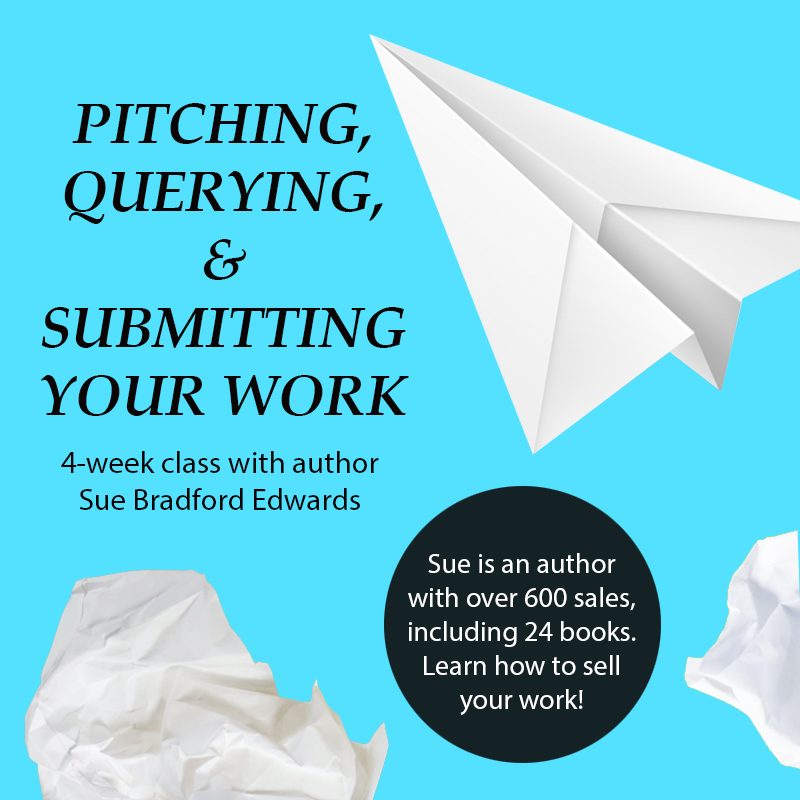
Pitching, Querying, and Submitting Your Work
4 weeks starting December 2
Whether you write essays, short stories or novels, sending your work to an agent, editor or publisher is a daunting task. This course will teach you to assemble submission basics including a pitch and a query letter. These tools will enable you to get your work in front of industry professionals. We will also discuss how to find markets and how to manage rejection. Course materials include successful samples and tips from industry experts. Led by Sue Bradford Edwards, an author with over 600 sales to her credit!
Class Details
| | |
|
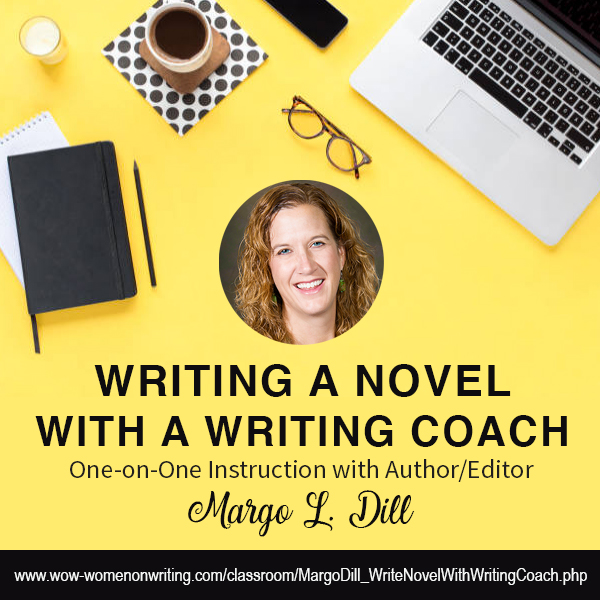
Writing a Novel with a Writing Coach: One-on-One Instruction
4 weeks starting December 6
Are you writing a novel? Do you need a writing coach to keep you accountable and provide feedback as you go? Do you have an idea for a novel but you don’t know how to plan or get started? Join Margo L. Dill in an online workshop environment, where you can work with her to get a first or second draft of a novel completed. Novelists for almost any genre are welcome. Depending on your needs, Margo will also provide help with writing a synopsis and query letter.
Class Details
| | |
On Submission with Memoir Magazine | |
|
As we enter the festive holiday season, I’m reminded of the magic of storytelling; in particular, those true tales told by friends or relatives beside a crackling fire. These are the stories that make up our lives. Whether oral or written, our personal stories and memoirs matter more than ever with the rise of AI. Today’s guest, Mary McBeth, founder and editor-in-chief of Memoir Magazine, is a fierce advocate for true stories and brave, vulnerable voices with impact.
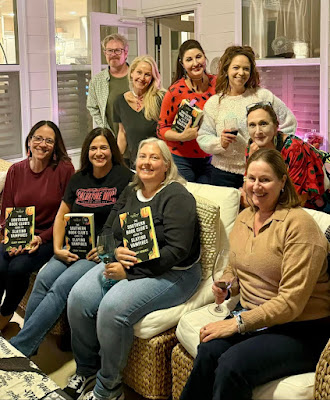
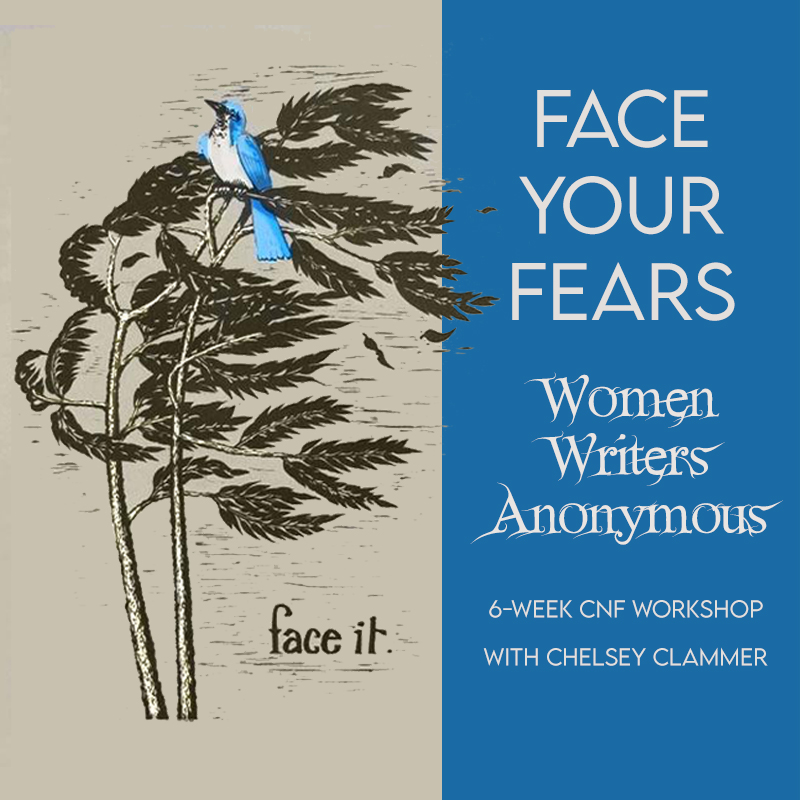
Before I met the talented Mary McBeth, I had the pleasure of reading anonymous pieces from her memoir. It was 2017, and we were participating in Chelsey Clammer’s WOW workshop, Face Your Fears: Women Writers Anonymous. Students used pen names, so we could write about our deepest, darkest secrets without judgment. I remember being swept away by Mary’s writing, which was immersive and scene-driven and held nothing back. We both wrote about our time as young adults, struggling to get ahead in the world, and our relationships with abusive men. I fondly remember her calling me “A sister from another mother.” When the class ended, our group of five writers continued to workshop, dubbing ourselves “The Ladyballers,” because what we wrote about was fearless and ballsy—it took courage, it took lady balls. I wanted to make matching bowling shirts with our logo on it! Several of the pieces we wrote in that group were published, and we supported and celebrated each other’s achievements. Before the group ended, we shed our pen names and revealed our identities. Around that time, Mary came up with the brilliant idea to start Memoir Magazine.
Founded in 2017 by Mary McBeth, Memoir Magazine is an online literary magazine dedicated to publishing true stories and creative nonfiction essays, together with innovative work from illustrators, fine art photographers, and artists. Editor-in-Chief Mary McBeth believes that everyone’s story matters. Memoir Magazine’s mission is to be a witness to both factual and emotional truths that resonate with the human heart by supporting writers and artists in sharing their stories—whether personal, social, or political—through publication, education, and advocacy. Memoir Magazine publishes online throughout the year and accepts submissions on a rolling basis. The journal hosts The Memoir Prize for Books, an annual contest now in its fifth year, that awards memoir and creative nonfiction book-length works of exceptional merit in the categories of traditional, self-published, and previously published prose.
Mary McBeth is a writer, editor, book coach, and certified Amherst Writers and Artists Workshop Facilitator. As a memoirist, Mary delves deeply into her subjects, drawing on personal experiences of childhood, race, and immigration to produce emotionally rich work. Her short-form memoirs and personal essays have appeared in Cobalt Review, *82 Review, Argot Magazine, Awakened Voices, and others. A 2024 Rosemary’s House Fellow, her essay “The Summer of Love” is an excerpt from her forthcoming memoir The Secret Life of Grownups and was long-listed for the 2023 DISQUIET International Literary Program. She is a member of the National Association of Memoir Writers and the North Carolina Writers Network, AWP, and CLMP. A Level 3 Reiki master and certified raw vegan chef, Mary is also a polyglot—fluent in Italian, German, Spanish, and English—and has lived and worked in more than twenty-three countries. She spent twelve years in Italy as a runway fashion model, which is the subject of her current memoir-in-process entitled, Perfect. She now lives in Durham, North Carolina, with her husband and dog. Find her at www.MaryMcBeth.com.
I had the pleasure to chat with Mary about the Craft of memoir, what she’s looking for in submissions, Memoir Mag’s annual book contest, the state of memoir publishing, book proposals, and more. Join us for our lively chat!
| |
|
WOW: Welcome to our holiday edition, Mary! I’m excited to grab a cup of hot chocolate and talk to you about all things memoir! I remember in 2017 when you announced to our writing group that you were going to start Memoir Magazine, and we all thought the idea was brilliant. What prompted the idea? Why only memoir/nonfiction?
Mary: Thank you, Angela. It’s great to be here with you. Yes, our writing group with Chelsey was epic—so full of amazing, fearless writing from the heart. I wish it never ended, and I keep trying to recreate that magic, but alas there is only one Ladyballers group! I remember feeling like I could read essays like this all day. And how much I’d love to read a magazine full of them. Then when Chelsey encouraged us to submit these essays, I started looking for lit mags to publish some of the stories and started noticing that essays on trauma or gut level experiences didn’t have as many outlets as one might expect. I remember having heard that CNF accepted like 1 to 3 percent of its submissions and asking one of their readers, “What happens to the other 97-99 percent of submissions? Are they good essays that just don’t have a home because there aren’t enough literary magazines?”
I mean, in 2017, the word “memoir” was still kind of controversial, and in some literary circles, people were like, “Is this legit literature?” And I couldn’t help thinking: why should it be less profound just because it’s the truth about a real person’s life? I decided only memoir/nonfiction because I believed that’s what was needed at the time, on a sociological as well as literary level: a publication dedicated to memoir could go far to alleviate the prejudices in our society. I wanted to draw a line in the sand and be like, “Memoir is important and powerful. It changes lives and we are all in!” As Chimamanda Ngozi Adichie said in her Ted talk “The Dangers of a Single Story”: “When we reject the single story, when we realize that there is never a single story about any place, we regain a kind of paradise.”
WOW: Wow, I love Adichie’s quote and admire your mission so much, Mary! I agree that there aren’t many markets that publish essays on trauma, so thank you for providing a safe space for writers to tell their deeply personal stories. Memoir Magazine is open for submissions throughout the year and publishes online periodically. Is there a set publication schedule? Typically, how many pieces do you publish per year, and what is your acceptance rate?
Mary: We try to publish one essay a week now, and like forty to fifty essays per year. We receive about forty to fifty essay submissions a month, and we publish three to seven essays. So, our acceptance rate is more like 9 percent.
WOW: That’s a great percentage rate! Writers will also be thrilled to know that Memoir Magazine accepts reprints. We also accept reprints here at WOW, but few journals do. It seems like most journals want to be first to publish for whatever reason—be it viral traffic, uniqueness, or financial reasons. And some journals will exclude personal blogs as well. Can you tell us about why you decided to accept reprints?
Mary: There are several reasons why I originally accepted reprints. The first being I was forced to. When I started looking for pieces by established writers, they weren’t immediately forthcoming. A memoir writer friend who was also a college professor seeking tenure said he didn’t believe a magazine for memoirs or one that was mainly online would work because print was prestigious, and I should only make a journal for Black people anyway. But I had come from a background of marketing and publishing a free weekly newspaper. I saw it differently than academia.
I envisioned a semi-commercial publication that would have mass appeal outside of academia too—the place I felt the results would show. I told him online was the inevitable future of journals, and it was important because the work could be promoted in a way that hadn’t previously been done—memoir was important to everyone (meaning a larger potential readership). And race is not the only bias we suffer from, nor are Black people the only people who suffer from discrimination. What about other minorities: women, LBGTQ, aging populations, and others whose experiences we can only know by hearing their own words?
His viewpoint is exactly the big problem America has that it can’t see itself—my own race has nothing to do with who would want or need to read these memoirs of others! Like people didn’t watch the Oprah Winfrey Show solely because she was Black—they watched because she was sharing stories that needed to be told. The whole point was that even stories featuring race (perhaps especially so) needed to be read by everyone to be truly effective.
He said that if I insisted, I could reprint one of his previously published works from his memoir he was trying to get published. Of course, I didn’t know if I would prevail or if anyone would submit great work. I also figured as a new magazine, it would give me a chance to choose writing that set the tone for what I was looking for. So, I took him up on his offer to reprint his essay.
Then once the piece was published online, he said he was shocked to receive so many compliments from readers he thought had already read the piece when it was previously printed in a university literary journal. Turns out, very few had actually purchased that print journal and therefore had not read his essay until it was available for free online on Memoir Magazine.
So even though he would only give me a reprint at first because he thought his writing was too important for my memoir magazine, it turns out we both won anyway, and he learned a valuable lesson about how powerful the little internet guy could be for his career (you know actually getting readers!).
Just because the school lit mag printed the essay and charged people to read it—it doesn’t mean anyone did! Prestige comes at the cost of a narrow audience, and that’s not what memoir is about. Memoir is for the people.
Turns out to have been a great decision to accept reprints, and it’s easily possible as a mainly digital magazine. Reprints enable you to broaden your audience and deepen your engagement through the benefit of a strong dynamic and ever evolving, ever-changing readership. And not everybody reads academic journals or the first time something was printed.
Finally, I simply love publishing reprints for the love of the Craft. If a piece is good the first time, then why not publish it again? Things like limited print runs make me sad. A piece of writing, an idea, a concept, or a context should not simply be erased. It is now part of history. Stopping a print run feels kind of like erasing a historical fact.
Prestige is also just another way of saying privileged. Good is good. Like this incredible reprint, “Dead Weight,” from author Claire O’Brien.
WOW: I love Claire’s piece, and that is such an interesting story about how you got started with reprints. I agree, showcasing work for free online often has a much larger readership and ongoing publicity than publishing in a print-only journal. Each journal has its own tastes and readership, so it’s great to give a piece a second chance. I’d love to get a peek into your behind-the-scenes editorial process. Do you do most of the reading yourself, or do you have a team of readers and discussions?
Mary: It’s a crazy hot mess since Covid. In the beginning, I did most of the reading myself, which was a special time for me. But all of the administrative tasks of running a magazine (as a writer myself) left me with less time to read and actually publish or explore new initiatives and relationships. It is the nature of the thing. Now I have a team of reader interns. Some great professors sent me some great students that I spend a lot of time with working one-on-one to discuss what makes a good Memoir Mag essay. The students love memoir and really have the right attitude and appreciation for what the writers are offering of themselves and the courage it takes to be so vulnerable. I still end up reading, but it’s a great process with the interns and being a part of their growth as literary citizens with voices.
WOW: Cheers to all the dedicated readers who share their time and appreciation for writers’ work! Memoir Magazine publishes memoir, personal essay, creative nonfiction, and excerpts. In submitted work, what are some key elements that leave a lasting impression?
Mary: Vulnerability is the Holy Grail. Nothing leaves an impression like the spark of recognition or when we are emotionally moved by the experience. It’s one thing to tell us that happened and yet another to reach us emotionally. Only vulnerability in the telling can do this.
WOW: Vulnerability is key! Alternately, what, if anything, turns you off right away when reading submissions?
Mary: That’s a hard question because life can be so subjective. First off, all writing is good writing because it exists in a space and time where a human soul has undergone a process of self-awareness and endeavor to express itself, and that’s beautiful and magical for sure. So, I would always protect writing as an act and encourage everyone to keep writing.
I have to say the main things that turn me off (even if the piece might work somewhere else) are submissions written in san-serif fonts, like Arial. All the letters look the same in the words, and it’s exhausting and straining on the eyes of someone who is already reading far more than the average person. There’s a reason for fonts like Times Roman—respect the job of reading! Hehe. Another thing that turns me off is vulgarity for no reason (not the same as a vulgar character), but when the writer themselves choose to have an intimate conversation with me on the page, and they curse a lot or use vulgarity a lot, and it doesn’t seem to serve a purpose in the work. Also, any kind of discriminatory writing or lack of self-awareness in the writing. Finally, writing that is using the work to prove they are right to someone about something the reader isn’t privy to, like a parent, mate, or child. There are ways to do this effectively, but that requires Craft, and/or we have to give up something to do this—some truth/secret we might not feel ready to reveal.
Memoir writing is not for the faint of heart. It’s a warrior Craft. We are more naked than we believe when we put pen to paper. Ignore the elephant in the room at your work’s own peril, but the reader won’t—so neither will I.
| |
|
“Nothing leaves an impression like the spark of recognition or when we are emotionally moved by the experience. Only vulnerability in the telling can do this.”
| |
|
WOW: Memoir is “a Warrior Craft”—I love that! Creative nonfiction comes in so many forms, from the personal essay and scene-driven memoir to lyric essays and hermit crab formats and even one-sentence essays. Do you have a favorite type of essay or structure? And do you have some examples/links to standout pieces published in Memoir Magazine, and what makes them unique? I know it’s hard to choose! But I’m sure our writers would love to read them.
Mary: OMG, don’t get me started because I love it all! I love being surprised, which is why Memoir Magazine is so wide open in what it is willing to consider. I hate the idea of rules in an art form—beyond the Craft. I fear too many rules could stagnate the Craft from evolving into whatever humanity needs it to become. And memoir is a voice—too many rules can lead to silencing. Memoir must stay free to get to the heart of universal truth. That said, I am very partial to lyrical essays and humor. I also love alternative structures and short micro essays, and I will advocate fiercely for brave vulnerable voices with a big impact.
Memoir essays that are alternative, micro, or just plain hilarious:
“An Ephemeral Experience of Permanence” by Amanda St. Claire
“Redacted Relationship” by Keith Hoerner
“Avocado” by Sophie Trevitt
“@clotheslinetimeline” by Maud Kelly
and
“Courting Miss George” by Garnett Cohen
or
“My Korean Therapist” by Joan Sung
“The Peppermint Kid” by Jeff Veazey
“The Question of Spilled Milk: A Short Parable” by Tracy Ross
“Memoir of a DREAMer” by Magda X
And memoirs that play with viewpoint to create an even greater universal connection, such as “Hypostasis” by Amy Bailey.
Memoirs that explore literature and life: “Iris on My Mind” by Odeta Xheka. Or combine food and longing, such as: “Sourdough, Ancestors, and Other Recipes for Time Travel” by Edvige Giunta, or “Strawberry Mud” by Shizue Seigel.
The things that cause embarrassment, but are just a part of life, like wishing our parents were someone else and then realizing that’s just not a thing...
“Drowning” by Natasha Williams
“How 90 Day Fiancé Helped Me Tell My Story as the Child of a Mail Order Bride” by Katya Suvorova
“How I Discovered America” by Sharmila Voorakkara
Essays that are unique in their vulnerability and truth, full of history, confession, and revelation, such as:
“Going to Find” by David Hensley
“Hearts Are Public” by Lola Kelly
“Waiting on the Stair” by Jonathan Odell
“Ashes of American Flags” by Justin Florey
“Beautiful, Disturbing, True” by Heather Caliri
“Finding Satan on the Road to Damascus” by Spencer Soule
“Healing Through Storytelling” by Melissa Zook
WOW: That’s an amazing list, and I look forward to diving in and studying them all! Is there anything you’d like to see in submissions that you currently aren’t receiving?
Mary: I’d love to see more science memoirs, more spiritual awakening memoirs, and more memoirs about the calamity of aging—something that we can read and make our own and get valuable wisdom and insight into the processes that are coming for us all—but most importantly, a third of the world population in a very short time. For the first time ever, the majority of the population will be elderly and/or grappling with what is true factually and individually/subjectively because of current trends toward blind acceptance of influencer interpretations of facts. And we are going to need a lot of documentation on this social phenomenon that is unique in all of history. I would, of course, also like to keep receiving stories of unique experiences or reactions to commonly documented experiences and stories that dispel myths about reality for those that think they understand it.
WOW: CNF writers, you heard it! Let’s see if we can make Mary’s wish list come true. I know there are plenty of WOW writers who write about the calamity of aging and the other great topics you mentioned. You’ve also created special editions that focus on important topics—#MeToo, #GunsandPeople, and #Recovery. I love that you give writers a safe space to share their stories. What are some tips you can share with our writers for writing powerful essays for social change?
Mary: Go for vulnerable and universal. Trust that your readers are smart, that we will learn new things and the stakes, just by you showing up and sharing your experience in a sincere and open way. Oh, and it never hurts to be funny! More than what happened to you, we want to know how it felt, and how you dealt with or did not deal with it.
| |
|
WOW: Great tips! Memoir Magazine hosts the annual Memoir Prize for Books, now in its fifth year, which is an innovative contest for memoir and creative nonfiction book-length works in the categories of traditional, self-published, and previously unpublished—and awards $5,000 in prizes. There aren’t a lot of book contests, and this is an amazing opportunity! Can you tell us a bit about your judges, judging process, how many writers typically enter, how many winners are selected (I know there are quite a few!), and what you’re looking for in submissions?
Mary: About 350 writers entered the memoir prize last year, and fifteen or so make the final selection. Books make it through three rounds. The first round of readers evaluate and rate the book one to five, and the second round is me evaluating those books and preparing them for the third round with the final judge(s) who usually are made up of one or more winners from the previous year. We are looking for memoirs with the power to change lives and the way we look at the world.
WOW: That’s great! Speaking of book-length memoir, when we were in our writing group together, you were working on a memoir about an intense time in your life working as a model in Milan, Italy. Have you finished your memoir, and are you in the process of querying or submitting? Please share a bit about your book with our readers.
Mary: You have a great memory, Angela! And thank you for asking. I have been approached by a couple of TV writers to adapt my memoir, The Secret Life of Grownups. The writer I am most aligned with is now waiting for me to get a book deal, so she can sell the story “like the next day” as she puts it.
I am currently querying agents for the completed first memoir in a series of three books called My 10,000 Lives that includes my growing up and running away to Italy with $160 in my pocket to escape a drug dealer and ending up a runway fashion model for thirteen years. Everyone loves that story and those essays you are talking about, but I have lived such a Forrest Gump life that it quickly became evident the model years are just part of a much larger story, like what kind of person even gets on a plane at age sixteen with a one-way ticket to a foreign country? So, the first memoir is the story of this little unicorn of a Black girl who is born with gifts that nobody seems to know what to do with, and there is no one at the information desk to direct her on this journey. The first memoir is about how I gained the education to survive the next three memoirs.
The modeling in Milan, Perfect, is the second book in the series, where I go from homeless dropout to runways with super models, and what it costs for a natural born scholar to achieve and maintain society’s ideals of beauty. The third memoir, My 10,000 Lives, is about how I escaped domestic violence by going abroad and my two years on the run from the FBI with a breastfeeding infant. I go through five countries, change identities, and live in the jungle of Costa Rica.
I am hoping to find an agent who can guide my career through the film and TV process as well since the cinematographic nature of my life and writing is making film work inevitable.
WOW: Your memoirs sound incredible, Mary! It’s such a joy to see how much work you’ve done with your life stories over the years, and writing three memoirs is an amazing feat! I am sure you will find an agent soon. What are you working on now?
Mary: Query and submitting several parts of the book have gotten me into exciting workshops and anthologies. Right now, I’m working on an essay for an upcoming anthology. Here is an essay I’m proud of. It was first published in The Nervous Breakdown, which folded during Covid, so I reprinted it in Memoir Magazine: “Main Street Madness.”
WOW: That is one of my favorites for its strong sense of place and insight into your family dynamics, and I love the collective use of “we.” I remember you started it in our writing group, and it’s a joy to see it fully developed!
| |
|
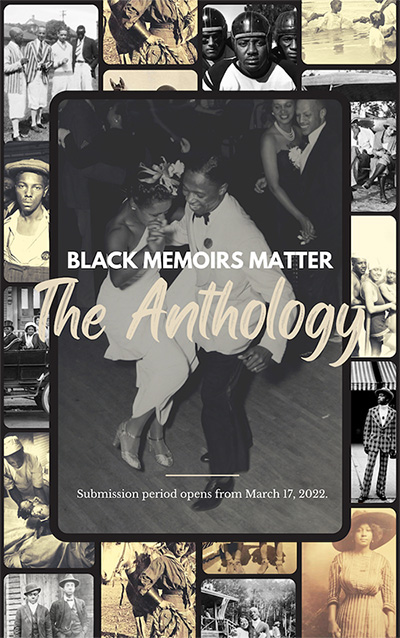
You also compiled and edited the Black Memoirs Matter anthology to chronicle the global Black Experience through memoir and explore universal truths. While chatting with you via email, you mentioned the anthology was completed, and you were actively submitting it to publishers and that you’d written a book proposal. Wishing you the best of luck in the submission trenches! It’s an important project, and I can’t wait to see it published. I imagine you wrote a proposal for your memoir as well. For so many writers, book proposals can be intimidating, and writers have asked us for tips. Do you have any advice you’ve learned while writing your proposals that you can share?
Mary: Wow, proposals are a big subject that so many hugely knowledgeable people, like Jane Friedman, are offering powerful insight into. I guess I can say query and proposal writing never felt safe until after many rigid attempts, it clicked for me, and I began to see the proposal as really being a basic conversation between the writer and the publisher or any potential person who might be considering coming along for the journey, like agents or publicists. A kind of casual conversational business plan for your book, like assume the sale—that sort of thing.
If you are just starting out it can be difficult to see all the practical ways you have of contributing to the hard work they would be doing to sell your book. Understand a brag is just meaningless unless its details can contribute to selling books. For example, my son is a musician songwriter in Los Angeles who goes by the name NoMBe. His songs have had over 700 million streams across streaming platforms, and he has over 60,000 fans, and many of them are Blue Check friends of his (with millions of their own followers) who all know and love me (his posts about me are some of his most popular). It never occurred to me to mention that he is my biggest fan and would be promoting my book to his loyal fans who already are my fans by proxy! He is even the reason I was approached by a filmmaker friend of his in the first place who had heard parts of my story from another friend at a dinner party! So that is something I maybe should have mentioned in earlier proposals because it is a definite asset to my future sales. But at first, I thought it would be uncool to mention it, like they might think my writing was not good or that I was using my son instead of letting the work speak for itself. Once I added it to my proposal, the anthology gained interest from two publishers right away!
So, about proposals, it is a social journey. Don’t be afraid to be real and vulnerable and share social information because you feel like it might be out of context!
| |
|
“Authentic true stories aren’t going anywhere anytime soon. We need them too much to help our traumatized selves to evolve. Whatever you envision is going to be hard about your memoir or the future of the memoir genre, it’s all totally worth it!”
| |
|
WOW: Excellent example and tips, Mary, and I didn’t know that about your son! You must be proud, and I will definitely check out his music. It’s wonderful one of his friends offered to adapt your memoir!
Memoir is definitely my favorite genre to read and to write, and I believe personal stories are more important than ever, especially in a time of AI. So I’m always trying to keep up with memoir publishing trends, and earlier this year, Allison K. Williams and Jane Friedman published an article on Brevity: “The Hard Sell: Why Memoirs Get Fewer Book Deals,” which states that in the past twelve months on Publisher’s Marketplace, there were only 267 memoir deals, and many of those were celebrity memoirs. Considering all the writers I know who are currently trying to shop their memoirs, that’s a sad number! I admire your advocacy for memoir and how you give memoirists a platform to share their stories. What are your thoughts on the current marketplace for memoir?
Mary: Thank you, Angela! I love memoir and admire memoir writers! 267 mostly celebrity memoir deals is a sad number indeed!
This was a good article. I am so happy that Allison spoke about the need for genres in memoir because that is something I have been strongly advocating for through the Memoir Prize and categories on the website.
I think it could be helpful to have baseline categories of memoir, such as Commercial memoir and Literary memoir and Heritage memoir and then go on to genres from there.
Memoir is unique in that there are career writers, and there are people with a story. Some people are both, and some are people with a story who are willing to become writers and learn the Craft to tell it, and some are not. This is not an indication of their story’s worth or their worth as human beings. Only that Craft is concerned with the reader’s experience.
It’s definitely time to rethink distribution methods for memoirs in the Heritage and Literary categories. Like Jane says, “Fiction has genres, and genres have fans,” and “We don’t need agents to send our work to university and literary presses; and plenty of memoirs sell to the small, specific audience who need to hear that story ... Finding that audience means doing research in advance and promoting our own work, and many authors balk at the idea of ‘doing the publisher’s job.’”
While it’s certainly helpful and empowering for many of us to think of research and promotion as a choice on our own terms. That we can choose to “work hard to appeal to the masses necessary to attract a Big Five publisher; or work hard to discover who our readers are and get our books into their hands.” And this is certainly a big part of how far our book can go.
I am fortunate to come from a marketing background, and so I believe that’s always been true and never was a “choice.” Whether we know it or not, from the age of one, every day we are already always selling some idea, reputation, or product, and therefore behooves us to do the research and be as aware as we can of our audience and outcome of our efforts. And writing is no different. Doing research in advance and promoting our own work is not just “publisher’s work.” That’s like insisting the success of your child’s education is your partner’s job or solely a teacher’s job. It’s a damaging delusion to think so.
Successful writers aren’t just lucky—they do the work, too. They show up, and reach out, whether that means doing interviews, teaching, publishing essays, or posting on social media—somehow they all give back, and are strong advocates of their own work. I mean, who can love your work more than you do? It’s just good solid sense to know your audience and engage with them, and if you get a Big Five publisher—all the better! But do it anyway! Why? Well, for one thing, it will make you a better writer, and some writers get Big 5 publishers and then do not even make back their advances because they never did the work. Who knows how much this might have contributed to fewer memoirs deals with Big 5s? We must get over this romantic notion that someone else will do “the work” for us if we want our ideas to be heard. The sooner the better.
Today, writing is more like 10 percent writing, 30 percent revision, 10-20 percent reading, and 40-50 percent engaging and self-promotion! Do we wish to spend all our time writing? Sure! I bet tennis stars also want to just play all day, but they have to do career maintenance stuff, like pose for magazine photoshoots, attend galas, do charity work, give interviews, critique others, and teach salons to give back too. I bet they find all the ways to even learn to love it, and so could we! It’s all part of the practical process of becoming and keeping the coveted GOAT role. And maybe we still might not ever be the GOAT, but my motto is “Reach for the stars and land on a cloud.”
Also, we need to give way more space to the idea that writing is all about The Process—something AI cannot take away from us. So much happens when we write that is not spoken of enough. Many people wouldn’t even try to write a memoir if they knew how truly arduous (and deeply rewarding) The Process was beforehand! Ha! Seriously though, (to quote Dana Carvey’s Biden character on SNL, “I’m being serious, folks! And another thing!” Hehe) I think AI is only forcing us to see memoir writing in a more inevitable millennial way—write, tell story, rinse, and repeat.
I think the problems with memoir sales are a result of bigger problems or changes overall. For example, college professors are noting that young people are losing a reading culture and reading fewer and fewer books. Professors are basically teaching poetry, excerpts, and essays at this point (I am delighted to share that many use Memoir Magazine as parts of their curriculum!). Our beloved librarians are in trouble, and my latest visit to a Barnes and Noble bookstore was mystifying, if not sobering. They didn’t even have a section called “Memoirs” on the main floor! They just put an advertisement placard over the heading sign for that section and attempted to coolly extend current events and nonfiction tomes, like Freakonomics in with celebrity memoirs (and a few non-celebrities), which then became the Classic Fiction area! I’d say I was witnessing a process that hasn’t yet found its final version. But the majority of the space was reserved for the fantasy, YA genres, and perhaps as much as 70 percent of the store was devoted to novelty gift items.
Does this tell me people are not reading memoirs? No. And certainly, the majority of readers are not sci-fi fans or eager to relive the trials of high school. But these just might be the readers that still show up for that new ink paper smell. It only tells me that the role of bookstores is still evolving in our modern times. And that big commercial book chains are not the only places people get their books today, that people may be getting their memoirs from other places, in other forms of distribution, and maybe in other packaging. We must tell our stories, but the way we do that is fast changing. The past is gone. We must adapt or die. But authentic true stories aren’t going anywhere anytime soon. We need them too much to help our traumatized selves to evolve. So, whatever you envision is hard or going to be hard about your memoir or the future of the memoir genre, it’s all totally worth it!
WOW: Amen! Smart answer, Mary, and you’ve given us a lot to digest. I really appreciate you answering all my tough questions. Let’s end with a lightning round of fun holiday questions! What is your favorite:
- Holiday
- Drink
- Tradition
- Movie
- Song
Mary:
-
Holiday: I like every holiday. I think that the USA doesn’t have nearly enough holidays, and I think we could easily use ten more. We could make Monday into Holiday Day and move to a four-day work week!
-
Drink: Hot chocolate—I have tons of different types.
-
Tradition & Movie: Watching holiday movies from childhood, and my favorite movie is Elf with Will Ferrell. I’m not the sort to put lights on my house that I have to take down a few weeks later—I would just end up leaving them up all year, which might prove dangerous or costly!
-
Song: My favorite songs are “Simple” by KD Lang and the Holly Cole version of the “Waters of March.”
| |
|
My thanks to our intelligent, passionate, and generous guest, Mary McBeth, founder and editor-in-chief of Memoir Magazine! I had a blast chatting with her, and I hope you had a blast reading.
For those in our readership who have written a book-length memoir (whether it’s traditionally published, indie published, or unpublished manuscripts), consider submitting it to The Memoir Prize for Books before the deadline of February 28, 2025!
For shorter memoirs, up to 3,000 words, Memoir Magazine is open to submissions year-round here: https://memoirmag.com/submit
Wishing everyone a safe and joyous holiday season!
| |
|
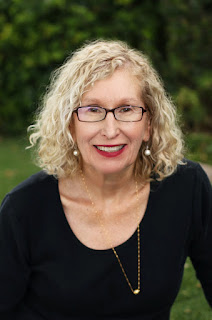
Angela Miyuki Mackintosh is an artist living on a ranch in the Sequoia National Forest, California. Her creative nonfiction has been published in a number of literary journals. Most recently, her essay about her Okinawan mother and growing up mixed race, “Sayonara, ai,” was published in Under the Sun’s 2024 issue and nominated for a Pushcart Prize! A big thank you to the Under the Sun dedicated readers and editor Cindy Bradley, who helped her shape the piece, as well as editors Martha Highers and Nomi Isenberg! This is Angela's fourth Pushcart nomination. Angela is editor-in-chief at WOW! Women on Writing. When she’s not writing or editing, she enjoys oil painting, trail running, watching horror flicks, and snuggling with her three rescue cats and Rottweiler.
| |
|
100 Fresh Alaskan Poems
Deadline: December 1
They are accepting submissions from 10 poets to be published in their inaugural poetry anthology. Submit a collection of 10 poems with the same theme/thread which connects all 10 poems. All poetry styles welcome, including but not limited to free verse/blank verse, rhyming, sonnets, villanelle, haiku, and so on. No word count or line limits. Pay $100. No fee.
https://edutainmentnitepublishing.submittable.com/submit
The James Dickey Prize for Poetry
Deadline: December 1
Send three previously unpublished poems no more than fifty lines each. The winner will receive $1,000 upon publication and will be featured in an upcoming issue of Five Points. Entry fee includes a one-year subscription. Fee: $25
https://fivepoints.submittable.com/submit/46529/the-james-dickey-prize-for-poetry
Brick Road Poetry Book Contest
Deadline: December 1
The mission of Brick Road Poetry Press is to publish and promote poetry that entertains, amuses, edifies, and surprises a wide audience of appreciative readers. Prize $1,000. Their preference is for poetry geared toward dramatizing the human experience in a language rich with sensory image and metaphor. 50 to 100 pages. Fee: $30
https://www.brickroadpoetrypress.com/poetry-book-contest
Palette Poetry Previously Published Poem Prize (Reprints)
Deadline: December 8
Palette Poetry is delighted to continue their tradition of celebrating previously published work. They appreciate the curatorial work of fellow literary magazines, and want to support poets as they continue to expand their publishing careers. Your submission must be no more than three poems and under ten pages. For this prize, they are only accepting previously published work. The winner will be awarded $3,000, publication, a brief interview in Palette Poetry, and a limited-edition broadside of the poem. Second and third place will receive $300 and $200, respectively, as well as publication. Fee: $20
https://palettepoetry.submittable.com/submit/306781/the-2024-25-previously-published-poem-prize3500-awarded
Jane Martin Poetry Prize for Young Poets (UK)
Deadline: December 9
Now in its 15th year, the competition is open to UK residents between 18 and 30 years of age. In 2025, the panel of judges will be led by Caoilinn Hughes and Kirsten Norrie. The winner will receive a cash prize of £1,000 and there will also be a second prize of £500. Both prize-winners will have an opportunity to give a reading at a celebratory event at Girton College, at which the prizes will be awarded. No fee.
https://www.girton.cam.ac.uk/jane-martin-poetry-prize
Mslexia Women’s Pamphlet Competition
Deadline: December 9
1st prize: £250 plus publication of the winning pamphlet by Bloodaxe Books. The competition is open to collections of 18-20 poems, of up to 24 pages, by poets who have never had a full-length collection published. Imtiaz Dhaker will be choosing the winner of 2024 competition on behalf of Bloodaxe books. Fee: £20
https://mslexia.co.uk/competitions/pamphlet-poetry/
Lit Fox Award
Deadline: December 15
Lit Fox Books, a nonprofit press based in Austin, TX, is an organization dedicated to preserving authors’ artistic visions in a vibrant and supportive environment. They provide fee-free submissions, swift feedback, eye-catching book covers, and custom merchandise.
They are open to submissions of full-length poetry manuscripts for their new annual book award. The manuscript should be at least 48 pages. Prize: $1,500 and 25 author copies. The judge is poet Mary Biddinger. No fee.
https://litfoxbooks.com/lit-fox-award/
2025 Poetry Chapbook Contest
Deadline: December 20
Center for Book Arts invites submissions to its annual Poetry Chapbook Program. The competition winner receives ten copies of their chapbook, a $500 honorarium, a $500 stipend to participate in a competition reading public program, a week-long stay at Millay Arts during their Wintertide Rustic Retreat season (valued at $480), and one copy of the guest judge's chapbook as well as the runners-up's broadsides. Please submit a collection or sequence of original poems or a single long poem that does not exceed 450 lines or 21 pages. Fee: $30
https://centerforbookarts.submittable.com/submit
Codhill Press Pauline Uchmanowicz Poetry Award
Deadline: December 30
The Codhill Press Pauline Uchmanowicz Poetry Award 2024 is open to any poet who writes in English. Previously published poems with proper acknowledgment are acceptable. They publish a diversity of approaches, from the formal to the openly experimental. Codhill has published books by poets in academe and by poets having no connection to academics. Prize: $1,000. Submit forty-eight to seventy (48-70) pages. Fee: $30
https://www.codhill.com/codhill-press-poetry-award-guide/
Hollis Summers Poetry Prize 2025
Deadline: December 31
Named for the distinguished poet who taught for many years at Ohio University and made Athens, Ohio the subject of many of his poems, this competition invites writers to submit unpublished collections of original poems. Manuscripts of 60 to 95 pages should be set on standard sized paper. The winning manuscript will be published by Ohio University Press the following year and will be awarded a cash prize of $1,000. Fee: $30
https://www.ohioswallow.com/poetry-prize/
Williams Carlos Williams Poetry Competition
Deadline: December 31
This contest is open to medical students enrolled in M.D. and D.O. programs in the US, Puerto Rico, or Canada, and physicians, open to any rank of physician (M.D. or D.O.) at any career stage, from residency to retirement, in the U.S., Puerto Rico, or Canada. First-, second- and third-place winners in each category will receive a cash prize ($300, $200, $100) and will be considered for publication in the Journal of Medical Humanities. No fee.
https://www.neomed.edu/wcw-poetry-competition/
Chapter House Indigenous Poetry Prize
Deadline: December 31
This year's poetry prize will be judged by m.s. RedCherries, 2024 National Book Award Finalist and author of "mother." Cash prize of $250 will be awarded to the winner, and the winner and two runners up will be published in Chapter House. Submit 3-5 poems not to exceed 5 pages total. No fee.
https://chjournal.com
The Lyric College Poetry Contest
Deadline: December 31
The contest is open to undergraduates enrolled full time in an American or Canadian college or university. Poems must be original and unpublished, 39 lines or less, written in English in traditional forms, preferably with regular scansion and rhyme. They welcome up to three poems per student. Prizes: $500, $200, $100. No fee.
https://thelyricmagazine.com/collegepoetrycontest/
Four Quartets Poetry Prize (Reprints)
Deadline: December 31
The Four Quartets Prize is for a unified and complete sequence of poems published in America in a print or online journal, chapbook, or book in 2024. Fourteen pages of published poems unified by subject, form, and style is the minimum per submission. Submissions must be accompanied by an entry form and a paragraph statement about the aims of the work. Prize: $20,000. Finalists will receive $1,000 each. No fee.
https://poetrysociety.org/awards/four-quartets-prize/four-quartets-prize
Maureen Seaton Poetry Prize 2025
Deadline: December 31
This opportunity will close when 1000 submissions are met. This year they are inviting submissions from the LGBTQIA+ Community. There are no geographical restrictions. Please note: you must be at least 18 years old to submit. There is no theme for this contest; let Maureen Seaton be your guide. Prize: $500. Final judge is Aaron Smith, author of five books of poetry. Submit one document containing one previously unpublished poem. No fee.
https://soflopojo.submittable.com/submit/308441/the-maureen-seaton-poetry-prize-2025
| |
|
Wallstrait
Deadline: December 1
“Wallstrait is all about publishing quality, hard-to-define fiction and treating writers right.” They are open to all genres of fiction from 500 to 3,000 words, but you can submit up to 5,000 words maximum. No AI. Their goal is to be one of the fastest-responding literary journals in the industry. Pay: $25 per piece. No fee.
https://www.wallstrait.com/submissions
Never Whistle at Night II Anthology
Deadline: December 1
They invite emerging Indigenous writers to submit their horror stories for the sequel to the international bestseller. This next anthology will feature 20+ terrifying boundary-pushing horror stories from Indigenous writers of North America. They aim to showcase fresh, original voices in Indigenous Horror, and encourage submissions that explore new and innovative themes. Submit a horror story between 3,000 - 5,000 words. Pay: $1,500 per story. No fee.
https://neverwhistleatnight.moksha.io/publication/nwan2/guidelines
Inanimate Things – Volume Two
Deadline: December 1
Burial Books is looking for horror short stories between 1,500 and 6,000 words in length about inanimate things that are living. It could be a doll, the dead flesh of zombies, or your Ford F-150. The story needs to involve this subject in some way…and be scary too. Pay: $10 and a copy of the anthology. No fee.
https://burialbooks.com/submissions/
Moment Magazine Karma Foundation Short Fiction Contest
Deadline: December 1
Moment Magazine will award outstanding works of unpublished short fiction with Jewish content. Maximum length for prose is 5,000 words. Up to three prizes will be awarded, including $1,000 for first place. Winners may be invited to an awards ceremony. If so, the contest covers a round trip flight or train fare and one night in a hotel, if necessary. Fee: $25
https://momentkarma.submittable.com/submit/293973/moment-magazine-karma-foundation-short-fiction-contest-2024
The Other Stories Podcast – Theme: Found Footage
Deadline: December 1
Bring them stories from lost tapes, forgotten diaries, old film, banned video games, or wherever else you might find strange echoes in lost media. Submit a story up to 2,000 words. Pay: 15GBP per story. No fee.
https://theotherstories.net/submissions/
Fractured Lit Micro Prize
Deadline: December 1
Fractured Lit has always been a place that celebrates the use of writing craft to tell small stories with big impacts. They’re looking for microfictions that demand more than one reading, invite them into their small containers, and awe them with the mysteries of being human. Submit up to three stories of 400 words or fewer each per entry. First Place receives $2,500 and publication, while the second- and third-place place winners will receive publication and $600 and $400, respectively. Fee: $20
https://fracturedlit.submittable.com/submit/305470/fractured-lit-micro-prize-3500-judged-by-deb-olin-unferth
One Teen Story Contest
Deadline: December 2
Open to teen writers ages 13-19. They are interested in great short stories of any genre about the teen experience—literary, fantasy, sci-fi, love stories, horror, etc. What’s in a great short story? Interesting teen characters, strong writing, and a beginning, middle, and end. The contest winners will receive $500 upon publication. Short stories should be between 2,000 to 4,500 words and be the writer’s own original, previously unpublished work. No fee.
https://one-story.com/write/one-teen-story-contest/
Writer Advice Micro Fiction Contest
Deadline: December 2
Writer Advice is open to micro-fiction 50 to 500 words. Write about what interests you or stokes your imagination. Or dig out old pieces that haven’t placed elsewhere, decide whether or not to revise, and submit those. The cash prize varies depending on the number of winners. Fee: $5
https://writeradvice.com/latest-contest-information/
Once Upon a Moonless Night: Tales of Betrayal, Revenge, and Redemption
Deadline: December 15
These are the tales whispered in dark corners, of good people pushed too far. Stories of revenge and redemption for past wrongdoings. Stories that excite the mind where what seems to be true isn’t always the case. Dark, foreboding, full of suspense, can you weave the story of what happens during the moonless night? Length: 250-15,000 words. Pay: $0.05/word, capped at $400. No fee.
https://brothersuber.moksha.io/publication/once-upon-a-moonless-night-tales-of-betrayal-revenge-and-redemption/guidelines
Story Magazine Fiction Prize
Deadline: December 15
Prize: $1,500 and publication in their summer issue. Story is a tri-annual print publication devoted to the complex and diverse world of short fiction. Submit one short story of up to 10,000 words. Fee: $25
https://www.storymagazine.org/news/2024-story-foundation-prize-writing-contest/
Uncharted Novel Excerpt Prize
Deadline: December 15
They love the rush of dipping into a writer’s best scenes, intriguing plots and turns of phrase, and elegant and deep world-building. They’re looking for the best 5,000 words or fewer of your novel-in-progress! The three cowinners of this prize will each receive $1,000 and publication. All entries will be considered for publication. Fee: $20
https://www.unchartedmag.com/uncharted-magazine-novel-excerpt-prize-judged-by-laird-barron-3000-awarded/
St. Martin’s Minotaur/Mystery Writers of America Best First Novel Competition 2025
Deadline: December 15
The contest is open to any writer internationally who has never been the author of any published novel in any genre. The writing should be no less than approximately 60,000 words. Murder or another serious crime or crimes is at the heart of the story. Authors of self-published works only may enter, as long as the manuscript submitted is not the self-published work. Award: $10,000 advance against royalties. No fee.
http://mysterywriters.org/about-mwa/st-martins/
Flame Tree Fiction: Latin America Shared Stories
Deadline: December 15
Your speculative story can be anything from a tale in the style of traditional oral storytelling, emphasizing heritage and ancestors, to one that imagines new worlds and futures, but at its core it is likely to concern, celebrate or give agency to Latin American characters and issues. Story length: 2,000 – 4,000 words. Edited by V. Castro, Mexican-American speculative, horror and sci-fi writer extraordinaire and author of Mestiza Blood and The Queen of the Cicadas. Pay: $0.08 per word. No fee.
https://blog.flametreepublishing.com/fantasy-gothic/latin-american-submissions-0
Writer’s Digest Short Short Story Competition 2025
Deadline: December 16
They are seeking stories of 1,500 words or fewer. First Prize: $3,000, publication in Writer’s Digest magazine, and a paid trip to the Writer’s Digest Conference. Second Prize: $1,500. Third: $500. Fourth through Tenth: $100. Fee: $35
https://www.writersdigest.com/writers-digest-competitions/short-short-story-competition
Toasted Cheese: Dead of Winter Fiction Contest – Theme: A Glitch in the Matrix
Deadline: December 21
Any horror subgenre is welcome. Submit within the theme of “A Glitch in the Matrix." Note that the judges prefer gothic, dark fantasy, erotic horror (PG-13 max), noir, psychological horror, quiet/soft horror, and suspense horror. Submit stories between 1,000 and 5,000 words. If 50 or fewer eligible entries are received, first place receives a $20 Amazon gift card, second a $15 Amazon gift card, and third a $10 Amazon gift card. No fee.
https://www.toasted-cheese.com/community/23rd-annual-dead-of-winter-short-fiction-contest-2/
ZO’s Literature Expo – Theme: Your Dreams for a Better World
Deadline: December 28
Imagine if in our current world, right now, a Force more powerful than any human put an end to ALL war and violence. Forever. Where would your characters start in repairing our world from the damage that war and violence have done? How would they craft a better world? How would your characters celebrate and live in the peaceful aftermath? In under 700 words, create a story of a world in the aftermath of violence, on a new path of peace! Each winner will be published and receive a $50 Honorarium. First Place winners are also eligible for a one-year ZO Gold Level City Curator Page (Award Value $240). No fee.
https://zomagazine.com/literature-expo/
Lascaux Prize in Short Fiction
Deadline: December 31
Storytelling began around campfires. They seek prose that continues the tradition. Length should not exceed 10,000 words. All genres and styles are welcome. Stories may be previously published or unpublished, and simultaneous submissions are accepted. Winner receives $1,000, a bronze medallion, and publication in The Lascaux Review. Fee: $15
https://lascauxreview.com/contests/
The Danahy Fiction Prize
Deadline: December 31
Founded in 1964, Tampa Review is Florida’s oldest continuously published literary journal. Submissions must be original, previously unpublished short fiction. Prize: $1,000 and publication in Tampa Review. Manuscripts should be between 500 and 5,000 words. Fee: $20
https://tampareview.org/the-danahy-fiction-prize/
Do Wha(ts) Write Creative Writing Contest
Deadline: December 31
The goal of Do Wha(TS) Write is to fundraise for Tourette Canada, a national charity that provides support for individuals with TS. Contest entries should be flash fiction or short stories, with an absolute word limit of 1000 words. There is no preferred genre or format of the story. Prize: $200 CAD. This contest is international—you do not have to reside in Canada to participate. Fee: $3 CAD
https://www.dowhatswrite.com/
Dracula Beyond Stoker: Issue 6: Jonathan Harker
Deadline: December 31
What happened on the way from the castle to the hospital in Buda-Pesth? What happens after the story ends? What is his relationship with his son? Jonathan is often perceived and portrayed as impish and weak, but he might just be one of the bravest characters in the book. Submit a story between 1,500 – 5,000 words. Pay: $0.05/word for stories. No fee.
https://www.dbspress.com/submissions
We’re Here: The Best Queer Speculative Fiction 2024 (Reprints)
Deadline: December 31
They’re looking for the best speculative stories published in 2024 under 17,500 words that implicitly or explicitly explores queerness and/or transness. Submissions are open to all. Pay: $0.01 per word. No fee.
https://www.neonhemlock.com/submissions
EastOver Anthology of Rural Stories: Writers of Color (Reprints)
Deadline: December 31
EastOver Press is accepting previously published short stories for a forthcoming fiction anthology. The stories should have been published in 2022 or 2023. The anthology will focus on BIPOC writers who live in or hail from rural or semi-rural locales (in the United States) and whose short stories feature characters living and/or working in rural or semi-rural spaces. Submissions should be no more than 25 pages or 7500 words and may include up to three submissions per author or five submissions per editor of a literary journal. Pay: $100 - $300. No fee.
https://eastoverpresscutleafjournal.submittable.com/submit/255379/eastover-anthology-of-rural-stories-writers-of-color
L. Ron Hubbard’s Writers of the Future Contest
Deadline: December 31
The contest is open to new and amateur sci-fi and fantasy writers who have not professionally published a novel or short novel, or more than one novelette, or more than three short stories, in any medium. Submit fiction up to 17,000 words. Prizes: $1,000, $750, $500, Annual Grand Prize: $5,000. No fee.
http://writersofthefuture.com/Contest-Rules-Writers/
The Drabble Harvest Contest – Theme: Hunting with Wolves
Deadline: December 31
A "drabble" is defined as a short story containing exactly precisely no more and no fewer than 100 words. It has a title, which can be from 1 to 15 words—but no more than 15. This contest was inspired by the Hunting with the Wolves video by Helena Wild on Youtube. Pay for drabbles is $0.01/word, which means one dollar per drabble. Pay for First Place is $5.00, and pay for Second Place is $2.00. No fee.
https://www.hiraethsffh.com/drabble-contest
Allegory – Volume 47/74
Deadline: December 31
They’re looking for good, solid fiction. They specialize in the Science Fiction, Fantasy and Horror genres. They will consider other genres, such as humor or general interest, provided that the work possesses an original, "quirky" slant. There is no minimum or maximum length for fiction. But bear in mind that short-shorts (less than 500 words) and flash fiction (less than 100 words) are usually hard sells, as are stories longer than 5000 words. Pay: $15 per story. No fee.
https://www.allegoryezine.com/submissions
Lilith Magazine Fiction Contest
Deadline: December 31
Gifted fiction writers! Lilith Magazine—independent, Jewish & frankly feminist—seeks quality short stories with heart, soul, and chutzpah, 3,000 words or under, for their Annual Fiction Contest. First prize: $300 and publication. They especially like fresh fiction with feminist and Jewish nuance and are eager to read submissions from writers of color and emerging writers of any age. No fee.
https://lilith.org/contact/writing-for-lilith/
Silent Nightmares
Deadline: December 31
This anthology of dark holiday horrors will be co-edited by Chuck Palahniuk and Michael Bailey, who will be eagerly sifting the slush for Haunting Stories to Be Told on the Longest Night of the Year. Submit original fiction up to 5,000 words. Pay: $0.10 per word, and a contributor copy of each edition published (hardcover, paperback, eBook, and potentially audiobook and a limited collector’s edition). No fee.
https://nettirw.com/2024/09/05/silent-nightmares-open-submission-call/
| |
|
Split/Lip Press: Essay Collections, Memoirs, Nonfiction-Hybrid Full-Length Manuscripts
Deadline: December 1
Split/Lip Press is currently looking for previously unpublished essay collections, memoirs, and nonfiction-hybrid full-length book manuscripts. Individually published pieces within the manuscript are absolutely fine (and expected!) but the book should not have been published as a BOOK before. Manuscripts should be between 100-300 pages. They are looking for manuscripts that question boundaries (physical, emotional, metaphysical, meta-emotional—you get the gist). Dazzle them with your version(s) of truth! Please note: while they are big fans of poetry, they aim to publish prose and mostly-prose/prose-esque manuscripts. Pays: royalties and copies. Fee: $15
https://splitlippress.submittable.com/submit/121154/essay-collection-memoir-nonfiction-hybrid-manuscripts
Serving House Books/Broken Tribe Press: Memoirs and Essay Collections
Deadline: December 2 (essay collections) and December 29 (memoirs)
They are seeking memoirs and nonfiction essay collections that are well crafted and inspiring. International writers of English welcome. Translations also welcome. Complete manuscripts should be 90 pages + (memoir) and 80 pages + (essay collections), excluding front and back matter. Pays: royalties. No fee.
https://lawrencelandingcompany.submittable.com/submit
2025 Lukas Prizes in Nonfiction for Work-in-Progress
Deadline: December 5
Two J. Anthony Lukas Work-in-Progress Awards, in the amount of $25,000, are given annually to aid in the completion of a significant works of nonfiction on topics of American political or social concern. Recognizing that a nonfiction book based on extensive original research often overtaxes the resources available to its author, the project envisions the Awards as a way of closing the gap between the time and money an author has and the time and money that finishing a book requires. Applicants for this award must already have a contract with a US-based publisher to write a nonfiction book. Submit 50-75 pages from the work-in-progress; the original book proposal accepted by the publisher; proof of the contract; statement addressing how the award will advance the book; details on any other financial support. No fee.
https://columbiajournalismawards.submittable.com/submit/302246/2025-j-anthony-lukas-work-in-progress-prize-entry-form
Kim Wall Memorial Fund 2025 - Women and Nonbinary Journalists
Deadline: December 8
The IWMF's Kim Wall Memorial Fund will provide $5,000 grants to journalists whose work embodies the spirit of Kim’s reporting. The grant will fund women or non-binary reporters covering subculture, broadly defined, and what Kim liked to call “the undercurrents of rebellion.” Kim wanted more women to be out in the world, brushing up against life, and the Kim Wall Memorial Fund honors this legacy. No fee.
https://iwmf.submittable.com/submit/309921/kim-wall-memorial-fund-2025
Under the Sun Literary Journal
Deadline: December 15
Accepting manuscripts of creative nonfiction of 7,500 words or less, including essays, graphic essays, memoir excerpts that stand alone. Simultaneous submissions are okay but please notify them promptly if your work is accepted elsewhere. Please consult their journal for the types of creative nonfiction they publish. Please submit your manuscripts without identifying information on them, including no headers or footers. Pay: $50 per essay. Fee: $2 for Submittable or free submissions via email.
https://underthesunonline.com/wordpress/2024/submissions/
Bellevue Literary Press: Narrative Nonfiction Books
Deadline: December 15
Bellevue Literary Press has been publishing prize-winning books since 2007 and is the first and only nonprofit press dedicated to literary fiction and nonfiction at the intersection of the arts and sciences. Please submit narrative nonfiction only. Bellevue Literary Press does not consider proposals of the following genres: memoir, self-improvement, popular reference, handbooks, cookbooks, plays, or poetry. In an email to submissions@blpress.org with PITCH and the title of your work in the subject line, please send a cover letter and attach a full proposal, including at least three sample chapters in a Word document, typed in size 12 font and double spaced. In the cover letter, tell them how you see your work fitting in with their mission and previously published nonfiction. Pay: contract and royalties. No fee.
https://www.blpress.org/contact/
Narratively 2024 Memoir Prize
Deadline: December 19
Narratively is on the hunt for revealing and emotional first-person nonfiction narratives from unique and overlooked points of view. Entries will be judged on a rolling basis in four rounds: the first three by experienced Narratively readers and staff, and the final by critically acclaimed writer Jami Attenberg. Grand Prize: US $3,000; 2 finalists: US $1,000 each. Word count: 2,000 – 7,000 words. Fee: $20
https://narratively.submittable.com/submit/310077/narratively-2024-memoir-prize
The New York Times: Modern Love
Deadline: December 31
They seek true stories on finding love, losing love and trying to keep love alive. Limit your essay to 1,500-1,700 words. Pay: $500 per essay. Send submissions to: modernlove@nytimes.com. Please put the subject of your essay or a possible title in the email subject line. No fee.
https://www.nytimes.com/article/how-to-submit-a-modern-love-essay.html
Open Secrets – Personal Essays
Deadline: December 31
Open Secrets Magazine is now accepting submissions of unpublished first person 1,000-2,000 word personal essays written entirely by the author without use of AI and based on the author’s life experience ONLY from Open Secrets Magazine free or paid subscribers from anywhere in the world in the following categories: work, stuff, relationships, parenting and family, identity, finances, LGBTQIA+, physical health, mental health, and grief. Pay: $50 per essay. No fee.
https://opensecretsmag.substack.com/p/paid-call-for-personal-essay-submissions
2025 Eunice Williams Nonfiction Prize
Deadline: January 1
HerStry is pleased to announce the 2025 Eunice Williams Nonfiction Prize with guest judge Negesti Kaudo. HerStry has long been a place for women and nonbinary folks to tell their stories. There is no theme to adhere to for this contest, simply nonfiction written by you, about you. Give them your best work, the stuff of your heart. First Place: $400. Second: $250. Third: $100. Essays must stay under 5,000 words. Please note: NO simultaneous submissions are allowed. Fee: $15
https://herstry.submittable.com/submit/306330/the-2025-eunice-williams-nonfiction-prize
| |
|
2025 NRDC Climate Storytelling Fellowship
Deadline: December 5
The Fellowship will grant $20,000 each to three writers to support revision of a feature screenplay or pilot that engages with climate change in a compelling way. They are looking for all genres—the bleak and the inspirational, the fantasies, dramas, comedies, and rom-coms—but climate change and solutions must influence action and/or impact characters. No fee.
https://blcklst.com/programs/2025-nrdc-climate-storytelling-fellowship
| |
|
Charlotte and Wilbur Award for Compassion for Animals
Deadline: December 1
Picture book, chapter book, middle-grade book (or graphic novel), or young adult book traditionally or self-published in 2024. Books in translation are welcome. The Charlotte and Wilbur Award for Compassion for Animals will award one winning book and one honor book for their dedication to promoting compassion and respect for animals in their readers. The winning book will receive a prize of $2,500 and the honor book will receive $1,000. If the winning or honor book is a picture book, the prize will be split between the author and illustrator. Submit a full manuscript via PDF. No fee.
https://www.scbwi.org/charlotte-and-wilbur-award
Schneider Family Book Award
Deadline: December 1
Sponsored by the American Library Association, the award honors an author or illustrator for a book that embodies an artistic expression of the disability experience for child and adolescent audiences. Three annual awards each consisting of $5,000 and a framed plaque, will be given annually in each of the following categories: Younger Children (ages 4-8), Middle Grade (ages 9-13), and Young Adult (ages 14-18). May be fiction, biography/memoir, or nonfiction, and must have been published in the previous year. No fee.
https://www.ala.org/awards/books-media/schneider-family-book-award
Athenaeum of Philadelphia Literary Award Fiction, Creative Nonfiction
Deadline: December 1
Established in 1950, The Athenaeum Literary Award recognizes books of literary excellence by local authors and/or works that examine and reflect life in the greater Philadelphia area. Up to two awards are granted annually to fiction and/or non-fiction works, carrying a cash prize of $1,000 as well as an invitation to give a public lecture at The Athenaeum. Books must be published in the calendar year for which the award will be given, submitted by December 1st of that year, and received by December 15th. Winning books will reflect fresh points of view, or shed new or unusual light on the greater Philadelphia area, and invite lively dialogue about our world. Submit two copies of your book to the address provided. No fee.
https://philaathenaeum.org/literary-award/
Jewish Fiction Award
Deadline: December 1
The contest is open to published novels or flash fiction collections that have significant Jewish thematic content related to Jews, Judaism, the Jewish experience, or Israel. Works with little Jewish content (e.g. a peripheral character or two) will not be considered. The author of the work does not need to be of Jewish heritage. The book must have a publication date of 2024 and be available for purchase in the US. The award will include a $1,000 cash prize as well as support to attend the Association of Jewish Libraries conference to receive the award. No fee.
https://jewishlibraries.org/jewish-fiction-award/
2025 Nossrat Yassini Poetry Prize
Deadline: December 2
The Nossrat Yassini Poetry Prize—housed and managed by the University of New Hampshire’s English Department—honors a first book published by a U.S. poet of genuine promise in the previous calendar year. Any full-length poetry collection (48+ pages/with an ISBN) published between January 1 - December 31, 2024. Prize: $10,000. Entering the prize implies the author’s willingness to attend the Nossrat Yassini Poetry Festival in Durham, New Hampshire (April 18-19, 2025), and to take part in the headline reading and offer one workshop virtually. Fee: $50
https://yaspress.submittable.com/submit/306418/2025-nossrat-yassini-poetry-prize
Friends of American Writers
Deadline: December 14
Each year FAW recognizes new emerging Midwestern authors or those whose novels or non-fiction writing are set in the Midwest. The author must be a resident (or previously have been a resident for approximately five years) of Illinois, Indiana, Iowa, Kansas, Michigan, Minnesota, Missouri, North Dakota, Nebraska, Ohio, South Dakota or Wisconsin; or the locale of the book must be in a region identified above. Currently they are evaluating books published during the 2024 year. The books can be fiction or creative nonfiction. Prize: $2,500. No fee.
https://www.fawchicago.org/awards.php
VCU Cabell First Novelist Award
Deadline: December 30
The VCU Cabell First Novelist Award honors an outstanding debut novel published in the US in 2024. The author may have published previous books in a different form, such as collections of poems or short stories, but the submission must be their first published book marketed as a novel. This may include hybrid works such as novels-in-verse and novels-in-stories. Collections of linked short stories not marketed as novels are not eligible. Graphic novels are also not eligible. While books with crossover audience appeal may be considered, they reserve the right to eliminate those with a primary audience of young (YA or middle-grade) readers. Submit a PDF via email or five hard copies via snail mail. Prize: $5,000. No fee.
https://firstnovelist.vcu.edu/submit-a-novel/
2024 Hooks National Book Award Nonfiction
Deadline: December 31
The Benjamin L. Hooks Institute for Social Change at the University of Memphis is accepting nominations for the 2024 Hooks National Book Award. Nonfiction books focusing on past or current civil rights or social justice issues, leaders, policies, etc. are eligible. One award of $1,000 will be made to the author(s) of the award-winning book. Books with a first-published date in the 2024 calendar year are eligible for the award. No fee.
https://www.memphis.edu/benhooks/programs/bookawardnominations.php
Ernest J. Gaines Award for Literary Excellence in Fiction
Deadline: December 31
The award recognizes rising African-American writers of excellence as they work to achieve the literary heights for which Ernest J. Gaines is known. A work of fiction (novel or collection of short stories) that is published between January 1, 2024 and December 31, 2024. Galleys for a 2024 publication are also accepted. The author must be an African-American U.S. citizen. Prize: $10,000. No fee.
https://ernestjgainesaward.org/criteria
W.Y. Boyd Literary Novel Award for Excellence in Military Fiction
Deadline: December 31
This award honors the best fiction set in a period when the United States was at war. The $5,000 award and citation, donated by author W.Y. Boyd II recognizes the service of veterans, and encourages the writing and publishing of outstanding works related fiction. Books must have been published in 2024. No fee.
https://www.ala.org/awards/books-media/wy-boyd-literary-award-excellence-military-fiction
| |
|
Literary Mama
Deadline: Rolling
After a brief pause in publishing, Literary Mama is once again open for submissions! Literary Mama publishes work that honors the journey and the job of mothering. Creative Nonfiction: they seek essays of all kinds (lyrical, personal, memoir, braided, flash) that focus on motherhood from 500 to 2,500 words. Literary Reflections: seek essays focused on motherhood and the creative process from 1,500 – 3,500 words. Poetry: submit up to two poems. Fiction: up to 5,000 words, including flash fiction. Book Reviews & Profiles: please query first. No fee.
https://literarymama.com/submissions
Steven R. Guthrie Memorial Writers’ Festival Contest
Deadline: December 1
Agnes Scott College’s 54th Annual Writers’ Festival will be held on Thursday and Friday, April 3-4, 2025. Finalist entries in the Festival Contest will be judged by guest writers Carmen María Machado, Stephanie Burt, and Jennifer Bartell Boykin '05. Contest categories are poetry, short fiction, creative nonfiction, and playwriting/screenplay. Each entrant may submit up to five poems, up to two stories, up to two creative nonfiction essays, and one one-act play or screenplay. Stories and creative nonfiction must be no longer than 5000 words, poems no longer than 100 lines. Plays and screenplays must be no longer than 20 pages and typed in the approved professional format. A prize of $500 will be awarded during the festival to the winning entry in each category. No fee.
https://agnesscottwritersfestivalcontest.submittable.com/submit
Chulitna Lodge Creative Residency Program Fellowship
Deadline: December 1
Chulitna Lodge Wilderness Retreat seeks to provide the time, space, clarity, and facilities for all forms of creative professionals or researchers to make and meditate. Writers and researchers will find their library a great place to find everything from obscure local native legends, to biology, anatomy or taxa. Chulitna Lodge is 180 miles from the nearest road, with fly-in access only; a historical landmark on the shores of Lake Clark National Park. For fellowships, all expenses covered including gourmet meals, travel stipend, and charter flight from Anchorage to the lodge. Full 6 week commitment required. Three Fellowship Periods between May 18 and October 11, 2025. No fee.
http://chulitnalodge.com/artists
Eternal Haunted Summer – Theme: Fortune and Luck
Deadline: December 1
Improbable events. Random associations, positive and negative. Is it chance or is it divine intervention? Send them your best poems, short stories, and essays about fortune and luck—good and bad—from a Pagan/polytheist, witchy, or mythological point of view. They don’t specify word count. Pay: $5 per piece. No fee.
https://eternalhauntedsummer.com/about/
Writing in the Margins Contest
Deadline: December 1
Briarpatch is accepting submissions of original, unpublished writing and photography for their 14th annual Writing in the Margins contest. They are seeking fresh writing and photography that brings to life issues of political, social, and environmental justice. Prize: $500. Creative non-fiction submissions should not exceed 2,000 words. Poetry entries are limited to one poem that should not exceed two pages in length. Fee: $25
https://briarpatchmagazine.com/writinginthemargins
Thomas and Lillie D. Chaffin Award for Appalachian Writing
Deadline: December 1
Open to published Appalachian writers in all genres. Prize: $500. Authors may nominate their own work. No fee.
https://www.moreheadstate.edu/academics/colleges/humanities/english/eng-chaffin-award
59th New Millennium Writing Awards
Deadline: December 1
They believe in the creative potential of every writer, regardless of experience and use blind judging to ensure equality to writers of every level. All writers are welcome, and no subject is off-limits. Prizes: $1,000 in each category. Fiction and nonfiction: up to 7,499 words. Flash fiction: up to 1,000 words. Poetry: up to 3 poems. Fee: $20
https://newmillenniumwritings.submittable.com/submit/305170/59th-new-millennium-writing-awards
Unleash Press 2025 Book Prize
Deadline: December 1
Novels, poetry collections, short story collections, and creative nonfiction manuscripts are accepted. 30,000 words for prose or 70 pages for poetry. $1,000 advance and an optional/standard contract from Unleash Press for one winning manuscript. Fee: $35
https://unleashpress.submittable.com/submit/292751/2025-book-prize
Humour Me – Theme: Christmas and Funny Festive Stories
Deadline: December 2
Beyond the seasonal theme, there are no rules. All you have to do is tell them a funny festive story! Short stories: 500 – 3,000 words. Cartoons: up to five cartoons per submission. Pay: £20.00 per accepted submission for stories; £5.00 per accepted cartoon submission. No fee.
https://humourmemag.co.uk/submission-requests/
Meetinghouse
Deadline: December 3
Meetinghouse is seeking submissions for their next issue. They appreciate genre-bending & genre-blending. They accept up to two pieces of prose, five poems, and five 2D artworks per submission. Please keep each submission under 7,500 words. On rare occasions they accept previously published work. Pay: $40 for content published digitally, $100 for prose published in print, $50 for each poem published in print, and $100 per artwork published in print. No fee.
https://www.meetinghousemag.org/submit
Geist (Canada)
Deadline: December 4
GEIST is a magazine of ideas and culture with a strong literary focus and a sense of humour. They publish emerging and established writers from across Canada. Short Nonfiction: 800-1500 words; pays $300-$500. Longer Nonfiction: up to 5,000 words; pays up to $1,000. Comics pays $120 per page. Fiction: up to 5,000 words; pays up to $1,000. Poetry: up to 5 poems; pays $100 per page. Fee: $3; no fee for writers of color.
https://www.geist.com/submission/submit
The Citron Review
Deadline: December 6
The Citron Review is accepting submissions for poetry, creative nonfiction, flash fiction, and micros (across genres). Poetry submissions should be no more than thirty (30) lines. Creative nonfiction should be between 101 to 1,000 words. Micro cross-genre should be no more than 100 words. Flash fiction should be greater than 101 – 1,000 words. No fee.
https://thecitronreview.submittable.com/submit
Stonecrop Magazine
Deadline: December 8
Stonecrop publishes original works of fiction, nonfiction, poetry, and art. There is a 25-page limit for all works of fiction and nonfiction. However, works of length must be of exceptional quality. Single poems, or groups in a single upload, are accepted. Limit to 5 poems per document file. No fee.
https://stonecropmag.submittable.com/submit
Room Magazine Short Forms Contest
Deadline: December 15
Room Magazine is accepting entries for its short forms contest. Each entry can consist of one or two prose poems, flash fictions, or flash creative nonfiction of up to 500 words. Authors are not required to clarify which genre(s) they are writing in, as long as each work is 500 words or less. All submissions, regardless of genre, will be judged in a single category. Prizes include: First Prize: $500 + publication in Room; Second Prize: $350 + publication in Room; Honorable Mention: $150 + publication on Room’s website. All first submissions include a one-year subscription to Room. Fee: $49 CAD (US entrants); $39 CAD (Canadian Entrants)
https://room.submittable.com/submit
The Journal of Compressed Arts
Deadline: December 15
They accept fiction and creative nonfiction, as long if they are compressed in some way. Work is published weekly, without labels, and the labels here only exist to help us determine its best readers. Word count: up to 600 words. Pay: $50 per piece. No fee.
https://matter.submittable.com/submit
Radon
Deadline: December 15
Radon welcomes short stories and poetry containing elements of science fiction, anarchism, transhumanism, or dystopia. They accept flash fiction and short story submissions up to 3,000 words. Poetry: submit up to five poems in a single Word document. Pay: $0.02/word for fiction; $20 per original poem and $10 for reprints; $100 for cover art, $30 for back cover art, and $20 for art used on their site. No fee.
https://www.radonjournal.com/submit
Discretionary Love – Holiday Love Stories
Deadline: December 15
They want to hear about your thanksgiving meltdowns, home for the holidays tear jerkers & new year break ups. Poetry: 1-5 poems, no more than 100 lines per poem. Short Stories/Creative Nonfiction: 1 piece up to 3000 words. Articles/Essays: up to 3000 words. 1 article or essay. Please include a brief synopsis of what the piece is about in your email. Send submissions with a third-person bio to: submissions@discretionarylove.com. No fee.
https://www.discretionarylove.com/submit/
Exposition Review – Theme: Spring
Deadline: December 15
Exposition Review is an independent, multi-genre literary journal that publishes narratives by new, emerging, and established writers in the genres of fiction, flash fiction, nonfiction, poetry, scripts for stage & screen, experimental narratives, visual art, film, and comics. The theme for their tenth annual issue is "Spring." Guidelines: Fiction: Short stories and stand-alone novel excerpts up to 5,000 words. Flash Fiction: Up to three pieces of flash or microfiction. Each piece should be no more than 1,000 words; there is no minimum word count. Nonfiction: Memoir, personal essays, and creative nonfiction up to 5,000 words. Poetry: Up to three poems of any form and in traditional or experimental styles. Stage & Screen: One-act plays, scenes, or short film and screenplay excerpts up to 15 pages. Please format according to the standard unpublished playwriting or screenwriting format. Experimental Narratives: Whether it’s digital poetics, a video, or a genre-bending transmedia piece, if it tells a good story, creates compelling characters, and/or tickles our literary senses, they want it. Consider the limits of other categories and our online platform for length guidelines. Comics: Comics should be self-contained, up to three pages per piece, with no more than three pieces per submission. Film: Short films in live-action narrative, documentary, or animation up to 15 minutes in length. Please include a brief summary and credits list in the cover letter of your submission. Translations are accepted as well. Translations are accepted as well. Author receives $50.00 USD for accepted work. Fee $3.50.
https://expositionreview.submittable.com/submit
Copper Nickle
Deadline: December 15
Please submit four to six poems, one story, three flash pieces, or one essay at a time, and please wait at least six months between submissions. For prose, they do not have any length restrictions—but longer-than-normal pieces have to earn their space. Poetry & Prose: $30 per printed page. Poetry payments have a minimum of $50 and a maximum of $150. Prose payments have minimum of $50 and a maximum of $250. Fee: $3
https://coppernickel.submittable.com/submit
Propagule – Issue 6
Deadline: December 15
Propagule champions experimentation, transgression, and aesthetic novelty. They accept fiction, flash fiction, nonfiction, and visual art, and are excited about stories that have traditionally not been considered literary. Submissions may range from 1,500 to 10,000 words; any submitted pieces below or above this will not be considered. They are open to accepting flash, though we strongly prefer to receive a set of multiple related pieces. Pay: $5 per 1,000 words for the first 2,000 words, and $10 per 1,000 words thereafter (up to a maximum of $30). No fee.
https://propagule.submittable.com/submit
The Sine Qua Non Prizes
Deadline: December 15 (they have a sub quota, so submit early)
For their inaugural issue, the sine qua non is sponsoring two creative writing competitions: for creative prose (send up to 15 pages) and poetry (send up to 5 poems, 10 pages). $2,000 in total cash awards. They are interested in prose and poetry that addresses any topic in a way that exhibits your unique perspective. They want to read about characters and places humming with life and situations that challenge our conceptions of the world or deepen our investment in it. If you aren’t sure what to write about, remember that this is an inaugural issue, so consider some of the following suggestions: beginnings, newness, fresh starts. The winner in each category—creative prose and poetry—receives $500. The two runners up in each category will receive $250 each. If your work is selected for publication (non-prize winners), you will receive an honorarium of $50. No fee.
https://thesinequanon.com/prizes
Eggtooth Editions Chapbook Contest
Deadline: December 15 (limited to 100 entries, submit early)
The Eggtooth Editions Chapbook Contest winner receives: $250 prize, publication of the winning manuscript as a physical book, and 20 author’s copies of the chapbook. The contest is open to anyone writing in English who has not published a full-length book. Submit a manuscript from 15-50 pages. Submissions must be made to their email address eggtootheditions@gmail.com. No fee.
https://eggtootheditions.wordpress.com/home/contest-guidelines/
Bayou Magazine Fiction
Deadline: December 15
Bayou is a literary magazine based at the University of New Orleans. Fiction: submit 7,500 words or less. Payments for 3000 or more words is $150, less than 3000 words is $100. Poetry: Submit only one submission of up to 5 poems at a time. For poetry, payment is one contributor’s copy unless otherwise specified by genre. Fee: $3
https://bayoumagazine.submittable.com/submit
Kay Snow Award
Deadline: December 15
The Kay Snow Awards were named in honor of Willamette Writers founder. The aim of the awards is to help writers reach professional goals in writing through a broad array of categories. This year, the Kay Snow Award will be chosen by their editorial staff and given to (1) the top piece and (2) the runner-up in each of the categories of poetry, fiction and non-fiction. Fiction, Non-fiction, Critical Commentary: up to 3,500 words. Poetry: one poem, 10 pages max. They are seeking submissions from writers 18 and up. Winning entries in the Kay Snow categories are awarded: First prize: $100 cash prize and one-day admission to the Willamette Writers Conference; Runner-up: $50 cash prize and one-day admission to the Willamette Writers Conference. Fee: $4
https://willamettewriters.submittable.com/submit
2025 RBC Bronwen Wallace Award for Emerging Writers (Canada)
Deadline: December 16
Established in memory of writer Bronwen Wallace, this award has a proven track record of helping talented developing authors secure their first book deal. Must be a Canadian citizen or permanent resident. Three $10,000 prizes will be given for outstanding works of unpublished poetry, short fiction, and creative nonfiction. Three finalists will each receive $2,500 and will be featured in an award ceremony. Submit up to 10 pages (2,500 words max) for fiction and creative nonfiction. For poetry, submit 5-10 pages. No fee.
https://www.writerstrust.com/awards/rbc-bronwen-wallace-award-for-emerging-writers/
Love Letters to London – Theme: Dreams of London
Deadline: December 20
What are your passions, hopes and dreams for this incredible city? We all need to dream to conjure up a brighter future. Let your imagination run riot, spill your dreams onto the page in prose and poetry (or both!). Open internationally to all ages, and all writing styles - fiction, poetry, essays and reportage. Write a Love Letter to London of up to 500 words. £4,000 in prize money, with four first prizes of £500 and publication by The London Society. No fee.
https://www.londonsociety.org.uk/page/loveletters
The Letter Review Prizes
Deadline: December 31
Letter Review emerges as a hallowed space where words bleed, mend, and soar. Within its pages, we find not just tales, but the delicate pulse of memories, interwoven with the age-old craft of storytelling and vulnerability. Short fiction up to 5000 words. Poetry not more than 70 lines. Nonfiction up to 5000 words. Unpublished Books: including novels, novellas, short story Collections, poetry collections, and nonfiction books. Prize of $1,000 for each category distributed between two to four winners. Fee: $15-$25
https://letterreview.com/information/
Third Coast Fiction and Poetry Contest
Deadline: December 31
Founded in 1995 by graduate students of the Western Michigan University English department, Third Coast publishes excellent and often award-winning fiction, poetry, nonfiction, and drama. Submit one previously unpublished story of up to 9,000 words or up to three previously unpublished poems at a time. Winners receive $1,000 and publication in Third Coast. Fee: $10
https://thirdcoastmagazine.com/contests/
Action, Spectacle Prose & Poetry Chapbook Contest
Deadline: December 31
They seek both debut and established writers and thinkers creating intriguing and original work, whether conventional or experimental, and they don’t shy away from the idea of a text that might be “difficult.” Send 20 - 32 manuscript pages of poetry or prose (no more than one poem per page). $1,000, plus publication, and 25 author copies beautifully printed. Fee: $25
https://balticwritingresidency.submittable.com/submit
2025 Elizabeth Alexander Writing Award
Deadline: December 31
The Elizabeth Alexander Creative Writing Award celebrates an author whose work embodies the lyrically powerful and historically engaged nature of Dr. Alexander’s writing. Works engaging with feminism, race, and transnationalism will be prioritized. Translated works and manuscripts in languages other than English are encouraged as well. All submissions will be judged anonymously. Prize: $500, reading and retreat at Smith College, and publication in Meridians: feminism, race, transnationalism. Poetry: submit 3-5 poems in one document. Fiction and Nonfiction: no longer than 7,500 words. Play Scripts: no more than 5,000 words. No fee.
https://sites.smith.edu/meridians/awards/elizabeth-alexander-creative-writing-award/
2025 Colorado Front Range Book Prize
Deadline: December 31
The Front Range Book Prize is Alternating Current Press’ annual book award to recognize an unpublished manuscript of poetry, fiction, nonfiction, play script, or hybrid work that is written by a Colorado author or on the theme of Colorado. Manuscripts may be of any length. Prize: $1,000, book publication on Alternating Current Press, 25 copies, Colorado book-reading tour, book distribution, 30% net royalties, along with other prizes. Fee: $18
https://altcurrentpress.com/2023/01/06/front-range-book-prize/
The Caribbean Writer Prizes – Theme: Possibilities: Beyond Tradition, Inside of Courage
Deadline: December 31
Contributors may submit works of fiction, nonfiction, poetry, essays or one act plays which explore the ideas resonating within the region and its diaspora. The Caribbean should be central to the work, or the work should reflect a Caribbean heritage, experience or perspective. Individuals may submit poems (3 maximum), short stories (2 maximum) and personal essays (2 maximum) on general topics as well as on the theme. The maximum length (for short stories and personal essays) is 3,500 words. There are 5 prizes ranging from $300 - $600. No fee.
https://www.thecaribbeanwriter.org/online-submission/
Poisoned Soup for the Macabre, Depraved and Insane: Nostalgic Terrors
Deadline: December 31
A pinch of poetry, a dash of drabbles, a frisson of flash fiction…mix well together in a cauldron of nostalgia and what do you get? A recipe that's dastardly, delectable, and pure poison. The genre stirs a sense of nostalgia for us all, through vintage television hits like Tales from the Crypt and Elvira’s Movie Macabre, to famed comics such as Adventures into Terror and Weird Tales. Send them your nightmares, your childhood frights, your sleepaway camp mysteries. Poems: Up to 32 lines. Drabbles: 100 words. Flash Fiction: 500-1000 words. Non-Fiction: Up to 1k words. Pay: $0.08/word for prose; $50 per poem or drabble. No fee.
https://brigidsgatepress.com/submissions
Menagerie
Deadline: December 31
Menagerie publishes fictions, essays, and poems. Things they like: fictions ala Borges, Link, Calvino, & Sparks; weird lyric essay; engagements with the environment and natural world; poems that explode form; bricolage, masala, & sagul sagul; forays into the omnipresent information-saturated online architecture we live in. Poetry: submit 3-5 poems as a single file. Fiction and Essays: no more than 5,000 words. Pay: $50 per piece. No fee until monthly cap is hit; after that $3.
https://menageriemagazine.com/submissions/
Girls Right the World
Deadline: December 31
Girls Right the World is a literary journal inviting girls and young, gender-expansive writers and artists, ages 14–21, to submit work for consideration for the eighth annual issue. They believe girls’ voices transform the world for the better. They accept poetry, prose, and visual art of any style or theme. Send your best art and/or writing, in English or English translation, to girlsrighttheworld@gmail.com. Please include a note mentioning your age, where you’re from, and a bit about your submission. No fee.
https://girlsrighttheworld.com/submissions/
Sundress Publications 2024 Microgrant for Palestinian Writers
Deadline: December 31
Sundress Publications is open for submissions for grant applications from Palestinian writers with a chapbook or full-length book in progress. Applicants may apply for any genre. They will award $500, a one-week residency at the Sundress Academy for the Arts in Knoxville, TN courtesy of the G. Gazelka & Friends Fellowship, and the potential for publication to one writer of Palestinian descent with a chapbook or full-length in progress to support the completion of said project. To apply, please send a sample of the work in progress (up to 15 pages) along with a brief (no more than 500 words) artist/personal statement about what this grant would mean to the completion of said work. No fee.
https://www.sundresspublications.com/news/2024/10/sundress-publications-open-for-2024-microgrant-applications-for-palestinian-writers/
Bold: Creative. Inspired. Happy Mid-Career Writing Scholarship
Deadline: December 31
Evelyn Skye used to be a corporate attorney whose days were unfulfilling. Then she discovered writing, and it completely changed her life. Now, Evelyn is a New York Times bestselling novelist, #1 Netflix film/literary collaborator, and founder of the CREATIVE.INSPIRED.HAPPY online writing community. She established this scholarship to kickstart a writing career for someone else, too. This scholarship is for an aspiring writer not currently in a professional writing career, for use toward furthering their education in writing, such as continuing education or community college courses on writing. Two winners receive $1,000 each. This scholarship is open to aspiring writers in any field, including fiction, poetry, and non-fiction. To apply, tell them what you love about writing and why you want to further your education in the field in 400-600 words. No fee.
https://bold.org/scholarships/creative-inspired-happy-mid-career-writing-scholarship/
| |
|
WOW! Women on Writing Quarterly Flash Fiction and Creative Nonfiction Contests
Deadlines: November 30 (fiction) and January 31 (nonfiction). Our favorite writing community offers quarterly contests judged blindly with multiple cash prizes and more for 20 winners, up to $1,350 (fiction) and $1,175 plus a gift certificate to CreateWriteNow (nonfiction), an affordable critique option, and an entry limit on each contest. Previously published work is accepted! What’s not to love? This season's guest is Literary Agent Quressa Robinson with Folio Literary Agency. Fee: $10 Sale! $5 (Flash Fiction) and $12 Sale! $6 (Nonfiction).
https://www.wow-womenonwriting.com/contest.php
| |
|
Let’s face it, the holidays are pretty weird and filled with festive writing inspiration—with elves, flying reindeer, and a plump jolly man who sneaks down your chimney and eats your cookies! If you have a strange holiday story, consider submitting to Weird Christmas Flash Fiction Contest by December 1st. They are looking for flash fiction of no more than 350 words that’s both about Christmas (or any other winter holiday) and simultaneously weird. There are three prompt categories: Stocking Stuffer, Weird Cards, and Weird Unreal Cultural Celebration. Each category wins $50 and publication. There will also be a dozen or so stories that win $35 and publication. No fee.
| |
Craft Corner: Writing Trauma | |
|
Have you ever written a dark character or story and found yourself rolling around in a sea of trauma?
It’s incredibly easy to let our writing topics inform our moods. Writing is an immersive experience. When we write a fight or chase scene, our heartbeat races. In moments of tension, we hold our breath. Our physiological reactions mirror what would happen if we lived through the experience. Because of this, when we write about dark events, it's easy to find ourselves spiraling.
| |
|
That’s what happened to writer Michelle McNamara, who wrote about the Golden State Killer in I'll Be Gone in the Dark (book and streaming series). At times she called her fascination “a murder habit” and a “clawing hunger.” She admitted to being obsessed. “It’s not healthy,” she said. She ultimately suffered anxiety and insomnia, as she spent her nights researching gruesome crimes. She died in her sleep at the age of forty-six. Her husband wasn’t aware of the mix of drugs that she’d taken to overcome the ugliness of her research.
In the spring of 2020, like millions of others, I became obsessed with true crime. If we weren’t watching Tiger King, we devoured serial killer documentaries and biopics. From Bundy to the unknown, they called to us.
And then I found McNamara’s miniseries, and my obsession—our collective lockdown obsessions—were laid bare because the story shows more than the Golden State Killer timeline and victimology. It shows the unhealthy side of our writing. McNamara’s empathy for the victims spiraled into unhealthy coping mechanisms that writers may be prone to experience.
| |
The Link Between Depression and Creativity | |
|
Trauma fascinates me. I worked for a year developing and facilitating the Expressive Writing Workshop for military members, veterans, and family, using Dr. James Pennebaker’s Writing to Heal, about writing to recover from trauma. I teach writing and healing courses, and I recently completed a year in Ireland studying trauma in Irish literature. While these studies didn’t take me to a dark place, I realized in watching McNamara’s story that I was equally capable of rolling around in other people’s trauma, equally obsessed, equally prone to depression. Working on my memoir, reliving the past, negatively impacts my mental health. I relive a scene as I write about it, and while I take mental-health breaks, I never really “handle it.” McNamara’s story became a wake-up call. I couldn’t survive on a constant diet of serial killer documentaries, true crime podcasts, and my personal story without paying a cost.
Writers are not more capable of compartmentalizing than the average person. In fact, writers are more prone to depression and other mood disorders. A recent journal article notes “a clear association between creativity and mood” disorders “including depression, mania, panic attacks, generalized anxiety, and drug abuse.” Lucky us.
Like nature versus nurture, there are differing views on whether we choose art to deal with depression or if creating art is the cause. Writing about trauma, whether personally experienced or in a fictional situation, can cause an emotional deep dive; yet for some, creativity expression can improve mental health, which is the other theory as to why writers have higher rates of depression. We write seeking our own creative therapy. Either way, there are ways to buffer the impact of writing on our mental health.
| |
|
Have you ever read a book that took you to a bad place, something that triggered you? Have you ever had a reader or critique partner say they couldn’t read a section or chapter of your work?
Sometimes, the explicit description of a traumatic event causes an unwelcome reader response. For example, when I wrote about opening chapters, I quoted selections of Colleen Hoover’s Verity. I included trigger warnings because the depictions of blood and gore might be too much for an unsuspecting reader. While it didn’t bother me, that’s because it’s not something that triggers a trauma response in me. That doesn’t mean that it would be okay for anyone and everyone.
When in doubt, consider hiring a sensitivity reader. Typically a sensitivity reader reviews a manuscript for potential bias, stereotypes, or offensive content, but other times, they can be trauma-informed readers who note places where the writing may cause some readers an issue. Consider their editorial suggestions an extension of being a compassionate human. Avoid putting the reader into a negative spiral.
| |
Create Rhetorical Distance | |
|
Another way to protect the reader and the writer is to build rhetorical distance. As a fiction writer, I tend to write in third person close perspective, which puts the reader close to the action, feeling the sweat on the narrator’s back. There are some scenes, however, where that closeness might not be in anyone’s best interest.
The torture scenes from the television show Dexter fall under that category for me, although that rule probably doesn’t apply to horror readers. Dexter is an interesting case study, because it made a serial killer the hero. He killed prolifically, which is bad, but he only killed “bad” people. Because the audience has no sympathy for the perpetrators he eliminates, he remains a “hero.”
A maxim I’ve heard about horror writing that also applies to comedy is to take the reader right to the edge of their comfort level. And then grab their hand and take them across the line. While that might work in horror, most readers need distance from trauma in order to stick around for the rest of the story. What follows are several ways to build rhetorical distance.
| |
|
When you get to a climactic, brutal, or traumatic experience, change the point of view character. Specifically, to a character who is not in pain or enduring something painful.
One of the reasons Dexter works is that it’s told from a clinical perspective of the killer. We have no empathy for his victims because they’re people who have done horrible things. Dexter became a kind of retribution for the victims. The audience is never put through the torture of seeing the scene from the victim’s perspective. We do not feel as if it’s happening to us.
| |
|
If you’ve read Lisa Cron’s Wired for Story, you know that readers experience the world that they’re reading. Specifically, using functional MRIs, scientists observed readers’ brains in the act of reading. The MRIs showed that readers’ brains activated in the same locations as they would if they were living through the scene. This is more than empathy. We experience the story with the character, and because of that connection, challenging scenes from that character’s experience can feel overwhelming.
That’s the time to switch perspectives. Tell the story from the point of view of a dispassionate detective’s recitation of facts, a doctor, or a friend. They might care about the outcome, but they’re not experiencing the event firsthand.
An example of this is from the Harry Potter series. When Harry’s class learns to fly, Neville’s broom takes off, sending him for a few loops before unceremoniously dropping him. As members of the audience, we see this event from further away. It’s more humorous than frightening. That’s a safe rhetorical distance told from the perspective of an outsider (Harry), but later, Harry’s broom is taken over by a curse, and this time, the audience experiences the fear and chaos of his out-of-control broom from his perspective. As readers and viewers, our physiology responds to this disaster because of this closer perspective.
| |
Change Narrative Point of View | |
|
For nonfiction and memoir writers, the challenge is greater because yours is the only experience you can write from, so what do you do when you get too close to trauma?
Change to second person “you” instead of first person “I.”
Shifting to second person perspective in memoir came up at an AWP conference in 2020. One of the panelists said that “you” is a narrator who doesn’t want to take responsibility. I disagree, mostly because I noticed that I inadvertently switched to the “you” narrator when an event or experience was still too close. The switch to “you” made it possible to keep writing. The switch gave me rhetorical distance to safely write the scene.
| |
|
Another perspective shift is to write from the Voice of Innocence. This comes from the Sue William Silverman’s Fearless Confessions and her discussion of narrating a memoir. Silverman writes, “The Voice of Innocence describes the event. The Voice of Experience interprets and reflects upon it.”
The Voice of Innocence, then, gives the reader rhetorical distance because it is told through inexperienced eyes. Because of this, the event is shrouded in the mind of a child, trapped by lack of experience and vocabulary.
This is critical in a book like Mary Karr’s The Liars’ Club. It opens with a scene of the local doctor and Karr, then seven, and he is “pulling at the hem of my favorite nightgown.” He asks her to show him the marks. “I won’t hurt you,” he says.
Told through the eyes of the child, the adult reader is tense, aware of the many implications of this opening scene, but nothing explicit is shared. This keeps our emotional reactions more mental than physical, as we make the connection to the unspoken, but we avoid the experience happening to us. The reader does not experience the event in its full horror, nor does the reader get into the mindset and physiological experiences of the narrator.
Another point to notice is that in Karr’s opening paragraphs, we experience the aftermath and not the event, which is another way of handling traumatic experiences. Give the reader the start, and then move to the aftermath, saving both the character and the reader from the full experience.
| |
|
Remember the readers’ brains in the MRI studies mentioned in Cron’s book? I want to take her idea a step further. I posit that as writers, we experience a physiological reaction to the story as we’re writing, which explains why our emotional health is so affected by what we write. Changing perspectives, narrative point of view, and changing to a more innocent narrator saves us from too closely experiencing the events.
Another way to protect the writer is to practice self-care. Perhaps the first rule of writing self-care is to avoid retraumatizing yourself. One of Dr. Pennebaker’s directives is that if “you feel as though you cannot write about a particular event because it will ‘push you over the edge,’ don’t write about it.”
I know. For many memoir writers, writing about the past is cathartic. We write to bring it to the light of day, so not writing about it seems like a failure. But narrative control is not a failure. Remember that you can switch perspectives, change the narrative to second person, or write about the aftermath. It doesn’t have to be all or nothing. The same rules hold for fiction writers. Nothing says you must write explicit details.
Another aspect of self-care is giving yourself a break, both a break in time and a break from destructive self-talk.
With regards to your writing schedule, limit how much time you spend on the darker parts of your story. Write for twenty-five minutes and then take a break to gauge your emotional temperature. Should you push forward? Or would it be better to take a walk to shake off the effects of the previous scene?
Beyond that, when writing trauma, a daily writing practice may not serve you. Play with the timing that works best—starting with three days a week and adjusting up or down as needed for your emotional health.
Also, keep in mind that you cannot spend an entire book in the dark section of your personal history. Readers and writers need space to breathe and process the events portrayed. Create a bridge scene that moves the story forward while giving the reader an emotional break.
As for you, the writer, monitor your negative self-talk, find its cause, and then talk back.
When I finished my first masters, we presented our thesis project to a small table of complete strangers. It was exciting to have an audience and daunting to share my personal story. A woman at the table asked what I’m sure she thought was a clever question. She asked if I judged or hated myself for the person I was in those essays. I was new to creative nonfiction and inexperienced enough to be shocked at the victim-blaming tenor of the question. This woman I had never met before or seen since became the negative voice in my head. I didn’t have the experience or confidence to respond.
What I would tell her now is that I did what I could with what I had. I do not blame or judge past-me. She made me who I am. I have learned to defend myself. I’ve learned to take care of myself and write with care for my reader. My hope is that you can do the same.
| |
A Golden State Conclusion | |
|
While McNamara is a warning to writers and our writerly obsessions, her story did not end with her death. The man she dubbed the Golden State Killer was found and convicted, thanks in large part to her years of hard work and a DNA profile submitted to a genealogy site. At 74, he was sentenced to life in prison.
McNamara once said that her interest was a desire for justice. The victims deserved to have their rapist and killer named and shamed. In that bold aim, she hit the mark.
| |
|
One way to remember past events and to write cathartically is expressive writing which is detailed in Pennebaker’s book. Write stream of consciousness style. Do not judge the writing, the grammar, or anything else. No one says you must use proper punctuation or correct spelling. For each of these bullet point prompts below, write for twenty minutes. If you can’t think about what to write, it’s okay to put, “I don’t know what to write.” Trust me, your brain will get tired of that line.
Complete one of these prompts each day for four days in a row if you can, although I used this method with groups: one prompt once a week and had successful results. Do not try to complete them all in one sitting. The time away from the writing and reflection is good for you.
- Write about the event. Write about your thoughts and emotions around the event.
- Link the event to other areas in your life. How or where do you see the impacts of this event on your current life?
- Write about the event from a different perspective. Write as if you’re another character in the scene, or if there isn’t another person in the scene, write as if you’re a silent observer on the outside.
- Put it all together. How have these prompts changed your understanding of the experience? Can you write a more balanced version of the event?
| |
|
Cindy Skaggs is a writer with a decade of experience teaching writing in higher education. She has ten published books, multiple journal publications, and a Pushcart nomination. She teaches classes in first-year writing, creative writing, writing to heal, and creative nonfiction. She has mentored more than sixty completed novels. Her latest book, Dear Someday Writer, guides writers who want to write a book someday to start today. In 2022, she quit her day job and moved to Ireland to study Irish Literature. It seemed like a good idea at the time.
| |
|
By Amanda Nicholson
The idea to create my first anthology came after I spent 18 months publishing a quarterly lit mag and published my last issue of the magazine. My dad passed away from cancer a few years earlier, and I had taken part in a local charity run for two years to raise money for a cancer charity. Due to health issues, I could no longer do this, so I decided to use the contacts and social media profile I had made from writing and publishing to put together an anthology to raise money for similar charities. I had a starting point from the lit mag and from years of attending spoken word nights in my local area, where I met lots of talented writers.
I’m an author who has self-published most of my books, except two that were picked up by small publishers and republished. I learned a lot from self-publishing and watching what those two small publishers did right (or in some cases, what they did wrong), as well as hands-on experience as I went along.
So, while I’ll share how I created the anthologies, I’ll also refer back to other things I did, for the benefit of anyone who is starting at an earlier point than me and wants to create a charity anthology.
READ MORE
| |
|
So, You Want to Write for Kids?
By Sue Bradford Edwards
Recently the organist at our church called to me across the chancel. “So, you’re a writer?”
“Yes?”
“I didn’t know that!”
I don’t hide what I do, and we’ve known each other for about 18 months. But somehow some people just seem to miss this fact about me. Yes, I am a writer. Yes, I write for young readers.
Periodically when I’ve had an especially gruesome week, I consider giving it up. But then what would I do? If we’re just talking how would I fill my time, that isn’t an issue. I love taking classes and figuring out new things. I’m currently taking a class about AI.
But if we are discussing how would I earn income? Hmm. That’s tricky. I’ve been a freelancer since about 1997. I’m not sure I’m good for much else at this point.
READ MORE
| |
|
Ask the Book Doctor: Advice for Writers Who Couldn't Sell Their First Book
By Bobbie Christmas
Q: I have several acquaintances who have given up writing because they could not sell their first book or two. One is a woman who wrote two excellent stories, so it is really a shame. I do not know what to tell them. Any advice?
A: If only we could sell the first book we write! Talk to many published authors, and most will tell you their first book turned out to be practice, but a future book finally got accepted. Some authors were able to sell their first or second book, but often only after selling their third, fourth, or fifth book and then going back to sell the first, once the authors had a following.
If writers wrote only for the purpose of selling books, few books would be written, because a dismal percentage of books get sold to publishers, and self-published books rarely sell more than a few hundred copies.
What advice would I have for writers who stop writing because they didn’t sell their first or second story?
READ MORE
| |
|
Why I'm Glad I Joined a Book Club
By Renee Roberson
This past spring, I decided to join a neighborhood book club that had just started up. I haven’t been in a club like this one since my first attempt around 20 years ago, when my kids were still toddlers. I left that one disappointed because I had shown up alone, having read the book, only to find out it was more of a social event than a book club. It discouraged me from joining any others, and I decided to just read for pleasure on my own.
Since I work from home, I’ve been trying to get out at least once a week for a social engagement so I don’t hermit too much. I attended the first book club meeting in March ...
READ MORE
| |
|
The Key to Successful Writing
By Jodi Webb
“Before you go, what’s the key to successful writing?”
I stared at the professor with a look that had the heat of a thousand suns. I am not great at ad-libbing. This is why I am a writer, not a stand-up comedian. I have a chance to think my thoughts over and tweak them before sharing them with the world.
I had pre-planned my speech introducing his students to the college’s Academic Support Services, including me as a writing tutor. I had answered the expected questions about making appointments, e-tutoring, study groups, effective study techniques. And now he was throwing me a question from left field. Arghhh.
A kid sitting in the back of the room smirked. He knew I had absolutely no idea what to say and this was the highlight of the class for him. He leaned back in his chair, waiting.
READ MORE
| |
|
Friday Speak Out! A Rose By Any Other Name Would Smell As Sweet—Or Would It?
By Charlotte Whitney
Names define us; often they thrust us into places and situations we desire, or conversely, find unpleasant or even despicable. I chose to name the main character in my upcoming book A Tiny Piece of Blue, an unusual name. The reader is introduced to a thirteen-year-old girl as “Silly” at the beginning of the book, but we soon find out it’s a nickname for “Silstice.” When Silly was born on the winter solstice, December 21, Silly’s mother misunderstood the midwife and thought her baby was born on the winter “silstice,” and she believed it would be a good omen to name her Silstice.
READ MORE
| |
WOW Classes Starting in January! | |
|
Face Your Fears: Women Writers Anonymous
6 weeks starting January 6
Face Your Fears is an online creative nonfiction class in which all of the participants are anonymous (with the exception of the instructor, Chelsey Clammer). Students will face the stories and situations in their lives that they swore they would NEVER write about, and then not only write them, but also receive feedback based on craft, not content. Students will read assigned essays to see how authors have written about traumatic/shameful events. By the end of the class, students will have a complete draft of their brave essay, as well as the knowledge and skills to help them revise a personal essay in a more objective way.
Class Details
| | |
|
No Matter How Busy You Are You Can Still Find Time to Write!
4 weeks starting January 6
$40
Students learn unique and creative ways to fit writing time into their busy lives, including how to set achievable writing goals, how to create a Writing Action Plan, and how to manage distractions and interruptions. Led by Kelly L. Stone, the author of Time to Write: Professional Writers Reveal How to Fit Writing into Your Busy Life, Thinking Write: The Secret to Freeing Your Creative Mind, and Living Write: The Secret to Inviting Your Craft Into Your Daily Life.
Class Details
| | |
|
An Introduction to Storytelling Forms
12 weeks starting January 7
This 12-week course introduces students to storytelling in all its forms, examining flash fiction, short stories, novels, poetry, screenplays, personal essays, and memoirs. Each week includes an assignment critiqued by the instructor, and across the course, students will write in each of these forms. At the end of this course, students will have produced a portfolio of various forms.
Class Details
| | |
|
How to Write a Dystopian Novel
8 weeks starting January 7
Have you always wanted to write a dystopian novel but need help fine-tuning your idea? Got an idea for a dystopian novel, but have no idea where to start with the actual writing of your book? In this eight-week course dystopian novelist Madeline Dyer will take you through the steps involved in crafting a dystopian novel.
Class Details
| | |
|
Narrative Structures
6 weeks starting January 7
Have you always wanted to write a novel but don’t know where to start? Or maybe you always eagerly begin a manuscript only to lose momentum a couple of chapters later? This Narrative Structures class is aimed at writers of all levels who want to deepen their understanding of plot, narratives, and structures.
Class Details
| | |
|
Writing Horror and Gothic Fiction
7 weeks starting January 7
Have you always wanted to write scary fiction but need help fine-tuning your idea? Got an idea for a horror novel, but have no idea where to start with the actual writing of your book? Does writing the Gothic appeal to you? In this seven-week course novelist Madeline Dyer will take you through the steps involved in crafting a horror or Gothic novel.
Class Details
| | |
|
Live Zoom: Travel Writing 101
January 8, 2025, 2-4 PM ET
$40
You have stories to tell from your travels and you think they should be published in a newspaper, magazine, online, or your own blog, but where do you start? This class provides an overview of the travel-writing world from ideation to publication, including tips on how to get started, different types of stories, a brief look at how to write a travel feature story, potential markets, and successful pitching. Led by full-time travel writer and former longtime National Geographic editor Barbara Noe Kennedy!
Class Details
| | |
|
Captured Moments: Writing Life's Stories Using Family Photographs
6 weeks starting January 13
Sometimes, it feels like we’ve lost the stories we always intended to write in our spare time—the family legends we cherish, the tales we want to pass down to our kids and grandkids. But they’re not truly lost. They linger in the corners of our memories, preserved in family photos, waiting to be rediscovered. During this six-week course, we’ll learn how to carefully select the best photos and how to use them as powerful tools to record and revive our family histories. Led by Arial Zucker!
Class Details
| | |
|
From Better to Best: Writing Fictional Beginnings that Hook Readers
4 weeks starting January 24
Readers, editors, agents, and writers speak again and again about the importance of beginnings, especially in longer stories, such as novellas, and novels. During this four-week workshop, we’ll explore what makes a successful beginning for a fiction project, the purpose of a start, the importance of arriving late and leaving early, some genre considerations where applicable, reasons why some beginnings fail to hook readers, how the ending can inform the beginning, and more. Led by Melanie Faith!
Class Details
| | |
|
Live Zoom: How to Write Your Best-Selling Picture Book
January 25, 2025, 12-2 PM EST - $35
How many times have you thought to yourself, I could write a picture book? The picture book is a wildly creative and utterly unique storytelling medium. When done right it can transform the lives of children and adults alike. However, writing and publishing a good picture book is much harder than it seems. Bestselling author Celeste Davidson will describe the process from beginning to end: from first light bulb moment to publication-ready manuscript.
Class Details
| | | | | |