June 2026 Markets Newsletter | | |
In this issue:
- "Never Alone: Your Pet as Your Muse" by Ashley Harris
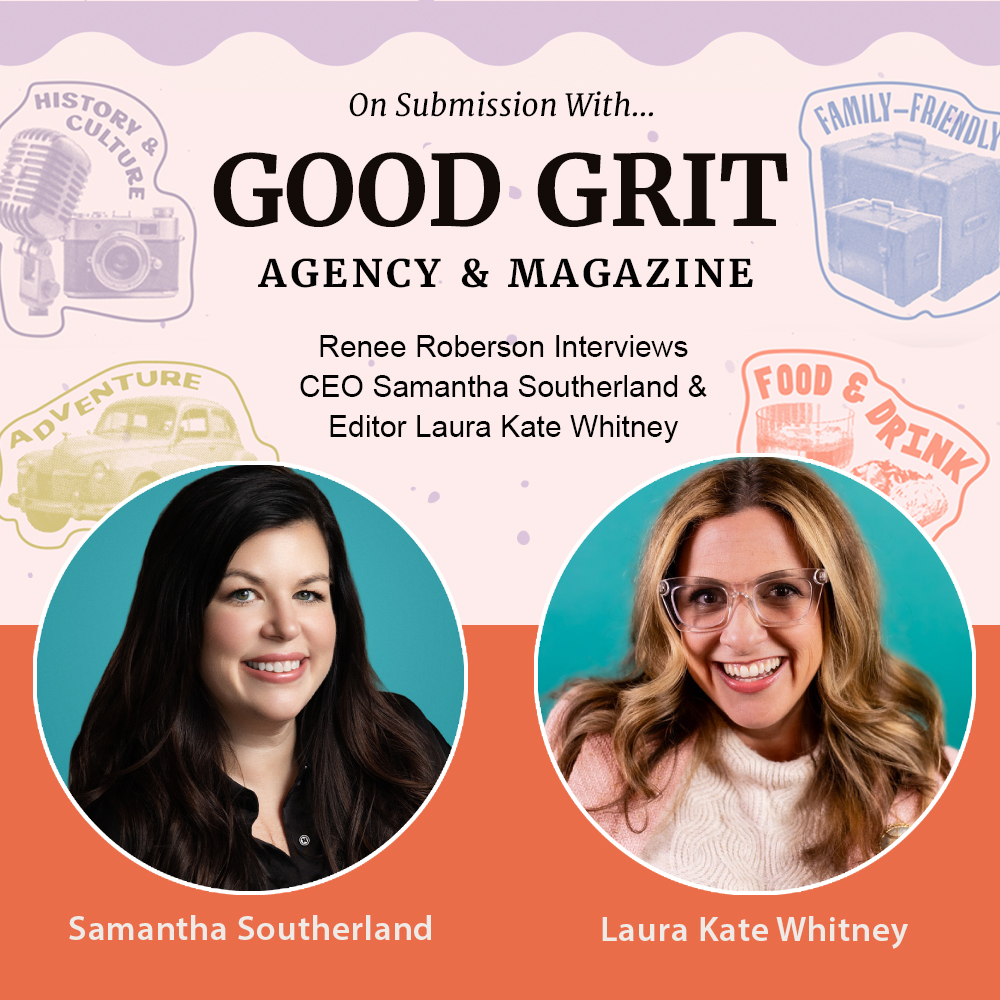
- Celebrating Stories of the Southeast: Good Grit Agency & Magazine - CEO Samantha Southerland and Editor-at-Large Laura Kate Whitney - Interview by Renee Roberson
- Calls from Editors
- June Deadlines: Poetry, Fiction, Nonfiction, Multigenre, Just for Fun
- Craft Corner: "5 Creative Approaches to Try for Your Next Short Story" by Savannah Cordova
- Recent WOW features and posts from The Muffin
| | |
“Pangur Bán and I, my cat, / Tis a task we are at; / Hunting mice is his delight, / Hunting words I sit all night,” wrote an Irish monk in the ninth century in the first line of one of the earliest literary works featuring a pet.
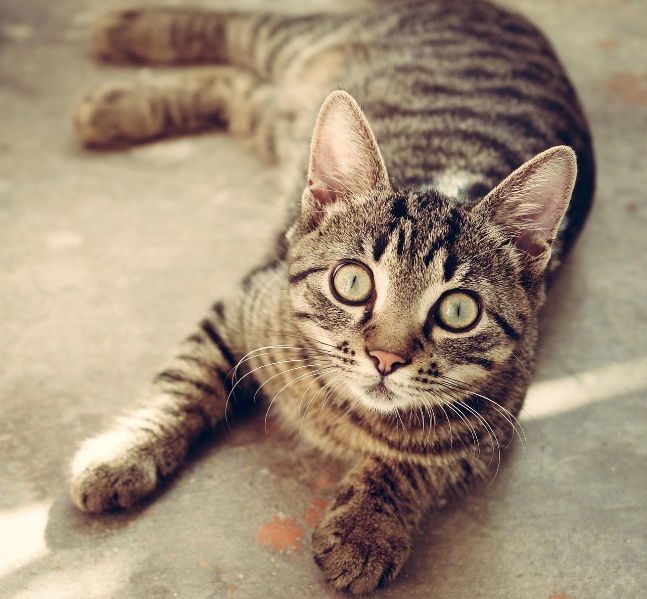
It’s true that not all writers have pets but it’s also true that some of the world’s greatest writers enjoyed the company of a special animal, whether dog, cat, or something more exotic, such as Flannery O’Connor and her peacocks or Lord Byron and his bear. As the experience of the anonymous monk demonstrates, pets are not only our companions, but they can also serve as muses, inspiring vivid and thoughtful prose and poetry.
| | |
Writers who cherish animals never suffer from a lack of inspiration. Would Carl Sandburg have penned “Fog,” one of the most famous image poems of all time without a cat nearby? And consider the rich sensory details brought to life by Jane Kenyon in “After an Illness, Walking the Dog.”
Not everyone is fortunate enough to own a pet, but simply observing an animal in nature brings a special delight, as illustrated by The Tyger by William Blake and the snail in The Crossing by my dear friend Ruth Moose.
| | |
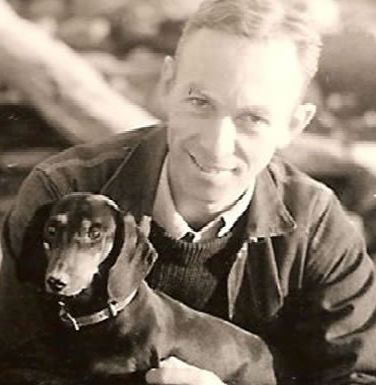
Writers can learn so much from animals about nature. One of my favorite pet passages belongs to writer E.B. White, who described his dachshund Fred in an essay published in 1956. “Within the range of his tether, he continued to explore, dissect, botanize, conduct post-mortems, excavate, experiment, expropriate, savor, masticate, regurgitate. He had no contemplative life, but he held as a steady gleam the belief that under the commonplace stone and behind the unlikely piece of driftwood lay the stuff of high adventure and the opportunity to save the nation.”
As we can see from White’s example, it’s almost impossible to write about a pet without a healthy dash of humor. White’s essay primarily concerned the politics of the day, but what made it truly memorable is White’s hilarious and thoroughly unique portrayal of Fred.
If you’re considering memorializing a favorite pet or including a special animal in your work, the writing prompts below might help.
Write a story for children. Like so many other Gen X’ers, I grew up on the illustrated tales of Richard Scarry and Dr. Seuss. Featuring animals in a story is an easy way to captivate children and to gently teach them important life lessons. This is especially appealing for writers who also like to draw or are willing to learn. Or, in the example of Stan and Jan Berenstain, creators of the kid’s lit franchise, Berenstain Bears, you can also find a collaborator!
Give your fictional character a pet. The addition of a pet can add texture to the life of your protagonist, and in the case of Jasper, the dog of Mrs. De Winter in the novel Rebecca, they can also help advance the plot. Jasper led our heroine on a number of adventures that ultimately helped unravel the novel’s deepest secret.
Where is Fido? Take a pivotal point in your life and put your pet in it. The harrowing and poignant modern essay, The Fourth State of Matter, by Jo Ann Beard, gets its momentum from the author’s masterful weave of her collie’s illness and a workplace shooting. Where was your pet during your own struggles? Make a short diary of their behavior and your dilemma and watch them magically converge into an essay of your own.
| | |
Give your pet the pen. Write a scene from your own life from the point of view of your pet. But there’s a catch. You must be perfectly serious. Comedy will naturally arise, but it will be even funnier if you let your dog describe you baking a cake or weeding the garden without irony or intentional humor.
Your pet at work. My dogs and cat spend most of the day snoozing, to be honest. But when Little Puss is stalking a lizard or when my husky Max is alerting me to the arrival of the postal carrier, they are all business. In the spirit of White’s beloved Fred, describe the unwavering dedication of your favorite hunter or guardian in work mode. (For Tulsi, from the sounds she makes while dreaming, sleep counts as work!)
| | |
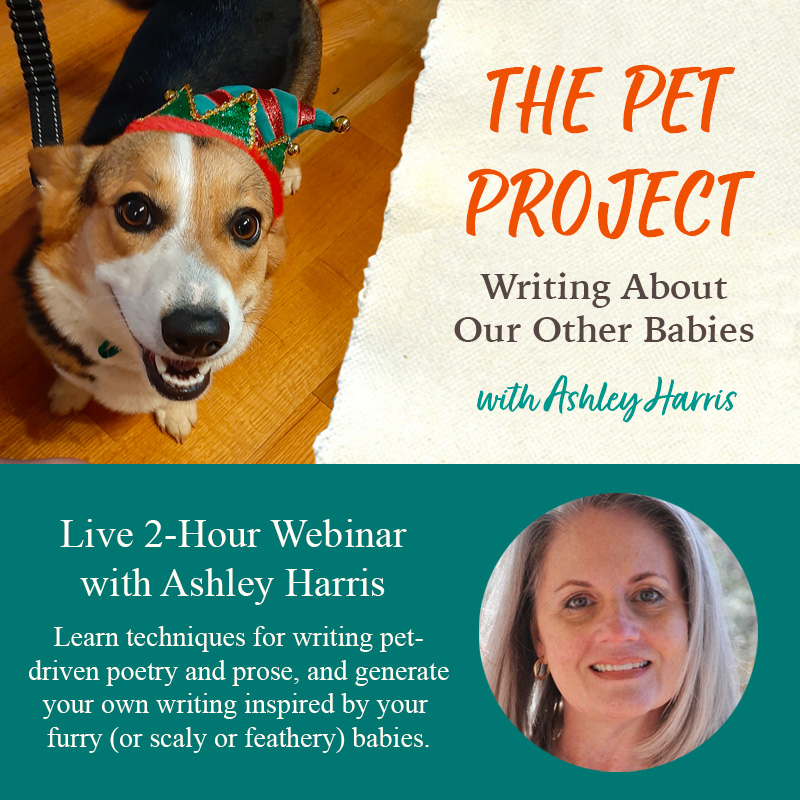
If these prompts intrigue you and you’d like to have even more, I hope you’ll join us for The Pet Project, a two-hour workshop on Friday, June 19, from 2 – 4 pm ET. At this special event, we’ll read pet-driven poetry and prose written by masters such as E.B. White, T. S. Eliot, Rachel Wetzsteone, Mary Oliver and more, and discuss techniques from them that can enhance portrayals of our own pets. We’ll use THREE unique prompts guaranteed to generate instant work you may polish later and submit for publication. As with all my classes, I’ll also include a roundup of magazines and websites eager to publish your writing. And for an additional fee, I’ll critique up to 3 pages of your work and offer targeted submission opportunities. During our time together, we may laugh, and yes, we may cry a tear or two, but it will be time well spent. Hope to see you (and your pets) there!
| | On Submission with ... Good Grit | | |
Celebrating Stories of the Southeast:
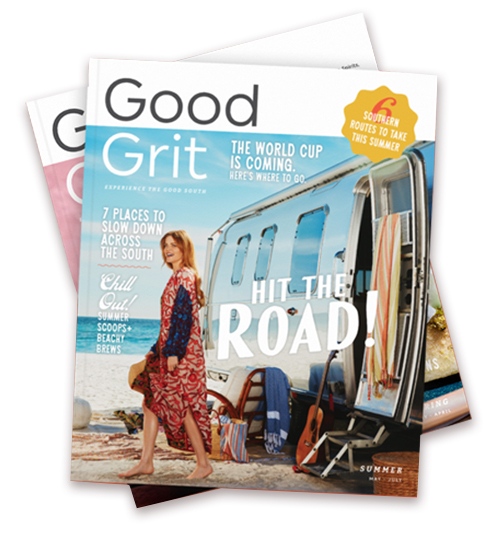
Good Grit Agency & Magazine
| | |
When Laura Quick founded Good Grit Agency & Magazine in 2015, her primary focus was to showcase the stories of the South with honesty, heart, and grit. Fast forward eleven years, and the regional publication has now grown into a multimillion-dollar creative business that offers a variety of services to clients. It produces a quarterly magazine and operates a full-service agency that elevates brands, nonprofits, and entrepreneurs across the Southeast.
We recently chatted with Samantha Southerland, who was named Chief Executive Officer earlier this year, and Laura Kate Whitney, who serves as the Editor-at-Large for Good Grit magazine, to learn more about what the company has to offer and what type of work is available for freelance contractors.
Samantha Southerland is the CEO of Good Grit Agency and Good Grit magazine, where she leads strategy, storytelling, and growth across a creative agency and a publication built to spotlight people, businesses, and communities doing meaningful work. Her role sits at the intersection of brand, media, partnerships, and leadership, helping ideas move from concept to real-world impact.
Samantha’s background is in strategic operations, marketing, and communications, with more than a decade spent building teams, scaling initiatives, and leading complex, cross-functional work. She holds an Executive MBA from Auburn University and a PMP certification and is known for blending structure with creativity and strategy with story.
Laura Kate Whitney is the Founder and Chief Experience Officer of GOODco, an experience management studio based in Charleston, S.C. A master connector, passionate storyteller, and creative strategist, she leads experiences and campaigns for brands and organizations across the Southeast. Laura Kate also serves as Editor-at-Large for Good Grit magazine, a Southern travel publication for those who love and are curious about exploring the good South. Known for her strategic vision and creative edge, Laura Kate brings people together for experiences that leave a lasting imprint.
| | |
WOW: Welcome, Samantha and Laura Kate! Samantha, let’s start with you. What first attracted you to Good Grit Agency & Magazine, and what do you hope to bring to your new role as Chief Executive Officer?
Samantha: You know that feeling when something just fits—when you don’t have to stretch to be it, you just are? That’s what Good Grit feels like to me.
I’ve had a career I’m deeply grateful for: a communications and marketing degree, an MBA, owning multiple businesses, and serving as a VP inside a billion-dollar company. I learned a lot in those seasons. But stepping into Good Grit feels different. It feels like the most aligned version of who I am and what I’m meant to build.
This role brings together everything I care about, like building strong teams, serving people well, and helping organizations connect marketing, sales, and operations so growth is intentional, not accidental. And when you add the magazine—the storytelling, the culture, the South—it just makes sense.
Laura Quick laid an extraordinary foundation over the last decade, and it’s an honor to steward what she built. If I can bring anything to this role, it’s clarity, high standards, genuine care, and long-term vision. I want our team to love working here. I want our clients to feel supported and understood. And I want us to keep raising the bar while protecting the heart that makes Good Grit what it is.
That’s what excites me.
WOW: What are some of the current products the company produces that our readers based in the South can check out?
Samantha: What makes our company unique is that we’re both a magazine and an agency.
On the magazine side, we tell meaningful stories about the South—where to travel, who to know, what’s being built, and the people shaping our communities. It’s thoughtful, culture-driven storytelling that celebrates this region in an elevated way.
On the agency side, we partner with businesses of all sizes across the South who want to grow with intention. We sit at the table with leadership teams, learn their goals, understand their pain points, and build strategies that align marketing, sales, and operations in a holistic way. We develop brands. We map customer journeys. We build websites. We lead PR initiatives. We create advertising strategies. But more than that, we help organizations get clear on who they are and how they show up.
And you can actually see our work out in the world: when you look at the menu at The Essential, browse the Visit Dublin website, or attend the All the Hats conference, you’re experiencing Good Grit in action. Together, the magazine and the agency allow us to serve the South in a way that’s both creative and strategic.
WOW: Your website offers the following statement:
Whether you’re a bustling tourism board aiming to lure adventurers, a scaling business hungry for brand elevation, or a bold startup embarking on an entrepreneurial journey, we’re here for you.
What are some examples of ways the agency has assisted clients in crafting and sharing their messages?
Samantha: At the core of what we do, we help people get clear and then we help them say it well.
For tourism boards, that often starts with defining what truly makes a place worth the drive. With Visit Mississippi, we created an immersive brand experience through the Porch Party in Jackson, pairing editorial storytelling, influencer engagement, photography, and video capture to position the city as soulful and experience driven. The event generated nearly 130,000 in social reach and strong engagement, proving that when hospitality meets strategy, people don’t just scroll—they plan trips.
We also believe experiences create momentum. For the State of the Industry conference, we handled branding, website management, content capture, on-site execution, and long-term strategy. We helped lay the groundwork to grow it from a one-day event, helping the event reach capacity and build demand for future expansion.
On the digital front, we partnered with South Georgia to create an international visitor website ahead of the 2026 World Cup. Through workshops, research, SEO-forward storytelling, and intuitive design, we built a website that unified 11 small towns under one welcoming digital front porch, making it easier for global travelers to discover and navigate the region.
For growing businesses and education initiatives, alignment is usually the starting point. With Story Arts, we helped bring a vision to life through brand identity, website development, social strategy, blog content, marketing materials, and video production. Driven by our work, the Georgia Department of Education selected Story Arts as its featured curriculum for public school teachers statewide.
And with Dublin, we led a full brand unification effort, aligning multiple governmental entities under one cohesive identity, refining messaging, and developing digital assets that strengthened both internal pride and external visibility.
Whether it’s a tourism board, a regional website, an event, or an education initiative, we’re making sure the story being told externally matches the experience being delivered internally. That’s what builds trust. And trust is what lays the foundation for growth.
| | |
“Our freelance opportunities span both sides of our business ... What we look for is simple: people who are excellent at what they do, communicate clearly, and genuinely care about the work and the people it serves.”
| | |
WOW: What a unique scope of work! In addition to your core staff, Good Grit Agency is looking for individual contributors in a variety of areas. Could you tell us more about freelance opportunities with the agency?
Samantha: Over the past decade, we’ve had the privilege of collaborating with more than 200 freelancers across the South and beyond, and that’s something we’re incredibly proud of. While we’ve built a strong internal leadership team, we firmly believe great ideas don’t live only inside four walls. Some of our strongest work has come from bringing in the right specialist at the right moment, whether that’s a writer, photographer, videographer, designer, strategist, or event lead.
Our freelance opportunities span both sides of our business. On the magazine side, that might look like editorial contributors or visual storytellers. On the agency side, it can include brand strategy, website development, video production, social media support, or campaign execution. The needs shift depending on the season and our clients’ goals, but our standards stay the same.
What we look for is simple: people who are excellent at what they do, communicate clearly, and genuinely care about the work and the people it serves. We’re always open to building relationships with talented creatives and operators who want to collaborate on meaningful projects. When someone does great work and aligns with our values, there’s almost always an opportunity to build something together.
WOW: Laura Kate, what is the mission and philosophy behind Good Grit magazine, and where can readers find the publication?
Laura Kate: Good Grit exists as a field guide for those who love or are curious about the South. Every page in the magazine serves as an inspiration to explore the many charms and flavors found in destinations across the Southern U.S., a region known for its hospitality, natural beauty, and indisputable influence on music and cuisine. Our storytelling, photography, and insider tips invite readers to take a bite out of lesser-known destinations, discover hidden gems in some of the South’s most popular destinations, and get to know the creatives and change agents who are shaping the region’s current culture.
Adventure seekers can find our magazine at more than 1,500 retailers across the Southeast and online at goodgritmag.com. The BEST way to get your hands on Good Grit Mag, though, is by having it delivered straight to your mailbox: https://goodgritmag.com/subscribe/.
WOW: How did you personally learn about the magazine, and what about it made you want to join the staff as Editor-at-Large?
Laura Kate: As a Southern native and lifelong collector of good stories, I caught wind of what Good Grit founder Laura Quick was up to back in 2015 when the magazine launched. I enjoyed consuming the brand throughout the years and, when Laura asked, “Do you want to dream big with me?” in the fall of 2024, I jumped at the opportunity to step into the role of Editor-at-Large to take this beloved, decade-old media brand into its next best chapter. I began working with the team in spring of 2025 and it’s been my focus since day one to grow from the good foundation that’s been built by the incredible team, and expand that shared space for our community to discover and celebrate this remarkable place where we live, work, learn, play, dine, entertain, explore, and rest. What I’ve been most delighted by is how many genuinely good stories there are out there - the South definitely has something to say, and I can’t wait to keep telling these stories for years to come!
WOW: As a fellow southerner, I wholeheartedly agree that this is an incredible area to work, live in, and visit! What do you think makes Good Grit magazine stand out from other competition in the print marketplace?
Laura Kate: Our cover, no notes. The Good Grit cover is textural - it feels, quite literally, gritty. So as soon as you pick it up and feel it, you know you’re in for a treat. We also dedicate every single page to stories about the American South that inspire travel, adventure, curiosity, and connection. While we enjoy the good company of other remarkable Southern-focused magazines, Good Grit has its own voice that’s rooted in people and place. Also, each issue is so beautiful that our readers tend to collect and display them.
| | |
“We dedicate every single page to stories about the American South that inspire travel, adventure, curiosity, and connection ... While we enjoy the good company of other remarkable Southern-focused magazines, Good Grit has its own voice that’s rooted in people and place.”
| | |
WOW: What types of submissions are you looking for from readers for the quarterly magazine? How can a writer really “wow” you with their query?
Laura Kate: The incomparable Landon Bryant hosts his “Just Ask Landon” column in each issue. Readers are encouraged to send in their burning questions about Southern isms and idiosyncrasies. We collect those queries over on Instagram and he chooses which to answer. Those pages are some of my favorites in each issue. You can’t not smile when Landon is sharing his sweet tea-tinged Southern knowledge.
We love to hear from readers. Folks can drop a note to us on our website or send us a note via social. Our editorial team is always looking for inspiration and tips on where to go, what to see, what to eat/drink, and just how far that country lane goes…
Our readers gravitate towards content that is both helpful and aspirational. Each issue covers everything from Good Finds (our favorite product picks), Good Times (seasonal events to see + be seen), Good Hospitality (individual stories of exceptional Southern service), Travel Like a Local (an influential insider’s take on a popular destination), and The Good Getaway (a comprehensive itinerary highlighting a featured destination) - not to mention all the other wonderful recurring features such as Good Reads, Good Sounds, and One for the Road (our playlist for the season, designed to be the soundtrack for your next, most epic Southern road trip).
WOW: Thanks again to Samantha and Laura Kate for introducing us to Good Grit Magazine & Agency this month! Be sure to check out them out and learn how you can get involved in reading about and sharing more stories from the southeast.
| | |
Renee Roberson is a freelance writer, editor, and host/creator of the true crime podcast, Missing in the Carolinas, which has more than 8,000 followers on Spotify. For fun, she works as a bookseller at a charming independent bookstore in North Carolina. Learn more at FinishedPages.com.
| | |
Adi - Spring 2026
Deadline: May 31
Adi is seeking new poems for their Spring issue. They tend toward creative, experimental approaches to political writing, measuring the effects of policy through the intimate lives and experiences of people with a particular focus on those on the margins and in the Global South. Submit up to 5 poems, no more than 10 pages. Pay: $150 per poem. No fee.
https://adimagazine.submittable.com/submit/350064/spring-2026-open-call-for-poetry
PhilLit Summer Poetry Contest
Deadline: June 1
Send them your best poem. One winner will receive a $300 cash prize, publication in the annual PHIL LIT PARAGON: Annual Poetry Anthology, a contributor copy, and promotion on their supported media outlets. 3 finalists will also be published in the anthology and paid a $25 honorarium. Fee: $9
https://phillitjournal.submittable.com/submit/349653/2026-summer-poetry-contest
2026 Button Poetry First Book Contest
Deadline: June 2
They value energy and voice and force, work that crosses borders or effaces them completely, work that enters into larger social conversations, work that lives in the world, work with calloused hands and a half-empty stomach. The winner will receive publication, 25 free author copies, and a $1,000 honorarium. Fee: $25
https://buttonpoetry.submittable.com/submit/354161/2026-button-poetry-first-book-contest
Boulevard Poetry Contest for Emerging Poets
Deadline: June 2
$1,000 and publication in Boulevard awarded for the winning group of three poems by a poet who has not yet published a book of poetry with a nationally distributed press. Fee: $18
https://boulevard.submittable.com/submit/12288/poetry-contest-for-emerging-poets
Biocoastal Review Ekphrastic Poetry Contest
Deadline: June 2
For this contest, they’re looking for poetry that is inspired by, in conversation with, critiquing, or responding to any poem that they have published in any of their past issues. One winner receives $200, a featured publication in a print issue, a uniquely designed physical and digital broadside of their poem, publicity on our social media channels, free contributor copies, and an optional interview. No fee.
https://bicoastalreview.submittable.com/submit/326484/ekphrastic-poetry-contest
Ros Spencer Poetry Prize 2026
Deadline: June 7
A poetry contest from WA Poets Inc. for original and unpublished poems of up to 60 lines, of any theme, for an opportunity to be published in the anthology Brushstrokes 2026 and to win: First Prize $1,001, Second Prize $499. Fee: $25
https://wapoets.submittable.com/submit/352222/ros-spencer-poetry-prize-2026
Poetry Magazine
Deadline: June 14
Submit up to 4 poems (10 pages total) in a single document. They are open to poetry, translation, video poems, and visual poems. Pay: text poems: $10/line with a minimum payment of $400 per poem; visual poems: $400 per poem; video poems: $600 per poem; prose: $250 per published page. No fee.
https://poetry.submittable.com/submit
Philly Poetry Chapbook Review: Summer 2026 Edition
Deadline: June 15
The editors are looking for serious poetry that has something important to say. This can mean poems about topics important to you, poems telling them about who you are or what you think, or an unusual or clever creative style. Poems don’t need to deal with weighty subjects but should be meaningful. They prefer thought-provoking free verse. AVOID common forms of metered verse, end-rhyme, haiku/tanka, and other well-worn forms. Submit at least three poems. Each submission is judged as a whole. Pay: $10 honorarium. No fee.
https://docs.google.com/forms/d/e/1FAIpQLSeiYYc7FDeUakMaWXcfm3D47S7Io9HCYbNB1dLBjhGRI1C9jw/viewform
2026 Akron Poetry Prize Submissions
Deadline: June 15
Each year, the University of Akron Press offers the Akron Poetry Prize, a competition open to all poets writing in English. The winning poet receives $1,500 and publication of their book as part of the Akron Series in Poetry. Manuscripts must be a total length of at least 48 pages and no longer than 90 pages. Fee: $25
https://theuniversityofakronpress.submittable.com/submit/350925/2026-akron-poetry-prize-submissions
2026 Dan Veach Prize for Younger Poets
Deadline: June 15
The Dan Veach Prize for Younger Poets solicits unpublished poems from college-age students, aged 18-23, on any subject or style. Prize: $100. No fee.
https://atlantareview.submittable.com/submit/354487/2026-dan-veach-prize-for-younger-poets
2026 Nature Poetry Prize
Deadline: June 15
This summer, Palette Poetry invites you to get outside and write some poems! Kimiko Hahn will judge their inaugural Nature Poetry Prize. Send them your meditations on the sound of wind, your obsessions with the shape of trees, and your words woven like blades of grass. The winner will be awarded $3,000 and publication, the first runner-up will receive $300 and publication, and the second runner-up will receive $200 and publication. Submit no more than three poems and under ten pages in one document. Fee: $20
https://palettepoetry.submittable.com/submit/351591/the-2026-nature-poetry-prize3-500-awarded
Eye to the Telescope: Issue 61: Aliens
Deadline: June 15
From close encounters to first contact to space operas to UFO Earth visits, stories about aliens or extraterrestrials proliferate in our diverse cultures and communities. Aliens can take on many forms: humanoid, animal-like, plant-like, virus-like or completely divergent from species on Earth. They can be hive-minded or individualistic, coming from other worlds or dimensions. They are looking to weave a vibrant issue on ETs and their interactions with humans or species of various experiences and backgrounds! Open to free verse, scifaiku, humor, rhyme, concrete poetry and more! Submit 1-3 unpublished poems in English and include a short bio. Pay: 4¢/word rounded up to nearest dollar; minimum US $4, maximum $25. No fee.
https://eyetothetelescope.com/submit.html
The 25th Annual Gival Press Oscar Wilde Award
Deadline: June 27
This award will be given to the best previously unpublished original poem written in English (of any length, in any style, typed, single spaced but with breaks for stanzas on one side only), which best relates LGBTQ+ life by a poet who is 18 or older. Entrants are asked to submit up to 3 of their poems. The winner will receive $500 (USD), and the poem, along with information about the poet, will be published on the websites of Gival Press. Fee: $20
https://givalpress.submittable.com/submit/210511/25th-annual-gival-press-oscar-wilde-award-2026
Poetry London Prize 2026
Deadline: June 30
Open internationally, the Poetry London Prize awards a single outstanding poem. First Prize is £5,000, Second Prize is £2,000 and Third Prize is £1,000. The judge is Seán Hewitt. Entries must be written in English, can be on any subject and in any style or form. Each poem should be uploaded in a separate document. Entries are welcome from poets based anywhere in the world and there are no restrictions on themes, subjects or styles. Fee: £10 per poem or £5 for subscribers.
https://poetrylondon.submittable.com/submit
2026 May Sarton New Hampshire Poetry Prize - Full Length
Deadline: June 30
Manuscripts must be typed and paginated, and roughly 50 to 80 pages in length. The winner receives $1,000, book publication, and 50 copies of the published book, as well as distribution with other spring titles through their distributor. Fee: $30
https://bauhanpublishing.submittable.com/submit/343806/2026-may-sarton-new-hampshire-poetry-prize
SpecPoVerse
Deadline: June 30
SpecPoVerse is an international journal of speculative poetry. They accept poems with or without known formalism and also experimental forms. An illustrated poem in which the illustration was created by the poet is also acceptable. Poems created by AI are not acceptable. Submit up to 3 poems; 100 lines or 499 words for a prose poem. Pay: $5 per poem. No fee.
https://specpoverse.org/submission
| | |
Bard Fiction Prize for Young Writers
Deadline: June 1
The Bard Fiction Prize is awarded to a promising emerging writer who is an American citizen aged 39 years or younger at the time of application. Prize $3,000. No fee.
https://www.bard.edu/bfp/
The Halifax Ranch Prize
Deadline: June 1
American Short Fiction has published and continues to seek short fiction by some of the finest writers working in contemporary literature, whether they are established or new or lesser-known authors. The winner will receive a $3,000 prize and publication in an upcoming issue of American Short Fiction. Fee: $20
https://americanshortfiction.submittable.com/submit/110312/the-halifax-ranch-fiction-prize
The Times/Chicken House Children’s Fiction Competition
Deadline: June 1
The Times/Chicken House Children’s Fiction Competition is the largest writing competition for children’s books in the UK, offering unpublished and unagented writers the chance to get their work discovered. £10,000 royalty advance. Fee: £25
https://www.chickenhousebooks.com/submissions/
The Dream Foundry: Emerging Writers Contest
Deadline: June 2
Open internationally, the Dream Foundry Contest for Emerging Writers is an annual no submission fees contest with cash prizes. They are looking for short speculative fiction (science fiction, fantasy, weird fiction, etc.) First Place: $1,500. Second Place: $750. Third Place: $400. This contest is for writers who are relatively new to paid or incoming-earning publication of speculative short fiction in English. To be eligible for this contest, you must not have published more than 4,000 words, earned more than $320 from those words, and have not been nominated for a major award or are a previous winner, and no AI. Submit one complete and finalized story of up to 10,000 words. No fee.
https://dreamfoundry.org/writing-contest/
BSFS's Avery/Deutsch Amateur Writing Contest
Deadline: June 15
The Baltimore Science Fiction Society Avery/Deutsch Amateur Writing Contest is open to amateur writers over 18 years old who are residents of Maryland and to students attending any Maryland 2- or 4-year college. 1st place is $250, 2nd place is $100, 3rd place is $50. No fee.
https://www.bsfs.org/bsfsssc.htm
2026 Eluid Martinez Prize
Deadline: June 15
The Eliud Martínez Prize was established to honor the memory of Eliud Martínez (1935–2020), artist, novelist, and professor emeritus of creative writing at the University of California, Riverside. One prize of $1,000 and book publication through Inlandia Books will be awarded for a book of fiction or creative nonfiction by a writer who identifies as Hispanic, Latino/a/x, or Chicana/o/x. Fee: $15
https://inlandiaaliteraryjourney.submittable.com/submit/351327/2026-eluid-martinez-prize
2026 New American Press Fiction Prize
Deadline: June 16
All full-length fiction manuscripts are welcome. Full-length fiction manuscripts tend to be at least 100 pages. There is no maximum length. Winner will receive a contract including $1500, publication, twenty-five copies, and promotional support. Fee: $25
https://newamericanpress.submittable.com/submit/347550/2026-new-american-fiction-prize
Craft First Chapters Contest
Deadline: June 28
There’s an unforgettable electricity that courses through the first chapters of a terrific novel. So much magic and mystery. So many potential paths for our protagonists. This summer, CRAFT wants to be transported by your early pages. The CRAFT First Chapters Contest encourages novelists to harness the energy of their openings for the opportunity to win a $2,000 award, excerpt publication, and a full manuscript critique by Artful Editor. Submit excerpts of up to 5,000 words of book-length fiction only. Fee: $20
https://craft.submittable.com/submit/353595/craft-2026-first-chapters-contest-guest-judge-deb-olin-unferth
2027 Katherine Anne Porter Prize in Short Fiction
Deadline: June 30
The University of North Texas Press announces the 2027 Katherine Anne Porter Prize in Short Fiction. Entries can be a combination of short-shorts, short stories, and novellas, from 100 to 200 book pages in length (word count between 27,500 and 50,000). Material should be previously unpublished in book form. The Winner of this annual award will receive $1,000 and publication by UNT Press. Entries will be judged by an eminent writer. Fee: $25
https://universityofnorthtexaspress.submittable.com/submit/354780/2027-katherine-anne-porter-prize-in-short-fiction
Lascaux Prize in Flash Fiction
Deadline: June 30
All genres and styles are welcome. Individual story length should not exceed 1,000 words. Winner receives $1,000, a bronze medallion, and publication in The Lascaux Review. All entries are considered for publication. Fee: $15
https://lascauxreview.com/contests/
| | |
Norton Writer's Prize
Deadline: June 15
The Norton Writer’s Prize recognizes outstanding original nonfiction by undergraduates. The contest is open to students age 18 and above who are enrolled in an accredited 2- or 4-year college or university during the 2025–2026 academic year. Three cash prizes of $1,000 apiece will be awarded in 2026 for coursework submitted during the academic year. Submissions must be between 1,000 and 3,000 words in length. Literacy narratives, literary and other textual analyses, reports, profiles, evaluations, arguments, memoirs, proposals, multimodal pieces, and other forms of original nonfiction will be considered. No fee.
https://wwnorton.com/norton-writers-prize/
Room Creative Nonfiction Contest
Deadline: June 15
Room is Canada’s oldest feminist literary magazine, published quarterly since 1975. First prize: $1,000 and potential publication in Room; Second prize: $250 and potential publication in Room; Third prize: $100 and publication on Room’s website. Submit CNF up to 3,500 words. Do not include your name or personal info on the document, as submissions are judged blindly. Guest judge: Kai Cheng Thom. Fee: If you reside in Canada, $45. If you reside in the US, $55 CAD. If you reside outside of North America, $65 CAD.
https://roommagazine.com/contests/
Anne Brown Essay Prize
Deadline: June 15
This contest awards £1500 for the best literary essay by a writer in or from Scotland. Entrants must be over 16 and a resident in Scotland, born in Scotland or have a longstanding association with Scotland. Submit an essay up to 4,000 words. No fee.
https://www.wigtownbookfestival.com/blog/anne-brown-essay-prize-2022
Eugene C. Pulliam Fellowship for Public Service Journalism
Deadline: June 29
The Pulliam Fellowship awards up to $100,000 to outstanding editorial writers, columnists or reporters to help broaden their journalistic horizons and knowledge of the world. The award can be used to cover the cost of study, research and/or travel. To be eligible, writers must be employed as an opinion writer, or as a reporter with a major focus on analytical or investigative journalism, at a U.S. news outlet. Submit an application with a cover letter of your project, an endorsement of the project by an editor, a one-page bio, and five samples of opinion or analytical writing. No fee.
https://www.spj.org/eugene-c-pulliam-fellowship-for-public-service-journalism/
Storyhouse Nonfiction Contest
Deadline: June 30
The contest is open to writers whose creative writing has never produced revenues of over $250 in any single year. Any appropriate nonfiction topic is eligible. Stories must be true, not semi-fictional accounts. Submit a nonfiction piece between 1,000-5,000 words. Prizes: $200 for the winner, $100 for the runner-up, and certificates of achievement for all finalists. No fee.
https://www.storyhouse.org/contest2026.html
Modern Love
Deadline: June 30
The New York Times’ Modern Love column seeks true stories on finding love, losing love and trying to keep love alive. They welcome essays that explore subjects such as adoption, polyamory, technology, race and friendship—anything that could reasonably fit under the heading “Modern Love.” Ideally, essays should spring from some central dilemma you have faced. It is helpful, but not essential, for the situation to reflect what is happening in the world now. Word count: 1500-1700 words. Send submissions to: modernlove@nytimes.com. Please put the subject of your essay or a possible title in the email subject line. Pay: $400 per essay. No fee.
https://www.nytimes.com/article/how-to-submit-a-modern-love-essay.html
The Amy MacRae Award for Memoir
Deadline: July 1
Writers anywhere in the world are invited to enter. The prize is CAD$1,000. Submit an exceptional work of memoir writing no longer than 2,000 words. All entries are judged anonymously. Fee: $25
https://memoirwritingink.submittable.com/submit
| | |
The Common
Deadline: June 1
The Common seeks stories, essays, poems, and dispatches that embody a strong sense of place: pieces in which the setting is crucial to character, narrative, mood, and language. Dispatches: are notes, news, and impressions from around the world. Both prose (nonfiction only) and verse accepted. Length: up to 800 words. Include the title, piece location, and word count of the piece on the first page of your submission. Fiction, Essays, and Translations: submit one piece up to 10,000 words. Poetry: submit up to 5 poems. Pay: Fiction, nonfiction, translations, and poetry will be considered for print and online publication. $200 honorarium per prose piece, and $40 per poem. Dispatches are published online only and receive $100 per piece. Fee: $2-$3, no fee for subscribers.
https://thecommon.submittable.com/submit
The PEN/Bare Grants
Deadline: June 1
The PEN America Literary Grants support literary works-in-progress in the categories of Children’s and Young Adult Novelists, Review, Oral History, and Translation. Grants of $2,000 - $15,000 are awarded for fiction, creative nonfiction, and poetry. Apply with a sample of your writing. No fee.
https://pen.org/literary-grants/
Lullaby Machine: Issue 004
Deadline: June 1
Lullaby Machine is a quarterly e-magazine that publishes poetry, short fiction, creative nonfiction (including interviews and reviews) and lullabies/recorded landscapes. Lullabies invite the practice of relational presence via rest. Rest invites the possibility of restoration and dream. Dreams remind us that life is liminal, reality bends, and change is possible, inevitable, and necessary. They are currently seeking submissions for issue 004. Prose: Maximum 10 double-spaced pages, or roughly 2,500 words. Poetry: you may submit multiple poems in one document. They also accept visual, hybrid work, and recorded lullabies. Pay: $30 per piece. No fee.
https://lullabymachine.com/submit
Solstice’s 2026 Annual Literary Contest
Deadline: June 1
Submit your fiction, nonfiction, poetry, and graphic lit to Solstice’s 2026 Annual Literary Contest. Winners, finalists, and Editors’ Choice in each genre will be published in our Summer Awards Issue due out in August.
All winners, finalists, and editors’ choice will be cited in future advertisements and announcements. Fiction or Nonfiction: 25-page. Poetry: 3-poem maximum. Graphic Lit: Original artwork, multiple panels (no single image pieces), 1-6 pages preferred, maximum 8-10 pages. Prizes: $1,000 Fiction Prize, judge: Jessica Treadway; $500 Stephen Dunn Poetry Prize, judge: Porsha Olayiwola; $500 Michael Steinberg Nonfiction Prize, judge: Sven Birkerts; $500 Graphic Lit Prize, judge: John Vasquez Mejias. Fee: $20
https://solsticelitmag.org/contest/
Emerging Writer Awards
Deadline: June 1
The Cecelia Joyce Johnson Award, Scotti Merrill Award, and Marianne Russo Award recognize and support writers who possess exceptional talent and demonstrate potential for lasting literary careers. Winners of the 2027 Emerging Writer Awards will receive full tuition support for their January 2027 Seminar and Writers’ Workshop Program, round-trip airfare, lodging, a $500 honorarium, and appear on stage during the Seminar. Poetry: Please submit 5 - 7 poems within one document. Short Story: Please submit a complete short story of 20 pages or fewer. Novel In Progress: Please submit an excerpt from your novel of 25 pages or fewer. Fee: $12
https://kwls.submittable.com/submit
Moon City Press
Deadline: June 1
The Moon City Poetry Award is for an original collection of poems written in English by a single or collaborative author. Poetry: First prize: $1000, publication by Moon City Press (including international distribution through the University of Arkansas Press and the Chicago Distribution Center), and a standard royalty contract. Ten additional finalists will be named and considered for publication. The Moon City Short Fiction Award is for an original collection of short fiction, written originally in English by a single or collaborative author. First prize: $1000, publication by Moon City Press (including international distribution through the University of Arkansas Press), and a standard royalty contract. Ten additional finalists will be named and considered for publication. Fee: $27
https://mooncitypress.submittable.com/submit
Midway Contests Flash Prose and Poetry Contest
Deadline: June 1
Enter Midway Journal’s -1000 Below: Flash Prose and Poetry Contest for a chance to win the $500 grand prize. All prizes: First Prize: $500 + publication in Midway Journal; Second Prize:$250 + publication in Midway Journal; Third Prize: $100 + publication in Midway Journal. Judge: Michael Martone. Poetry: up to 2 poems per entry, up to 55 words per poem. No more than one poem per page. Prose (Fiction, Nonfiction, Prose Poetry): 1 piece per entry, up to 1,000 words per piece. Fee: $10
https://midwayjournal.com/contest/
Wallstrait Literary Magazine
Deadline: June 1
They accept fiction and creative nonfiction and publish a new piece every three weeks. Pay: $100 upon publication (PayPal only). 500-3000 words preferred. (500 min; 5,000 max.) No AI. Please include a third-person bio. Fee: $3
https://www.wallstrait.com/submissions
Boston Public Library Writer-in-Residence Fellowship
Deadline: June 5
Open to US citizens or green card holders, the residence provides an emerging children’s writer with the financial support, editorial assistance, and office space needed to complete one literary work for children or young adults. The fellowship recipients get a $70,000 stipend, up to $2,500 of additional funding, a private office space at the Boston Public Library in Copley Square, and an opportunity to present your manuscript at a fall reading. All genres welcome! Eligible projects include fiction, non-fiction, a graphic novel, script, memoir, or poetry intended for children or young adults. No fee.
https://www.associatesbpl.org/events-and-programs/writer-in-residence-program/
The Icelandic Festival of Manitoba Poetry & Short Story Contest
Deadline: June 7
Writers do not need to be of Icelandic descent to submit an entry, however material reflecting Icelandic culture and interests will be given preference, as will entries that reflect their 2026 festival theme, “Interconnected Shores: Tengdar Strendur.” Poetry: submit up to two entries per person, not to exceed 300 words. Short Story: submit one entry per person, up to 1,000 words. For each category, prizes are awarded: 1st Place Open: $125; 1st Place Intermediate (13-18): $75; 1st Place Junior (12 and under): $50. No fee.
https://www.icelandicfestival.com/festival-events/contests/poetry-short-story-contest
The Masters Review Best Emerging Writers Contest
Deadline: June 7
Best Emerging Writers 2026 will showcase a collection of prose from ten emerging writers who are bold and brave, who tell stories only they can tell, stories that must be told now. Each of our ten winners will receive a $700 award and a print copy of the book. This contest is for emerging writers only. Writers with single-author book-length work published or under contract with a major press are ineligible. Submissions of fiction or creative nonfiction must be under 8,000 words. Fee: $20
https://mastersreview.com/anthology/
Ocean Awareness Student Contest - Theme: Your Story, Our Ocean: How Our Ocean Sustains, Protects, and Inspires Us
Deadline: June 8
The 2026 Ocean Awareness Contest challenges you to dive into this year’s theme by exploring how the ocean sustains, protects, and inspires you and your community. Students ages 11-18 from around the world are invited to participate. Submit a variety of creative expressions, including poetry and spoken word, creative writing, and more. Cash awards are presented to winners in all of the categories at both the Junior and Senior Division levels. Gold Award prize is $1,000. No fee.
https://bowseat.org/programs/ocean-awareness-contest/contest-overview/
Dreamworldgirl Zine - Issue 05: Fantasy
Deadline: June 14
This summer they are looking to explore the intersection between fantasy and girlhood, the magic of childhood and how attainable all of our dreams felt as kids. Without the burdens of societal parameters, expectations and negative stereotypes, our imaginations were once free to flourish, and DWG is devoted to carving out a new space for play. Send no more than three submissions. Poetry and Prose should be under 1,500 words. You can send illustrations, paintings and sketches, prose and poetry, playlists, photography, collages, musings, rants & more! No fee.
https://www.dreamworldgirlzine.com/submit
Little, Brown Emerging Artist Award – Picture Book
Deadline: June 15
Open to US residents, the award will be given to the entrant who submits the most accomplished picture book submission in the form of a mock-up. One prize is available and consists of American Express® gift cards totaling $1,000, and a portfolio review by a Little, Brown Books for Young Readers’ professional children’s book design and editorial team, and a distinguished Artist Mentor. The winner of the Little, Brown Emerging Artist Award will also have an opportunity for his or her submission to be reviewed by the Little, Brown Books for Young Readers editorial team for possible future publication. Submit a mock-up of no more than 32 pages of text (no more than 1200 words), sketches, and at least 2-3 double page spreads (or 4-6 individual pages) of finished art. No fee.
https://lbartistaward.com
Variety Pack
Deadline: June 15
Variety Pack takes pride in being a journal of inclusivity, so they will accept submissions from all walks of life. Poetry: up to 4 poems, any form. Flash fiction: up to 1,000 words. Short fiction/novelette: between 1,001–9,000 words. Nonfiction: up to 3 pieces, a maximum of 5,000 words. They also accept reviews, interviews, and artwork. Pay: $13 per poem; $23 for prose. No fee.
https://varietypack.net/submissions-2/
Chicago Review
Deadline: June 15
They welcome unsolicited submissions of poetry, fiction, and nonfiction for publication in their journal. Poetry: While there are no strict length requirements, they prefer to read at least five pages of work. In most cases, more than fifteen or twenty pages will be too much. Fiction: They will consider one short story or novel excerpt of up to 5,000 words, or up to five “short-shorts” submitted in one file. To submit poetry and fiction, use Submittable. Nonfiction: See guidelines for pitch angles. Nonfiction may vary in length from regular reviews (1,500–2,500 words) to more expansive pieces for their commentary section (2,500–5,000 words). To submit nonfiction, send a pitch in the body of an email, following their guidelines. Fee: $5 (for fiction & poetry); no fee for non-fiction.
https://www.chicagoreview.org/about/submissions/
The Journal of Compressed Creative Arts
Deadline: June 15
The Journal of Compressed Creative Arts is looking for, as you might guess, "compressed creative arts." They accept fiction and creative nonfiction, as long if they are compressed in some way. We pay writers $50 per accepted piece and signed contract. For fiction & creative nonfiction prose (and we think of the prose poem as such), we have a word-count limit: 600. No fee.
https://matter.submittable.com/submit
Fourteen Hills Literary Magazine
Deadline: June 15
They accept the following genres for unpublished unsolicited submissions: Poetry: Up to 3 poems (maximum 7 pages); Fiction: 1 short story or novel excerpt (maximum 20 pages or 6000 words) OR 3 pieces of flash fiction (1000 words per piece); Creative Nonfiction: 1 piece of literary creative nonfiction (maximum 20 pages or 6000 words); Visual Art: Up to 10 pieces of visual art; Experimental/hybrid: Up to 3 pieces (maximum 7 pages). Fee: $3
https://www.14hills.net/submit-general
Grain Magazine
Deadline: June 15
Grain is an internationally acclaimed literary journal that publishes engaging, surprising, eclectic, and challenging writing and art by Canadian and international writers and artists. Poetry: Individual poems, sequences, or suites up to a maximum of 6 pages. Fiction: To a maximum of 3500 words. Literary Nonfiction: To a maximum of 3500 words. All contributors, regardless of genre, are paid $50 per page to a maximum of $250. Fee: $5 (for USA/International); No fee for Canadians.
https://grainmagazine.ca/submit
Gold Man Review
Deadline: June 15
All submissions to Gold Man Review must be original, unpublished work from writers, and artists residing in the states of California, Oregon, Washington, Alaska, and Hawaii. Nonfiction and fiction: Submissions should not be longer than 5,000 words. Poetry: Submissions can be either three short poems or longer poems with a three-page maximum. No fee.
https://goldmanpublishing.submittable.com/submit
AAWP: 2026 Writing Prizes
Deadline: June 30, 2026
The Australasian Association of Writing Programs (AAWP) is offering prizes for fiction, nonfiction, and poetry. AAWP & Westerly Magazine Life Writing Prize 2026: Nonfiction entries should not exceed 3500 words. The winner will receive written commendation from the AAWP, a $500 cash prize, a one-year subscription to Westerly, and conference fees to attend the annual conference of the AAWP, where they will be invited to read from their work. Sudden Writing Prize for Writers Under 25: Submit up to 400 words prose, 40 lines for poetry, 200 words for prose poems, and the equivalent for hybrid forms. If you win you will receive a written commendation from AAWP, and $500. You will have your work published on the Express Media website and receive a Voiceworks subscription. 2026 Short Story Prize for Emerging Writers: Fiction entries should not exceed 3000 words. If you win you will receive: a festival pass to Ubud Writers and Readers Festival (UWRF) and accommodation for the duration of the festival. In addition, you will receive a one-year annual membership to the Australasian Association of Writing Programs (AAWP) and fully subsidised conference fees. 2026 Poetry Prize for Emerging Writers: Entries should not exceed 40 lines (lineated poetry) or 400 words (prose poetry and hybrid forms). If you win you will receive: a festival pass to Ubud Writers and Readers Festival (UWRF) and accommodation for the duration of the festival). In addition, you will receive a one-year annual membership to the Australasian Association of Writing Programs (AAWP) and fully subsidised conference fees. Fee: $20 (Sudden Writers Prize: $5)
https://meniscusliteraryjournal.submittable.com/submit
The Masters Review: Reprint Prize
Deadline: June 30 (Opens June 15)
For two weeks in June, The Masters Review is open to submissions of reprints. Any fiction or creative nonfiction under 6,000 words published prior to June 1, 2025 is eligible. This challenge will be judged by our editorial staff, who will select one winner to receive a $500 prize and publication on our site. More news on the 2026 prize to come soon. Fee: $10
https://mastersreview.com/the-reprint-prize/
Polyphony Lit Poetry & Prose Submissions
Deadline: June 30 (or when they reach 205 submissions)
High school students (aged 14-18) from anywhere in the world are eligible to submit. Poetry must be 80 lines or less. Fiction and creative nonfiction must be 1800 words or less. Please submit no more than three submissions per volume. No fee.
https://polyphony.submittable.com/submit
YesYes Books Vinyl 45 Chapbook Contest
Deadline: June 30
The Vinyl 45 Chapbook Contest is open to poetry, prose, and mixed genre chapbook manuscripts, 20-25 pages in length including title page and table of contents. The manuscript may include pieces that have been published previously, but the manuscript as a whole must be unpublished. Winner will receive the following: Publication by YesYes Books; A limited edition print run of 400; $500 prize; 50 author copies; An additional $250 toward tour expenses. Fee: $20
https://www.yesyesbooks.com/submit
The Closed Eye Open
Deadline: June 30
The Closed Eye Open is an art & literature website that was started as an exploration of the many forms of self-expression. Their main goal is to feature work from a wide range of people that may not necessarily connect with other publications. Submit: Between 1-10 visual art pieces; 1-6 poems; 1-3 pieces of short fiction or flash fiction; 1-3 pieces of creative non-fiction/essay. Fee: $4.50
https://theclosedeyeopen.com/submissions/
Granta
Deadline: June 30
Granta is committed to championing new voices and is open to unsolicited submissions of fiction and non-fiction. They consider all submissions for both print and online publication. They have no set maximum length or minimum length, though most of their submissions are between 3,000-6,000 words. Please submit only one complete story or essay at a time, or one document of no more than four poems. Fee: £3.50
https://granta.com/submissions/
“Verses of Love” – Global Anthology
Deadline: June 30
This international call invites writers from all over the world to submit literary works exploring the theme: Love in all its forms — romantic, platonic, obsessive, painful, political, transformative, or unconventional. Selected works will be published in a digital anthology (e-book). The following literary forms are accepted: Short stories; Poetry; Flash fiction; Creative prose; Experimental texts. Maximum length: 4,000 characters (including spaces and title) Minimum length: not specified (as long as the work is complete). Selected authors will receive: Publication in the digital anthology (PDF e-book) and Digital certificate of participation. Fee: $12
https://www.diarioartistico.com/post/international-open-call-verses-of-love-global-anthology
Chestnut Review
Deadline: June 30
Submit poetry, prose, and flash fiction. Any artist from anywhere in the world may submit. Poetry: Length and format are open. Submit one to three poems without a fee, submit four to six for a small fee. Flash: Submit one piece of up to 1000 words. Prose: Submit one piece between 1000 and 5000 words. Pay: $120 per piece, on publication. Fee: $5 for prose; No fee for poetry and flash.
https://chestnutreview.submittable.com/submit
Flavors of the South Fellowship
Deadline: June 30
The Writers’ Colony at Dairy Hollow is excited to announce the Flavors of the South Fellowship — a new residency celebrating writers whose work explores the food, culture, and stories of the American South. Fellows will enjoy a two-week stay in their acclaimed culinary suite, plus a $1,500 unrestricted stipend. Apply with your writing background, a description of your proposed project and its connection to Southern cuisine, and a work sample. Fee: $35
https://writerscolony.org/scholarships-fellowships/fellowships-current-past/
| | |
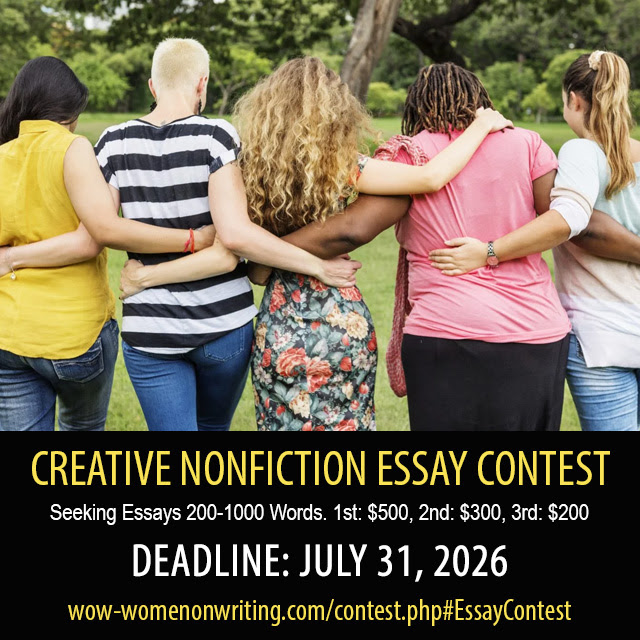
WOW! Women on Writing Quarterly Flash Fiction and Creative Nonfiction Contests
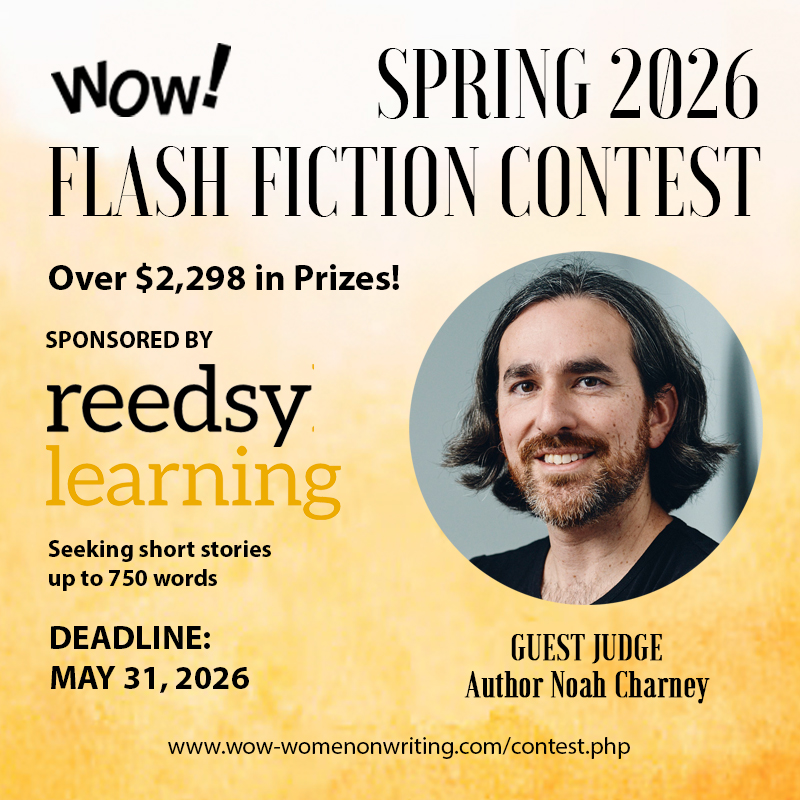
Deadlines: May 31 (fiction) and July 31 (nonfiction). Our favorite writing community offers quarterly contests judged blindly with multiple cash prizes and more for 20 winners, up to $2,298 (fiction) and $1,175 (nonfiction), an affordable critique option, and a 300-entry limit on each contest. Previously published work is accepted! What’s not to love? This season is sponsored by Reedsy Learning! We have a higher cash prize, and Reedsy awarding the winner with a spot in Reedsy’s How to Write a Novel Course ($499 value), a 12-Month Reedsy Learning Membership ($249 value). Guest judge is author Noah Charney. Fee: $10 (Flash Fiction) and $12 (Nonfiction).
https://www.wow-womenonwriting.com/contest.php
| | |
In celebration of Midsummer and the Summer Solstice, consider submitting to the Toasted Cheese 2026 A Midsummer Tale Writing Contest with the theme: Summer Festival. This year, entries must incorporate a festival that takes place during the heat of the summer. This could be a religious or cultural festival, a seasonal or harvest festival (e.g. Lughnasadh), an arts festival (a music festival, film or theater festival, literary festival, etc.) or a summer fair or exhibition (e.g. an agricultural or county fair). Other possibilities include renaissance fairs and pride festivals. Identify your story as fiction or creative nonfiction. For CNF entries, please indicate whether names have been changed. Length: 1,000 words minimum; 5,000 words maximum. Winning stories are published in the September issue of Toasted Cheese. Gift card is awarded based on number of entries; minimum is $25 Amazon Gift Card. No fee.
| | 5 Creative Approaches to Try for Your Next Short Story | | |
One of the best things about the short story form is how much room it gives you to experiment. Unlike a novel, a short story lets you take big creative swings without the significant time investment; if it doesn’t work, you can just try something else next week.
This is one of the things I love about judging Reedsy’s weekly short story contest. Every week, I see writers try things they probably wouldn’t attempt in a longer piece—whether it’s a quirky perspective or a playful structural choice—and many of them pull it off brilliantly. Of course, we also try to facilitate this creativity with “out-of-the-box” prompts that not only allow for unusual approaches, but outright encourage them.
So if you’re looking for a fresh approach for your next short story, here are five creative strategies worth exploring—each one illustrated by a story from our contest.
| | 1. Tell a story through letters or emails | | |
There’s something wonderfully intimate about the epistolary format, in which the reader becomes privy to “someone else’s” correspondence and has to read between the lines. It also solves one of the major structural problems of short fiction: how to convey the passage of time without burning through your word count.
The epistolary form is especially well-suited to relationship stories, in which what’s left unsaid often matters more than what’s articulated. For example, in the short story “Love.edu” by Eliza Levin, two English professors email about a shared academic interest—and what starts as a collegial conversation soon blossoms into something more. The details do a lot of heavy lifting here to show the transition from formality to familiarity: a shift from “Professor Laird” to “Fred,” a postscript that lingers longer than it should.
And indeed, the real magic of an epistolary story is imagining what’s happening off the page. What are these characters thinking? How deliberate are they being with their words? To what extent do we know things about them that they may not even know themselves?
If you want to try this approach, think about what kind of correspondence suits your characters and their circumstances. Text messages, for example, can capture urgency or casual intimacy. Old-fashioned letters might suggest distance and longing. And don’t underestimate the power of one-sided correspondence—a series of missives that never receive a reply (or where we don’t see the replies) can be devastatingly potent.
| | 2. Let a character argue with their author | | |
This is one of the most daring creative approaches for a short story, but when it works, it really works. Writing a character who is “self-aware,” pushing back against the decisions their author makes, opens up a rich vein of metafiction that can be hilarious, moving, or both.
The key to pulling this off is to create a conflict between character and author that doesn’t feel too gimmicky. The best metafictional stories use author-character relationships to pick apart legitimate creative tensions: the gap between intention and execution, the limits we impose on our characters (consciously or unconsciously), and the fear that so often holds writers back from reaching their full potential.
A fantastic example of this is “Track Changes” by Ali Venosa, a shortlisted story from a recent Reedsy contest. In this piece, a woman narrates her own frustrated existence inside a Word document, watching as her author creates—and then deletes—version after version of her.
The narrator’s voice is sharp and self-aware, and the story becomes a biting critique of how audiences respond to “unlikable” women. We feel the character’s exasperation as she’s written into a gambling addiction, then a drug-dealing arc, then something so dark that the details are actually withheld from the reader… only for the author to lose her nerve each time, hitting backspace until the slate is wiped clean again.
The idea is obviously clever, and each new twist keeps us intrigued—but the true genius of this story is how much it resonates beyond the page. After all, the tension of what is “acceptable” for men vs women is arguably even stronger in real life than in fiction.
So if you want to try something in this space, remember: the “character knows they're in a story” concept needs stakes. What does the character want that their author won’t give them? What does their conflict reveal about storytelling and/or society? Address these questions and your story will be more than a one-trick pony; it will have staying power.
| | 3. Retell a familiar story from an unusual perspective | | |
Retelling a fairytale, myth, or similar story is one of the oldest creative tricks in the book—and one of the most reliably effective. There’s a reason that tales like Wicked are so popular; we love to see the “other side” of narratives we thought we already knew. And in a short story, this approach works for a similar reason to the epistolary format: you don’t need to spend much time on worldbuilding, because readers already know the source material.
The secret here is to give your reimagined character a specific, grounded perspective that reframes the original story in a surprising way. A great example is “The Bear Necessities of Contract Law” by Troy Phillips. This story recounts the Goldilocks tale as a transcript from small claims court, in which Goldilocks—a licensed house-sitter in this tale—presents her defense against the Bear family's complaints.
Phillips amusingly grounds his fairytale in the language of real-life technology and law:
My rating on Acorn Exchange was 4.9 stars. Was. After I submitted my invoice, the Bears posted a retaliatory review within one hour. One hour, Your Honor. They called me ‘destructive, greedy, and potentially criminal.’ My rating dropped to 4.7.
This juxtaposition transforms a classic fairytale into a sharp, funny, and (dare I say?) relatable piece of adult fiction. The author manages to make us sympathize with Goldilocks—not because she tells a sob story, but because we can actually imagine being in her (too small? too big? just right?) shoes.
If you’re interested in this tactic, pick a story where you can explore the “other side” with depth and intrigue, not just provocation. The best retellings add complexity, humor, or pathos in a way that makes us rethink the original. And don’t be afraid to transplant the story into a different genre, setting, or time period—sometimes that’s where things really get cooking.
| | 4. Write from the POV of a pet or inanimate object | | |
Now for a prompt that sounds deceptively simple: tell your story from the POV of something that isn’t human. The challenge lies in how this character’s perception is markedly different from that of a human. For example, a dog doesn’t understand why its owner is crying, but it notices the tears. By depicting human drama through a non-human lens, you can achieve a kind of indirect emotionality that often hits harder than a straight-on approach.
In the short story “Crowsong” by Sarah Combs, the narrator is—surprise, surprise—a crow. The bird soars over a small town, observing its residents with a well-trained eye, leading us to a man named Ryan who has unearthed a third-grade time capsule. From the crow’s perspective, we see Ryan’s buried grief, his painful childhood memories, and his decision to return each classmate’s treasure to them—all filtered through the bird’s own instinct for “re-caching.”
What makes this POV so interesting is that the crow doesn’t sentimentalize; it simply notes, with an animal’s impartiality, the patterns of human mourning and love. While the narration does dip into Ryan’s thoughts for extra context, it then switches back to the mind of the crow so we don’t get too deep into the past—and the story is all the more effective for it.
If you want to try this, think about what your non-human narrator would notice that a human character might miss or take for granted. Conversely, think about how an animal or object might lack an important frame of reference for human life. What’s their version of the world? How does their understanding create dramatic irony? The power of this technique lies in the gap between their perspective and ours.
| | 5. Set your story over just a few seconds or minutes | | |
Short stories are inherently an exercise in concision, and this final approach takes that principle to the extreme. To some, it might sound restrictive, but the constraint can actually be quite liberating; when you eliminate the need for exposition, scene descriptions, and transitions, all that’s left is pure, concentrated feeling.
Ironically, the writer then has room to slow time down—to zoom in on every sensation and thought, to let the character’s mind spiral through memories and associations in a Proustian fashion. As you might imagine, this tactic works particularly well for moments of crisis, grief, or high stakes in a story: something like a car crash, a phone call, or the moment when someone has to make a life-changing decision.
An excellent example of this is “Forgiveness” by Harry Stuart. The story follows our narrator as she drives to the hospital to say goodbye to her dying sister. The prose mirrors her shaky mental state: short, scattered sentences as she scrambles to piece together something that’s too big to process. Her rushed driving, blurred vision, and overwhelming emotions all come together for a striking sensory experience—and the story ends in a wrenching climax.
To try this yourself, choose a moment already loaded with tension or significance. Then slow it down. Let your character think, remember, feel. The external event might last thirty seconds, but the internal story could span a lifetime.
Remember, as I said earlier, one of the best things about the short story form is that you have little to lose—and everything to gain—from a bit of experimentation. So the next time you sit down to write a short story, give yourself permission to try something new. At worst, you might “waste” a few hours on something unorthodox; at best, you’ll create something totally innovative that readers will absolutely love.
| | |
Savannah Cordova is a writer with Reedsy, a publishing platform that connects authors with editors, designers, and marketers to help them publish a book. Savannah has also written for Kirkus, BookTrib, and Litreactor and has been published in the Owl Canyon Press anthology, No Bars and a Dead Battery. Her non-writing interests include cooking, watching rom-coms, and visiting various art museums around London, where she is currently based.
| | |
You Want What? Time for Reinvention
By Sue Bradford Edwards
I have reinvented my writing self multiple times. First there was my stint as an equestrian writer. When my publisher shuttered the magazine, I pivoted to book reviewer. As those pay checks became fewer and farther between, I briefly wrote testing materials before moving on to writing how-tos for my fellow writers. Then I started writing activities for teachers to do with their classes and parents to do with their children. Then came the school library market.
But that market is under attack by book banners. There is even speculation that this may be why Penguin Random House announced the closure of its Dial Books imprint. I reached out to the school library packager that I work through and . . .
Nothing.
READ MORE
| | |
When Busyness Becomes a Dog Run
By Nicole Pyles
The last month or so has been quite the doozy. It began when I had an idea for a Substack featuring podcasters looking for guests. I launched it, not sure about the time investment or whether it was worth it, but I wanted to give it a try.
In a few weeks, I went from roughly 400 to about 800 subscribers. That's remarkable, right?
Well, when I had a really bad day that hit me really hard, I knew something had to give with my schedule. I ran across someone's newsletter that asked, "Is your schedule full but not increasing your income?"
READ MORE
| | |
A Little Help From My Friends
By Renee Roberson
I’ve been feeling a little down in the dumps about my writing lately. After years of working on various novel-length projects, I finally had requests from agents.
Then, the rejections came pouring in once they read through the book. I’ve had a few beta readers go over the manuscript, and it needs work, but I can’t bring myself to begin the edits. I’ve written a novel about a true crime podcaster who shares survival stories whose sister disappeared from a summer camp.
Last week I picked up a book by Tiffany Crum that's been receiving a lot of buzz called This Story Might Save Your Life. Guess what it’s about? Two true crime podcasters who host a survival podcast until one of them goes missing. Well, darn.
READ MORE
| | |
Do We Need AI Clauses?
By Jodi M Webb
I love to play with words. I love to move them around, trying to find the most powerful order. I love to wander the house mumbling to myself because the right word is lurking just on the outskirts of my thinking. I love scribbling an idea on the back of the grocery list. I love the feeling when someone reads something I wrote and I can tell they like it. Of course, on other days I'm frustrated, my hair looks like Albert Einstein's and I've erased more than I've written. But I can't stop no matter how many bad days I have. In other words, I'm a writer.
So A.I. has confused me from the beginning. Why would you want a computer to write/improve/edit your work? Doesn't that take all the fun out of writing? The joy of saying, "I wrote this!"
READ MORE
| | |
A Dozen Subgenres for Mystery Month
By Sue Bradford Edwards
I was reading through my email when I clicked on one from Kanopy. I use this app to watch a variety of movies and series including mysteries. “May Is Mystery Month” proclaimed the email. I love good mysteries. But I still wasn't sure where my own project fits into the most popular subgenres. I did some digging and found 12 popular mystery subgenres.
Caper
A caper is a humorous story about a heist. Much of the humor comes from someone being profoundly inept. My favorites are golden oldies, the Pink Panther and Scooby Doo.
READ MORE
| | |
How Better Mental Health and Self-Awareness Got Me Back On Track
By Nicole Pyles
When it comes to creative writing dreams, or goals as it's likely better put, I don't think there's enough said about how mental health can play a part in our own success. Lately, my own mental health took somewhat of a dive. Although not dramatically, mind you, it was enough to make me realize I needed to do something about it. I hadn't written in months, actually.
Kicking off May, I began by making a list of all the things that actually helped my mental health, from the minor things like taking my vitamins regularly to major ones like keeping a gratitude journal. Somehow, becoming more aware of what helped me, instead of focusing on what didn't, made a big difference.
READ MORE
| | |
Anatomy of an Essay
By Renee Roberson
Last month I shared that I’d begun working on an essay about being the victim of financial fraud in 2023. After dogged determination and enlisting the help of a local consumer affairs reporter, I got the $3,000 back from my bank only to find out my biological father had passed away penniless. I ultimately used some of that money to help pay for my father’s funeral.
I’ve been working on that piece for the past several weeks, and wanted to share what the writing and revision process has been like for anyone curious about the process. Focusing on what didn't, made a big difference.
READ MORE
| | | | |