January 2026 Markets Newsletter | | |
In this issue:
- "Success in Your Writing Game" by Margo L. Dill
- "In Conversation with Suchi Rudra, Freelance Writing Coach: Mastering the Art of Pitching" by Nicole Pyles
- Calls from Editors and Remote Jobs
- January Deadlines: Poetry, Fiction, Nonfiction, Multigenre, Just for Fun
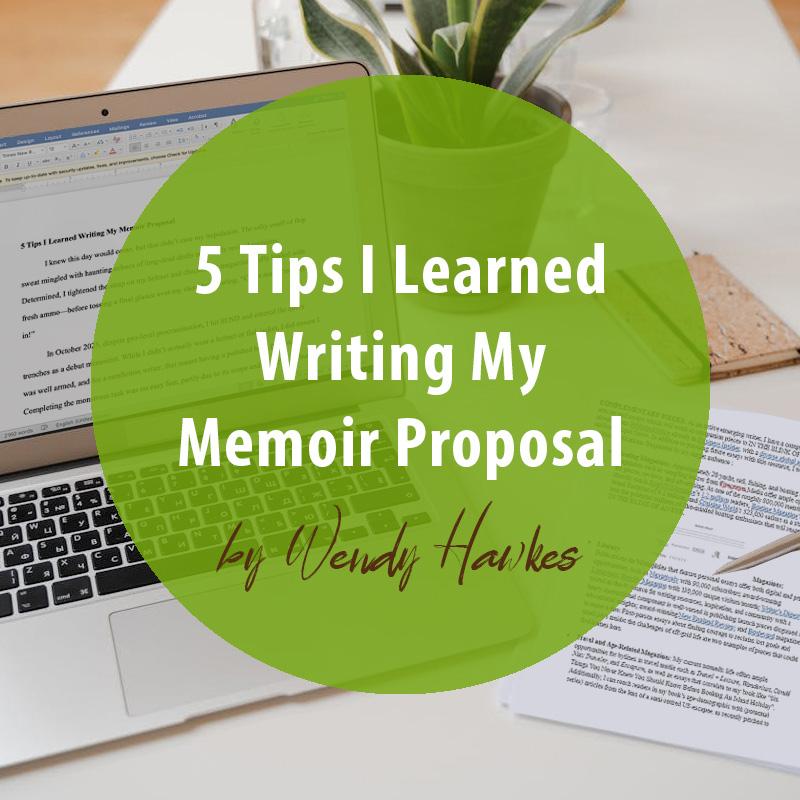
- Selling Your Work: "5 Tips I Learned Writing My Memoir Proposal" by Wendy Hawkes
- Recent WOW features and posts from The Muffin
| | |
Writers!
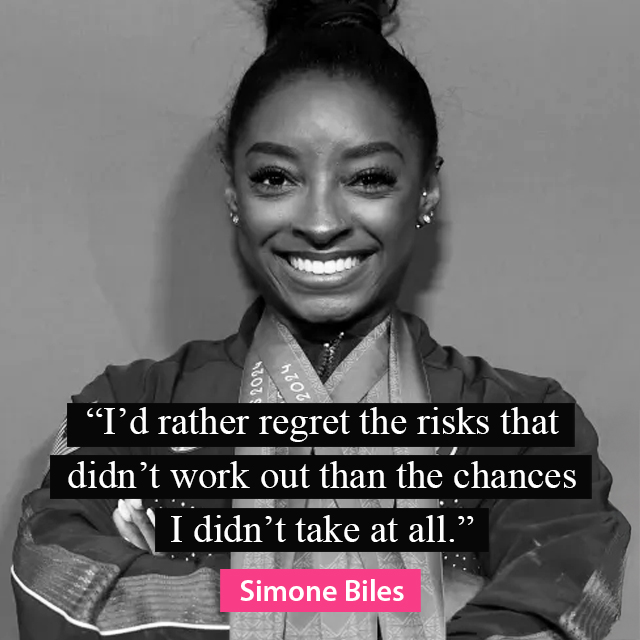
In January, sports are everywhere, especially American football and basketball. Even if your interests don’t align with sports, there’s probably someone in your family, friend groups, or co-workers who describes themselves as an avid sports fan.
| | |
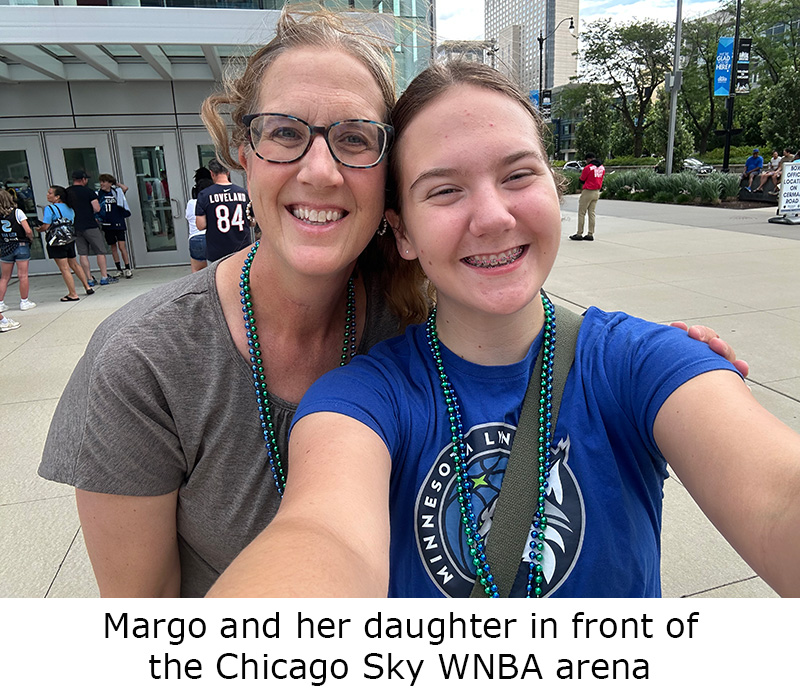
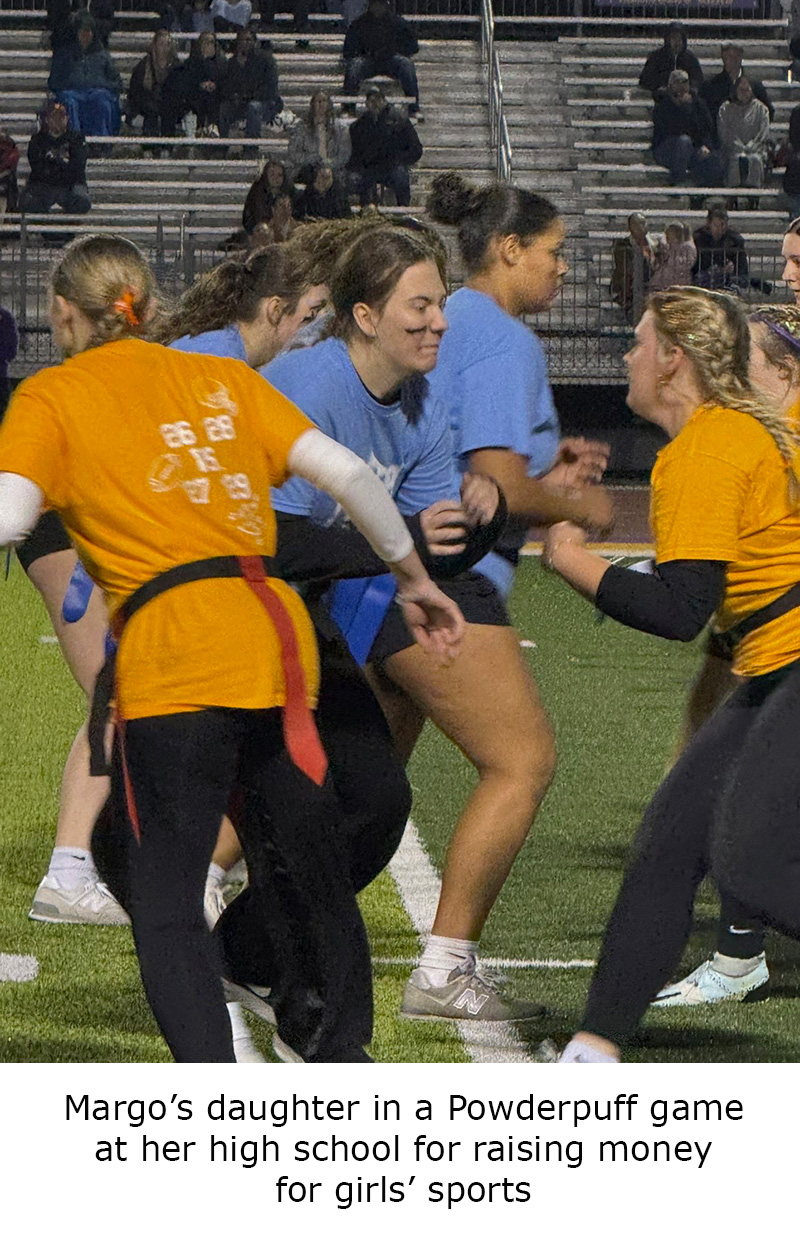
In my family, basketball is our favorite—my daughter plays, my dad watches college and pro, and I know so much about the WNBA that my friends don’t like to bring up the subject.
What does this have to do with writing?
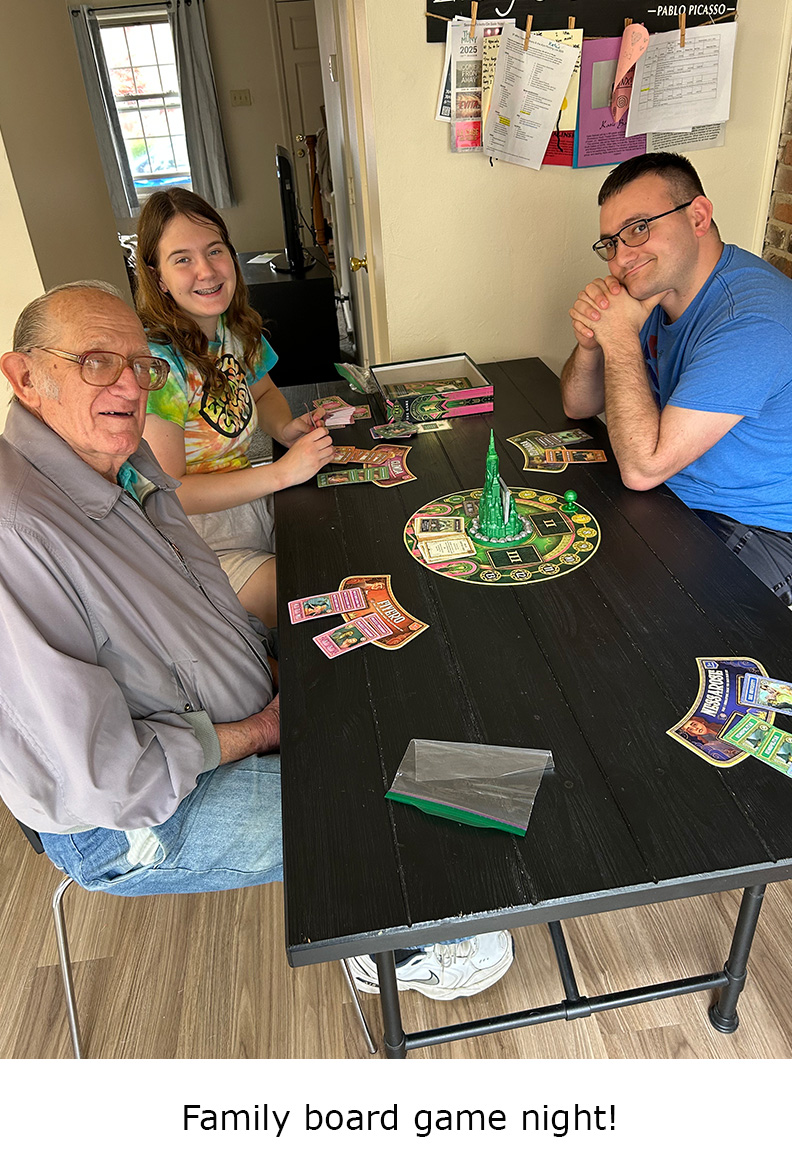
No matter what game you play, whether it’s a sport, board or card games, or online contests, you want to have success. The actual gameplay is fun, of course, but improving skills and winning is usually the ultimate goal. What if we looked at our writing the same way?
Here are some ideas to consider as you figure out: What’s your writing game?
| | |
1. Individual vs. Team Player: Whether you like to write solo or join a critique group or check-in with an accountability partner, whatever type of play you choose, embrace it! There’s no right way to get words on the page, and the important thing is to find the process that works for you. We wouldn’t tell a golfer that she has to play a team sport, or if you enjoy Hearts instead of Solitaire, that works too. Look at what motivates you to make progress toward your writing goals in 2026 and have fun while you’re doing it.
2. Fast vs. Slow: Not everyone likes games of speed; some people like slow and steady competitions. Both can result in hard work and determination winning a race, ribbon, or jackpot. The same is true for writing: figure out what works for you, and you’ll find yourself moving closer to your goals than ever before.
| | |
3. Defining Success: Success is not the same for everyone. If you have young kids who play sports, you’ve probably sat through some games with low scoring and lots of mistakes. But they are having fun! Their coaches may set a goal: let’s score each quarter or do a backwards flip one time successfully each week. If you look at pro sports, a winning season or championship is the way they measure success. With writing, what does it look like for you? If you’re a beginner, maybe you set a goal to enter three writing contests in one year. If you’ve written for many years, you want a book contract!
| | WOW Classes Starting in January | | Start off the New Year with a writing class to help you achieve your goals! |
| |
Flash Trauma Narrative
6 weeks starting January 5
Taking a life-changing event—such as an experienced trauma—and condensing that into under 1,000 words can at times feel impossible. But trauma events are the perfect experiences to use in a flash piece because they are such huge, highly emotional moments that fitting those big EVENTS into tiny narratives is what can make for amazing writing. Led by Chelsey Clammer!
Workshop Details
| |  | |
Writing Fitness and Sport Stories
4 weeks starting January 5
Sports and writing are activities many people do for pleasure or self-fulfillment, but these are also rich areas of personal learning and potential social change. This course is designed to give participants space to write and reflect on their fitness and sports activities, and to create a piece of writing to share with a broader audience. Led by Anne Greenawalt, Editor-in-Chief of Sport Stories Press!
Workshop Details
| | | |
Let's Get Cozy! How to Write a Cozy Mystery
4 weeks starting January 5
Work with cozy mystery author Christina Hamlett and learn to craft a compelling amateur sleuth (of any age!), how to factor location into your plot, the types of misdeeds which are appropriate for a cozy platform, how to incorporate humor and romance into this lighter side of mystery fiction, and what resources are available to make your storylines plausible. The culmination of the class will be the development of a one-page synopsis and the first chapter of your proposed cozy.
Course Details
| | | |
Sorrow's Words: Writing Exercises to Heal Grief
6 weeks starting January 5
There are periods in our lives when we deeply mourn losses, whether they be of loved ones, colleagues, friends, opportunities, or declining health. Using writing strategies can help us come at our feelings directly as well as slant to face challenges and restore our life spirit. In this class led by Sheila Bender, we will create narratives of our loss and use inventive writing exercises to re-vision our lives so we can carry the lives of others (including our own pasts) as we travel a new path.
Workshop Details
| | | |
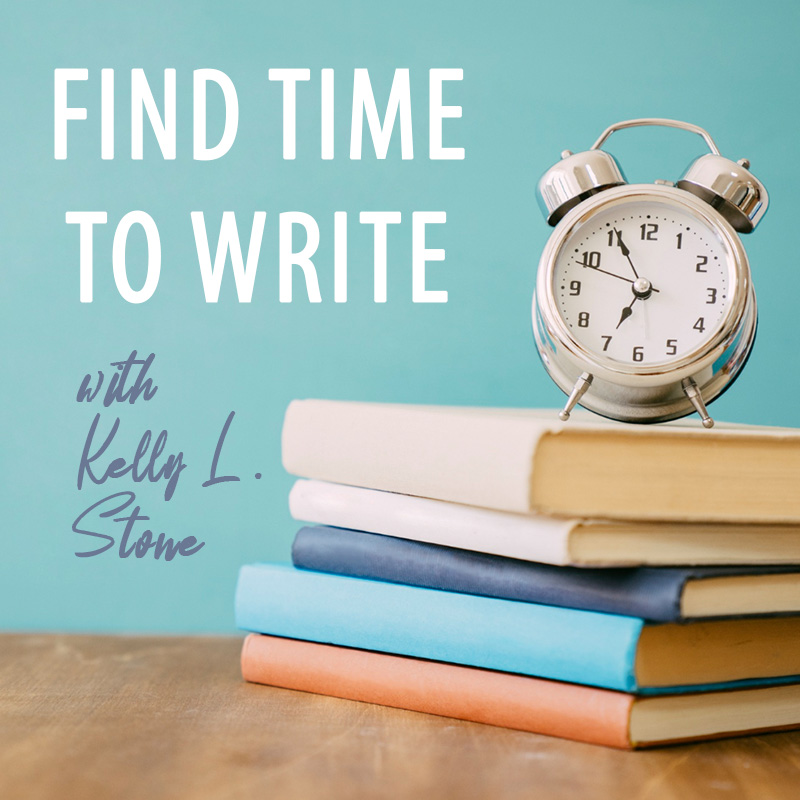
No Matter How Busy You Are, You Can Still Find Time to Write!
4 weeks starting January 5
($40)
Students learn unique and creative ways to fit writing time into their busy lives, including how to set achievable writing goals, how to create a Writing Action Plan, and how to manage distractions and interruptions. Led by Kelly L. Stone, author of Time to Write! Includes includes a free critique of up to 10 pages or a 15 minute phone consultation.
Class Details
| | | |
Research: Prepping to Write Nonfiction for Children and Young Adults
4 weeks starting January 5
Nonfiction for children and teens lines the bookshelves of libraries and bookstores, fills magazines and e-zines and is used in classrooms around the world. The first step in taking your place in this market is learning to do the research. That may sound relatively simple, but done right it includes researching markets and possible topics as well as locating accurate source materials. Led by Sue Bradford Edwards, an author with over 50 traditionally published nonfiction books for young readers.
Course Details
| | | |
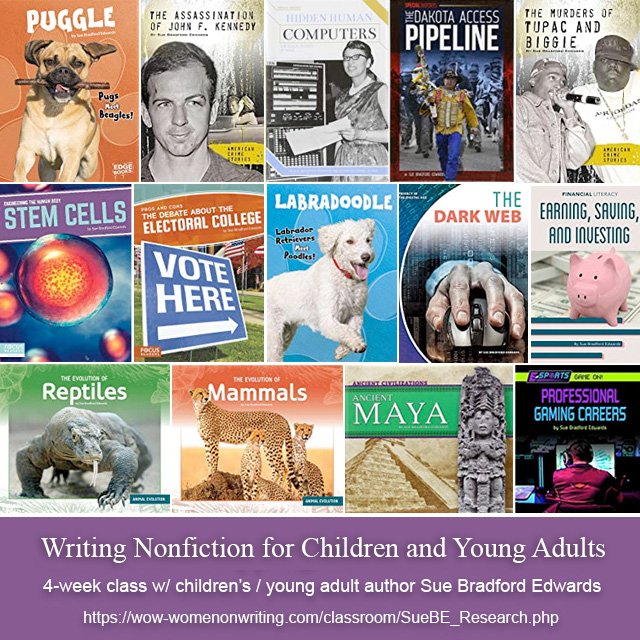
Writing Nonfiction for Children and Young Adults
4 weeks starting January 5
Biographies, science, history, how-to, and more. Nonfiction is published in book form, online and in both magazines and e-zines. Not only do teachers and school librarians seek nonfiction for their students, children and teens read it for fun. In this course, you will learn how to organize your material, write and revise not only the manuscript you workshop in class but future projects as well. Led by Sue Bradford Edwards, an author with over 50 traditionally published nonfiction books for young readers.
Course Details
| | | |
Pitching, Querying, and Submitting Your Work
4 weeks starting January 5
Whether you write essays, short stories or novels, sending your work to an agent, editor or publisher is a daunting task. This course will teach you to assemble submission basics including a pitch and a query letter. These tools will enable you to get your work in front of industry professionals. We will also discuss how to find markets and how to manage rejection. Led by Sue Bradford Edwards, an author with over 600 sales to her credit, including 50+ traditionally published nonfiction books.
Course Details
| | | |
Narrative Structures
6 weeks starting January 6
Have you always wanted to write a novel but don’t know where to start? Or maybe you always eagerly begin a manuscript only to lose momentum a couple of chapters later? This Narrative Structures class is aimed at writers of all levels who want to deepen their understanding of plot, narratives, and structures.
Course Details
| | | |
How to Write a Dystopian Novel
8 weeks starting January 6
Have you always wanted to write a dystopian novel but need help fine-tuning your idea? Got an idea for a dystopian novel, but have no idea where to start with the actual writing of your book? In this eight-week course dystopian novelist Madeline Dyer will take you through the steps involved in crafting a dystopian novel.
Course Details
| | | |
Writing Horror and Gothic Fiction
7 weeks starting January 6
Have you always wanted to write scary fiction but need help fine-tuning your idea? Got an idea for a horror novel, but have no idea where to start with the actual writing of your book? Does writing the Gothic appeal to you? In this seven-week course novelist Madeline Dyer will take you through the steps involved in crafting a horror or Gothic novel.
Course Details
| | | |
From Fact to Fiction: Spring from Headlines into Story
5 weeks starting January 13
This is the course to tickle your imagination, write wild and free from just a headline and photo from the news! You’ll explore what layers and context could be added to your stories to bring a more topical lens. You’ll gain techniques and features used by journalists to generate stories. Led by Nicky Torode!
Workshop Details
| | | |
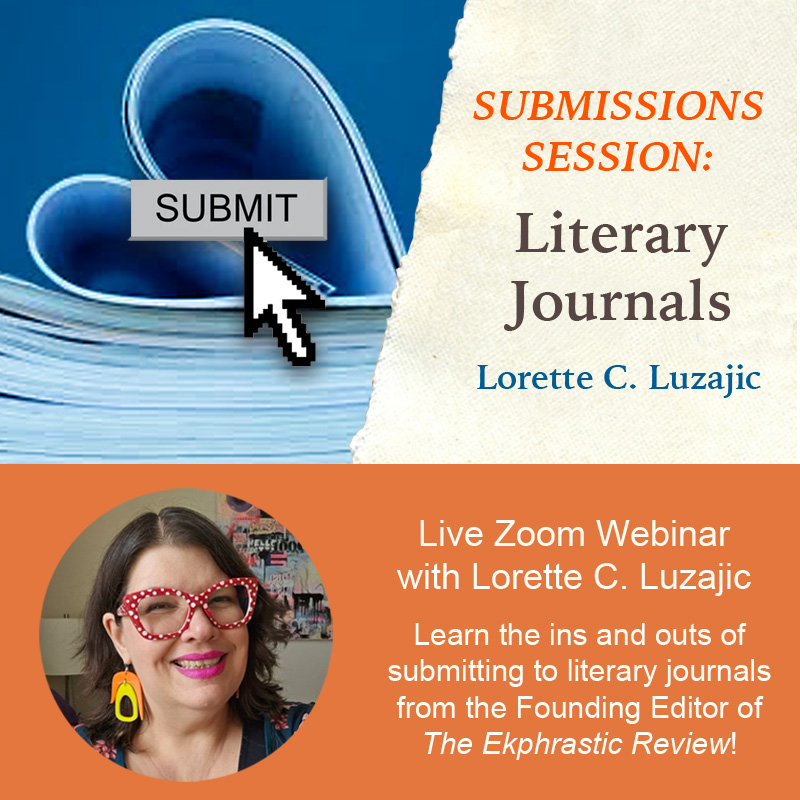
Submissions Session: Literary Journals
Live Zoom! January 20
($40)
The editor of The Ekphrastic Review and The Mackinaw will take you on a detailed tour of the submission process for sending your poetry and short stories to literary journals. We will look at the odds and how to beat them. Preparing your work, where to send, guidelines, simultaneous submissions, withdrawals, a personal submission system, and keeping track are a few of the areas we will cover together.
Webinar Details
| | | |
Travel Writing 101 Webinar
Live Zoom! January 28
($40)
This class provides an overview of the travel-writing world from ideation to publication, including tips on how to get started, different types of stories, a brief look at how to write a travel feature story, potential markets, and successful pitching. Led by Barbara Noe Kennedy, full-time freelance travel writer and former longtime editor of National Geographic!
Webinar Details
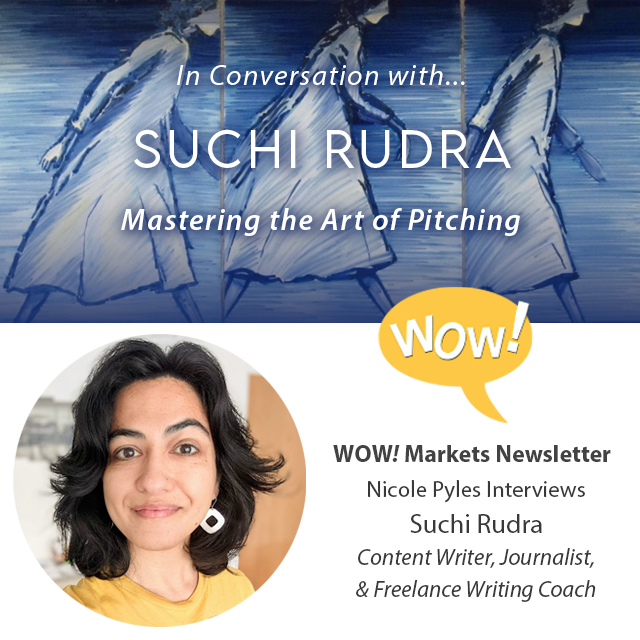
| | | In Conversation with Suchi Rudra: Mastering the Art of Pitching | | |
n an age when writers are being replaced with machines, it seems more important than ever to know how to evolve and adapt with these changing times. As a freelance writer who’s been affected by artificial intelligence and Google algorithms, it’s been difficult. However, I’ve realized that while the industry has changed, hope is not all lost. It’s our humanness that makes us unique and gives us that edge.
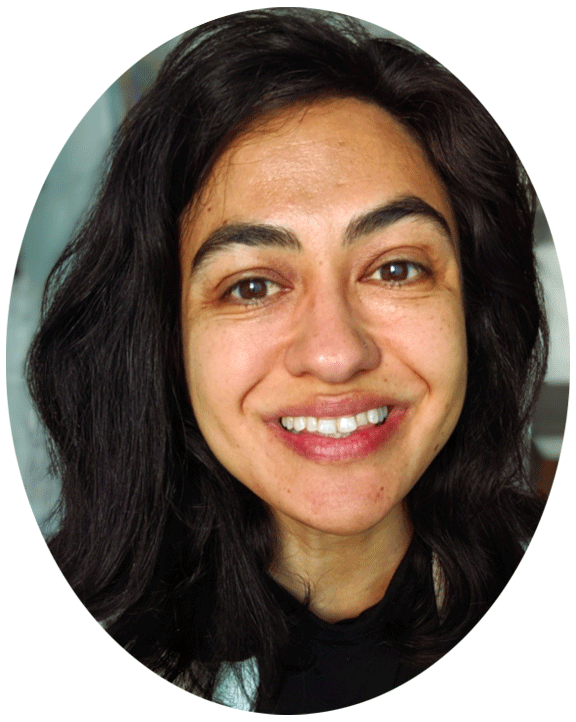
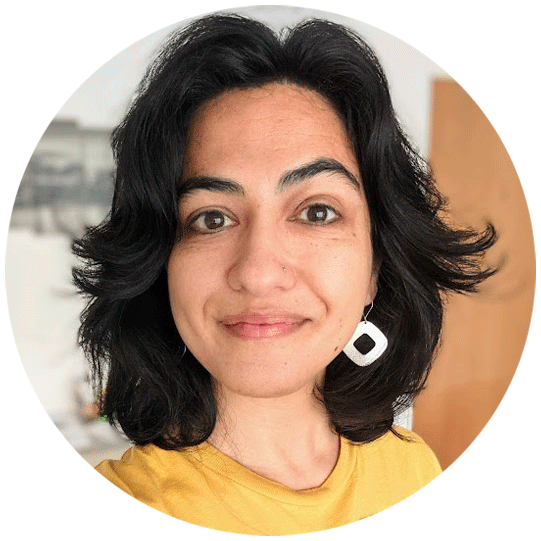
I am so excited to interview Suchi Rudra. For over 15 years, Suchi Rudra has been a freelance journalist and content writer. She draws on her long career to guide and motivate writers who are newer to the freelance writing and publishing world as a writer coach. Her work has been featured in top consumer publications, such as The New York Times, WIRED UK, WSJ, Nat Geo, AFAR, BBC Travel, Fast Company, Fodor’s, and more, and also in major trade magazines. She has also created web and print content for various national and global brands.
Suchi is a lifelong writer of short stories and novels, and her first novel was longlisted for a Dzanc Books prize. She’s currently revising her second novel and is represented by the Frances Goldin Literary Agency. And after many years of writing from various cities and villages around the world, with much time spent in Prague and Buenos Aires, Suchi is now a reluctantly recovering digital nomad.
We discuss the state of the industry, tips on overcoming self-doubt, pitching techniques (my personal kryptonite!), and more.
| | |
WOW: Thank you so much for taking time out of your day to chat with us. First, I love how your coaching business helps writers specifically with their most unique struggles. That begs the question: what’s the most common struggle you’re hearing from writers lately?
Suchi: I think the most common issue I get asked for help with is how to frame the pitch correctly for the target publication—but also, finding the right publication to pitch. The writers I work with have tons of great ideas, but they aren’t always sure where to send them and how to tweak them accordingly to catch the editor’s interest. Aiming for top pubs is great, but you have to get your idea to fit their style, to shape into the kind of article that their readers are interested in.
WOW: As someone who struggles with pitching, I think that’s an important factor. Knowing how to target the publication specifically is essential. What is a surprising skill or technique that your clients are amazed to hear you recommend for their processes?
Suchi: I can’t force anyone to meditate, of course, haha! But I would say that it has helped me become a lot more focused and less stressed to meditate in the mornings before I get down to work. Even if it’s just 10 or 15 minutes. Also, it helps not to look at your phone first thing in the morning; that sets a nice tone, so you can start the day slowly, peacefully, before you have to be online and dig into your deadlines. And of course, I will always recommend writers to read, read, read. That’s how you become a better writer.
WOW: Reading is so important! It feeds our brain. How much does confidence play in the success of a freelancer? And why?
Suchi: Confidence is a big deal—even if it’s not 100 percent real. It really is all about “fake it till you make it.” Many, many freelance writers, even very experienced ones, have that imposter syndrome. It’s hard to shake, because you don’t really get that external validation from anyone each time you get an article published, right? You may not even get much more than a “good job on this one” from your busy editor. And your friends and family may not even read it if you’re writing for a trade pub or writing something they’re not interested in. So when you do get a win, take the time to celebrate it, because as you might have heard: what gets celebrated gets repeated.
If it works for you, post your favorite motivational quote at your desk and say it out loud every morning to yourself in the mirror. You basically have to give yourself a pep talk all the time, and then you have to stop revising your pitch for the 100th time and just hit send. Keep sending until you get a response. You have to realize that your ideas and your way of writing and expressing an idea are unique in this world, and your work needs to be out there and seen. Even if you don’t get direct, vocal feedback or a round of applause. You need to give yourself some applause.
Especially for less experienced freelance writers, being more confident (or faking it!) allows you to forge ahead instead of wondering if you will ever belong or be good enough to submit to that top publication. If you want to pitch the New York Times, do it! You never know until you try.
| | |
“You have to realize that your ideas and your way of writing and expressing an idea are unique in this world, and your work needs to be out there and seen.”
| | |
WOW: Faking it is definitely helpful! And you’re right, you don’t get many “kudos” from editors. That’s why it’s important to remind ourselves of our own skills. I feel like the idea of pitching a top publication comes with so many hurdles and roadblocks. Is that a common feeling for freelancers? What do you tell them about that?
Suchi: Very common. But the thing is, it’s so much easier than figuring out exactly how to find an editor’s email address and the writer’s guidelines (and even if there aren’t any, it’s okay, you just need the right email, and you’re on your way!). And that’s just the technical stuff. As with any kind of writing, you need to be a good reader to be a good writer, right? So I always say that you need to study the articles in your dream pub that are similar in style/department to the one you want to pitch. Read as much as you can from your dream pub—and once the editor sees your pitch matching their style, you’ve already passed a big hurdle, you’ve shown that you are actually familiar with their mission, their tone. It will be obvious that you put in the time and effort, and that’s a big deal. That’s a sign that you are also respecting the editor’s time (which they have very little of) and not just mass emailing the same exact pitch to every single dream pub on your list without making any changes.
As you said in the question, it’s just “the idea of pitching” that comes with hurdles and roadblocks, which are all in your mind. Because the strategy for a top publication is essentially the same as for a less popular publication. But we blow it up in our minds, hesitate, don’t think we’re good enough, etc., which makes pitching the big pub scarier. Just make your pitch the best it can be, adjust it according to the publication’s needs, and press send. It’s that simple.
Also, very important to keep in mind: editors are humans too, with relationships and busy lives and full inboxes, so if they don't respond, it doesn’t mean they are ignoring you or rejecting your idea. Make sure to follow up a couple more times in case they missed your email. (Unless their guidelines state not to follow up!)
WOW: Great tips! Now, if we can all just get out of our own heads to overcome those roadblocks. So, when it comes to coaching, how do you really get to the root of what a writer needs help with?
Suchi: I like to interview my client and see what motivates him or her: why do they continue to choose freelance writing as a career, what are their priorities: getting big bylines, making a certain amount of money per month, scoring press trips, making an impact on society with their writing work, etc.? Having clarity on this really helps us to unravel their biggest needs at the moment.
| | |
“If all the research you are doing online is taking up more time than the time you spend on productive pitch writing and sending, or finding new clients—actual steps that are moving you toward making you more money—then you probably need a coaching session or two to get some one-on-one guidance.”
| | |
WOW: Good questions! I think we need to ask ourselves those questions often throughout our writing journey. Why should a writer invest in themselves by hiring a coach?
Suchi: So it might not be for everyone. If you are good at sticking to a consistent pitching schedule and don’t feel overwhelmed by the pitching process or how to find clients or different niches, then it sounds like you don’t need my help. However, if you have been reading over all the freelance writing groups on Facebook, Reddit, following freelance writers on Instagram, and signing up for every free video course or newsletter about freelance writing, well, there is a good chance you are overwhelmed by all the different and possibly conflicting tips.
That is definitely how I felt when starting out, and even now, I see this online everywhere. But the thing is, no one is listening to your specific concerns about your career goals and doubts, and giving you feedback on your pitches, where and who to pitch, etc. If all the research you are doing online is taking up more time than the time you spend on productive pitch writing and sending, or finding new clients—actual steps that are moving you toward making you more money—then you probably need a coaching session or two to get some one-on-one guidance.
WOW: That’s a great gauge to go by. And the industry is saturated with so much advice, having that one-on-one conversation about what we need help with would be so valuable. I think the battle against AI is affecting (for the lack of a better word) the “joie de vivre” of the writing life right now. How do you help writers regain their joy of writing?
Suchi: I think it’s important to write and read for fun, write creatively for yourself instead of only writing pitches that are only made to sell. Maybe try writing with a notebook and a pen. Read widely, outside of your dream pubs. Read as much as you can in your free time, but think of it as an investment in your career, in your lifelong writing education. You cannot get better at writing without being a devout reader. But aside from this: take time to regularly go offline, off-screen, and do things that energize you, that inspire you. Do hands-on activities. Take a little trip somewhere. You never know when and where your next story idea will come from. Refresh yourself away from technology and see how you feel when you get back to your keyboard.
WOW: Great tips. I love how you mention reading is an investment in your career! As someone who is often busy, reading is typically the first thing to go. That’s a habit I need to change. My own personal battle with pitching editors comes with finding ideas. What are ways writers can mine ideas in their lives or in the world around them?
Suchi: For me, one of the best ways to come up with ideas is to write down the questions and wonderings you have about things you notice in your daily life. As a writer, your job is to be curious, observant. And your articles can answer those questions—questions that many other people may have, including editors!
| | |
“Consider that your idea can take many forms: a personal essay, a reported article, a listicle, a round-up, a review, or a profile. Maybe you can pitch the idea in different formats to different publications, depending on their current needs.”
| | |
WOW: I love that idea! I plan to put that into action. With that said, how can we turn those ideas into actual pitches?
Suchi: The challenge then comes in matching those ideas to the right publication. And often, your idea needs to not only be fleshed out according to the style and needs of the publication, but also most likely needs to be “wow and now,” as an editor once told me. So just because the idea is new to you doesn’t mean it’s a new concept—however, there might be a new twist or update on that concept, something newsworthy that readers may not have heard about yet. Also consider that your idea can take many forms: a personal essay, a reported article, a listicle, a round-up, a review, or a profile. Maybe you can pitch the idea in different formats to different publications, depending on their current needs. Again, it’s really all about studying the publication. And it might also help to research the editor you are pitching and find out if they mention their typical interests anywhere.
WOW: I love this! It reminded me of a piece of wisdom that I read from a writer once about how they never just use an idea once, but rather, allow it to take many forms (just like you said!).
Suchi, thank you so much for taking the time to chat with me today. You shared so many great tips that I plan on using myself.
Ready to take your writing to the next level? Book a FREE 20-minute consultation with Suchi and find out how she can help you overcome your own writing struggles and finally land your dream publication.
| | |
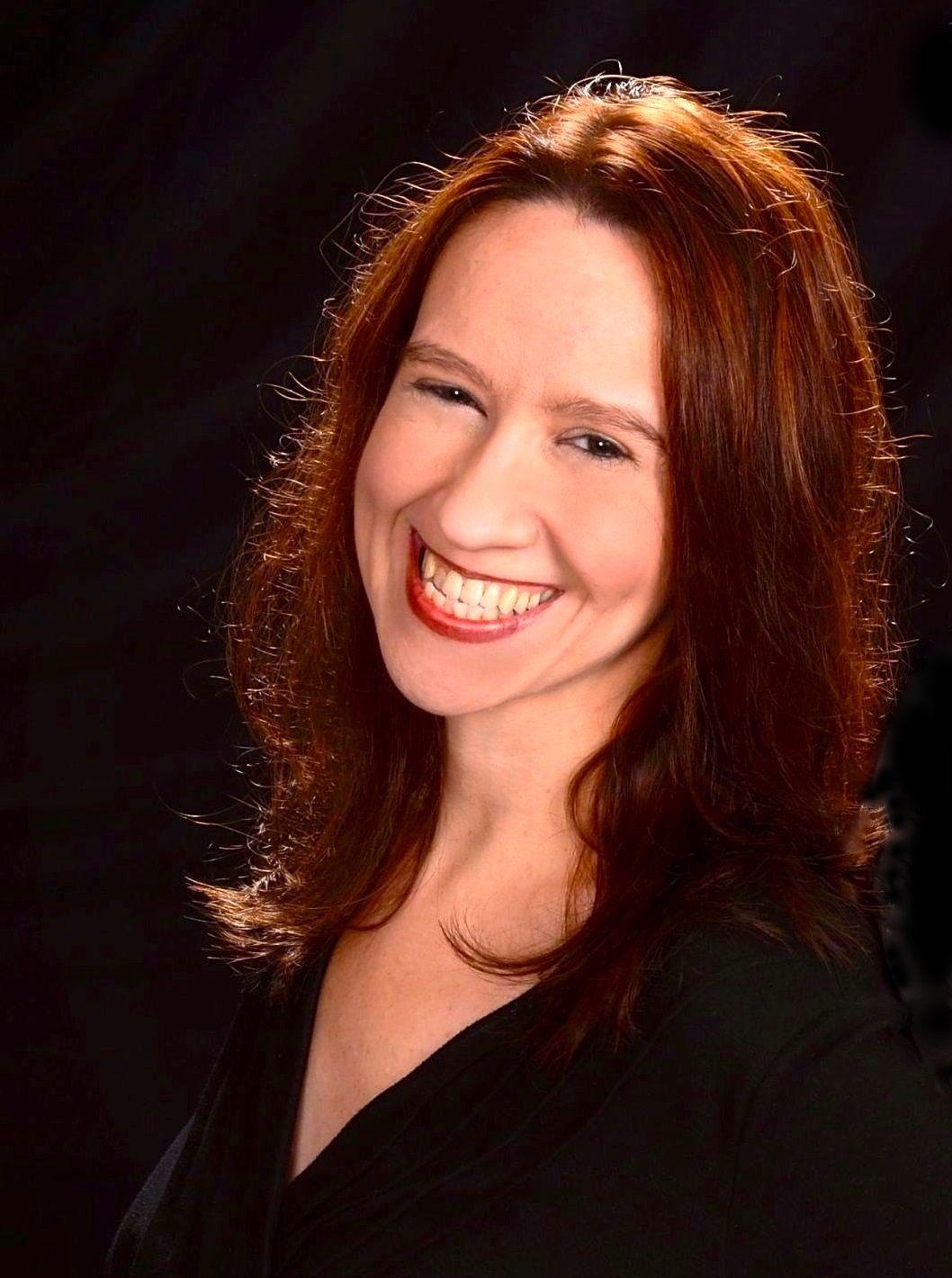
Nicole Pyles is a freelance writer living in Portland, Oregon. She has written for numerous publications, including Better Homes and Gardens, The Spruce, National Geographic, Tom's Guide, and more. Her creative writing has appeared in Sky Island Journal, Arlington Literary Journal, The Voices Project, The Ocotillo Review, and Gold Man Review. Her short story, “The Mannequin of Lot 18,” was nominated for Best American Science Fiction and Fantasy for 2024. Since she’s not active on social media very much, stay in touch by following her writing blog at World of My Imagination.
| | |
Prose Poems
Deadline: Rolling during winter
Prose Poems is an online publication dedicated to publishing prose poetry. They publish during the winter months, November through March, and are currently seeking submissions. Submit up to five poems, one page or shorter each. Pay: $10 per poem. No fee.
https://www.prosepoems.com/masthead-2/
Defenestrationism Lengthy Poetry Contest
Deadline: January 1
Your work must include line breaks, no prose poems. Must be at least 120 lines, not counting the title, partitions between stanzas, or paratextual elements—such as epigraphs or dedications—while no longer than, roughly, chapbook length. Prize: $300. No fee.
https://defenestrationism.net/lengthy-poem-contest-guidelines/
Shepton Snowdrops 2026 Poetry Competition – Theme: In the Garden
Deadline: January 4
You can write your poems in any format: haiku, sonnet, blank verse etc., but they must be relevant to the theme “In the Garden.” Poems must be your own original work and not have been published before or currently entered in any other competition. Prizes: £300 (18 and over); £100 (12 to 17); £50 (11 & under). Over 18s can submit up to five poems, under 18s one poem. Poem(s) must be no more than 30 lines long. Fee: £4 per poem for age 18 & Over; no fee for under 18s.
https://www.sheptonsnowdrops.org.uk/competitions/2026-poetry-competition/
Golden Haiku Poetry Contest – Theme: The Joy of Nature
Deadline: January 11
Open to all ages, worldwide. Poets are invited to submit up to two original, self-authored haiku. Prizes (Adult): First Place: $500; Second: $200; Third: $100; Regional/DC: $200. Prizes (Youth): High School: $150; Elementary/Middle School: $75; Regional/DC High School: $150; Regional/DC Elementary/Middle School: $75. Winning haiku are displayed in hundreds of tree boxes along some of Washington DC’s most iconic streets from March through early May. No fee.
https://goldentriangledc.com/event/golden-haiku/
Bethesda 2026 Poetry Contest
Deadline: January 13
All winners will be published on the Bethesda Urban Partnership website and honored at a special event during the Local Writer’s Showcase, March 12, 2026. Residents of Washington, D.C. and the select counties of Maryland. Prizes: $350, $250, $150, $75. Poems cannot be more than 21 lines of text. Judge is Alexa Patrick. No fee.
https://bethesdaarts.submittable.com/submit/338563/2026-poetry-contest-adult-category-ages-18
Lit Fox Award - Full-Length Poetry Manuscipts
Deadline: January 15
Lit Fox Books, a nonprofit press based in Austin, TX, is an organization dedicated to preserving authors’ artistic visions in a vibrant and supportive environment. They are open to submissions of full-length poetry manuscripts for their annual book award. The manuscript should be at least 48 pages. Prize: $1,500 and 25 author copies. The judge is Kristina Marie Darling. No fee.
https://litfoxbooks.com/lit-fox-award/
2027 Women Artists Datebook
Deadline: January 15
Open to all women and femmes. They seek art that instigates activism, art that challenges the powerful, that sustains and educates, celebrating our efforts for justice and peace. Submit up to 4 poems, 30-line maximum per poem. Pay: $70 per poem, plus two datebooks. They are also seeking cover artwork ($200) and inside artwork ($70). No fee.
https://syracuseculturalworkers.com/pages/call-for-art
The Stacy Doris Poetry Memorial Award 2026
Deadline: January 15
Stacy Doris was a poet, translator, and an Associate Professor in San Francisco State University’s Department of Creative Writing, where she taught for ten years. The winning poet will receive $500 and publication in the Spring 2026 issue of Fourteen Hills. Submit 1 poem: minimum of 3 pages; maximum 10 pages. No fee.
https://fourteenhills.submittable.com/submit/341050/the-stacy-doris-poetry-memorial-award-2026
Stephen A. DiBiase Poetry Contest
Deadline: January 15
$500 for first place, $150 for second place, $75 for third place. The prize-winning and final poems will be listed and published on the contest website in April 2026. Submit 1 poem per author. The poem must be in English. Previously published/reprints are accepted! No fee.
https://dibiasepoetry.com/submit/
Rattle’s Tribute to Invented Forms
Deadline: January 15
Rattle's Summer 2026 issue will be dedicated to invented forms—poetic structures created by the poets themselves. These might include entirely new formal constraints, creative spins on traditional styles, or intuitive methods developed to suit a single poem. Invented forms offer a chance to blend play and precision, and they’re excited to showcase the wide range of possibilities poets are exploring. The poems may be on any subject and of any length, as long as they demonstrate a form that you’ve invented or substantially modified yourself. Submit up to four previously uncurated poems. Pay: $200 and a complimentary one-year subscription. No fee.
https://rattle.submittable.com/submit/330500/tribute-to-invented-forms
2026 Zócalo Poetry Prize Honors Poems Evoking Place
Deadline: January 23
They are on the lookout for that rare combination of creativity and clarity, excellence and evocation. The prize interprets “place” in many ways: A location may possess historical, cultural, political, or personal importance, and may be literal, imaginary, or metaphorical. The winner will receive $1,000 and will have the opportunity to read their poem at the Zócalo Book Prize event in the spring. They will also publish a selection of honorable mention poems; those writers will receive $100. Submit up to 3 poems. No fee.
https://www.zocalopublicsquare.org/zocalo-poetry-prize-2026/
Pegasus Poetry Book Prize for Poets 40+
Deadline: January 26
The Pegasus Poetry Book Prize, established in 2025 in partnership with Graywolf Press, awards $10,000 and publication to an unpublished first or second poetry collection by a United States poet 40 or older. Submit one original, book-length poetry manuscript (48 to 80 pages) that has not been previously published in its entirety. No fee.
https://www.poetryfoundation.org/awards/poetry-book-prize
Terry J. Cox Poetry Award
Deadline: January 31
The Terry J. Cox Poetry Prize is awarded to honor a poetry collection, while also honoring the founder’s late father who held a lifelong love of poetry. Prize: $1,000 and poetry publication by Regal House Publishing in 2028 in paperback, hardcover, and ebook formats. Minimum of 48 pages, maximum of 100 pages of poetry. Fee: $25
https://regalhousepublishing.submittable.com/submit/341746/the-2026-terry-j-cox-poetry-award
The Passionfruit Review Being in Bodies Contest 2026
Deadline: January 31
For this poetry contest, they are calling for poetry that engages with the experience of being in bodies. Send them poetry that recognizes that embodiment in some way: poetry about breathing and breathlessness; poetry about soft touches and the sensation of sunlight on your skin; poetry about the body’s limits, its pain, its power and its powerlessness; poetry which makes us cringe and poetry that makes our blood boil; poetry that reminds us what it is to be human, to exist in and to interact with bodies. Prizes: £600, £75, £25, and nine prizes of £10. Poems up to 40 lines will be considered. Fee: £4
https://passionfruitreview.com/being-in-bodies/
June Road Press Anthology – Theme: Nature or Place
Deadline: February 1
Open to primarily emerging writers and US residents, they are looking for individual poems for inclusion in their first anthology, with a projected publication date of late 2026. This anthology will be loosely organized as a cross-country road trip: a tour of new voices from different regions of the United States. They’re particularly interested in work that engages in meaningful ways with nature or place—the more specifically place-based or regionally inflected, the better suited to this project. Submit up to three poems; each poem should fit on one to two typeset pages. Contributors will receive a copy of the book and will be invited to record their poem for an audiobook. No fee.
https://www.juneroadpress.com/submissions
| | |
Lucy Cavendish Fiction Prize for Women Novelists
Deadline: January 7
The Prize is awarded to a novel written by a woman over the age of 18 that combines literary merit with compelling readability. The work can be on any subject at all. They welcome submissions of literary fiction and genre fiction equally. Novels for young adults or children are acceptable if they are mainly word-based. Picture books are excluded. Entrants must submit the opening 10 pages of their novel, a one-paragraph pitch, and a one-page synopsis, all combined into a single PDF document no longer than 12 pages total. The winner will receive a £1,500 prize and all shortlisted authors will receive a one-on-one consultation with a literary agent at WME, the prize sponsor. Fee: £12
https://www.lucy.cam.ac.uk/how-to-enter-fiction-prize
Spark Flash Fiction: Snowed in Love
Deadline: January 9
Spark provides flash fiction romance and women’s fiction stories under 1,000 words. They want stories that will grab the reader and put a lil’ spark in their day. Currently, they are seeking submissions for their Winter 2026 issue, “Snowed in Love.” Forced proximity can bring out what we’d rather leave unspoken, so for this issue, the editors want stories of characters getting snowed in. Whether they’re rivals who discover a different side of each other or exes getting a second chance, give them plenty of spark to create that cozy feeling we love. Send your story between 700 and 1,000 words. No fee.
https://sparkflashfiction.com/submission-guidelines/
34 Orchard
Deadline: January 10 (Opens January 1)
34 Orchard is an international journal that publishes dark, intense pieces that speak to a deeper truth. Submit short fiction from 1,000 to 6,000 words. Pay: $50 per piece. No fee.
https://34orchard.com/guidelines/
Discoveries Women’s Prize
Deadline: January 12
Discoveries invites unpublished and unagented women writers in the UK or Ireland to submit the opening of a novel in English (up to 10,000 words) for the chance to take part in a bespoke creative writing course, secure personalized mentorship packages, an offer of literary agent representation by Curtis Brown Literary Agency, and a prize of £5000. No fee.
https://www.womensprize.com/writers/discoveries/
Bourbon Penn
Deadline: January 14
They are looking for highly imaginative stories with a healthy dose of the odd. Odd characters, odd experiences, odd realities. They’re looking for genre/speculative stories and are quite partial to slipstream, cross-genre, magic realism, absurdist, and the surreal. They want character, action, and fresh voices. Length: 2,000 – 7,500. Pay: $0.04 per word. No fee.
https://www.bourbonpenn.com/submissions
Cai Emmons Fiction Award
Deadline: January 15
To honor the life and enduring legacy of beloved novelist Cai Emmons, who published three novels through Red Hen Press (Weather Woman, Sinking Islands, and Livid) and who passed away with dignity on January 2, 2023 after a hard-fought battle with ALS, Red Hen Press is proud to announce the Cai Emmons Fiction Award. 25,000-word minimum. Prize $5,000 and book publication with Red Hen Press. Fee: $25
https://redhenpress.submittable.com/submit/41779/cai-emmons-fiction-award
Janet Heidinger Kafka Prize for Women
Deadline: January 15
All entries must be submitted by publishers who wish to have the work of their authors considered. $15,000 will be awarded to a woman who is a US citizen, and who has written the best book-length work of prose fiction, whether novel, short stories, or experimental writing. They are interested in calling attention to the work of a promising but less established writer. No fee.
https://www.sas.rochester.edu/gsw/news-events/kafka-prize/index.html
Tales from the Crosstimbers
Deadline: January 15
They are seeking speculative fiction stories between 1,000 and 2,500 words. They like character-driven stories where the boundary of imagination and reality collide. They welcome submissions from under-represented groups who bring their lived experience to their fiction, as well as first-time, unpublished authors. Writers may be from any location. However, their mission includes providing a market for authors from the region of the Crosstimbers Forest, which includes Oklahoma and surrounding states, so they especially encourage authors from this region to submit. Pay: $10 per story or $0.01 per word, up to $50, and a copy of the printed issue. No fee.
https://thecrosstimbers.net/open-call/
Very Special Episodes: 90s Stranger Danger PSA Anthology
Deadline: January 15
Dancing Griffin Press is seeking horror stories that take place in a 90s urban setting. They're looking for stories that recapture the magic of some of the most disturbing “very special episodes” of the 90s, like the time Shawn from Boy Meets World joined a cult, or the time 7th Heaven tried to convince us that marijuana will make you die. Think along the lines of: white vans, satanic panic and cults, anorexia and bulimia, roid rage, 90s urban legends. Length: 2,000 - 5,000 words. Pay: $25 per story; $40 for their favorite. No fee.
https://dancinggriffinpress.com/blogs/news/submissions-open-for-very-special-episodes-a-90s-stranger-danger-psa-anthology
Thomas Wolfe Fiction Prize
Deadline: January 30
The Thomas Wolfe Fiction Prize is administered by the Great Smokies Writing Program at the University of North Carolina at Asheville. The winner receives $1,000 and possible publication in The Thomas Wolfe Review. Submit two copies (if submitting by mail) of an unpublished fiction manuscript—short story or self-contained novel excerpt—not to exceed 3,000 words. Fee: $15 for NCWN members, $25 for nonmembers
https://www.ncwriters.org/programs/competitions/thomas-wolfe-fiction-prize/
The A.C. Bose Grant for South Asian Speculative Literature
Deadline: January 31 (Opens January 1)
The A.C. Bose Grant provides $1,500 to South Asian or Desi diaspora writers developing speculative fiction. South Asia encompasses the countries of Afghanistan, Bangladesh, Bhutan, India, The Maldives, Nepal, Pakistan and Sri Lanka. Work that is accessible to older children and teens will be given preference in the jury process. To apply, include a short cover letter less than 500 words and a writing sample of up to 5,000 of fiction. No fee.
https://speculativeliterature.org/grants-3/slf-ac-bose-grant/
Writing the Future We Need: Defying Death
Deadline: January 31
The editors are looking for creative and unique stories about all the ways we overcome demise. They welcome all kinds of stories of resilience, resistance, and perseverance. And if there’s some rogue or trickster vibes in there, they definitely like to see them. They’re hoping this next anthology will be another empowering, uplifting, yet defiant message of survival against all odds. There is no limitation to how you incorporate this theme into your work as long as the story falls within the Sci-Fi, Horror, or Fantasy genre. Max: 8,000 words. Pay: $45 per accepted piece plus one paperback contributor copy. No fee.
https://writehive.org/annual-anthology/
Summer in the City
Deadline: January 31
The oppressive heat of Summer sits like a woolen shroud over the city, while the overextended air conditioners groan as they struggle to provide any small relief to the inhabitants. Hydrants are opened for neighborhood children to cool off, and many families escape to the beaches and countryside in the hope of an occasional breeze. But heat is not the only thing impacting humanity’s comfort. Summer in the City: A Collection of Dark Speculative Fiction is the next anthology in Ruadán Books’ “…In the City” series that takes place in different metropolises around the world during the hot, hazy, and lazy days of summer. The heat can bring out the worst in all of us. Submit a story between 3,000 and 7,500 words in length on the theme. Your title must be the name of the city the story is set in. Pay: $0.10 per word. No fee.
https://ruadanbooks.moksha.io/publication/summer-in-the-city/guidelines
Cozy Fantasy
Deadline: January 31
Hollow Oak Press is looking for cozy fantasy short fiction (3,000 – 8,000 words). They’re open to any definition of fantasy—second-world, urban, historical, paranormal, you name it—as long as it has cozy themes. They want whimsical, slice-of-life, optimistic stories and worlds that feel like a freshly laundered, warm blanket on a cool morning. Pay: $30 per story. Submit one story. No fee.
https://hollowoakpress.com/cozy-fantasy-submission-call/
Fractured Lit Micro Prize
Deadline: February 1
Fractured Lit has always been a place that celebrates small stories with big impacts. They want to honor microfiction stories of 400 words or fewer that tell a complete story and have us marveling at the depth of character and language. Guest judge is Steve Almond. Prizes: $2,500 and publication; second and third receive $600 and $400, respectively, along with publication. Submit fiction up to 400 words. Fee: $20
https://fracturedlit.com/2025-micro-prize/
Jim Baen Memorial Short Story Award
Deadline: February 1
Write a short story of no more than 8,000 words that shows the near future (no more than about 50-60 years out) of manned space exploration. They want to see: Moon bases, Mars colonies, orbital habitats, space elevators, asteroid mining, artificial intelligence, nano-technology, realistic spacecraft, heroics, sacrifice, adventure. The Grand Prize winner will be published as the featured story on the Baen Books main website and paid $0.08/word. The author will also receive an engraved award, free entry into the 2026 International Space Development Conference and a year’s membership in the National Space Society. No fee.
https://www.baen.com/contest-jbmssa
| | |
The Sun Reader’s Write – Theme: Distractions
Deadline: January 1
Distractions are a part of daily life: The baby that starts crying as soon as you sit down to work. The magazine that takes your mind off waiting for news at the hospital. The cute guy you can’t stop eyeing while you’re studying at the library. And in a world where our attention is currency, most of us carry a machine built to distract us in our pockets. For some people, internal intrusions—anxieties, fantasies, the argument they can’t stop rehashing—are louder than any ping or buzz. Others are able to filter out everything but what they want to focus on. Distractions can hinder our progress, can help us cope, or can be just a nuisance to overcome. Send them your true stories about how they affect you. 300 to 1,000 words. No fee.
https://www.thesunmagazine.org/submit/readers-write
Ned Stuckey-French Nonfiction Contest
Deadline: January 1
They seek nonfiction that prods and pressures expectations; that speaks to the personal against the powerful; and that prioritizes soul, heart, and service. Please send essays up to 10 pages. Do not include personal identification information within your submissions. Porochista Khakpour will judge. Prize: $750, and publication in Southeast Review’s biannual issue in Fall 2026. Fee: $16
https://southeastreview.submittable.com/submit/337507/ned-stuckey-french-nonfiction-contest-2025
21st Japan Center Essay Competition
Deadline: January 8
Writers should discuss one or more aspects of Japan including art, culture, tradition, values, philosophy, history, society, politics, business, and technology in relation to their personal experiences, views, and/or future goals. (Contestants do not need to have any experience in visiting Japan or studying Japanese.) Prizes: Best Essay Award in the High School Division: 1st Place: $3,000 and a Canon product; 2nd Place: $2,000 and a Canon product; 3rd Place: $1,000 and a Canon product; Best Essay Award in the College Division: $3,000 and a Canon product; Uchida Memorial Award: $1,000 and a Canon product; Special Award: $500 and a Canon product. Submit an essay 500-700 words. No fee.
https://www.stonybrook.edu/commcms/japan/programs/essay-comp.php
Thinking Forest Foundation
Deadline: January 9
Thinking Forest Foundation is building a new editorial platform, a website for championing like-minded artists and initiatives worldwide. They’re looking for new voices to contribute to their growing ecosystem of ideas. Does your writing engage with art and regeneration, decay, conviviality, sustainability, biodiversity, forest ecology, or related themes? Pay: €200 per essay. No word count specified. Send your submissions to mail@thinkingforestfoundation.org. No fee.
https://thinkingforestfoundation.org/
2026 Bechtel Prize
Deadline: January 11
Each year Teachers & Writers Magazine awards the Bechtel Prize and a $1,000 honorarium for an essay describing a creative writing teaching experience, project, or activity that demonstrates innovation in creative writing instruction. This year’s prize will be judged by Diana Khoi Nguyen. They are looking for essays 2,500 words or less that describe a project or activity that got students excited about writing and fostered a vibrant and dynamic culture of creative writing in the classroom. No fee.
https://teachersandwritersmagazine.org/bechtel-prize/
John F. Kennedy Profile in Courage Essay Contest
Deadline: January 12
Open to US high school students. Describe and analyze an act of political courage by a U.S. elected official who served during or after 1917, the year John F. Kennedy was born. Include an analysis of the obstacles, risks, and consequences associated with the act. The essay may concern an issue at the local, state, national, or international level. First-place: $10,000; Second-place: $3,000; Three Finalists: $1,000 each. Essays can be no more than 1,000 words but must be a minimum of 700 words. Citations and bibliography are not included in the word count. No fee.
https://www.jfklibrary.org/learn/education/profile-in-courage-essay-contest
Whitehill Prize in Early American History
Deadline: January 15
The Walter Muir Whitehill Prize in Early American History will be awarded annually, at the judges’ discretion, for a distinguished essay on early American history (up to 1825), with preference being given to New England subjects. The prize award is $2,500. Essays should, as a guideline, range between 40 and 60 double-spaced typewritten pages. No fee.
https://newenglandquarterly.org/whitehill-prize/
Elie Wiesel Prize in Ethics Essay Contest
Deadline: January 20
Open to registered undergraduate full-time Juniors or Seniors at accredited four-year colleges or universities in the United States. Essay Topic: What challenges awaken your conscience? Is it the conflicts in American society? An international crisis? Maybe a difficult choice you face or a hard decision you had to make? Explore the ethics of any problem, question, or issue, whether close to home or in the world at large. First Prize $10,000, 2nd Prize $5,000, 3rd Prize $3,000, two Honorable Mentions $1,000 each. Submit one essay 2,500 to 3,500 words. No fee.
https://eliewieselfoundation.org/prize-in-ethics/
CRAFT Memoir Excerpt & Essay Contest
Deadline: January 25
They want to read your best longform creative nonfiction, from 1,001 to 6,000 words total. Excerpts from book-length projects and stand-alone essays will both be considered. Judging this year’s contest is none other than Roxane Gay! Three winners will receive $1,000 each along with publication, a set of six titles from Graywolf’s The Art Of series, and a free course through Memoir Nation. Their team will also select two “editors’ choices” to publish alongside the three grand-prize winners. All fifteen shortlisted creative nonfiction writers will receive a $1,000 scholarship to PocketMFA. Fee: $20
https://www.craftliterary.com/craft-memoir-excerpt-essay-contest-2025/
Technology Addiction Awareness Scholarship
Deadline: January 30
Open to a high school freshman, sophomore, junior, or senior or a current or entering college or graduate school student of any level. Home schooled students are also eligible. There is no age limit. You must also be a U.S. citizen or legal resident. Young people spend an average of 7.5 hours a day consuming media—and this doesn't include computer use for schoolwork—according to the Kaiser Family Foundation. With technology always at the ready at your fingertips, it can be a challenge to unplug. But taking a break from technology is healthy for both the mind and body. The purpose of this scholarship is to help you understand the negative effects of too much screen time. Submit a 500- to 1,000-word essay about technology addiction. Prize: $1000 scholarship. No fee.
https://www.digitalresponsibility.org/technology-addiction-awareness-scholarship
The Hillman Prizes for Journalism
Deadline: January 30
The contest is open globally. Since 1950, the Sidney Hillman Foundation has honored journalists, writers and public figures that pursue investigative journalism and public policy in service of the common good. The 2026 categories are for: Book (nonfiction), Magazine Journalism (longform; print or online), Broadcast Journalism (television, radio or podcast; at least 20 minutes in total package length), Opinion & Analysis Journalism (commentary and analysis in any medium). Prizes: $5,000 honorarium and a certificate at their annual ceremony to be held in New York City. Stories may be on any topic but they prioritize entries with U.S impact. You may nominate your own work or someone else’s. You may apply on your own, or be entered by your editor/outlet/organization. There is no limit to the number of entries one outlet may make. No fee.
https://www.hillmanfoundation.org/hillman-prizes/nominations
Memoryhouse Magazine
Deadline: January 31
Memoryhouse Magazine is a semi-annual publication that seeks to curate personal narratives through creative nonfiction and visual art, giving some preference to writers and artists with a significant connection to the Chicago area. They are currently seeking submissions for their Spring 2026 issue. They accept all forms of visual art and creative nonfiction/memoir highlighting personal narrative, though their guidelines for form are open-ended and they welcome experimental works. Submit no more than five pieces per issue, no longer than six pages. No fee.
https://chicagomemoryhouse.wordpress.com/submit/
Dorothy Parker’s Ashes – Theme: Body
Deadline: February 1
Submit a personal essay 500 to 2,000 words on the theme. Paste a short bio directly into your email. No fee.
https://www.dorothyparkersashes.com/submit
Acquired Tastes Anthology
Deadline: February 2
Roxane Gay is putting together Acquired Tastes, an anthology celebrating unlikeable characters: how we create them, how we understand them, how we love them and how they enrage us, and why they are so necessary to our stories. This call is for young adult writers, whose work she’d like to include in this anthology alongside some more familiar names. She’s looking for short fiction or essays, from young adults, ages 15-21. Essays should not exceed 5,000 words. Pay: $1,000 per essay, upon publication in 2027 and a copy of the anthology. No fee.
https://gay.submittable.com/submit/341913/acquired-tastes-anthology-submissions
| | |
Table/Feast Poetry and Prose Contests
Deadline: January 1
Table/Feast Literary Magazine has three contests that close at noon on New Year’s Day. The Blossom Contest for BIPOC Writers is open to poetry (submit up to five poems) and prose (up to 3,000 words). The winner receives $250. No fee. The Women Writers' Micro-poetry and Nano-prose Contest is open to poetry (submit up to five poems) that you feel would be micro. Ideally no more than a half sonnet or eight lines. Prose that's F or CNF is 200 words or less as nano-work. Each genre winner receives $100. The Fifty & Up Writer Awards is open to poetry (up to five poems), one piece of fiction or nonfiction (up to 3,000 words). Prize: $50 plus an additional dollar per year beyond fifty. Fee: No fee for The Blossom Contest; $5 for The Women Writers’ Micro Contest; $3 for The Fifty & Up Awards. Fee waivers available.
https://tablefeastlitmag.com/chefs-special-planboard-contests
Mississippi Review Prizes
Deadline: January 1
They are currently accepting poetry, fiction, and non-fiction for the 2026 Mississippi Review Contest Issue. Poetry: submissions should be 3-5 poems, totaling 10 pages or less, submitted as one single document. Fiction and Creative Nonfiction: submissions should be 800-8,000 words. One winner from each category will be selected as the winner and will receive $1,000 and publication in the contest issue. The winner and finalists will receive two copies of the contest issue. Fee: $16
https://mississippireview.submittable.com/submit
The Southern Review
Deadline: January 1
Submit fiction, poetry, and nonfiction to The Southern Review. Poems: up to 5 poems. Prose: submit one story or essay. (You may submit both a story and an essay if you wish; please submit them separately.) They rarely publish work that is longer than 10,000 words, though we will consider it. Pay: $75 for the first printed page and $25 for each subsequent printed page with a maximum payment of $300, plus two copies of the issue in which the work appears, and a one-year subscription to The Southern Review. Fee: $3
https://thesouthernreview.org/submissions/
The Welkin Mini Competition
Deadline: January 2
The Welkin Mini is a competition to celebrate micro fiction and creative non-fiction up to 100 words. The competition is open to all forms of narrative prose (fiction and non-fiction), be that flash fiction, short-short, vignette, haibun, hermit crab, prose poem or work that sits outside such labels. Prizes: First place: £75; Second: £40; Third: £25; Highly commended: £10. No fee.
https://www.mattkendrick.co.uk/welkin-prize/welkin-mini
Bronx Recognizes its Own (BRIO) Artist Award
Deadline: January 2
Each year, BRIO provides direct support to individual Bronx artists who create works in the literary, media, visual, and performing arts. 25 BRIO grants of $5,000 each are awarded to Bronx artists. BRIO award winners complete a one-time public service activity. No fee.
https://www.bronxarts.org/grants/bronx-recognizes-its-own/m/grants/bronx-recognizes-its-own/
The Newberry Artist-in-Residence Fellowships
Deadline: January 3
Founded in 1887, the Newberry is one of Chicago’s most historic cultural institutions. They offer three one-month fellowships with a $3,000 stipend: The Jan and Frank Cicero Fellowship (visual or performing arts), The Arthur and Lila Weinberg Fellowship for Independent Researchers (for writers, journalists, filmmakers, visual and performing artists with preference given to individuals working on projects that focus on social justice or reform), and The Historical Fiction Writing Fellowship (open to a wide range of historical fiction including novels, short stories, plays and theatrical works, or poetry). Apply online. No fee.
https://www.newberry.org/research/artists-in-residence/artists-in-residence-fellowship
Apricity Magazine
Deadline: January 3
Poetry, drama, fiction, and non-fiction are welcome. There is no word limit for online submissions; however, if you would like to be considered for print publication, the word limit is 7500 words for prose and 3000 words for poetry. No fee.
https://apricitymagazine.submittable.com/submit
Steinbeck Fellowships
Deadline: January 4
This fellowship helps writers complete a book project. Up to six Steinbeck Fellows are selected each year from disciplines including fiction, drama, creative nonfiction, and biography (no poetry). The creative writing fellowship does not require that there be any direct connection between Steinbeck’s works and that of the applicant. The Steinbeck Fellowship is a one-year residency at San José State University which includes a stipend of $15,000. Fellows are expected to give one public reading from their work and must reside in the Bay Area during the academic year. Submit a project proposal, résumé/CV, writing sample (up to 25 pages), and the email addresses of three references. No fee.
https://steinbeck.submittable.com/submit
Mslexia Literary Magazine
Deadline: January 5
There are 25 ways to submit, from a four-line poem to a 3,000-word lead article, from a 300-word bedtime story to a 700-word memoir performance piece—so there’s bound to be something to suit your kind of writing. Including big-name commissions and as-yet-undiscovered newcomers, they publish over 60 women in every issue. Pay: £30 and up per piece. No fee.
https://mslexia.co.uk/submit-your-work/
Pornstar Martini Magazine – Theme: Escapism
Deadline: January 5
Pornstar Martini is, at its heart, a fun, camp, queer, feminist, sultry, sophisticated, crazy quarterly literary publication aimed at showcasing the best boundary-pushing work from emerging writers and artists. They are seeking submissions for their Escapism issue. Fiction: go crazy, up to 1000 words. Poetry: send linked poems in a single document; or if non-linked, up to three individual poems. Creative Nonfiction/Essays: 1200 words. Catchy pieces, vignettes: 100-500 words; send two max. Reviews and Criticism: 800-1000 words; submit two pieces max. They pay all contributors for their work. No fee.
https://pornstarmartinimagazine.squarespace.com/submission-guide
Ropes Literary Journal – Theme: Punk
Deadline: January 5
Ropes Literary Journal is published annually by students of the MA in Literature and Publishing at University of Galway. They accept a variety of written and visual work, including, but not limited to, fiction, flash fiction, poetry, memoirs, essays, art, and photography. Their theme for 2026 is Punk. They encourage writers and artists to explore and develop their own interpretations of the theme. Fiction: Max 3,000 words (ONE piece per submission). Non-fiction (memoirs, essays, other): Max 3,000 words (ONE piece per submission). Flash fiction: Max 500 words (up to THREE pieces per submission). Poetry: Max 40 lines per poem (up to TWO poems per submission). No fee.
https://www.ropesliteraryjournal.com/submissions
Disquiet Luso-American Fellowship Application 2026
Deadline: January 5
A collaboration between Dzanc Books and the Luso-American Development Foundation has made possible four full fellowships for writers of Luso descent from North America to attend the DISQUIET ILP's Writing the Luso Experience workshop in Lisbon in 2026. To be eligible for the fellowship, entrants must be residents of the United States or Canada who have a genealogical link to a Lusophone country. The four winners will receive accommodations, a travel stipend, and full tuition to the 2026 ILP in Lisbon to attend the multi-genre workshop “Writing the Luso Experience” (June 28-July 10) with other writers from Portugal and North America. Runners-up will be offered partial tuition discounts. Submit a 250-word statement and a maximum of 10-page writing sample. All works are welcome. No fee.
https://disquietinternational.submittable.com/submit/335686/luso-american-fellowship-application-2026
The Disquiet Literary Prize
Deadline: January 5
The Disquiet Prize is now open for submissions. Entries will be accepted in fiction, nonfiction, and poetry. One winner in each category will be published in Granta (fiction), Ninth Letter (non-fiction) or The Common (poetry). One grand prize winner will receive a full scholarship, accommodations, and travel stipend to attend the fourteenth annual DISQUIET International Literary Program in Lisbon (June 28-July 10, 2026). Genre winners will receive a tuition waiver for DISQUIET 2026 in addition to publication. Winners who are unable to attend the program in Lisbon may elect to receive a $1,000 cash prize in lieu of the tuition waiver. Fee: $15
https://disquietinternational.org/the-program/contests-scholarships/
Notch Magazine – Theme: If/Else
Deadline: January 7
For this issue, Notch welcomes meditations on conditionality and nested possibilities. Send essays on the foundations of computational logic and stories that capture capillaries of reasoning. Share art that seizes visual polarity, cultivating contrast or queering light vs. dark. Track the evolution and architecture of decision trees—particularly when neat root systems spawn a Dantesque forest of disorientation. Consider temporal parallels, alternative paths that tug at the seams of the present. Capture the essence of elseness, being as/in/of otherness. Inhabit the space between If and Else; a clearing in which to grapple with potential. They are open to all mediums up to 1,500 words. Pay: contributors will be compensated, but they don’t share specific rates. No fee.
https://notch.ink/submissions/
Leiby Chapbook Award
Deadline: January 7
Each year, The Florida Review honors former editor Jeanne Leiby with the publication of a prose or graphic narrative chapbook. Winners receive chapbook publication, 50 copies of the winning chapbook, and $1,000 upon publication. Submit up to 45 pages, including any combination of long or short stories, essays, flash fiction, creative nonfiction, or hybrid works, as well as graphic narrative to be considered. Fee: $25
https://cah.ucf.edu/floridareview/submit/chapbook-contest/
2026 Jack Hazard Fellowships for Writers Who Teach
Deadline: January 9
Jack Hazard Fellows are fiction, creative nonfiction, poetry, and memoir writers who teach full time in an accredited high school in the United States. They provide a $5,000 award that enables these creative writers who teach to focus on their writing for a summer. Apply with a bio, CV, description of your project, and a writing sample up to 5,000 words. No fee.
https://www.newliteraryproject.org/jack-hazard-fellowship
Book Worms Issue 10 – Apocalyptic Horror!
Deadline: January 10
For Issue 10, they’re looking for stories and poetry that dive into nuclear winters, climate catastrophes, algorithmic uprisings, techno-anarchy, or whatever fresh brand of apocalypse your twisted imagination can conjure. Send only one submission, meaning don’t send multiple short stories or poems or a combination of both. Pay: $0.08 per word for fiction (1500 words or less). $25 flat fee for poetry (20 lines or less). No fee.
https://rsaintclaire.com/2025/11/03/call-for-submissions-4/
Blanket Gravity
Deadline: January 10
Blanket Gravity Magazine is a journal for fiction, creative nonfiction, and visual art. Current prompt: A snippet of old text history kicks off memories of an extinguished friendship. The nightly video call between a long-distance parent and their kids. A college student confides details about romancing their crush into ChatGPT. Technology has become the site of intense shared moments, in some cases fully an additional participant in a relationship. They are looking for fiction and creative nonfiction pieces that explore the role of technology in intimate relationships today, whether by facilitating connection or misunderstanding, capturing a moment in time, or other imaginative forms of engagement. How are we molded by the people we choose, and how has technology shaped the ways we love them? Maximum length: 5,000 words. Pay: $40 per piece. No fee.
https://www.blanketgravitymag.com/submissions
The Fantastic Other - Theme: Metamorphosis
Deadline: January 12
The Fantastic Other is reading for their Winter 2026 issue with the theme “Metamorphosis”—a complete change of form, structure, or substance. It is an imperative of life, and for many, the only means of survival. Fiction submissions should be no longer than 3,500 words. Fiction submissions that are 1,000 words or fewer will be considered as flash fiction. Poetry submissions should be no longer than 50 lines and under three pages. Please send no more than two fiction or flash fiction pieces or four poems per issue. Pay: $5 USD for each accepted piece, paid through PayPal. No fee.
https://fantasticother.com/submissions/
Olive B. O’Connor Fellowship in Creative Writing
Deadline: January 12
They are awarding one fellowship in nonfiction and one in poetry. The fellowship includes a stipend of $58,800, travel expenses, and health and life insurance. It is open to writers who have recently completed an MFA, MA, or PhD in creative writing, and who need a year to complete their first book. The selected writers will spend the academic year (late August 2026 to early May 2027) at Colgate University in Hamilton, New York. The fellows will teach one course each semester and will give a public reading from the work in progress. Apply with a maximum of 30 pages of prose (for nonfiction) and 20 single-spaced pages of poetry. No fee.
https://www.colgate.edu/academics/departments-programs/department-english-and-creative-writing/creative-writing-0
Story Unlikely Short Story Contest
Deadline: January 14
There are no restrictions on genre: fantasy, sci-fi, memoir, fiction/nonfiction. The story itself cannot exceed 4,000 words. There are no restrictions on age or location of participant. Prizes: $3,000 first place, $1,000 second place, $750 third place, and $250 for reprints. The winning story will be featured on Story Unlikely's website. No fee.
https://www.storyunlikely.com/#contest
New Ohio Review Awards
Deadline: January 14
New Ohio Review awards $750 for a poem or series of poems, a short story, and a piece of creative nonfiction submitted in each genre. This contest is judged by alumni of Ohio University’s Creative Writing program. This year’s judges are E. M. Tran for Fiction, Zoë Bossiere for Nonfiction, and Jaswinder Bolina for Poetry. Submit a poem or group of poems up to 6 pages, or prose up to 20 pages. Fee: $21
https://newohioreview.submittable.com/submit
Hearts of Thunder Magazine – Theme: Sensory Perception
Deadline: January 15
Hearts of Thunder is a new digital literary magazine created by and for Highly Sensitive Persons (HSPs)—those who move through life attuned to subtleties, textures, and quiet intensities. Their debut issue, “Sensory Perception,” invites you to explore the extraordinary within the ordinary—the taste of silence, the weight of color, the electricity of human connection. How does your sensitivity shape the way you see, hear, touch, and know the world? Essays: personal reflections, lyrical nonfiction, meditations on sensory experience (up to 2,500 words). Poetry: Up to 5 poems that engage the senses or emotional perception. No fee.
https://hearts-of-thunder-magazine.life/call-for-submission/
In a Flash – Theme: Reunions
Deadline: January 15
Submit a flash piece 500 words or less on the theme. Pay: $25 per piece. No fee.
https://inaflashlitmag.substack.com/p/submission-guidelines
The Gina Berriault Award for Works-in-Progress
Deadline: January 15
The Gina Berriault Award is a national award given to an emerging prose writer for an exemplary work-in-progress. The winner will have an excerpt of their winning submission published in the Fourteen Hills journal. Prize: $1,000 and publication. Your submission must be at least 50 pages in length, and no more than 150 pages in length. Fee: $10
https://fourteenhills.submittable.com/submit/341047/gina-berriault-award-gba-2026
Womanly Magazine – Theme: Grief & Healing
Deadline: January 15
Womanly Magazine is open to pitches and submissions for Issue No. 9, exploring loss, grief, and healing. This issue is in partnership with writer, entrepreneur, and innovator Rachel Cargle, founder and president of The Loveland Foundation, which provides free therapy to Black women and girls. Womanly is accepting illustration, poetry, essays, articles, film, and photography. They encourage works that include traditional concepts of grief such as death and dying, as well as works that broaden our understanding to include transgender experiences, climate loss, political upheaval, societal transformation, and more. Through this issue we aim to offer resources, support, and pathways that help people live with, manage, and navigate grief and discover routes to healing. Length: 1,500 words or fewer. No fee.
https://womanlymag.typeform.com/issue9submit
The Arkansas International – Theme: Labor
Deadline: January 15
The Arkansas International is now open for submissions for themed issue #20, due out in the fall of 2026. Send them your stories, poems, comics, and non-fiction about all the ways we labor, whether emotional, physical, or mental. How does labor form and inform our lives? What does our work say about what we love, or about what or whom we care for? What does it reveal about what we hate or fear? Hired labor, hard labor, labors of love, or laborious revenge, all of it creative fodder. Prose submissions should be no more than 8,000 words, poem packets no more than five poems, and excerpts from longer works should be self-contained. Please submit all work in one document. Pay: $25 a printed page (capped at $200), a one-year subscription and two complementary copies of the journal. Fee: $4
https://acwlp.submittable.com/submit
Qu Literary Magazine
Deadline: January 15
Qu is a literary journal, published by the MFA program at Queens University of Charlotte. Pay: $100 per prose piece or visual art, $50 per poem. Contributors will also receive one copy of the magazine. Submit non-fiction and fiction up to 8,000 words. Please do not submit more than 3 poems. Fee: $2.50
https://quliteraryjournal.submittable.com/submit
The Meadow: Literary and Arts Journal
Deadline: January 15
The Meadow publishes work each summer from beginning and experienced writers and artists. They welcome submissions of poetry, fiction, nonfiction, and cover artwork. They accept up to five poems, photos or art pieces, or one work of prose (fiction or nonfiction) from each author or artist. Prose may not exceed 5,000 words. No fee.
https://www.tmcc.edu/meadow
The Georgia Review Prose Prize
Deadline: January 15
The 2026 Georgia Review Prose Prize will be judged by Kiese Laymon. The best short story and essay will both be published in The Georgia Review. The overall winner, chosen between the two, will receive $1,500. The runner-up will receive $600. All entries will be considered for publication. Fee: $25
https://www.thegeorgiareview.com/the-georgia-review-prose-prize/
Heroines Women’s Writing Prize
Deadline: January 30
The Heroines Anthology reimagines women in myth, fairy tale, folklore or legend, & tells women's lost histories and untold stories. Submissions are open to women writers from around the world. Short fiction: up to 2500 words. Poetry: single poems up to 3 pages. They also accept previously published work as long as you own the rights to it. First prize winner receives $500. All short-listed entries are published in Volume 7 of the Anthology. Fee: $15 AUD (fee waivers available)
https://www.writingtheheroine.com/heroines-anthology-submissions
Salt Hill Journal
Deadline: January 31 (fiction & poetry); ongoing (non-fiction & art)
Salt Hill publishes poetry, prose, translations, essays, interviews, and artwork. Poetry: Please submit no more than five poems at a time, in one document. Fiction: Please do not submit works of more than 30 pages. They accept multiple flash pieces, so long as their combined length does not exceed 30 pages. Nonfiction: The nonfiction they are interested in pushes the boundaries of the genre, making use of the techniques of fiction and poetry to tell a true story. They want memories, arguments, meditations, revelations, philosophical rants. No fee.
https://salthill.submittable.com/submit
Double Dutch Magazine
Deadline: January 31
They publish poetry, music, and art. Poetry: submit up to 3 poems, no max word count. Music: submit 3 pieces of music/tracks max. Art: submit up to 3 pieces. Include a 50-word bio with each submission. They also accept reprints. Pay: $50 per piece. No fee.
https://www.doubledutchmagazine.com/submissions
The Iowa Review Awards
Deadline: January 31 (Opens January 1)
The Iowa Review Awards accepts poetry, fiction, and creative nonfiction. Winners receive $1,500; first runners-up receive $750. Winners and runners-up are published in each December issue. Multiple poems or prose pieces can comprise a single entry if the total number of pages does not exceed 25 for prose or 10 for poetry. Fee: $20
https://iowareview.org/submissions/iowa-review-awards/
The Chautauqua Janus Prize
Deadline: January 31
The Chautauqua Janus Prize will be awarded for the ninth time in 2026, celebrating an emerging writer’s single work of short fiction or nonfiction for daring formal and aesthetic innovations that upset and reorder readers’ imaginations. In addition to receiving a $5,000 award plus a travel expense, the winner receives a week-long writing residency at Chautauqua Institution, during which they will give a combined reading and lecture on the grounds during the summer assembly season. May be up to 15,000 words in length but no more than 100 pages. Fee: $25
https://www.chq.org/things-to-do/education/literary-arts/chautauqua-janus-prize/
The Forge Literary Magazine
Deadline: January 31 (Opens January 1, submit early for free subs)
The Forge Literary Magazine publishes short prose selected by a rotating cast of editors. Free submissions open on the 1st of each month. They accept 200 free submissions per month. They strongly prefer stories under 3,000 words but will consider exceptional stories up to 3,500 words. Please only send them literary fiction/nonfiction. Pay: $100 per piece regardless of length. No fee.
https://forgelitmag.com/submit/
Masque & Spectacle – Theme: Storms
Deadline: January 31
Fiction: individual works can be up to 7,500 words, but they prefer shorter fiction and flash fiction pieces. Poetry: all forms of poetry, including formal and experimental work. Submit up to 3 to 5 poems. Nonfiction: essays, literary analysis pieces, and personal essay/memoirs of up to 7,500 words. The theme for their March Issue is Storms. No fee.
https://masqueandspectaclejournal.wordpress.com/submission-guidelines/
Union Spring
Deadline: January 31
Union Spring seeks work from the heart that takes aim straight at our particular moment. They want writing that comes from out of nowhere, maybe inside of you, to say something big about this daring, windblown world. They publish poetry, fiction, nonfiction, and literary criticism that says something direct and meaningful about our current American moment. For poems, limit your submissions to 10 poems. For fiction and nonfiction, limit submissions to 8,000 words. No fee.
https://unionspring.submittable.com/submit
The 48th Nimrod Literary Awards
Deadline: January 31
Enter The Katherine Anne Porter Prize for Fiction & The Pablo Neruda Prize for Poetry. First Prize: $2,000 and publication; Second Prize: $1,000 and publication. The winners will also take part in a virtual Awards Ceremony and reading in the fall of the contest year. All finalists in fiction and poetry will be published and paid at their standard publication rate of $20/page. Semifinalists in poetry will also be published and paid at their standard publication rate. Submit up to 3-8 pages of poetry (one long poem or several short poems); 5,000 words maximum (one short story or a self-contained excerpt from a novel). Fee: $25
https://nimrod.utulsa.edu/nimrod-literary-awards/
Hot Flashes
Deadline: January 31
Paradise Press is a collective of LGBT+ writers and editors which has published over forty titles since 1999. They are looking for flash fiction stories and poems for possible inclusion in the new anthology, Hot Flashes, to be published in April 2026. The competition will have four categories: Under 40 words prose (for poetry – haiku, limerick or clerihew); Under 300 words prose, or, for poetry – sonnet, or other form under 20 lines; Under 600 words prose (poetry under 40 lines); Under 1000 words prose (poetry under 70 lines). Prizes: £100 for each of the categories, plus two commendations. All these will be guaranteed inclusion in the anthology. No fee.
https://paradisepress.org.uk/projects.html
Sunspot Lit
Deadline: January 31
With Geminga, Sunspot Lit honors the power of the small. No restrictions on theme or category. Word limit is 100 for fiction and nonfiction. Micropoetry is limited to 140 characters. Graphic novels should be 4 pages or less. Prize: $100 cash, publication for the winner, publication offered to runners-up and finalists. Fee: $5
https://sunspotlit.com/contests
The /tƐmz/ Review: Issue 34
Deadline: January 31
They publish prose (fiction and creative non-fiction) up to 10,000 words long. Poetry: 1-8 poems, depending on the length of the poems. They prefer poetry submissions to be 10 pages or fewer. Reviews and interviews: query first. Pay: $20 per piece of prose; $20 per batch of poems. No fee.
https://www.thetemzreview.com/submissions.html
Bad Romance
Deadline: January 31
You know that friend who keeps falling for terrible people? That couple that not only fights all the time but makes each other a worse person, and they keep getting back together? They want stories or poetry about trashfire, toxic relationships, with a speculative element. Your story or poem must contain a failed romance. Story: fewer than 5,000 words long. Poetry: 60 lines long. Pay: $0.03 per word for stories, $0.01 per word for reprints; $0.25 per line for poetry; $5.50 per poem reprint. No fee.
https://www.parsecink.org/submissions
Vine Leaves Press: Full-Length Books
Deadline: January 31
They are looking for: novels and novellas (all genres accepted, but with a literary bent), memoirs/biographies/autobiographies, creative nonfiction, writing/publishing reference books, short story collections, and poetry and vignette collections. For shorter works, such as poetry and vignettes, they will not accept anything shorter than 60 pages. Pay: 40% net royalty on all eBook and print sales. No fee.
https://www.vineleavespress.com/submissions.html
New Media Writing Prize 2025-6
Deadline: February 1
This international event is now in its 15th year and open to any person whatever their age or nationality. The NMWP showcases exciting and inventive stories and poetry that integrate a variety of digital formats, platforms, and media. Prizes: the top prize winner in each category (fictional interactive digital narrative, nonfiction interactive digital narrative, epoetry, I-documentary) will receive £1000; runners up will receive £500. No fee.
https://newmediawritingprize.co.uk/
The Fictional Review
Deadline: February 1
The Fictional Review is seeking short stories, essays, poems, fake interviews and cultural reviews for its inaugural anthology. They are looking for work that blurs the lines between fiction and non-fiction, narrative storytelling and cultural criticism. Examples include, but are not limited to: A dystopian sci-fi death game where contestants are forced to correctly rank their favorite Lil Wayne albums; A fake profile or interview of a fake band called Castlepillar; A short story where a couple loses their minds talking about movies while waiting in line for the Guardians of the Galaxy roller coaster at Disney World; An essay about how another author blended fiction and reality, like in James Frey’s A Million Little Pieces. Every piece in the anthology should contain elements of both fiction and non-fiction, achieving both narrative structure and criticism of something from the real world. Please try to keep submissions under 5,000 words. Pay: $50 per piece. They will publish a collection of 10 pieces, targeting April 1, 2026 as the release date. Email willhaglewriting@gmail.com with your submission attached as a docx, pdf, and pasted into the email.
https://thefictionalreview.com/
| | |
WOW! Women on Writing Quarterly Flash Fiction and Creative Nonfiction Contests
Deadlines: January 31 (nonfiction) and February 28 (fiction). Our favorite writing community offers quarterly contests judged blindly with multiple cash prizes and more for 20 winners, up to $1,350 (fiction) and $1,175 plus a gift certificate to CreateWriteNow (nonfiction), an affordable critique option, and a 300-entry limit on each contest. Previously published work is accepted! What’s not to love? This season's guest judge is Literary Agent Emily Williamson. Fee: $10 (Flash Fiction) and $12 (Nonfiction).
https://www.wow-womenonwriting.com/contest.php
| | |
Nature lovers, bird lovers, and bird watchers across the country annually recognize National Bird Day on January 5th! Celebrate by submitting to Blackbird, an online publication made possible with the work of undergraduate and graduate student interns and graduate teaching assistants from the VCU Department of English. Poetry: send up to six poems, but no fewer than two poems. Fiction and Creative Nonfiction: double-space please, no max word count. Book Reviews, Craft Essays, and Interviews: up to 500 words for reviews; books must have been published within a year; up to 2,000 words for craft essays and interviews. Pay: $40 per poem; $200 per story or essay; $100 per book review/craft essay/interview. Fee: $2
| |
| |  | National Fun at Work Day is the last Friday in January! Celebrate by submitting to After Happy Hour's 5th Annual Contest – Theme: Work & Labor by January 31st! Work is a huge part of most people’s lives. The average adult human spends almost half of their waking hours at work—but, despite that, it’s something that’s often overlooked in creative writing. This year’s contest flips that ratio. The editors want to see stories, essays, and poems where work and/or labor is a core element. It’s not enough if a character mentions going to work in dialogue—work should be so woven into the piece that it wouldn’t be the same without it. Submit one prose work of 1,000 words or longer; 1 suite of up to 5 linked pieces; 3 individual poems sent in one document; up to 3 flash or micro prose in a single document. The winners and honorable mentions for this contest will receive a percentage of the total entry fees paid (including purchases of After Happy Hour print issues): Up to 3 “ranked winners” will split 30%; Up to 3 honorable mentions will split 15%. This year’s contest is sponsored by Chill Subs, and winners will all receive free memberships (including everyone who enters), length of membership varies. Fee: $10
| | |
knew this day would come, but that didn’t ease my trepidation. The salty smell of flop sweat mingled with haunting echoes of long-dead drafts and overly revised revisions. Determined, I tightened the strap on my helmet and checked the magazine—fully loaded with fresh ammo—before tossing a final glance over my shoulder shouting, “Cover me…I’m goin’ in!”
In October 2025, despite pro-level procrastination, I hit SEND and entered the query trenches as a debut memoirist. While I didn’t actually wear a helmet or flak jacket, I did ensure I was well armed, and for a nonfiction writer, that meant having a polished book proposal. Completing the monstrous task was no easy feat, partly due to its scope and importance, but also because there just isn’t a ton of info out there on the subject of book proposals.
Trust me, I spent a couple of years looking.
I cobbled together some of the most-referred to references: the venerable Jane Friedman, Writer’s Digest (some of the articles old, some even older), Courtney Maum, and a few esoteric blogposts from days of yore (when folks still ran their own blogs). What I found was, like so many aspects in publishing, there is no “this way or the high way” ipso-facto recipe for the perfect book proposal. Which is cool, considering we creatives like a little leeway to, ya know, create.
There are, of course, best practices—sections no matter how they’re presented that every agent and publisher will expect to see. The data they need to assure them your story is worth the gamble. Because publishing is a bit Las Vegas after all. Toss the dice and see how they roll. Okay, maybe a more apt term is how literary agent Carly Watters’ refers to the industry: venture capitalism. Querying authors are like contestants on Shark Tank. Your query letter is your pitch, and your proposal is the business plan you hand out (in duplicate) to Mark Cuban and Barbara Corcoran when they smile and ask to see more.
As a debut author, there was loads I didn’t know. Full disclosure: I’m one of those self-taught, Internet University, non-MFA writers, so I’ve had a tendency to deep-dive into every aspect of my writing journey. As I revised my completed manuscript, tweaking structure, agonizing on a line-level, hand wringing while waiting for beta readers and critique partners to return feedback, I curated the information I’d learned my proposal required.
My comparable titles (comps) list spanned three pages. My bookmarks bar bulged with possible promotional angles. My “Proposal” folder—stuffed with photos and statistics on whom I determined made up my readership—waited patiently to be emptied of its contents.
And still I hadn’t started the stupid thing. Hello, analysis paralysis.
In June as my FINAL_FINAL_(No, Really!).docx draft was being reviewed by my lovely critique partner, I made a commitment that by the end of the summer I’d be ready to query. That gave me three months to attack the dreaded proposal (duh-duh-duhhhnnn). This coincided beautifully with a housesitting opportunity my husband and I lucked into. Nomadic, we typically move house (or countries) monthly, but now we’d be stuck-in at an English country farmhouse, a quiet respite without distraction to focus on the monumental task. My own writing book proposal retreat.
Enter the Dream to Deal Book Proposal Workshop…my actual dream come true. I tripped across this opportunity via Courtney Maum’s Substack and was fortunate enough to snag a spot. This nine-week course promised in-depth coverage of each aspect of a well-honed proposal with weekly feedback; two industry guests: a multi-title nonfiction author and an acquisitions editor; plus an opportunity to craft a query letter AND have that query critiqued by two bonafide, in-the-flesh agents (who even requested fulls from a few of the participants after this live pitch session!). By the end of the workshop, I held a polished, shimmery, comprehensive book proposal and matching sassy query letter in my hands. Figuratively. Who prints on paper anymore?
From the camaraderie, to the accountability, to the insider baseball nuggets, I gained so much more from this formal workshop than my internet rabbit warren diving ever provided. Here are my top tips I learned while crafting the proposal for my travel-survival memoir, to sell the tale of how I survived a climate change-fueled Category 5+ hurricane in the Bahamas:
| | 1. The Overview: Last is Best, but Nail Your First Impression | | |
The overview is the last section you want to write but the first thing an agent/publisher will see. Don’t slide into term paper summary mode, blandly parroting what each category will eventually spell out in detail. Grab your reader from the get-go in scene. This is a chance to flex your creative muscles to explain the origin story of this book (the infamous “Why You, Why This Book, Why Now?” conundrum).
In my hurricane-survival memoir, I originally opened with a voicey epigraph to set the tone. My developmental editor suggested saving it for marketing copy since my opening chapter accomplished the same thing. I bristled, until I positioned the sassy, surprising paragraph as the opener to my Overview to suck the reader in and deliver a little twist in hopes of making the agent want to read more.
| | 2. The Audience/The Market: Hello Ideal Reader - It’s a Pleasure to Meet You | | When completing your Audience or Market section, get super granular describing who’s most likely going to buy your book. Picture sitting in front of a room of folding chairs at your local bookshop filled with folks eagerly awaiting your excerpt reading. Who’s sitting in those chairs? Men, women, nonbinary? Young, old? College-educated? Working class? I went so far as to name my educated, well-read midlife woman who loves travel, listed her demographics, included a royalty-free photo, and even placed her in scene to show I have a clear vision of my audience: | | 3. Marketing & Promotion: By The Numbers – Mining for Outreach | | |
Perhaps the most daunting section of a nonfiction book proposal is the Marketing and Promotion category. AKA capital P-Platform. The “Help Me Help You” juggernaut that is the bane of every nonfiction author trying to traditionally publish today. THE MISSION: Create an unforgettable, moving, wholly unique story that resonates across a wide demographic; make it voicey so this and future works can be easily distinguishable (read: brand-able); oh, and come to the table with a built-in fan club, drooling in anticipation of the release date, eagerly waving their greenbacks and queueing up for author signing events. No wait, we need them—hundreds if not thousands of them—to pre-order so there’s a Hail Mary chance your book baby hits a bestseller’s list.
No pressure.
The Marketing and Promotion section is where you show agents and publishers your ability to reach said ravenous fans. Common sense dictates you reveal your social media followers, newsletter subscribers, website visits. But you can sweeten that impression by illustrating solid growth (have your posts been read, restacked, or shared more of late?), or if you’ve had one post do very well (please go viral, please!), or by piggybacking on those who have a larger platform than you.
Now don’t get me wrong, I am NOT condoning lying in your proposal. Don’t be fudging numbers or claiming you know so-and-so author who’s certainly going to promote your book to her 400,000 online “friends,” unless you are lucky enough to be besties with an influencer. But much like my claims of being 5’5’’ and 110 lbs. on my resume when I danced professionally in my twenties, there’s nothing wrong with a little aspirational extrapolation. I could have hit those goals if I’d starved myself for two weeks (not that I would) and hung upside down for 20 minutes right before stepping up to the measuring tape. Similarly, you can show numbers from platforms you (realistically) think you can mobilize to reach a wider readership.
Are you in conversation with (online, taken classes from, etc.) authors who have a strong platform and followers who would like your work? Hitch yourself to a bigger wagon by illustrating how you might access that potential to boost your total reach. Do you write a column for a regional zine or have you published for a national imprint? Include their total readership along with ideas (I recommend suggesting article titles) you’ll pitch for complementary pieces to run just prior to launch date. Cross-pollinate: are there Substack newsletters similar in theme or substance to your book you could reach out to that might participate in cross-promotional posts? Include their subscriber numbers as an audience you will court in your PR efforts. Events, interviews, groups (yes, book clubs)…Remember, this is a business plan.
Just like convincing a bank to lend startup capital to open a new business, you must convince the agents and publishers that you (and your story) are worth investing in. Vegas, baby!
| | 4. The Big Ask: Blurbs and Endorsements | | Don’t wait until a year or so before your book’s launch date to seek promotional affirmation. Show your marketing chutzpah by reaching out and securing some peer brags to include right there in your proposal. I know, I KNOW. It’s terrifying. But your willingness to self-advocate and self-promote, engaging with other authors, experts in your field, and influencers who may toot your horn for you, signifies how far you’ll go to make your book a success. Plus, it’ll be easier to send those cringy emails closer to your pub date if you’ve already broken that ice. | | 5. Make Pretty, but Don’t Overwhelm | | |
Just because a book proposal is a serious document filled with statistics, demographics, and data (oh my!) doesn’t mean it has to be banal. Some proposals are all text; that’s fine. There are no rules. But adding photos (if pertinent) and/or graphics (e.g. a graph illustrating an increase in stories on your book’s topic, showing a rise in reader interest) can add impact to the sea of numbers and hyperlinks1.
Sprinkle a dash of creativity to break up the mundane parts and keep the reader interested without going over the top. Separating sub-sections in your Marketing segment with a subtle border? Cool. Filling in the background with a “brand color” and a few emojis? Not cool. Avoid cutesy and cheesy. Stay out of Canva and PowerPoint. The goal is to enhance the seemingly run-on blocks of text for ease of reading, not to detract from the substance of what’s on the page.
| | |
1BONUS TIP: Don’t go all Boomer and add your supporting data as footnotes, like this one. Slap that info right into the body of your text via hyperlinks to prove your case without stopping momentum, to keep the agent/editor reading. And while you’re at it…
BONUS TIP 2: Hyperlink your Proposal’s Table of Contents directly to the corresponding sections. Agents and acquiring editors will navigate a book proposal from differing perspectives and may revisit sections. Granting easy access to jump between categories makes deciphering your proposal a breeze, which will be greatly appreciated by overworked gatekeepers with bleary eyes.
I hope these tips are useful. So far, as a noob querying writer, I’ve submitted to 10 agents and received 2 requests for fulls, which indicates my query letter is (sometimes) doing its job: seducing the agent to want to see more. And of course, the query letter was composed after I completed my proposal and saw, with confidence and clarity, what my project was, where it was going, and how I will help bring it into the world (fingers crossed). I wish the same confidence and much success for you.
For those interested, the wonderful experts I learned from, Hanna Howard and Kelsey Erin Shipman, are offering their next Dream to Deal Book Proposal Workshop starting January 28, 2026, with a free info session on January 20, 2026.
| | |
Wendy Hawkes (She/her) is a nomadic prize-winning essayist exploring resilience, reinvention, and life lived off the beaten path from her ever-shifting home base. She is a member of the National Association of Memoir Writers and her personal essays have achieved Finalist status in various competitions, including Second Place Winner in Writer’s Digest 2023 Personal Essay Awards. For years she lived fulltime on a boat cruising the islands, collecting bylines like Business Insider and The Good Trade, even recording a guest spot on Writing Your Resilience podcast from aboard her floaty home. Now she slow-travels the world with her fellow-writer husband, having finally embraced the freedom of being permanently unmoored.
| | |
Interview With Odyssey Writing Workshops Graduate & Instructor: Barbara A. Barnett
By Nicole Pyles
If you're looking to invest in yourself in the new year, you may consider signing up for a course with Odyssey Writing Workshops. Their courses combine deep focus, directed study, intensive practice, and detailed feedback to help you learn how to best use the concepts, tools, and techniques covered to make major improvements in your work.
Today, we're interviewing Odyssey Writing Workshop graduate and instructor, Barbara A. Barnett. She's teaching a course entitled, "All the World’s a Page: Adapting Acting Techniques to Strengthen Your Fiction."
Apply now through January 18, 2026. You will learn about several different acting techniques and how they can be applied to various aspects of your writing.
READ MORE
| | |
Interview with Gabrielle Wanek, Author of Songs of Ash and Dawn
By Nicole Pyles
Nicole chats with author Gabrielle Wanek about her debut fantasy novel, Songs of Ash and Dawn, her journey to publishing her book, writing tips, using mythology, and much more.
READ MORE
| | |
Is Your Book Club Worthy?
By Sue Bradford Edwards
Recently I have been getting emails every week stating that this, that or the other book club wants to include my book on their list. The emails are all from bots or are some kind of scam,* but they do make me think. How do you know if your book is a good book club selection?
I did a bit of research and talked to the members of my book club. Here is the list I came up with.
READ MORE
| | |
An Important Lesson I Learned from a Difficult Client Situation
By Nicole Pyles
Last week, I had one of the worst client experiences I've had all year. I'd rather not get into the weeds of it here, but I can tell you the word "lawyer" was brought up, and I ended up in tears. The situation has, for the most part, subsided and, as much as possible for now, has been resolved. However, I learned an interesting lesson that I wanted to share.
The day it happened, after responding to the client and attempting to resolve the matter, I stopped checking my personal e-mail and refocused my attention on other responsibilities. In fact, I didn't even think about freelance work the rest of the day. The next day, which happened to be my birthday, I didn't open up my laptop or check my e-mail even once.
I absolutely had to put my mental health first. I even told a couple of pending clients that I wasn't able to accept work until the new year started. The situation that happened rattled me so bad that I was shaking.
READ MORE
| | |
What's in My TBR Pile?
By Renee Roberson
Around this time last year I wrote a post discussing what our collective bookshelves say about us. I came to realize like many bookworms, I love to read and also collect things to read . . . in the future. Unfortunately at this point I feel like I’ll never catch up on my TBR pile. My piles of books come from a variety of places, some are gifted to me, some I discover at my favorite thrift stores and used bookstores, others I dig up at library book sales. Now that I also work part-time at an independent bookstore, I have access to an overwhelming number of advanced reader copies, both in physical form and through audiobook. My TBR pile is growing by the day. I thought it would be fun to inventory what I currently have on my shelves (and anywhere else I can stash them). This does not include cookbooks or books that I either did not finish or have not yet completed.
READ MORE
| | |
Writing Isn't Perfect
By Jodi Webb
Well, it's December 26. The Christmas Season is officially over.
Or is it?
I don't know how Christmas unfolded in your family this year but a pesky bout of the flu left several presents unclaimed under our tree awaiting a visit for Christmas 2.0. Tomorrow, I'll be reluctantly heading out to purchase some clearance wrapping paper and cards for next year. Promises of snowy and icy weather have postponed (canceled?) my brother's waffle breakfast on Sunday. Then there's the friend who wisely schedules her annual holiday party for January, "when everything settles down." Except that means I have to keep my festive red sweater ready for a few more events.
So the holiday I thought was completed, isn't quite.
I find I have the same problem with my writing as I do holidays. Left to my own devices, I could probably refine, rewrite and rethink creative writing pieces indefinitely. I never seem ready to declare something done. In my mind, just one more edit will make it perfect.
READ MORE
| | |
Friday Speak Out!: Are You Trying Too Hard to Write?
By Noelle Sterne
Is your writing forced? Stale? Flat? You may be trying too hard. I know when I am. The first sign is murmuring admiration of my turns of phrase. The second is imagining readers’ gasps of delight at my ingenuity. The third, and most important, is a yellow-red warning flare—Oh, oh, ego’s rising.
If I don’t pay attention to that flare, I know it heralds disaster. The work cannot help reflect this overconscious effort. Somehow, all the technique, wordplay, and resplendent diction overpower whatever message I want to convey.
The idea isn’t new; it’s been called the Law of Reversed Effort. Aldous Huxley said, “The harder we try with the conscious will to do something, the less we shall succeed.”
READ MORE
| | |
Friday Speak Out!: When an Historian Writes Historical Fiction
By Nancy Bernhard
What’s the difference between writing history and writing historical fiction? As an historian turned novelist, I bring the same love of research and discovery to each project. I respect facts and timelines in my fiction, but when evidence ends, imagination steps in and I invent freely.
My novel The Double Standard Sporting House is set in an elite brothel in 1868 New York. At that time there were more than 500 brothels in the city, from dirt cheap and risky to wildly expensive and elegant, but we have very little evidence about the women working in any of them. The few contemporary studies reek of moral hypocrisy and the sexual double standard.
READ MORE
| | |
Friday Speak Out!: How Writing Helped Me Find My Voice Again
By Dani Moody
For a long time, I wrote only when I felt “ready.” When the pain wasn’t so raw, when I had the perfect words, when I finally felt like myself again. But healing doesn’t wait for readiness, and neither does writing.
I started journaling again during a season when my confidence was gone. My faith felt shaky, my purpose unclear, and my mind constantly cluttered. But when I began putting my thoughts on paper—messy, unfiltered, and honest—something shifted. Writing became the space where I didn’t have to be perfect to make sense. I just had to be present.
The more I wrote, the more I realized how much of my voice I’d quieted trying to fit into expectations—as a woman, as a professional, as a creative. Every sentence I wrote was a small act of rebellion against that silence.
READ MORE
| | | | |