October 2023 Markets Newsletter | |
|
In This issue:
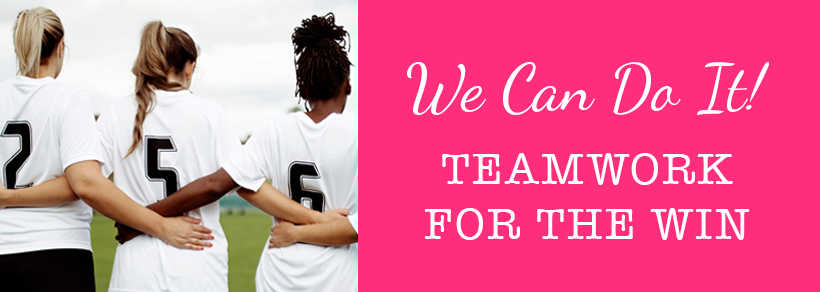
- "We Can Do It! Teamwork for the Win" by Renee Roberson
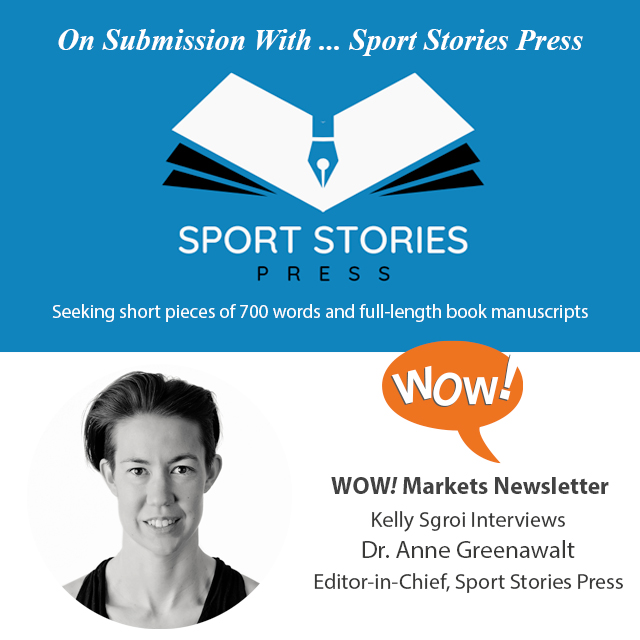
- "On Submission with Sport Stories Press Editor-in-Chief Dr. Anne Greenawalt" interview by Kelly Sgroi
- October Deadlines: Poetry, Fiction, Nonfiction, Multigenre, Just for Fun
- "Tag-Team Editors: How We Helped Each Other Write Our Books" by Kate Evans and Cathleen Miller
- Craft Corner: "Best Practices for Reading Submission Guidelines" by Dawn Colclasure
- Recent Posts from The Muffin
- Success Stories and Favorite Collaboration Methods from the WOW! community
| |
|
In my former occupation as a freelance magazine editor, I spent a lot of time outsourcing assignments and collaborating with other creatives. Networking was also a necessity. We wouldn’t have been able to produce a monthly magazine without the help of community members giving us story ideas, business owners, nonprofit leaders, writers, photographers, designers, sales team members, and more. But when I started my true crime podcast back in 2020, I worked alone because I didn’t have a budget to support staff. I kept telling myself eventually I’d be able to bring in advertising revenue and sponsorships that would help me grow a team. It didn’t happen, because it’s difficult to grow a product alone, and I struggled to produce content in a timely fashion (weekly, then bi-monthly), growing more frustrated and stressed out.
| |
|
After looking at my podcast download numbers, I had to admit that if I could produce the podcast weekly, it would be in a place that could finally attract advertisers. But part of me was apprehensive. Did I want to commit to putting together a weekly podcast, when each episode requires so much time to research and write, not to mention develop a content production schedule more than two weeks in advance? During the month of August, I spent a solid two weeks brainstorming enough weekly podcast episode ideas for two months. I figured out a mix of interviews, reviews, and investigative scripts that would be manageable. I decided to funnel all of my current freelance income into the podcast, meaning I could occasionally hire a writer to help with episodes. Then, as a stroke of luck, a friend reached out and asked if I would be interested in a high school intern looking to get writing experience for her resume before applying to colleges. As a bonus, she was interested in true crime!
My point is that it’s difficult to create in a vacuum, and collaboration and innovation only help us achieve our goals. If you’re like me, and are hesitant to do it, start small. Workshop pieces of your writing with others. I participate in a monthly writer’s accountability group where we all list our writing goals for the month and then check in with one another. It’s a built-in support group. There are numerous tools (many free) that are available to assist us in this process. Here are five tips to help you get started.
| |
|
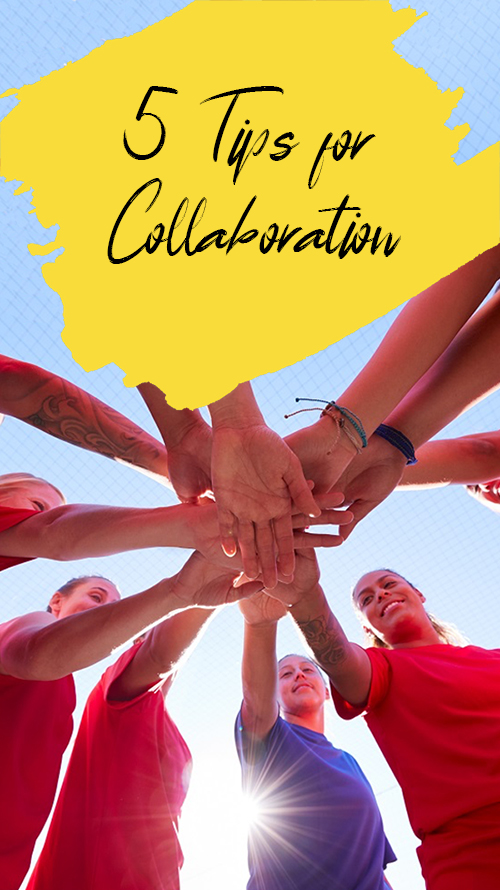
5 Tips for Collaboration
Find an easy-to-use teleconferencing platform. While there are many out there, I’ve found Google Meet and Zoom the easiest to use, and they both have free versions. I use Zoom to meet up with writer friends, conduct podcast interviews, and attend other meetings that aid in collaboration on projects.
Share and edit work with software. I used the file-sharing service Dropbox in my work as a magazine editor, because it could hold large files. I still use Dropbox Paper with my writing accountability group; and with my current podcast writers, we either share Word documents (with track changes feature) or Google Docs for edits and revisions. I use Asana to help keep track of various project details and deadlines, and you can use it as a collaborative project management tool with team members.
| |
On Submission With... Sport Stories Press | |
|
Proceeding a record-breaking FIFA Women’s World Cup 2023™, women’s sport has never had so much of the spotlight. I’m excited about how that will inspire future athletes and encourage girls to dream bigger. Because women can compete and fill arenas, just like men can. Enter Sport Stories Press, a publishing company and literary journal ahead of its time! Featuring stories about women in sports, particularly amateur women athletes, this platform has me excited! You know why? Because it’s time for women to shine. And what better person to elevate our voices than Dr. Anne Greenawalt, a writer, competitive swimmer, and trail adventurer.
Dr. Anne Greenawalt earned a doctorate in Adult Education from Penn State University. While earning her master’s degree in Creative Writing: Prose from the University of East Anglia, she wrote stories about ancient Spartan sportswomen. She also has a master’s degree in Communication Studies and a BA in Creative Writing and Women’s Studies. As an educator, she has 12+ years’ experience working with student writers in all genres. Now, she’s the founder and editor-in-chief at Sport Stories Press, ready to read and publish what women athletes have to say. In this interview, Anne and I chat about what the press is looking for, her favorite sport books, and why it’s so important to tell women’s sport stories.
| |
|
WOW: Hi Anne, it’s so great to meet you! Women’s sport is something I’m really passionate about, so I’m absolutely thrilled to be speaking with you. I love that there is a publication/publisher that focuses on amateur sportswomen because those real-life stories are so inspiring but also rarely captured. Can you start by telling us a bit about how Sport Stories Press was born?
Anne: It’s great to meet you, too, Kelly, and it’s wonderful to speak with other writers. When I was choosing a topic for my doctoral dissertation in Adult Education, my professors encouraged me to choose a topic that I was passionate about. So, I wrote about the identity development and learning that takes place when sportswomen tell and reflect on their sport narratives. It’s the marriage of my two greatest passions: sports and stories. I loved meeting and interviewing other athletes for my dissertation so much that I didn’t want the project to end when I graduated. I continued to write articles and interviews with sportswomen for various publications, but it wasn’t enough. I wanted a focused space to share sportswomen’s stories, particularly amateur sportswomen’s stories because, as you said, they’re not often captured. Thus, Sport Stories Press was born.
WOW: I think it’s absolutely wonderful that Sport Stories Press is the fusion of your two passions. The Sport Stories Press vision, to become the world’s leading publisher of women’s and amateur sports literature, is such an admirable goal. Why is that goal important to you, and what is Sport Stories Press about?
Anne: I want Sport Stories Press to set the example and lead the way for publishing more stories by, for, and about sportswomen and amateur athletes using equitable and inclusive representation. Sportswomen’s stories are so often riddled in biases and sexism, if they’re shared at all. I want to change this. By changing the discourse of women in sports, it can change discourse of women in general, creating more equitable and inclusive representation inside and outside of the sports realm.
| |
|
“Sportswomen’s stories are so often riddled in biases and sexism, if they’re shared at all. I want to change this. By changing the discourse of women in sports, it can change discourse of women in general, creating more equitable and inclusive representation inside and outside of the sports realm."
| |
|
WOW: Words are powerful, and women’s voices are underrepresented, especially women athletes. I love that you are leading the way and I hope you achieve your goal in a big way. The Notebook is the department of Sport Stories Press where all accepted short pieces are published. I noticed you accept most genres, from fiction and creative nonfiction to poetry, reviews, and more. What type of stories are you looking for in that 700-word count? For reviews, are you seeking book and film reviews?
Anne: I’m looking for just about anything that’s related to sportswomen’s stories, whether a short story, poem, personal narrative, review, or some hybrid of those. I’m particularly drawn to creative nonfiction pieces about amateur sportswomen’s athletic journeys. Julianne Bergmann, for example, is a retired dancer writing a series about her journey towards completing her very first pull-up. For reviews, I’m mostly interested in informal, reflective book reviews, though I would also consider micro reviews about a single story or poem related to sportswomen, like the one about Courtney LeBlanc’s poem “How to Run.”
WOW: Julianne’s CNF series is seriously inspiring; thanks for sharing. I love how she is reawakening her desire to be athletic. This will be relatable to so many women. Do you have any favorite short form pieces you’d like to share, a favorite manuscript, or all-time favorite sport story you’d like to talk about?
Anne: A League of Their Own is my all-time favorite sports movie. Not only is it an excellent story with some of the best quotes (“There’s no crying in baseball!” and “If it wasn’t hard, everyone would do it. It’s the hard that makes it great.”), it’s set in the WWII era that enriches the storyline and characters. Beyond that, I love listening to audiobooks of sportswomen’s memoirs, particularly ones that the athletes read in their own voices; most recently, I listened to and loved Brace for Impact by Gabe Montesanti, about her experience with roller derby. Amanda Beard’s memoir, In the Water They Can’t See You Cry, is one that has stuck with me not only because she was an icon and role model when I was a young age-group swimmer, but also because she discussed the challenges of training and competing when females cross from adolescence to adulthood.
WOW: Oh, I’m so glad you brought up A League of Their Own; what a movie! These real and raw stories are so important, because sportswomen face so many more obstacles than sportsmen. I’m going to go and re-watch A League of Their Own now. I see Sport Stories Press is currently open for full-length manuscript submissions. What are you looking for in the book publishing division?
Anne: Right now, I’m most interested in publishing creative nonfiction or memoirs about amateur sportswomen’s journeys written for an adult audience, books similar to Seconds Out: Women and Fighting by Alison Dean, From Couch Potato to Endurance Athlete by Hilary Topper, or A Beautiful Work in Progress by Mirna Valerio. I’d also be thrilled to receive novels, novellas, short story collections, chapbooks, and poetry about amateur sportswomen’s journeys. In the future, I’d like to expand to other aspects of sportswomen’s stories like college women or professional athletes. There may be books about other amateur athletes in the future, too, not just women.
WOW: Have you noticed any trends in sport books as of late?
Anne: I’ve noticed a growing number of professional sportswomen’s memoirs for both YA and adult audiences; women’s sport history books like Shifting Currents: A World History of Swimming by Karen Eva Carr; and women’s sport science books like Up to Speed by Christine Yu. Although there are a few new memoirs about amateur sportswomen, like Brace for Impact by Gabe Montesanti that I mentioned earlier, there aren’t many. That’s an area I’d love to see grow, and the area I’m most interested in championing through Sport Stories Press.
WOW: It would be great to see more amateur sportswomen telling their stories, because those grassroots stories are just as interesting and inspiring. Your author benefits are appealing with full editing, copyediting, cover and layout design, and marketing included. What else can a Sport Stories Press author expect after they get a yes from you? Can you tell us what your royalties percentage is, please? Asking for a friend.
Anne: The Sport Stories Press core values are creativity, curiosity, character, and commitment; so, in addition to the specifications of the publishing package authors receive, I will treat them and their writing with these values in mind. To me, this means that authors will get excellent customer services and will have a lot of input into the entire publication process of their work. There may be some variations in the contracts depending on the project, but in general, authors will receive $100 advance + unlimited PDF ARCs + 5 published copies + 25% royalties from book sales.
WOW: I love your four C’s! Many authors will be excited to work with a press with those values. And 25% royalties is amazing! That’s such an enticing percentage. You also offer editing and ghost writing on the Sport Stories Press site. Are those services for those who publish with you? What kinds of projects do you take on?
Anne: I offer developmental editing and ghost-writing services for all types of authors and projects, not just for Sport Stories Press authors and not just for sports writing. It won’t come as a shock to anyone who’s been involved in independent and small press publishing, but there’s not much (any?) money in it. Sport Stories Press, at least for right now, is a personal passion project. So, I take on other writing and editing projects to partially fund it. Most of the projects I’ve taken on so far are ghost-writing projects for older adults who want to leave their legacy as stories for their children and grandchildren. I’ve also worked with a few novel writers on developmental edits. Memoirs and novels are my favorite genres to work with, but I have experience with and interest in a wide variety of creative and business-related projects.
| |
|
“Stories are powerful. We learn from stories; they expand our hearts and minds, and they provide us with new perspectives, all of which are all a necessary catalyst towards change."
| |
|
WOW: That’s actually great to know. Writers are always looking for assistance, and I’m sure working with someone as passionate as you would be a pleasure. I was excited to see you’re also running a four-week workshop through WOW that starts on October 16th! Can you tell me more about Writing Fitness & Sport Stories? I’m particularly interested in learning more about how writers can share personal stories to create social change.
Anne: I’m so excited to be in partnership with WOW! and to be able to share my love of sports and writing with other athlete-writers. Sports and writing are activities many people do for pleasure or self-fulfillment, but these are also rich areas of personal learning and potential social change. This course is designed to give participants space to write and reflect on their fitness and sports careers, lives, and bodies, and then discuss how sharing these personal stories can create social change. By sharing our stories in ways that are meaningful to us, free of bias and sexist discourse, and reflecting on how those stories have shaped us and our place in the world—not just the sports realm—we are able to work towards social change. Stories are powerful. We learn from stories; they expand our hearts and minds, and they provide us with new perspectives, all of which are all a necessary catalyst towards change.
WOW: I couldn’t agree more. Writing and sports have so much to offer; there is power that can be unlocked if we just acknowledge all the benefits. I’m assuming you don’t sleep with all you have going on, but I’m hoping you still find time to write! Do you have a WIP you can tell us about? Or any of your own published work you’d like to share?
Anne: My children are three and one years old (so, no I don’t sleep much!), but surprisingly, the last three years have been my most productive writing years yet! I breastfed both of my kids, which forced me to sit and be still for long periods of time, especially in those first few postpartum months. After I got the hang of breastfeeding, I started to write story notes on an app on my phone while they ate. Most of the snippets were about being a pregnant and postpartum athlete and how new motherhood affected my athletic identity. After a few years, those snippets added up to entire essays, and now I have a full manuscript tentatively titled Challenge Accepted. Some of the essays have been published in literary journals (“You Are a Strong, Brave Girl” with Autofocus Lit Mag, and “Mothers in the Bleachers” with Words & Sports). I’ve just started to submit the full manuscript to some of my favorite small presses. (Fingers crossed!) I’ve also had a novel on the backburner for years, a story about four women on a U.S. Masters Swimming relay team, so maybe it’s time to dust that off again.
WOW: OMG, I started writing my first manuscript when I became a mother. Early motherhood is a time when we find our true passion, I think. Why do you think women’s sports is so important, and why is it your focus rather than men’s sports or kid’s sports?
Anne: Historically, and even in the recent past, and to some extent currently, women have been banned from participating in sports: doctors warned women that bicycling could damage internal organs and lead to infertility or even death; other doctors wrote studies about the damaging psychological and physical effects of playing basketball for women; governments banned women’s soccer for being “quite unsuitable” for females. Women have persisted, but even as women’s sports participation has increased, society often overlooks or devalues their participation: women athletes haven’t received equal playing time or facilities or pay; they receive less media coverage in quantity and quality; and they’re discriminated against when they are pregnant and postpartum. Still, women persist because they love their sport. There’s this rich history for women’s sports and there’s so much more to accomplish. I’m especially fascinated with and inspired by amateur sportswomen who train to compete, despite not being professionals and not getting paid. They are participating because they truly love it. It helps them find joy and make meaning in their lives.
WOW: Yes to all of this. There’s even some focus and consideration towards sportswomen during menstruation now, which is great. But we still have a long way to go. Your special project, Thigh Flashers Book Series, is currently inviting athletes to participate in an online written interview. Can you explain more about this for people reading who may be interested?
Anne: “Thigh Flashers” is a derogatory term that people used to call athletic girls and women in ancient Sparta. I use it as a title for this project to not only catch people’s attention, but also to show how sportswomen today still face similar discrimination as they did in ancient Sparta: they’re more valued for their roles as mothers than as athletes; they’re inappropriately sexualized; and media depicts them using unequal and condescending discourse. So, the title Thigh Flashers calls attention to the inequalities that still exist in sports, and this book series seeks to rectify that inequality by encouraging women to share their sports experiences in their own words. The online interview allows athletes to respond to as many or as few questions as they would like, using as much or little detail as they want.
WOW: It’s certainly a catchy title! What makes a good sport story?
Anne: Great sport stories are always about more than just the sport itself. They’re about the history, culture, and/or social contexts surrounding the sport story. For example, A League of Their Own isn’t just about the women’s baseball league; it’s also about women’s roles and relationships and identities during the WWII era in the United States. Brace for Impact isn’t just about a woman’s experience in a roller derby league; it’s about a woman redefining herself apart from societal and familial expectations. Great sport stories also have all of the elements of other great stories: strong and dynamic characters, something at stake if they don’t reach their goals, and a vivid setting that gives the story additional context.
WOW: Great point! Being an athlete takes over your life, so it’s important to contextualie how sport fits into that equation. Time, family, genetics, matters of the heart, even politics can play a part in an athlete’s journey. Finally, I’d love to hear about what sports you participate in, and what teams you follow with passion? I’m a soccer fan!
Anne: I’m a lifelong competitive swimmer! I had my first swim race when I was three years old, and I continue to train and compete in U.S. Master’s swimming today, over 30 years later. I’m a freestyler: I’m best at the 100 and 200 free, but I love the 500 free and longer-distance freestyle events. I’ve dabbled in other sports over the years—softball, track, cross-country, basketball—but swimming is the sport that continues to stick with me. For anyone who’s interested, I’ve started writing a series about my recent swimming progress in the Notebook at Sport Stories Press. Surprisingly, I don’t follow college or professional sports closely; instead, I gravitate more towards championing other amateur sportswomen with their sports goals, whether locally or through social media. But I do keep an eye on the U.S.A. Swimming National Team.
| |
WOW: You are an inspiration, Anne! Thank you for sharing your love of sports and words with us. It’s been an absolute pleasure chatting with you. | |
My thanks to editor-in-chief at Sport Stories Press, Dr. Anne Greenawalt! It’s been a treat to get a behind-the-scenes look at this innovative, passionate, and supportive press. I’m feeling inspired to write my own sport story! If you’re inspired, too, consider sending your short pieces of 700 words or less to Sport Stories Press’s Notebook here. For book-length manuscripts, submit here. Keep up with the latest calls and publications by signing up for their email newsletter at www.sportstoriespress.com. | |
|
Kelly Sgroi is based in Melbourne, Australia. Now represented by Beyond Words Literary Agency, Kelly is thrilled to be out of the query trenches and looking forward to what comes next in her writing journey. She’s also a content writer and an enthusiastic member of the writing community. Some of her short works are published by WOW! Women on Writing, Dream Journal, The Endometriosis Foundation of America, Endometriosis Australia, and a few Medium publications. Her debut manuscript is a women’s fiction story about motherhood.
| |
|
Wheelbarrow Books Poetry Prize
Deadline: October 1
The RCAH Center for Poetry at Michigan State University, in cooperation with the MSU Press, announces reading dates annually for the Wheelbarrow Books Poetry Prize. The winner will receive $1,000 and publication within two years of selection under the Wheelbarrow Books imprint. Manuscripts must be in English and a minimum 64 pages. Fee: $15
https://poetry.rcah.msu.edu/wheelbarrow-books/guidelines-established.html
Alta California Chapbook Prize - Latinx
Deadline: October 1
Gunpowder Press invites all Latinx poets who are current residents of the United States (age 18+) to submit to the Alta California Chapbook Prize contest. Poems may be submitted in English or Spanish. Two manuscripts will be selected for publication in bilingual editions. The winning poets will each receive $500, 10 copies of the published chapbook, and an invitation to read at the Mission Poetry Series in Santa Barbara in 2024. Guest judge is Alexandra Lytton Regalado, a Salvadoran-American author, editor, and translator. Submit 8-12 pages of poetry (no more than one poem per page). Fee: $15 (they also have a fee waived category)
https://gunpowderpress.submittable.com/submit
Writer’s Digest’s Annual Poetry Awards
Deadline: October 2 (Early Bird); November 1
We’re on the lookout for poems of all styles–rhyming, free verse, haiku, and more–for the 18th Annual Writer’s Digest Poetry Awards! This is the only Writer’s Digest competition exclusively for poets. Enter any poem 32 lines or fewer for your chance to win $1,000 in cash. Fee: $20 (Early Bird); $25 (November Deadline)
https://www.writersdigest.com/writers-digest-competitions/poetry-awards
dipity - Antique Roadship Poetry
Deadline: October 8
Write up to 3 poems any style about antiques in your location, those you've personally acquired, fave passed down collections, e.g. radios, typewriters, vintage baseball card, necklace, a rare book or a family heirloom that you hold in your heart. Each poem should have a brief backstory paragraph on a separate page about 5-8 sentences. Discuss what it means to you, how you acquired it, the year or age. Provide as many details as you're comfortable with sharing. Each antique or item should have a few photos that you've taken yourself. The photos should NOT include you in them, as we only ask for profile photos after acceptance in dipity's new ANTIQUE ROADSHIP series. No fee.
https://dipitylitmag.submittable.com/submit/259663/dipity-antique-roadship-poetry-submissions
2024 Peter Porter Poetry Prize
Deadline: October 9
Australian Book Review welcomes entries for the twentieth Peter Porter Poetry Prize, which is open to all international poets. This year the Porter Prize is worth a total of AU$10,000 – with a first prize of $6,000. Entries must be an original single-authored poem of not more than 70 lines written in English. Each non-subscriber of ABR will receive digital access to the magazine for four months. Fee: $20 (ABR Subscriber); $30 (Non-ABR subscriber)
https://www.australianbookreview.com.au/prizes-programs/peter-porter-poetry-prize/2024-peter-porter-poetry-prize
Jake Adam York Prize
Deadline: October 15
The Jake Adam York Prize for a first or second poetry collection of more than 48 pages is a collaboration between Copper Nickel and Milkweed Editions. The prize-winning poet receives $2,000 and publication by Milkweed Editions. Poets must be US Citizens (living abroad is fine) or must live in the US and be writing in English. All entrants will receive a one-year subscription to Copper Nickel. Fee: $25
https://copper-nickel.org/bookprize/
2023 Gerald Cable Book Award
Deadline: October 15
Silverfish Review Press sponsors the Gerald Cable Book Award. This prize is awarded annually to a book-length manuscript of original poetry by an author who has not yet published a full-length collection. There are no restrictions on the kind of poetry or subject matter; translations are not acceptable. The winner will receive $1,000, publication, and 25 copies of the book. Manuscripts should be at least 48 pages in length. Fee: $25
https://silverfishreviewpress.com/submission-guidelines
The Resistance & Resilience Prize
Deadline: October 15
This contest is interested in reading poems that reflect upon, live within, wrestle with, uplift, or subvert themes of resistance and resilience. They are looking for poetry of pushback and of survival, poetry that troubles power and poetry that nurtures its readers and writers alike. The winning poet will be awarded $3,000, publication, and a brief interview in Palette Poetry. Second and third place will receive $300 and $200, respectively, as well as publication. Fee: $20
https://www.palettepoetry.com/current-contest-copy/
Anthology Poetry Competition
Deadline: October 31
This is open to original and previously unpublished poems in the English language. Entries are invited from poets of all nationalities, living anywhere in the world. Poems submitted should not exceed 40 lines. First place winner will receive a €1,000 cash prize and the chance to see their work published in a future issue of Anthology. The winner will also receive a one-year subscription subscription to Anthology. Entries are invited from poets of all nationalities, living anywhere in the world. Fee: €18
https://anthology-magazine.com/awards/poetry-competition/
Nine Arches Poetry Collection
Deadline: October 31 (Opens October 1)
Nine Arches Press is currently accepting submissions for both debut collections from new or emerging poets and submissions from established poets with previous collections published. They welcome poets of all ages and diverse submissions. Please send them a sample of twenty poems from your full collection manuscript, in one single document. Please also include a short biographical note, which should include information of any previous or forthcoming publication (in magazines, journals, pamphlets, collections, online etc.). Pay is in royalties. No fee.
https://www.ninearchespress.com/submissions.html
The National Poetry Competition
Deadline: October 31
Run by The Poetry Society since 1978, The National Poetry Competition is one of the world’s most prestigious prizes for an unpublished poem of up to 40 lines, open to all poets worldwide aged 18 or over. A prize of £5,000 (approximately $6,382) and publication on the Poetry Society of the United Kingdom website is given annually for a single poem. A second-place prize of £2,000 (approximately $2,553) and a third-place prize of £1,000 (approximately $1,276) is also given. Fee: £8
https://npc.poetrysociety.org.uk/
2023 Jessie Bryce Niles Chapbook Contest
Deadline: Novemb
Prize: $1,000 plus publication and 50 author’s copies. Judge is Kathleen Bryce Niles. Submit 25-34 pages of poetry, single-spaced (1 page=38 lines maximum, including spacing between lines; poems may run longer than 1 page). Manuscripts either too short or too long will be disqualified. Entry Fee: $30 +$2.50 internet fees per chapbook (includes copy of chapbook)
https://comstockreview.submittable.com/submit/266915/2023-jessie-bryce-niles-chapbook-contest
| |
|
Negative Creep - Horror Stories Inspired by Nirvana
Deadline: October 1
From Book Slayer Press and Roxie Voorhees, co-editor of Mine and Reader Beware, comes a collection of Nirvana-inspired horror. For decades, our lives have been touched by the music. We’ve cried, screamed, laughed to the punk riffs and unique vocals. Nirvana shaped us during our formative years and it shows. For that, we honor the mark they’ve made. 20-30 stories inspired by Nirvana songs, ranging their entire discography. All horror tropes are welcome. Genre-blending is highly encouraged. Please note: Only one story per song will be accepted. Submissions must be between 1,000 and 3,000 words. Pay is $50 per story. No fee.
https://www.bookslayerpress.com/submissions
The Last Line
Deadline: October 1
All stories must end with the last line provided: "Samir was never one to back down from a challenge." The line cannot be altered in any way, unless otherwise noted by the editors. The story should be between 300 and 5,000 words (this is more like a guideline and not a hard-and-fast rule; going over or under the word count won't get your story tossed from the slush pile). No fee.
http://www.thelastlinejournal.com/index.htm
Hauntings and Hoarfrost - Gothic Fiction
Deadline: October 7
Gothic fiction is renowned for being filled with spine-chilling stories in isolated and forlorn places. What better setting could there be than the deep, dark, depths of winter? Hauntings and Hoarfrost will be filled with stories of frosty mornings, blood stained snow and ghosts who appear and disappear like breath fogging the air. The editors will be looking for mysterious messages scratched into frosty windows, the sound of ice skates cutting across an empty pond, wild storms and blankets of soft, white, beautiful death. Submit gothic fiction under 7,500 words. Pay: $50 CDN flat fee and a paperback copy of the anthology for stories. $20 CDN flat fee and a paperback copy of the anthology for poems. No fee.
https://www.rhondaparrish.com/home/open-calls-for-submission/
I Faked My Own Death Contest
Deadline: October 7
Sleek City Press challenges zesty writers with plenty of life in them to submit the best faked my own death stories. The best fake death account wins! Entries should be completely original fiction or stories based on historical events. Submit up to 1,500 words. Top winning prize is $2,000. Fee: $20
https://sleekcitypress.wordpress.com/
Stone’s Throw - The Dinner Table
Deadline: October 7 (Opens October 1)
The dinner table—a place where families gather, where clients are charmed, where relationships begin and goodbyes are postponed. Breaking bread together is integral to the human experience. The poor do it, world leaders do it. Deals are made. Handshakes exchanged. So many good things come out of these meetings, memories and progress and high spirits. They're looking for dark fiction, crime and noir as their usual submissions, but with a target length between 1,000 and 2,000 words, and aligned with the monthly submissions prompt. Pay is $25 per accepted story. No fee.
https://www.rockandahardplacemag.com/stones-throw-submissions
Bath Flash Fiction Awards
Deadline: October 8
Ad Hoc Fiction is seeking entries for its flash fiction award. Submit your stories with a 300 word limit. £1000 prize for the winner, £300 second and £100 third. Two commendations £30 each. 50 authors offered anthology print publication, with all published authors shipped a free print copy. Fee: £9.00
https://www.bathflashfictionaward.com/enter/
Zoetrope All-Story Short Fiction Competition
Deadline: October 10
Zoetrope: All-Story accepts all genres of literary fiction. Entries must be unpublished at the time of submission and strictly 5,000 words or fewer. The three prize winners and seven honorable mentions will be considered for representation. Three prizes include: First prize: $1,000; Second prize: $500; Third prize: $250. Fee: $30
https://www.zoetrope.com/contests/stories-2023/
The Adina Talve-Goodman Fellowship
Deadline: October 11
Each year, together with the Talve-Goodman Family, One Story awards one writer the Adina Talve-Goodman Fellowship. The fellow receives: access to One Story online classes; admission to One Story's Writing circle; stipend ($2,000) and free admission to One Story's week-long summer writers' conference; a full manuscript review and consultation with One Story Executive Editor Hannah Tinti (story collection or novel in progress up to 150 pages/35,000 words). This fellowship calls for an early-career writer of fiction who has not yet published a book and is not currently nor has ever been enrolled in an advanced degree program (such as an MA or MFA) in Creative Writing, English, or Literature, and has no plans to attend one in the 2024 calendar year. To apply, you need a fiction writing sample (3,000 - 5,000 words), a personal statement (600 - 1,100 words), references, and a resume. No fee.
https://one-story.com/learn/fellowship/
The Other Stories Podcast - Crime II
Deadline: October 14
If you think you’ve got what it takes to terrify, scar and haunt their audience, they want your stories! If accepted, they'll get their narration team to lend their voices, their editor will sprinkle some magic pixie dust on the track, and you could have your story heard by thousands of listeners each week. Submit your 2,000 word story on the theme of "Crime II" for consideration. Pay is 15GBP. No fee.
https://theotherstories.net/submissions/
Feisty Felines and Other Fantastic Familiars
Deadline: October 15
A collection of fun and thought-provoking stories about magical animal familiars and their humans. Familiars can be feisty felines or other imaginative animals. Original feline and or familiar stories and poetry in the genres of fantasy, science fiction, horror, suspense, humor, and romance, appropriate for up to a “PG-13” audience. Up to 5,000 words. Pay: 6¢/word on acceptance. No fee.
https://wordfirewestern.moksha.io/publication/feisty-felines-and-other-fantastical-familiars/guidelines
Bounds of Infinity Anthology
Deadline: October 15
An anthology edited by Vaughn A. Jackson & Stephanie Pearre, of cosmic horror and weird tales written by marginalized peoples whose experiences and worldviews have influenced their interpretation of dread. The anthology hopes to bring these diverse perspectives to the forefront of the horror community and, of course, make Lovecraft roll over in his grave! Word count is 2000 – 4000 words. Pay: 8 cents per word. No fee.
https://rawdogscreaming.com/contact/amp/
2023 Neilma Sidney Short Story Prize - Travel
Deadline: October 20
Supported by the Malcolm Robertson Foundation, and named after the late Neilma Gantner, this prize seeks excellent short fiction of up to 3000 words themed around the notion of ‘travel’; imaginative, creative and literary interpretations are strongly encouraged. This competition is open to all writers, nationally and internationally, at any stage of their writing career. The winning story will receive a AU$5000 first prize and be published in Overland. Two runners-up will each receive AU$750 and be published at Overland online. Fee: AU$12 (subscriber) or AU$20 (nonsubscriber)
https://overland.submittable.com/submit/
Science Fiction & Fantasy Writing Competition 2023 - Young Writers
Deadline: October 23 (Opens October 2)
Fantasy and sci-fi stir our imaginations, inviting us to think outside the limits of the life we know. This month, you have the extraordinary and exciting task of reimagining the world. Perhaps this means revealing a fantastical element hidden within our “reality”—the rabbit hole in Alice in Wonderland, for example. Perhaps you will dream up an entirely different world, as in The Lord of the Rings. Or perhaps you will take readers to the future, dreaming up a reality dramatically changed by technology, the environment, or a new social order. In a fantasy or sci-fi short story, take your readers on a journey into a world of your imagination. This contest is open to young writers between the ages of 13 and 19.5. Submit stories between 500 and 1,000 words. Their theme is, "Reimagine the world." The winning entrant receives $100, and the runner-up and best peer reviewer receive $50. No fee.
https://writetheworld.org/#/competition-page/5250
Novel Slices - Novel Excerpt
Deadline: October 31
Submit your novel excerpt between 4,000 to 6,000 in length. All novel genres welcome except for Children's and Middle Grade. Five equal, first-place winners will each receive $1,000 ($5,000 total) and publication in the latest issue. Fee: $12
https://www.novelslices.com/contest.html
Novel Opening & Synopsis Competition
Deadline: October 31
Flash 500 is hosting a novel opening competition, judged by Headline Publishing. It's open to published, self-published, and unpublished novelists. The only stipulation is that the entry must be unpublished. They are looking for a novel opening up to 3,000 words, plus a synopsis of the story (max 750 words) to be submitted together in a single file. First prize is £500; Runner up is £200. Fee: £10
https://flash500.com/novels/
Raleigh Flash Fiction Prize
Deadline: October 31
Submit up to two unpublished works of flash per entry. Flash works should be no longer that 1000 words each, combine both stories in one file. First Prize includes $300 USD and publication in the Spring 2023 issue. Finalists will receive our standard $15 payment along with publication. Fee: $5
https://raleighreview.org/rr-flash-fiction-prize
Uncharted Magazine Novel Excerpt Prize
Deadline: October 31
Uncharted Magazine is looking for the best 5,000 words or fewer of your novel in progress. They love to read opening chapters, climaxes, and anything in-between! They publish genre novel excerpts from fiction writers of any background or experience. The three co-winners of this prize will each receive $1,000 and publication. All entries will be considered for publication. The guest judge is Meg Elison. Fee: $20
https://www.unchartedmag.com/uncharted-magazine-novel-excerpt-prize-judged-by-meg-elison/
| |
|
Dorothy Parker’s Ashes – Lost
Deadline: October 1
Dorothy Parker’s Ashes publishes first person essays. They are seeking essays from 500 to 2,000 words on the theme of “Lost.” They do consider previously published essays, taking into consideration venue, date, etc. You can also find their upcoming themes on their submission page. Their next theme after “Lost” is “Friends” with a deadline of November 1. No fee.
https://www.dorothyparkersashes.com/submit
Sasee Magazine – Jingle & Joy
Deadline: October 15
Sasee welcomes editorial submissions from freelance writers. They are looking for new, unpublished, first-person, non-fiction material that is for or about women. Essays, humor, satire, personal experience, and features on topics relating to women are their primary editorial focus. Diversity of subjects that reflect all age groups and variety of writing styles are invited. Articles should be 500 to 1000 words in length. Their November issue’s theme is “Jingle & Joy.” Payment varies. No fee.
https://sasee.com/submissions/
Event Magazine's Creative Nonfiction Contest
Deadline: October 15
$3,000 in prizes, plus publication (First Place $1,500; Second Place $1,000; Third Place $500). They encourage writers from diverse backgrounds and experience levels to submit their work. Guest judge is Omar Mouallem. Explore the creative nonfiction form. 5,000-word limit. Entries must not have been previously published, either in print or online, or been accepted for publication elsewhere. No simultaneous submissions. Fee: $34.95, which includes a one-year subscription to Event magazine.
https://www.eventmagazine.ca/contest-nf/
Brick Magazine
Deadline: October 31 (Opens October 1)
Brick is an international literary journal published twice a year out of Toronto. With a focus on literary non-fiction, the magazine prizes the personal voice and celebrates life, art, and the written word with the most invigorating and challenging essays, interviews, translations, memoirs, belles lettres, and unusual musings. They don’t have a set word count limit, but pieces tend towards a range of 1,000 – 5,000 words. Pay: $65–$720, depending on the length of accepted work, plus two copies of the issue the work appears in and a one-year subscription to the magazine. No fee.
https://brickmag.com/submissions/
River Teeth Literary Nonfiction Book Prize
Deadline: October 31
The River Teeth Book Prize is an annual contest to identify the best book-length manuscript of literary nonfiction. All manuscripts are screened by the co-editors of River Teeth, and this year’s final decision will be made by guest judge and award-winning author Lacy M. Johnson. The contest winner will receive $1,000 and publication by The University of New Mexico Press. They encourage underrepresented voices to submit their work for consideration, including but not limited to: BIPOC, LGBTQ+, and disabled writers. All U.S. entrants will receive a one-year subscription to River Teeth with their submission fee (provided they supply a mailing address). All entrants will be notified by mid-March 2024. Fee: $27
https://riverteeth.submittable.com/submit/7795/river-teeth-literary-nonfiction-book-prize-submission
Panther Creek Book Award in Non-Fiction
Deadline: October 31
Hidden River Arts offers an award of $1,000 and publication on Hidden River Press, an imprint of Hidden River Publishing, for an original, unpublished book-length work of non-fiction. (This includes creative non-fiction, memoir, biography—all forms of non-fiction are welcome.) Important to note: They consider ALL forms of publication of your book as disqualification. Self-publishing is publication; if your manuscript has an ISBN number, or if it is available for sale online and/or in brick and mortar stores, your book is “published.” Please note that this refers to the entire book-length work. If you have published excerpts of the work in literary magazines, that is acceptable as long as you provide full details of where the excerpt was published, the date of publication, and confirmation that full rights and ownership have reverted to you exclusively. This competition is open to international submissions for all writers in English. They also accept translations to English from any language. All submissions must include name, address, telephone number, email, website (if you have one), a brief biography, a synopsis, outline, and full manuscript—IN THAT ORDER. Please note that, when submitting online, all materials must be combined into ONE document before uploading. Simultaneous and multiple submissions are allowed. Fee: $20
https://hiddenriverartssubmissions.submittable.com/submit/96026/panther-creek-book-award-in-non-fiction
Gabriele Rico Challenge for Creative Nonfiction 2024
Deadline: October 31
The Gabriele Rico Challenge for Nonfiction recognizes outstanding works of nonfiction, awarding $1,333 to the author of the winning entry. They are looking for creative nonfiction, such as personal essays or narratives, not scholarly papers or book reviews. All works should be stand-alone essays, not chapters of a longer work, 5,000-words max. Fee: $20.
https://reedmagazine.submittable.com/submit/262464/gabriele-rico-challenge-for-nonfiction-2024-1-333-prize
The Letter Review Prize for Nonfiction
Deadline: October 31
The Letter Review Prize welcomes most forms of nonfiction including: Memoir, journalism, interviews, essay (including personal essay), fictocriticism, creative nonfiction, travel, nature, opinion, and many other permutations. The top three winning entries are declared the Winners, and share equally in the Prize pool of $1000 USD. Winning entries are published by The Letter Review, accompanied by an original commissioned artwork. Submissions should be 5,000 words or less. The judges will be judges will be Ol James and Kita Das. Fee: $20 USD to enter one submission, $35 to enter two (save $5), and $45 to enter three (save $15).
https://letterreview.submittable.com/submit/272877/the-letter-review-prize-for-nonfiction
Cutleaf - Essays
Deadline: October 31 (Opens October 1)
Cutleaf publishes a new issue every other week. They are open to nonfiction submissions only during the month of October. Cutleaf is interested in essays in both standard and hybrid forms. They welcome new approaches such as speculative nonfiction, essays based in metaphor, essays in verse, and other re-imaginings of the format. They welcome work about literature, travel, music, visual art, and film in multiple formats. They are less interested in journalistic approaches than in work that shows the larger and smaller truths about being human. Essays should be less than 6,000 words. Longer work must be exceptionally compelling, and they may publish longer works in installments. Pay is $100 to $400 for published nonfiction prose. No fee.
https://cutleafjournal.com/submit/
Ghost Peach Press: 2023 Book Contest Essays (Essay Collections)
Deadline: November 1
This contest for a collection of essays is open to anyone writing in English who has not yet published more than one full-length book of creative nonfiction (writers with multiple chapbooks are eligible), and offers a cash prize of $1,000 and publication by Ghost Peach Press, as well as ten free copies of the published book. Not sure your collection is all essays? T welcome lyric essays, hybrid pieces, uncategorizable collections, and everything you've got that blurs the lines of genre. Entries will first be read anonymously by Ghost Peach’s panel of editors, and judge Jenny Boully will choose the winning collection from ten finalists. The winner will be announced by May 2024 and publication is expected in the spring of 2025. Fee: $22
https://ghostpeachpress.com/essays/
Mayday Creative Nonfiction Prize 2023 – Theme: Changing My Mind
Deadline: November 1
Mayday offers the following prizes: First Place: $500; Second Place: $250; Third Place: $100. Submit an essay (5,000 words or less) that responds to the theme “Changing My Mind,” which might refer to trying to change the minds of others, something you changed your mind about, or a subject you wish you could look at differently. Editors would especially love to see humor in your piece. Fee: $20
https://newamericanpress.submittable.com/submit/269615/2023-mayday-creative-nonfiction-prize
HerStry – Winter Stories
Deadline: November 1
Winter is both bleak and beautiful. Tell us stories that happened in the winter. About falling in love in the cold, about breaking apart, coming back together. Tell us about a silent snowfall or a snowstorm. Tell us about ice fishing with grandma or ice skating with mom. Tell us about your winter. All stories must be true and about you. Submit essays between 500 – 3,000 words. Pay is $20 per piece. Fee: $3
https://herstry.submittable.com/submit/238786/winter-stories-december-2023-theme
| |
|
Winter Poetry & Prose Getaway Scholarship
Deadline: October 1
There are 29 scholarships offered for the 30th annual Winter Poetry & Prose Getaway, January 12-15, 2024 in the Atlantic City, NJ area. Recipients may choose from workshops in novel writing, memoir, fiction, nonfiction, poetry, songwriting, playwriting and flash prose. In addition, the conference offers a Story Slam, a literary bookstore, open mics, tutorials, sunrise yoga, karaoke, dancing at the Getaway Disco, writerly camaraderie and more. No fee.
https://wintergetaway.com/registration/writers-conference-scholarships/
American Literary Review Contests
Deadline: October 1
The spring online issue of the American Literary Review will award three prizes of $1,000 each for a poem, short story, and an essay. Limit 8,000 words for short story, 6,000 words for creative nonfiction, and up to three poems. Fee: $15
https://americanliteraryreview.com/contest/
2023 Fiction, Non-Fiction and Memoir Contest
Deadline: October 1
IML Publications is a boutique publishing company that is dedicated to amplifying the voices of contemporary writers who are nomads and explorers of language, form, and the psyche. High-quality “unpublished” manuscript submissions of memoir, fiction and non-fiction entrusted to us will be read, sorted and pondered by our esteemed author, Jacqueline Gay Walley. Award: $1000 +possible book publication/distribution in ebook and paperback formats. Submit 50 pages double spaced + a 1-page synopsis of story. Fee: $35
https://www.imlpublications.com/contests
Little Somethings Press
Deadline: October 1
In each issue, little somethings press publishes 30 pieces of flash fiction, flash memoir, poetry, and up to 10 pieces of visual art. Simultaneous submissions are accepted. This small independent press makes everything by hand (with love), so responses may take up to six months. No fee.
https://littlesomethingspress.com/submissions/
Gordon Square Review
Deadline: October 1
Gordon Square Review encourages writers to submit poetry, fiction, or nonfiction. Poetry: only include one poem in your submission. Fiction: Only include one story in your submission. The word limit is 7,500 words. Nonfiction: Only include one story or essay in your submission. The word limit is 1,000 words (if fewer than 1,000 words, that is okay). Gordon Square Review pays a modest honorarium for accepted work ($25 per accepted prose piece and $10 per accepted poem). No fee.
http://www.gordonsquarereview.org/submit.html
Cherry Tree - Issue 10
Deadline: October 1
Cherry Tree welcomes submissions of poetry, fiction, creative nonfiction, and literary shade. Please send no more than 5 poems, 5 flash prose pieces, or 20 total pages of prose uploaded as a single file. Fee: $3
https://cherrytree.submittable.com/submit
A Hotel Room of One's Own: The Erma Bombeck | Anna Lefler Humorist-in-Residence Program
Deadline: October 5
Two humor writers will receive free registration, travel and hotel expenses for the April 4-6, 2024, Erma Bombeck Writers’ Workshop, followed by an all-expenses-paid writing residency at the University of Dayton Marriott Hotel through April 18. It’s the gift of time to write and free room service. The package is worth approximately $5,000, but the experience is priceless. Cash prizes for finalists and honorable mentions. On the application, they ask you to reply to a few short questions and upload a sample of your funny writing (no longer than 1,250 words). Fee: $25
https://humoristinresidence.submittable.com/submit
Witness - Crush
Deadline: October 6
Witness is the multi-genre literary magazine of UNLV. They are currently reading for the Spring 2024 print issue. Their theme is “Crush,” and invite you to interpret it loosely and expansively, to let the writing take you where it wants. "Bring us work that explores the tensions and intricacies surrounding Crush, work that complicates the idea, work that makes you and us feel vulnerable, lost, hopeful, and most importantly, a little more alive." Fiction and Nonfiction: Submissions must be under 7,000 words (please include a word count and page numbers in your header.) Poetry: Please limit your submission to five poems, and wait to hear back from us before submitting again. Poems should be sent in a single document file, with the individual poems separated by page breaks. Fee: $3
https://witnessmagazine.submittable.com/submit
DreamForge
Deadline: October 14
Seeking science fiction and fantasy short fiction and poetry. Accepts reprints. Flash Fiction: 500 - 1,500 words. Short Stories: 1,500 - 7,000 words. Poems: up to 900 words. Payment: $0.08/word. Payment for reprints is $0.04/word. Poems are paid at the rate of $25 to $100. No fee.
https://dreamforgemagazine.com/call-for-submissions/
Seaside Gothic
Deadline: October 15 (Opens October 9)
Seaside Gothic publishes fiction, poetry, and nonfiction of high quality that meet the criteria of seaside gothic literature. Each Issue also features a selection of images from a single photographer or artist, including the cover. Fiction, Poetry, and Nonfiction: Submissions should be a single piece of fiction, a single poem, or a single piece of nonfiction attached as a Word (.doc or .docx) or PDF document in Times New Roman size 12. Submissions must be complete self-contained pieces not in excess of 1,000 words in length and not serialised or extracts of larger works. Pay is £0.01 per word. Payment is offered for accepted submissions via PayPal upon publication. No fee.
https://seasidegothic.com/submissions/
Cutbank: Big Sky, Small Prose - Flash Contest
Deadline: October 15
CutBank Literary Magazine is seeking interesting, compelling fiction and nonfiction prose in 750 words or fewer. Lyric essays, prose poems, short essays, vignettes—send your most dazzling short form prose. This year's guest judge is Micah Fields, Iowa Nonfiction Writing Program alum and author of the recently published memoir, We Hold Our Breath: A Journey to Texas Between Storms. First place is $500 and publication in CutBank. Two runners-up will be awarded $50 and publication in CutBank. All other submissions will be considered with submissions for the print edition of CutBank literary magazine. Fee: $7
https://cutbank.submittable.com/submit/45798/big-sky-small-prose-flash-contest
Consequence Forum
Deadline: October 15
All submissions need to address in some manner the human consequences and realities of war or geopolitical violence. Fiction: Short story (up to 5,000 words), Flash (up to 3 pieces or 1000 words), and Excerpts (up to 5,000 words); Nonfiction: Interviews, Reviews, Essays, and Narrative Nonfiction (all up to 5,000 words); Poetry: Up to 5 poems of any form (please label the file with the number of poems, e.g. “Three Poems”). Publications receive: Print Poetry: $20 per piece; Print Prose: (1-4 pps) $30 | (5-10 pps) $40 | (11+ pps) $50; Online Poetry: $40 per piece; Online Art: $40 per piece. No fee.
https://www.consequenceforum.org/submissions
The Minnesota Review
Deadline: October 15
Please submit only one story (4,000 words or less), or up to four short shorts or flash fiction pieces (1,000 words or less each). All types of poetry are reviewed. You may submit three to five poems per reading period. No fee.
https://theminnesotareview.submittable.com/submit
The Plentitudes
Deadline: October 15
"We are accepting submissions of poetry, short stories, and personal essays." Personal essays & stories: 1,500-5,000 words. Poems: No more than 10 pages and no more than 5 poems, in ONE document. Upon publication, they award an honorarium of US $50 per published story, essay, poem or collection of poems. No fee.
https://www.theplentitudes.com/submit
Tahoma Literary Review
Deadline: October 15
For fiction, they like stories that offer imaginative premises, unusual or marginalized characters, and high stakes. For nonfiction, send the stuff you never thought would get published anywhere or the thing you have to take a deep breath over before submitting or running by your critique group. For poetry, alongside free verse, works that are formal, prose, or long form poems are also welcome. Word limit for fiction and nonfiction is 1,500 to 6,000 words. You can submit up to six poems. Pay is $55 for flash prose and short poems; $135 for longer prose and poems. Fee: $5 (for fiction & nonfiction); $4 (for poetry).
https://tahomaliteraryreview.submittable.com/submit
Thin Air Magazine - Uprooted
Deadline: October 15
The theme for Issue 30 is Uprooted! Thin Air Magazine invites fiction, nonfiction, and poetry that reflect how personal and/ or collective uprooting transforms us. Consider: personal identity, physical locales, relationships, language, life circumstances, and all else. Thin Air is accepting submissions in fiction, nonfiction, and poetry, but we also seek work that defies genre categorization and embraces hybridity. They accept fiction and nonfiction up to 3,000 words. We will consider novel excerpts as long as they can stand alone. Send up to three poems in one document totaling five or fewer pages. Fee: $3
https://thinair.submittable.com/submit
2024 IHLR Long Story: Nonfiction and Fiction
Deadline: October 15
Originally, the IHLR Long Story was known as The Trifecta, and it included one long winning poem, story, and essay, published in the summers. We were and are still proud to offer longer manuscripts, which most journals cannot publish because they lack the space to do so. Recently, we've rethought the way we manage this issue. While we still open our submission gates to longer works every fall, we are only looking for longer PROSE: essays and stories between 20 and 40 pages This is the ONLY time of the year in which we consider longer works. We will select only ONE winner—a story OR an essay—but instead of a $250 honorarium, the winning writer now receives $1,000. Fee: $15
https://ironhorse.submittable.com/submit/272172/2024-ihlr-long-story-nonfiction-and-fiction-only
New Letters Editor's Choice Award
Deadline: October 16
“This year our editors are looking to read your best short narratives, whether they are stories, essays, poems, or hybrid forms. The only requirement is that each entry must be brief—1,000 words or fewer.” The winner will be published in New Letters and receive a $1,000 cash prize. Max word count is 8,000. Entries must cross the traditional boundaries of genre and form. Fee: $20
https://www.newletters.org/editors-choice-award/
Uncanny
Deadline: October 16 (Opens October 2)
Uncanny Magazine is seeking passionate, diverse SF/F fiction and poetry from writers from every conceivable background. They want intricate, experimental stories and poems with gorgeous prose, verve, and imagination that elicit strong emotions and challenge beliefs. Uncanny believes there’s still plenty of room in the genre for tales that make you feel. Fiction: submit speculative fiction between 750-10,000 words. Pay is $.10 per word (including audio rights). Poetry: submit original, unpublished speculative poetry of any length. Pay is $40 per poem. Novellas: submit original, unpublished speculative fiction novellas between 17,500 to 30,000 words. Pay is $.10 per word (including audio rights). Essays: pay is $100 per essay on acceptance. Art: pay is $125 for reprint art. No fee.
https://www.uncannymagazine.com/submissions/
Tulip Tree Review Humor Story Contest
Deadline: October 17
Tulip Tree Review is dedicating their fall/winter issue permanently to humor. Entries can be fiction, nonfiction, or poetry—as usual, if it tells a story, and makes them laugh, it fits! Word limit is 10,000 words. Grand prize for each contest: $1,000. Contributors for each issue will be paid a minimum of $50. Additionally, all contributors receive a free copy of the issue in which they appear. Fee: $20
http://www.tuliptreepub.com/tuliptree-review.html
-Ette - Cassette
Deadline: October 21
-ette is seasonal, small, and publishes flash fiction, micro, and prose poetry. -ette's editors, Beth Hahn and Nora Maynard, met at Bread Loaf Writers' Conference in Amy Hempel's workshop. They share a love of gorgeous prose, writing that arcs strange, and small-form work. They bonded over Murakami, cats, and music (Nora plays violin; Beth, guitar). Their winter/spring issue's theme is cass(ette). They don't expect you to conform to the familiar definition of the word. Have fun. Note the etymology of cassette. They want to be surprised, delighted, and moved. That said, if you do have a mixtape sub for the cass(ette) issue, they'd be excited to read that, too. Submissions should not exceed 1000 words. No fee.
http://www.ettereview.com/submit/
The Dawn Review
Deadline: October 31
They accept all written work, so long as it is literary in nature! They also publish visual work. There are no restrictions on who can submit, and their issues are not themed. They want you to send them something new—a new form, a new combination of words, a new perspective. They love work that is striking and honest—that creates the truth by refracting it. They provide FREE FEEDBACK (~300 words) to all submissions upon request. No fee.
https://www.thedawnreview.com/submit
CRAFT 2023 Flash Prose Prize
Deadline: October 31
This contest is open to microfiction, flash fiction, and prose poetry. Submissions up to 2,000 words—if submitting two pieces, please send them in a SINGLE document. The writers of the three winning pieces will each receive $1,000 and a bundle of Rose Metal Press Field Guides. The guest judge is Kathy Fish. Fee: $20
https://craft.submittable.com/submit/269292/craft-2023-flash-prose-prize-guest-judge-kathy-fish
Open Minds Quarterly - Identity
Deadline: October 31
The theme for Winter 2024 is Identity: How has your experience with mental health challenges, mental illness, madness, and/or neurodivergence shaped your identity? How do other identities intersect with your experience? Have mental health challenges, mental illness, madness, and/or neurodivergence affected the way you see yourself? What about others? Do you feel your identity is understood by others? What would you like to tell them about it? We want to here all about how identity affects your lived experiences. Nonfiction, reviews, and letters, should relate specifically to experiences of madness or mental health challenges. Poetry, fiction, or visual art submissions do not need to focus on madness/mental health, but we may prioritize pieces that fit our mandate and this issue's theme. Pay is $25 CAD per piece. No fee.
https://openmindsquarterly.submittable.com/submit/272171/winter-2024-theme-identity
Infrarrealista Review - Texas Writers
Deadline: October 31
They prioritize radical writers from Texas, especially those from the central Texas area. Poetry: Please send up to five poems as a PDF, (sometimes the line breaks don’t transfer the same way). Pay: $50 per poem. Fiction and Nonfiction: Please send one piece at a time. Use a 12 pt font. Double-spaced, MLA or AP style margins. Pay: $100 per piece. Word limit is 1,300 words. Reviews: Please share one review. Pay: 15 cents per word. Illustrations: Please share up to 3 illustrations. Pay $50. On all submissions, please submit your bio, artist statement, and your preferred payment method. No fee.
https://infrarrealistas.org/submission/
Vern Rutsala Book Prize 2024
Deadline: October 31
The winner of the Vern Rutsala Book Prize wins a cash prize of $1,000, publication of the book, and 50 free books. Cloudbank poetry editors seek a wide range of styles, approaches, forms, and aesthetics (for example: lyric, prose poems, experimental, flash fiction (up to 500 words), etc). The final judge is Robert Morgan. Submissions can be 60 to 90 pages of poetry and/or flash fiction, including a Acknowledgments page and Table of Contents. Fee: $25
https://cloudbankbooks.submittable.com/submit/267149/vern-rutsala-book-prize-2024
Last Girls Club - Clones, Drones, and Ready Made Meals
Deadline: November 1 (Opens October 1 - submit early, they will close if they reach their quota)
Last Girls Club was created for problematic fiction. It’s fearless, feminine, sometimes fairy-tale based, and usually ends with blood. Heroines are flawed, angry, not interested in being loved, and not afraid to get ugly. Fierce. They want stories from the female gaze (think Aliens, Resident Evil, Hereditary, Tank Girl). Short Story: 2,500 words or less. Pay is $0.015 USD per word/$37.50 USD max upon acceptance and a PDF of the magazine issue. Flash Fiction: less than a 1,000 words. Pay is $0.015 USD per word/$15 USD max upon acceptance and a PDF of the magazine issue. Poems: less than 200 words. Pay is $10 upon acceptance and a PDF of the magazine issue. No fee.
https://www.lastgirlsclub.com/submit
| |
|
WOW! Women on Writing Quarterly Flash Fiction and Creative Nonfiction Contests
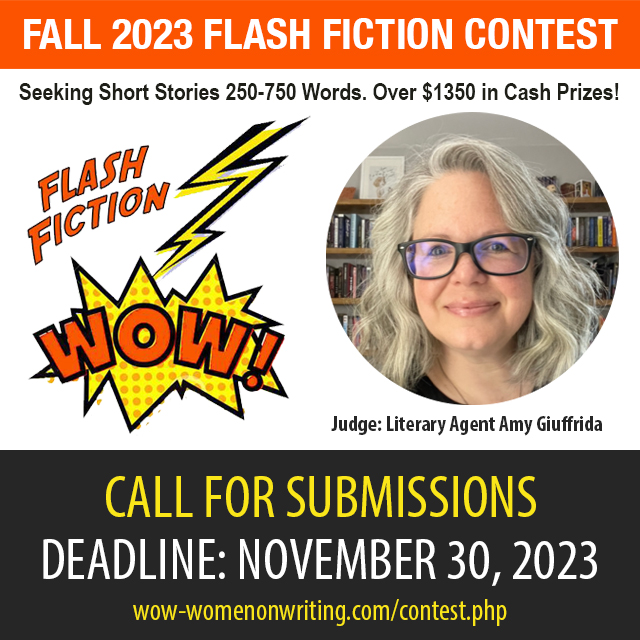
Deadlines: October 31 (nonfiction) and November 30 (fiction). Our favorite writing community offers quarterly contests judged blindly with multiple cash prizes and more for 20 winners, up to $1,350 (fiction) and $1,175 plus a gift certificate to CreateWriteNow (nonfiction), an affordable critique option, and a 300-entry limit on each contest. Previously published work is accepted! What’s not to love? This season's guest judge is Literary Agent Amy Giuffrida with Belcastro Literary Agency. Fee: $10 (Flash Fiction) and $12 (Nonfiction).
https://www.wow-womenonwriting.com/contest.php
| |
|
Did you know that it's Mystery Series Week on the first full week in October? Send your your 1000-7500 word story or You-Solve-It mystery to Mystery Magazine. Submissions must be original works of short fiction that have never appeared online or in print in any form. Pay is 2¢/word USD for accepted stories. Their average response time is 4-6 weeks. No fee.
| |
|
In celebration of Halloween, submit to Furious Gazelle's 2023 Halloween Contest. It's free to enter, and the deadline is October 6. The first-place winner will receive $50. Runners up will receive publication and a $5 honorarium. Each writer can submit either one short story (max 4,000 words), one play (capped at 10 pages), or up to three shorter fiction pieces (any combination of flash pieces / poems is ok as long as they don’t exceed 3 submissions). Poems shouldn’t exceed two pages; flash pieces should be capped at 1,500 words each. No fee.
| |
|
Did you know Frankenstein Friday is October 27th? Celebrate by submitting your flash fiction to The Molotov Cocktail: Flash Monster 2023. Deadline: October 9. All submissions must absolutely be under 1,000 words, and they tend to look more kindly on 750 or fewer. This is a FLASH MONSTER contest, so you must include some sort of literal or figurative monster. They want to see your nasties, the dark entities you conjure up and the ghouls you stitch together. Make them brutal, make them sympathetic, make them impossible to define. They like literary approaches, but t also dig genre and pulpy takes as well. Art house or grindhouse. Subvert the usual monster tropes or create something nobody’s ever seen before. Prizes: $300 for Flash Monster 2023 winner; $200 for 2nd place; $100 for 3rd place. They also award 4th-10th place by publishing in their Flash Monster mega-issue. Fee: $10
| |
|
October is Italian-American Heritage Month! Celebrate the work of Italian writer Italo Calvino by submitting a short story to University of Louisville Creative Writing’s Calvino Prize 2023. Deadline: October 15. Submit up to 25 industry standard (double-spaced, 12-point font, pages numbered) pages of a novel, novella, short story, or short collection. Final Judge is Aimee Bender. Work previously published is eligible and simultaneous submissions are accepted. An excerpt from a larger work is allowed; however, remember that the selection will be judged on its own merit and so should be able to stand on its own. Winner will receive $2,000 (USD) and the winning story will be published in Miracle Monocle, the University of Louisville's award-winning online literary journal. A runner-up, if named by the Final Judge, will receive $500 (USD). Fee: $25
| |
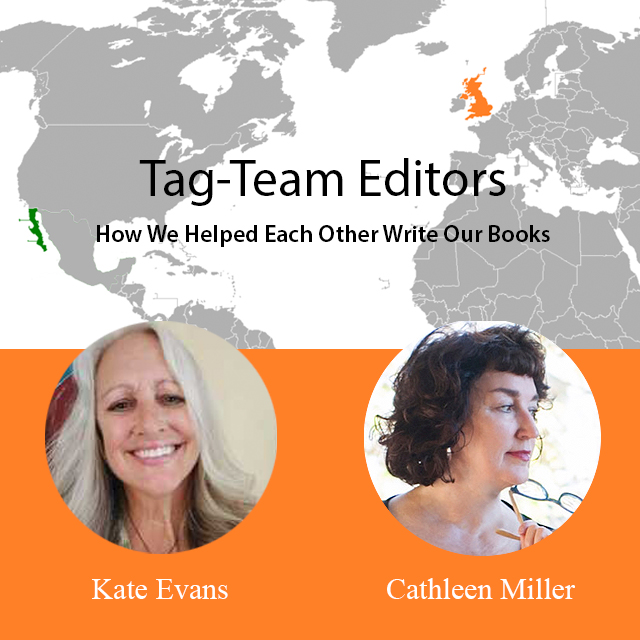
In Conversation: Tag-Team Editors: How We Helped Each Other Write Our Books | |
|
By Kate Evans and Cathleen Miller
In this conversation, Cathleen Miller and Kate Evans, longtime friends and former colleagues at San José State University, talk about how they supported each other in writing their most recent books while living thousands of miles apart.
| |
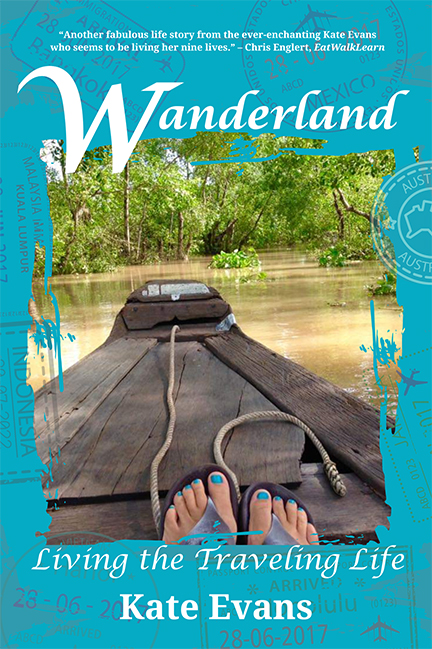
Kate Evans is the author of eight books, including Wanderland: Living the Traveling Life and Call It Wonder: An Odyssey of Love, Sex, Spirit & Travel, winner of the Bisexual Book Award. She’s Emeritus Faculty at San José State University and lives in Baja California Sur, Mexico, where she is co-hosting a women's writing retreat in April 2024.
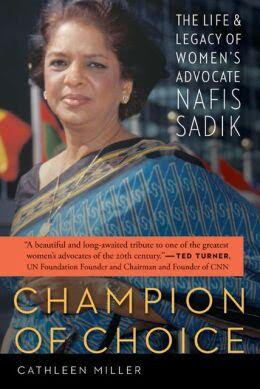
Cathleen Miller, also Emeritus Faculty at San José State, lives in England. She’s the bestselling author of the nonfiction works Desert Flower, Champion of Choice, and The Birdhouse Chronicles. She’s at work on a trilogy of biographical novels based on the love triangle surrounding photographer Eadweard Muybridge.
| |
|
Cathy: When you approached me about swapping our writing each week with a deadline of delivering five to ten pages each Friday, my initial thought was “Oh my god, no!” I’d recently retired from college teaching, which not only included grading thousands of papers, but running a literary journal and directing our speakers’ series. I never wanted to hear the word “deadline” again.
Kate: Right, retirement is supposed to mean you never have to hear an alarm clock again—and in our cases, that you don’t have to spend all day Sunday frantically grading papers. I was just reminded of that time you came over to my apartment to respond to final papers so we’d support each other in getting grades done at the end of the semester. Maybe working together on our books was an offshoot of that?
Cathy: I like that. What led you to want to work with me in this way?
Kate: As you know, I’d already written six books when another friend and I devised a plan to co-author a novel. The experience electrified me. I couldn’t wait to receive her pages to see where the story and characters were heading—and I had a great time writing my parts in hopes of exciting and entertaining my co-author. We liberally edited each other’s pages to the point that now when I open the book, I often can’t recall who initially wrote which scenes. After that book came out and I started on my next project, I liked the feeling of being at the helm and not having to consider anyone else in terms of the direction the book would take—but I missed the momentum and excitement of writing with a friend. I knew you were working on a novel. I thought sending each other pages each week could be the best of both worlds: we’re each in charge of our own projects, but we have a deadline and offer support.
Cathy: I definitely needed a kickstart to get me going. I’d been slogging along on this Eadweard Muybridge project for twenty years. It started out as a biography, then had morphed into my first-ever attempt at fiction, a biographical novel.
Kate: What drew you to Muybridge’s story?
| |
 | 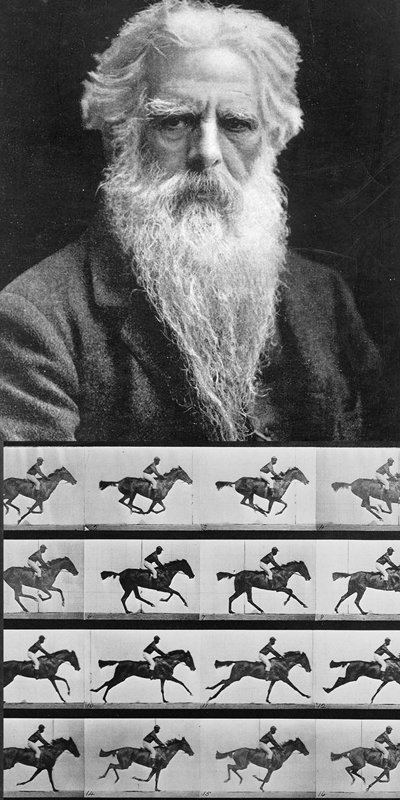 | Cathy: I knew about Muybridge because I was an art student, but only as the photographer who discovered how to freeze motion. And then when I was living in Napa I accidentally discovered that he was also a murderer, who had killed his wife’s lover, because the trial had been in Napa. I thought, whoa, nobody knows about this dark side of Muybridge; this crime story has been lost to history. I started poking around, visited the Napa County Historical Society, and came home with a copy of the original court transcripts in this beautiful hand-written script. I felt like I’d entered a secret world and wanted to keep going. Unfortunately, life interceded—a job teaching creative writing at SJSU with a back-breaking workload, then a contract to write the biography Champion of Choice. By the time I came back to Muybridge several books had been written on him, but they all barely skimmed over the murder and his tumultuous personal life that included a love triangle with his wife and the drama critic for the San Francisco Evening Post. The Bay Area setting was also a huge draw since I love that region.
| |
|
Kate: I thought you made mid-19th century Barbary Coast come alive. As well as England—two key settings in the book. Since Wanderland takes place in many locations, I found depicting place to be crucial. I mostly evoked place through the senses. I once took a workshop with Janet Fitch who says each page should induce at least two senses in a fresh way. She bans clichés, which she defines as anything you’ve ever heard before! Quite a high bar. But her advice rang in my mind as I revised my manuscript, and I think my settings are richer as a result. How do you handle writing about place?
Cathy: My first love was travel writing, so that’s familiar territory for me. Just as you described, I look at bringing in the five senses, but since Muybridge was a photographer—and one of the first to document San Francisco—describing his photos of what the city looked like in 1850 was a natural way to begin. I’m happy to hear this setting came alive for you and enjoyed getting your reactions. So helpful!
| |
|
“I once took a workshop with Janet Fitch who says each page should induce at least two senses in a fresh way. She bans clichés, which she defines as anything you’ve ever heard before! Quite a high bar.”
| |
|
Kate: It was. I sensed there would be something great about doing this together.
Cathy: There was the added attraction that you are an experienced fiction writer who I knew could provide editorial advice that would be invaluable to me, a novice novelist. As it happened, my genre was nonfiction and you were writing a memoir, so I felt confident that I could help you, as well. In reality, we were both experienced editors and neither of us would have been able to afford to pay someone for this level of attention.
Kate: Great point. I hadn’t thought about the financial aspect. We saved each other a mountain of money! What, for you, has been the biggest difference between writing nonfiction and fiction?
Cathy: The thrill of getting to make shit up! In Champion of Choice I defame both President George W. Bush and Pope John Paul II. I was convinced I had my facts right, but still I lay awake nights worrying about being challenged, sued, and attacked by fanatics. All that stress was gone when I dipped my toe in the cool water of fiction.
| |
|
“In reality, we were both experienced editors and neither of us would have been able to afford to pay someone for this level of attention.”
| |
|
Kate: Oh, I feel you. On the other hand, I’ll take the criticism if it means people have read my book with such attention! And not to raise your blood pressure, but readers could always get on you about details they think are wrong in a historical novel. But as I read your manuscript, I was so captivated by the world you’d created and the authoritative voice that I never thought to doubt a single detail. I was always thrilled to get your pages on Friday and to watch your novel unfold. Did you feel the same?
Cathy: I did. We developed into a highly successful, 21st-century editorial duo, one that could only take place in the digital age, with me in England, and you in—well, as your memoir Wanderland describes your nomadic existence—any number of spots around the globe.
Kate: I remember being on housesits in Hawaii, Panama, and Lake Chapala, Mexico, working on your pages and writing mine. And also, all over the U.S. on an 18,000-mile trek in a Subaru. But remember we also saw each other in person during this time: I was housesitting in Carmel, and you had come to California to visit friends and do some research, and you stayed with us in that beautiful location in that weird house that had three couches facing a mammoth TV.
Cathy: That was indeed a weird house—a flatscreen the size of a movie theater’s but not one book in sight. As far as writing from afar, while you were scrounging to unpack and log on in a new nation, my biggest challenge was that I was still researching my protagonist’s life as I wrote. Muybridge had lived in the 19th-century, a groundbreaking photographer who’d crisscrossed the oceans from his native England to New York then San Francisco, and scored assignments in regions so unexplored that he might fall off the edge of the earth. As someone who came to the party as the nonfiction gal, I had to get my facts straight to write. So I scrambled each week to get the research done then weave it into an engaging narrative.
Kate: It was fun and instructive to watch this all develop.
| |
|
“I realize now that there are three things that fuel my writing momentum: writing regularly, which is helped by having a weekly deadline; writing with a specific reader in mind; and getting ongoing feedback.”
| |
|
Cathy: Knowing you were tapping your foot in Hawaii or Panama while you waited for this week’s installment to sing down the wire kept me highly motivated. Neither of us wanted to be labeled a loser because we couldn’t get our pages in that week. Peer pressure has its benefits.
Kate: I realize now that there are three things that fuel my writing momentum: writing regularly, which is helped by having a weekly deadline; writing with a specific reader in mind, in this case you; and getting ongoing feedback. You indicated what tickled you, moved you, and confused you. You also asked great questions that prompted me, at times, to take a new direction or go deeper. That inspired me to keep going. What was it like for you to write your other books? Did you get ongoing feedback from people?
Cathy: My first book was actually written in a very similar process to the one we created. My MFA thesis turned into my memoir, The Birdhouse Chronicles. Because I was on a deadline to graduate, each week I wrote a new chapter and sent it to my thesis advisor, Charlotte Holmes. She gave me feedback immediately and on I’d go until it was completed that semester. The other books were written in seclusion. Champion of Choice took me around the globe and ten years to write.
Kate: Wow, ten years. And twenty on Muybridge. I think to be deeply involved for so long with a project must be rewarding and also taxing. Could you say more about that? And what it felt like to finally finish?
Cathy: I was holed up in a log cabin in the woods to finish Champion of Choice, and typed the last words just after midnight. Then I emailed a friend who’s also a writer that I’d finally finished the damned book. He’d watch me slog through this thing for years and how it had dominated my every waking moment—even landing me on a therapist’s couch for PTSD. He happened to be on email and saw the message come through. He called and said, “I’m on my way” and showed up with a bottle of champagne to celebrate!
Kate: I love that. Sometimes I forget to celebrate my successes and just press on to the next thing. Next time: champagne. I remember when you finished that book. What a feat. I wish back then, when I saw you struggling to complete it, that I had suggested you send me five pages a week. My first book, like yours, evolved from my dissertation. However, when it came time to write a novel, I flailed. Then I started bringing pages every week to Ellen Bass’s writing group in Santa Cruz—and I was off and running. Before that, I’d written many short stories and poems in my MFA program, always excited, and sometimes unnerved, by printing out my pages and bringing them to class. I’d been a journalist; talk about deadlines! Working with an editor to shape my stories offered that flush of immediate advice—and when the newspaper came out smelling of new ink, I liked imagining who was reading what I’d written. Do you have memories of writing early in your career and getting feedback?
Cathy: This is how my travel writing group, the Wild Writing Women, was born in San Francisco. I took a travel writing course from editor Don George. Why, I still don’t know, because I’d never written anything—I was an art major in college—and had never really traveled. But I realized I needed help, so when the course came to a close, I begged the other women in the class to form a writing group with me. At first they demurred, but then I offered to cook at my house each week if they’d come, so they surrendered. We met for the next 17 years, but at some point we mercifully began to rotate the cooking. We started out asking each other questions like “Do you know how to write a query letter?” then later it was “Where’s a good place to host a book launch party?” So the support of these women definitely helped.
| |
|
“I realized I needed help, so when the course came to a close, I begged the other women in the class to form a writing group with me.”
| |
|
Kate: There’s something about the energy of a group. While I’ve always kept a private journal, I’m stimulated to write public pieces when I have a specific reader in mind. I remember as I turned in a paper in college or high school I looked forward to the teacher’s response. And in elementary school I scrawled stories in pencil on thin brown paper that could be easily torn by an eraser and felt proud when my words hung on the classroom wall. Do you ever write just for yourself?
Cathy: Oh yes! This is where all the rage goes which is socially unacceptable to spew in public. The poison is fairly oozing out the covers. But like you, I’ve mined those journals to write memoir—of course carefully choosing the passages that will serve me.
Kate: True, my journal is a safe place for me to throw plates against a wall. I can see now that my diaries are intrinsically motivated. The extrinsic motivation of working so closely with another writer is something that has been an important part of my publishable output.
Cathy: That’s certainly the case in our experiment. And I’m happy to report that we finished those two books, both made immeasurably better by the gift of quick and constant feedback.
| |
Craft Corner: Best Practices for Reading Submission Guidelines | |
Most freelance writers serious about submitting to a market will faithfully read the market’s submission guidelines. Also called “Guidelines” or found on the “Contact Us” page, the submission guidelines for a publication or publishing company will provide all of the necessary information a writer needs to know in order to submit in such a way the guidelines state. But are you reading the submission guidelines correctly? | |
|
Nowadays, an unfortunate trend is that many new writers don’t bother reading submission guidelines. They just see a market and email the editor. Horror stories of such kinds of communication from writers abound on the Internet, along with the editor stating that such inquiries were automatically deleted.
Don’t let this happen to you!
By correctly following submission guidelines, you increase your chances of not only selling your writing to the market, but also having a potential market to submit work to again in the future.
| |
|
The first thing you need to do is read ALL of the submission guidelines, word for word. Pay attention to what exactly the editor is asking for. Don’t scan for the important things or just hunt for the information you need. Read the entire guidelines. This will tell you everything you need to know about whether this market is right for you and/or how to submit to them.
When reading the guidelines, pay attention to a few select pieces of information. Points you should note are:
- What kind of work do they want? (Articles, poetry, short fiction, etc.)
- What topics do they cover? (Writing, automotive, paranormal, society and culture, etc.)
- What are their rates?
- What rights do they buy?
- Length or type of work?
- Who is the audience?
- Any deadlines for specific submissions?
- Do they want you to query or submit work on spec?
- Anything specific they want you to note in your query?
- Do they require writing samples with your query?
Make sure you are familiar with the kind of material the market publishes. I normally submit to markets I am already familiar with, but if I come across a new market, I spend some time reading the material they have already published in order to become familiar with what they publish.
| |
Preferred Method of Submission | |
|
When reading the submission guidelines, note how the publication wishes to receive the submission. Do they use Submittable? Or do they prefer submissions sent by email? Do they want the submission as a Word doc or docx? Or as a PDF?
Many publications have their preferences on how they wish to receive a submission. Normally, they will tell you how to submit your work in their guidelines. Follow these instructions, as most editors will delete submissions th do not meet this criterion.
| |
Reading Samples of a Publication | |
|
If you’re not familiar with the publication, take some time to read past issues. If possible, try to read their most recent issue.
Normally, most publications will include samples from back issues on their website, an archive of all past issues, or a list of excerpts from work they have published. In some cases, they will only include an excerpt of their most recent issue.
| |
What to Do When There Are No Samples | |
|
Much to many freelance writers’ chagrin, some markets will forgo including samples of past issues on their site. They often suggest that a writer purchase their most recent issue or purchase a subscription instead. Unfortunately, this is not possible for many of today’s writers.
One way to get around this hurdle is to try to look them up at your local library or bookstore. See if a friend has a copy of their most recent issue or look them up on Facebook and Instagram, where they might share snippets of work they have published.
| |
|
If this doesn’t work, look up the editor and/or the magazine upon social media. I once found the Twitter account for an editor of a new magazine, and she tweeted about what kind of articles she wanted from writers. I also reached out to an editor through Instagram and asked what kind of work her magazine published.
Some editors will share excerpts on social media. Additionally, writers published in a particular publication may provide snapshots of their published work on social media, which can help the writer looking for what kind of work the publication wants.
| |
|
Failing this, look them up on other sites such as Duotrope or Submission Grinder, which may have more information of what kind of work they publish. These sites will normally provide a detailed look into the publication, including what kind of awards they have won. This can offer clues as to the type of work they publish.
Finally, try going with what information you already have about this market. What sort of vibe does it give off? Does it appear family-oriented? Does their writing style appear conversational or academic? If the guidelines merely state what topics they publish, you may have to just submit something that fits that topic and just hope for the best.
| |
What Type of Writing Do They Want? | |
|
As you read samples of work a market has published, pay attention to the writing style and how their work is formatted. What kind of tone do they use? For articles, do they include many quotes? For poetry, what kind of poems do they publish?
In most cases, you won’t be able to see every kind of work they prefer to publish—for example, they may welcome traditional forms of poetry, while their latest issue contains only free verse poetry—but reading the samples can help give you a good idea of the kind of work they want. It can also shed light on the type of writing they accept.
| |
|
When you read submission guidelines, keep an eye out for the mention of a theme for the current submission period. Some publications which use themes will normally include a list of their themes for certain reading periods.
You should also note if they are only accepting submissions for these themes, rather than also accepting work outside of the theme. If there is no mention of a theme, then try to submit something similar to the kind of work that they have already published.
| |
|
In addition to themes, take note of fees. Some markets charge a reading fee or a submission fee. These are usually small fees of $3-$5 and these fees help keep the publication going. Some writers are comfortable paying submission or reading fees, while others are not.
Make sure you read the guidelines thoroughly to see if a fee is required. In some cases, a fee won’t be revealed until you get to their Submittable page, so be prepared for that information.
| |
Ignore Guidelines at Your Own Peril! | |
|
Whatever you do, don’t neglect specific details in the submission guidelines, thinking the editor will take a chance on you or understand this oversight. Refusing to follow the guidelines, even in a way to make it look like a mistake, can look bad for you and anger an editor who may already be having a bad day. Rather than gaining an editor’s understanding over your mishap, it will only tempt them to hit the “delete” button. This is especially true if you are submitting to a market for the first time.
If the guidelines state they request a query letter first, then submit the query letter first. Don’t think it’s okay to submit your article on spec instead. In some cases, a market may state in their guidelines that they welcome both a query letter along with your submission, but in the event that they prefer a query letter first, then abide by this request. Ignoring any part of the submission guidelines will only sabotage your chances of having your work accepted, and the editor may not welcome future submissions by you.
| |
Always Check Guidelines Before Submitting | |
|
Finally, keep in mind that submission guidelines can change. One market I submitted to in the past went from accepting work on spec to wanting queries first instead. For this reason, it’s a good idea to reread the submission guidelines right before you submit or query.
Even if you have read the guidelines in the past, read them again before submitting. They might have changed since you last checked.
| |
Maintain a Professional Attitude with Editors You Know | |
|
If you are submitting to a market where you have been previously published, don’t resort to getting too chummy with the editor in your pitch or submission. It is better to remain professional in all of your business correspondence with editors and publishers.
Some submission guidelines will provide a sample format of what to include in your cover letter, and it’s usually a good idea to follow this format. If they require a bio in your query, then even if you know the editor well, provide the bio all the same. Follow their guidelines to a tee and provide exactly the kind of information they want to see in your cover letter or query.
Following the submission guidelines does not always guarantee you’ll receive an invitation to submit, but it’s a good idea to still follow the guidelines exactly as it has been laid out by the editor. This not only shows that you are serious about your role as a freelance writer but you respect an editor’s preferences. If you are a new writer just starting out, showing that you follow submission guidelines means that you took the time to read them.
Freelance writers attempting to get their work published must act in a professionally and following submission guidelines is the first step. The editor will be grateful that you took the time and therefore take the time to respond. The writer who faithfully sticks to reading and following the submission guidelines will leave a positive impact on that editor, who just might end up welcoming more work from the writer.
***
| |
|
Dawn Colclasure is an author of several books who lives in Oregon. Her work has appeared in magazines, newspapers, and anthologies. She is a freelance writer, book reviewer and ghostwriter. Her articles have appeared in SUCCEED Magazine, American Fitness, BackHome Living, and Home Education Magazine. Her website is at www.dmcwriter.com.
| |
|
Get Your Book Seen and Sold: The Essential Book Marketing and Publishing Guide
By Claudine Wolk and Julie Murkette
It is easier than ever to publish a book, but many authors find out too late about the actual work—the book marketing—that needs to be done to achieve sizable book sales. Instead of embracing the opportunities to promote their books, authors are intimidated and shut down. Those days are over. This is the book authors MUST HAVE to give their books the best chance to be seen and sold.
Enter the Giveaway by Oct 1
| |
|
When Mama Grows with Me
By Rebecca Wenrich Wheeler
In this beautifully illustrated children’s book, a mama and her son create their own garden, starting with just a few small seeds and ending with a beautiful display of flowers. They observe how pollinators help the earth stay healthy, learn how to care for plants, and meet other critters that live in their garden, all while playfully shaping their bodies into yoga poses inspired by nature. Not only do Mama and her son learn valuable lessons about their garden, but along the way, they also learn to practice patience.
Enter the Giveaway by Oct 8
| |
The Muffin: Recent Blog Posts | |
|
Friday Speak Out! Empathy, The Secret To It All
By Laura Yeager
Why is it that writers think that stories/articles/novels/blog posts/poems/plays must “come out” of one’s psyche chronologically? This is a conceit of mostly beginning writers. From my experience of over 40 years as a writer, this just isn’t the case. You don’t have to sit down and write something from beginning to end.
Recently, I wrote an article for The Writer, but I wrote it in sections that I ultimately “glued” together and formed a piece that made sense but wasn’t conceived chronologically.
READ MORE
| |
|
The Bigger the Stakes, The Bigger the Fall
By Sue Bradford Edwards
I was catching up on my blog reading the other day when I read an insightful post by Nathan Bransford on story stakes – "The More the Character Puts in a Bucket, the More There Is to Spill." Admittedly, my first thought when I read the title was “no kidding.” But I’m accustomed to finding treasures among Bransford’s posts, so I read on.
And, yes, I discovered another insight. Too often, our characters are skipping along, having an amazing day when disaster strikes. We expect readers to empathize with our characters because disaster is bad. But if we want to keep our readers engaged, we need to do better. There’s no taking the easy way.
Bransford’s point was that if your character has already put a ton of effort into something, and then it goes wrong? That’s huge. We’ve all been there and so have our readers.
READ MORE
| |
|
Strange Magic
By Cathy C. Hall
Sometimes, we need a reminder about why we do this writing thing we do.
My daughter, who is a grown woman and working a lovely though demanding job by day, chooses to “follow her bliss” in her hours off. Which just happens to be musical theater. And right now, she’s performing in Xanadu.
For those of you of a certain age, you’ll remember the 80s and Olivia Newton John and all the music from ELO associated with this movie. You might recall that it tanked at the box office. Even the hugely talented Olivia, following on the heels of success with Grease, could not save this clunker. But the music? The music was BIG.
READ MORE
| |
|
Ask the Book Doctor: Making Money Writing
By Bobbie Christmas
Q: How do we support ourselves while we’re writing our books?
A: If you’re writing nonfiction, you can write a proposal and several sample chapters instead of the whole book. If the information is current, compelling, and well written, and if the proposal follows the guidelines about how to write a book proposal, you may succeed in selling the book and get an advance against future royalties. Still, the advance may not be enough to live on while you write the full book. My advance from Union Square Publishing for the first edition of Write In Style paid only about a month’s expenses, so I continued to edit books and write articles to maintain my income while I wrote my book in my free time.
READ MORE
| |
|
Turns Out, Maybe Not Writing Was a Smart Decision This Year
By Nicole Pyles
Earlier this year I came across someone's blog, who said their writing motivation was switched off like a light switch after going through some really tough times. They said instead of fighting it and struggling to be creative, they just went with it.
At the time, it really resonated with me. I was (and still am) going through really stressful times myself. Creative writing seemed distant and hard and not where I was at. All the advice stored in my mind encouraged me to maintain the habit. Keep up with it. Fight against the temptation to not write.
And yet, I couldn't do it.
READ MORE
| |
|
Launching into Freelance Editing: Tips for Choosing Your Genres
By Melanie Faith
There’s never been a better time to break into freelance editing. With the rise of e-books and digital publishing, many small-press publishers and individual authors who self-publish actively seek the assistance of editors who are enthusiastic about their craft.
When you think about beginning as a freelance editor, in addition to creating a website and posting your editorial availability on your social media, another step to explore is to decide what genre or genres you’d most like to edit.
READ MORE
| |
More Classes Starting in October | |
|
Let's Get Cozy! How to Write a Cozy Mystery
4 weeks starting Oct 2
In this four-week class, you’ll receive instruction on what makes for a compelling amateur sleuth (of any age!), how to factor location into your plot, the types of misdeeds which are appropriate for a cozy platform, how to incorporate humor and romance into this lighter side of mystery fiction, and what resources are available to make your storylines plausible. In each module, there’s a fun and challenging mix of writing assignments for which you’ll receive one-on-one feedback. The culmination of the class will be the development of a one-page synopsis and the first chapter of your proposed cozy.
Class Details
| |  |
|
Research: Prepping to Write Nonfiction for Children and Young Adults
4 weeks starting Oct 2
Nonfiction for children and teens lines the bookshelves of libraries and bookstores, fills magazines and e-zines and is used in classrooms around the world. The first step in taking your place in this market is learning to do the research. That may sound relatively simple, but done right it includes researching markets and possible topics as well as locating accurate source materials. This course will help you develop the skills you need to take on these tasks with confidence.
Class Details
| | |
|
Writing Nonfiction for Children and Young Adults
4 weeks starting Oct 2
Biographies, science, history, how-to, and more. Nonfiction is published in book form, online and in both magazines and e-zines. Not only do teachers and school librarians seek nonfiction for their students, children and teens read it for fun. In this course, you will learn how to organize your material, write and revise not only the manuscript you workshop in class but future projects as well. Learn from Sue Bradford Edwards!
Class Details
| | |
|
Pitching, Querying, and Submitting Your Work
4 weeks starting Oct 2
Whether you write essays, short stories or novels, sending your work to an agent, editor or publisher is a daunting task. This course will teach you to assemble submission basics including a pitch and a query letter. These tools will enable you to get your work in front of industry professionals. We will also discuss how to find markets and how to manage rejection. Course materials include successful samples and tips from industry experts.
Class Details
| | |
|
Writing a Novel with a Writing Coach
4 weeks starting Oct 6
Are you writing a novel? Do you need a writing coach to keep you accountable and provide feedback as you go? Join Margo L. Dill in an online workshop environment, where you can work with her to get a first or second draft of a novel completed. Depending on your needs, Margo will also provide you with resources on writing novels and help with writing a synopsis and query letter.
Class Details
| | | |
Success Stories from the WOW! Community | |
|
Welcome to almost-October—whatever that means to you in your neck of the woods. For me, in St. Louis, it means that Halloween decorations are already inflated in yards, and pumpkin spice lattes are at the local Starbucks. It also means a lot of kid activities, early darkness and a lack of making time for myself and my writing. But after reading these success stories this month—and we had more than we ever have, I think—I’m determined to keep plugging along on all my projects! Make sure you read over these amazing stories, and celebrate with the authors who published a new work, won an award, or accomplished a goal!
We also asked writers how they collaborate with each other, and although we did not get a lot of responses, we did get a couple from our Instagram community. You will see those below. If you haven’t found a writer or two to share your work with or someone to edit for you or work on a book cover, think about making this a 2024 goal—writers need each other! And you don’t have to be an expert in every piece of book writing, publishing, and marketing because you can find experts and writer friends to help you.
Don’t forget—send me your success stories by email if you have one that didn’t make it on our social media pages this month. Please use both email addresses to avoid spam filters: margo@wow-womenonwriting.com and margolynndill@gmail.com, and put "WOW Success Story" in the subject line.
Congratulations to our writing community!
| |
|
Facebook
Success Stories
Mary Jo Thayer, Author writes, “Finished my second novel (96,000 words) and sent it to the publisher! Running out of Sand is written from the POV of another character from my first novel, Close to the Soul. It's about the guilt Sil Fandel feels over his sister's rape, and he uses alcohol to cope. Whether his marriage survives is up for grabs. Now I wait until the intake editor reads it.”
Claudia Kingdom Communicator Tynes writes, “AGD Publishing Services, LLC Visionary Allison G Daniels Empowered to Win Edition 4 Anthology, of which I am one of 23 authors, won Amazon International Best-Seller in three categories (September 2023).”
Marissa Frosch writes, “I overcame severe burnout and finished a short story. My first in over a year.”
Julia Clebsch writes, “Was one of the writers reading at the Salem Literary Festival, one of my one-hundred-word memoirs published in Five Minutes.”
Ashley Haas Gamrat writes, “Finished my newest book on time, to have paperbacks ready for a signing I was a part of yesterday. Had a deadline and met it!”
Melissa Goodwin writes, “Published my first poetry chapbook which includes several poems I wrote during the pandemic that won awards in international competitions! “The Brook in the Woods Behind Our Old House.” Also published my first self-illustrated children’s rhyming picture book, Come Fly with Me.”
Patricia White Gable writes, “I finished writing my third middle grade book in the series. It’s with my editor (sister) for the second edit. She had me change several things in the first edit, but I learned a lot.”
Shirley Ann Howard writes, “My five novels went out of print after my publisher closed. So, I resurrected them myself on Amazon, and now they're alive again as paperback and Kindle. The learning curve was steep, but very satisfying.”
Chris Moray St Germain writes, “I published ‘Magic Shorts’ on Draft 2 Digital. It’s on 50 platforms. And it has a sequel, ‘Magic Scarf’ I’m getting ready to publish. And a second sequel, ‘Magic Beret,’ each is 8000 + words. Very inspiring. Check out on Barnes & Noble. Easy to find there. I have ten more short stories, six have covers already made on Canva in the pike ready to publish, but I got hooked on the character of Winnie who started out a bit of a loser; but her courage and determination combined with a good heart and the tiniest spark of good luck changed the direction of her life.”
Amanda Furness writes, “World Pulse Story Award.”
Janet Coburn writes, “I just finished writing an outline for a new customer. And I am booked up on ghostwriting till the end of the year.”
Ruth Douthitt writes, “I wrote and released four book projects this year. 1 more to go to meet my goal of 5 projects in 2023.”
Susan Schwartz writes, “Just had my second book published Aug 21, 2023-Haunted Inns and Hotels of Virginia by Arcadia/Haunted America.”
Roberta Codemo writes, “I may have mentioned this but I'm a new monthly contributor for Elle Two, an online website.”
Phyllis Wilder Unterschuetz writes, “One of my stories won first place in a writing contest and was recently published in a collection of essays, Tell Your Story: Spring 2023.”
Alanna Klapp writes, “I’m giving a book a second edit.” Then she writes, “I finished my second edit!”
Nancy Whitesell writes, “My goals and successes are always about my internal emotional life. So … after I sent my second novel to my editor, I celebrated! But in part because I found the courage to copy my main character and set firm boundaries against my abuser!!”
Adriana Grillo writes, “Writing the sequel to an existing movie and had it stolen - it means it was more than successful.”
Joy Bach writes, “My fourth book, Either Way, It’s Okay. was published.”
Kathye Fetsko Petrie writes, “Wrote and published this, ‘(Re) Visiting the Styrons,’ in the magazine Next Avenue!”
Paula Cappa writes, “My novel, The Dazzling Darkness, a ghost story (published ten years ago) just won a gold medal at Global to Me Book Awards. Important to me because the shelf life of a book is not thrilling at ten years out, and this award has brought the story new life and attention, proving that as authors we all need to keep the wheels turning onward.”
| |
|
Instagram
How do you collaborate?
@alliestories8 writes, “Exchanging critiques.”
@priscillathomaswrites writes, “I host and attend co-writing sessions on Zoom, so even virtually we can motivate each other, help each other stay focused, and connect and build community. Workshops and classes are important, but co-writes make time for us to work on our own projects. They’re great for meaningful networking too—we all promote each other’s events and work, support each other’s announcements, and genuinely bond over our writing lives. Link in bio if you’re looking for some camaraderie!”
| |
|
Success Stories
@youngversation writes, “My poem, ‘Vantablack,’ was in Grailing Press. I have another piece being published by them in October or November.”
@sagacious_cat_creative writes, “One of my flash fiction pieces finished in the top 10% of entries in the Oxford Flash Fiction competition. Didn't make the long list, but I was really pleased! I entered three pieces, and one of the others finished in the top 20%. I thought it nice that the Oxford team let people know this. Very encouraging, and much appreciated.”
@shennanigenz writes, “I reached out directly to a multiple Grammy winner for permission to use his lyrics in my work in progress, and he provided full permission with the only request being I take him out to dinner if he's ever in my city. Such an awesome response from a very accomplished artist. No charge.”
@jturneryamamoto writes, “I gave a keynote at the 2023 Santa Barbara Writers Conference and just celebrated the first bookversary of my debut novel, Loving the Dead and Gone!”
@untilnomore writes, “I was asked to put together a presentation at my job. Diversity, equity, and inclusion but meets poetry. It was a success. As an author and poet, that was a great move.”
@griffin.joan writes, “My debut book, Force of Nature, an adventure memoir, is being published by Black Rose Writers on September 28!”
@gmvcle writes, “After three years of working toward leaving clinical patient care to be a health content writer, I finally started a new position for an online health publication in August!!”
@amy.lynn.hardy writes, “I got in to Huffington Post!!”
@sunmoonsource writers, “I got my first draft of my first mystery book done. It was amazing to see how everything unfolded to give me the time and mental energy to push through to the end.”
@audrey_lynden_author writes, “After ten years, my first book was published on Sept. 12, 2023. The Artful Bargain by Audrey Lynden is out in the world and was definitely worth the wait.”
@read_agathasicil writes, “My book titled, Before You Met Me, by Agatha Sicil will be published on January 29th, 2024.”
@cheri_krueger_writer writes, “My publisher has my audiobook ready to release on launch date. The Abduction of Adrienne Berg will be available in ebook, paperback and audio on October 5.”
@pyrchgetspublished writes, “September 6th was my book’s 1st birthday!”
@bernadettegeyer writes, “I had my first short story acceptance! Westerly accepted my story, ‘The Bag!’”
@ams92096 writes, “I finally beat writer’s block and started up on my screenplay again. And that was nearly a year of writer’s block.”
@tinaradcliffeauthor writes, “I didn't cry all month.”
@shereeleigh writes, “My novella in flash, Summer 1969, was published by AdHoc Fiction (2023).”
@jennifer_gaites writes, “I was published in @hippocampusmag!”
@nevmarch writes, “Reached 23% of my draft!
@annkkelly writes, “My micro, titled ‘Germie,’ was published in Five Minute Lit, and I was invited to read it alongside other microwriters at the Salem Literary Festival in Salem, Mass, in early September.”
@jeanne_blum_lesinski writes, “My poetry book Tethers End is due out from Shanti Arts in October.”
@christina_rauh_fishburne writes, “The text of my recent picture book won 1st place at the St Mary’s County Fair!”
@k.r.morrisonpoet writes, “Publication of my poem, ‘She’s History’ by @pigeonpagesnyc.”
@mytop5ofeverything writes, “Sent my final draft to my editor @sianelinbookmentor and can't wait to go down the self-publish route!”
| | | | |