March 2026 Markets Newsletter | | |
In this issue:
- "Write More without Stressing about It" by Melanie Faith
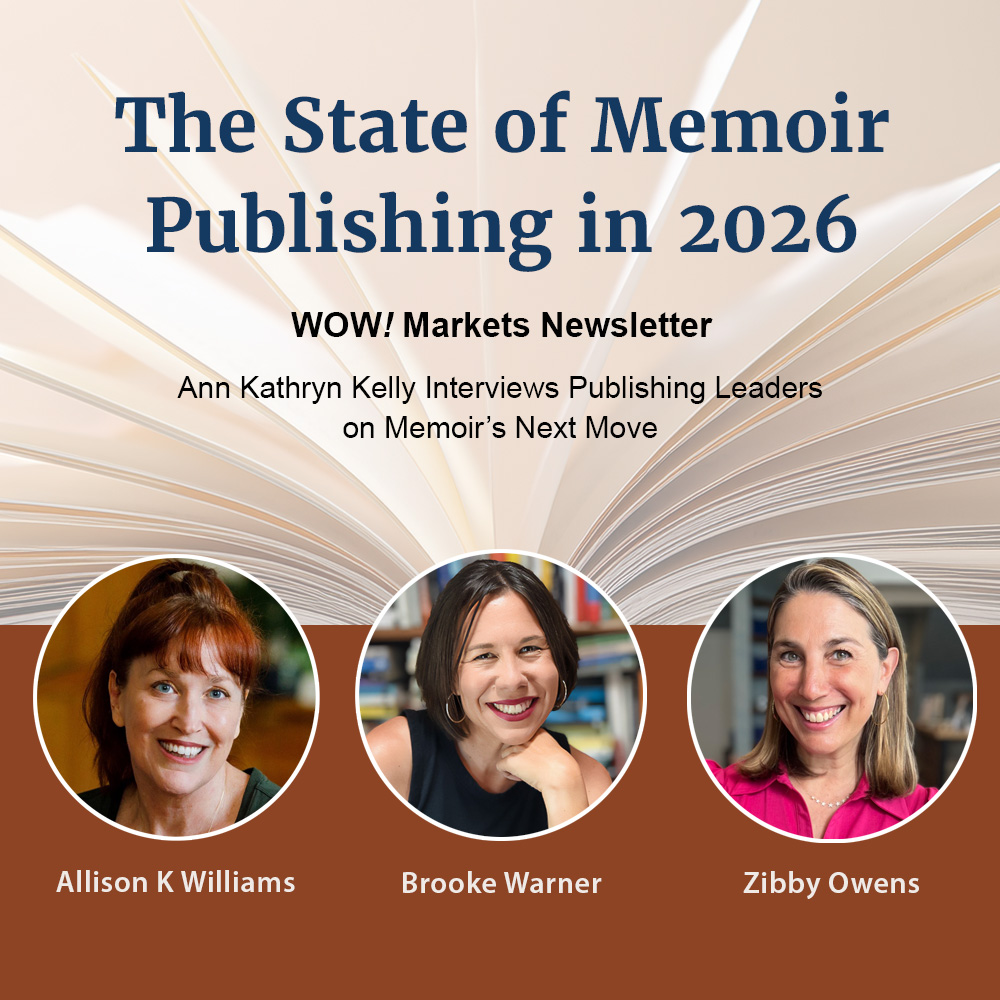
- Market Focus: "The State of Memoir Publishing in 2026: Allison K Williams, Brooke Warner, and Zibby Owens" interview by Ann Kathryn Kelly
- Calls from Editors
- March Deadlines: Poetry, Fiction, Nonfiction, Multigenre, Just for Fun
- Submitting Your Work: "Reframing Rejection" by Allison Lynn Flemming
- Recent WOW features and posts from The Muffin
| | |
Here we are in the opening months of a fresh year. I’ll be honest: I’ve made no overarching resolutions, nor set any goals with hard deadlines. Instead, I have a sincere but low-key aim to write more each month and to encourage others to do the same all year. Sounds easy, right?
Well….
There are always many reasons not to write. From day-job tasks taken home to cleaning that piles up to feeling more tired than usual to meal-preparation and socializing and you-name-it, we all know the “I’ll just do this quickly first, and then I’ll have plenty of time to write later today” self-talk that often leads to a day, or a week, or even a month without writing followed a creeping sense of deflation.
I’m right there with you. None of us needs more “I didn’t get to write” ick-feeling in our lives.
| | |
So how do we get to the desk more frequently without stressing ourselves out about the days that got away from us?
Try to:
Connect your writing to an errand you already practice. Do you go on a coffee run twice a week? Bring your notebook with you and instead of going through the drive-thru or dashing out the door with your to-go cup in hand, take a seat for twenty or thirty minutes. Or write shortly after a morning or evening walk or gym run. Or write while the laundry spins; you’ll have an automatic timer rolling and clean clothes by the end.
| | |
Get a new pen or notebook that you only use for your writing, and keep your supplies light and handy. No distracting grocery or to-do lists in this notebook. Pick materials that you want to pick up and eagerly return to. That said, no need to overspend—I’ve scribbled some of my best ideas into a cheery notebook from the dollar store using a fine-liner pen or a marker that called my name. Carry your special pen and notebook with you—it does no good if it’s sitting on your coffee table while you’re out. Narrow your supplies down to one or two. Carrying around too many pens—a club I’m a frequent member of—can be as bad as not carrying a pen at all. Scrambling to find one pen among many or narrowing down pens can waste precious writing time. One pen, one notebook, and you’re good to go.
| | Take a class. Once you schedule and pay for a course, the magic of showing up tends to happen more frequently. You also get to say you literally have to write because there’s a homework assignment your teacher is waiting to see and offer feedback on, so you can’t do such-and-such-else at the moment. A class offers the motivation that will guarantee you practice your art more. Assignments, writing prompts, and teacher feedback so often get words that otherwise would have just swirled around one’s head onto a screen instead where they can be shared and sculpted. A class can also provide a gentle support system. | | |
Last year, I wanted to take my photography to a new level and practice more frequently but was spinning my wheels on my own. The awesome online photography course I took sparked my creativity in both photography and writing, and I met talented photographers. Being in a class where other people care about the same thing(s) you care about is a confidence boost that will trickle down into your work. If you’re looking for an online writing class where you can work on any project, in any genre or stage, whether beginning, middle, or ending of the project, I’m offering a Your Time to Write course starting March 16th that can encourage and enhance your writing journey.
| | |
The time for New Year resolutions is in the rearview, yet it feels like yesterday that I was trading writing (and non-writing) highlights and lowlights from 2025—while picking goals for 2026—with WOW! founder, Angela Mackintosh.
I had shared with Ang, at the time, some thrilling news I’d gotten in late October. I’d received a request from an independent publisher for the full manuscript of my memoir, and had allowed myself to dream that I might actually exit 2025 with a book contract. The balloon popped six weeks later when a “no” landed in my inbox. Despite this, Ang believed the request for a full belonged in my yearly Wins column, though I’d been quick to relegate it to the Losses column. I’d done something right, she reminded me, to get that far.
Many querying memoirists share the feeling that the door to traditional publishing seems bolted shut. A column about that reality isn’t, therefore, “breaking news.” But while the topic isn’t new, there’s always room to curate fresh perspectives through a lens appropriate for today’s querying writers. We spoke with three professionals to ask their viewpoints on the state of memoir publishing, as we move through 2026.
*
| | |
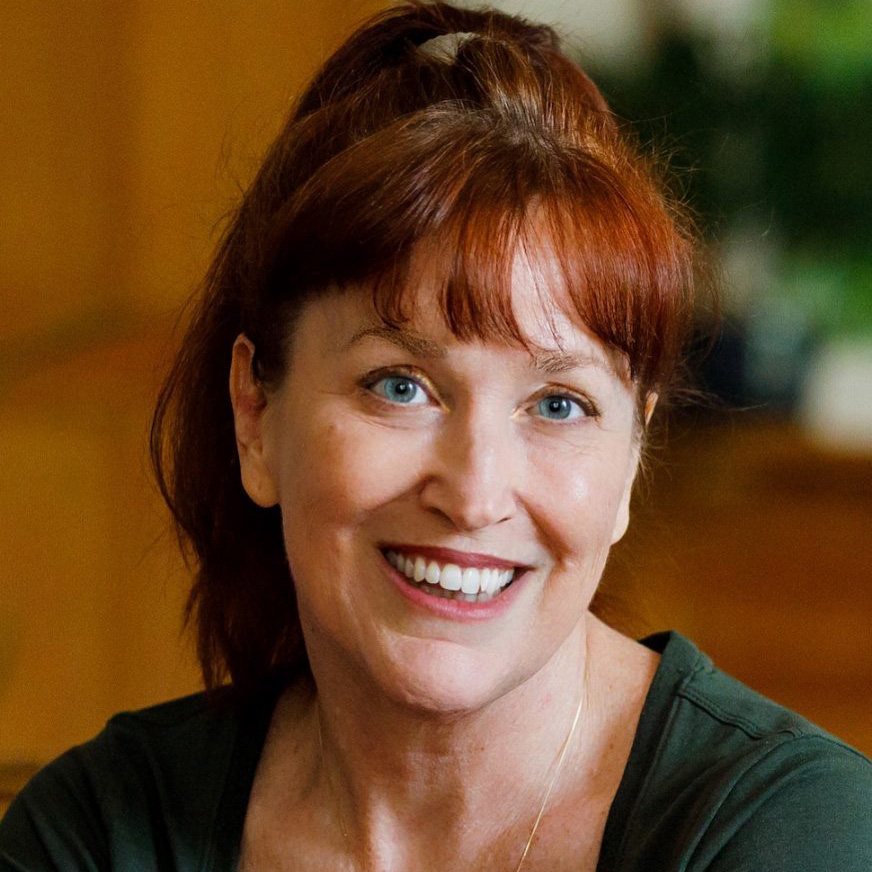
Allison K Williams is the author of Seven Drafts: Self-Edit Like a Pro From Blank Page to Book. She has edited and coached writers to publishing deals with Big Five, independent, and literary presses, and The New York Times and USA Today bestseller lists. She’s helped writers publish in The New Yorker, Time, The Guardian, The New York Times, McSweeney’s, and more. Her own writing has appeared in/on National Public Radio, CBC-Canada, The New York Times, Writers Digest, Creative Nonfiction, and more. Allison is managing editor of The Brevity Blog.
| | |
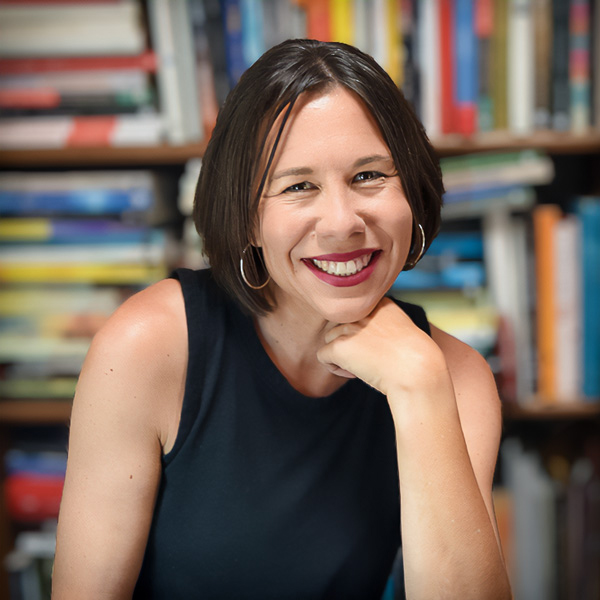
Brooke Warner is publisher of She Writes Press, and a former executive editor of Seal Press. She has taught memoir in person and online since 2012, often with Linda Joy Myers of the National Association of Memoir Writers. Brooke has seen hundreds of memoirs through to publication through her coaching and publishing endeavors, and writes a weekly Substack newsletter, Writerly Things.
| | |
WOW: Welcome, everyone, thanks for joining us! We’re keeping our Q&A a bit tighter this time, since we have multiple interviewees; just a handful of questions Angela and I have been mulling recently. Since we’ve all read our fair share of advice on query letter tips and book proposal best practices, let’s focus instead on the heartbeat of story, craft, and how memoirists are realizing their publication dreams.
First off, what kinds of memoirs have you seen breaking through recently, and how has the timeliness of these stories played into their success?
Allison: Being willing to respond in the moment is key. Some authors I work with have been writing for several years, then hustled to finish a manuscript and start querying while the cultural moment was hot, or wrote an essay to respond to breaking news, like Mimi Nichter’s essay in Newsweek in 2023. She wrote it within 24 hours after the October 7 events, and that built public presence for her recently-published Hostage: A Memoir of Terrorism, Trauma, and Resilience. Writers, keep an eye on the news, and if something intersects with your memoir, write faster!
Zibby: I’m beyond thrilled that Strangers: A Memoir of Marriage by Belle Burden debuted at #1 on The New York Times bestseller list. The memoirs really breaking through are a mix of deeply personal stories from notables, especially about their interior lives like their marriage and family, or the standby celebrity memoirs which always find an audience.
Brooke: As has always been true, the memoirs that are really breaking out lately are written by well-known people. Over just a few months, we’ve had memoirs by Kamala Harris, Elizabeth Gilbert, Molly Jong-Fast, and as Zibby mentioned, most recently Belle Burden. The kind of fame each of these people has is fairly different, but undoubtedly being the former VP, being a person who’s been in the public eye as a major writer for years, and then writers who have noteworthy families—these are the factors that play into what breaks out.
From my more humble place at She Writes Press, however, we’ve had a couple big breaks in the past months: Dumb Girl: A Journey from Childhood Abuse to Gun Control Advocacy, by Heidi Yewman, and Bright Eyes: Surviving Our Monsters and Learning to Live Without Them, by Bridey Thelen-Heidel. These are very different stories, but there is trauma at the heart of both. What makes these books find their readers is the story itself, how the book gets positioned, and the author’s tirelessness in promoting.
If we’re speaking to the big-name people, they don’t have to really do all that much to be successful in the ways that debut memoirists do. So the answer to our authors’ success is truly in their passion for their stories, and their all-out promotion. It’s hard, because writing is such a solitary experience and then, post-publication, you have to be hustling. I do think the hustlers show who they are pretty quickly and because of their efforts (and those of their publicists), they really can break out.
| | |
“Weaving in research, historic events, or another topic that readers didn’t even know they’d be fascinated by, elevates a memoir from diary to cultural document. Example: If you’re caring for a sick child, what do we all need to know about parents as medical activists?”
| | |
WOW: How might a memoirist take her narrative—for example, on illness, addiction, coming-of-age, or travel, all of which are common topics—and create an angle to elevate it beyond a simple recounting of events, to ensure universal resonance?
Zibby: There has to be something unique about the memoir. It doesn’t have to take a radically new form, but something has to be different enough to capture the reader’s attention. Is it exceptional prose? A new format? Something truly dishy? There’s a famous quote about the more specific you get, the more universal it becomes. I honestly think the writing has to be the main distinguishing factor.
Brooke: It’s a great question and not the easiest to execute. More and more these days we’re seeing fragmented memoirs, meaning that the structure is not limited by chronology. I think symbols are always a good way in. I mentioned Belle Burden’s book, and she uses ospreys that have a nest on her property as a metaphor that she comes back to again and again. The universal is in the writing. Some writers just really struggle with how to do that, which is why I recommend classes and lots and lots of reading in your genre, to begin to notice the universal moments, the takeaways. It’s critical to have that kind of writing in a memoir.
Allison: The “so what?” factor is always there: why should anyone not related to you care about your story? Weaving in research, historic events, or another topic that readers didn’t even know they’d be fascinated by, elevates a memoir from diary to cultural document. If you’re caring for a sick child, what do we all need to know about parents as medical activists? If you’re writing about your mom, what’s the mystery behind how she behaved that will fascinate readers and teach them something about their own parent-child relationships?
Also, it’s easier than ever to create a quality self-published book. If you need a book-length eulogy for your partner, or a diary of your travels, because you want to remember and process and share, that’s a fine path to take. Not every story needs a traditional publishing deal to be worth telling.
WOW: I mentioned we wouldn’t get into book proposals, but here’s a slight detour. What do you think it takes to successfully market a memoir today? Please share a successful marketing example that stands out in your mind.
Brooke: I don’t think there’s one single strategy, I believe it’s all the things happening at once. But I will give a shout-out to She Writes Press author Andrea Leeb, who wrote a memoir called Such a Pretty Picture. Andrea really pulled out all the stops with an ambitious marketing and publicity plan, and it worked. She had lots of media and hit the USA Today bestseller list. Andrea was also out there publicly, as an advocate for survivors of sexual abuse. She did a book tour and had lots of speaking engagements, and put in the work to get her book in venues big and small, including writers’ festivals, book clubs, and more. I think authors have to brainstorm all the things they could do—maybe in tandem with a publicist—and then just start executing. There’s a lot to do, undoubtedly.
Zibby: I think the author is a huge piece of the puzzle, though not necessarily follower count. The author has to have that certain something that pulls people in, and will be on the road and on social, marketing the book. Is it someone you want to spend time with? There are no tricks. It’s about communicating clearly what the author brings to the table, across many dimensions.
Allison: No matter how good your book is, you will need to market. And that means learning who your audience is, where those readers get their information, and how you can add to the conversation, whether that’s speaking or posting on social media or publishing essays.
Memoirist Ashleigh Renard, who self-published Swing: A Memoir of Doing It All, went all-in on giving advice and sharing her personal experiences on Instagram and TikTok because her audience—women in unfulfilling marriages—were scrolling. She partnered with a local indie bookstore and encouraged her audience to order signed copies from that store, no matter where they lived. She educated her audience about why pre-orders matter. And her self-published book debuted as an Amazon bestseller because she showed up online, every day, for a year before the book came out. She became her readers’ friend-with-the-best-advice.
| | |
“There has to be something unique … to capture the reader’s attention. Is it exceptional prose? A new format? Something truly dishy?”
| | |
WOW: As we look at the state of memoir publishing in 2026, what excites you?
Allison: That celebrity memoirs are focusing on a personal journey rather than the journey to fame. Jennette McCurdy and Vicky Nguyen have big platforms, but their books are truly memoir, not autobiography, and that helps create reader appetite for more stories like theirs, by non-famous people.
Zibby: All the stories I’m going to hear, and everything I’ll learn from them.
Brooke: Good question, because things are all around hard right now, but I’m excited by the movement and momentum of the memoir genre. More and more people are gravitating toward it. I teach very full memoir classes and the industry, for all its issues with memoir, is stepping up and publishing more. Memoirists are also seeking other alternatives beyond traditional publishing. So we’re seeing a lot of hybrid-published memoirs, and self-published memoirs. I’m just happy to see so many people committed to this genre and writing books that help the writer and help the reader.
WOW: How do you see AI affecting memoir writing or publishing?
Zibby: Oh boy. It remains to be seen. The other day I asked ChatGPT for an essay in the style of Zibby Owens and to be honest, it was pretty close. I worry about the implications of that. Voice, too!
Brooke: Ugh, my least-favorite thing: AI. People are for sure putting their work into AI and letting AI clean it up for them. I think this is okay if you’re a technical writer, but when it comes to creative writing, I think AI is ruinous. It creates a situation where just because it’s there, it’s tempting to use. But creative writing should be wrangled within one’s own mind. I also, sadly, see a lot of submissions to She Writes Press that are either obviously AI-enhanced, or the writers are so lazy they don’t even proofread their work before submitting, so there are AI prompts embedded in the submission. I am a purist, for sure, but I believe in the power of the written word as self-expression, not the written word as computer-generated or -enhanced, and I and others like me will never be able to get over the fact that these LLMs were trained on stolen works. I don’t know if there will be a reckoning about all of this someday, but I sure hope so.
Allison: Truly personal writing, and an author’s voice, are more important than ever before. Just as vinyl records and corsets are now high-dollar luxury items, human writing will also be valued and appreciated. Meanwhile, Claude can generate a schedule and format for my marketing emails for a year, so that I can write the essays and newsletters that require my creative, thinking brain. We can focus on speaking to our readers, instead of making calendars.
| | |
“I’m excited by the movement and momentum of the memoir genre. More and more people are gravitating toward it. I teach very full memoir classes and the industry, for all its issues with memoir, is stepping up and publishing more.”
| | |
WOW: Let’s end with this: What’s one misconception about memoir publishing that you wish writers would let go of?
Brooke: Anything to do with feeling bad about what you’re doing—let go. I work with so many memoirists who feel so much shame and so much resistance in their own writing due to embarrassment or vulnerability or fear. I’m not suggesting denying these feelings, and you can’t(!), but I also think the more memoirists hem and haw and even articulate out loud that they feel bad about the genre they’re writing in, it’s a self-fulfilling prophecy. Memoirists, hold your heads high. It is the bravest genre anyone can tackle. It’s scary as all get-out, for sure, and importantly, every story matters. Our stories help us make sense of our own lives, and they help others, too, in the form of showing people that they’re not alone. Memoir is a unique genre in this way, and I always want to encourage writers I work with to celebrate your efforts and to keep going!
Allison: Wanting to tell your story and wanting to be a writer are two different but complementary goals. If you have only one story to tell, it can be worth spending money on professional editing and self- or hybrid publishing to speed up the process and get a book in your hands. But if you want to be a writer, that means learning skills that take time, and confronting a lot more missteps along the way. Happily, there’s a beautiful literary community out there, ready to support, befriend, and share information with you.
Zibby: Not every memoir deserves to be commercially published. Some are great, but totally fine to be self-published and sent to friends and family. There’s absolutely nothing wrong with that. Getting traditionally published isn’t the right path for most memoirs. Think about who and why you’re writing the book, and pour your heart out.
| | Many thanks to our three guests this month. Taken together, we hope their insights offer WOW! readers a clearer picture of how memoir is being evaluated, at least partially, in 2026. Keep the faith, fellow querying memoirists! I’m right beside you, in the trenches. Onward! | | |
Ann Kathryn Kelly is a memoirist and essayist living in New Hampshire’s Seacoast region. Her prize-winning writing has been published in dozens of literary journals and anthologies, and she has been awarded writing residencies around the world. Ann is a columnist with WOW! Women on Writing and she volunteers as a writing workshop leader. Visit her creative writing website. Ann also writes professionally for technology companies through her LLC, Pen on Demand.
| | |
Steve Miller BSFS Annual Poetry Contest
Deadline: March 1
The Baltimore Science Fiction Society has officially renamed the contest in honor of the late SF author Steve Miller, who died in February 2024. Entries should address the themes of science fiction, fantasy, horror, science. You may submit up to 2 poems, maximum 60 lines each. Winners will receive a cash prize, convention membership and be invited to read their winning entries at Balticon. Attendance at Balticon is not required to win. 1st prize: $100; 2nd prize: $75; 3rd prize: $50. The Judges may consider a "Youth Award" category ($25) for Young Adult submissions. No fee.
https://www.bsfs.org/bsfspoetry.htm
64.3 EARTHKEEPER Poetry Submissions
Deadline: March 1
Prism International invites you to think of your own positionality in relation to the corners of earth you live and die in. What does it mean to be the land’s “salt and its water”? Submit up to four poems, maximum of six pages. Pay: $45 per printed page for poetry; an editorial board will also award a $500 prize to an outstanding poetry contribution. Fee: $3
https://prisminternational.submittable.com/submit/344640/64-3-earthkeeper-poetry-submissions
Sand Hills Poetry Contest 2026 50th Anniversary
Deadline: March 8
Sand Hills Literary Magazine is an annual, student-run publication based at Augusta University, active since 1973. Please include only three poems per submission. Prize: $500. Fee: $12
https://sandhillsmagazine.submittable.com/submit/347589/poetry-contest-2026-50th-anniversary
The London Magazine Poetry Prize 2026
Deadline: March 13
The London Magazine is the UK’s oldest literary magazine, proud to have published some of the biggest names in poetry including T. S. Eliot, Ted Hughes, Sylvia Plath, and Philip Larkin. This contest is open internationally and there are no criteria as to theme, form or style. Poems must be previously unpublished and no longer than 40 lines. First Prize: £1,000 Second Prize: £600 Third Prize: £400. Fee: £12
https://thelondonmagazine.submittable.com/submit/344453/the-london-magazine-poetry-prize-2026
Place-Based Poetry Anthology
Deadline: March 15
Open to US residents, this one-of-a-kind compilation of place-based poems—be that place a region or city or town, a river or lake or coastline, a landscape, an intersection, a grounded memory, a house, a room, a bedside, a tree, a sense of home, a moment in time—will bring together resonant voices from across the country in an exploration of rootedness and movement, loosely framed as a cross-country American road trip. Think of it as a mixtape meets a photo album meets a field guide, made of poetry. Submit up to three poems that fit on one to two typeset pages. Accepted contributors will receive, at minimum, personal editorial feedback, the opportunity to review a proof, and a complimentary copy of the print book upon publication. No fee.
https://duotrope.com/duosuma/submit/june-road-press-HgMJk
Blue Rivers National Poetry Month 2026
Deadline: March 15
Blue Rivers welcomes poetry submissions in English for publication to their website. They are looking for poems that are clear, resonant, and accessible to a wide audience. During the current submission window, selected poems will be published daily throughout April in celebration of National Poetry Month. They are open to both contemporary free verse and more traditional forms. Submit up to 3 poems, 750 words or less. No fee.
https://duotrope.com/duosuma/submit/blue-rivers-0J7Z2
Slope Editions 21st Annual Book Prize
Deadline: March 15
Slope Editions is an independent, non-profit small press focused on publishing high-quality, eclectic poetry books and chapbooks. Submit 40 to 90 pages as formatted. Prize: The winning poet will have their book of poems published in 2027 by Slope Editions and will also receive $1,000 and copies of the book. Fee: $25
https://slopeeditions.submittable.com/submit/346437/21st-annual-slope-editions-book-prize
The Poet’s Billow Bermuda Triangle Prize – Theme: Unity
Deadline: March 15
The Bermuda Triangle Prize is given to three poems on a theme from up to three different poets. Current Theme: Unity. They are open to interpretations on the theme: harmony, partnership, belonging; losing relations, discord, chaos; the complexity among ecosystems or among the human-made governing bodies. Prize: Each winning poem will receive $50, for a total cash prize of $150. Fee: $10
https://thepoetsbillow.submittable.com/submit/316375/bermuda-triangle-prize
The Countee Cullen Poetry Prize
Deadline: March 15
To provide a space for poetry that reflects the experiences & perspectives of the many facets of the 2SLGBTQIA+ Community. 1st Prize: $100. 2nd Prize: $60. 3rd Prize: $40. Submit an original poem, no more than 40 lines. Fee: $1
https://nfsps.submittable.com/submit/343466/9-the-countee-cullen-poetry-prize
Poetry of the Plans & Prairies 2026 Chapbook Award
Deadline: March 17
North Dakota State University Press seeks poetry submissions of any style for their annual Poetry of the Plains and Prairies letterpress chapbook publication. While authors may call any place home, their submissions must deftly capture the feeling of, as well as the reality of, living on the plains and prairies. The winner will receive $200 upon signing their standard publication contract, national distribution, and an additional $200 for service as the next year's POPP Award finalist judge. Submit any number of poems equaling twenty-five to thirty pages in length, with no more than one poem per page. No fee.
https://ndsupress.submittable.com/submit/343584/2026-popp-award-poetry-of-the-plains-prairies
Foley Poetry Contest 2026
Deadline: March 31
Submit one unpublished poem of 45 lines or fewer. Poems can be on any topic. The winning poem will be announced in early June and published in the print edition of America. The cash prize is $1,000. Three runners-up will also be published in subsequent issues. No fee.
https://americamedia.submittable.com/submit/344297/foley-poetry-contest-2026
The F. Sean Hodge Prize for Poetry in Medicine
Deadline: March 31
You must be a current medical student, resident, or fellow; or a physician who has completed post graduate training. Submit up to 5 poems. A $250 prize will be given in each of the two categories. No fee.
https://healingmuse.submittable.com/submit/325069/poetry-vol-26-f-sean-hodge-prize-for-poetry-in-medicine
Memoir in Verse Award
Deadline: March 31
Submit your full-length poetry collection (50–150 pages) for the Memoir in Verse Award, celebrating one BIPOC or underrepresented poet with a thematic collection, capturing a personal journey or season of life. Selected poet receives publication and a $1,500 licensing award. Fee: $22
https://www.kinsmanquarterly.org/contests
Wergle Flomp Humor Poetry Contest
Deadline: April 1
Submit one humor poem, up to 250 lines. Judge: Jendie Reiter. There are 13 cash prizes totaling $3,750. Plus, the top winner receives a two-year gift certificate from Duotrope. And this year, Chill Subs is offering some special gifts for winners. No fee.
https://winningwriters.com/our-contests/wergle-flomp-humor-poetry-contest-free
| | |
Future Worlds Prize 2026
Deadline: March 1
Open to writers of color based in the UK and Ireland. They’re on the lookout for great works of science fiction and fantasy by new writers, so whether you’re writing a space opera or a dystopian novel, a romantasy or a book set in a magical world...or something completely different, they want to hear from you. Submit a cover letter, a synopsis of no more than one page, and an excerpt up to 10,000 words from your work. The winner will receive a prize of £4,500. A Second Place Winner will receive a prize of £2,500. Up to six additional Runner Up writers will receive £850. No fee.
https://www.futureworldsprize.co.uk/2026-prize/
Tales to Terrify Sci-Fi Flash Fiction Contest
Deadline: March 1
Tales to Terrify is a podcast featuring stories. For this contest, they want short fiction of up to 1,000 words that blends the elements of science fiction and horror. What peers unseen, from the frigid void of deep space? What machinations bubble in the flasks and beakers of the fevered scientist? What happens when the reins of technology finally slip our hands for good? Few genres are as fertile for cross-contamination as sci-fi and horror. So, slip on your lab coat… strap into that space suit… plug into the mainframe… and descend into the nexus where science meets fear. The top flash piece will be produced for audio narration on Tales to Terrify and receive $50 (USD). Up to four runners up may also be considered for production. No fee.
https://talestoterrify.com/flashcontest/
Jacob Zilber Prize for Short Fiction 2026
Deadline: March 1
Jacob Zilber was a renowned writer, respected teacher and mentor. In 1965, Jacob helped Earle Birney form the Department of Creative Writing, one of the very first such departments in North America and the very first of its kind in Canada. Prize: $1,500 grand prize, $600 runner-up, $400 2nd runner-up. Submit a short story up to 4,000 words. Fee: CAD $35.
https://prisminternational.submittable.com/submit/345912/2026-jacob-zilber-prize-for-short-fiction
Views from the Overlook
Deadline: March 2 (Opens March 1)
An anthology of stories set in the infamous hotel from Stephen King’s THE SHINING, edited by Jamie Flanagan, to be published by Vintage Books in 2027. Short stories that take place in Stephen King’s world of THE SHINING, prior to the Torrance family’s arrival at the Overlook Hotel. The anthology will be based on lore from King’s writings (follow the books; not the films). Word count: 3,000 – 5,000 words. Pay: $2,000 USD advance ahead of royalties. No fee.
https://strangebird.moksha.io/publication/views-from-the-overlook/guidelines
Gutsy Great Novelist Chapter One Prize
Deadline: March 3
The Gutsy Great Novelist Chapter One Prize is open internationally to writers over 18 who are working on an as-yet-unpublished novel (fiction only). Please submit only the complete first chapter of your unpublished novel-in-progress (fiction only). First prize: $1,000; Second Prize: $500; Third Prize: $250. Fee: $20
https://gutsygreatnovelist.com/chapter-one-prize/
On the Premises Mini Contest – Theme: Circles
Deadline: March 6
For this mini-contest, tell, show, or evoke a complete story between 25 and 50 words long in which circles, one circle, or the idea of circling is important. Open internationally. Prizes: $35 for first place, $25 for second, $15 for third, all in US dollars. No fee.
https://onthepremises.submittable.com/submit/349217/otp-mini-contest-64-circles
Story Quarterly 2026 Fiction Prize
Deadline: March 8
StoryQuarterly is a long-running American literary journal founded in 1975, dedicated to publishing work from both established and emerging writers. They are looking for previously unpublished fiction up to ~6,250 words. Prize: $500. The guest judge is Elizabeth McCracken. Fee: $15
https://storyquarterly.submittable.com/submit/343015/2026-fiction-prize
Edinburgh Short Story Award 2026
Deadline: March 10
The Edinburgh Short Story Award is open to all writers worldwide, published and unpublished, who are over 16 years. Entries can be on any theme or subject but must be written in English. First Prize: £3,000; Second Prize: £500; Third Prize: £250. Fee: £11
https://scottishartstrust.submittable.com/submit/339517/2026-edinburgh-short-story-award
Crime Story Contest
Deadline: March 15
2026 marks the 50th anniversary of Agatha Christie’s death. To honor her tremendous legacy, Writers Online is inviting entries of crime fiction in any genre, from cozy to noir, procedural to psychological suspense, between 1,500 and 1,700 words. The winner will receive £200 and publication in Writing Magazine, with £50 and publication on the website for the runner-up. Fee: £8.50
https://www.writers-online.co.uk/writing-competitions/crime-story
34th Annual James Jones First Novel Fellowship
Deadline: March 15
A prize of $12,000 is given annually for a novel-in-progress by a U.S. writer who has not published a novel. First runner-up will receive $3,000, second runner-up will receive $2,000. A two-page (maximum) synopsis of the entire novel and the first 50 pages of the novel-in-progress are to be submitted. Fee: $33
https://www.wilkes.edu/academics/graduate-programs/creative-writing-ma-mfa/james-jones-fellowship-contest.aspx
BBC National Short Story Award 2026
Deadline: March 16
The Award, now in its 21st year, is worth £15,000 and will be given to one writer demonstrating exceptional skill and artistry in the short story form. £600 for four (4) further shortlisted stories. Submit a single story of up to 8,000 words. Open to published writers who are British citizens and/or resident in the UK. Submit a short story up to 8,000 words. No fee.
https://www.bbc.co.uk/send/u223748296
The Mollie Savage Memorial Writing Contest - Theme: Mystery
Deadline: March 22 (Opens March 20)
The Mollie Savage Memorial Writing Contest is a 48-hour short story writing contest. The spring edition of the Savage Writing Contest is a MYSTERY contest. Winning stories are published in the June issue of Toasted Cheese. If 50 or fewer eligible entries are received, first place receives a $35 Amazon gift card & second a $10 Amazon gift card. If 51 or more eligible entries are received, first place receives a $50 Amazon gift card, second a $15 Amazon gift card & third a $10 Amazon gift card. No fee.
https://tclj.toasted-cheese.com/savage-writing-contest/
The Henry Dumas Fiction Prize 2026
Deadline: March 22
In honor of Henry Dumas’ legacy, the editors seek to award an emerging writer for innovative fiction that “inhabits the geography” of its place in rare ways. Entries for The Henry Dumas Fiction Prize should be a single prose work of fiction not exceeding 7,500 words. Prize: $1,000. Fee: $20
https://acwlp.submittable.com/submit/348538/the-henry-dumas-fiction-prize-2026
WestWord Prize 2026 for Flash Fiction
Deadline: March 31
Westword is a free, independent digital and weekly print publication based in Denver, Colorado, covering local news, arts, music, and culture. Their annual WestWord Prize wants your best flash fictions up to 1,000 words. Prize: First prize: £400 Second prize: £250 Third prize: £100 Shortlisted: £25. Fee: £10
https://westword.submittable.com/submit/336910/westword-prize-2026
Parsec Short Story Contest - Theme: Metamorphosis
Deadline: March 31
Parsec Short Story Contest has a theme of "Metamorphosis." Send them your stories of complete transformations, inside and out. Of inevitable moments of sudden, irrevocable change. Of destruction that leads to unexpected growth. Stories have no minimum, no more than 3500 words. The contest is open to non-professional writers who have not met the eligibility requirements for SFWA Full Membership. Writers meeting the SFWA Associate level of membership are eligible to submit to the contest. First-place receives $200 and publication in the Confluence program book. Second-place receives $100. Third-place receives $50. Youth Story Prize receives $50. No fee.
https://parsec-sff.org/short-story-contest/
Sisters in Crime: Eleanor Taylor Bland Crime Fiction Writers of Color Award 2026
Deadline: March 31
This is an annual grant of $2,000 for an emerging writer of color. Open internationally. This grant is intended to support the recipient in crime fiction writing and career development activities. The grantee may choose to use the grant for activities that include workshops, seminars, conferences, retreats, online courses, and research activities required for completion of the work. Submit an unpublished work of crime fiction, aimed at readers, from children’s chapter books through adults. This may be a short story or first chapter(s) of a manuscript in-progress of 2,500 to 5,000 words; a resume or biographical statement; and a cover letter that gives a sense of the applicant as an unpublished work of crime fiction, aimed at readers, from children’s chapter books through adults. This may be a short story or first chapter(s) of a manuscript in-progress of 2,500 to 5,000 words. No fee.
https://www.sistersincrime.org/page/ETBAward
Red Hen Press Ann Petry Award
Deadline: March 31
The Ann Petry Award is for a work of previously unpublished prose (including self-published works), either a novel or a collection of short stories or novellas, with a minimum of 150 pages, by a Black writer. The 2026 award is judged by Lisa Teasley. Awards: $3,000 and book publication by Red Hen Press. No fee.
https://redhenpress.submittable.com/submit/175314/ann-petry-award
The Coppice Prize 2026
Deadline: March 31 (Opens March 1)
The Coppice Prize is an annual short story competition run by the Redbud Writing Project. Every year, they invite writers around the world to submit a short story, up to 4,000 words. The contest is open to writers who identify as belonging to marginalized or under-represented groups (e.g. cultural identity, income level of your family, racial identity, gender identity, disability, or something else). Winners and the finalist receive review and feedback from a literary agent. Winners also receive $600 (first place), $300 (second place) and $100 (third place). No fee.
https://www.redbudwriting.org/coppice-prize-2026
The Ursula K. Le Guin Prize for Fiction
Deadline: March 31 (Opens March 1)
An annual $25,000 cash prize given to a writer for a single work of imaginative fiction. This award is intended to recognize those writers Ursula spoke of in her 2014 National Book Awards speech—realists of a larger reality, who can imagine real grounds for hope and see alternatives to how we live now. The book must be an imaginative work of fiction, written by a single author, and published in the US between January 1 – December 31, 2025. No fee.
https://www.ursulakleguin.com/prize26
Witches Save the World
Deadline: March 31
They want stories of witches as marginalized folk who rise up and burn it all down. The outcast doing the right thing when no one else will. For example: a demoted and ostracized witch detective is called in to solve an impossible murder; an enslaved king’s witch secretly helps the rebels trying to overthrow the monarchy; a thief witch steals potion medicines for the poor, risking imprisonment or worse; a fortune teller witch lies to create fear among the powerful and hope among the powerless, and thereby potentially remake the future; a witch who can communicate with the dead is called in to clear hostile ghosts from an old castle … except the ghosts are her family, killed during a failed revolt; a witch cons a dragon out of its gold to help an impoverished village; and more. Word count: 1,000 – 8,000. Pay: royalties. No fee.
https://eternalhauntedsummer.com/forests-haunted-by-holiness-2/call-for-submissions-witches-save-the-world/
Suburban Gothic
Deadline: March 31
They are accepting submissions by Canadian authors for short fiction under 7,500 that fit under the suburban gothic genre. Stories that explore feelings of unease, suspense, and terror within a suburban setting, such as homes, neighborhoods, community spaces, or work. Stories can include, but aren’t limited to, elements of the supernatural, horror, crime, sci-fi, and magical realism. Examples include Shirley Jackson’s “The Lottery,” Stephen King’s It, David Lynch’s Twin Peaks, and Jane Schoenbrun’s I Saw the TV Glow. The anthology is intended for readers aged 18 and up. Pay: $0.01 CAD per word. No fee.
https://www.engenbooks.com/suburbangothic
Fantastic Voyages
Deadline: March 31
They are looking for portal stories, with characters taken unexpectedly and unexplainedly from the world they know into a world they don’t. They’re talking rabbit holes and wardrobes here. Absurdly huge magician’s top hats and the yawning mouths of hippos at the zoo. Submit a story 2,500 – 10,000 words. Pay: $25 plus a copy of the anthology. No fee.
https://www.criticalblast.com/content/publishing
Eye Contact Prize in Genre Fiction – Theme: Symphony
Deadline: March 31
Eye Contact is literary journal affiliated with Seton Hill University. To be eligible for the prize, submit fantasy flash fiction up to 1,000 words on the “Symphony” theme for their next issue. The best story submitted for the magazine will win a prize. There is no separate submission process. Prize: $250 and publication in the magazine. No fee.
https://sites.google.com/setonhill.edu/eyecontact/guidelines/genre-flash-fiction-prize
| | |
Dorothy Parker’s Ashes – Theme: Mysteries
Deadline: March 1
Submit an essay 500 to 2000 words on the theme of “mysteries.” No fee.
https://www.dorothyparkersashes.com/submit
The Sun Reader’s Write – Theme: Lines
Deadline: March 1
You wait on them in stores and airports. Actors rehearse them, and writers craft them. Pickup artists use them (or at least try to). Partiers might snort them. Rebels might cross them. They’re on maps, drawings, and medical charts. They’re the wrinkles around your eyes, the scars under your clothes, and the quote tattooed on your arm. Submit an essay 300 to 1,000 words. No fee.
https://www.thesunmagazine.org/submit/readers-write
In Short: A Journal of Flash Nonfiction
Deadline: March 15
In Short: A Journal of Flash Nonfiction is an independent literary magazine for short-form creative nonfiction. They publish flash of 1,000 words or fewer, micros of 400 words or fewer, and short-shorts of 100 words or fewer. No fee.
https://inshortjournal.com/in-short-home-page/submissions/
The Waterman Fund Essay Contest
Deadline: March 15
Since 2008, Appalachia, the mountaineering and conservation journal published by the Appalachian Mountain Club, and the Waterman Fund have collaborated to sponsor an annual essay contest for emerging writers. Writers who have not published a major work of fiction or narrative nonfiction on topics of wilderness, wildness, ecology, or environmental issues are eligible. The Waterman Fund provides generous prize money of $3,000 for the first-place essay selection and $1,000 for a runner-up. They welcome essays that span genres of memoir, scientific, and personal adventure. Submissions should be 2,000-3,000 words. No fee.
https://www.watermanfund.org/essay-contest/enter-essay-contest/
Annie Dillard Award for Creative Nonfiction 2026
Deadline: March 15
Bellingham Review's annual writing contest awards $1,000 for first place. Submit 3 pieces of flash nonfiction of up to 1,500 words each OR an essay of up to 4,000 words. All entries will be considered for publication in the journal. Fee: $15
https://bhreview.submittable.com/submit/661/the-2026-annie-dillard-award-for-creative-nonfiction
White River Environmental Law Writing Competition
Deadline: March 27
The White River Writing Competition is an annual writing competition that seeks law students with a passion for environmental law to illuminate creative solutions to current legal frameworks at the local, state, federal, and international levels. Any article that explores a legal environmental topic is generally eligible. Topics generally include environmental law, natural resource law, energy law, environmental justice, land use law, animal law, and agricultural law. Submit a piece around 20-30 double-spaced pages. The winning author will receive a $1,000 cash prize. No fee.
https://vjel.vermontlaw.edu/writing-competition/
2026 Silvers Grants for Work in Progress
Deadline: March 31
Anglophone writers of any nationality may apply for up to $10,000 to support long-form writing in the fields of literary criticism, arts writing, political analysis, and/or social reportage. Grants may not be used to fund translation. Applications must be submitted as a single PDF and include: a curriculum vitae, a one-page description of the project, full responses to the financial questionnaire, and a 500–2,000 word sample of the writer’s work. No fee.
https://silversfoundation.org/grants/
The Ilse Schwepcke Prize for Women’s Travel Writing
Deadline: March 31
This prize is for non-fiction, prose works of travel writing and not open to fiction or poetry. The winning author will receive £5,000. Submissions must be made by an established commercial publisher. Submit five physical copies of the book. No fee.
https://societyofauthors.org/prizes/other-prizes/ilse-schwepcke-prize/
Rage, Well Spoken
Deadline: March 31
Dismantling Press is seeking creative nonfiction by women that confronts, interrogates, or gives voice to their rage. Stories may be personal narratives, essays, hybrid, or experimental. They especially encourage work that offers a rebuttal to conventions around anger, gender, and power. Submit a creative nonfiction piece 1,000 – 7,500 words. Pay: $0.04 per word and a print copy. No fee.
https://dismantlingpress.com/submissions/
Chicken Soup for the Soul: Random Acts of Kindness
Deadline: March 31
Chicken Soup is looking for true stories about random acts of kindness that have happened to you or stories about a kindness that you performed for someone else. Stories can be serious or funny but they should definitely inspire readers to look for ways in which they can perform kind acts. Essays should be around 1,200 words. Pay: $250 plus ten copies of the book. No fee.
https://www.chickensoup.com/story-submissions/possible-book-topics/
Ache Magazine x Common Threads Collaborative – CNF on the Intersection of Craft Practices and Disability
Deadline: April 1
Ache is an intersectional feminist press publishing writing and art on illness, health, bodies, and pain. They are seeking creative nonfiction for their upcoming collaborative publication (title TBC). Craft is often romanticized as therapeutic, relaxing or universal, but whose hands, bodies and rhythms are being centered? Disability offers radical reimaginings of craft: through slowness, adaptation and resistance. This project will spotlight disabled makers, thinkers and writers, and offer a space for their practices and perspectives. They welcome visual art and writing that looks at contemporary and historic craft practices, both about/or through the lens of disability, health and care. They hope to represent a broad range of perspectives and subjects in this publication, and strongly encourage people of all backgrounds to submit. Creative nonfiction: up to 2,500 words. Visual art: 4-6 images and up to 500 words for captions. Pay: £150 for work published. No fee.
https://www.achemagazine.co.uk/submissions
| | |
Flare Magazine’s Strength in Stories Contest – Theme: Disability as a Strength
Deadline: March 1
Flare Magazine’s Strength in Stories contest features the theme: Disability as a Strength. This is your chance to find your voice and showcase how being disabled has made you (or a character, if fiction) stronger. What are your badges of honor, your battle scars? What does your “fight” look like? Prizes: 1st Place Winner: $140 + online publication; 2nd Place Winner: $80 + online publication; 3rd Place Winner: $55 + online publication; And 3 Runners Up: $15 each + online publication; Submit: flash fiction: up to 1,200 words (giving more leeway here since it’s a contest); microfiction: up to 400 words; short story: up to 2,500 words; creative nonfiction: up to 2,000 words; poetry: ONE poem ONLY per person (prose poetry is allowed); hybrid/experimental: up to 1,200 words and ONE piece ONLY. No fee.
https://flare-magazine.com/contests/
SUSPECT – Theme: Archipelagic Entanglements
Deadline: March 1
In May 2026, SUSPECT will publish a portfolio of writing and art putting the Southeast Asian and Caribbean archipelagos in conversation. They are interested in works that explore the histories, presents, and futures of the archipelagos through the nodes of plantation, patois, and possibility. If you are writing from—or about—the Southeast Asian or Caribbean archipelagos, they invite you to submit work that ruminates on these nodes in the form of short fiction, poetry, or essays. Submit a story or essay (1,500 to 6,500 words), or 3-5 poems (maximum 10 pages). For flash fiction, submit 2-4 pieces with a combined word count of at least 1,500 words. Pay: $100 per piece. No fee.
https://singaporeunbound.org/opp/archipelagic-entanglements
Annual Tennessee Williams Poetry & Short Story Contests
Deadline: March 1
The Key West Art & Historical Society invites poets and writers to submit original works to the annual Tennessee Williams Poetry and Short Story Writing Contests. Drawing from the 2026 Festival theme, writing contest entries must in some way reference Tennessee Williams’ seminal work Cat on a Hot Tin Roof. First-place winners will be awarded a $500 prize while second-place winners will receive a $250 prize. Poetry: Maximum of 30 lines. Short Story: Between 1,500 to 4,000 words. Fee: $20
https://www.twfest.org/contests
Mascara Literary Review
Deadline: March 2
Co-founded in 2007, Mascara is a journal which focuses on the work of First Nations, CaLD, disabled and neurodivergent writers, as well as human rights and experimentation. Nonfiction: One piece of up to 3,000 words. Reviews: Word length is approx. 1,200-1,500 words. Please use endnotes, not footnotes for citation. Poetry: 3 poems max., all in one file. Fiction: One short story up to 3000 words, or for flash fiction send no more than 1000 words. Pay: Poems $100; Fiction and essays $200; Reviews $200; First Nations & CaLD critics $500; Tasmanian critics $400. No fee.
https://www.mascarareview.com/submit/
Exposition Review Flash 405 Contest – Theme: Oops
Deadline: March 5
Flash 405 is Exposition Review’s multi-genre flash competition, awarding prizes and online publication to the winners. The theme for this upcoming issue: Oops. “Tell us about a time you—or someone else—messed up, biffed it, dropped the ball. Mistakes happen, and they usually come with a good story. Whose fault was it? What were the consequences? Did anyone learn their lesson?” Fiction: A complete story, up to 405 words (get it?).; Nonfiction: A complete story, up to 405 words. Poetry: One poem, up to 5 lines (including prose poems). Stage & Screen: A complete scene, up to 4 pages. Please format according to the standard unpublished playwriting or screenwriting format. Experimental: A complete short-form narrative utilizing innovative techniques and/or hybrid forms. Prizes: 1st prize: Online publication + 40% of all entry fees. 2nd prize: Online publication + 20% of all entry fees. Honorable Mention: Online publication. Fee: $5
https://expositionreview.submittable.com/submit
Utah Artist Fellowship 2026
Deadline: March 6
The Utah Artist Fellowships are $5,000 awards that recognize the careers of Utah artists demonstrating exceptional creativity in their fields. This year’s literary arts juror is author Lia Purpura. Apply with a bio, artist’s statement, description of intent, resume, and up to five work samples (prose and poetry). No fee.
https://artsandmuseums.utah.gov/fellowship/
MIDLVLMAG – Theme: Reverse Evaluation
Deadline: March 7
They are currently seeking submissions for their theme on “Reverse Evaluation.” Poetry: up to three poems. Short Fiction: 1,500 – 4,500 words. Creative Nonfiction: 1,500 – 4,500 words. Pay: $25 per piece. No fee.
https://midlvlmag.com/submissionguide/
Phoebe Literary Contests
Deadline: March 8
Every spring, phoebe hosts contests in Poetry, Fiction, and Nonfiction, each with a $500 prize. They do not have a strict word limit for prose; however, work over 4,000 words will need to be extraordinary. Regarding flash prose, they are happy to accept up to three pieces of less than 1,000 words each. Please paste these together in a single document and submit them via the standard fiction or nonfiction portal. Poetry submissions should contain 3-5 poems, totaling no more than ten pages. Please include all poems in one document. Fee: $3
https://phoebe.submittable.com/submit
Micro Fiction: Stoner Stories
Deadline: March 15
Stories must be exactly 420 words. "We all know things get a little weird when marijuana is involved. Make us laugh with your weirdest cannabis-related stories. Whether your characters get into mishaps over munchies, time travel for the dankest bud, or grow their own flower using the finest alien-sourced seed, let's get wacky with weed. Give us seventies insanity or nineties kitsch or introduce us to the future of pot a few decades from now." They'll be accepting fiction and creative non-fiction for this one. Pay: $4.20 for digital publication in April. They will consider reprints. No fee.
https://duotrope.com/duosuma/submit/form.aspx?id=notGFLw-LGJ6j-HtCM3S3
Subnivean Awards for Poetry and Fiction
Deadline: March 15
The 2026 Final Judge in Poetry is luminary poet Chen Chen. The 2026 Final Judge in Fiction is award-winning author Megan Mayhew-Bergman. For the Subnivean Awards in fiction, please submit an original, unpublished story up to 6,000 words. Two winners (one in poetry, one in fiction) will receive the above as well as a blurb by the appropriate final judge; and a $150 prize. Fee: $7
https://subnivean.submittable.com/submit
Cloudbank Contest
Deadline: March 15
A prize of $500 is awarded for one poem or flash fiction. Reading fee covers up to five poems or flash fiction pieces. Flash fictions should be no more than 1,000 words each. All submissions will be considered for publication in Cloudbank 20. Fee: $15
https://cloudbankbooks.com/contest-rules/
Iron Horse Review 2026 Chapbook Competition
Deadline: March 15
For the 2026 Chapbook Competition, Iron Horse will select a winning collection of prose. The winning manuscript will be published in the Fall of 2026 as a separate issue. The winner also receives a $1,000 honorarium and 15 copies. Prose chapbooks should be either a short collection of three to five stories, a short collection of three to five essays, a short collection of flash fiction, a short collection of flash essays, a novella, a long story told specifically in linked flash, or a long lyric essay (by lyric, we mean segmented, braided, or in a hermit crab shell). The submitted manuscript must be 40 - 56 pages. Fee: $18
https://www.ironhorsereview.com/chapbook
Jabberwock Review Poetry & Fiction Contest
Deadline: March 15
One winner in fiction and one in poetry each receive $500 and publication in Jabberwock Review. All finalists are considered for publication. Each fiction entry should consist of a single short story of any length—though please keep in mind that our entire journal runs 90-100 pages. (Novel excerpts may be submitted if they are self-contained.) Each poetry entry should consist of 1-3 poems. The winning entry may be for a single poem or group of poems. Fee: $15
http://jabberwockreview.org/submit/editors-prize
Paul Engle Prize
Deadline: March 15
The annual Paul Engle Prize from the Iowa City UNESCO City of Literature honors an individual who, like Paul Engle, represents a pioneering spirit in the world of literature. The award seeks to recognize a writer, like Engle, who makes an impact on the community and the world at large through efforts beyond the page. The winner receives a $25,000 cash award and a one-of-a-kind work of art. Open to nominations; self-nominations are not accepted. No fee.
https://www.iowacityofliterature.org/paul-engle-day/#1655230881973-dc276dbb-7391
The 2026 Prairie Schooner Raz-Shumaker Book Prize Contest
Deadline: March 15
The Prairie Schooner Raz-Shumaker Book Prize Series welcomes manuscripts from all living writers, including non-US citizens, writing in English. Both unpublished and published writers are welcome to submit manuscripts. Winners will receive $3,000 and publication through the University of Nebraska Press. The fiction prize is for a short story collection, and manuscripts should be at least 150 pages long. The poetry prize is for a collection of poems, and manuscripts should be at least 50 pages long. Winners will receive $3000 and publication through the University of Nebraska Press. Fee: $25
https://prairieschoonerbookprizeseries.submittable.com/submit
Collaborature
Deadline: March 17
The key point of every submission is that it must be written by more than one author, or include a collaboration of two individuals (eg: art and poetry). Poetry: submit one to three poems; limit each poem to 100 lines or less. Fiction: one fiction submission up to 1,000 words. The monthly winner will receive a $20 cash prize. No fee.
https://collaborature.blogspot.com/p/contests.html
DAG Prize for a Second Book
Deadline: March 18
Open to US residents working on a second book. A “book of prose” may contain elements of poetry, visual art, or other forms but should be primarily recognized/categorized as prose. Prize: $20,000. Apply with your author bio, information about your book, your resume, a description of your new project, and an excerpt up to 25 pages maximum. No fee.
https://www.dagfoundation.org/literary-application-description
The Garden Party Chapbook Contest
Deadline: March 21 (Opens March 15)
The Garden Party Collective is accepting entries for their chapbook contest starting March 15. Their judges will pick ~4 winners, and bring these collections into print! Submissions must be ~20 pages min/~30 pages max. Prose, poetry, and hybrid combinations are all welcome (in traditional or experimental styles). They initially pay authors with 20 copies of their chaps + free copies of the other contest winners, and also provide royalties once they break even on production costs. You’ll receive an invitation to feature at their Garden Party online reading and an invitation to join the Garden Party Collective—lend your voice for picking new winners in future contests. No fee.
https://www.gardenpartycollective.com/contest
Boudin’s Third Annual Pet Contest
Deadline: March 25
Do you hear those excited tails wagging? It’s time for Boudin’s annual pet writing contest! They want your best fiction about felines, poems about parakeets, creative nonfiction about camels, micros about manatees, and artwork about aardvarks. Invite the whole zoo! Man’s best friend takes many shapes and sizes, and they want to read all about yours no matter how many legs, tails, ears, or eyes they may have. Fiction/CNF/hybrid submissions under 3,000 words. You may submit up to three poems/flash fictions on the same document. They are also open for visual art. Fee: $3 (All proceeds will be donated to Lake Charles’ animal shelters, Hobo Hotel for Cats and Do Good Dogs.)
https://www.mcneese.edu/thereview/welcome-to-boudin/boudin-submissions/
The Sharon Prize
Deadline: March 27
The Sharon Prize will award $5,000 and provide $1,000 in marketing and social media consulting to support a woman or non-binary artist in creating new work that celebrates the power of togetherness and the transformative potential of community across Colorado. They are also excited to welcome collaborative project submissions to the Sharon Prize. In the spirit of creative exchange and learning from one another, they invite teams of at least two (2) female and/or non-binary artists working in distinct artistic disciplines (for example, Visual Art + Music, or Dance + Film) to collaborate on the creation of new work. All artists participating in the collaboration must be Colorado residents throughout 2026. If selected as the Sharon Prize winner, the collaborating team may receive a combined grant award of up to $10,000 to support the development and public presentation of the project. Apply with a description of your project. No fee.
https://docs.google.com/forms/d/e/1FAIpQLScTxbZ8ax4QJiU7JMn6oD0A-H93Ult36jZc4Zir6Aqdqbp03Q/viewform
The Letter Review Prizes
Deadline: March 28
The Letter Review Prize awards writers over $16,000 USD annually. The top 2-4 winning entries of each category are declared the Winners, and share equally in the prize pool of $1,000 USD. Fiction: entries up to 5000 words. Poetry: poems up to 70 lines. Books: For fiction & nonfiction they are seeking the first 5,000 words. For poetry please submit the first 15 pages. Fee: $20 (for poetry); $25 (for fiction); $30 (for books).
https://letterreview.submittable.com/submit
Virginia Woolf Anthology
Deadline: March 29
Indirect Books seeks submissions for an anthologized collection responding to the work of Virginia Woolf. Focused on works of literary criticism and autotheory, they are interested both in writing that engages playfully and seriously with Woolf’s fiction and nonfiction. The anthology will be published in Spring 2027. Submit a piece up to 7,000 words. Contributors will receive a complimentary copy. No fee.
https://lespritliteraryreview.submittable.com/submit/323568/virginia-woolf-anthology
Black Fox Prize: Fairy Tale Remix 2.0
Deadline: March 31
Black Fox is accepting submissions for its winter 2026 writing prize. Back by popular demand, the theme for this round is “Fairy Tale Remix.” They are open to loose interpretations of the theme in any genre, as always. They’re once again looking for original work that reimagines fairy tales from around the world! They challenge writers to reshape classic fairy tales and invent their own spellbinding versions. Please submit your strongest fiction, nonfiction, or poetry. The prize is $325 and print publication in the Summer 2026 issue. Submissions should be no more than 5,000 words. For poetry, send up to three poems in the same document. For flash fiction, send up to two stories in the same document. Fee: $12
https://blackfoxlitmag.com/contests/
Chestnut Review: Summer Issue
Deadline: March 31
Chestnut Review appears four times per year online and once per year in print in our annual anthology. They are drawn to beautiful language, resonant images, and we crave narrative. Poetry: Submit up to six poems (three for free submissions). Flash: Submit one piece of no more than 1000 words. Prose: Submit one piece of between 1000 and 5000 words. Pay: $120 per piece. Fee: $5 for prose; no fees for poetry, flash, art/photography, and Black and Indigenous writers.
https://chestnutreview.com/submissions/
Black Lawrence Press - The Hudson Prize
Deadline: March 31
Each year, Black Lawrence Press will award The Hudson Prize for an unpublished collection of poems or prose (short stories or essays). Novels are not eligible for this prize. The winner of this contest will receive book publication, a $1,000 cash award, and ten copies of the book. Prizes awarded on publication. Manuscripts should be 45-95 pages in length (poetry) or 120-280 pages in length (prose). Fee: $30
https://www.blacklawrence.com/submissions-and-contests/the-hudson-prize/
Indiana Review Contest
Deadline: March 31
Indiana Review currently runs four prizes annually. Their current contest is accepting nonfiction and poetry entries. In nonfiction, submit a single essay up to 5,000 words. In poetry, submit up to three poems. The winners will be awarded $1,000 and publication in an upcoming issue of Indiana Review. Fee: $20
https://indianareview.submittable.com/submit
Emerging Writers’ Contest
Deadline: March 31
In the spirit of the journal’s founding mission, the Ploughshares Emerging Writers’ Contest recognizes work by an emerging writer in each of three genres: fiction, nonfiction, and poetry. They consider authors “emerging” if they haven’t published or self-published a book in any of the contest genres. One winner in each genre per year will receive $2,000 and publication in Ploughshares. The winners will also receive a conversation with a partnering literary agency, Aevitas Creative Management, regarding their work and writing careers. They accept fiction and nonfiction up to 6,500 words and 3-5 pages of poetry. Excerpts of longer works are welcome if self-contained. No fee for current subscribers; $30 for non-subscribers (fee includes a year of print and digital subscription).
https://pshares.org/submit/emerging-writers-contest/
Prime Number Magazine Awards 2026
Deadline: March 31
Contest is open to writers anywhere in the world, 18 years of age and older, who write in English. First Prize in Each Category: $1,000 and publication in Prime Number Magazine, Issue 293, Sept-Dec 2026 (a Press 53 online publication). Two Runners-Up in each category receive $250 plus publication Poetry: Submit one (and only one) unpublished poem, no more than three pages in length in standard 12-pt. type. (Times, Garamond, etc.). Make sure your name does not appear on the page with your poem. Short Fiction: Submit one (and only one) unpublished short story of up to 5,300 words, with title and word count, double spaced with numbered pages in standard 12-pt. type. (Times, Garamond, etc.). Make sure your name does not appear on the manuscript. Fee: $15
https://www.press53.com/prime-number-magazine-awards
Atmo: A Literary Journal
Deadline: March 31
Atmo: A Literary Journal welcomes submissions of short, unpublished work in all genres. Under 10 pages for prose, under 5 pages for poetry, under 10 pages for whatever other weird thing you can make. Pay: $100 for each accepted piece. Fee: $3
https://atmospherepress.com/atmo-a-literary-journal/
The Tom Grass Spirit of Adventure Literary Prize
Deadline: March 31
Open to emerging writers aged 25+, the prize welcomes short pieces of stand-alone prose in either Fiction or Non-Fiction (1,500 - 3,000 words). It can be adapted from a longer work but must be satisfying to read by itself. Entrants are invited to reflect the spirit of adventure in subject matter and/or style in whichever way and in however broad a sense the writer interprets this. The prize invites writers from all walks of life, whether writing a short story, essay, memoir, piece of reportage, historical investigation, or other hybrid form, as long as the writer reflects the sensibility of the prize. Prizes: 1st prize: £1,000; Two runners-up prizes: £500 each; All three finalists will be offered a meeting with a Literary Agent. Fee: £15 (after February 28; otherwise, no fee if submitted beforehand).
https://www.tomgrassprize.com/entry-and-prizes-2026
Sunday Service – Theme: After
Deadline: March 31
Sunday Service accepts submissions of literary and visual work set in, or shaped by, the American South. They are currently seeking submissions for their debut issue, themed: After. They’re specifically interested in work that sits with what comes after. After the season. After the end. After leaving. After Staying. They’re not looking for affirmative work, work that smooths over the rough parts. They're looking for fiction and poetry that are shaped by the American South. Work that exposes the pressure sources without resolution. Prose (fiction, narrative nonfiction, autofiction, dramatic forms, monologues): up to 10,000 words. Novella (fiction or narrative nonfiction): 10,000-35,000 words. Poetry: individual poems or short sequences. Pay: $1-$5 per piece and a contributor copy. No fee.
https://www.thesundayservice.net/submissions/
The Marguerite and Lamar Smith Fellowship for Writers
Deadline: April 1
These three-month fellowships are to afford writers uninterrupted time to focus on their work at an apartment in Carson McCuller’s childhood home in Columbus, Georgia. A spouse or companion is welcome. The application includes a writing sample of up to 20 pages. The fellow is provided with a stipend of $5,000 to cover costs of transportation, food and other incidentals. No fee.
https://www.columbusstate.edu/mccullers-center/fellowships.php
| | |
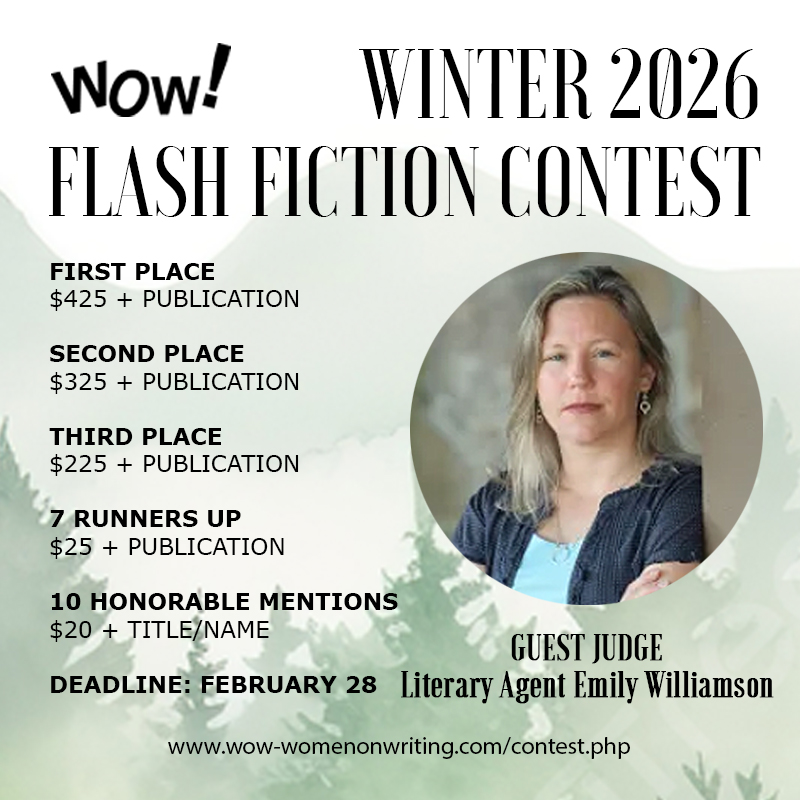
WOW! Women on Writing Quarterly Flash Fiction and Creative Nonfiction Contests
Deadlines: February 28 (fiction) and April 30 (nonfiction). Our favorite writing community offers quarterly contests judged blindly with multiple cash prizes and more for 20 winners, up to $1,350 (fiction) and $1,175 plus a gift certificate to CreateWriteNow (nonfiction), an affordable critique option, and a 300-entry limit on each contest. Previously published work is accepted! What’s not to love? This season's guest judge is Literary Agent Emily Williamson. Fee: $10 (Flash Fiction) and $12 (Nonfiction).
https://www.wow-womenonwriting.com/contest.php
| |
 | | March 8 is International Women’s Day! Celebrate the holiday by submitting to the Wild Women Story Contest with the same deadline (March 8). This contest is based on the radical idea that history and the present moment are not (cannot be) just a series of wars and domination—destruction. The creative life force carried forward through the millennia, frankly, does not get enough appreciation, and the creative force and the Wild are innate in the Feminine spirit. They are looking for empowering stories whose main characters embody the Wild Woman spirit. They want stories about finding the Wild, reclaiming the Wild, experiencing the Wild, being the Wild, staying Wild. They especially love stories about the ways women use their power to create and shape the world, and stories about discovering—or remembering—this power in the first place. Stories can be fiction, nonfiction, or poetry—as usual, if it tells a story, it fits! Prizes: Grand prize for each contest: $1,000. Contributors for each issue will be awarded $50. Additionally, all contributors receive a free copy of the issue in which they appear. Prose: up to 10,000 words. Poetry: 5 pages per poem. Fee: $20
| | |
few weeks ago, I was chatting with a writing friend about submissions. More specifically, we were discussing a particular publisher who accepts stories based on open calls with no fees. Each volume can receive over a thousand submissions, so the competition can be pretty fierce.
I’ve been fortunate to have some success with this publication, but my friend was frustrated. Despite multiple attempts, she’d only had two pieces published with them in the last decade.
She finally blurted out, “Have any of your stories been rejected?”
I paused for a moment. Technically, the answer was “yes.” There were definitely stories I’d submitted that hadn’t been accepted for publication.
But there was something about attaching the word “rejected” to my beloved stories that made my skin bristle.
I write creative nonfiction, so all my pieces are deeply personal. They’re infused with funny, heartbreaking, and life-changing memories. Each story is like a slice of my own skin.
Attaching the word “rejected” to something this intimate felt wrong, like kicking a puppy or shouting at a grandma.
I answered her honestly, but the conversation stuck with me, as I considered my relationship with rejection.
| | My Journey with Rejection | | |
For the first decade of my career, I was an actor and singer. (I’m still a singer and now a writer, but that’s another story for another day.)
Very early in my professional life, I realized that a good actor needed to be able to handle two things—direction and rejection.
Taking direction meant I had to stay teachable and open to new ideas. I learned to accept, and actually invite, the ideas of others into my creative work. Learning this skill has benefited me in every aspect of my life. As a writer, it means I’m never afraid to receive an editor’s feedback. I may not always agree with them, but I’m not scared of that email!
Handling rejection was more difficult. Being an actor means auditioning—a lot! Some weeks, I had anywhere from three to eight auditions, sometimes doing several a day. I wanted to succeed at all of them.
But each time, I was going up against a room full of wonderfully talented people. As the “nos” piled up, it was easy to become discouraged and disillusioned.
If I was going to be a full-time artist, I needed to find a way to accept rejection without taking it personally, without having each “no” shut me down.
Thankfully, I learned how to reframe rejection.
| | “The first lesson in reframing rejection is to see it as a single step and not the end of the journey.” | | |
Whether we’re trying out for a play or submitting a story to a publisher, the stakes are always high. We want our art to be embraced. We want the work, money, and opportunities that come with a “yes.” Our plans and dreams are tied into the acceptance of others, and that can be incredibly complicated. It can make us feel like we have no control over our destiny.
Rejection often feels deeply personal, especially when it’s connected to our heartfelt, creative work. It can trigger memories of being shunned by kids at school or having someone you love disrespect your writing as an adult. Some people become so terrified of rejection that they actually never submit their work.
The first lesson in reframing rejection is to see it as a single step and not the end of the journey.
Your creative life isn’t like winning the lottery. There’s no one ticket that will bring you instant success. One “yes" or “no” won’t make or break your career.
Play the long game and see each submission as simply a step in your journey. Some steps are forward; some are backward. But if you keep walking, you’ll eventually head in the right direction.
| | It’s Not About You ... Necessarily | | |
Nepotism and politics are real. A harsh lesson, but true all the same. An agent once told me, “You never know what adjudicators are thinking. You could end up losing a gig because you remind the director of his ex-girlfriend!” Her point was that not all rejections are about us or our work. Sometimes, we’re just caught up in something that has nothing to do with us.
Also, let’s talk numbers for a second. For any given project, there will be way more submissions than space on the page. The New York Times rejects 99.5% of Modern Love submissions. Chicken Soup for the Soul regularly receives several thousand stories for each 101-story volume. Many stats suggest your chances of having your book traditionally published are between 1 and 5 percent.
With odds like that, lots of great work will be turned away! Take heart in the numbers, and realize that rejection is often not personal.
| | Submit Lots and Build Your Armor | | |
When I first started auditioning, I was thrilled and nervous every time I walked into the casting office. But as the months and years went on, I became less starstruck and developed the attitude of a professional actor.
I saw each audition as an opportunity to learn my craft, hone my auditioning skills, and connect with a casting agent. I realized I might not be the right fit for this project, but if I do well today, they might remember me for a project further down the line. And yes, that happened several times in my career.
It’s the same with submitting our pieces to publishers. Submit lots and often. Do it until it doesn’t make you nervous. Develop a professional attitude. Realize this is just one step.
When rejections do come in, let them make you stronger. I once read a story about a writer who collected all her rejection letters and used them to decoupage her coffee table. Every day, when she sat on her couch for her morning coffee, she would be faced with a litany of rejection. I don’t know if I could be that strong, but for her, seeing those letters reminded her of the battle ahead and the strength she would need to face the day.
| | Maybe You’re Just in the Wrong Place? | | |
In our house, we’re fans of the NBA Toronto Raptors (“We the North!”). That said, there’s no way my husband or I should ever try out for the team. It would be a tremendous waste of everyone’s time. But for several years, we sang the national anthems at the Raptors’ Christmas games. We were able to be part of the game by finding the right place for our gifts.
Sometimes, we experience rejection because we’re not submitting our work for its best potential home. I’m not saying we shouldn’t try to push our boundaries, but it's important to be realistic in our expectations.
- If I submit a haiku for a science journal, they’re going to reject it.
- If I submit a murder mystery for a children’s picture book, they’re going to reject it.
- If I submit a political dissertation to a cooking magazine, they’re going to reject it.
Give your work its best chance of success by practicing good craft, getting helpful feedback, and finding its best possible home.
| | “I don’t think of my story as being ‘rejected.’ I just think of it as ‘not accepted at this time and in this place.’” | | |
Thinking back to my friend and the conversation that sparked it all, there’s one more reason why I bristled when she asked if my stories had been rejected:
I love my stories!
By the time I’m ready to share any piece of my work, I’ve poured my heart and soul onto the page, fussing over every technical and creative detail. I’m confident it’s the very best work I can offer at this time. I’m trusting this is the story I’m supposed to tell to this particular audience.
Finally, I click “submit” and say a little prayer that it will be accepted, published, and widely read.
But if a “no” arrives in my inbox, I take a deep breath.
You see, I don’t think of my story as being “rejected.” I just think of it as “not accepted at this time and in this place.”
That small shift in language is seismic!
If my story is “rejected,” it’s discarded, cast off, less than.
But “not accepted” gives me so much space for opportunity!
Sure, I might have a moment of disappointment, but my next thoughts are, What can I learn? What can I change? Where can I submit it next?
A “no” isn’t the end. It’s just a step…
One final story: last year, I pitched a Christmas essay to a major news website. They accepted the pitch, and I wrote the piece. Ultimately, it was turned away in the kindest rejection letter ever. The editor was swamped with submissions and explained, “I’m having to say ‘no’ to a lot of great writing.”
A few months later, I did a full rewrite and submitted it to a popular anthology series. Sadly, it wasn’t accepted there either.
Finally, I suggested the idea to a faith-based magazine. The editor loved the pitch and asked to see a full article. Again, I rewrote my piece to fit their target audience. In November, I was rewarded with publication!
It would have been easy to become discouraged in this process. Instead, I allowed rejection to spur me forward, inspire me to find the best home for my idea, and write it in a style that best suited the publication.
I encourage you to reframe rejection for your writing! Submit often. Don’t take any of it personally. Find the best possible home for your pieces. Use each “no” as an opportunity to learn.
We need your unique voice! Don’t let rejection stop us from hearing what you have to say.
| | |
Allison Lynn Flemming is drawn to the power of story to grow hearts and communities. Allison and her husband, Gerald Flemming, form the award-winning, nationally-touring music duo, Infinitely More (based in St. Catharines, ON, Canada). 2026 will see both the launch of a new Infinitely More album and Allison’s first children’s book. Publications include Guideposts (20+ stories), Chicken Soup for the Soul (16 stories), Faith Today, Warner Press, and The Upper Room. www.InfinitelyMore.ca
| | |
There's a Lot to Be Said About Knowing Your Niche
By Nicole Pyles
I'm a big believer in trying things outside of your own comfort zone. It's how we grow and learn, right? But sometimes, there's a lot to be said about knowing your own strengths and where you are most comfortable as a writer.
Since the start of January, I've been focusing on doing "one act of writing" a day, whenever possible. It's been an incredibly busy month, so once a day has been sort of once-ish a day. But I did hit my goal of 20 "one things a day" in January. Hurrah!
I was looking over a short story I had written a couple of years ago. It's still handwritten, but I loved the premise. Yet, something about it just didn't work. I had even typed it up at one point and thought...you know, this just isn't doing it for me.
READ MORE
| | |
The Search for Beta Readers
By Renee Roberson
I periodically share updates here about a suspense novel I wrote a few years ago, inspired by my work podcasting. In early 2024 I hired a developmental editor to help me go over the manuscript. I began sending queries out to literary agents that spring after incorporating her suggestions. After the first few rejections, I had writer friends I trust help me tackle my query letter, and almost immediately I began receiving manuscript requests. I’ve written a few other novels before in the young adult genre and had never received a request, only rejections. I was elated.
Two agents that requested the full manuscript both got back to me within a few months and turned down representation.
READ MORE
| | |
A Writer's Version of Spring Cleaning
By Jodi Webb
After months of being stuck inside, who would want to spend yet another day indoors dancing with mops, vacuums and the occasional dust bunny when I could be in my garden? So I have never been enthusiastic about the annual ritual of Spring Cleaning. But then this weekend, after a frightful stretch of winter weather we experienced a Spring of sorts. No snow in the forecast and a balmy 45 degrees. Since it still much too early for gardening I was struck by an urge to Spring Clean.
I decided to focus on my home office, a spot that rarely gets more than a vacuum and a quick dust. Eventually the scrubbing and polishing turned into a decision to go through the files -- a decision not made lightly. My file cabinets are crammed with years of my writing career: manuscripts, tearsheets, invoices, ideas. It didn't take long until I was surrounded by stacks of paper.
READ MORE
| | |
Which Is Which? Parsing Contradictory Advice
By Sue Bradford Edwards
It doesn’t matter what the industry is, there is always contradictory advice out there in the world. Designers are sick of white and greige, says one article. Yet in another article I read that the Panton color of the year is Cloud Dancer which I saw described as a shade of white.
Eeny, meeny, miny, mo . . . writing advice is just as varied and contradictory.
- Never use sentence fragments.
- Use sentence fragments to create emphasis.
- A paragraph must have at least 3 sentences.
- A single word can be a paragraph. (Not sure what I mean?)
- Crash!
- Don’t use exclamation marks.
So how do you navigate this mess?
READ MORE
| | |
Friday Speak Out!: This is My Last Book ... But That Doesn't Mean I've Stopped Writing
By Deborah K. Shepherd
Honestly, no one was more surprised than I was when I published my first book at 74.When I retired from a decades-long career directing non-profits, where I wrote detailed—very detailed—grants asking for funding, and even more detailed reports accounting for how the money was spent, I swore I’d never write anything longer or more complicated than a grocery list.
But then, looking for community, I signed up for a writing workshop at my local senior college, came home from the first class and announced to my husband, “I think I’m writing a novel.”
READ MORE
| | | | |