September 2025 Markets Newsletter | | |
In this issue:
- "Writers! Follow Your Heart" by Ashley Harris
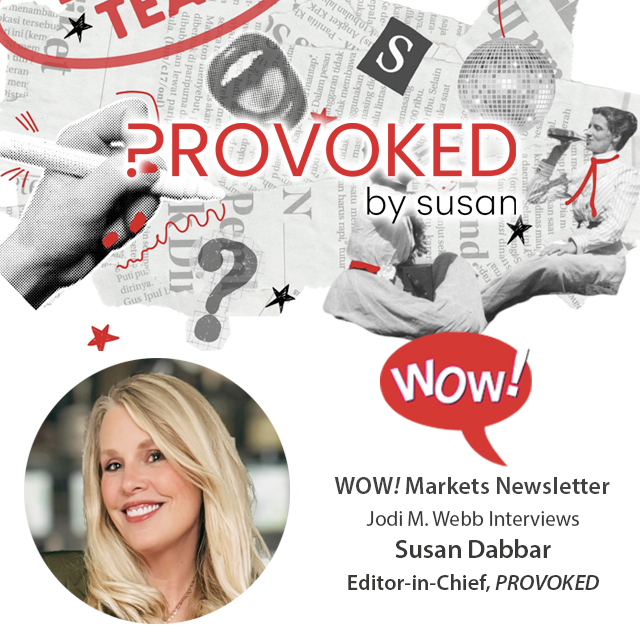
- "On Submission with PROVOKED by susan: Editor-in-Chief Susan Dabbar" interview by Jodi M. Webb
- Calls from Editors
- September Deadlines: Poetry, Fiction, Nonfiction, Multigenre, Just for Fun
- Inspiration: "Focus on Three Things: Writing, Reading, and Networking - An Interview with Regina Black, Author of August Lane" interview by Margaret Y. Buapim
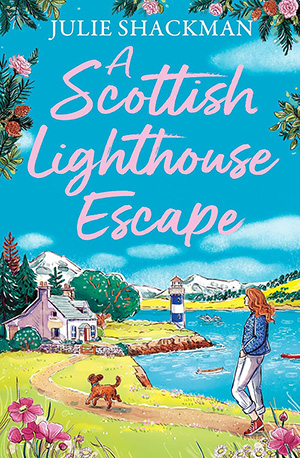
- Craft Corner: "Out of Character: How to Write Realistic Characters" by Julie Shackman
- Recent WOW! Features and Posts from The Muffin
| | |
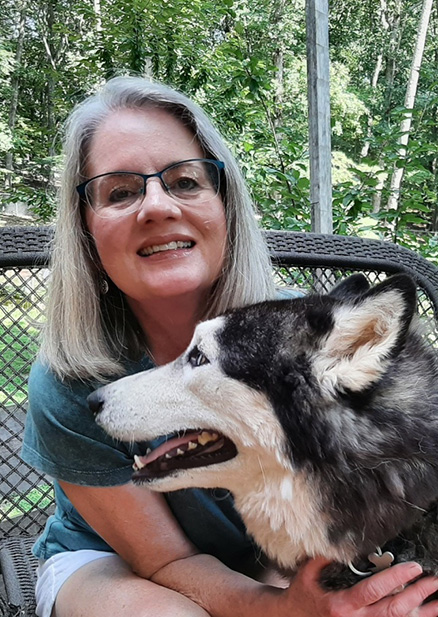
With cooler weather and glorious color, September offers a much-needed reprieve from summer. For writers, autumn is the season for mulling much more than cider. Since over half of the year has passed, this is a great time to mull over our writing and submission goals.
Our reflection, which should be peaceful, can zigzag as wildly as the falling leaves. You may be wondering: Am I writing about things that matter? Does the world need my words? Should I write what my heart tells me to write?
The answer to all of the above is YES! I’ll explain why by sharing a revelation from my own writing life. Eight years ago, after retiring from a busy job managing marketing communications, I decided to slow down and pursue my love of creative writing full-time. I wrote everything—short stories, poetry, nonfiction and memoir. To help supplement my income, I started pursuing paying markets.
| | |
To earn the most lucrative assignments, it was necessary to monitor the news daily. To keep up, I subscribed to several newspapers, watched the nightly TV news, scoured the internet and even set up special Google Alerts. Through the years I pitched and wrote timely articles about the pandemic, the surge in retirement, organic gardening, the holidays and even an opinion piece about a celebrity diagnosed with the same chronic illness as mine for outlets such as NBC News, The Independent, and Wired magazine. This work was exhilarating at times, but it also exhausted me. I soon learned that it wasn’t enough to be a good writer—you had to be the first!
My phone beeped constantly, but I couldn’t afford to put it away for fear of missing something. Before I knew it, my writing felt a lot like the job I had just retired from! And the pieces I most wanted to write, such as the missing chapters of my memoir and those spur-of-the-moment poems, were in danger of falling by the wayside. Yikes!
| | |
A year ago, I slammed on the brakes. I decided that I would follow my heart, that is, write what I wanted to write first. This meant I could finally breathe life into those stories that stirred my soul. I still kept up with the zeitgeist, but I no longer chased it, instead making note of only those pitches and themes that matched my work. Along the way, the most curious thing happened—I am not only much calmer but I’m getting published more often than before. And I’m still getting paid.
As my story demonstrates, it is possible to balance the twin tugs of your heart and the world. If you, too, are trying to make sense of all the submission calls while meeting your own writing goals, the following tips might help.
Write what you want to write about first. If it’s fiction, write that. The same goes for nonfiction, memoir, and poetry. These pieces will undoubtedly be your best work because you believe in them. They will be easier to write than anything else and before you know it, you’ll have a cornucopia of work to draw from when the world comes calling. And whatever happens, you’ll have the satisfaction of meeting your own goals.
| | |
Don’t worry about publication. If you’ve written a piece that you’re truly passionate about, don’t obsess about publication. Your time will come, I promise. Spend the time you might have spent hunting markets on refining your piece and making it the best it can be. Two years ago, I wrote an essay about my rescue dog Max, who was named for Max Verstappen, a Formula One racecar driver. The first editor I sent it to must have shipped it to the junkyard because I never heard back. So I kept tweaking it and started working on other things. And when Brad Pitt’s new movie, F1, debuted this summer, I sent my essay to the editor of Sasee magazine, who happened to be seeking pet-related essays at the same time. And in August, “Formula One Dog” was finally published.
| | On Submission With... PROVOKED by susan | | |
Looking back over my life, I can map the seasons through the magazines I read. The celeb magazines from my teen years. The fashion magazines from my college years. The parenting magazine years. The home decorating magazine years.
But now I’m a fifty-plus empty nester, and no one’s favorite audience. Sometimes it feels like the only articles targeting women my age are the ones telling us what not to do: haircuts we shouldn’t have, clothes we shouldn’t wear, foods we shouldn’t eat. It is frustrating to have 20-something freelance writers—who I know are lumping me into a vague “mature women” category—tell me what to do.
So when I stumbled across PROVOKED by susan, I celebrated on two fronts. First, as a reader I finally had sassy articles that celebrate the unique phase I’m in. After fifty years on this Earth, I know what I want from life, and after years of “playing nice,” I’m finally ready to speak my mind. And PROVOKED is right there with me! Second, as a writer, I suddenly have a market for issues and opinions that don’t fit anywhere else. Ask Susan! I sent her a laundry list of ideas, including my take on everything from grandma names to funerals to family heirlooms.
As both the founder and a hands-on editor-in-chief, Susan Dabbar agreed to tell us more about the creation of PROVOKED by susan and how WOW writers can help shape the future of this well-paying market.
| | |
WOW: Being the founder of PROVOKED by susan is just the latest chapter in your life. Can you tell us a little about some of your other endeavors?
Susan: My résumé reads like a dare to disrupt every field I entered. Call me a serial reinventor. I started my career designing nuclear submarines, then pivoted to Nestlé, marketing the chocolate chip cookie to a country where it didn’t exist yet. Led costuming at Disney and later built a global college admissions firm from scratch. I’ve also played professional poker, advised billionaires, and moved my family more than thirty times. My husband jokes that I’ve reinvented myself more times than Madonna.
What ties it all together? Resilience and great storytelling—followed by a strategic focus on outcome. I’m wired to move with intention, following the numbers. From counting cards to word counts to subscriber growth, I play smart—and I like to win.
WOW: Out of all of these very cool career experiences, was there a specific event that made you focus your attention on the publishing world?
Susan: Yes—when I turned sixty. I sold my educational consulting business, stepped back, and expected to feel free, finally able to enjoy the pause. What I felt instead was untethered. Not bored, but boring. Oh—and invisible. I’d spent decades building things, solving problems, staying sharp, and suddenly the world was speaking to me like I’d aged out. I looked around and tried to find publications that respected my life experience and earned wisdom. What I discovered was that we’re either patronized with wellness tips and “what not to wear” lists or completely ignored. I couldn’t find the thing I needed, so I’m building it.
PROVOKED started with a simple question: Why should we age quietly when we’re just getting interesting?
WOW: That’s right! We’re interesting and deserve to be heard! Give us the PROVOKED basics: When did it start, where can we find it, who is it for, and what will we read in it?
Susan: PROVOKED launched in late 2024 and lives at provokedbysusan.com. It’s built for smart, curious, unruly women over fifty who still have something to say—and plenty of story left to write.
Women are not a monolith. Each of us has built a life shaped by experience, ambition, and reinvention. I’m building PROVOKED to reflect that: content by women, for women, across all walks of life—without dumbing it down or smoothing the edges. Think The Atlantic meets Bustle meets The Cut, but for the demographic mainstream media forgot exists.
We publish personal stories, sharp opinion pieces, cultural commentary, sex and aging content, money and tech guides—anything that challenges the tired idea that midlife means slowing down. We don’t do listicles or patronizing wellness advice—we do provocative, intelligent content that makes you think, “Finally, someone is saying what I’m thinking.”
| | |
“Suddenly the world was speaking to me like I’d aged out. I tried to find publications that respected my life experience and earned wisdom. What I discovered was that we’re either patronized with wellness tips and 'what not to wear' lists or completely ignored. I couldn’t find the thing I needed, so I’m building it.”
| | |
WOW: As a fifty-plus woman, I can tell you that I am tired of reading articles directed to my age group that I can only imagine were written by twenty-something writers who view everyone over fifty as grandmas baking cookies and playing Bingo. I love the voice of many young writers, but sometimes I think you need a writer who has lived what they’re writing about. Can you describe the voice of PROVOKED?
Susan: The voice of PROVOKED is bold, wry, deeply intelligent, and allergic to clichés. What would Anne Lamott share with Fran Lebowitz over brunch? That’s the tone. We’re not here for perfectly balanced takes or soft landings. We’re here to poke, prod, challenge, and reflect—sometimes all in one piece. This isn’t content for content’s sake.
This isn’t a blog. Every piece must offer our readers a gut check, a wake-up call, or a revelation. We only publish what provokes: thought, reaction, memory, discovery. Write something that makes us say: “Oh, damn. Yes.”
I push our writers to answer:
- Why does this matter to us?
- What does it reflect or reject?
- What’s at stake?
- What larger truth am I exposing?
As for writers? Give me women who can be provocative without being inflammatory, who respect our intelligence while making us laugh. Writers who understand that aging isn’t about grace—it’s about power.
WOW: Aging gracefully. Years ago, I thought it sounded like an elegant way to grow older. Now I think it’s the equivalent of pushing those of us with gray hair into a corner and telling us to be quiet. After decades of striving for a place in both our personal and professional lives, I don’t think we want to settle for quiet. We want to hear our voices in places like PROVOKED, and I’m sure many women are thrilled to have the opportunity to write for their audience. What’s the biggest challenge to joining the PROVOKED contributor list?
Susan: The biggest challenge? Nailing the PROVOKED edge. Too often, we get drafts that sound like generic women’s magazine content or soft blog posts. That won’t cut it. We want writers who bring a sharp point of view, who know how to provoke thought, and who understand this truth: Every story must matter specifically to women fifty-plus.
We’ve got women engineers building our tech, women artists creating original images, and women creators running our digital and social channels. Our copyeditors are fearless. If you’ve got range, voice, and ideas that challenge the norm—we want to hear from you.
WOW: Sounds great! About how many pieces do you need each month?
Susan: We’re publishing three-to-four new pieces each week, plus one meaty, curated newsletter every Thursday. Our five core content buckets are: Wellness, Money, Tech & Culture, Humor, and Life. Within those, we cover everything—diet, sleep, sex, friendship, grief, reinvention, and the latest hot takes in culture.
WOW: So basically…life! What’s the average time frame from assignment to publication?
Susan: Turnaround is usually one-to-two weeks from pitch approval to first draft. Most pieces go through one or two rounds of edits. We aim to publish within two-to-three weeks after final.
Our editorial process is collaborative but intentional. We care deeply about the writing, and we’re not afraid of tough edits if it makes the piece more PROVOKED. That said, we respect our writers’ time and voice.
| | |
“As for writers? Give me women who can be provocative without being inflammatory, who respect our intelligence while making us laugh. Writers who understand that aging isn’t about grace—it’s about power.”
| | |
WOW: I can attest that the editing at PROVOKED is specific and helpful. I feel you make suggestions to bring out the PROVOKED voice in every writer. You have such a fast turnaround. Does that mean that timely pieces (tied to an event in the news or an upcoming holiday) will be able to find a home with PROVOKED?
Susan: Yes—absolutely. We’re fast, agile, and independent, which means we can turn around a timely piece in a few days if it’s the right fit. In fact, we love smart takes on cultural moments—especially if they offer a perspective most outlets are missing. If you’ve got something sharp, fresh, and urgent, don’t wait.
WOW: Is there anything you aren’t seeing that you’d like more of?
Susan: We’d love to see more tech and money pitches—but with voice. Think: AI and aging, women and financial power, not generic advice columns. And we’re especially interested in pitches that reflect more diverse experiences—stories that resonate with Black, Latina, Asian, Indigenous, and LGBTQ+ readers navigating midlife.
WOW: I’m especially interested in these pieces that tailor advice—so it works for fifty-plus women. For instance, I had a friend involved in a “gray” divorce. All the advice she found was about child custody and restarting your career, but nothing for a woman counting down the days to retirement who suddenly has to rethink her plan. We have so many special circumstances in midlife that most publications just seem to overlook. Is there anything you aren’t looking for?
Susan: Please, no surface-level menopause explainers. No lifestyle. No listicles unless they offer true insight or make us laugh out loud. If you’re going to write about hot flashes, you better burn the house down with perspective. Same goes for empty “empowerment” stories. We’re not here to cheerlead—we’re here to provoke.
WOW: I love that you’re steering away from articles that recycle the same ten predictable tips or pieces of info and are going a step further to “Here are the experiences I’ve only ever told to my best girlfriends—or maybe just thought to myself.” It’s powerful reading an article that reflects your secret thoughts and realizing that you aren’t the only one feeling that way. When I first pitched PROVOKED, I was worried that I wouldn’t make the cut. Do you feel there are any red flags in a pitch that make you pass on a story?
Susan: The biggest red flag is vagueness. A strong pitch has a clear angle and a reason for being. Don’t just tell me, “I want to write about aging.” Tell me you want to explore why so many women fear becoming like their mothers, or how fashion becomes armor after sixty. Be specific. Be bold. That’s what gets my attention.
Pitches: What to Include
- Explain briefly the journey the reader will take.
- Tell us what makes this story provocative. Takeaway? Wisdom? A provocation for action?
- In the subject line, write “Pitch” and include the working title. If it’s time-sensitive, use “Time-Sensitive Pitch.”
- Pitches should be one-to-three short paragraphs and include:
- A working title
- A clear thesis or central question
- A sense of the conclusion or takeaway
- Let us know how you plan to tell the story. Will it include personal reflections, expert interviews, cultural commentary, links to relevant research? You don’t need every detail—but give us a sense of your sources and approach.
Strong pitches show us that you’ve thought deeply—and that this is a story only you can tell.
| | |
“PROVOKED isn’t just a platform. It’s a reclamation—of voice, of power, of presence. We’re not here to politely suggest the world notice us. We’re here to make it impossible to ignore us.”
| | |
WOW: PROVOKED is relatively new, and you’re relatively new to the publishing world. Has anything surprised you? What has been the biggest challenge?
Susan: What’s surprised me most is how hungry the audience is. We’ve barely scratched the surface, and the response has been overwhelming.
The biggest challenge? Building something premium in a world obsessed with cheap clicks. Getting new engaged subscribers who get us. But I didn’t come here to play small. I came to build the media brand women over fifty actually deserve. That means holding the line on quality—and creating the kind of content we wish we’d had ten years ago.
WOW: Well, better late than never! You are constantly evolving, and I’m sure PROVOKED will be also. Any plans for the future?
Susan: Plenty. We’re launching a podcast later this year and building premium verticals around money, wellness, and tech. We’ll be expanding our newsletter into additional days and formats—always listening closely to what our audience actually wants to read and hear. We’re also planning live salons and events in 2026.
But more than anything, we’re building a cultural force. A place where women don’t just read—they gather, they get loud, and they get seen.
PROVOKED isn’t just a platform. It’s a reclamation—of voice, of power, of presence. We’re not here to politely suggest the world notice us. We’re here to make it impossible to ignore us.
WOW: Your enthusiasm is infectious. I can’t wait to see what’s next for PROVOKED. Thanks for introducing us to your amazing publication. I have a feeling there are plenty of WOW writers who would love to be PROVOKED.
| | |
PROVOKED by susan has a team of twenty-five talented, experienced freelancers—writers, designers, editors—ranging in age from forty-five to eighty-five. But they’re still growing. What do you have to offer to women who are loving their fifty-plus lives?
They pay some writers per word and others per piece, depending on the writer’s experience, the content bucket, and the nature of the assignment (personal essay vs. reported feature, for example).
Rates range from $0.50 to $1 per word, or $400 and up per piece with anticipated increasing rates as the publication becomes more profitable. Personally, I made over $800 for each article I wrote for PROVOKED. Although they are a new publication, they pay promptly. Once a piece is through editing, payment goes out within the month. And, in the words of Susan, “We treat writers with respect.”
Check out their pitch guide.
| | |
Jodi M. Webb writes from her home in the Pennsylvania mountains. She has bylines in PROVOKED by susan, Business Insider, Pennsylvania Magazine, Tea Journey, NPR and Woods Reader. She's also a blog tour manager and writer for WOW! Women on Writing. Visit her blog Words by Webb jodiwebbwriter.com/blog.
| | |
Gyroscope Review: Crone Power Issue (Women Over 50)
Deadline: September 1
The Fall 2025 Issue is their annual Crone Power Issue. Submissions will be limited to poets over the age of 50 who identify as female. For this special issue, the editors seek work that examines what it means to be a woman over 50. Send them your best poems, the ones you are dying to show the world. Let everyone know what you are thinking, from nature to politics to relationships. There are no length restrictions on individual poems. No fee.
https://gyroscopereview.submittable.com/submit/330872/2025-fall-crone-power-issue
2025 QTBIPOC Book Prize
Deadline: September 1
Kelsey Street Press was founded in 1974 to address the marginalization of women writers by small press and mainstream publishers. They are seeking manuscripts for their book contest, open to QTBIPOC-identified, feminist, innovative writers/poets. The winning manuscript will be chosen by Andrea Abi-Karam, author of Villainy (Night Boat Books 2021) and EXTRATRANSMISSION (Kelsey Street Press, 2019). The prize winner will receive publication along with a $1,000.00 cash award to help aid in book promotion, travel, event attendance, and a general contribution to the hopes of thriving as an artist. Submit a book-length manuscript (no word count specified). No fee.
https://www.kelseystreetpress.org/contests
The 7th Morioka International HAIKU Contest
Deadline: September 1
Open internationally. Submit up to 2 haiku, previously unpublished. There will be 1 Grand prize, 5 Second prizes, 12 Honorable mentions (prize amounts are not specified). An awards ceremony will take place in Morioka, Japan on Sunday, November 16, 2025. No fee.
https://morioka-haiku.jp/en/rule/
Academy of American Poets First Book Award
Deadline: September 1
Open to US citizens or resident of the United States, the Award is a $5,000 first-book publication prize. The winning manuscript, chosen by an acclaimed poet, is published by Graywolf Press. The winner also receives an all-expenses-paid, six-week residency at the Civitella Ranieri Center, a fifteenth-century castle in the Umbrian region of Italy, where they will become part of a cohort of accomplished international artists, writers, and composers; distribution of their winning book to thousands of Academy of American Poets members, making it one of the most widely-distributed poetry books that year; inclusion and promotion in American Poets magazine, the Academy’s newsletter, and Poets.org, among other opportunities. Submit a manuscript between 48 and 100 pages, typed single-spaced (unless the poems are meant to be presented using nonstandard spacing). Multiple poems may not appear on a single page. Fee: $35
https://poets.org/academy-american-poets/prizes/first-book-award
Cleaver Magazine 2025 Visual Poetics Contest
Deadline: September 1
They invite poems that engage with a visual life, whether this is as a traditional poem accompanied by a single photo, or a complete re-imagining of how language can live on the page. $500 First Prize. $250 Second Prize. $100 Third Prize. Submit 1-4 poems of up to 3 pages each. Fee: $20
https://cleavermagazine.submittable.com/submit/332269/2025-visual-poetics-contest
Naugatuck River Review 17th Annual Narrative Poetry Contest
Deadline: September 1
NRR is looking for poems that tell a story, or have a strong sense of story. They can be stories of a moment or an experience, and can be personal, fictional or historical. Prizes are $1,000, $250, and $100. Please submit no more than 3 unpublished NARRATIVE poems. Fee: $20
https://naugatuckriver.submittable.com/submit/331286/naugatuck-river-review-17th-annual-narrative-poetry-contest
Dryden-Vreeland Book Prize 2025
Deadline: September 1
Educators—currently active or retired, full- or part-time—are encouraged to submit a full-length poetry manuscript for the Dryden/Vreeland Poetry Prize. Unpublished book-length manuscript of 48-100 pages. Prize: $1,000, publication by Gunpowder Press and 10 author copies. Fee: $20
https://gunpowderpress.submittable.com/submit/325659/dryden-vreeland-book-prize-2025
North Coast Voices
Deadline: September 1
Seeking poems by those who grew up, lived, worked, or visited the region adjacent to Lake Erie from Toledo to Buffalo or pertinent to life or activities in the region. Maximum length per poem is 60 lines. Prize: three honorariums of $50. Published poets will receive a copy of the book. Fee: $3 for up to three poems.
https://mainstreetmag.submittable.com/submit/321992/north-coast-voices-poetry-anthology
The St. Lawrence Book Award
Deadline: September 1
Each year Black Lawrence Press will award the St. Lawrence Book Award for an unpublished collection of poetry or prose. Manuscripts should be 45-95 pages in length (poetry) or 120-280 pages in length (prose). Prize: book publication, a $1,000 cash award, and ten copies of the book. Fee: $30
https://blacklawrencepress.submittable.com/submit/6741/the-st-lawrence-book-award-poetry
Phi Kappa Phi Forum – Theme: Travel by Plane
Deadline: September 2
The Phi Kappa Phi Forum welcomes submissions of original, previously unpublished poetry that fits the theme of “Travel by Plane.” Poems will be selected to appear in the print version of the magazine, though others may appear online. Submissions must be under 40 lines, and poets can submit 1-3 poems as a single submission. Pay: $4 per line. No fee.
https://www.phikappaphi.org/publications/phi-kappa-phi-forum
Fourteen Poems
Deadline: September 15
They want to represent all that’s thrilling about the new wave of LGBTQ+ poets. If you’re a poet, even if you’ve never been published before, they want to read your work. Email up to five previously unpublished poems in a single pdf or Word document, with a small paragraph about yourself to hello@14poems.com. Pay: £30 for each poem published. No fee.
https://www.fourteenpoems.com/submit
2026 Ambroggrio Prize
Deadline: September 15
The Ambroggrio Prize awards $1,000 and publication for a book-length poetry manuscript originally written in Spanish and with an English translation. The winning manuscript is published by the University of Arizona Press. The original manuscript in Spanish must be between 48 and 100 pages. No fee.
https://poets.submittable.com/submit/329826/2026-ambroggio-prize
Pigeon Pages 2025 Poetry Contest
Deadline: September 15
Pigeon Pages is a literary space where emerging and established writers from all backgrounds are encouraged to nest together. They seek original, previously unpublished poems by a single author for this contest. Prize: The winning author will receive $250 and publication in Pigeon Pages. Honorable mentions will receive $50 and publication in Pigeon Pages. No fee.
https://pigeonpagesnyc.submittable.com/submit/332770/2025-poetry-contest-no-fee-submissions
2025 Princemere Poetry Prize
Deadline: September 20
Princemere announces its eighteenth annual poetry prize for an unpublished poem in any style. The winning poet will be awarded $300, with $200 to be shared among runners-up. Submit up to four poems. Fee: $5
http://www.princemere.com/
Rhonda Gail Williford Award for Poetry – Theme: Justice, Dignity, and Resistance
Deadline: September 30
The Rhonda Gail Williford Award for Poetry honors the courageous, passionate, and justice-oriented life of poet and attorney Rhonda Gail Williford. First Prize: $150. Second Prize: $100. Third Prize: $50. Please submit one poem that incorporates themes of justice, dignity, and resistance to hello@humanrightsartmovement.org, with the subject line: Rhonda Gail Williford Award for Poetry. Please include your name as you would like it to appear, country of residence and brief biography. No fee.
https://humanrightsartmovement.org/rhonda-gail-williford-award-for-poetry
2025 Sejong International Sijo Competition
Deadline: September 30
Open internationally to all ages. The sijo is a traditional three-line Korean poetic form organized technically and thematically by line and syllable count. Using the sijo form, write one poem in English on a topic of your choice. The sijo must be written in English. Prizes: USD $500, $250, $100. No fee.
https://sejongculturalsociety.org/isijo/index.php
Joy Bale Boone Poetry Prize
Deadline: October 1
Joy Bale Boone (1912-2002) was an American poet best known for her devotion to the arts. She was active in the women's liberation movement, having formed the League of Women Voters in Hardin County, KY in 1944. Her most significant work was The Storm's Eye: A Narrative in Verse Celebrating Cassius Marcellus Clay, Man of Freedom 1810–1903. She served as Kentucky's Poet Laureate from 1997-1998. The Heartland Review remembers Joy through this contest. There will be a $400 first place gift card, $240 second place gift card, and $100 third place gift card. Winners will be published in The Heartland Review. They usually receive between 70-80 submissions, so the odds are pretty good! This year’s judge is Clay Matthews. Submit no more than three (3) original, unpublished poems in any style, length or genre but in English, along with a 40-word bio. Fee: $10
https://elizabethtown.kctcs.edu/community/theheartlandreviewpress/poetry-prize.aspx
Changes Book Prize
Deadline: October 1 (Opens September 1)
Open to US residents, the Changes Book Prize awards $10,000 and publication for a first or second collection of poems. In addition to the cash prize, winners receive a fairer-than-standard publishing contract, national distribution, extensive advertising and publicity, 50 copies of their book, and a launch event in NYC. This year’s winning manuscript will be selected by Simone White. Criteria for selecting a winning manuscript are broad; the judge and first readers do not screen submissions with a preference for any particular “style” or type of poetry, and emphatically are not looking for work that bears an affinity to their own. Manuscripts must be a minimum of 48 numbered pages and a maximum of 96 numbered pages in length, including the title page and table of contents. No fee.
https://changes.press/book-prize/
| | |
Last Chapter Press Bombshell Beauty 2025 Concept Contest
Deadline: September 1
Craft an enticing concept and details for a series of 6 to 10 steamy romance books (can be paranormal, LGBTQIA, or cozy fantasy too). Please keep in mind the series concept should be named “Bombshell Beauty.” Write a compelling blurb (200-300 words) that will hook potential readers and get the editors jazzed about reading these books, too! The entrant of the winning concept will receive: Publication of their story as the first story in the Bombshell Beauty multi-author series, $200 cash prize (paid via PayPal), $300 in services from LCP Author and Book Services, which includes editing, covers, graphics, review campaigns, talking cover videos, and more! Two one-hour calls with Julie Stamps to outline and develop your story. First choice of cover design and publication date for your book. No fee.
https://www.lastchapterpress.com/contest-for-2025
Sydney Taylor Manuscript Award – Jewish Fiction for Ages 8-13
Deadline: September 1
The Award recognizes unpublished manuscripts of Jewish fiction targeting ages 8-13. The award was established by Sydney’s husband Ralph Taylor to encourage aspiring authors of Jewish children’s books. The winner receives a cash award of $1,000. The manuscript must be a work of fiction in English with universal appeal of Jewish content for readers aged 8-13 years, both Jewish and non-Jewish. Submit a manuscript between 64 pages and 200 pages, double-spaced and paginated. No fee.
https://jewishlibraries.org/sydney-taylor-manuscript-award/
Lorian Hemingway Short Story Competition
Deadline: September 1
A contest that honors the uniqueness of a writer’s voice and heart and spirit. Stories must be original unpublished fiction, typed and double-spaced, and may not exceed 3,500 words in length. Prize: The first-place winner will receive $1,500 and publication of his or her winning story on our competition website. The second – and third-place winners will receive $500 each. Fee: $15
https://shortstorycompetition.com/online-submissions/
Gemini Flash Fiction Contest
Deadline: September 2
Gemini Magazine is an independent literary journal established in 2009. They are open to creative work from writers and artists around the world. First Prize: $1,000. Second Prize: $100. Four Honorable Mentions: $25. Submit a story up to 1,000 words. Fee: $8
https://gemini-magazine.com/flash-fiction-contest-2025-2/
Stories Out of School Flash Fiction Contest
Deadline: September 7
Open to any adult of 18 years or older. Teachers have the most fascinating, difficult, and important job on the planet, and their workdays are filled with stories. Yet teachers seldom appear in fiction. This annual contest, for teachers and non-teachers, was created to inspire great stories about teachers and the rich and crazy world of schools. The judge is British Fantasy and Bram Stoker Award winner Paul Tremblay, who is the author of The Cabin at the End of the World, Horror Movie, and many other novels. The winning story will be published in A Public Space's print edition and the author will receive $1,000. Submit a story between 6 and 499 words. The protagonist must be a K-12 teacher. No fee.
https://www.academyforteachers.org/contests
Uncanny Magazine
Deadline: September 8
Uncanny Magazine is seeking passionate, diverse SF/F fiction from writers from every conceivable background. They want intricate, experimental stories with gorgeous prose, verve, and imagination that elicit strong emotions and challenge beliefs. Uncanny believes there’s still plenty of room in the genre for tales that make you feel. They publish poetry, novellas, and essays, but currently only fiction is open. Fiction: submit original, unpublished speculative fiction stories between 750-10,000 words. Pay: $0.10 per word for fiction. No fee.
https://www.uncannymagazine.com/submissions/
Shenandoah Literary Journal - Fiction
Opens September 10 (closes when cap is met)
The editors love writing that stretches their imaginations and ways of thinking, surprises, makes them laugh, moves them, is formally interesting or challenging, defies genre, explores the confusing or uncomfortable, introduces them to new writers, thinks globally, has a distinctive voice, cares about the world, and does not assume white people are literature’s default characters. Submit short stories and novel excerpts up to 8,000 words. Pay: $80 per 1,000 words of prose up to $400. No fee.
https://www.shenandoahliterary.org/submissions/
The Savage Science Fiction/Fantasy Writing Contest
Deadline: September 21 (Opens September 19)
The autumn edition of the Savage Writing Contest is a Science Fiction/Fantasy contest. Entries are blind-judged by Broker. Winning stories are published in the December issue of Toasted Cheese. If 50 or fewer eligible entries are received, first place receives a $35 Amazon gift card & second a $10 Amazon gift card. If 51 or more eligible entries are received, first place receives a $50 Amazon gift card, second a $15 Amazon gift card & third a $10 Amazon gift card. No fee.
https://tclj.toasted-cheese.com/savage-writing-contest/
Breakthrough Scholarship for Fantasy Writers with Low Income
Deadline: September 21
This scholarship will award one talented speculative writer with limited financial means a place on Curtis Brown Creative Literary Agency’s new nine-week online Writing Fantasy course with instructor Lucy Holland. Apply with the first 3,000 words of the novel you’d like to work on during the course, and a synopsis of no more than a page. No fee.
https://www.curtisbrowncreative.co.uk/course/breakthrough-scholarship-for-fantasy-writers-with-low-income-1025
Mslexia Women’s Short Story Competition 2025
Deadline: September 22
Open to entries from all women of any age of any nationality from any country. This includes under-18s. Submit complete short fiction on any subject, up to 3,000 words. Guest judge: author Eley Williams. 1st prize: £3,000. Three additional finalists will each receive £100. The winner and finalists will be published in Mslexia, with eight additional finalists, along with the four winners, appearing in our ebook anthology Best Women's Fiction 2025. Fee: £12
https://mslexia.co.uk/competitions/short-story/
Mslexia Women's Fiction Competition 2025 - Adult Novel
Deadline: September 22
Open to entries from all women of any age of any nationality from any country. This includes under-18s. The competition seeks unpublished fiction novels of at least 50,000 words in any genre for adult and/or young adult readers. The winner will receive £5,000. The winner and three finalists will also receive manuscript feedback from The Literary Consultancy, pitch training at a day-long professional workshop, introduction to agents and editors, and more. Submit the first 5,000 words. Fee: £26
https://mslexia.co.uk/competitions/adult-novel/womens-fiction-competition-2025-adult-novel/
Creative Writing Ink Short Story Competition 2025
Deadline: September 30
Embark on a literary adventure with the Creative Writing Ink Short Story Competition. Prize: First prize is £1,000, an online creative writing course with Creative Writing Ink, and publication on their website. Two runners-up will receive £200 each. Submit s short story up to 3,000 words. No minimum. Fee: £12
https://creativewritingink.co.uk/competitions/creative-writing-ink-short-story-competition-2025-2/
Jerry Jazz Short Fiction Contest
Deadline: September 30
Since 2002, three times a year, Jerry Jazz Musician awards a writer who submits the best original work of previously unpublished short fiction. Open internationally. Prize: $150 for the winning story. All story themes are considered, and ideally, stories will not exceed 3,000 words, but stories of up to 4,000 words are considered. Submit your story via Word (preferred) or PDF attachment to jerryjazzmusician@gmail.com, and be sure to include your name, address and phone number with your submission, as well as a brief 50 to 100-word story synopsis. Please include “Short Fiction Contest Submission” in the subject heading of the email. No fee.
https://www.jerryjazzmusician.com/short-fiction-contest-details/
Writers College Short Story Competition – Theme: All the Things We Didn’t Learn
Deadline: September 30
The competition is open internationally to any writer 16 and up who is unpublished, or has been published fewer than four times. First Prize: NZ $1,000. Second Prize: NZ $500. Third Prize: NZ $250. All winners will be published in an anthology of winning stories. They accept stories in any genre (literary/horror/sci-fi/fantasy/spec fic). However, literary fiction tends to fare best with their judges. The 2025 theme is ‘All the things we didn’t learn’. Word count: up to 2000 words. Fee: £8
https://www.thewriterscollege.com/the-writers-college-annual-short-story-competition/
Hearth Stories
Deadline: September 30 (Opens September 1)
Hearth Stories publishes speculative fiction (fantasy & science-fiction) slice-of-life stories with a focus on connection, family, relationships, comfort, and the natural world (they love stories prominently featuring nature, as opposed to tech). Word count: 1,000 words up to 10,000. However, the ideal length may be something in the 1,500 - 3,500-word range. Pay: 1¢ per word for accepted stories (with a minimum of $20 regardless of length). No fee.
https://hearthstories.org/submissions.html
L. Ron Hubbard Writers of the Future Contest
Deadline: September 30
The Contest is open only to those who have not professionally published a novel or short novel, or more than one novelette, or more than three short stories, in any medium. Prizes: $1,000, $750, $500. Quarterly 1st Place winners compete for a $5,000 additional prize. Submit a short story (under 10,000 words) or a novelette (under 17,000 words) in length. No fee.
https://writersofthefuture.com/Contest-Rules-Writers/
In the Words of a Flower
Deadline: September 30
All stories should incorporate an aspect of floriography, the language of flowers. Genre: fantasy; upper YA & Adult. Submit a story between 2,000 and 5,000 words. Pay: $50 per piece. No fee.
https://inkedingray.com/new-anthology-in-the-words-of-a-flower/
Suspect Flash Fiction Writing Contest – Theme: Unrepentance
Deadline: September 30
In conjunction with Gaudy Boy’s November 2025 publication of Sharmini Aphrodite’s The Unrepentant, SUSPECT is holding its 2nd flash fiction contest with a call for submissions inspired by the title of this bold story collection. They are looking for flash fiction of 100-150 words on the theme of unrepentance interpreted in any imaginative way. When should we repent and why don’t we? When should we not repent? What do we hope to obtain by not repenting? Integrity? Praise? Or just plain sustenance? Awards of USD $300, $200, and $100 will go to the top three winners. No fee.
https://singaporeunbound.org/opp/flash-fiction2
2025 Kari Ann Flickinger Memorial Prize for a Short Fiction Collection
Deadline: September 30
Open globally, the prize is for a collection of short stories or short experimental fiction. The winner will receive $1,500 and publication by Ballerini Book Press. Three finalists will receive $250 each. Submit a manuscript no less than 40,000 words. No fee.
https://kariflickingermemorialprize.com/submissions/
| | |
Freedom Ways Essays Series
Deadline: Rolling (until they reach 100 submissions)
Literary Liberation and Memoir Land have teamed up for this opportunity. They seek first-person essays that illuminate the ways in which writing can be a powerful tool for personal and collective liberation, challenging oppressive structures and creating new possibilities for understanding, resistance, and healing. Submissions might address trauma recovery through writing, community storytelling and oral histories, writing as political activism, disability narratives, and more. Pay: $150 per essay of around 2,000 words. No fee.
https://literaryliberation.substack.com/p/submissions-writing-a-liberatory
One Room Challenge
Deadline: Rolling
A short essay challenge based on the premise of author Jack Wieland’s project, 100 Rooms at the Met. Choose a room, any room, anywhere (maybe even a museum gallery near you), stay for an hour and then write a short essay on what you encountered – inside and out. Essays are chosen biweekly and posted to oneroomonehour.substack.com. Pay: $1,000 per published essay. No fee.
https://www.jackwieland.com/the-challenge
Longreads – Personal Essays
Deadline: Rolling
The editors of Longreads are currently looking for personal essays that tell a story from an unexpected angle with a compelling voice. Most essays run between 2,000 and 6,000 words. Submit your full, polished draft. Pay: $500 per essay. No fee.
https://longreads.com/submissions/
The Hinternet Essay Prize
Deadline: September 1
Open internationally, to all ages, The Hinternet is launching an essay prize contest. The inaugural competition asks: How might current and emerging technologies best be mobilized to secure perpetual peace? The winner will receive $10,000 USD. Submit an essay between 2,000 and 10,000 words. No fee.
https://www.the-hinternet.com/p/essay-prize
AILACT Essay Prize
Deadline: September 1
Essays related to the teaching, theory, or normative practice of informal logic and critical thinking will be considered. Prize: $500 USD. Maximum length: 6,000 words (excluding abstract, footnotes, and bibliography). No fee.
https://ailact.wordpress.com/essay-prize/
Coppercoat Brian Black Memorial Award 2025 – Theme: Our Changing Seas
Deadline: September 1
Open to anyone who lives in the UK and is over 16 years old. Yachting Monthly’s marine environmental journalism award is being launched with the support of Coppercoat, with cash prizes worth £3,000 and £1,000-worth of new camera equipment. ‘Our Changing Seas’ is the main theme. Judges will be looking for images and stories that answer the questions: How have you witnessed the changing marine environment and weather patterns through your sailing and along the coast? What was driving this change? and How do we respond to it? For the written submission, there is a prize of £2,000 for the best 1,800-word article and accompanying images. Submit an 1,800-word article and accompanying images. No fee.
https://www.yachtingmonthly.com/news/coppercoat-brian-black-memorial-award-2025-how-to-win-4000-in-cash-prizes-101026
Mavis Batey Essay Prize – Theme: Garden History
Deadline: September 7
The essay contest is open to any student, worldwide, registered in a bona-fide university or other recognized qualification-awarding institution of higher or further education or who has recently graduated from such an institution no more than two years prior to submission. Submissions must be 5,000 to 6,000 words and the only restriction on subject matter is that it must be of relevance to some aspect of garden history which could include explorations of little-known gardens, or an aspect of botany, ecology, horticulture, archaeology, social history, architecture, design, art history or sculpture. Prize: £500. No fee.
https://thegardenstrust.org/what-we-do/prize/
Fund for Investigative Journalism Grants
Deadline: September 8
Their regular grants are for investigative stories by US journalists that break new ground, which means they uncover wrongdoing in the public and private sectors and reveal information that was previously unknown or hidden. Grants are for specific investigative projects. They average $5,000 but can be as high as $10,000. They cover out-of-pocket expenses such as travel, document collection, and equipment rental. The Fund also considers requests for small stipends. Their “seed” grants are for $1,000 to $2,500 and cover early reporting that can lead to full investigative projects. This includes, for example, open-records requests and initial reporting trips to identify and interview sources. No fee.
https://investigate.submittable.com/submit
Breakthrough Scholarship for Memoir & Narrative Non-Fiction Writers of Colour
Deadline: September 14
The Breakthrough Scholarship for Memoir & Narrative Non-Fiction Writers of Colour will award one talented writer a free place on their Writing Memoir & Narrative Non-Fiction course with Curtis Brown Creative Literary Agency. Applicants can apply with the first 3,000 words of the memoir or narrative non-fiction book they’d like to work on during the course, and a synopsis of no more than a page. Please note that those with the financial means to attend their courses should not apply to this scholarship. Apply online. No fee.
https://www.curtisbrowncreative.co.uk/course/breakthrough-scholarship-for-memoir-narrative-and-non-fiction-writers-of-colour
Don’t Text and Drive Scholarship
Deadline: September 30
Open to US citizens or legal residents, you must be a high school freshman, sophomore, junior, or senior or a current or entering college or graduate school student of any level. Home schooled students are also eligible. There is no age limit. Prize: $1,000. Write a 500- to 1,000-word essay about texting while driving. No fee.
https://www.digitalresponsibility.org/dont-text-and-drive-scholarship
Bridport Prize for Memoir
Deadline: September 30
We all have a story to tell about ourselves, the good, the bad and the how did I end up there? Celebrate a snapshot of your life, a fragment in time or rear-view mirror look at what was and now is. They initially need 5,000 to 8,000 words plus a 300-word overview. If you’re long listed they’ll ask for a total of 15,000 words, including your original word count. Shortlisted? Then they need a total 30,000 words, again including your original entry and long listed word count. First prize: £1,500. Runner up: £750. Highly commended: £150 x 3 awards. Open internationally. Fee: £26
https://bridportprize.org.uk/the-competition/memoir-award/
True Magazine
Deadline: September 30
True is a home for essays and writing on the craft of nonfiction. They are seeking submissions of craft essays, interviews, and book reviews related to nonfiction in its many forms, including writing, video documentary, photography, and podcasts. Topics ranging from technique to experimentation, to research, to language, to ethics, to any writing complications are encouraged. They will consider pitches or complete pieces. No fee.
https://proximity.submittable.com/submit/260751/craft-essays-interviews-and-book-reviews-for-true
Boulevard Nonfiction Contest for Emerging Writers
Deadline: September 30
$1,000 and publication in Boulevard will be awarded to the winning essay by a writer who has not yet published a book of fiction, poetry, or creative non-fiction with a nationally distributed press. They accept essays up to 8,000 words. Entries are judged by Boulevard’s editors. Fee: $18
https://boulevard.submittable.com/submit/105394/nonfiction-contest-for-emerging-writers
The Lascaux Prize in Creative Nonfiction
Deadline: September 30
Creative nonfiction may include memoirs, chronicles, personal essays, humorous perspectives, literary journalism—anything the author has witnessed, experienced, learned, or discovered. Pieces may be previously published or unpublished, and simultaneous submissions are accepted. Winner receives $1,000, a bronze medallion, and publication online in The Lascaux Review. Writers may enter more than once. Length should not exceed 10,000 words. The winner and all finalists are published in the annual print edition of the journal. Fee: $15
https://lascauxreview.com/contests/
Open Secrets – Personal Essays by Humans About the Human Experience (No AI Writing Allowed)
Deadline: September 30
They are looking for original, unpublished 1,000-2,500-word personal essays that explore transformative, powerful human experiences, especially those that are often kept secret or hidden. Pay: $50 for general essays. Object-ives is a new column featuring rotating authors that will run on Fridays in our Stuff-ed section for flash nonfiction essays of 500-999 words about an object you own or have owned in the past. Pay: $25 for Object-ives essays. No fee.
https://opensecretsmagazine.com/p/lit-mag-personal-essay-writing-guidelines
Permafrost 2025 Book Prize in Nonfiction
Deadline: October 1
The winner of the contest receives $1000.00 and publication through the University of Alaska Press. The final judge will be award winning author Alison Hawthorne Deming. All nonfiction sub-genres and forms are eligible, including essay collections, memoirs, literary journalism, and other book length works. Submissions should be approximately 150-300 double-spaced pages (45,000 - 90,000 words). Fee: $25
https://www.uaf.edu/permafrostmag/annual-contests/index.php
What to Expect When Expecting... a Grandchild
Deadline: October 1
This anthology for expectant grandmothers by grandmothers will offer insight into grandparenting, relationships, and fun. These stories will explore the emotions women felt when they first learned they were going to be grandmothers. They reflect on what’s changed since they raised their children, what’s stayed the same, and everything in between; Legacy, laughter, love, and the unexpected turns of a new chapter in their lives. Contributors are invited to share their stories in the first person. The editors are looking for narratives that will make readers laugh, cry, learn something new, and feel a deep sense of connection. The goal is to craft stories that will help women prepare for the life-changing experience of becoming a grandmother. Please keep your story under 1,250 words. Authors with stories included in this anthology will receive 2 copies of the book once published and credit for being a contributing author. You may include a brief dedication under your name. Submit your story via email to AGrandmothersStory@gmail.com. No fee.
| | |
2025 Cosmic Chronicles Literary Prize
Deadline: September 1
Cosmic Chronicles is a contest for emerging writers of all ages whose work explores questions of life, intelligence and consciousness in the universe. They invite writers and poets working in literature, speculative fiction/sci-fi, experimental poetry, and philosophy to submit original, unpublished creative work that reflects and expands on the SETI Institute’s “Intelligence and Consciousness” research area, exploring the questions: What is the nature of consciousness? What is the nature and evolution of intelligence? Prize: $1,000 award and publication. Three honorable mentions will receive $100. Poetry: must not exceed 80 lines total (stanza breaks DO NOT count as lines, nor do titles or subheadings); Prose: submissions up to 2000 words; Visual Poetry: up to 8 pages. No fee.
https://www.seti.org/news/the-seti-institute-is-now-accepting-submissions-for-the-2025-cosmic-chronicles-literary-prize/
IHRAF Literary Magazine: Enduring Voices: Life with Disabilities and Chronic Illnesses
Deadline: September 1
Shining a light on life with disabilities and invisible illnesses, this edition raises awareness of the societal attitudes and injustices faced by the disabled community. It explores the impact on identity, memory, and sexuality while advocating for understanding and inclusivity. Submit poetry, short stories, and essays (2500 words or less), and artwork for consideration. Pay: $50 per accepted piece; $25 per artist. No fee.
https://humanrightsartmovement.org/ihraf-publishes
Bog Matter
Deadline: September 1
Bog Matter is a speculative literary magazine published biannually in the spring and fall. It seeks to publish new short fiction, poetry, and graphic shorts that could be described as science fiction, horror, fantasy, magical realism, slipstream, New Weird, utopian, dystopian, satirical, cross-genre, experimental, or exuding a general air of oddness. Word count: 3500 words (submissions under 2000 words are preferred and will have a higher likelihood of acceptance). Pay: $0.02/word, with a minimum payment of $5, plus two copies of the print issue. Graphic stories are paid at $4/page, plus two copies of the print issue. No fee.
https://martian.press/bog-matter
Solstitia – Theme: Dragon Hoards
Deadline: September 1
The theme is preferred but not strictly enforced. They accept all genres (yes, even literary fiction) and all submission types (fiction, nonfiction, poetry, art). Word count 10,000 or less preferred. Simultaneous submissions welcome, but please withdraw your piece from Solstitia if you accept publication elsewhere. If the submission has been previously published, please include the date and publication it appeared in. Pay: $50 per piece. No fee.
https://www.fictionfanspodcast.com/solstitia
Teach. Write.
Deadline: September 1
Open to all genres, except erotica, extremely violent pieces or those laden with profanity. Flash fiction: under 1,000 words. Short fiction: 1,000-5,000 words. Poetry: up to 100 lines. Creative nonfiction: up to 2,000 words. Short dramas or screenplays: 10 pages of dialogue or less. Pay: $15 for short stories, creative nonfiction, and essays; $10 for all other categories. No fee.
https://teachwritejournal.com/submission-guidelines/
Modest Magazine – Theme: Connection to Nature and Each Other
Deadline: September 1
The editors are thrilled to announce that they’re now accepting submissions for the next volume of MODEST. The third volume will focus on the connection we have to nature and each other. Fiction and non-fiction stories about nature and humans or dreams of better futures. Personal essays and reflections around the theme will also be considered. Generational Poetry: Poems from the perspectives of children, elders, various ages, etc. Photos or art can accompany these. Accepted submissions will be paid. No fee.
https://www.modestmagazine.co/submissions-open
Last Syllable Book Awards
Deadline: September 1
Starting Fall of 2025, Last Syllable will be holding a post-publication book award contest. Two awards will be given annually, one in poetry and one in prose. Prize will include: $1,000, travel expenses (transportation, lodging, food) up to an additional $1,000, and a headlining feature in the PLNU M.A. in Writing program’s Visiting Writers Series. Full-length books and chapbooks published in 2023-2025 may be submitted by the author, publisher, or agent. Fee: $25
https://lastsyllablelit.com/book-awards
Terrain.org 16th Annual Contest
Deadline: September 1
A prize of $1,000 plus publication for the first-place winner will be awarded in each genre. Finalists in each genre will also receive publication and a $200 prize. All submissions are considered for publication. Submit 1-5 poems per entry. Submit one story, up to 5,000 words total, or up to 2 flash fictions, up to 1,000 words each, per entry. Submit one essay or article, up to 5,000 words total, or up to 2 flash essays, up to 1,000 words each, per entry. Fee: $20
https://www.terrain.org/submit/contest-guidelines/
2025 ALR Awards
Deadline: September 1
Three prizes of $1,000 each and publication in the Spring online issue of the American Literary Review will be given for a poem, short story, essay or memoir. Finalists may also be selected for publication. There is a 300 submission cap for each genre, after which the respective submission portal will close. There is no set maximum for length, but stories and essays under 8,000 words have the best chance of publication. Submit up to five poems at a time. Fee: $15 (fee waivers available)
https://americanliteraryreview.com/contest/
Bear Paw Arts Journal
Deadline: September 1
Submit 3-5 poems in one attachment. They are interested in flash fiction and micro memoir pieces that are under 500 words. No fee.
https://www.bearpawartsjournal.com/submissions
HBI Research Awards - Jewish Women’s Gender Studies
Deadline: September 2
The Hadassah-Brandeis Institute awards grants to support research or artistic projects in Jewish women’s and gender studies across a range of disciplines. Awards are made to graduate students, early career, and established researchers. Junior grants up to $2,000 awarded to graduate students enrolled in recognized PhD programs and new scholars—generally within two years of receiving a PhD. Senior grants up to $5,000 are awarded to established scholars and professionals. Apply with your project description and a creative writing sample, 10-20 pages. No fee.
https://www.brandeis.edu/hbi/programs/research/index.html
Fascination
Deadline: September 3
Imagine a tall figure in black robes wearing a mask that looks like a deer skull, antlers backlit by moonlight. Or perhaps it is not a mask and the shape beneath the robes something much more than human. Imagine a thatch-roofed fairy tale cottage deep in a forest, with a lake of black water for a front lawn. Imagine what creatures the cottage’s occupant keeps trapped beneath the water, waiting to be called forth to do their bidding. Submit stories and poetry under 7,500 words. Canadian spelling. Pay: $50 CDN for stories; $20 CDN for poetry. No fee.
https://www.rhondaparrish.com/home/open-calls-for-submission/
Neon & Smoke
Deadline: September 3 & 10
Neon & Smoke is a home for bold, voice-driven fiction with emotional weight and narrative fire. They publish stories that don’t sit quietly—tales where the plot might thrill, chill, or make you laugh, but always reveals something deeper. They crave characters who leap off the page, language that crackles, and stories that blur the line between genre and literary not for the sake of novelty, but it’s the most honest way to tell the truth. Poetry: submit 1-2 poems totaling no more than 60 lines or 600 words. Flash Fiction: up to 1,000 words. Pay: $20 per story. No fee.
https://www.neonandsmoke.com/submissions
Flash 405 Multi-Genre Flash Contest – Theme: Normal
Deadline: September 5
Flash 405 is Exposition Review’s multi-genre flash competition, awarding prizes and online publication to the winners. The theme this season is “Normal” and will be judged by Kiana Shaley. Fiction: A complete story, up to 405 words (Get it?). Nonfiction: A complete story, up to 405 words. Poetry: One poem, up to 5 lines (including prose poems). Stage & Screen: up to 4 pages. 1st prize: Online publication + 40% of all entry fees. 2nd prize: Online publication + 20% of all entry fees. Honorable Mention: Online publication. Fee: $5
https://expositionreview.com/flash-405/
Dogwood's Annual Contest
Deadline: September 5
You are invited to submit to Dogwood’s annual contest, which awards $1,000 each for the best essay, story, and poem submitted during the reading period. Finalists are chosen by the editorial staff and accepted for publication; winners are then chosen from the finalist pool by a guest judge. Submit fiction or nonfiction up to 22 pages using this online submission manager. Submit one, two, or three poems (max ten pages). Fee: $10
https://dogwood.submittable.com/submit
Book Worms – Halloween Issue: Folk Horror
Deadline: September 10
For their next issue, Book Worms is venturing deep into the twisted roots of folk horror—that uncanny space where ancient legends, rural isolation, and old-world rituals fester just beneath the surface of pastoral charm. They accept fiction, poetry, and essays up to 1,500 words. Pay: $0.08 a word for fiction (1500 words or less). $25 flat fee for poetry (20 lines or less). No fee.
https://rsaintclaire.com/2025/08/05/call-for-submissions-for-our-halloween-issue/
Constellations – Theme: Invisibility
Deadline: September 10
In addition to general unthemed content, Volume 15 will include a selection of material related to the theme of INVISIBILITY. Please submit up to six pages of separate poems or one sequence. Please submit a single fictional story, shorter than 2,000 words, although on rare occasions they’ve gone with ones over 5,000 words in the past. No fee.
https://constellations.submittable.com/submit
Burningword Literary Journal
Deadline: September 10
Burningwood Literary Journal features an eclectic mix of poetry, short fiction, short nonfiction, and visual art. Your poetry submission may contain up to three (3) poems. Flash fiction (a.k.a. microfiction, short-short story, sudden fiction, etc.) or flash nonfiction submissions should aim for a word-count of 300-500 words or less per piece. You may submit up to two (2) pieces per issue. Fee: $3
https://burningword.submittable.com/submit
Plott Hound – Animals as Protagonists
Deadline: September 15
An e-zine for speculative fiction starring animals. They’re looking for stories with anthropomorphized animals as viewpoint characters and protagonists. Submit original fiction 1,000 (minimum) – 5,000 words (maximum). Poetry: they’d love to see animal-centric speculative poems in all forms, from free verse to a sonnet to a canto in terza rima. Send 1-5 poems in a single document. Nonfiction Essays: Animals hold a special place in our hearts and within the communities and cultures we belong to. They would like you to share that significance and impact. Submit an essay 1,000-2,500 words. Pay: $0.08 per word for fiction; $50 per poem; $100 per essay; $300 for cover art. No fee.
https://plotthoundmag.com/submissions/
2025 Literary Awards judged by Deesha Philyaw
Deadline: September 15
They are looking for fiction and creative nonfiction of any genre. The grand prize is $1,500, and two runner-ups will receive $500 each. Winners will be offered a competitive book contract for full-market, frontlist release. There’s no obligation to sign this contract. The prize money is awarded either way. There is no minimum or maximum page limit. All entries will be considered by our publishing wing. If selected, we offer competitive contracts with full marketing support. SFWP has extensive relationships with trade publications, sales reps, subrights agents, and bookbuyers worldwide. Fee: $30
https://santafewritersproject.submittable.com/submit
Casa Uno Residency
Deadline: September 15
Located in the Central Valley of Costa Rica, the residency takes place on a beautiful property that provides an opportunity for one to three artists simultaneously to have meaningful interactions and stimulating discussions while pursuing their own individual projects in an inspiring natural setting. Artists provide their own food by cooking in a shared kitchen. The ideal participant is an artist who wants to be able to devote time to a project for 3 weeks in a beautiful nurturing environment in Costa Rica. Participants may be a writer, visual artist, photographer, filmmaker, storyteller, poet, composer, librettist, performer or dancer/choreographer. Apply online. No fee.
https://mostlydance.com/1830-2/
Sunspot Literary Journal
Deadline: September 16 & September 23
Submit Long-form Fiction, CNF, Graphic Novel, Poetry 2025 (Deadline: September 16): Single works of fiction or nonfiction, including scripts and screenplays, between 3,501 and 7,500 words can be submitted here. Graphic novels should run 11 to 25 pages. A single poem of 4 to 10 single-spaced pages (30 lines per page) is accepted here. Submit Short Fiction, CNF, Graphic Novel 2025 (Deadline: September 23): We accept all types of fiction and nonfiction including essays, memoir, travel, teleplays, film and stage scripts. Using this form, submit a single work of fiction or nonfiction up to 3,500 words. Graphic novels should run 5 to 10 pages. Fee: $5 (short-form); $6.50 (long-form)
https://sunspotlit.submittable.com/submit
Summer Tide Pool Chapbook 2025
Deadline: September 22
Summer Tide Pool chapbooks of poetry are between 20-40 pages. Chapbooks of fiction, creative nonfiction, essays, and mixed genre are between 18-50 pages not including front matter. Manuscript authors selected for publication receive ten copies of the book, $100 dollar honorarium, $500 social media and ad network promotional campaign. Fee: $20
https://crpress.submittable.com/submit
Woman Scream
Deadline: September 28
For the past fifteen years, the cultural international Woman Scream cause (Grito de Mujer), in collaboration with the Women Poets International Movement (MPI), has created books, anthologies, and collective compilations rooted in solidarity to women and girls rights around the world. This special print edition welcomes women and men over the age of 18, from any part of the world, who wish to contribute their voice or their art with sensitivity and respect. Poetry: the editors are looking for poems related to migrant women and girls: their journey, struggles, resilience, contributions, and challenges in new frontiers. Poems should deeply and humanely explore the multiple realities migrant women face. Submit one poem in English or translated into English (min. 15 lines, max. 3 pages). Short Story: the editors are looking for brief narratives with a feminist perspective that highlight the various forms of violence faced by women and girls around the world, including abuse, discrimination, imposed silence, as well as their resistance, strength, and/or healing processes. Submit a short story (min. half a page, max. 3 pages), written in English or translated into English. No fee.
https://www.womanscream.com/2025/08/woman-scream-call-for-submissions-2025.html
Amuse-Bouche
Deadline: September 30
Amuse-Bouche publishes the following genres: creative nonfiction, fiction, flash prose, poetry, literary translation, and YA (13+). They accept multilingual submissions in all genres. Submissions should not exceed 3,500 words. Submit up to 3 poems per submission. No fee.
https://lunchticket.submittable.com/submit/22526/amuse-bouche
Margarita Donnelly Prize for Prose Writing
Deadline: September 30
$500 cash prize. Winner will be published in CALYX Journal Vol. 35:3, Summer/Fall 2026. Winner and up to two finalists will receive a one-volume subscription to CALYX Journal and publication on CALYX’s website. Please submit up to 10,000 words of unpublished fiction or creative nonfiction. One piece of prose per submission. Simultaneous submissions are discouraged. The CALYX editorial collective reads all manuscripts first, then selects 5-10 finalists to send to the final judge. Fee: $20
https://www.calyxpress.org/margarita-donnelly-prize/
Gold Line Press Chapbook Contest
Deadline: September 30
They invite submissions of nonfiction, fiction, and poetry that are chapbook-length as a key element of their concept. Their judges this year are Jenny Tinghui Zhang in fiction, Claire Hong in poetry, and Samantha Hunt in Nonfiction. They seek works of prose that are purposefully planned as chapbooks: novelettes, carefully curated collections of vignettes, short stories, essays, or other projects that take the chapbook format as an instrumental element of their design. Length: 20-30 pages of poetry, 7500-15000 words of prose. Each winner receives $750, publication of their perfect-bound chapbook with ISBN, and 50 contributor copies. Fee: $15 (no fee POC & Indigenous writers and writers facing financial hardship)
https://goldlinepress.submittable.com/submit
The Letter Review Prize
Deadline: September 30
The Letter Review Prize is an internationally celebrated event, offered every three months in the categories of Short Fiction, Nonfiction, Poetry, and Books. The Letter Review is offering $1,000 USD Prize pool in a competition for short fiction up to 5000 words; $1,000 USD total Prize pool in a competition for poems of not more than 70 lines; $1,000 USD total Prize pool in a competition for nonfiction up to 5000 words in length. Fee: $20
https://letterreview.submittable.com/submit
The Willie Morris Awards for Southern Writing
Deadline: September 30
The Willie Morris Awards for Southern Writing celebrate works in three genres—fiction, nonfiction and poetry. A national panel of judges reviews hundreds of nominated books and poems looking for works that ask readers to engage with the complexities of the U.S. South. Fiction and nonfiction winners receive a cash prize of $12,000. The winner of the poetry category receives $3,000. Winners also receive an expenses-paid trip to Oxford, Miss., where we celebrate the winning writers as part of the Oxford Conference for the Book. No fee.
https://www.williemorrisawards.org/submissions
Midnight & Indigo
Deadline: September 30
Midnight & Indigo is a literary journal and publishing company dedicated to celebrating and amplifying the voices of Black women writers. They are seeking short stories (1,500-7,000 words) and personal essays (minimum 1,200 words) for their next issue. Pay: $0.07 per word for Short Stories and $150 for personal essays. No fee.
https://www.midnightandindigo.com/write-for-us/
BWR Literary Magazine – Theme: Communities, Us
Deadline: September 30
For this submission period, they’re looking for stories about communities. So many stories are about ‘I,’ and ‘me.’ This is your opportunity to tell a story about ‘us.’ For fiction, they accept pieces of up to 6,000 words, but please keep in mind they are a print journal with limited physical space. For poetry: they seek to publish poems that encompass this tangibility: poems that deconstruct whiteness and reconstruct history; poems that hold space for chronic illness and disability; that create discomfort and break down colonial belief systems. Submit up to 10 poems. Their 2025 Nonfiction Editor, Abi Diaz, wants your nonfiction writing that defies empire, upends capitalism and your communities of love that break down systems of oppression. The amount per contributor or piece is dependent on our overall number of contributors for a given issue, and the budget allocated to them by our presiding office at the University of Alabama, the Office of Student Media. Fee: $5
https://bwr.submittable.com/submit
Dzanc Books Prize for Fiction, Short Story Collections, and Nonfiction
Deadline: September 30
The Fiction Prize recognizes daring, original, and innovative novels (generally over 40,000 words, but there is no hard minimum). A $5,000 advance and publication by Dzanc Books will be awarded to the winner. The Short Story Collection Prize celebrates imaginative and inventive writing in book-length collections (generally over 40,000 words, but there is no hard minimum). The winning submission will be awarded a $2,500 advance and publication by Dzanc Books. The Nonfiction Prize will award $1,500 and publication to the most innovative and inspiring book-length work of nonfiction (generally over 40,000 words)—including but not limited to memoir, essays, polemical writing, historical writing, and biography. Fee: $25
https://www.dzancbooks.org/contests
The Core Review
Deadline: September 30
Poetry submissions should be no more than 10 total pages of poetry, in a 12-point font. Please include a title at the top of each poem, which should begin on a new page. Prose submissions should be up to 6,000 words, double-spaced, in a 12-point font. The Core Review accepts a variety of prose, including but not limited to fiction, creative non-fiction, flash fiction, and hybridized prose. No fee.
https://forkapplepress.submittable.com/submit/317205/the-core-review-prose
Home Constellations – Theme: Non-traditional Families
Deadline: September 30
Home Constellations is an anthology focused on stories about the future which feature non-traditional families. Submitted works should be of any genre, as long as the work depicts a world that is noticeably in the future. Prose: submit one story only; there is no hard word count limit. Poetry: submit no more than three poems. Pay: prose and poetry: 5$ + 1c/word over 500 (up to 5k) words + .2c/word over 5k words; graphic narrative: $5/page; reprints: half of the fees listed; cover illustration: $100. No fee.
https://www.manawaker.com/submit-to-home-constellations/
Shearing Fellowship
Deadline: September 30
For emerging and distinguished writers who have published at least one book with a trade or literary press, this fellowship includes: compensation of $46,500 paid over a nine-month period; a nine-month-long letter of appointment; eligibility for optional health coverage; office space in the BMI offices on the campus of UNLV; housing (fellows cover some utilities) in a unique and vibrant arts complex in the bustling district of downtown Las Vegas—home to The Writer’s Block, their city’s beloved independent bookstore; and recognition at BMI as a “Shearing Fellow.” Apply online with a three-page personal statement, a writing sample (10 pages maximum), and a resume or CV. No fee.
https://blackmountaininstitute.org/fellowships/apply/
Culinary Artist in Residency
Deadline: September 30
The Ox-Bow Culinary Artist in Residency in West Michigan is a unique program designed to support and elevate artists working at the intersection of food and art. Application and participation is not limited to creators with traditional fine arts training, but open to anyone who identifies as having a creative practice that considers food material—whether as research, or as a conceptual, sculptural, performative and/or event-based practice. Successful applicants receive: room and board; $1,500 artist fee; $600 travel stipend (equivalent to domestic travel); $200 materials budget for the winter residency; Materials budget plus program and event support for the Taste of Ox-Bow event. Apply online. No fee.
https://www.ox-bow.org/culinary-artist-in-residency
| | |
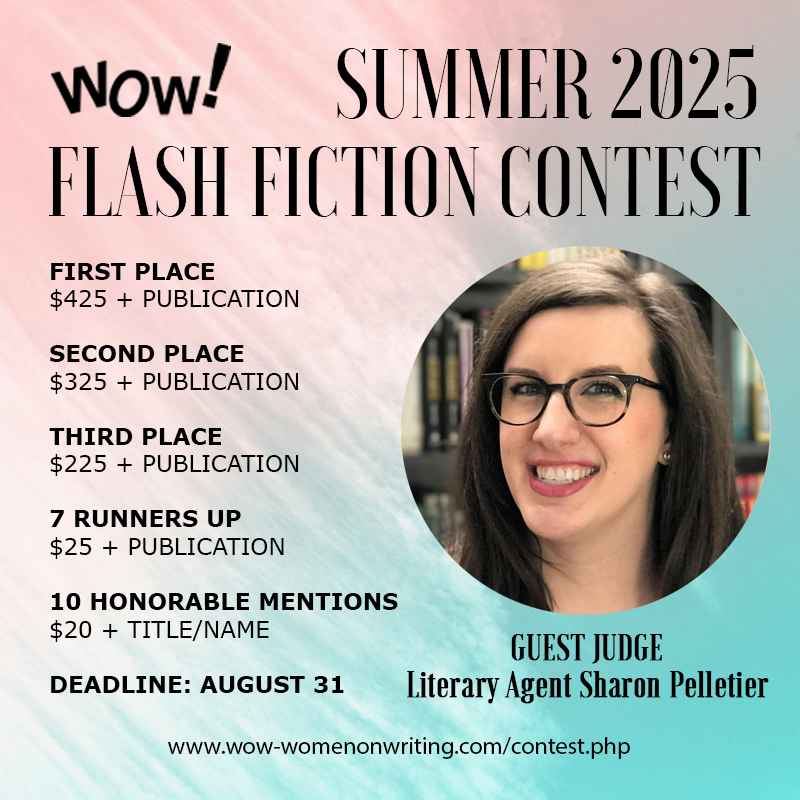
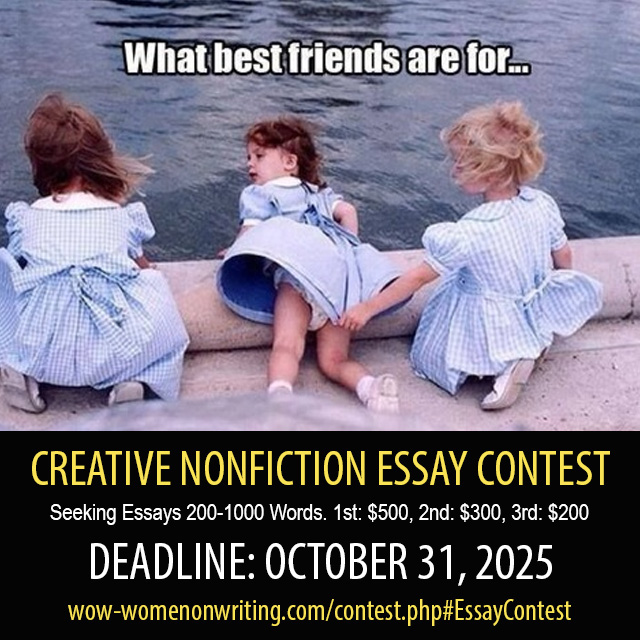
WOW! Women on Writing Quarterly Flash Fiction and Creative Nonfiction Contests
Deadlines: August 31 (fiction) and October 31 (nonfiction). Our favorite writing community offers quarterly contests judged blindly with multiple cash prizes and more for 20 winners, up to $1,350 (fiction) and $1,175 plus a gift certificate to CreateWriteNow (nonfiction), an affordable critique option, and a 300-entry limit on each contest. Previously published work is accepted! What’s not to love? This season's guest judge is Literary Agent Sharon Pelletier with DG&B. Fee: $10 (Flash Fiction) and $12 (Nonfiction).
https://www.wow-womenonwriting.com/contest.php
| | |
September 1st is Ginger Cat Appreciation Day! Honor your furry friend by submitting a mystery story to Cat Stories, a special anthology by Thalia Press of short stories that feature cats. Both cozy and dark stories are strongly encouraged as this anthology will contain stories featuring a variety of tones, including noir. There are no requirements for the plot other than that it be mystery/crime fiction featuring one or more cats as an integral part of the plot. Pay: $25 per piece. No fee. Deadline: September 30.
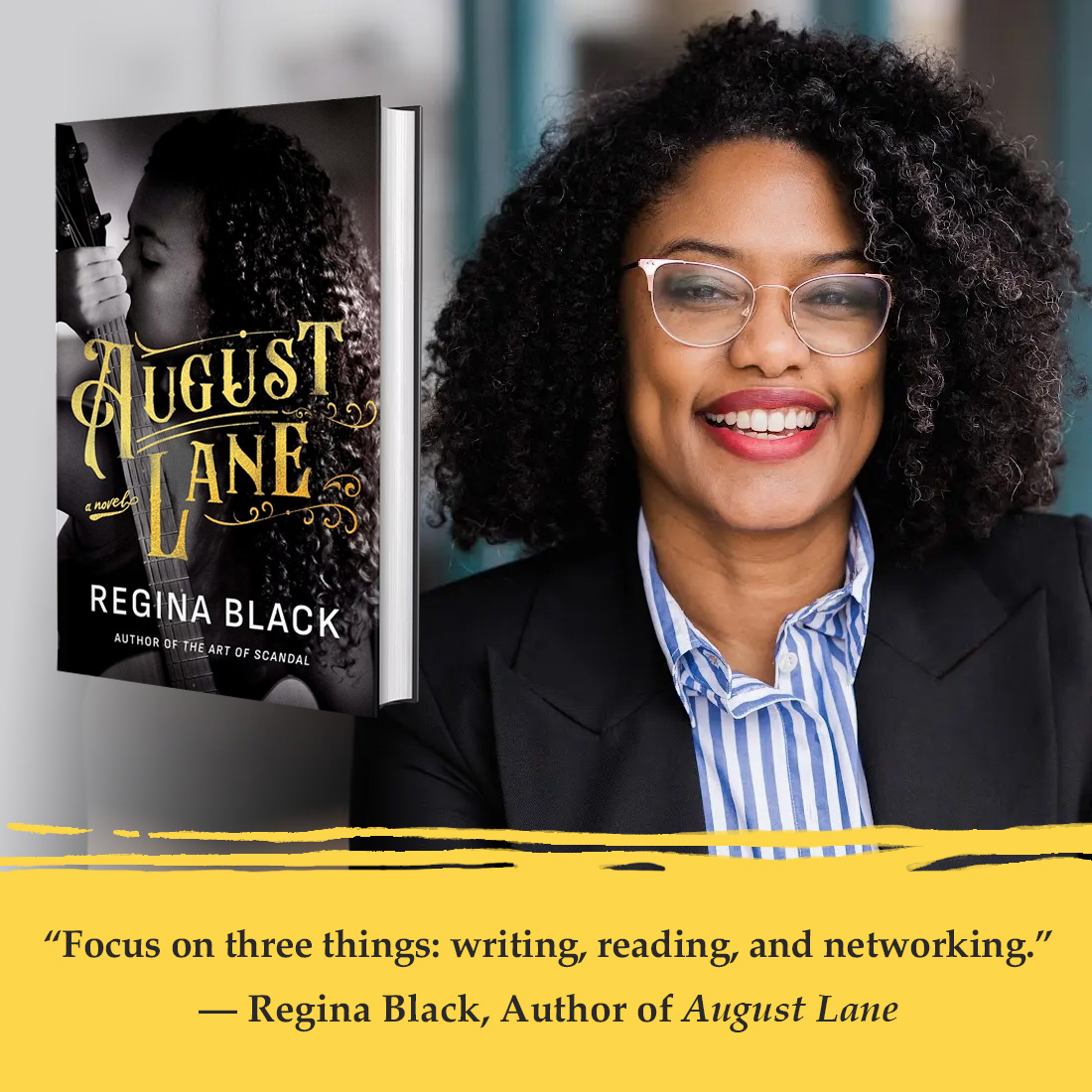
| | In Conversation with Regina Black, Author of August Lane | | |
By Margaret Y. Buapim
Regina Black’s second novel August Lane (Grand Central Publishing, July 29, 2025) is a blistering love story about second chances. It dives into the lives of Luke Randall and August Lane and takes you through a history of Country Music through the eyes of Black Country Singers. But it’s not just for Country Music Fans. There are universal themes developed within the lives of the characters which hook the reader to the very end. WOW was able to catch up with Regina to ask about her latest novel and the writing process.
***
| | |
WOW: How did you get your start in writing?
Regina: I've been writing since I was nine or ten years old. I began with poems and short stories, then wrote my first full novel in 2006. I wrote eleven books before I wrote my debut, but never queried them. I shared them with friends and posted online. My debut, The Art of Scandal, was my twelfth completed manuscript.
WOW: That’s a lot of writing before beginning August Lane. Are you primarily a romance writer?
Regina: Both of my novels are romance, but I've written across genres—contemporary fiction, fantasy, thrillers. Most of what I write has a love story at its heart, though. Romance was my gateway into both reading and writing, and I suspect all of my books will include some sort of love story.
WOW: Romance has a way of pulling us all in. In your acknowledgements, you say August Lane is a second-chance romance inspired by the song "Belinda" by Ben Folds. Can you describe for WOW readers how you developed the main characters?
Regina: "Belinda" gave me the hook for the story. The song is about a man who has to perform his only hit, a song he wrote about a woman he betrayed. That situation stuck with me, and I started thinking about what that would do to a person psychologically. Then I started “what if” brainstorming. What if she's the one who actually wrote the song, and he lied about it? That's how the premise was born.
I develop characters by figuring out what's wrong with them first. What happened in their past that brought them to where they are when the book starts? In romance, I focus on why they're alone and what's keeping them that way. Then I figure out why meeting their love interest matters. What is it about this person, in these circumstances, that inspires them to grow and change? My shorthand for this process is 'why this, why them, why now?'
| | “I develop characters by figuring out what's wrong with them first. What happened in their past that brought them to where they are when the book starts? ... What is it about this person, in these circumstances, that inspires them to grow and change? My shorthand for this process is 'why this, why them, why now?'” | | | |
WOW: When you read August Lane you can see how this writing process plays out fully. Two troubled souls who rescue each other. The story dives deep into country music and overlooked Black country singers, but it also explores alcoholism, family violence, grief, and self-discovery. What kind of research went into making those themes realistic?
Regina: I research extensively for every book. I read about southern history, musician memoirs, books about living with complex PTSD, alcoholism, and grief. I interviewed Black country singers about their experiences in the industry. I took online classes on songwriting and studied music theory. All this was ongoing. I didn't stop researching until I turned in the final draft. Some of the book is drawn from my personal experience. I'm a Black woman who grew up in a small town in Arkansas. I'm a mother. My family has experienced pain and trauma. The book isn’t based on my life, but a big part of writing for me is writing what I know emotionally and writing from a place of empathy.
WOW: Writing from a place of empathy. That’s big. Its palpable. The small town of Arcadia where much of the book plays out is so real but the characters are what make it come to life. How long did it take you to complete August Lane?
Regina: I began writing it in 2021 and completed three drafts before submitting it to my editor in 2024.
WOW: Three drafts? I loved the final product. Pivoting a bit, It seems you have a full schedule daily. What is your writing process?
Regina: I spend considerable time developing a book before I start drafting. I write a logline first to ensure I have a high-concept, easily pitchable idea. Then I draft a longer pitch to ensure all the key elements are present—character, goals, motivation, conflict, and stakes. Next comes character development, which is when research begins in earnest. Once I have a decent idea of who the book is about, I do a broad outline of the story beats. Depending on the complexity of the book, I may start drafting at this point. If it has a lot of moving pieces (like August Lane), I'll create a document that's a cross between a detailed outline and a zero draft. Once that's done, I use it to start drafting the book.
I have a full-time job, so I have to squeeze my writing into the margins of my day. When I'm drafting, I get up every day at 5:30 a.m. to write. My minimum is twenty minutes of uninterrupted writing every day. After twenty minutes, if I have some momentum going, I write more. If not, I stop there. On weekends, I do at least three twenty-minute sprints with the same rule: write more if the words are flowing, but stop if they’re not. This is how I avoid burnout. Eventually, I’ll have a finished book. I try to revise that draft at least once before sending it out for feedback.
| | “My minimum is twenty minutes of uninterrupted writing every day. After twenty minutes, if I have some momentum going, I write more. If not, I stop there. On weekends, I do at least three twenty-minute sprints with the same rule: write more if the words are flowing, but stop if they’re not. This is how I avoid burnout.” | | | |
WOW: So no excuses for our readers, even with a full time job, it can be done! But you are very detailed in your approach. That can lead to nothing but success. I’m sure you’ve learned a lot since the debut of your first novel. What has been the most eye-opening experience since you became a published author?
Regina: How opaque the industry is. It's surprising how little an author knows about what's happening behind the scenes with their own book. Clear communication isn't a priority, which is unusual for an industry that relies so heavily on words.
WOW: That must have taken some adjustment on your part. What advice would you give to an unagented writer trying to get their work published?
Regina: Focus on three things: writing, reading, and networking. Writing is something you should always be trying to improve. I never stop reading craft books and pushing myself to become a better writer. Reading reminds me why I decided to do this in the first place. It keeps me inspired and fills my creative well. Networking is essential because this business is built on relationships. Find friends who will give you honest feedback and remind you of who you are when the business makes you forget.
WOW: That’s great advice to remember especially about honing your skills by reading craft books and networking. Wrapping up, what would you like readers to know about you as a writer?
Regina: I write stories for people who have made mistakes and had to figure out how to forgive themselves and move forward. If you've ever ruined a friendship, broken a heart, or forgotten to pick up your kid from daycare, my books may be for you.
***
| | |
Margaret Buapim is the author of Ring Envy, a Christian fiction adult contemporary novel. She has conducted several interviews for WOW! Women on Writing, including New York Times bestselling author Mary Monroe, author Karen Brown Tyson, author Brittney Morris, and author Denise Williams. Connect with Ms. Buapim online at www.authormyb.com or via Twitter @YBuapim.
| | Craft Corner: How to Write Realistic Characters | | |
By Julie Shackman
Have you ever read a book and decided that the main character was unlikable or annoying?
Or have you finished a novel, knowing that the protagonist has stolen your heart?
Or perhaps you’ve been so frustrated with a character or characters in a book that you couldn’t bear to continue reading it?
I tried to read a contemporary romance last year and couldn’t get beyond the first couple of chapters. I tried to talk myself into continuing with the book, but it was no good. The protagonist was galling—smart-mouthed, aggressive and totally unlikable. Everything she said was vitriolic, and the hero seemed to be her verbal punching bag. He just took it and never answered her back or addressed her attitude. Maybe this happened later in the story, but I’d given up by then!
I think the idea was supposed to be that she was “sassy,” but she just came across as nasty, and she would be the last person I’d ever want to hang out with! Clearly, I couldn’t warm to her at all.
Characters have to be realistic, likable, and relatable, yet possess the same nuances that we do, so that they become individuals in their own right.
Even when you craft a villain for your story, you have to be careful that you don’t create someone who is too stereotypical. If you do, then your reader won’t believe that this baddie exists, and they will doubt the authenticity of the rest of your cast of characters and your story as a whole.
So, what’s the best way to write realistic characters?
| | |
None of us are perfect.
It’s a fact.
We all have imperfections, likes, dislikes, strengths, weaknesses, and foibles. Some of us are impatient (me!), some of us procrastinate (me again!), and some are shy or too talkative.
We have talents and abilities. We also have things that we aren’t quite as proficient in.
Creating a character who also possesses uniqueness and individuality will make them far more realistic and vivid to your reader, and these characters will ultimately pop from the page with life.
Creating a protagonist who is deemed too perfect will make your reader question their authenticity and in turn the authenticity of the other characters and your plot—just like the villain scenario mentioned above. Heroes and heroines will become unattainable and out of reach to your reader. They won’t come across as 3D, which is what writers strive for in their fiction works.
Perhaps your character loves The Rolling Stones and dancing in puddles? Maybe they can be a little too impatient when they are asked to wait for something or have a hatred for New York cheesecake? (I know, but just go with me on this one, I don’t get that either!)
Show, don’t tell, their uniqueness. What they do, how they act, and what they say can illustrate the sort of person they are.
| | |
So, what is the best way to do this? How can you get to know your characters, so that you feel like they are old friends?
As a writer, you should always try to make your characters zing from the pages, and that means getting to know their passions, fears, and dreams.
Some writers undertake “interviews” with their characters, asking them probing questions, so that they can understand their background and motivations. This means that you can essentially get inside the head of your characters. Talk to them, have conversations with them, and tap into their psyche.
You don’t have to talk to them aloud, for fear of people on the bus sitting next to you, changing seats! What you can do instead is write up an interview with them. You pose the questions, they answer, and then you will have far more of a rounded take on your characters and what makes them who they are, why they are, what they want to achieve, and what might be holding them back.
| | Holding Out for a Hero You Want to Meet | | |
One of the most likable charismatic characters I’ve ever read about (and who I fell a little bit in love with) is Jack Wolfe in Hazel Osmond’s contemporary romance, Who’s Afraid of MR Wolfe?
Jack is ambitious, confident, and sexy, but he’s also vulnerable underneath. And this is beautifully illustrated in the book with everything from his body language to his conversations. Once I’d finished reading, Jack, his life, and his sheet presence was imprinted on me long afterwards, and this remains one of my all-time favorite books.
Making your characters touchable, infallible, and relatable is the key to creating someone whom the reader feels they know or desperately wishes they did know!
| | |
We all have insecurities—even your characters.
If you can tap into this reality and show your readers that your characters are just like the rest of us, then you will have the magic combination.
Readers will feel like they know your characters, will want to get to know them and have affinity with them, and readers will also see part of themselves in your characters, too.
Anyone who says they don’t possess particular insecurities is either deluded or telling a lie. You can channel yours while writing and also look at your characters’ concerns or worries. What makes them concerned for their future? What affects their confidence?
| |
In my latest feel-good romance, A Scottish Lighthouse Escape, Rosie Winters, my main character and a romance author, definitely carries some of my characteristics! She’s a dog lover like me. She’s a hopeless romantic (again, like me or at least to begin with…). She’s obsessed with Christmas like me, but she also has a tendency to be a bit impatient (yep, me!).
Hold a mirror to your characters and let them reveal themselves.
| | |
Think of characters like Wolverine, Batman, or The Hulk. They are considered anti-heroes because they are thought to lack conventional heroic attributes, such as idealism and morality.
Some say with anti-heroes, baddies and goodies become less distinguishable from one another, and the lines are ultimately blurred.
However, if you get stuck in a tight spot, I guarantee you, they would come rushing to your rescue!
That is what makes them so appealing and their personalities so realistic; they aren’t perfect, and they don’t try to be. But ultimately, they are on the right side—even if some of their actions could be seen as questionable.
They may have a tragic backstory (Batman’s parents were murdered by The Joker), and this too can be like a mirror, reflecting their decisions and actions. Readers get an insight into why anti-heroes have become who they’ve become, and why they act the way they do. It also gives us insight into their motivations.
Plus, they are attractive and appealing in fiction because they are individuals who don’t prescribe to a specific code of conduct. They want to do the right thing—but under their own terms—and that is what makes them so hard to ignore.
Everybody has a backstory of some kind, which supports how and why they’ve travelled the road that they are on. Weave your character’s backstory into your plot, and this will illustrate why your characters have made the choices that they’ve made. It can also help predict choices they might make in the future and what they intend to do to succeed.
| | |
These beings are your characters. You are breathing life and energy into them whenever you reach for your pen or tap on your keyboard. Craft them so they zing from the page. Make them seem real to you, and that will transfer to the reader.
They will see your characters as living, breathing individuals, and they will become even more invested in the characters and the story—and also you as the storyteller.
Speak to your protagonists. Interview them. Chat with them. Examine them. See them as real people. Put some of your own qualities and insecurities into all your characters. Show how these characteristics have affected them in the past and the decisions they’ve made.
Do this to your fiction, and before you know it, you’ll have a set of realistic characters whom you’ll feel are your friends—and whom your reader will consider as friends, too!
Happy writing, folks!
| | |
Julie Shackman’s new feel-good romance, A Scottish Lighthouse Escape, is out now in e-book, paperback, and audio from the HarperCollins imprint, One More Chapter. Visit her website: julieshackman.co.uk. Connect with her on social media: X @G13Julie, Instagram @juliegeorginashackman, and Facebook @julie.shackman.
| | |
Self-Publishing: Editorial Assistance Required
By Sue Bradford Edwards
Last weekend, my son and his fiancé got married. There was food, dancing, music, and lots of talk. Among other things, I spoke with a new in-law whose daughter is going to start working as an editor. She recently edited her brother’s book. At least she passed on her recommendations. He didn’t do everything she told him to do.
And that’s his prerogative. Even when I’m doing work-for-hire, I don’t make every change suggested by the team of editors. Sometimes I respond to a comment with extra sources that back up my original sources. Other times I see their point, this thing right here needs to be fixed, but I come up with a different fix that I think combines better with the surrounding text.
When you self-publish, it can be tempting to ignore even good suggestions.
READ MORE
| | |
Sometimes You Just Need to Start
By Nicole Pyles
I get a little too caught up in figuring out my processes sometimes. For example, with my podcast booking service, I got overly obsessed with finding the right task app, time tracking app, to-do list app, project management app, you name it. Anything to make me feel more organized, that less was on my plate, and I wasn't so stressed.
It didn't work.
And what I've come to realize is that all of this hunting for the one app that will make my life easier is just wasting time.
READ MORE
| | |
The Transitions of Motherhood
By Renee Roberson
The past few weeks have been an emotional rollercoaster for me. My oldest child headed off for her final year of college this past weekend. Her brother moves into an apartment for his second year of school in just a few days. We were fortunate to have both of them home with us for the summer. Around the end of July, it finally dawned on me that this could be it. Our final summer with the four of us all under the same roof. The tears began to flow steadily.
READ MORE
| | |
What's the Magic Number?
By Jodi Webb
As writers, we spend so much time searching for the magic word needed for a piece of writing. But lately I've been wondering about the magic number—the marketing number. In my prior life in marketing, I talked to plenty of business owners about the Rule of Seven. The Rule of Seven is a theory that the average customer has to have seven contacts with a message before they take action. For writers, the message might be "Buy my book" or "Hire me for my writing services" or "Take my class." On the surface it sounds simple, but how much contact is too much?
READ MORE
| | | | |