WSRA/ WORC 2025 Conference | |
Understanding Food Recyclers | |
|
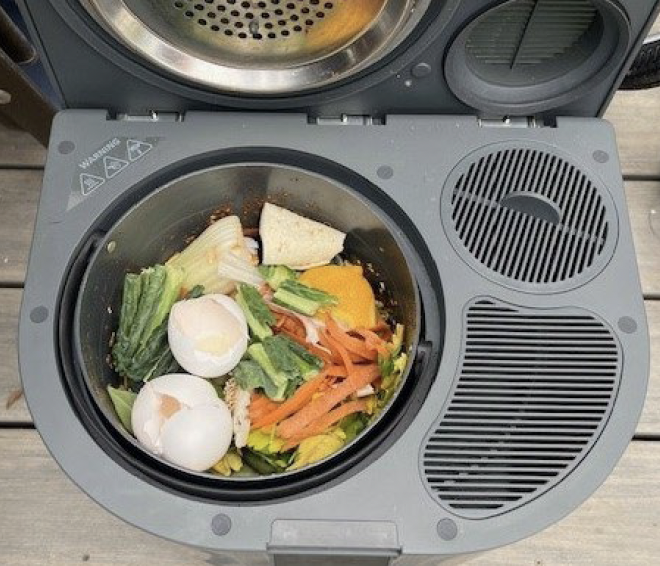
How can food recyclers expand participation in organics recycling, increase awareness of food waste, and help change behavior around food waste separation? Join us to learn how food recyclers work and can be deployed by municipalities as one strategy to reduce food waste going to landfills. Representatives from Food Cycle Science and Mill, two companies working to establish industry standards for this emerging technology, will discuss their research, what happens with the end product, electricity consumption, general benefits, and more! You’ll also hear lessons learned from Mill’s pilot study with the City of Tacoma and Food Cycle Science’s pilot study with King County.
Date: February 13th, 2025
Time: 11:00AM – 12:00PM (PST)
Location: Virtual Meeting
Speakers Include:
- Jessica Taylor, Food Cycle Science’s Director of Implementation
- Scott Smithline, Mill’s Policy Director
- Hilary Leftick, Food Cycle Science’s Interim Vice President, Sustainability and Communications
- Becky Scribner, Mill’s Business Operations
| |
Call for Session Champions | |
|
The WSRA Conference Committee is recruiting volunteers to serve as Session Champions at Conference! This is a terrific way to meet experts in our industry and meaningfully contribute to making our Conference successful.
Champions are responsible for supporting sessions by:
- Coordinating one or two meetings with speakers to connect and create a cohesive session together
- Helping finalize a title and session description
- Serving as moderator if needed (some speakers may have a preferred moderator in mind)
- Supporting miscellaneous logistics to help the session run smoothly before and during the session
| |
|
Back of House: Managing Waste
Between the Bin and Back Door
Webinar presented by Busch Systems
| |
|
Getting people to sort correctly is only the first step in the collection journey. For large institutional, commercial and public buildings, handling waste materials from the point of being discarded to when they’re carted away can be deceptively complex. How the collection system is designed and managed directly impacts operational costs and diversion rates not to mention health and safety.
This webinar will feature presentations reviewing best practices and case study examples for handling separate waste streams and managing custodial staff, as well
Date: Wednesday February 5th, 2025
Time: 1:00PM E.T
Pricing: Free
Featured Speakers:
Waste Reduction and Recycling Program Manager
The Pennsylvania State University
Principal, ThinkWoven
Executive Director, Center for Zero Waste Design
Sustainability & Diversion Advisor
Busch Systems
| |
Join the Washington Department of Ecology at the Organics Regional Summits in Spring 2025! | |
|
Why Attend?
This is your opportunity to connect with Ecology and your regional organics management chain, dive deeper into your region’s management of organics material, and determine next steps for your impacted area.
Who Should Attend?
A representative from county and city solid waste departments, waste service providers, facilities, local health jurisdictions
| |
|
NWPSC Virtual Event
Coffee & Learn Event about HB 1150 and the Recycling Reform Act (EPR for Packaging and Paper Products)
| |
|
Washington State's 69th Legislative Session has just started. One of the major recycling bills is HB 1150, improving Washington's solid waste management outcomes. Sponsored by Rep. Berry, the Recycling Reform Act would create a coordinated, transparent statewide system for residential recycling that is funded by producers through extended producer responsibility (EPR). It would provide residential recycling services across the state, including public places, and expand curbside recycling services to all households with curbside garbage collection. Residents would no longer have to pay for recycling and local governments and other service providers could seek reimbursement for their recycling services.
HB 1150 builds upon last year's version of the bill (the ReWRAP Act) and aligns with the model policy passed in Minnesota last year. One key difference is that local governments and other service providers that want to be part of the program and receive reimbursement would be required to register as a service provider. The bill requires performance targets to be established that will reduce plastic packaging and increase reuse, return, recycling and composting rates. It also requires producers to fund a financial assistance program to support the development of reuse systems. For more on the bill, read this explainer.
| |
|
Date: January 23rd, 2025
Time: 3:00PM - 4:00PM PST
Pricing: Free
| | |
|
Join us for a casual discussion where you can get answers to your questions about how this policy would impact residents, local governments, service providers and producers. If you are wondering about things like…
- How much of the costs of recycling would be covered?
- Will it raise costs for consumers?
- What are the responsibilities for a local government as a service provider?
- How will it help with current challenges like contamination?
...then this is for you!
If you are unable to attend but are interested in learning more about the Recycling Reform Act or EPR, we would be happy to set up a different time to connect! Please contact Adrian Tan at adtan@kingcounty.gov or Hannah Scholes at hscholes@kingcounty.gov.
| | |
|
The Northwest Product Stewardship Council (NWPSC) is a coalition of government agencies in Washington and Oregon working on solid waste, recycling, resource conservation, environmental protection, public health and other issues. Together with non-government agencies, businesses and individuals, we form a network that supports product stewardship and extended producer responsibility (EPR) policies and programs. For more information, contact info@productstewardship.net or visit us at www.ProductStewardship.net. | |
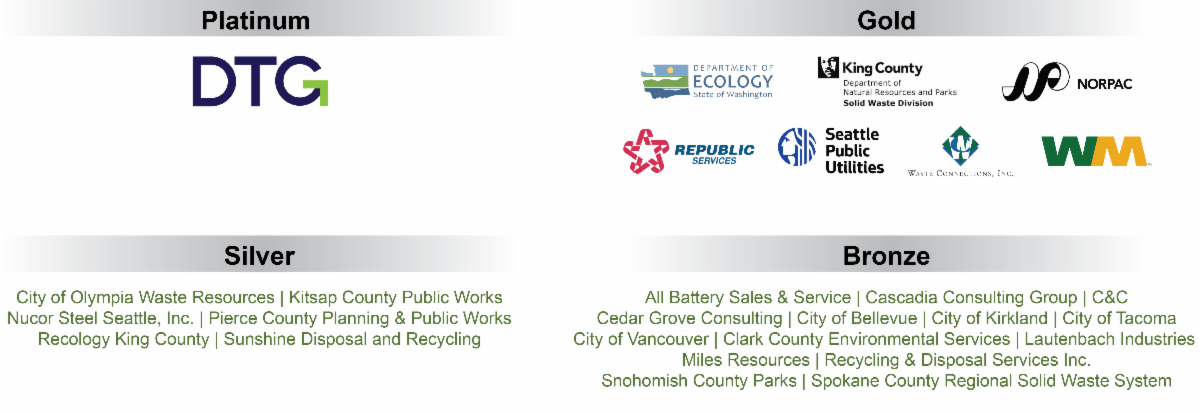
Thank You to Our 2025 Precious Metal Partners | |
WSRA is a 501(c)(6) nonprofit. As such Contributions to section 501(c)(6) organizations are not deductible as charitable contributions on the donor's federal income tax return. They may be deductible as trade or business expenses if ordinary and necessary in the conduct of the taxpayer's business | | | | |