Let’s Clean the Compost Stream 

Keeping compost feedstocks clean is essential for producing high-quality soil products and supporting a sustainable organics recycling system. Across Washington, composters agree that certain materials like glass, high-density plastics and thin film plastics don’t belong in the compost stream.


"Contamination is our number one cost outside of payroll. This is of importance because it is pervasive across the board for other composters and is a drag on the system. It reduces the value of our product. Every percent we can get cleaner has a huge benefit," said Pierce Louis, co-founder of Dirt Hugger, an organics recycling and soil production facility in Dallesport, WA. The facility recently published a short video to highlight what contamination looks like at their site, why it matters and to encourage a unified front in Washington to address contamination.

In This Issue


Let's Clean the Compost Stream


Cascadia Produce Tour


Sustainable Community Stewards Volunteer Training


Compost Regulators Training Survey


Job Opportunity: Solid Waste Management Analyst (“Planner”)


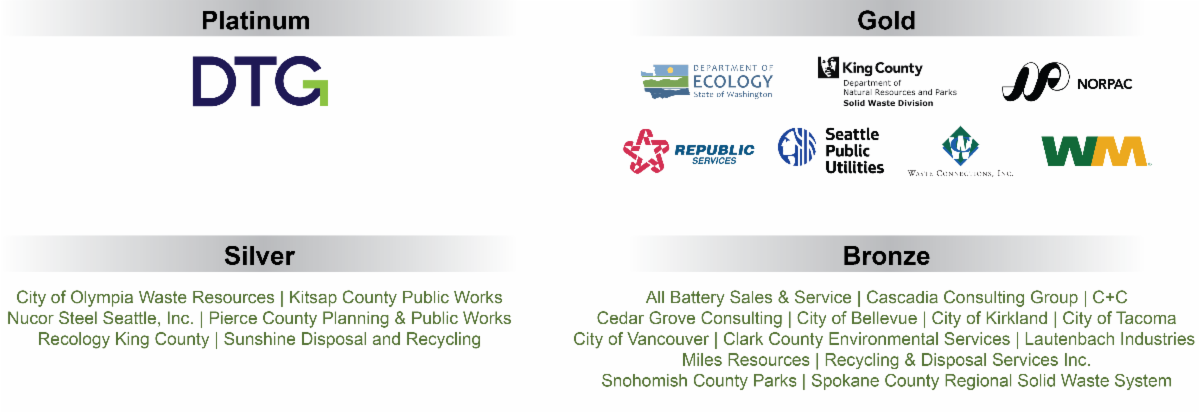
Thank You to Our 2025 Precious Metal Partners

The Washington Department of Ecology has started the rulemaking process to update the state’s Organics Management Rule (WAC 173-350), including a 2% contamination limit on incoming feedstocks at compost facilities, anaerobic digesters and other organics material handling. For many composters, especially small and mid-sized operations, that threshold is key to producing compost that meets quality standards without significant additional processing.


Pierce Louis with Dirt Hugger shared “We are typically getting material that is under that limit [2%] residentially. For us, we felt that this update would give us leverage to push upstream when material comes in too contaminated.”


As these updates move forward, collaboration across the supply chain, from waste generators to haulers to local governments, will be crucial. Everyone has a role to play in keeping compost clean.


Take action: Learn what belongs (and what doesn’t) in your compost bin and help spread the word in your community. Provide your feedback for the Organics Rule Revision Draft Concepts (WAC 173-350) by 11:50pm on August 3, 2025.  


WSRA September Education and Networking Event: Cascadia Produce Tour

Date and time: Wednesday, September 24th from 1-3

Location: 1904 B St NW, Auburn, WA 98001

Limit: 40 people

Fee: No Charge

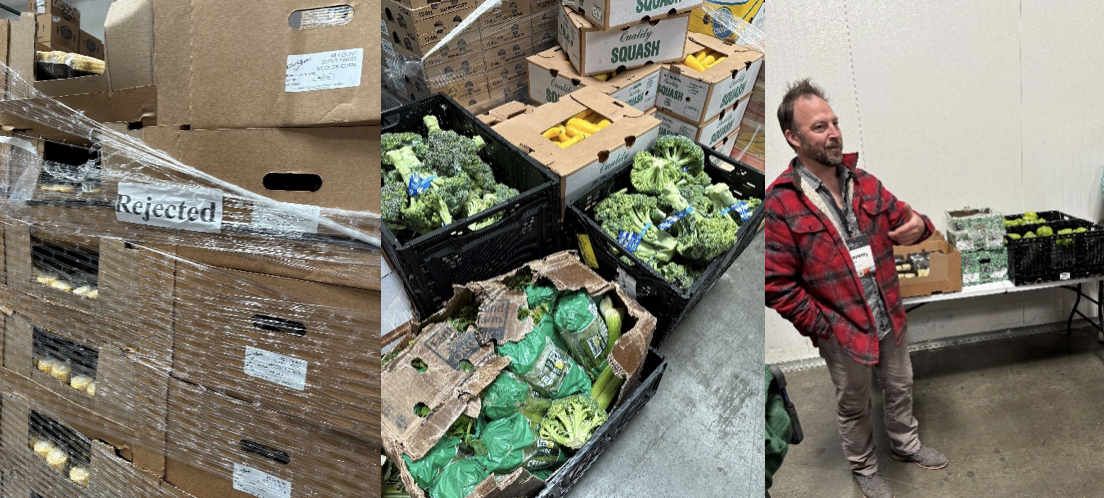
Food waste is a big problem. Join WSRA to learn about some of the solutions! We’ll tour the warehouse space shared by both Cascadia Produce and GoodRoots NW in Auburn and learn how they solve the daily logistics puzzle of making retail rejected and surplus food available in the right quantity and the right place for sales and donation.


Please wear closed-toe shoes, and bring an extra jacket or warm clothing for entering warehouse freezers.

Sustainable Community Stewards Volunteer Training

Date: September 10 (Training Series Runs on Wednesdays) to Nobember 5th

Time: 6:00 pm - 8:30 pm

Fee: $60

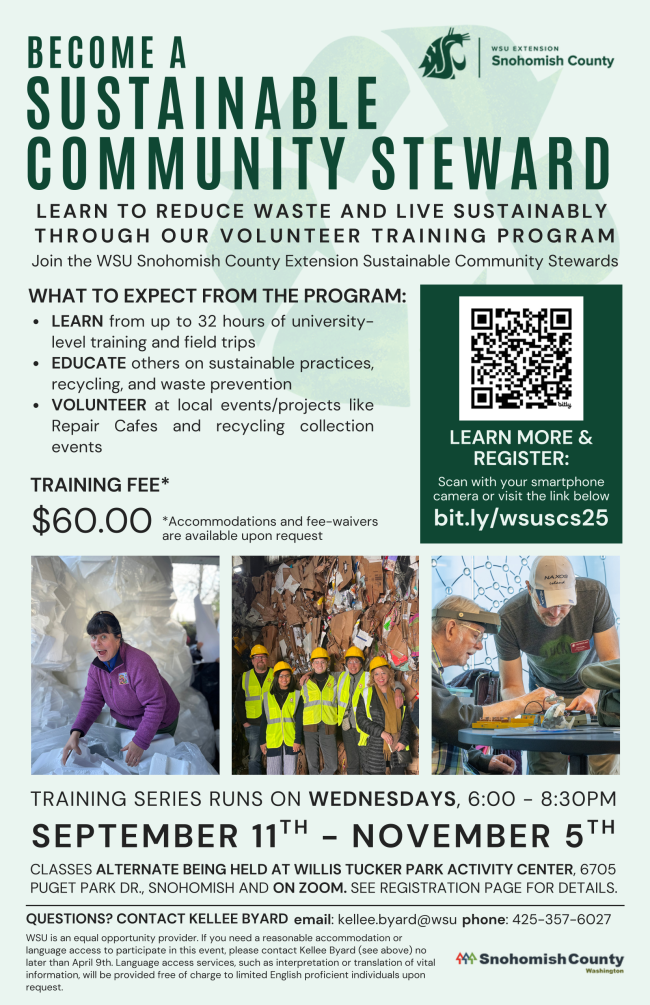
Learn to reduce waste and live sustainably through our volunteer training program.

Join the WSU Snohomish County Extension Sustainable Community Stewards!


What to expect From the Program:

  • LEARN from up to 32 hours of university level training and field trips 
  • EDUCATE others on sustainable practices, recycling, and waste prevention
  • VOLUNTEER at local events/projects like Repair Cafes and recycling collection events


Training Series Runs on Wednesdays, 6:00 - 8:30pm, September 11th to November 5th

Classes alternate being held at Willis Tucker Park Activity Center, 6705

Puget Park Dr., Snohomish and on zoom. See registration page for details.


Compost Regulators Training Survey

We Want to Hear from You!

The Washington Organics Recycling Council (WORC) is developing a composting training program for Washington's regulatory community— and we want your input to help us create a curriculum that meets the needs of WA’s compost facility regulators, inspectors, and technical service providers


Whether you're new to composting regulations or an experienced professional, please take five minutes to share your training priorities. Please forward this survey to colleagues who regulate, inspect, or provide technical assistance for organics management operations.

Solid Waste Management Analyst (“Planner”)

First Review: Aug 13, 2025  


Thank You to Our 2025 Precious Metal Partners

WSRA is a 501(c)(6) nonprofit. As such Contributions to section 501(c)(6) organizations are not deductible as charitable contributions on the donor's federal income tax return. They may be deductible as trade or business expenses if ordinary and necessary in the conduct of the taxpayer's business

Connect with WSRA

Washington State Recycling Association


5727 Baker Way NW, #200 Gig Harbor WA 98332

253-525-5145

Recycle@WSRA.net

wsra.net

Facebook  Youtube  X  Instagram