View as Webpage

Don't want these anymore? Unsubscribe at the bottom.

Hello Climate Creatives,


It's been a minute since I've written because so much is going on! I'm going to try small bites more regularly to keep you up to date.


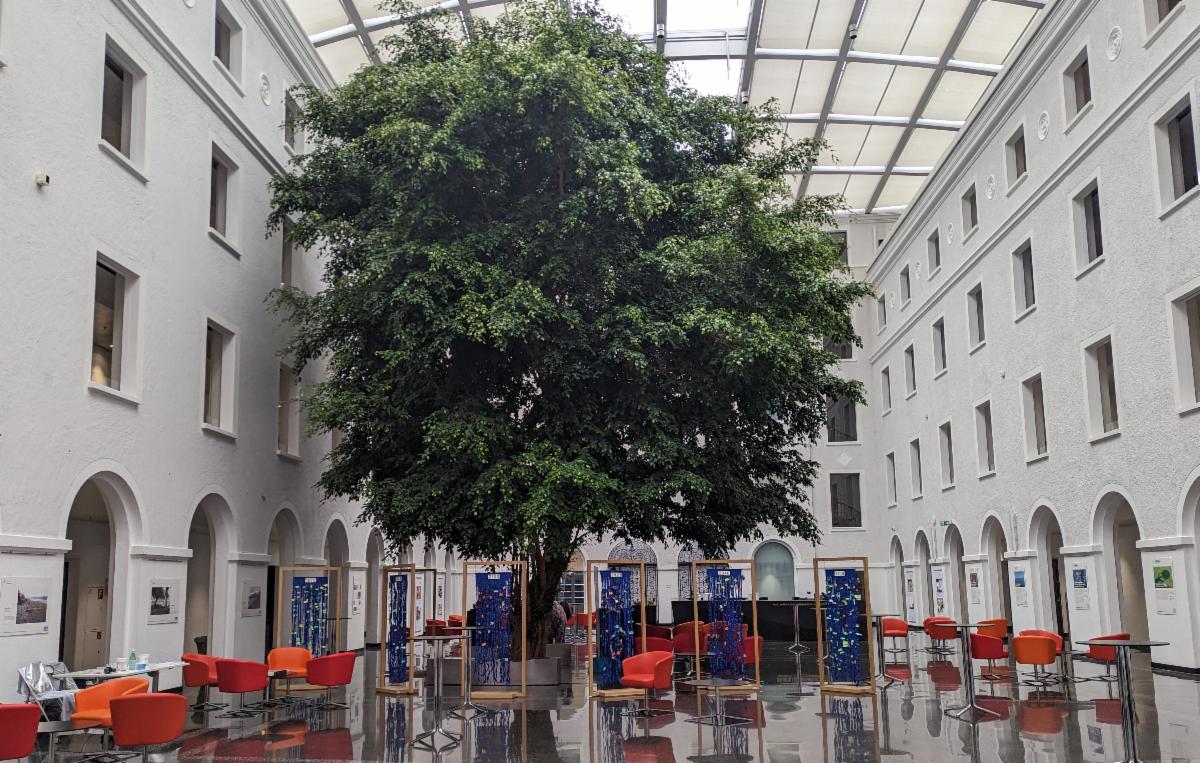
I was in Geneva for the World Trade Organization's Trade and Environment Week, themed Triple Planetary Threat: Pollution, Climate Change, and Biodiversity Loss. As a member of the UN World Oceans Day working group, I also wanted to promote the confluence with UN World Oceans Day (June 8th). The result was Tipping Points, a site-specific installation that tells the story of overfishing, ocean plastics, and the possibility of regeneration.


As it turned out, a fishing conference was just ending when I arrived, so there was significant interest. I always enjoy the causal interactions sparked by curiosity when I'm installing a piece. It feels more spontaneous than after the piece is completed. There was an effort at the WTO to keep the artwork indefinitely, but alas, it didn't happen. Many conversations are continuing from the visit; I'll keep you posted about those and other smelting irons.


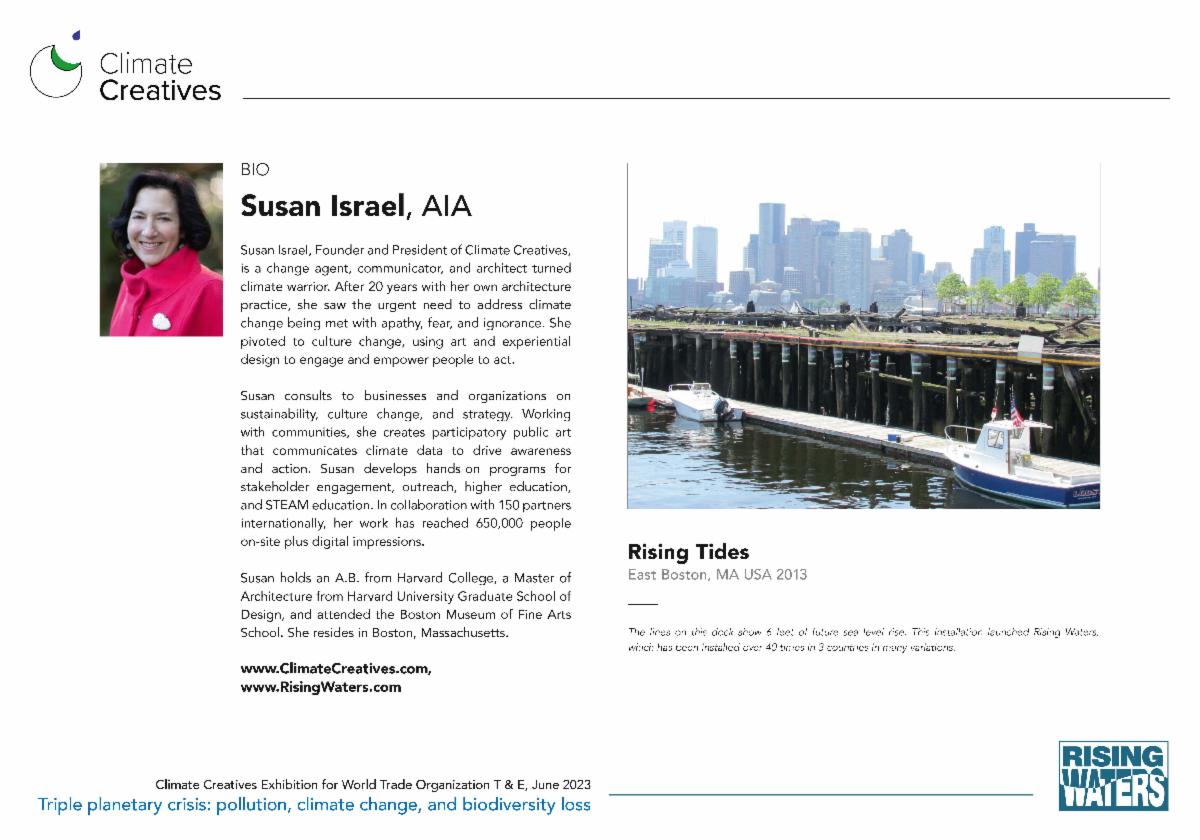
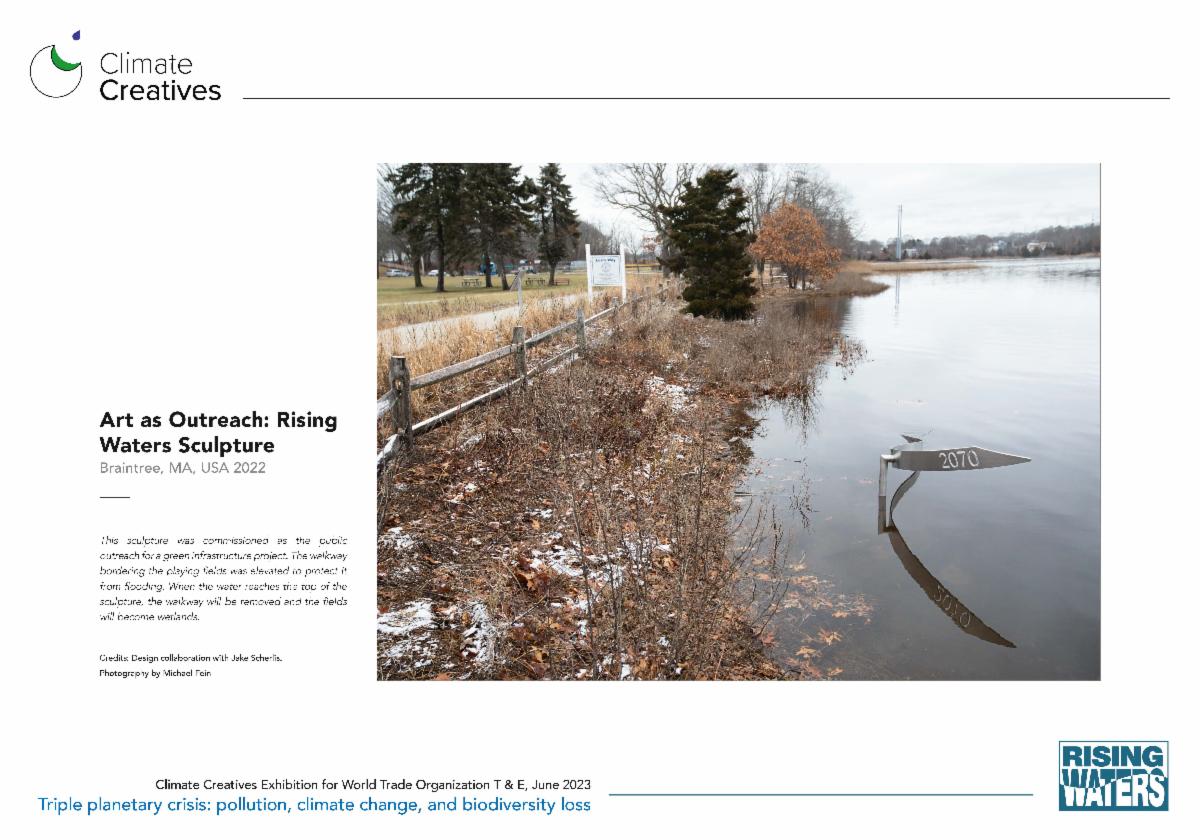
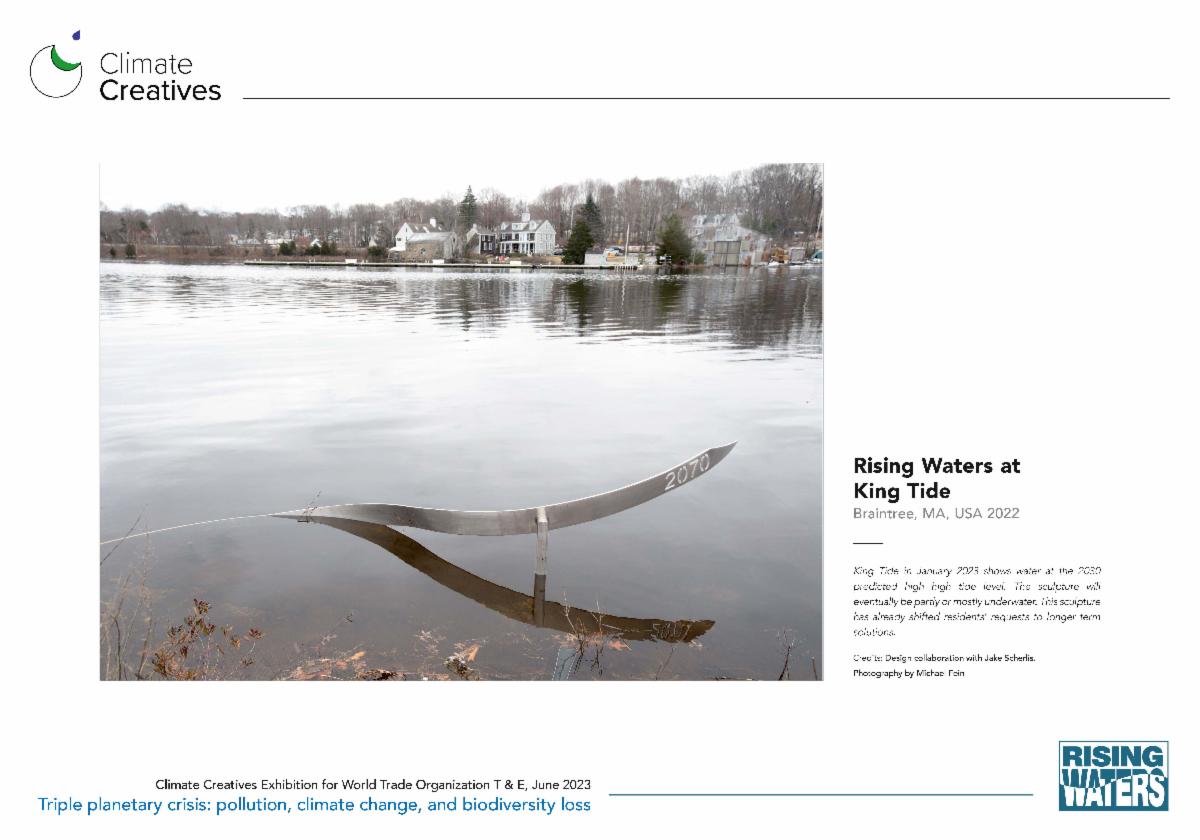
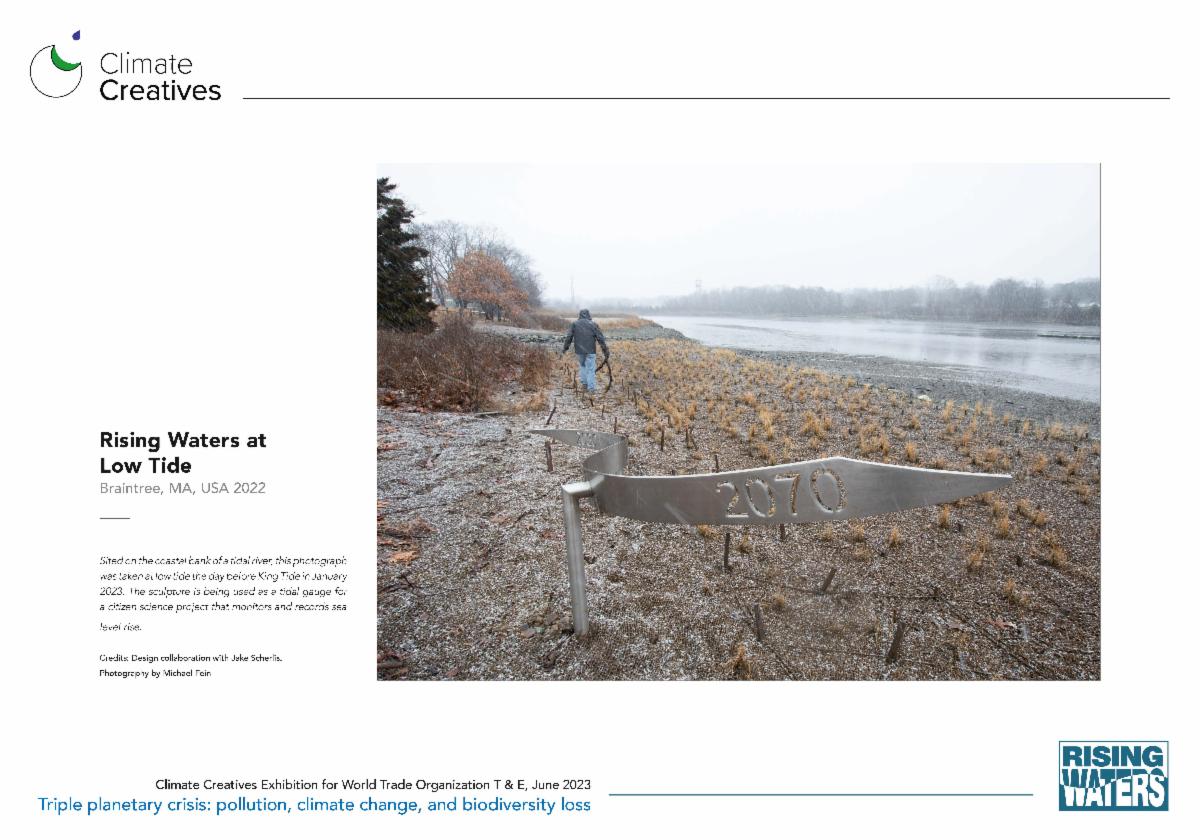
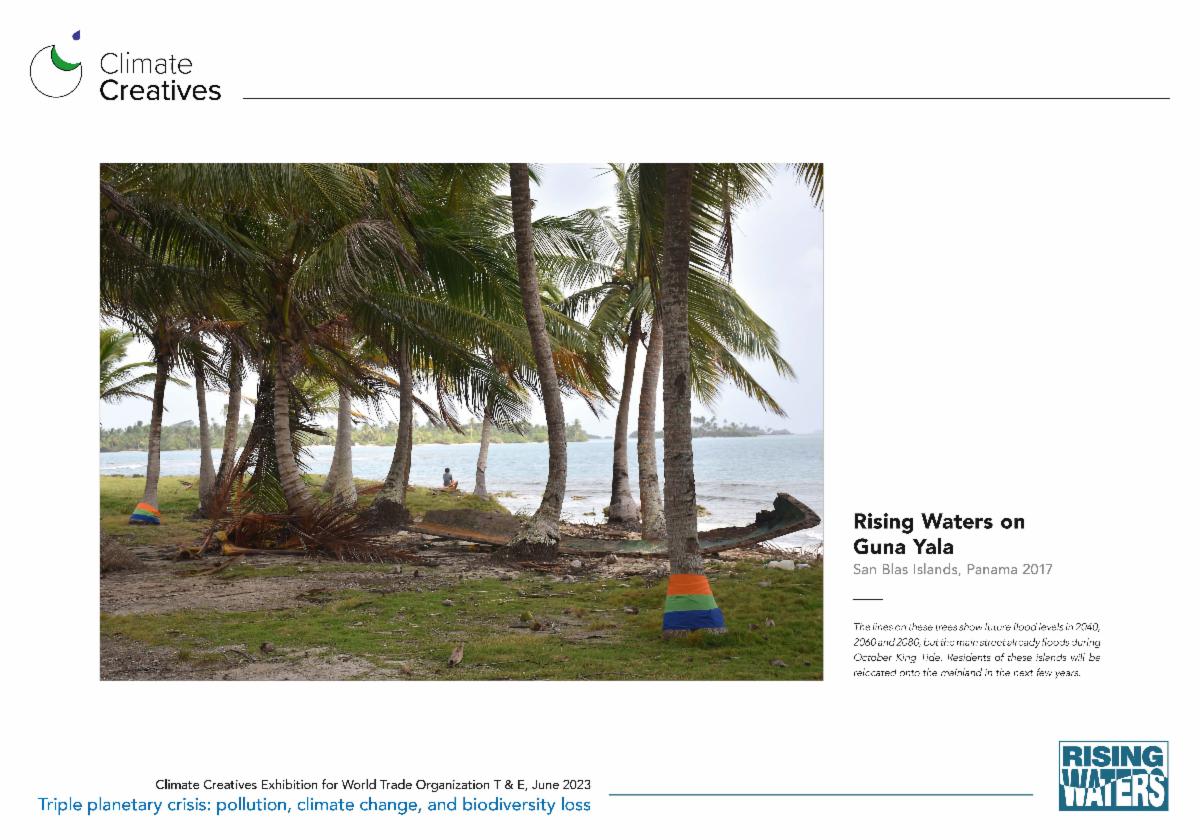
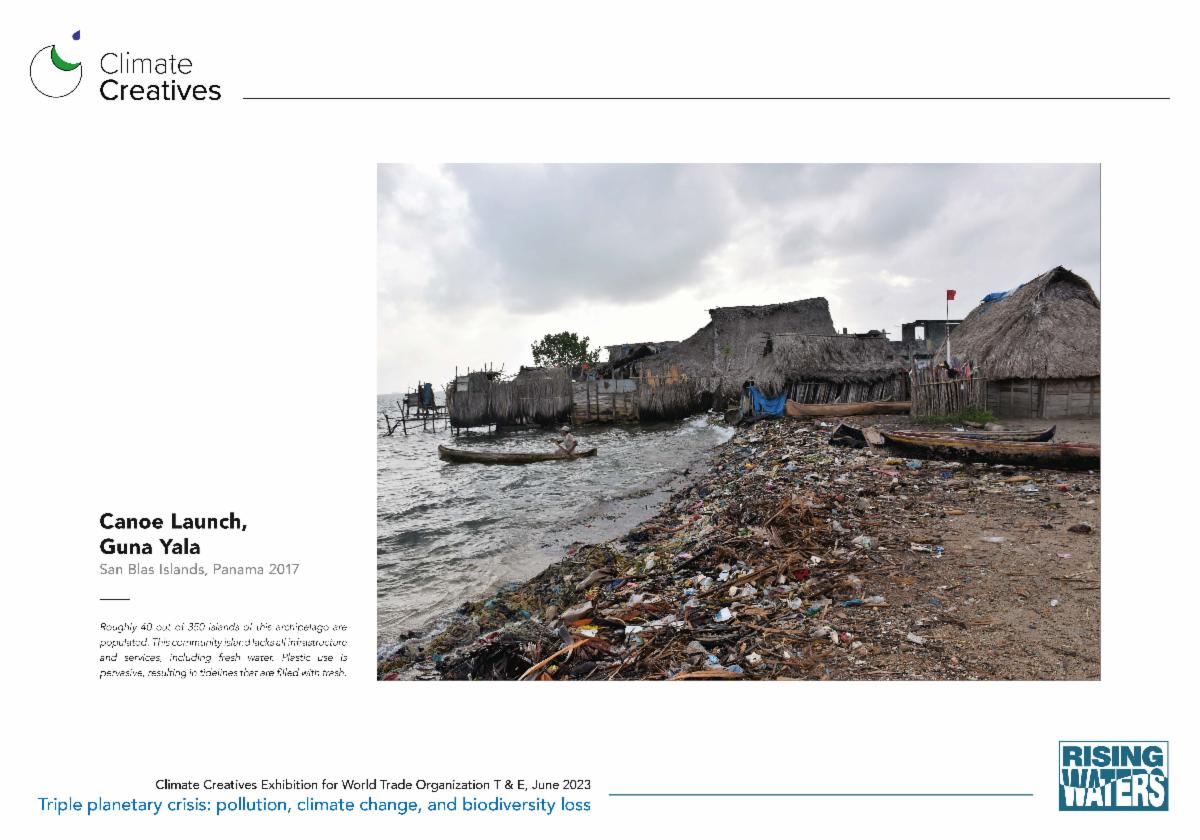
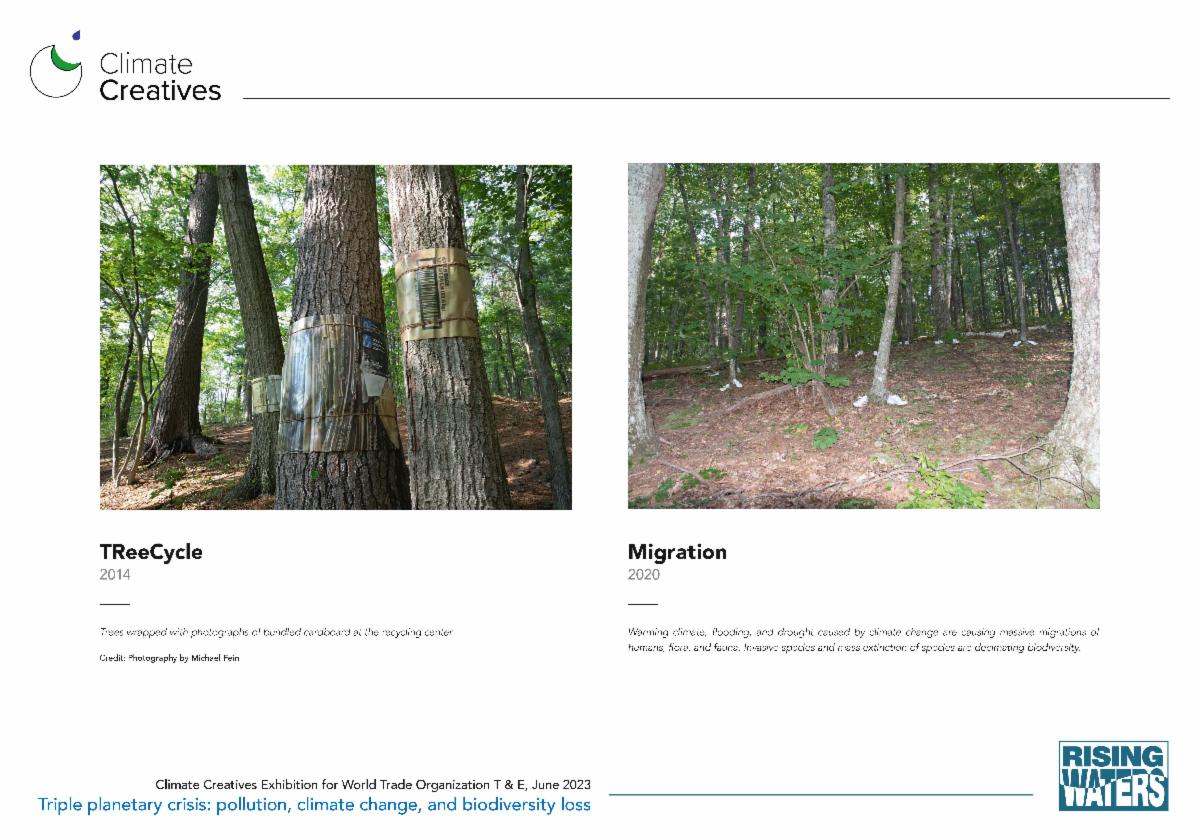
WTO created seven large posters of our work, including Rising Waters, for the exhibition. The posters and Tipping Point artwork are available for loan if you have a conference, lobby, gallery, or office space in need of a compelling climate story. Email or call me and we'll arrange it.


Warm Regards,


Susan Israel, Founder and President

Susan@ClimateCreatives.com, +1 (617)276-2490


Contact us to become a sponsor.

Climate Creatives is a WOSB (Woman-Owned Small Business) and

WBE (Women Business Enterprises)

Tipping Points at the WTO

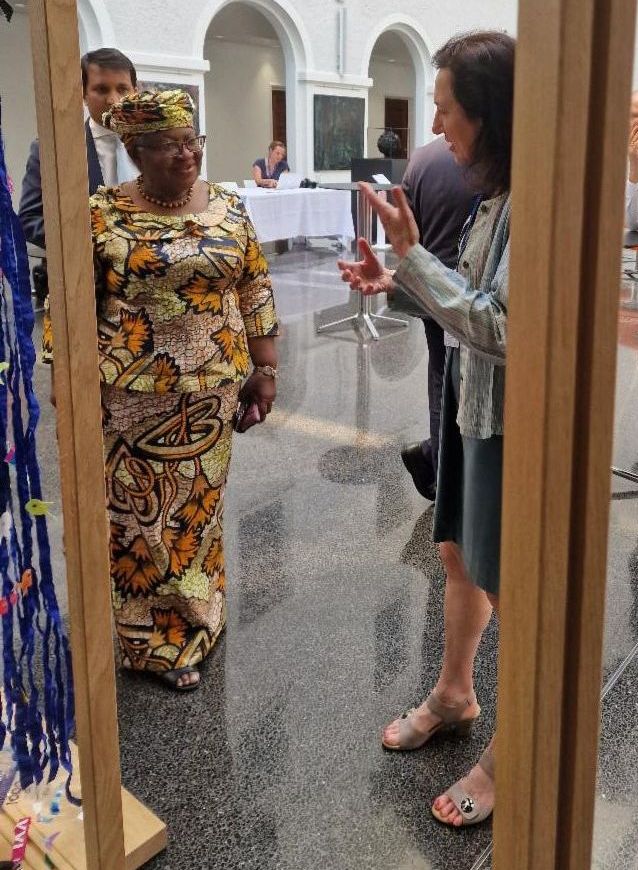
WTO Director-General Ngozi Okonjo-Iweala was quite taken with the installation. We discussed the challenge of building awareness about the great work being done by the WTO for the environment. The Director-General was very interested in how our alternative communication methods could augment her own speaking efforts.

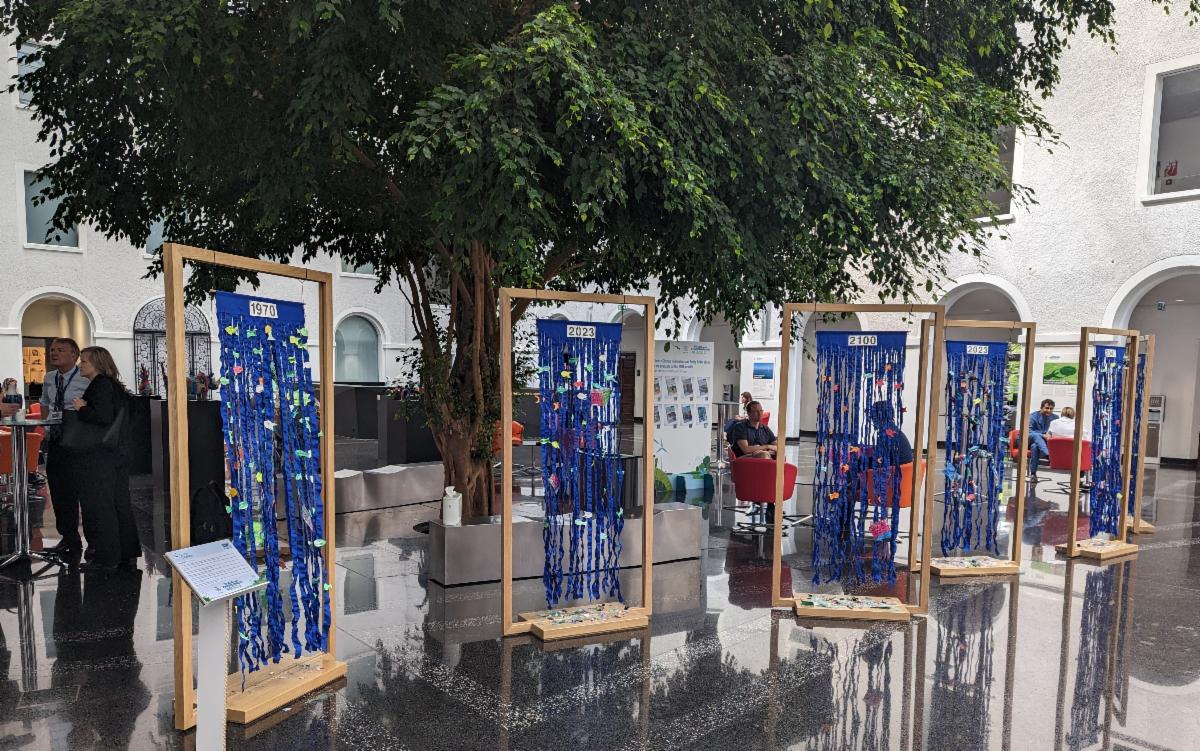
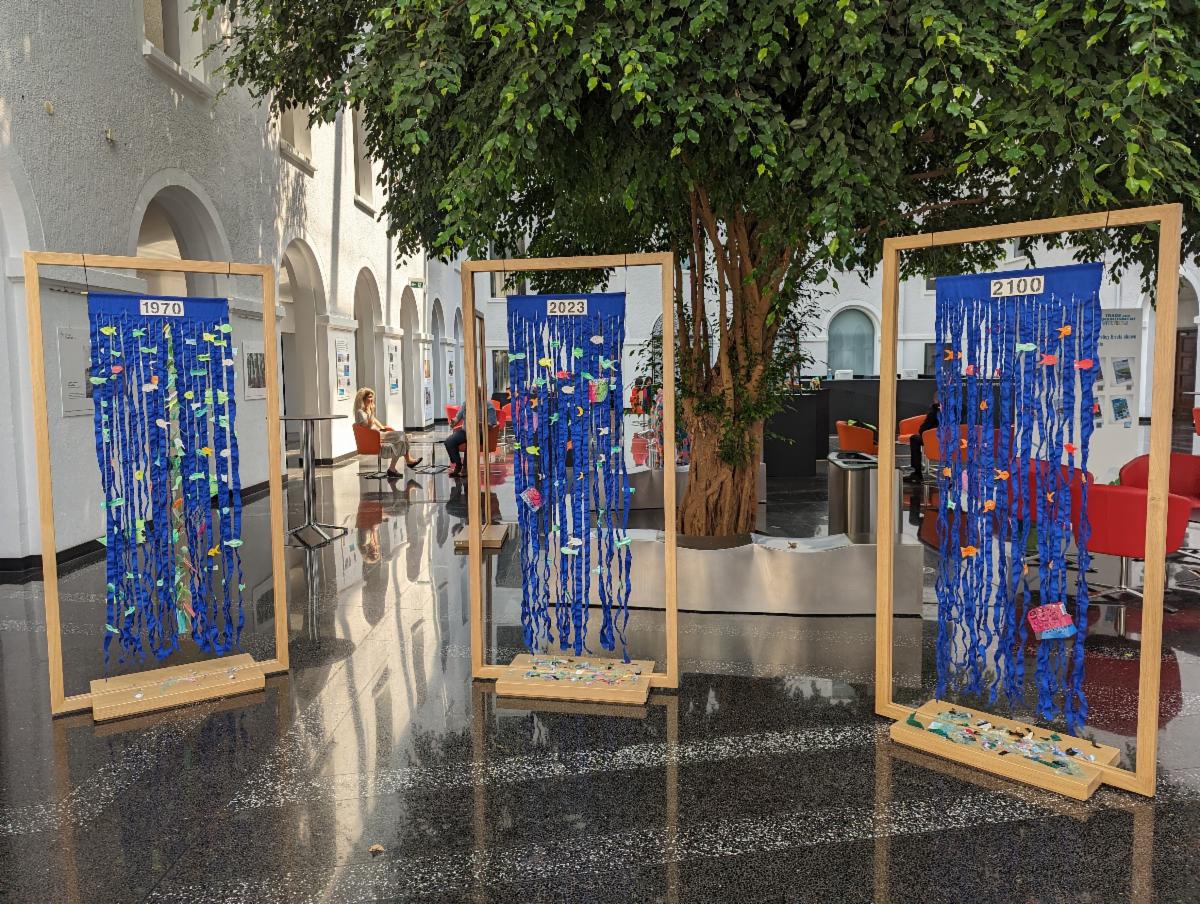
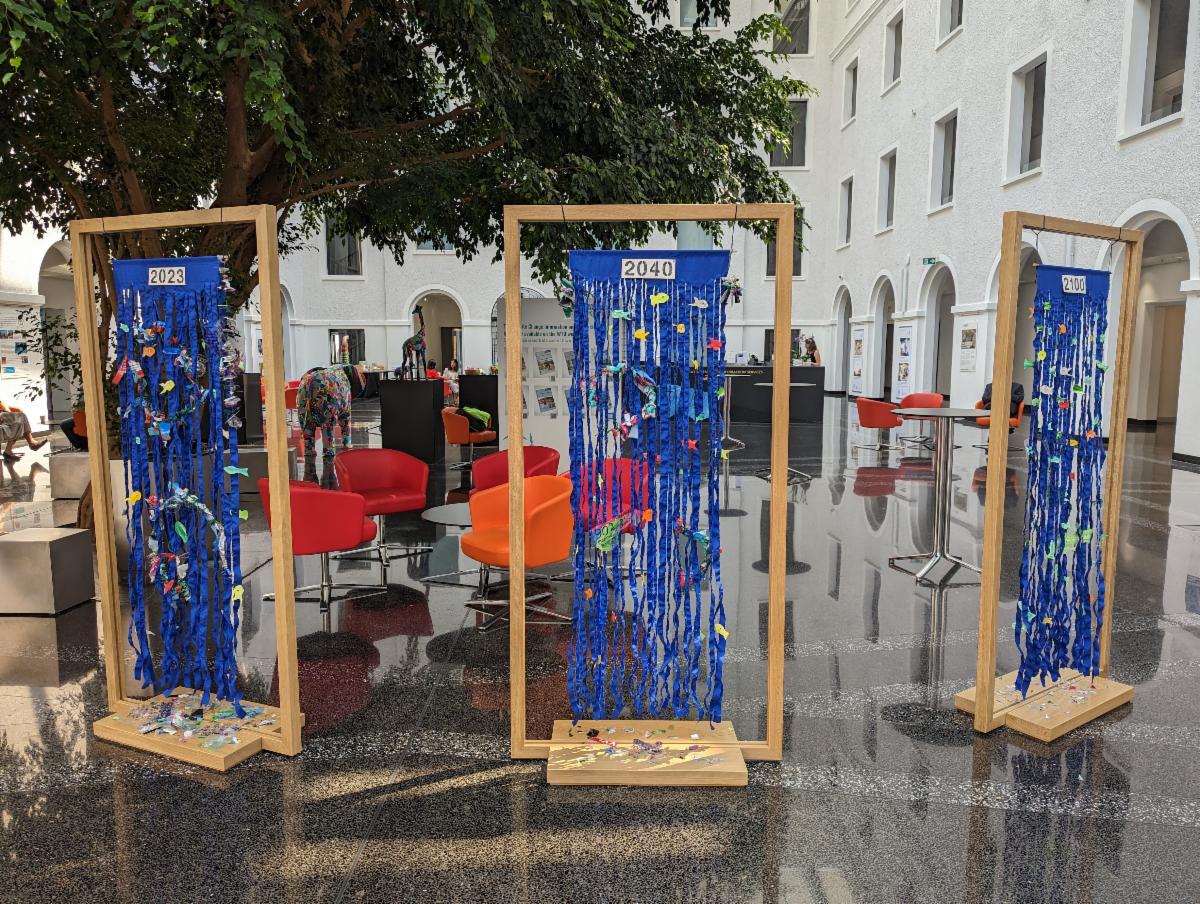
The artwork: Six panels show the impacts that overfishing, plastics, and climate change have had on the biodiversity of fish in two story lines - the path we are on, and the path we could be on.


The two-sided frames were arranged in a wave that encouraged people to flow through. Given the location near the snack bar, there was a steady stream of attendees in search of coffee!

The bad news: The first three panels highlighted the impacts of overfishing on the biodiversity of fish.


1970: Commercial fishing has depleted many marine species by 70% since 1970, and by 90% since 1950. Panel 2 (2023) shows 70% fewer fish than panel 1 (1970).


2023: One third of fish species are endangered or threatened by plastics, pollution, commercial fishing, and climate change. The fish are color-coded to match the IUCN Red List coding system.


Established in 1964, the International Union for Conservation of Nature’s Red List of Threatened Species tracks biodiversity and species loss, and is the world’s most comprehensive information source on the global conservation status of animal, fungi and plant species.


2100: Continuing on our current path of emissions, pollution, and fishing practices will result in 90% of all fish being Critically Endangered (red) or Endangered (orange) by 2100.

The good (and not so good) news: The second set of panels emphasized the impact of plastic on oceans and the work to remove it.


2023: 14 million tons of plastic enter oceans every year. Surprisingly, 80% of the Pacific Ocean Gyres is from the fishing industry, nautical activities, and aquaculture. Ghost nets are an enormous problem. 90% of the remaining plastic waste flows primarily from 1,000 rivers.


2040: The Ocean Cleanup projects that 90% of floating ocean plastics will be removed by 2040 through gyre and river clean-up projects. Microplastics in the water, in fish, wildlife and humans, and on the seabed, still present an enormous challenge. The Ocean Cleanup is an amazing story; I encourage you to look at their website and videos.


2100: Marine life can rebound and rebuild by 2100 if we take immediate action to reduce emissions, manage fishing practices, clean up ocean trash, and prevent plastic pollution.


We will be uploading our data source documents to our website, and will let you know when.

What Can I Do??7

  • Keep advocating for policies that repair the climate and oceans.
  • Use less plastic personally and in your organizations.
  • Reduce plastic use by businesses and products you influence.
  • Purchase and specify sustainable materials.
  • Inform your friends and colleagues.
  • Eat sustainably raised fish.
  • If you must use plastic, reuse it as much as possible.
  • Support ocean advocacy organizations.

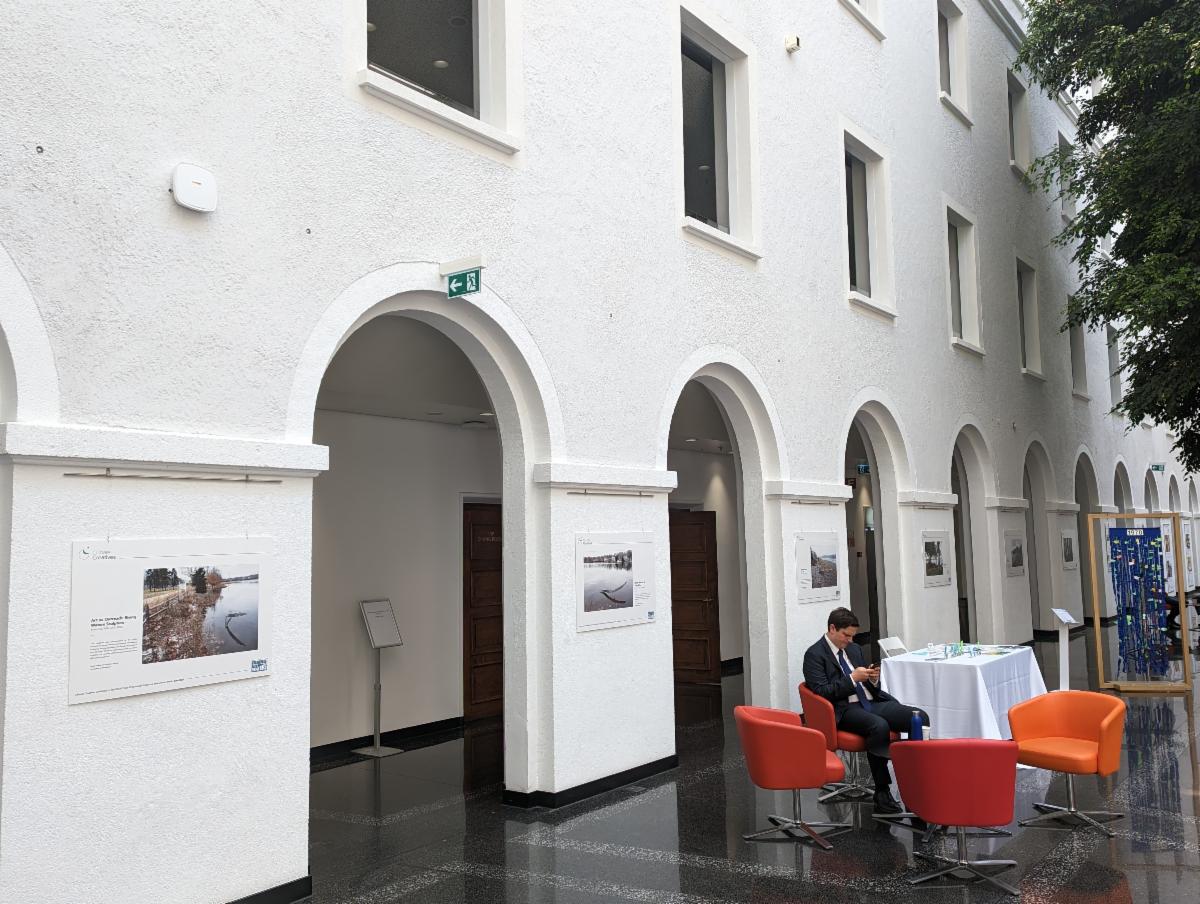
Climate Creatives Poster Exhibit at the WTO

Seven posters showing our work lined the atrium arcade.

To exhibit these posters, contact us.

Visit our profile on Fractured Atlas to make a donation.


Contact us to sponsor a specific project or community

Climate Creatives is a sponsored project of Fractured Atlas, a non-profit arts service organization. Contributions for the charitable purposes of Climate Creatives must be made payable to "Fractured Atlas" only and are tax-deductible to the extent permitted by law.
Visit Our Website
Send us your thoughts

I'd love to hear from you!

Email me or visit us at:

ClimateCreatives.com

RisingWaters.org

QuarantineQuilts.org.


Susan Israel, AIA, LEED AP

Founder & President

photo by Michael Fein

Facebook  Twitter  Linkedin  Instagram