Wednesday, October 21, 2026

FEDERAL NEWS

Trump Administration Announces $8 Billion Harvest Fuel Relief Program


On October 19, President Donald Trump and U.S. Secretary of Agriculture Brooke Rollins announced $8 billion in one-time payments to help American farmers offset temporary market disruptions and increased input costs during the 2026 harvest season.


The new Harvest Fuel Relief (HFR) program will be administered by USDA's Farm Service Agency (FSA) and funded through the Commodity Credit Corporation (CCC). Similar to the Farmer Bridge Assistance program, payments will be calculated using a uniform formula based on reported planted acres, production costs, yields, and commodity prices.


USDA expects to release payment rates for Title I commodities in November, with additional details for other eligible commodities to follow. Specialty crop growers and other non-Title I producers are encouraged to submit information on increased fuel costs to HarvestFuel@usda.gov for consideration in determining payment rates.


Producers are also encouraged to establish a Login.gov account linked to USDA ahead of the application period to access pre-filled applications online. Additional information on eligibility, payment rates and application timelines will be announced by USDA.


STATE NEWS

Western United Dairies Works Alongside Dairy Cares in Lawsuit to Protect California Dairies


Dairy Cares, with financial support from the California Dairy Environmental Justice Fund, has spearheaded a lawsuit aimed at overturning a portion of the state’s recently adopted dairy order. The challenge is aimed at a critical issue involving when and how Central Valley dairies can expand their herds in the future. Dairy Cares was joined by Milk Producers Council, California Farm Bureau, Western United Dairies, and California Dairy Campaign as petitioners.


On September 15, the State Water Resources Control Board adopted a new order and regulatory framework for Central Valley dairies. The order outlines a roadmap for reducing nitrate impacts from dairy farms via setting progressively more stringent manure and nitrogen application limits, while also addressing impacts from unlined manure lagoons.


The order requires the Central Valley Regional Water Board to prepare a new Waste

Discharge Requirements General Order for Central Valley Dairies (replacing the version

that was last issued in 2013) within five years, while also taking shorter-term actions. At the same time, the State Board will oversee a process to develop interim and final discharge and application limits for dairies.


The lawsuit, filed in Tulare County Superior Court, centers on when those still-to-be-

developed final discharge and application limits should apply to dairies that expand in the future. Dairies that participate in the Nitrate Control Program (that is, who are members of

a Nitrate Management Zone and contribute to well-testing and drinking water program) will have up to 35 years to meet the coming limits.


However, the newly adopted order says that any dairy expanding its herd after 2031 must

meet the final limits immediately. This is problematic for several reasons:

  • The final limits are still unknown, and so it is unclear whether any dairy can meet them, even a well-designed state-of-the-art dairy, in just five years. Additional yet- to-be-determined advances in manure treatment, manure products and markets, irrigation systems, precision application, automation, remote sensors, crop breeding and other advancements may be needed to meet final limits, many of which are unlikely to be fully determined and available in only five years.
  • Central Valley dairies have participated in good faith in the Nitrate Control Program – funding drinking water programs in their local areas – with the understanding that this would allow for extended compliance timelines up to 35 years. The finding by the State Water Board that final limits must be met in five years by expanding dairies is not consistent with previous orders or based on evidence that a shorter timeline is reasonable or practicable, contrary to the requirements of the Nitrate Control Program.


Western United Dairies members should reach out to Paul Sousa at 209-556-2490 or paul@wudairies with questions. For all other questions or comments, please contact dairycares@gmail.com.


ICYMI: WUD to Present LandFlex Proposal at Upcoming DWR Workshop


Western United Dairies (WUD) will participate in an upcoming California Department of Water Resources (DWR) public workshop to present proposed concepts for a new LandFlex-style program. The proposal builds on the success of the original LandFlex program and seeks to expand opportunities for farmers to participate in groundwater conservation efforts through Proposition 4 funding. Paul Sousa and WUD members will provide verbal comments during the workshop to highlight the importance of supporting farmers, protecting drinking water resources, and advancing long-term groundwater sustainability.


Workshop Details:

Date: Thursday, November 5, 2026

Time: 1:30 – 3:30 p.m. PST

Location: Virtual only (Zoom)

Registration: Click here to register for the November 5 DWR virtual workshop.


Opportunity to Submit Written Comments

WUD encourages members to participate in the public comment process. Members interested in submitting written comments can request template letters from WUD to assist with their submissions. Written comments must be emailed directly to DWR at FinancialAssistance@water.ca.gov.


ASSOCIATION NEWS

New on Seen & Herd: Navigating California's Changing Dairy Regulations


From water quality requirements to methane regulations, California dairy producers have plenty to keep an eye on. In the latest episode of Seen & Herd, WUD Interim CEO Paul Sousa breaks down recent regulatory developments, including the State Water Board's Remand Order, CV-SALTS implementation, CARB's dairy methane regulations, and upcoming compliance requirements.


Paul also shares updates on North Coast groundwater work plans, carcass composting regulations, and Dairy Plus funding, along with what producers should prepare for as these programs move forward.


MARKET UPDATE

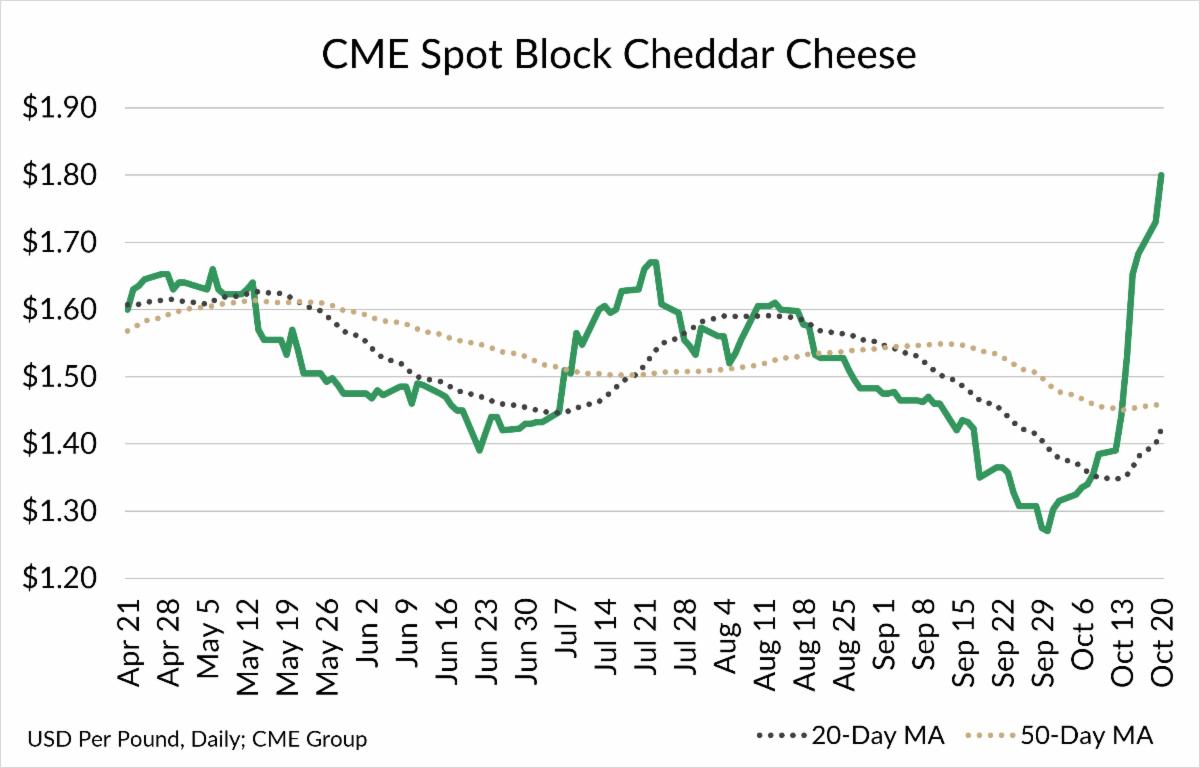
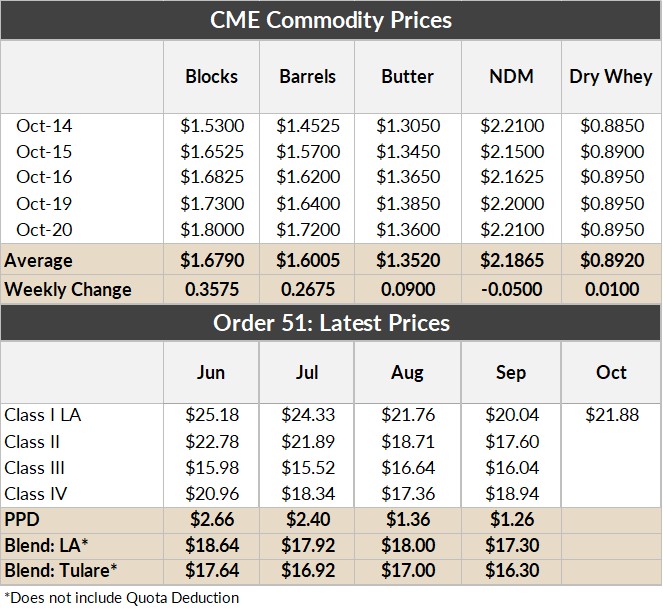
Spot blocks have been active the past few weeks as chatter around supply disruptions and plant downtime spurred new buying interest. After dropping to the mid-$1.20s, the market rebounded sharply, shooting up more than 30 cents in one week. CME blocks now sit at $1.80 per pound, the highest level since October 2025.

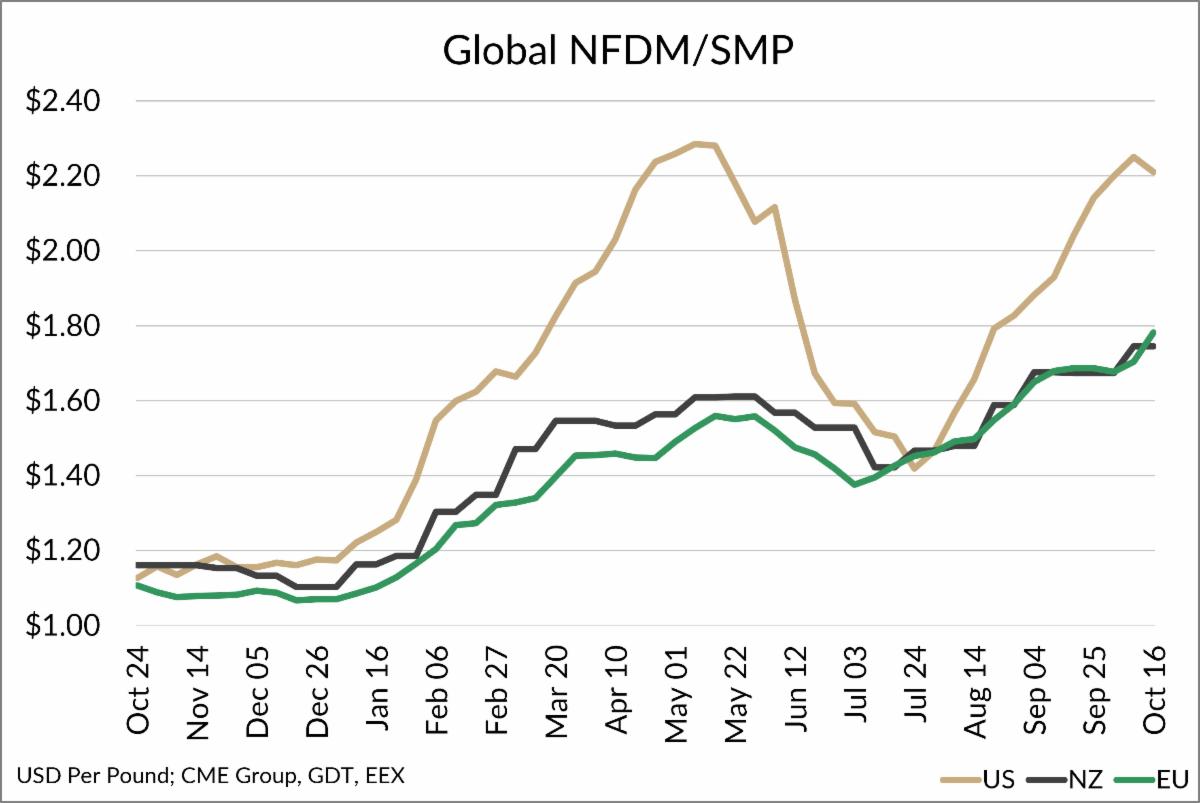
  • Spot nonfat dry milk continued to approach record-high territory, only to run out of steam and slip back. The decline didn’t last long, though, and the price has resumed its climb to the low-$2.20s. Milk powder availability varies widely by region, with supplies reportedly growing in the West but extremely tight in the East.


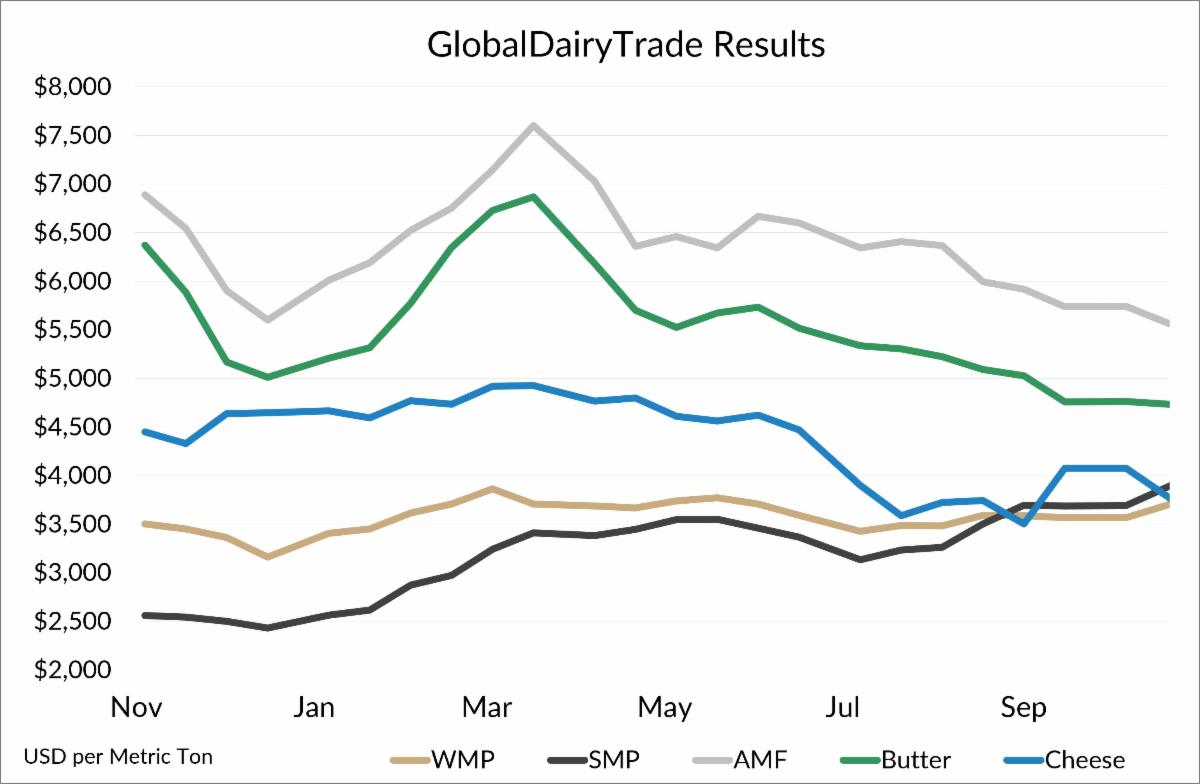
  • Milk powder prices climbed again at this week’s Global Dairy Trade auction, with skim milk powder up 3.3% to $1.80 per pound and whole milk powder 4.3% higher to $1.71. Meanwhile, cheddar tumbled 7.1% to $1.65 per pound, and butter eased 0.4% to $2.14 per pound. This puts US cheese and nonfat at a competitive disadvantage.


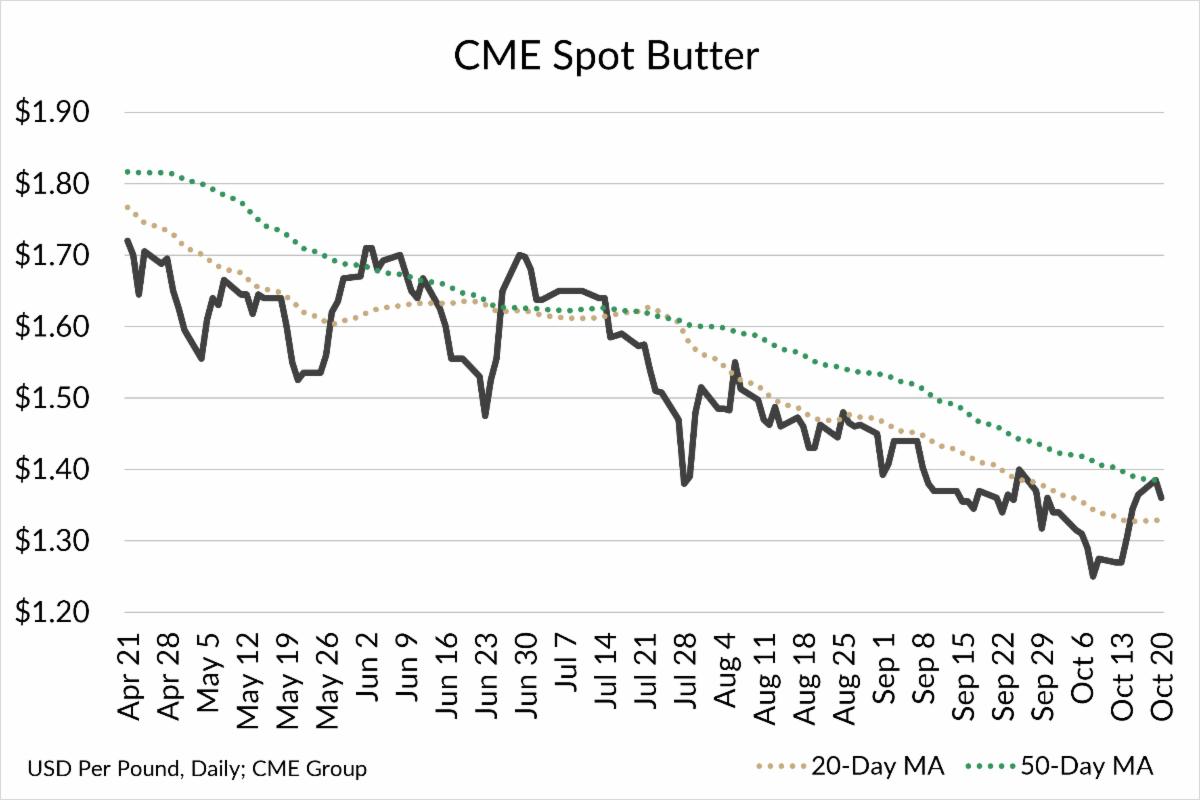
  • The CME butter market found enough support to rally off five-year lows and return to the upper-$1.30s. That’s still historically low for this time of year as the biggest demand season approaches. Reports suggest retail demand is still strong, but bulk supplies are heavy enough to weigh on the market.
  • Protein demand doesn’t appear to be slowing, and that, combined with some production issues, drove the spot dry whey market to record levels. The spot price reached a new all-time high of $0.8950 per pound late last week.


  • USDA will release its September Milk Production report on Thursday, with expectations for a 1.6% year-over-year increase. The September Cold Storage report follows on Friday.


  • The ripple effects of USDA’s October WASDE report continue to impact grain markets. That report included a surprising increase in corn yield projections, sending prices sliding sharply lower. The soybean market also softened amid strong yield expectations.


THANK YOU TO OUR CURRENT SPONSORS


Facebook  Instagram  LinkedIn  Web