Wednesday, February 25, 2026 | | What the Tariff? A Debrief on What We Know So Far | |
After the Supreme Court struck down President Trump’s emergency tariffs on Friday, the administration moved quickly to roll out a backup plan. Here’s where things stand right now.
What Happened
- The Supreme Court ruled Friday that the administration could not rely on emergency powers to impose certain tariffs.
- Within hours, the administration announced a new 15% global tariff that is set to take effect Tuesday.
- The White House is signaling it may launch new trade investigations that could justify additional tariffs in the future.
Tariffs are not going away. However, the legal path and long-term structure are still uncertain.
What About Refunds?
- The Supreme Court did not specify how tariff refunds should be handled.
- It is unclear whether the administration will create a refund program.
- Treasury Secretary Scott Bessent said lower courts will likely decide whether refunds are required and how they would work.
Businesses that paid under the previous tariffs are still waiting for clarity.
International Fall-Out
The new 15% global tariff changes the landscape for several countries.
-
United Kingdom: Previously secured a 10% rate. The new 15% represents an increase.
-
India: Negotiators are reportedly postponing a U.S. trip aimed at finalizing a trade deal.
-
European Union: A key parliamentary vote on implementing the EU-U.S. deal is scheduled, but some lawmakers are calling for a delay, citing tariff chaos.
- U.S. trade officials say no country has formally walked away from agreements, but responses are still unfolding.
What about China?
- Chinese exports had been subject to a 20% emergency tariff.
- The new 15% global tariff effectively lowers that rate.
- It remains unclear whether China will adjust its tariffs on U.S. goods in response.
How long will the 15% tariffs last?
- The authority used to impose the 15% tariff only allows it to stand for 150 days unless Congress approves an extension.
- The administration could let it expire.
- It could ask Congress to extend it.
- It could withdraw the proclamation and issue a new one.
What happens after the 150-day window remains unclear.
The Big Picture
- Tariff policy is still evolving.
- Legal uncertainty remains.
- International reactions are ongoing.
- Congress may step in or may not.
Businesses and agricultural exporters may not have a clear picture of the 2026 trade landscape for several weeks or months.
| | | Population changes may cause dairy consumption shifts | |
Published in Agri-Pulse
The dairy industry will likely see some shifts in consumption patterns it will need to adapt to in the years ahead, particularly as consumers age, Terrain economist Ben Laine said at USDA's Ag Outlook Forum on Friday.
Laine said that once consumers reach about 40 or 41 years old, demand for dairy begins to “level off a little bit.” He said the dairy industry should start looking beyond cheesy pizza crusts and dipping sauces toward other products like higher-protein lattes and fancier cheeses to meet shifts in demand, in addition to foreign markets.
He said that over the next several years, "it's going to be much more about balancing these things and adjusting to these realities and optimizing component production, rather than just sheer growth that we've seen over the last 20 years."
The dairy report says that after strong growth in herd sizes and milk supply along with a steady decline in milk prices, cows in milk production are expected to fall in 2025, ending the year with 35,000 fewer compared to the end of 2024.
This year, milk production per cow is expected to grow by less than 1%. But the herd size is expected to be higher than 2025’s.
“The combined effect of the larger herd and higher milk per cow supports milk production in 2026 growing at a forecast annual rate of 1.3%,” USDA’s dairy report says. In addition, milk component levels “are expected to continue to grow and augment the growth in milk production.”
USDA expects milk prices to be lower on average in 2026 compared to 2025.
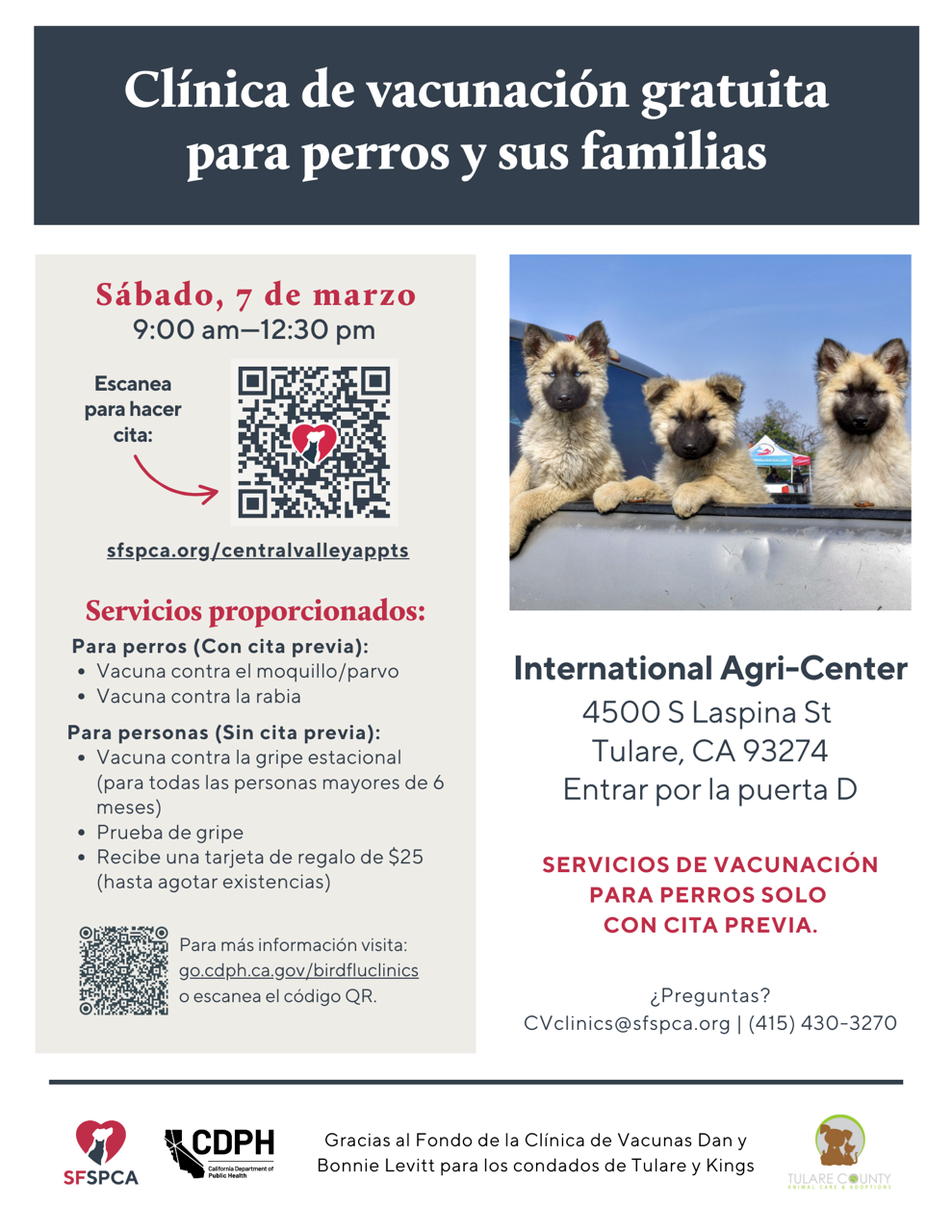
| | | Free Flu Vaccines, Testing & $25 Gift Cards Available Near You | The California Department of Public Health is hosting free seasonal flu vaccine and testing clinics in multiple counties this February and March. Seasonal flu vaccines are available to anyone 6 months and older who has not yet received one this flu season, and free Flu, COVID-19, and Bird Flu testing will also be offered. Individuals who receive a flu vaccine will receive a $25 gift card, and free flu treatment services are available for adults 18+. Vaccines help keep employees healthy, reduce missed work, and protect families and co-workers. We encourage you to share these flyers with your employees. | | | FREE Pets & People Clinic in Tulare on March 7th | | | March 24 - California Dairy Sustainability Summit | |
The 2026 California Dairy Sustainability Summit will be held on Tuesday, March 24, at the Visalia Convention Center. Dairy farmers, industry leaders, and policymakers will gather for a full day focused on water, regulatory challenges, and practical strategies to strengthen both economic and environmental sustainability on California dairies.
Attendees will hear the latest on water policy, nitrogen management, methane reduction, animal health, and emerging technologies, along with broader insights on consumer trends, human health, and the future of dairy in a changing food system. Registration for dairy farmers is $50 and includes all sessions, meals, and the closing reception. The Summit is co-hosted by Dairy Cares, California Dairy Research Foundation, California Milk Advisory Board, California Dairy Quality Assurance Program, and the Dairy Council of California.
| | | Need 2026 Labor Law Supplies? Order Today | |
WUD members can now request their 2026 labor law posters, along with other essential labor-compliance materials, through our updated online order form. Each member is entitled to one complimentary set of 2026 posters or a spiral-bound labor-law book. Additional posters, books, timecards, and discipline books are also available for purchase.
Staying current with state and federal posting requirements is critical, and this annual update ensures your dairy has everything required for compliance in 2026. Simply fill out the online form with your contact and dairy information, select the supplies you need, and submit.
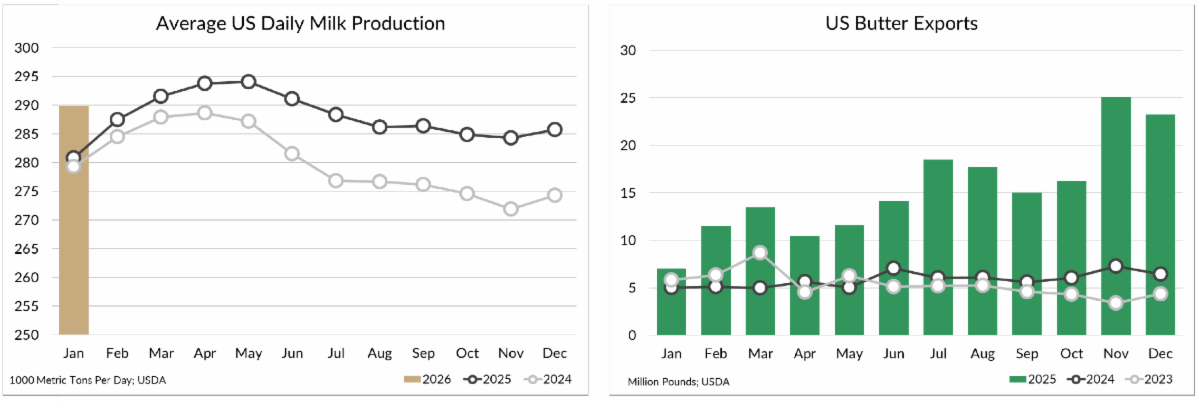
| | | US milk output totaled 19.8 billion pounds in January, up 3.2% on the year. While that was below expectations, it was the largest January output in at least 25 years. California’s production, up 4.7%, was the largest regional gain, but also below pre-report predictions. | |
- The US dairy herd reached 9.580 million head in January, up 14,000 cows compared to December and +189,000 on the year. That puts the herd at the largest level since 1993. Culling rates are up slightly on the year, but below the five-year average, indicating producers are still holding onto cows.
- US dairy exports closed out 2025 on a strong note. Outbound cheese volume shot up 24.0% versus 2024. It was also a banner year for butter, with exports up 256.3% in December. Nonfat dry milk and skim milk powder exports were up 18.0% on the year in December.
- USDA announced its intention to buy dairy products under the Section 32 program. Details around the purchase were sparse, with only dollar amounts assigned to categories. Impact to the market will all depend on timing — how many months will the purchase spread across?
| |  |
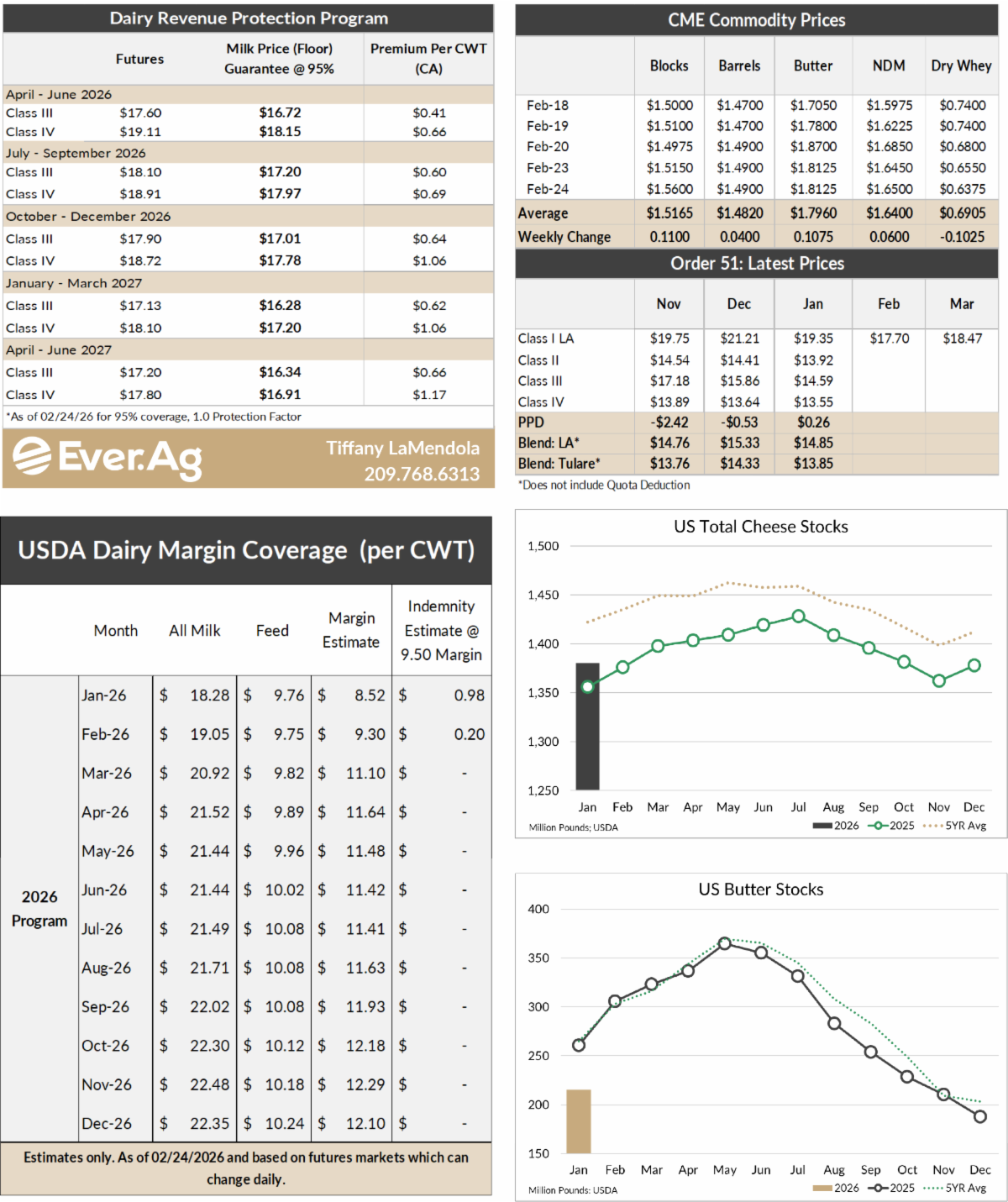
- According to USDA’s January Cold Storage report, total US cheese stocks grew below the five-year average rate. Butter stocks also increased month-over-month at a below-average pace, while dropping more than 17% on the year.
- Export data and the USDA announcement lit a fire under spot butter, which surged to the upper-$1.80s for the first time since September. Prices cooled slightly to the low-$1.80s. Trading volume remains heavy.
- The CME nonfat dry milk market remains in the mid-$1.60s, but forward-looking futures levels are much lower. Reports suggest sup-plies are loosening a bit. Contacts suggest Mexico may be looking to the EU to source product at competitive prices.
| | THANK YOU TO OUR CURRENT SPONSORS | | | |
Our Company | Contact Us | FAQs | Privacy Policy |
| | | |