WVP header logo 2.jpg
 

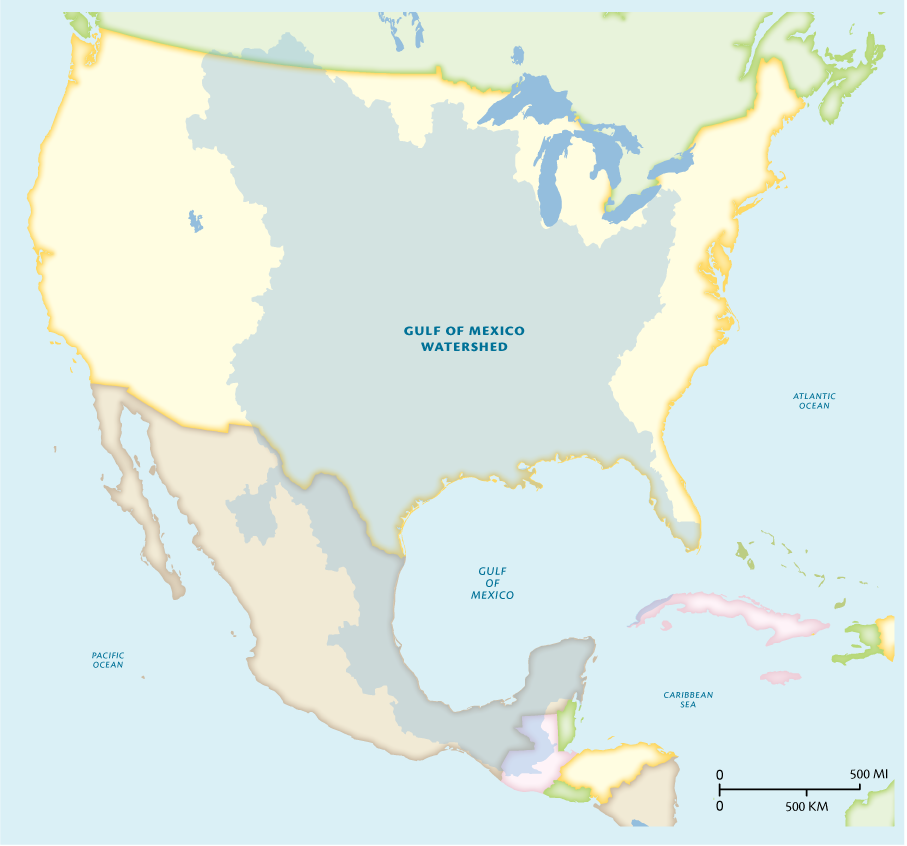
Gulf of Mexico Watershed

[Image credit: https://ian.umces.edu/media-library/gulf-of-mexico-watershed/]

What's in a Name?


Sometime in the middle of the 16th century, Spanish map makers started assigning the name El Golfo de México to the body of water cradled by the North American portion of New Spain. The Viceroyalty of New Spain spanned vast portions of the globe and its capital was Cuidad de México (Mexico City), a city originally named Tenochtitlán that was the seat of the Mexica people. As was the custom of the day during the Age of Discovery, the map makers assigned many waterbodies with the name of the destination that the mariners were sailing to. The last leg of a Spanish Galleon's journey to the new world passed through the Gulf of Mexico. These sort of naming conventions were the rule during this era, a product of European exploration and colonialism. The Irish Sea led to Ireland, the Indian Ocean to India. Even the English Channel was named by the Dutch and due to superior map making, the name stuck. Prior to this many cultures' naming traditions were connected to their mythology. In many parts of the world this persisted. The Mexica didn't refer to the oceans surrounding their land by distinct names, they saw it as the place where the water and sky met. They were more concerned with surface water and groundwater, focused on how they sustained their livelihoods. The capital of their empire was situated on an engineered island in the center of Lake Texcoco and they built extensive causeways and canals. They were more concerned with the watersheds that led to the gulf than the gulf itself.


The watershed that drains into the Gulf of Mexico Basin is enormous. It covers five countries: Canada, Mexico, Cuba, Guatemala and the United States where 31 states contribute to its waters. Since watersheds are all about movement, they're typically named for the destinations that they reach. Whether someone wants to call it one name in one country or a different name in another, the water still drains the same way. Overall, changing a geographic name is more of a bureaucratic and logistical challenge rather than a scientific one but it can touch many aspects of science:


Data and Publication Adjustments:

Scientific literature, databases, and maps would need updates to reflect the new name. This could incur costs and require significant effort from publishers and researchers to ensure accuracy and consistency across scientific publications.


International Collaboration and Communication:

International scientific communities may face initial confusion or miscommunication due to the name change. This could affect collaborative research projects temporarily until the new name is universally adopted in scientific circles.


Historical Research and Continuity:

Historical data sets and research studies would need clarification or cross-referencing to ensure continuity and understanding in ongoing and future studies.


Environmental and Ecological Studies:

The name change would not directly affect ecological or environmental studies, but it may require updates in documentation and possibly affect funding or attention if it sparks political or public interest.


Educational Material Revisions:

Educational content, including textbooks and online resources, would need revisions to incorporate the new name, affecting teaching and learning materials.


Our local watershed won't be changing its name anytime soon but no matter what it's called, it's the history that was written on the land by water before we built out our region and all the edits that we've made to that topographic story. We've channelized it, culverted it, dammed it and completely buried it but the water still has one destination, Lake Erie and eventually the Atlantic where it will meet the water from the Gulf and every other raindrop that falls east of the Great Continental Divide.  


Let's not forget where we're going. 


Sara Corrigan 

WVP Coordinator 


Watershed Spotlight

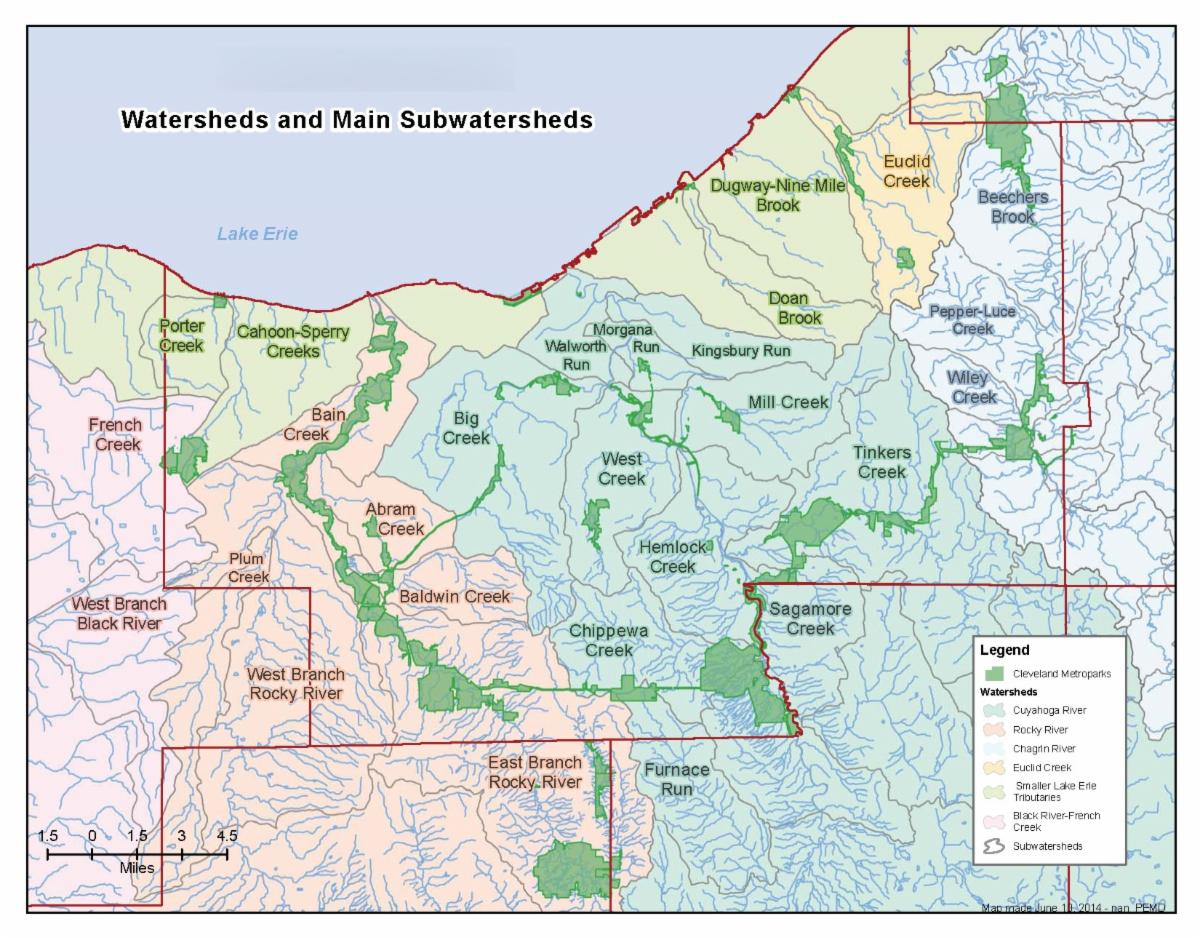
Cleveland Metroparks Watersheds in Cuyahoga County

We’re now including the watershed alongside volunteer location details for WVP events. You will see many Cleveland Metroparks' reservations are named after the watersheds they help protect, such as Rocky River, Euclid Creek, and Big Creek. By making this connection more visible, we hope to deepen awareness of which watersheds our efforts support and highlight the important role they play in our environment. 

[Photo credit: Cleveland Metroparks]


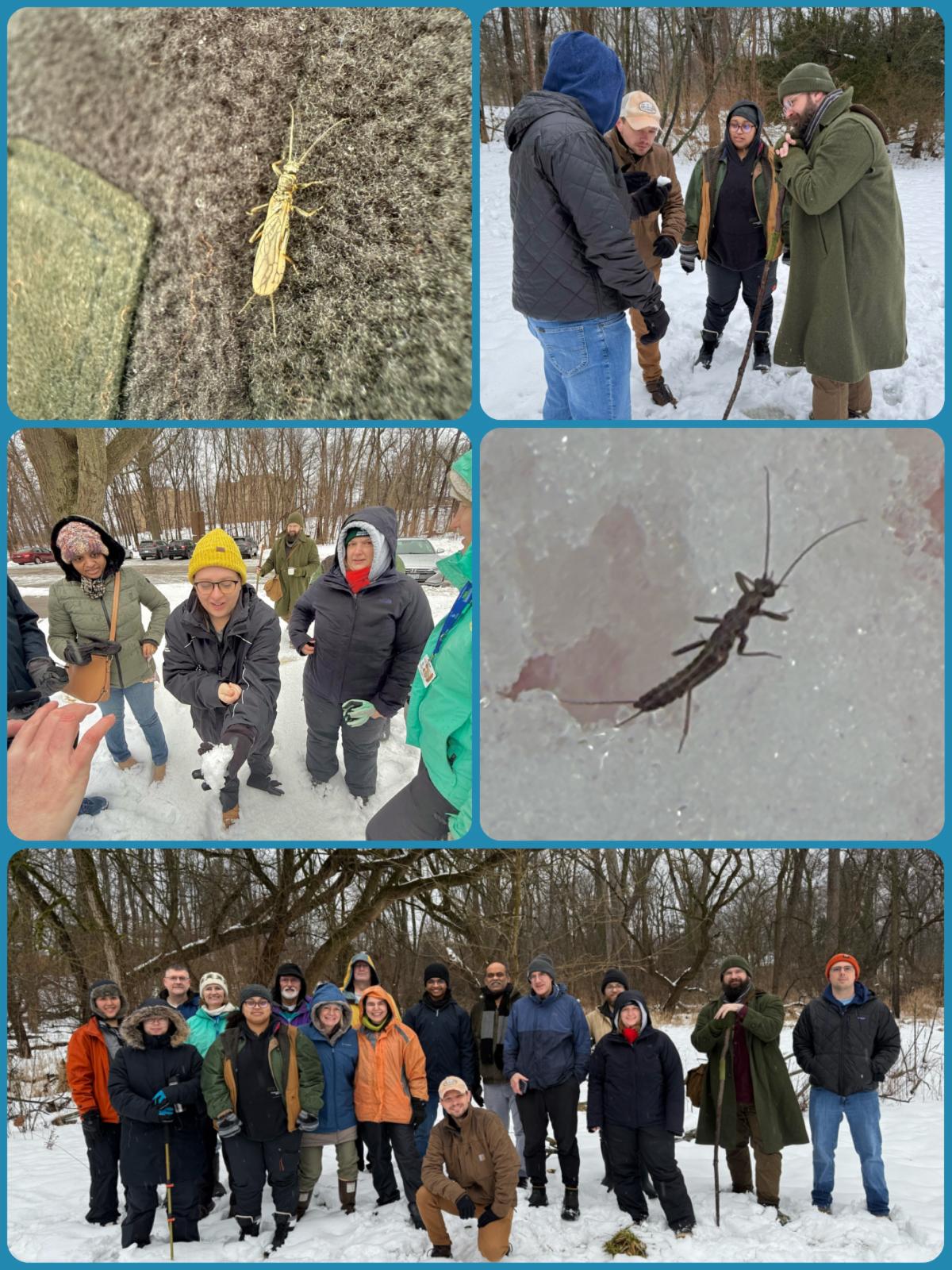
Winter Stonefly Club

Join us on March 15th for our last edition of (M) 2025 Winter Stonefly Survey

[Image credit: Cleveland Metroparks]

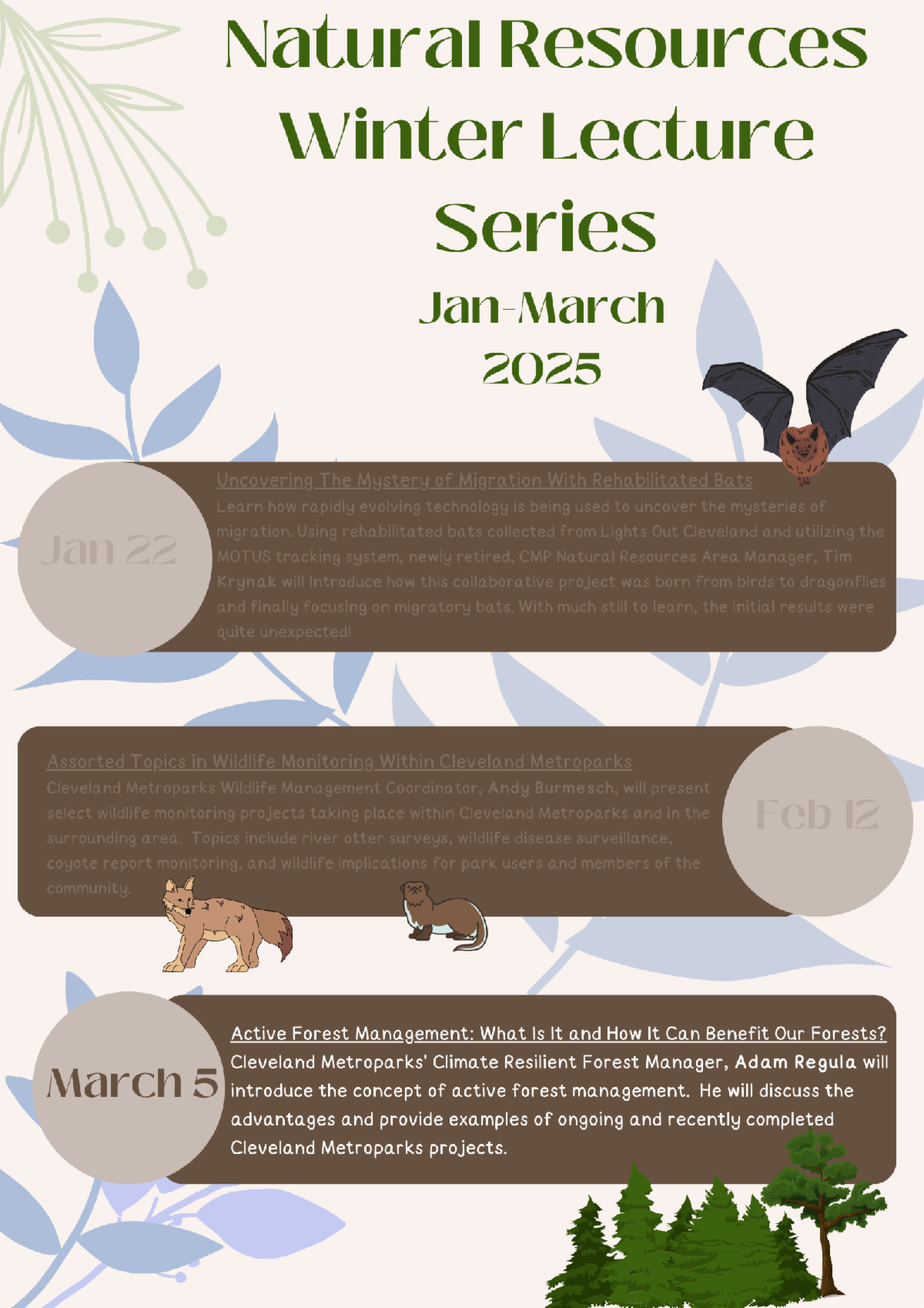
Lecture Series

Salt Watch


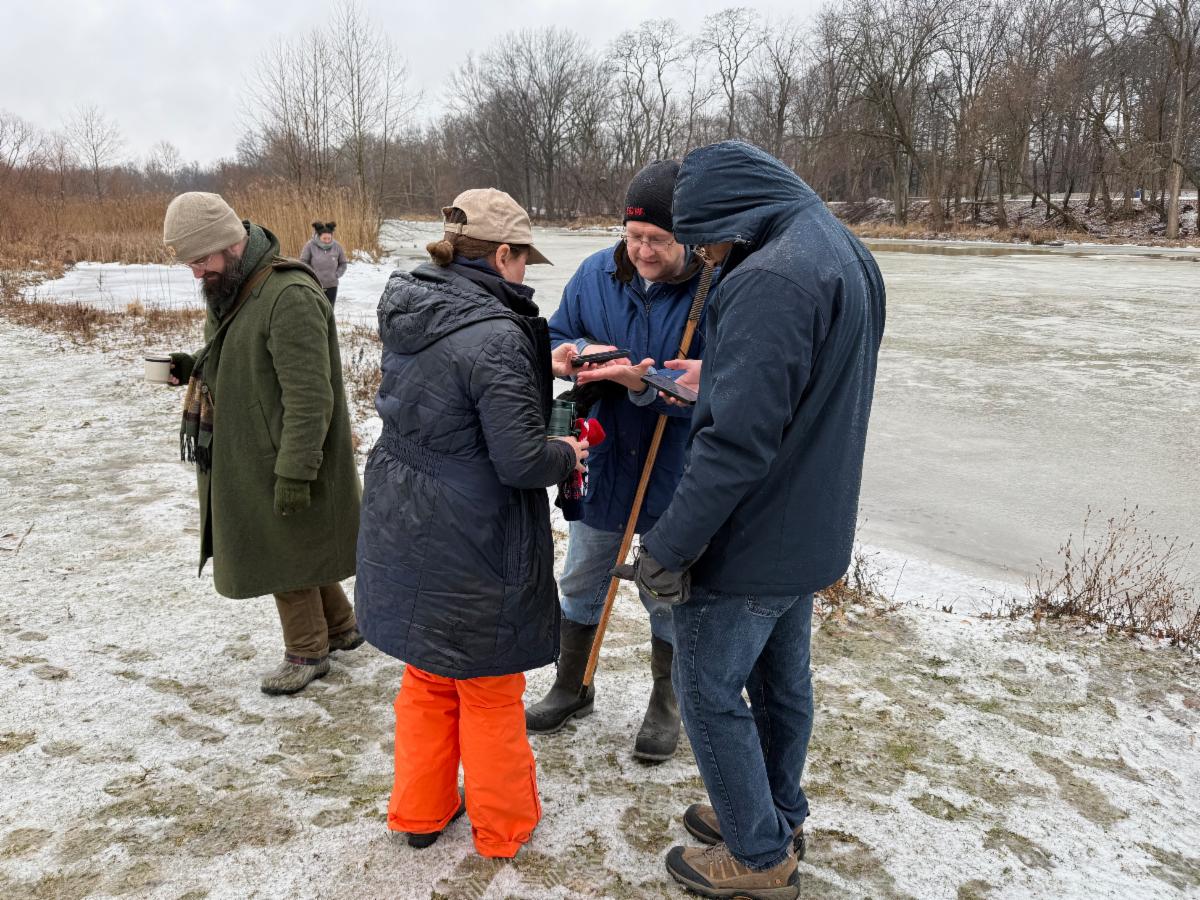
Salt Watch Reminder


Salt Watch Volunteers: You still have time to take your February sample.


Questions? Email us

Happenings

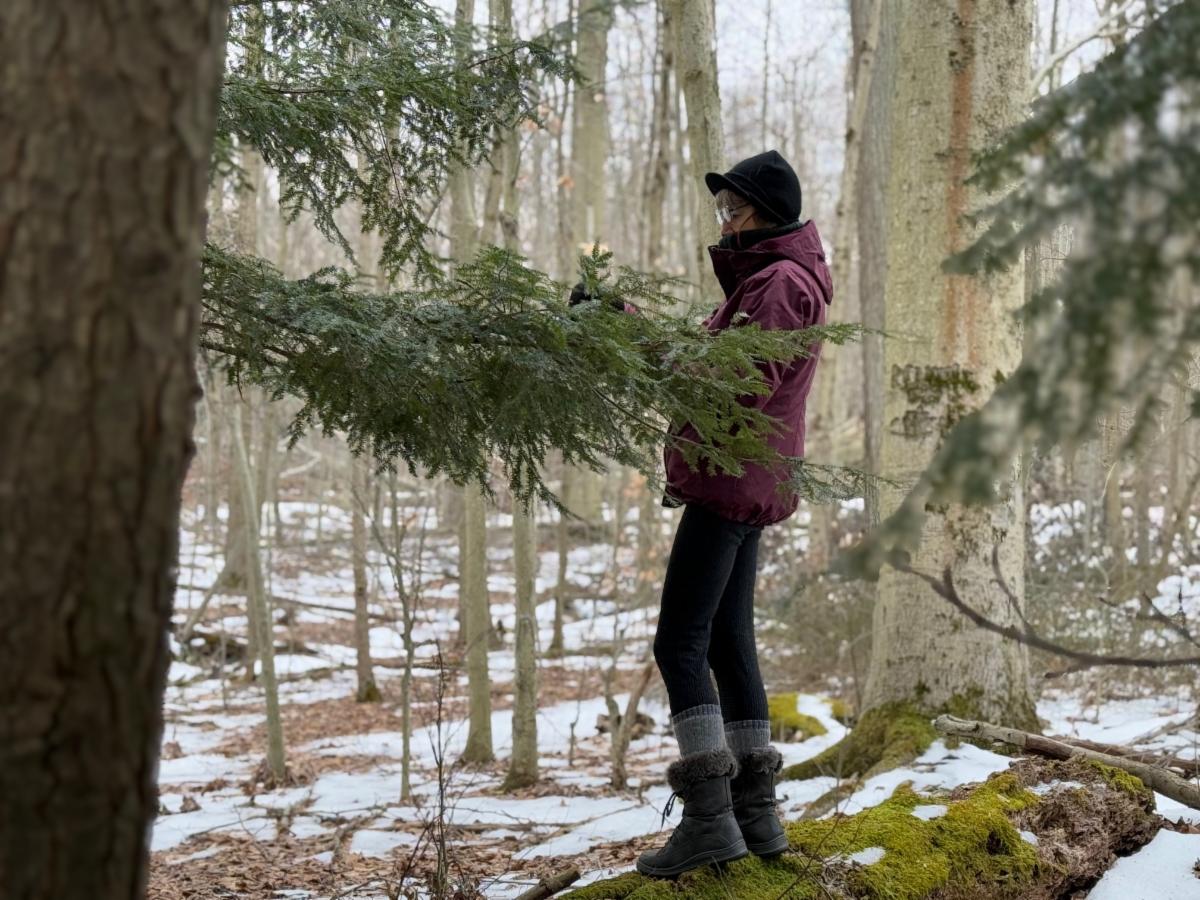
(M) Training Hemlock Survey

Feb 5, 2025 @ North Chagrin Reservation in Chagrin River Watershed

[Photo credit: Cleveland Metroparks]

WVP Opportunities

Key

  • (L)earning: These events include talks, workshops, and training sessions.
  • (M)onitoring: These events include water quality testing through chemistry and macroinvertebrate monitoring.
  • (R)estoration: These events include bioretention clean-ups, tree plantings, invasive plant removal, etc.
  • (O)utreach: These events are used to spread awareness of the Watershed Volunteer Program and general watershed health.


(L) Seed Paper Making

Mon, Mar 3, 6 - 8 p.m. @ The Watershed Stewardship Center, West Creek Reservation in West Creek Watershed


(L) Natural Resources Winter Lecture Series: Active Forest Management: What Is It and How It Can Benefit Our Forests?* 

Wed, Mar 5, 6 p.m. - 7:30 p.m. @ The Watershed Stewardship Center, West Creek Reservation in West Creek Watershed


(R) Invasive Mantis Egg Case Removal

Wed, Mar 12, 10 a.m. - 12 p.m. @ Acacia Reservation in Euclid Creek Watershed


(M) Winter Stonefly Survey  

Sat, Mar 15, 11 a.m. - 1:30 p.m. @ Baldwin Creek in Baldwin Creek Watershed


(R) Invasive Mantis Egg Case Removal

Wed, Mar 19, 10 a.m. - 12 p.m. @ Bedford Reservation in Tinkers Creek Watershed


(R) Green Infrastructure Maintenance

Fri, Mar 21 , 1 - 3 p.m. @ Brookside Reservation in Big Creek Watershed


(M) Marine Debris Monitoring 

Sat, Mar 29, 10 a.m. - 12:00 p.m. @ Euclid Creek in Euclid Creek Watershed


(R) Invasive Mantis Egg Case Removal

Wed, April 2 , 10 a.m. - 12 p.m. @ Hinckley Reservation in Rocky River Watershed


(R) Garlic Mustard Removal 

Wed, Apr 9, 6 -8 p.m. @ Engle Rd, Big Creek Reservation in Big Creek Watershed


(R) Live Stake Planting & Site Tour

Sat, Apr 12, 9 a.m. - 12 p.m. @ Johnsons Creek, Hinckley Reservation


(M) City Nature Challenge

Sat, Apr 26, 10 a.m. - Noon @ Chippewa Creek, Brecksville Reservation in Chippewa Creek Watershed


(R) Deer Fence Construction

Wed, Apr 30, 1 - 3:30 p.m. @ Camp Corde in West Creek Watershed


(R) Native Tree Planting

Wed, Apr 30, 5:30 - 8 p.m. @ Camp Corde in West Creek Watershed


WVP volunteers, please log into Volgistics to register for primary events.

*Open to the public.  Click Here or Email us for the registration link.

View Event Details

(M) Winter Stonfly Survey

Feb 15, 2025 @ Baldwin Creek in Baldwin Creek Watershed

[Photo credit: Cleveland Metroparks]

Opportunities With Our Partners


(S) EPA Tools & Resources Webinar: Alternative Water Sources to Augment Water Supplies

Wed, Feb 19, 3 - 4 p.m. @ Online

Meeting the demand for safe and adequate supplies of water, especially in regions undergoing hotter and drier weather conditions, requires addressing research gaps associated with water reuse and water storage, including enhanced or managed aquifer recharge. Sustainable and safe water supply is a common theme for states and communities across the nation. Key research needs include chemical and microbial risk assessments for fit for purpose reuse, treatment characterization and performance as well as reliable supplies and cost, which will assist communities in their water reuse and aquifer recharge decisions. This webinar will provide an overview of ongoing EPA ORD research related to alternative water sources including decentralized water reuse, protein processing plants, treated produced water from oil and gas activities, and enhanced/managed aquifer recharge, as well as collaborations with our partners.

More Information and Registration Here


(S) Tinkers' Creek Winter Webinar: Wickedly Invasive: Why Invasives Aren’t So ‘Popular’ in Our Forests & Yards

Fri, Feb 21, 12 - 1 p.m. @  Online

Join Becah Troutman, Working Woods Hub Manager at Holden Forests and Gardens in this webinar to explore loathing of invasive species - how they disrupt ecosystems, outcompete native species, and wreak havoc on biodiversity. We'll uncover how to identify common invasives, what makes them a threat, and how to get rid of them for good.

More Information and Registration Here


(S) Summit Metroparks: Skunk Cabbage Surprise

Sun, Feb 23, 10:30 a.m. - 12 p.m. @  GYH/Pioneer Area

How’s that plant already blooming? Hike the 1.4-mile Alder trail to discover the first flower of the year and the clever tricks it employs to beat the spring season to the punch.

More Information and Registration Here


(S) EPA's Impacts of Micro and Nanoplastics on Marine Organisms

Wed, Feb 26, 2 - 3 p.m. @  Online

As the abundance of plastic increases in marine systems, the potential risks of adverse biological and ecological effects of plastics of various size classes (macro-, micro-, nano-) need to be evaluated. EPA’s Office of Research and Development (ORD) has spearheaded methods development for extraction and characterization of microplastics (MPs) and works collaboratively with many agencies and organizations to better understand the sources, fate, and transport of MPs. Additionally, ORD research assesses ecological and human health impacts of MPs, supported by the development of analytical methods to detect MPs in a variety of environmental samples. This talk will cover three topics: 1) background information on MPs, including source and prevalence in the marine environment, 2) current research investigating the impacts of MPs on stony coral, and 3) recent studies assessing the impacts of nanoplastics to communities of benthic marine fauna.

More Information and Registration Here


(S) Wonders of the Great Lakes with Jim McCormac

Thur, Feb 27, 7 p.m. @  The Huron Yacht Club

Join the Friends of Old Woman Creek for an engaging Great Lakes presentation by well-known photographer, naturalist, and author, Jim McCormac. Jim will share his snapshots and insights on the biodiversity of the Great Lakes, focusing on Lake Erie and Ohio's coastal ecosystems.

More Information and Registration Here


(S) 14th National Monitoring Conference

Mar 10-14 @  Green Bay, Wisconsin and virtual

The National Water Quality Monitoring Council (NWQMC) will host its 14th National Monitoring Conference from March 10 to 14, 2025, in Green Bay, Wisconsin. All federal, state, tribal and local water professionals, nonprofits, academia, water consultants and industry, and volunteer scientists are welcome at this important national forum on monitoring Great Lakes, groundwater, streams, rivers, lakes, wetlands, estuaries, and oceans. The conference will be offered in a hybrid format, primarily consisting of in-person presentations and events as well as some virtual components. What is the difference between in-person and limited virtual attendance?

Networking and opportunities to create new relationships will abound for attendees. Whether you seek to develop new skills, learn about the latest technologies, or simply exchange information on a wide variety of topics relevant to water resources, the National Monitoring Conference is for you. The conference is a destination conference for many in the field, attracting the highest quality professional presenters and posters.

More Information and Registration Here


(S) Master Rain Gardener – Late Winter 2025

Mar 11- Apr 1, 2 - 4 p.m. @ Highland Heights Community Center

Train to be a Master Rain Gardener! Learn to design and install your own rain garden and become the rain garden expert in your neighborhood.

Class Details: The Master Rain Gardener (MRG) course includes four (4) classes over a four-week period. All classes will be held at the Highland Heights Community Center on Tuesdays from 2:00 to 4:00 pm. The end time may extend depending on the optional field trip location(s).

Registration Fee: $75

More Information and Registration Here


(S) River Network Community Science Solutions: Documenting the Impacts of Contamination in Land, Air, and Water

Thu, Mar 13, 1 - 2:30 p.m. @ Online

In this webinar, we’ll dive deep into case study examples of effective community science efforts around the country. Focus areas include air and water quality testing and monitoring contaminants in drinking water. Participants will learn how practitioners leverage funding sources and technical support to engage communities in data gathering and analysis, and work together to develop solutions that contribute to overall community health and well being by targeting nonpoint source pollution, informing land revitalization strategies, and more.

More Information and Registration Here


(S) Pond Management Workshop

Thu, Mar 20, 6:00 - 8:00 p.m. @ Centerville Mills Dining Hall

Join the Geauga and Portage Soil and Water Conservation Districts (SWCDs) on the first day of spring for a unique opportunity to gain information and resources about managing and maintaining your pond. Eugene Braig – Aquatic Ecosystem Program Director with Ohio State University – will be presenting at this FREE event. Registration is required by March 19.

More Information and Registration Here


(S) World Water Day Rain Barrel Workshop

Sat, Mar 22, 10 - 4:15 p.m. @ The Watershed Stewardship Center, West Creek Reservation in West Creek Watershed

Celebrate World Water Day by constructing a rain barrel to harvest rainwater at home. The Watershed Stewardship Center will be offering rain barrel workshops at a reduced rate to celebrate the holiday. Guests will work with naturalists to assemble their barrels and learn how to finish the installation at home. Each workshop registrant is welcome to bring a guest, but must register multiple times if they want additional barrels. Maximum of two registrations per household. 

$30 per registration 

11 spaces for registration 

Rain barrels are three feet tall, two feet wide, and hold 55 gallons of water. Please be certain to bring a vehicle that is large enough to transport your barrel.  

10 - 11 a.m. Register Here

11:15 - 12:15 p.m. Register Here

12:45 - 1:45 p.m. Register Here

2 - 3 p.m. Register Here

3:15 - 4:15 p.m. Register Here


(S) Tinkers' Creek Winter Webinar: Majestic Native Plants

Wed, Mar 26, 6 - 7 p.m. @ Online

Join Jennifer White, Education and Outreach Manager for Portage Parks, as she shares her expertise on growing native plants in your yard.

More Information and Registration Here


(S) West Creek: 2025 Annual Meeting

Tue, Apr 8, 6 - 8 p.m. @ Parma - Snow Library

Join us for West Creek Conservancy’s Annual Meeting on April 8th. The presentation will include a 2024 wrap-up and what's on deck for 2025 and beyond.

More Information and Registration Here


More (S)upplemental events can be found on our website here.


*WVP volunteers can submit supplemental hours in Volgistics under (S) Watershed Partner Event Contact us if you need assistance reporting any hours.

Recording Hours with WVP

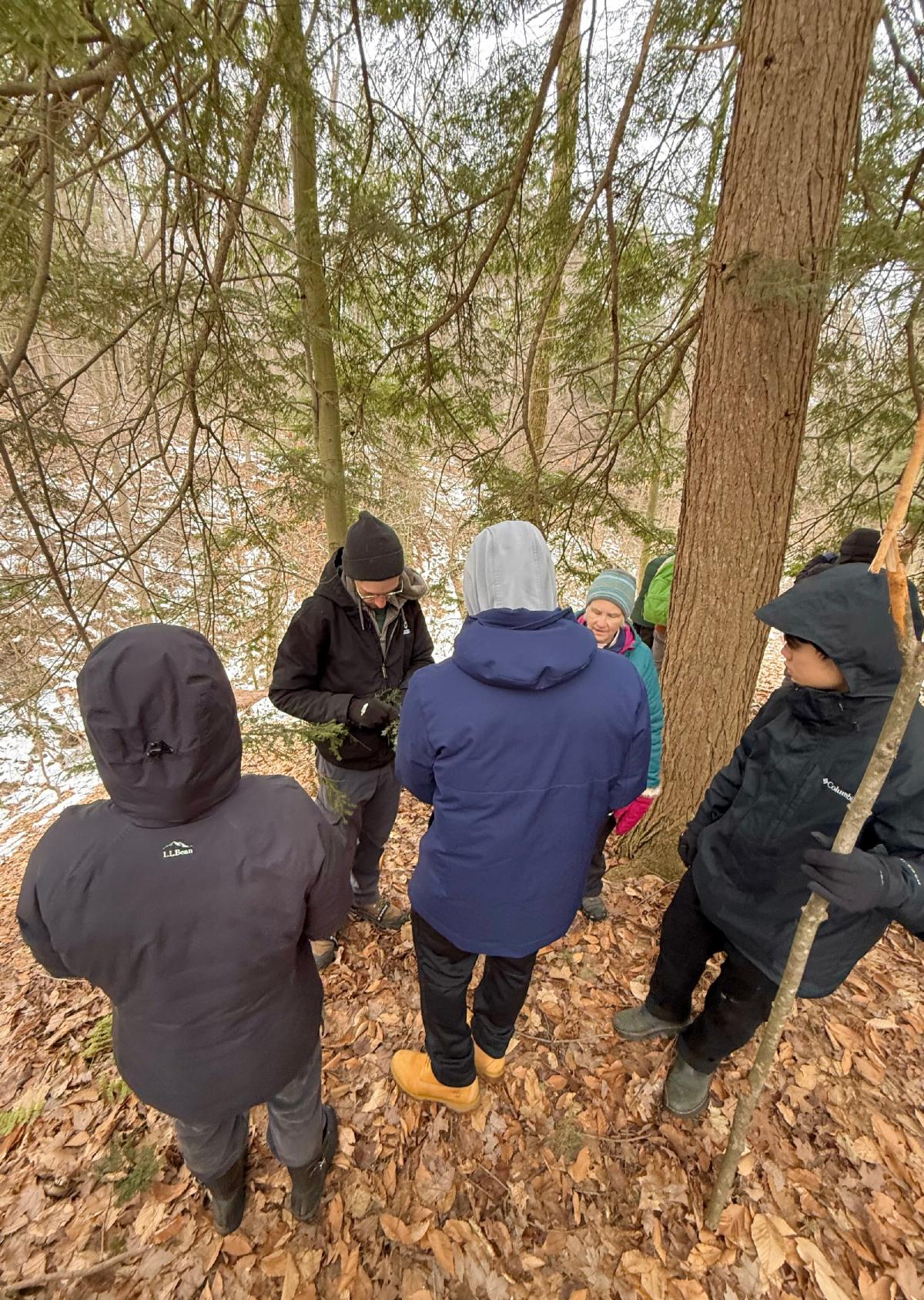
(M) Training Hemlock Survey

Feb 8, 2025 @ North Chagrin Reservation in Chagrin River Watershed

[Photo credit: Cleveland Metroparks]

Extras

News

How Oversalting Is Impacting Northeast Ohio’s Waterways | Read on and watch videos here


Akron Names a Sewer Digging 'Worm' After a Local Environmentalist | Read on or listen here


These 'Old Ladies' Are Keeping Cape Cod's Freshwater Ponds Clean | Read on or listen here


Tadpoles of a Certain Tree Frog Species Have a Unique Way to Avoid Contaminating Their Tiny Water Supply. They Simply Don’t Poop Until Adulthood! | Read on


A “Living” Chandelier Filled with Algae? Introducing........Exhale: The Bionic Chandelier | Read on


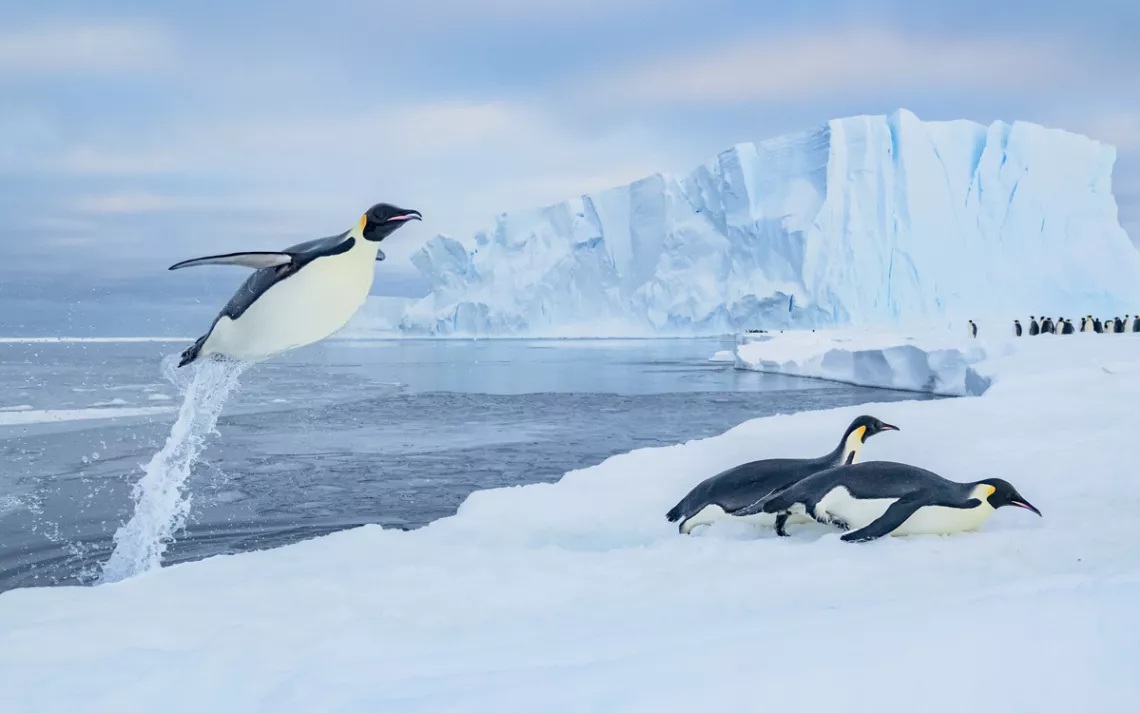
Are you sure penguins can't fly?

Antarctica’s emperor penguins are famously flightless.

So how do they “fly” out of the water like this?

First the penguins compress their feathers to trap air bubbles beneath the plumage. Then, they propel themselves while releasing the bubbles to create a slick coat that reduces friction. This allows them to shoot out onto the ice like a torpedo.

-- Stefan Christmann, Nature Photographer and Filmmaker from Germany

[Image Credit: Sierra Club]

Jobs


Engineering and Construction (Planning and Design) Paraprofessional Intern

Northeast Ohio Regional Sewer District - Cleveland, OH | Apply Here


Stream and River Research Technician (hourly)

Illinois Natural History Survey at the University of Illinois - Urbana Champaign

| Apply Here


Natural Resources Field Technician

EnviroScience - Stow, OH | Apply Here


Curator of Animal Programs, James H. Barrow Biological Field Station

Hiram College - Hiram, OH | Apply Here


President and CEO

Conservancy for Cuyahoga Valley National Park - Peninsula, OH | Apply Here


Lake Erie Islands Environmental Steward Intern

Appalachian Conservation Corps & Lake Erie Islands Conservancy - Put-In-Bay, OH

| Apply Here


Watersheds Coordinator (Closes 2/21)

Benzie Conservation District - Beulah, Michigan | Apply Here


Field technician/Water Chemistry Technician

Midwest Biodiversity Institute - Hilliard, OH | Apply Here


GIS Wetland STEP Intern (Short Term Experience Program) closes 2/23

Nature Conservancy - Virginia Location | Apply Here


Student Environmental Worker - Water Quality Program

Cuyahoga County Board of Health - Parma, OH | Apply Here


Manager of Environmental Planning

Northeast Ohio Areawide Coordinating Agency - Cleveland, OH | Apply Here


Entry Level Research Assistant

Midwest Biodiversity Institute - Hilliard, OH | Apply Here


Stream Restoration Designer

Wetland Studies & Solutions, a Davey Company - Louisville, KY | Apply Here


WVP Resources


Recording

Hours

Events

Videos & Learning

Safety Tips

 
Become a Certified Watershed Steward