Hello, just a reminder you are receiving this email because you expressed an interest in the West Virginia Primary Care Association. Don't forget to add paula.beasley@wvpca.org to your address book, so you don't miss any issues of the WVPCA Weekly Outlook! |
|
WVPCA Weekly Outlook
A Newsletter on Community Centered Healthcare
|
|
WVPCA News - Outreach and Enrollment News
Emergency Management News - State News - National News
Funding Opportunities - Upcoming Training Opportunities
|
|
Summersville Middle School Receives
Mask Up Award from New River Health
|
|
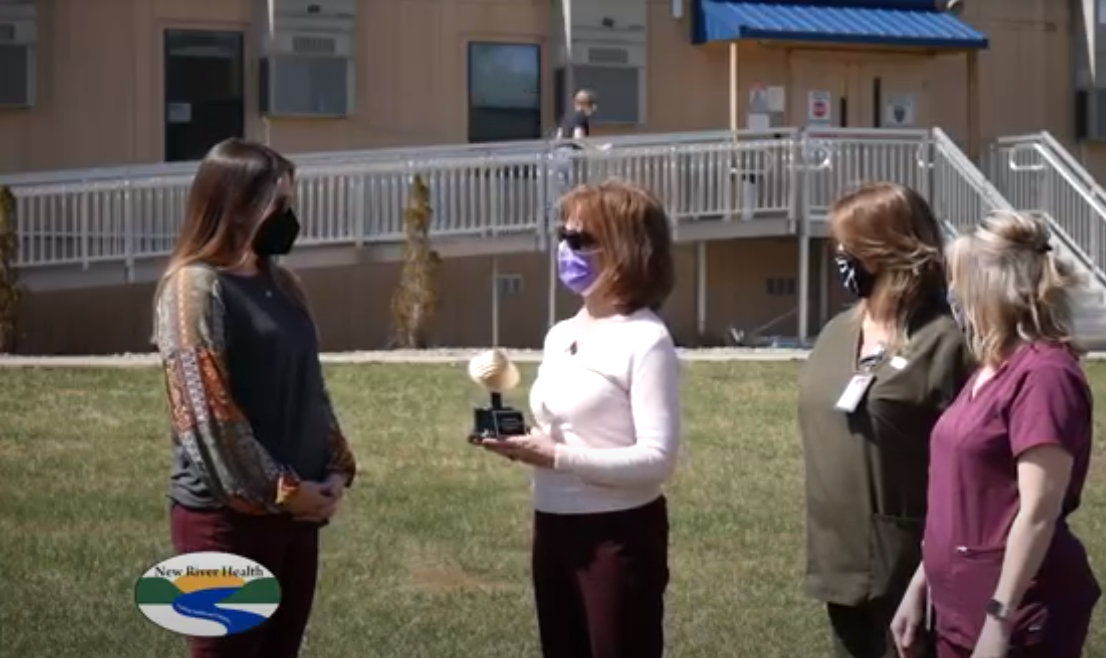
New River Health Center staff presented Summersville Middle School with a "Mask Up Award" for the students' diligent use of masks.
Wearing face masks is tough for some children, even in short bursts. Wearing masks for longer stretches while in school may be a real struggle, especially for kids who learn and think differently.
New River Health staff took notice of the Summersville Middle School students mask usage and wanted to recognize them.
|
|
All pandemic-paused flights now on track to resume at Yeager
Read the entire article from Charleston Gazette Mail here.
New study shows why vaccinating everybody against Covid-19 is essential
Read the entire article from CNN here.
Faith-Based Approaches' Could Help Convince Millions of Americans to Get COVID-19 Vaccines
Read the entire article from TIME here.
Record-breaking fatal overdoses reported in 2020 after years of decreases
Read the entire article from Charleston Gazette Mail here.
|
|
|
|
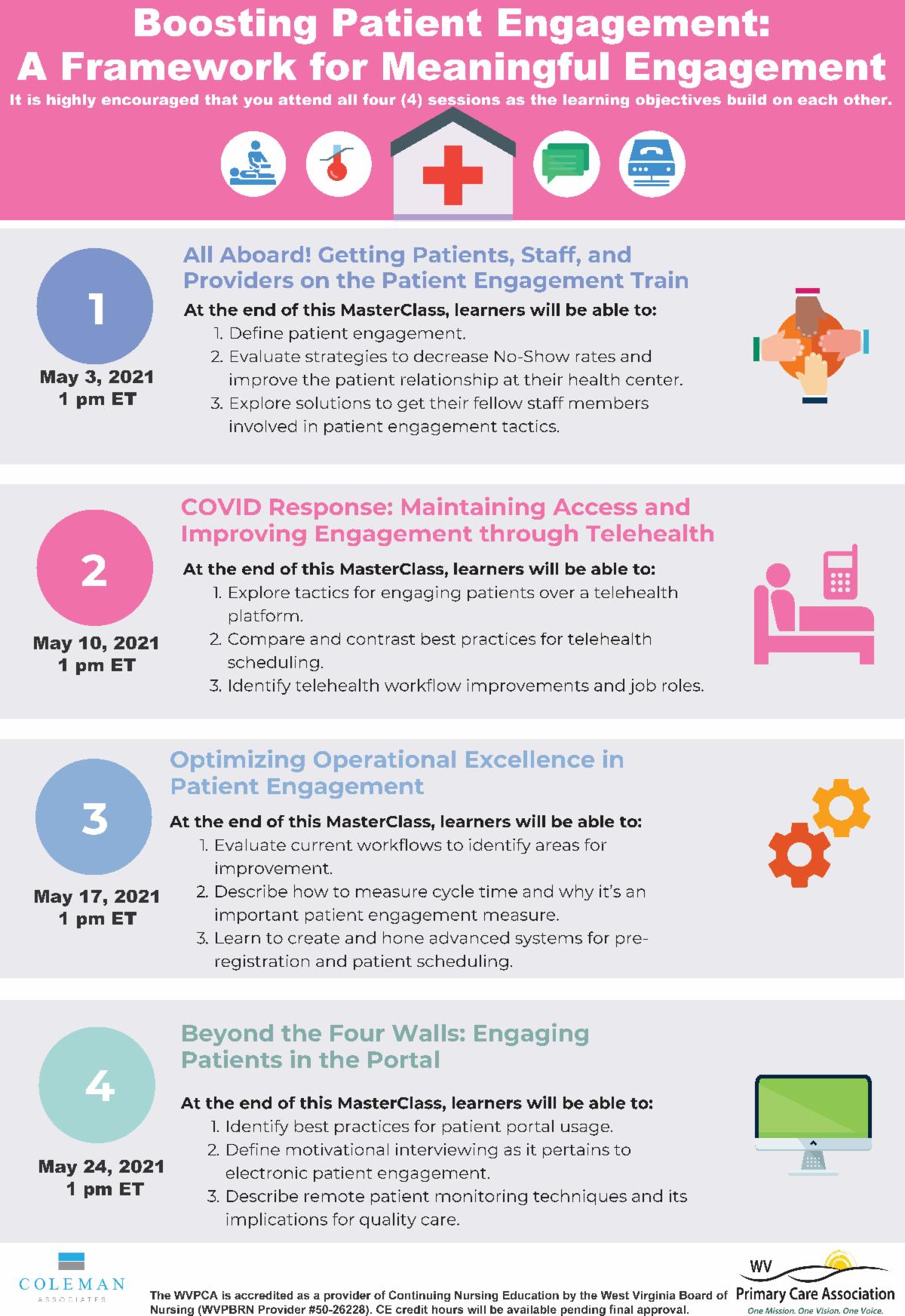
Boosting Patient Engagement:
A Framework for Meaningful Engagement
|
Please join the WVPCA and Coleman Associates, as we are excited to offer our members a four (4) part webinar series that will assist you in learning how to increase patient engagement in your health center. The webinar series will cover topics important to today's healthcare landscape, and focus on ways to improve productivity (i.e., the capacity to see patients), increase patient access, reduce patient waiting time, develop teamwork, improve staff satisfaction, further patient-centered medical homes, prepare for inevitable evolutions in healthcare reimbursement and optimize the use of technology wisely.
|
|
COBRA Premium Assistance Under The American Rescue Plan Act of 2021 Frequently Asked Questions |
The Department of Labor (DOL) has released frequently asked questions (FAQs) regarding implementation of certain provisions of the American Rescue Plan Act of 2021 (ARP), as it applies to the Consolidated Omnibus Budget Reconciliation Act of 1985, commonly called COBRA. Like previously issued FAQs, these FAQs answer questions from stakeholders to help individuals understand the law and benefit from it, as intended. The Department of the Treasury and the Internal Revenue Service (IRS) have reviewed these FAQs, and, concur in the application of the laws under their jurisdiction as set forth in these FAQs.
|
|
Largest Ever Funding Allocation for Navigators and
Final Numbers for 2021 Marketplace Open Enrollment
|
The U.S. Department of Health and Human Services (HHS) announced that to continue its efforts to increase access to enrollment assistance for consumers, the Centers for Medicare & Services (CMS) will make $80 million available in grants to Navigators in Federal Marketplaces for the 2022 plan year. The funding, which will be used for outreach and education efforts, is the largest allocation CMS has made available for Navigator grants to date and represents an eight fold increase in funding from the previous year. CMS invested $10 million annually in the Navigator program beginning with funding awarded in 2018 for the 2019 plan year. CMS awarded $36.2 million in 2017 for the 2018 plan year, down from a high of $63 million awarded in 2016 for the 2017 plan year.
Details about the Navigator grant funding, including eligibility requirements and required Navigator duties, are available through the 2021 Navigator Notice of Funding Opportunity (NOFO) Forecast. The 2021 Navigator NOFO will be released later this spring as indicated in the NOFO Forecast. All information contained in the forecast is subject to change, including the availability of funding. No applications are being accepted at this time.
|
|
We Can Do This: COVID-19 Public Education Campaign |
The U.S. Department of Health and Human Services announced a national effort to help community partners promote COVID-19 vaccine confidence. The campaign includes educational materials targeted to specific audiences and seeks volunteers for the COVID-19 Community Corps.
|
|
Volunteer to Administer COVID-19 Vaccines
|
The U.S. Department of Health and Human Services has expanded its definition of persons authorized to give the vaccine. These include, among others, current and retired traditional and non-traditional health care professionals, and students in health care programs.
|
|
West Virginia has Given at Least One Dose
to More than Half of the Eligible Population
|
Just over half of West Virginians who are able to receive a COVID-19 vaccine under current federal guidelines have gotten at least their first dose.
That is according to retired Maj. Gen. James Hoyer, director of the Joint Interagency Task Force, which coordinates the state’s vaccination efforts.
There have been 748,634 residents who have received at least one vaccine dose, Hoyer said during a COVID-19 press briefing.
According to data from the West Virginia Department of Health and Human Resources, the total population of the state ages 16 and older is 1,474,615. That means 50.77% of that age group has received a dose.
Those under age 16 are not currently eligible to receive any COVID-19 vaccine. The Emergency Use Authorization granted by the Food and Drug Administration for the Pfizer vaccine approves use for people ages 16 and older.
|
|
$418K Awarded for Programs Enhancing Health Care Delivery to Rural Underserved Populations |
The Health Resources and Services Administration (HRSA) announced more than $12.7 million in funding to 61 public, private and non-profit entities across 35 states to serve rural communities and address rural health disparities as part of its community-based Rural Health Care Services Outreach Program (Outreach Program). Coplin Health Systems and Williamson Health and Wellness Center are West Virginia community health centers that were awarded funding for programs to enhance healthcare delivery to rural underserved populations.
“Coplin Health Systems is very excited to be spearheading this multicounty FARMACY program in our region. This program will unite the efforts of health care facilities, social service agencies, local food banks and farmers to reach the most vulnerable populations with healthy produce and education about healthy life choices. The FARMACY is an amazing way to help patients change habits that have negatively impacted their health, while assisting them in overcoming social barriers that contribute to poor choices. Participants receive healthy food kits during a 10-week period and receive comprehensive training on how to prepare and use the food to improve health, incorporating health habits such as exercise into daily routines, and how wellness visits and health screenings can improve disease prevention and management,” said Sarah Barton, Senior Projects Manager at Coplin Health Systems.
“Lifestyle choices can slow down or speed up the discomfort experienced with heart disease. When complications arise, it is costly for families, in more ways than one. We know that healthy eating and active living can go a long way in improving quality of life, and that’s news we hope gets passed along from generation to generation. Williamson Health & Wellness Center will work with Healthy in the Hills Network partners, including Able Families, Appalachian Regional Hospital, Williamson Housing Authority and community residents to create solutions as a joint effort,” said Dino Beckett, CEO of Williamson Health & Wellness Center.
The Outreach Program expands and improves health services for rural residents by supporting innovative and evidence-based approaches tailored to the specific needs of local communities.
For the first time, funds will go toward supporting the Healthy Rural Hometown Initiative (HRHI) to address underlying factors that drive rural health disparities related to the five leading causes of avoidable death (e.g., heart disease, cancer, unintentional injury, chronic lower respiratory disease, and stroke).
|
|
Legislative Update: Three Health Care Bills Signed |
On Wednesday, Governor Jim Justice held a ceremonial virtual bill signing for three health care bills passed during the 2021 legislative session. One of these bills, House Bill 2263, was a key legislative priority for the West Virginia Primary Care Association. The bill passed both houses of the legislature unanimously.
Building on the Pharmacy Audit Integrity Act initially passed in 2017 and updated in 2019, House Bill 2263 is a win for pharmacies and patients alike. The bill establishes the state as a national leader in drug transparency and patient protection by doing the following.
- Protecting patient freedom of choice by allowing patients to choose any contracted pharmacy and prohibiting patients from being required to use a mail order pharmacy.
- Establishing fair reimbursement for pharmacies, so prescriptions are not filled at as great of a financial loss.
- Subjecting self-insured plans to regulation under the Pharmacy Audit Integrity Act.
- Requiring pharmacy benefit managers to pass through all drug rebates to patients at the point of sale to offset out-of-pocket costs. If rebates reduce the patient’s cost sharing to $0, the remaining rebate goes to the patient’s health plan, which must use it to lower premiums.
If you have questions about this bill or others, please contact Joshua Austin, WVPCA Policy and Communications Director at joshua.austin@wvpca.org.
|
|
Information for COVID-19 Vaccination for Teens |
Please see this recent information from the West Virginia Department of Health and Human Resources regarding the COVID-19 vaccination for teens. Share with others to inform students and families that vaccinations are the most effective path to building immunity to protect our students, families and communities.
|
|
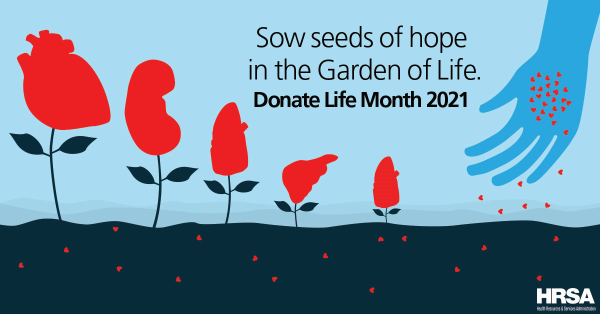
April is National Donate Life Month |
Observed in April each year, National Donate Life Month helps to encourage Americans to register as organ, eye and tissue donors and to honor those who have saved lives through the gift of donation. National Donate Life Month is about the importance of registering your decision to be a donor, and honoring deceased and living donors - recognizing that the generosity of donors makes saving lives through transplantation possible.
More than 100,000 people across the country are currently waiting for a lifesaving organ transplant. Thousands more people are waiting for lifesaving and healing cornea and tissue transplants. Only 3 in 1000 people die in a way that allows for organ donation to take place. That is why it is important for everyone to register their lifesaving decision to be an organ, eye and tissue donor. Learning more about and considering living donation is another way to help those waiting for a second chance at life.
|
|
National Health Service Corps New Site Application Open, Inactive Sites May Apply |
The 2021 National Health Service Corps (NHSC) new site application cycle is now open for eligible healthcare sites that have never been approved as NHSC sites. This year’s application is also open to formerly approved NHSC sites that have become inactive. Eligibility includes healthcare sites that provide outpatient, ambulatory and primary healthcare services (i.e., medical, dental, and behavioral health) in Health Professional Shortage Areas. Additional eligible site types include facilities providing general substance use disorder treatment, a medication-assisted treatment program, or an opioid treatment program. Applications are due at 11:59 p.m. ET on Tuesday, May 25. Click below to learn more about the NHSC new site application.
|
|
2021 NHSC Scholarship Program Application Cycle Open |
About the Program:
The NHSC Scholarship Program applicants include health professional students studying to become physicians, dentists, nurse practitioners, nurse midwives or physician assistants with a commitment to practice in underserved communities. In exchange, they commit to serve a minimum of two years in high-need, underserved communities. Scholars receive one year of financial support (up to four years) for each year of service at an NHSC-approved site. Accepting applications through May 11, 2021, at 7:30 PM EST.
|
|
 |
Funding and Financial Opportunities |
|
|
|
Round 2 of the COVID-19 Telehealth Program Application Portal to Open April 29 |
The Federal Communications Commission (FCC) will begin accepting applications for Round 2 of the COVID-19 Telehealth Program on Thursday, April 29 at 12 p.m. ET.
The filing window will last seven days and close on Thursday, May 6 at 12 p.m. Round 2 of the program is a $249.95 million federal initiative that builds on the $200 million program established as part of the CARES Act.
This funding will be prioritizing hardest hit area, low income areas, Round 1 unfunded applications, Critical Access Hospitals, Federally Qualified Health Centers, FQHC Look-alikes, Medicare Dependent Hospitals, providers located in a rural county, and providers in health provider shortage areas.
The telehealth program was established with the intent of supporting providers' efforts to continue serving patients by offering telecommunications services, information services and all of the necessary connected devices during the COVID-19 pandemic.
|
|
Grants Available for School-Based Health Centers |
The Sisters of St. Joseph Health and Wellness Foundation School-Based Health Fund at the Parkersburg Area Community Foundation (PACF) is once again offering West Virginia school-based health centers the opportunity to apply for mini-grants of up to $2,000. School-based health centers (SBHC) are defined as primary care clinics based on primary or secondary school campuses.
Grants may be requested for training and competency building, broadening of public awareness, advisory or consultancy services, improvements to facilities or equipment, or for response to COVID-19. Your school-based health center is encouraged to apply. Applications are due April 30. Please note that if your organization works with more than one school-based health center, you can apply for a separate grant for each center.
|
|
PPP Application Deadline Moving to May 31 |
Applications for the Paycheck Protection Program (PPP) will now be accepted through May 31, 2021. The extension from the original March 31 deadline was passed by the House and Senate and has moved to President Biden for signature. Health centers are eligible for First Draw PPP Loans if they have 500 or more employees but fewer than 500 employees per location. Existing PPP borrowers that did not receive loan forgiveness by Dec. 27, 2020, can reapply for a First Draw PPP loan.
If borrowers previously returned some or all of their First Draw PPP loan funds, they may request to modify their First Draw PPP loan amount if they did not accept the full amount for which they were eligible. Second Draw PPP Loans are only available to entities that have received, plan to use, or have used the First Draw PPP loan for authorized uses in its entirety. Entities must have no more than 300 employees per location and can demonstrate at least a 25 percent reduction in gross receipts between comparable quarters in 2019 and 2020.
|
|
HRSA Healthy Grants Workshop Registration |
The Health Resources and Services Administration (HRSA) has announced that registration for the 2021 Healthy Grants Workshop – Presented as a Web Series, in now open. Register now for up to eight sessions.
There is no cost to attend, and you can attend as many sessions as you would like.
The first session begins in May, followed by a new session every two weeks through August 24. Each session includes two to three topics, from grants policies, financial monitoring, and grant budgeting, to Prior Approvals, an Electronic Handbooks overview, and more.
|
|
|
Upcoming Training Opportunities |
|
|
|
Ask Us Anything: Learning Lessons from COVID-19 and Preparing for Future Emergencies |
Join the Health Resources and Services Administration (HRSA) for this informative webinar on best and promising practices, innovative approaches for challenging experiences, and successes.
Tuesday, April 27, 2021
3:00 PM EST
|
Today with Macrae: Health Center Program Updates |
Join Jim to hear the latest information on funding, the Health Center COVID-19 Vaccine Program, and more.
Tuesday, May 4, 2021
2:00 - 3:30 PM EST
Access details coming soon
|
Coordinating Hepatitis C (HCV) and HIV Treatment in Primary Care |
Health centers are poised to prevent and treat these viral infections by understanding the implications of comorbidity and by creating a welcoming environment for those at risk for, previously infected, or currently living with one or both diseases. Join the National Nurse-Led Care Consortium and the National LGBTQIA+ Health Education Center to explore the link between hepatitis C virus (HCV) and HIV, and particular considerations for community-based primary care providers. Both organizations are HRSA-funded NTTAPs.
Monday, May 3, 2021
2:00 PM EST
|
|
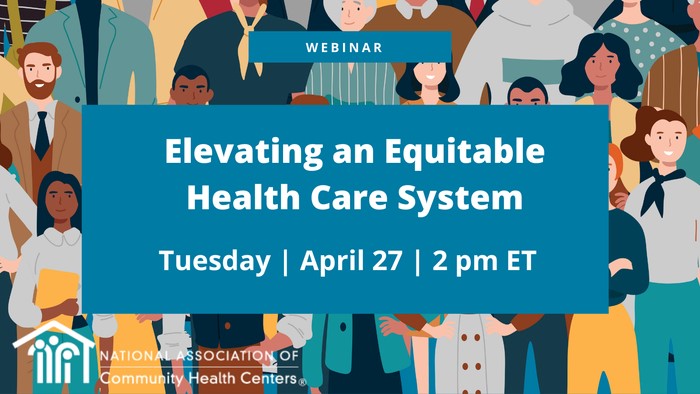
Elevating an Equitable Health Care System - A Conversation with Civil Rights Leaders |
Join the National Association of Community Health Centers (NACHC) for this webinar in honor of National Minority Health Month. NACHC welcome civil rights leaders to discuss how health centers have played a lead role in bringing health care to vulnerable communities.
Tuesday, April 27, 2021
2:00 PM EST
|
Management of Stimulant Use Disorder |
Please join the National Clinician Consultation Center (NCCC) in partnership with the Health Resources and Services Administration’s Bureau of Primary Health Care for this webinar, developed for health center clinicians. The misuse of stimulants, comprised of methamphetamine, cocaine, and other amphetamines, is a growing public health crisis across the United States. In this webinar, a consultant from the National Substance Use Warmline (855-300-3595) will provide a detailed discussion of both well-studied and emerging practices in the management of stimulant use disorder. The goal of this webinar is for participants to more confidently assess and manage the care of patients with stimulant use disorder.
Tuesday, April 27, 2021
2:00 PM EST
|
|
|
It is never easy to discuss end-of-life care or advance care planning—even more so during the deadly coronavirus pandemic. Yet, the pandemic has caused older adults to do just that with their families and other loved ones. The National Academy for State Health Policy has more information on this development, as well as what states are doing to bolster advance care planning.
A perfect storm of population/public health threats has caused a syndemic for Hepatitis C among IV drug users, argues Emory epidemiology professor Dr. Ronald Valdiserri in a new “Health Affairs” blog. Dr. Valdiserri’s blog says a renewed focus on harm reduction programs and easing restrictions on access to Hepatitis C treatment are among the solutions to the syndemic.
What is primary care? It depends on who you ask or what organization you work for. The Milbank Memorial Fund endeavors to establish a standard definition and measurement methodology for primary care to drive policy change.
If you come across something worth sharing, please feel free to forward to Joshua Austin, WVPCA Policy and Communications Director, at joshua.austin@wvpca.org.
|
|
|
Community Health Center Resources |
|
|
|
Jackson Kelly attorneys provide limited consultation to all members of the WVPCA at no charge, as part of the WVPCA contract. There is no limit to the number of calls which any member may make. All inquiries within the scope of professional competence of firm attorneys will be addressed. Inquiries which require expertise not available through the firm will be promptly identified and, when requested, Jackson Kelly will assist in referring the matter to accounting firms, insurance agents, or others as circumstances warrant.
All inquiries, responses and consultation services provided by the firm lawyers will be provided without additional charge beyond the retainer amount, except for matters which require formal opinions, representation of record in litigation, transactional work, e.g. the purchase or sale of real property, or matters which require continued representation, research or consultation beyond a single inquiry or document review.
Justin M. Harrison is a labor & employment lawyer with Jackson Kelly PLLC. He is available for consultation through a special retainer relationship with the WVPCA. Justin can be reached at 304.340.1358 and via email at justin.harrison@jacksonkelly.com.
|
|
Pandemic Operational Recovery Guide |
Operational disruptions to ambulatory care during and after a pandemic are significant. These disruptions may change many aspects of care delivery in ways that impact providers, staff, and patients alike.
Care may be temporarily limited or delivered in nontraditional ways, and recovery of operations may represent a "new normal."
The handbook contains links to tools as well as links to additional resources for a more comprehensive discussion of individual topics. Readers can refer to descriptive "Strategy" headings in each section, and consult the recommendations, tools, and resources that follow for more detailed information. Although some tools and resources focus on the COVID-19 pandemic, they can be adapted to respond to other public health emergencies.
|
|
Risk Management Manual for Health Centers Now Available! |
The Risk Management Manual for Health Centers is now available on the ECRI Institute Clinical Risk Management Program website! Designed to support a proactive approach to risk management at health centers and free clinics, the Manual provides background, tips, and how-tos in a manageable format.
Specific areas that are covered include:
Risk Management Programs & Plans
Claims and Lawsuits
Role of the Risk Manager
Patient Grievances and Complaints
Communication with Patients
Credentialing and Privileging
Communication among Providers, Staff, and Community Partners
Tracking Systems for Diagnostic Tests, Referrals, and Hospitalizations
|
|
|
Debra Boyd | Chief Financial/Chief Operations Officer
|
|
|
|
To sign up to receive the WVPCA Weekly Newsletter: |
|
1700 MacCorkle Avenue, SE
Charleston, WV 25314
Phone: 304.346.0032
Toll Free: 1.877.WVA HLTH
|
|
|
This project is/was supported partially/fully by the Health Resources and Services Administration (HRSA) of the U.S. Department of Health and Human Services (HHS) under grant number U58CS06834 State and Regional Primary Care Associations. This information or content and conclusions are those of the author and should not be construed as the official position or policy of, nor should any endorsements be inferred by HRSA, HHS or the U.S. Government. |
|
|
|
|
|
|