Hello, just a reminder you are receiving this email because you expressed an interest in the West Virginia Primary Care Association. Don't forget to add paula.beasley@wvpca.org to your address book, so you don't miss any issues of the WVPCA Weekly Outlook! |
|
WVPCA Weekly Outlook
A Newsletter on Community Centered Healthcare
|
|
WVPCA News - School Based Health Corner - Outreach & Enrollment News - Emergency Management News - State News - National News
Funding and Financial Opportunities - Training Opportunities
|
|
What is the mu variant of the coronavirus?
Read the entire article from WVNews here.
Group of West Virginia EMS agencies to require workers to be vaccinated against COVID-19
Read the entire article from WVNews here.
More than 5.63 billion shots given: Covid-19 tracker
Read the entire article from Bloomberg here.
More than a dozen lawmakers show for meeting of people opposing hospital vaccine mandates
Read the entire article from WVNews here.
|
|
|
|
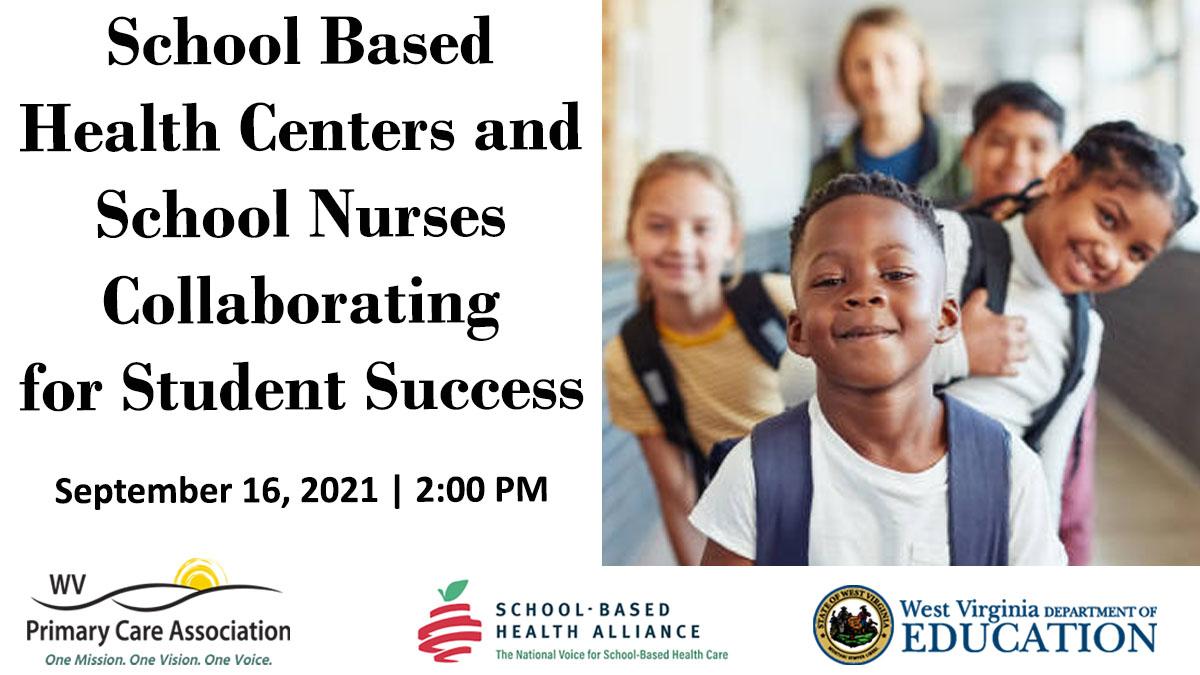
The West Virginia Primary Care Association (WVPCA) is sponsoring in collaboration with the national School-Based Health Alliance and the West Virginia Department of Education this learning opportunity.
School-based health center (SBHC) staff and school nurses share a vitally important mission which is to advance the health and well-being of our state’s school-aged children and maximize their potential. While each system has distinct and complementary functions, students win when we work collaboratively to provide effective and efficient health care. When this is done, there is improved quality of health care and academic outcomes for school-aged children and youth.
Please join this cross-system webinar and learn how a shared vision of collaboration can impact students, schools and families. Participants will hear from WV SBHCs and school nurses about how they collaborate.
Through this webinar, you will be able to:
- Identify national resources on how to work across HIPAA/FERPA to meet students’ healthcare needs
- Identify strategies for supporting students across HIPAA/FERPA through individual consent, MOUs, and data sharing agreements
- Discuss examples of best practices related to consents, well care visits, immunizations, and partnerships
TARGET AUDIENCE: School Based Health Center staff and School Nurses.
Nursing CE available pending final approval.
Registration closes on September 15, 2021 at NOON.
|
|
The Health Resources and Services Administration's (HRSA) Ending the HIV Epidemic: A Plan for America is a ten-year initiative beginning in FY 2020 to achieve the important goal of reducing new HIV infections to less than 3,000 per year by 2030. As HRSA has noted, community health centers are an integral partner in reducing HIV in the communities they serve.
Please join the West Virginia Primary Care Association (WVPCA), HITEQ, MAAETC, and Gilead for an exciting five-part webinar series to assist health centers with preparing to meet the goal of the Ending the HIV Epidemic initiative by sharing useful strategies both with data/HIT and clinical interventions.
This session is presented by Staci Arnold, WVPCA Data Services and Integration Specialist with Jamal Refuge, MPH, Ending the HIV Epidemic Specialist will be Tuesday, September 14, 2021 at 12:00 pm.
Data is the foundation of an efficient and effective quality improvement program. Utilizing electronic health records (EHRs) and population health tools, such as Azara DRVS, are proven strategies for enhancing workflows, increasing HIV screenings, and generating referrals for people at risk for or living with HIV. Please join Jamal Refuge from HITEQ and Staci Arnold of the WVPCA, to learn more about these approaches and how they can help end the HIV epidemic in your community.
Following this webinar, participants will be able to:
- Identify at least two workflow strategies that can be implemented to support routine HIV screening
- Describe at least one population health/EHR strategy to support routine HIV screening
- Describe the importance of leveraging data to improve HIV screening
See webinar series information here.
TARGET AUDIENCE: Data/HIT staff, EHR Managers, Quality Improvement Staff, and Nurse Managers.
Nursing CE available pending final approval.
This event is intended only for Community Health Center Staff.
Registration closes on September 13, 2021 at 5:00 PM ET.
|
|
Community Health Quality Recognition Badge Program |
The Health Resources and Services Administration (HRSA) is recognizing Health Center Program awardees and look-alikes that have made notable quality improvement achievements with our new Community Health Quality Recognition (CHQR) badges. These badges recognize achievements in access, quality, health equity, and health information technology for the 2020 Uniform Data System (UDS) reporting period.
CHQR badges include badges health centers will be familiar with as well as new ones to recognize contributions to the COVID-19 pandemic response. Unlike the Quality Improvement Awards of the past, CHQRs are not associated with supplemental funding.
Badge recipient information is available at the national, state, and health center levels on the Health Center UDS Data webpages. If your health center has received a CHQR badge(s), the information is displayed on your health center’s profile page.
If your health center received a badge(s), you can contact Health Center Program Support to request a high-resolution badge image you can use to share the recognition on your website or in your communications. We expect to email certificates to National Quality Leaders and Health Center Quality Leaders in September.
As a reminder, the Quality Improvement Fund replaced the Quality Improvement Awards. We have shifted to providing health centers with novel funding opportunities and initiatives. The Optimizing Virtual Care funding opportunity is an example. We’re designing these to accelerate innovation and quality improvement in the Health Center Program.
Want to learn more about CHQRs?
Visit the CHQR overview and CHQR FAQ webpages for answers to common questions. You can also join an upcoming CHQR program overview:
Thursday, September 16, 2021 | 1:00PM ET
|
|
Shared Decision-Making Contraception Counseling and Support Training |
The West Virginia Primary Care Association has partnered with the WV Perinatal Partnership and WV FREE to bring a contraception shared decision-making training to health centers.
• Learn to provide shared decision-making counseling for contraception.
• Trainings are appropriate for clinical and non-clinical staff, as using the same reassuring and non-judgmental language is imperative to build rapport and allow the free flow of information.
• Health centers will receive additional free resource materials for use with your patients.
• Participants will learn how to reduce barriers to the full spectrum of contraceptive options.
• Free CEUs for nurses and social workers.
• The training will be offered live via Zoom on September 15 and again on October 27
This training is only available to health centers serving the counties of Boone, Clay, Fayette, Kanawha, Lincoln, and Putnam.
Below you will find the links to the registration, sign-in and pre-survey that are required for CEUs.
Registration link:
Registration link:
Funding for this opportunity is provided by the Greater Kanawha Valley Foundation.
|
|
Pandemic Exposes School
Struggles for Many Children
|
Many students are back in school, and pediatricians can be ready to support them with the transition. Some students will struggle after all the disruptions of the last year and a half, but pediatricians can encourage parents to Take N.O.T.E. and to seek help. |
|
Key Issues for State Medicaid Programs When the COVID-19 Public Health Emergency Ends |
The COVID-19 pandemic has resulted in administrative challenges for state Medicaid agencies from staff transitions to telework due to social distancing requirements, increased applications during the economic downturn, and the need to modify policies and procedures to facilitate access to coverage and care in response to the public health crisis. As a result, states have faced increased enrollment while having fewer staff and resources available for routine eligibility and enrollment processing. At the same time, Maintenance of Eligibility (MOE) provisions require states to keep beneficiaries enrolled until the end of the month when the COVID-19 public health emergency (PHE) ends and prohibit states from adopting more stringent eligibility criteria or increasing premiums, as conditions of receiving temporary increased federal Medicaid funding under the Families First Coronavirus Response Act. Consequently, states will need to address a backlog of Medicaid eligibility renewals and redeterminations as well as continue to process new applications after the PHE ends. |
|
Emergency Preparedness Information Session with CMS |
Is your emergency preparedness plan solid and up to date? Have you tested it lately? Emergencies can come in many forms—a virus, wildfire, extreme heat, earthquake, floods. Are you preparing for the kind of care patients will need in these kinds of emergencies? As we experience more natural disasters and crises, let’s be best prepared to meet patient needs regardless of the emergency. Bring your lunch and join HRSA and the CMS Rural Health Clinic/Federally Qualified Health Center Office when we explore health center emergency preparedness planning in compliance with federal, state, and local emergency preparedness requirements.
Wednesday, September 15, 2021 | 11:30AM ET
|
|
West Virginia Leads Nation in COVID-19 Acceleration, Straining Hospitals |
West Virginia is blowing past the rest of the nation for how quickly the number of COVID-19 cases are accelerating, and hospitals are feeling the strain.
“Cases in West Virginia are speeding up faster than they ever have, and they’re speeding up faster than anywhere else in the country,” said Emory Parker, the data project manager at STAT, a national media company that investigates and reports on health, medicine and life sciences.
Parker examined how quickly COVID-19 cases are rising in each state, differentiated from overall caseload. This focused on how fast COVID-19 is spreading.
Right now, West Virginia leads the nation in that acceleration of new cases with 2.69 cases per 100,000 people per week per day.
|
|
Marsh: West Virginia Likely to Reach Peak of Current COVID-19 Waves in 1-2 Weeks |
The current wave of new COVID-19 cases is expected to peak sometime in the next two weeks, said Dr. Clay Marsh, the state's COVID-19 czar, during last Wednesday's Governor Jim Justice's press briefing.
"We predict it might take as much as another five to seven to maybe as many as 10 to 14 days for that to happen," Marsh said.
However, even after the state reaches the apex of the current peak, new case levels won't immediately drop back to the lows reported this spring, Marsh said.
As of Wednesday, there were 813 COVID-19 patients hospitalized statewide, including 252 patients in ICUs and 132 patients on ventilators, according to information from the state Department of Health and Human Resources.
The state's current ICU and ventilator usage numbers have now surpassed the previous all-time highs reported in January at the height of the last surge.
The state is also rapidly approaching its all-time high of 818 COVID-19 related hospitalizations, which was reported on Jan. 5.
|
|
Applications Open!
2022 Be Active WV Grant Program
|
The Center for ActiveWV, at WVU College of Physical Activity and Sport Sciences, through a partnership with WV Health Promotion and Chronic Disease, is funding projects statewide to increase physical activity. These one-time grants range from $1000-$5000.
Successful grant applications will propose a plan to improve the health of communities in West Virginia through increased opportunities for physical activity in the following areas:
- Increase physical activity opportunities for children throughout the school day and beyond
- Increase and/or improve pedestrian and bike infrastructure within West Virginia
- Implement programming and/or create opportunities for physical activity through clinical practice and community outreach.
Projects should include changes or improvements to policies, systems, or environments, address health equity, and have a plan for sustainability. Additionally, assuming that there will be continued restrictions and impacts due to COVID-19, projects must be feasible and include a plan to successfully complete the project with current restrictions and plans for possible shutdowns.
Upon completing this pre-application survey, the Project Coordinator will contact you to discuss your project and grant guidelines. A link for the full application will be provided after the initial conversation. The full application will be available on August 16, 2021 and closes on October 1, 2021, at 11:59 pm.
Please consider applying yourself or sharing this email with a friend or colleague. For more information contact the Project Coordinator, Rachel Byrne, at rbyrne2@mail.wvu.edu.
|
|
Suicide Prevention Awareness Month |
Suicidal thoughts, much like mental health conditions, can affect anyone regardless of age, gender or background. In fact, suicide is often the result of an untreated mental health condition. Suicidal thoughts, although common, should not be considered normal and often indicate more serious issues.
September is Suicide Prevention Awareness Month — a time to raise awareness on this stigmatized, and often taboo, topic. In addition to shifting public perception, use this month to spread hope and vital information to people affected by suicide. The goal is to ensure that individuals, friends and families have access to the resources they need to discuss suicide prevention and to seek help.
|
|
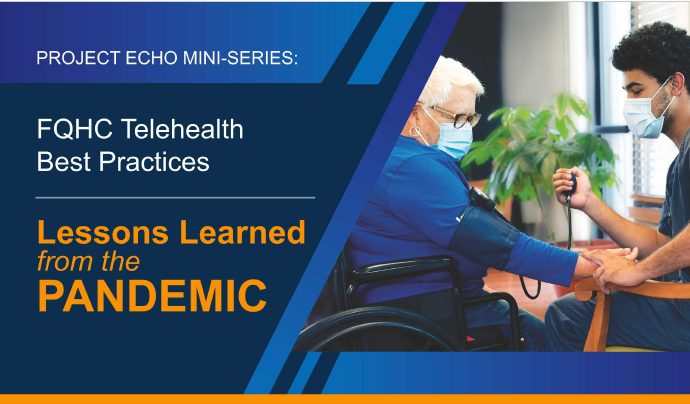
FQHC Telehealth Best Practices
Project ECHO Mini Series Sep-Oct 2021
|
We are pleased to share with you to the upcoming Project ECHO Mini-Series: “FQHC Telehealth Best Practices: Lessons Learned from the Pandemic”, hosted by the National Consortium of Telehealth Resource Centers (NCTRC). This four-part series runs September 28 - October 19, 2021. Check out this flyer for sessions descriptions. You won’t want to miss it! Spread the word!
|
|
2021 National Training and Technical
Assistance Needs Assessment Available Now
|
The 2021 Health Center Training & Technical Assistance Needs Assessment portal is now open, and your feedback is being requested. Please see the below information as provided by National Association of Community Health Centers (NACHC).
About the National Needs Assessment: The Health Resources and Services Administration’s Bureau of Primary Health Care (HRSA/BPHC) has requested a national health center training needs assessment. This one-time assessment will inform the development of training and technical assistance (T/TA) necessary to support health centers improve access to primary health care as well as to advance quality and impact over the next two-three years.
All health center staff are invited to take the 20-minute assessment using the link here.
Objectives: This Needs Assessment will:
- Minimize response burden by reducing the number of needs assessments deployed to health centers.
- Improve ease in response through a streamlined questionnaire.
- Identify priority training topics for BPHC, NTTAP, PCA and HCCN attention.
Who: All health center staff! Your input will influence future T/TA offered by BPHC’s training entities, like PCAs, HCCNs and NTTAPs.
How: The assessment will take approximately 20-30 minutes to complete. Access the assessment via an easy on-line portal on the NACHC website. If you’re experiencing technical difficulties accessing the hyperlink above, please use the link below to access the assessment:
https://www.nachc.org/trainings-and-conferences/health-center-needs-assessment/
Timeframe: August 12 – October 1, 2021.
Your health center’s response is critical! Thank you for your participation!
|
|
Continued Enrollment Opportunity for Consumers with Unemployment Compensation |
The American Rescue Plan (ARP) provides additional savings to help consumers access affordable, quality health coverage options, including expanded opportunities for those who received or are approved to receive unemployment compensation in 2021.
Starting July 1, 2021, the Centers for Medicare & Medicaid Services (CMS) added a new function to HealthCare.gov to allow consumers who receive or are approved to receive unemployment compensation for any week beginning during 2021 to access new savings on health insurance coverage, if they qualify.
Until August 15, these consumers could use the 2021 Special Enrollment Period (SEP) to newly enroll in Marketplace coverage with these additional savings. Now that the 2021 SEP has ended, there are still resources and ways for consumers to take advantage of additional savings. Consumers who don’t already have 2021 coverage, who don’t have another SEP (e.g., loss of coverage), and who attest to receiving or being approved to receive unemployment compensation in 2021 can access an SEP to enroll in 2021 Marketplace coverage and access the additional advance payments of the premium tax credit (APTC) and cost-sharing reductions (CSRs) for which they qualify.
Each week CMS will review HealthCare.gov applications and identify applicants eligible for this SEP. This means that when a consumer initially submits their application, the SEP will not appear in their eligibility results. Instead, they will be notified of their eligibility by email or phone, depending on their communication preference, and access to the SEP will be provided through their account on HealthCare.gov. Consumers may also use a certified enrollment partner to complete the plan selection process once they have been notified by CMS that the SEP has been applied. Additionally, eligible individuals who have a HealthCare.gov account will see a message in their My Account notifying them of their eligibility within one week of submitting their application. Consumers may call the Marketplace Call Center if they have questions.
Information for people who get or were approved to get unemployment compensation, see:
Have questions?
Navigators, please submit inquiries to your CMS project officer.
|
|
CDO Program Application Window
Extended until September 15, 2021
|
Any organization operating in a Federally-facilitated Marketplace (FFM) state seeking to provide certified application counselor (CAC) enrollment assistance to consumers for Plan Year 2022 must apply to become a CDO and enter into an agreement with CMS.
CMS invites NEW applicant organizations who want to become a CDO for Plan Year 2022 to apply during CMS’s Open Season, extended until September 15, 2021.
CDOs are a vital component of the assister community. In the FFM, CDOs oversee CACs, who are trained and able to help consumers seeking health coverage options through the Marketplace. For an overview of the CAC Program, visit the technical assistance page of Marketplace.cms.gov.
IMPORTANT: This notification applies only to organizations operating in an FFM state, that do not currently have an active CMS-CDO agreement with CMS, who wish to become a CDO for Plan Year 2022. Organizations with an active CMS-CDO agreement should disregard this message. If you are unsure if your organization has an active CMS-CDO agreement with CMS, please contact us at CACQuestions@CMS.hhs.gov.
|
|
 |
Funding and Financial Opportunities |
|
|
|
Resources for Provider Relief Fund Reporting
Need to be Submitted by September 30
|
|
|
Upcoming Training Opportunities |
|
|
|
Schedule Changes for Today with Macrae Webcasts
|
HRSA has made changes to upcoming Today with Macrae: Health Center Program Updates webcasts.
-
The Sept. 30 session is moved to Tuesday, Sept. 21 at 3:00 PM.
Access details coming soon
|
Better Assess Your Community Using the UDS Mapper Webinar |
The UDS Mapper is a collaboration between the Health Resources and Services Administration (HRSA) and the American Academy of Family Physicians (AAFP) and is part of the HealthLandscape online mapping platform.
Attend this session to learn how to leverage the UDS Mapper tool to further understand the communities and populations served by the Health Center Program.
The webinar is geared toward users who are familiar with the UDS Mapper.
The webinar is open to the public and free of charge.
Friday, September 10, 2021
2:00 PM ET
|
|
Using the UDS Mapper to Explore Measure of Social Need |
This webinar will review the most widely used multidimensional measures of social need, including the Social Deprivation Index (SDI), the Social Vulnerability Index (SVI), and the Access Deprivation Index (ADI). The webinar is geared toward users who are familiar with the UDS Mapper. The UDS Mapper is a collaboration between the Health Resources and Services Administration (HRSA) and the American Academy of Family Physicians (AAFP) and is part of the HealthLandscape online mapping platform. The webinar is open to the public and free of charge.
Monday, September 20, 2021
12:00 PM ET
|
Addressing Tobacco Dependency to Reduce COVID-19 Risks and Complications Webinar Series |
Smoking is a major risk factor for most respiratory related infections. Studies show that current smokers have been more likely to access various forms of smoking cessation assistance during the COVID-19 pandemic. This offers an opportunity to offer smoking cessation services, referrals, and in-house psychological and pharmacological interventions. These two webinars will provide examples of cessation plans and resources that can be shared with patients trying to stop smoking.
Tuesday, October 12, 2021
Tuesday, November 2, 2021
1:00 PM ET
|
|
|
|
Community Health Center Resources |
|
|
|
Jackson Kelly attorneys provide limited consultation to all members of the WVPCA at no charge, as part of the WVPCA contract. There is no limit to the number of calls which any member may make. All inquiries within the scope of professional competence of firm attorneys will be addressed. Inquiries which require expertise not available through the firm will be promptly identified and, when requested, Jackson Kelly will assist in referring the matter to accounting firms, insurance agents, or others as circumstances warrant.
All inquiries, responses and consultation services provided by the firm lawyers will be provided without additional charge beyond the retainer amount, except for matters which require formal opinions, representation of record in litigation, transactional work, e.g. the purchase or sale of real property, or matters which require continued representation, research or consultation beyond a single inquiry or document review.
Justin M. Harrison is a labor & employment lawyer with Jackson Kelly PLLC. He is available for consultation through a special retainer relationship with the WVPCA. Justin can be reached at 304.340.1358 and via email at justin.harrison@jacksonkelly.com.
|
|
Risk Management Manual for Health Centers Now Available! |
The Risk Management Manual for Health Centers is now available on the ECRI Institute Clinical Risk Management Program website! Designed to support a proactive approach to risk management at health centers and free clinics, the Manual provides background, tips, and how-tos in a manageable format.
Specific areas that are covered include:
Risk Management Programs & Plans
Claims and Lawsuits
Role of the Risk Manager
Patient Grievances and Complaints
Communication with Patients
Credentialing and Privileging
Communication among Providers, Staff, and Community Partners
Tracking Systems for Diagnostic Tests, Referrals, and Hospitalizations
|
|
|
Debra Boyd | Chief Financial/Chief Operations Officer
|
|
|
|
To sign up to receive the WVPCA Weekly Newsletter: |
|
1700 MacCorkle Avenue, SE
Charleston, WV 25314
Phone: 304.346.0032
Toll Free: 1.877.WVA HLTH
|
|
|
This project is/was supported partially/fully by the Health Resources and Services Administration (HRSA) of the U.S. Department of Health and Human Services (HHS) under grant number U58CS06834 State and Regional Primary Care Associations. This information or content and conclusions are those of the author and should not be construed as the official position or policy of, nor should any endorsements be inferred by HRSA, HHS or the U.S. Government. |
|
|
|
|
|
|