Visual 1st Perspectives


June 8, 2023

WWDC: Apple’s second mover challenge

Remember we all thought Microsoft had the second mover advantage?

In the PC era Microsoft excelled in mimicking the features of innovative companies such as Apple and various others, learned from these innovators’ imperfections, and fed their me-now-too products to their gigantic consumer and corporate user base, while keeping their cash registers ringing.


It took a while but with the emergence of smartphones and cloud computing, and the WinPC platform having become less of a bottomless cash cow, Microsoft reinvigorated under Satya Nadella’s leadership with a focus on staying at the forefront of technology innovation.

Most recently this meant: generative AI.


And then there’s Apple. 


While the entire tech world is on a breathtaking race to explore how generative AI can transform about every imaginable knowledge, visuals, or even code creation use case, the term generative AI was verboten in this week’s WWDC presentations – and so was The Metaverse. Even “AI” by itself was rarely mentioned in lieu of what seemed to be Apple’s sanctioned alternative terms: “on-device intelligence” or (if it really couldn’t be said otherwise) “machine learning.”


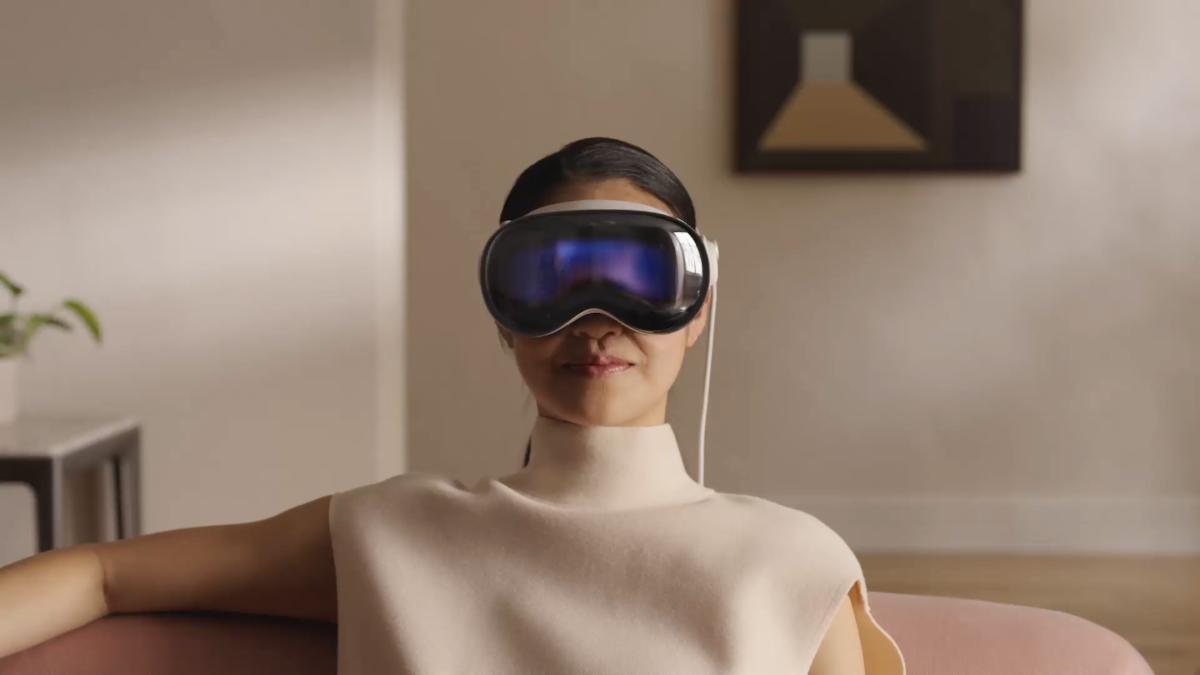
Instead of generative AI, WWDC was all about Apple's now officially announced Vision Pro mixed reality (MR) headset. Apple’s unmatched marketing prowess kept rubbing in that the Vision Pro is at the birth of a new category of devices (coined as “spatial computing”) along the lines of how the iPod, iPhone and Apple Watch were said to have been at the birth of new categories when they first launched (more about this later).  

Photo: Apple


It’s easy to go along with that by just absorbing the enticing presentations and reviewing the impressive specs (how about a standalone computing headset with a slick glass front and an aluminum frame, containing 12 cameras, 5 sensors, 6 microphones, a lidar scanner and a TrueDepth camera, a 4K display for each eye, and massive computing power from a new R1 chip?).


But still… let the Apple marketing engine not fool you: the Vision Pro is a second mover product, after having been in the works for years and reportedly having gone through several iterations as well as years of delays, to tackle a use case that other large tech players (Meta, Microsoft, Magic Leap, Samsung, Sony, Google among others) have spent billions of dollars on to address – and mostly failed at and to some extent abandoned.


This doesn’t mean that Apple can’t succeed with their second mover approach. It’s Apple, after all.


Which raises the question what in general is needed for second movers to succeed? Here’s my take:


1. Successful second movers tackle the hardest and most time-consuming phase of product development: getting the solution 100% right – not 80%, not 95%, not 99%. 


With the current lineup of VR, AR and MR headsets not even close to 100% where they should be, will Apple pull this off eventually? Given their extensive hardware, software and microchip design capabilities I have little doubt they will. 


But when they will, and whether there’s still an interest in MR headsets at that time is a whole other question.


2. Successful second movers launch solutions that serve proven (or at least latent) user needs and adhere to paradigms with which the target customers feel to some extent familiar. 


Which leads us to the big question: have all our abandoned VR, AR or MR headsets – and I’m sure you have at least one collecting dust in your closet – be rejected because they weren’t 100% right, there was not enough compelling content available (the perpetual excuse of VR headset vendors), or had simply a too disruptive form factor, too far removed from what customers are used to and would feel comfortable with? 


Remember, Segway failed, while e-bikes and e-scooters are thriving. Successful second movers stand on the shoulders of first-attempt predecessors whose experience indicated that there might be a nascent market for that new category after enough tweaking to get the products just right.  


And that’s how previous successful Apple device intros succeeded. No matter what Apple’s marketing says, their flagship devices were successful second movers: The iPhone wasn't the first smartphone; it wasn't even the first one with a capacitive touch screen. The iPod wasn't the first hard-drive-based music player, either. And the Apple Watch followed a long list of previous first-generation smartwatches. 


So what will the Pro Vision headset be: the next iPod, iPhone, or Smart Watch? Or the second mover stubbornly pursuing to become the next gen Segway?


I really don’t know. But I do know if any company could pull off leveraging their second mover advantage even with a first mover market that has largely failed to take off, it’s Apple – with its hardware, chips and software development resources, its large and loyal user base, and yes, its unmatched marketing skills. 


Finally, I can’t resist bring up this nagging what-if question: what would WWDC have looked like and how would photo & video app developers have reacted – other than the proverbial yawns and shrugged shoulders I’ve noticed this week – if Apple had put all it technology innovation ingenuity eggs in the (generative) AI basket to enable game-changing AI tech to run locally on all Apple devices made possible thanks to a next gen series of Apple processors? 


One thing I know for sure: nobody in our photo or video industry would have shrugged their shoulders when considering the security, privacy and real-time AI generation benefits. Neither would have Apple’s shareholders.

Oct. 24-25, San Francisco


Save $100: buy your Super Early Bird ticket

by June 15.


Initial Speaker lineup:

(more details here)


Keynote:


Profiting From Major Technology Transformations –

How About AI?

Hans Hartman

Co-chair Visual 1st

Principal Suite 48 Analytics

Alexis Gerard

Co-chair Visual 1st

Strategic Advisor

Suite 48 Analytics


Fireside Chat:


Google Photos –

The Challenge of

"Anything is Possible"

John Fisher

Sr. Director of Engineering

Google Photos

Show & Tell Presenters:


Taylor Schmidt

Corbu


Jose Florido

Freepik


Trista Taylor

LibAI Lab


Ran Rahav

Snapify


Sarah Lefebvre

EyeQ


Bill Testa

Frintz


Servi Pieters

Viesus


Marie-Eve Lemieux

Mediaclip


Troy DeBraal

IMAIGE


Show & Tell Judges:


Andy Kelm

Managing Director

Palmarés Advisors


Anna Dickson

Visual Lead,

Google Image Search

Google


Sami Niemi

Partner

Spintop Ventures


Click here for up-to-date program and presenter lineup descriptions


Contact us for Speaker, Show & Tell demo, and Sponsor opportunities.

And a few more things...


Frintz. Free advertising-supported photo prints. A new company, Frintz, launches an iOS and Android app to create and order free photo prints. While the idea of advertising-supported free photo prints is not new (for instance, past Visual 1st presenter Stampix offers this in several European countries), Frintz owns several patents in this area, micro-targets its ads for the user’s geographic region, and also provides a finely perforated seam to allow the user to separate their photos from the advertising part.


Getty & Stability AI. Taking off the gloves. Stock photo provider, Getty Images has asked London's High Court for an injunction to prevent Stability AI from selling its AI image-generation system in Britain, court filings show. Getty accuses the company of breaching its copyright by using Getty's images to train the Stable Diffusion system, according to the filing.


Bazaart. Background removal going video. Originally a photo and graphic design tool developer, last year’s Visual 1st panelist Bazaart keeps adding video features as well. It announces a new AI-based video background removal feature that runs locally on users’ smartphones.


Polycam. Capturing 360 with a little help of AI. We’ve had smartphone apps showing “360” degree image capture before at Visual 1st – Fyusion comes to mind, which has since been acquired by Cox Automotive – but, guess what, generative AI could make it all look a lot better. iPhone app Polycom now lets you take a continuous panoramic photo in a full circle and then uses generative AI to fill in the blanks (i.e. above and below the captured areas) and complete a 360-degree image.


Amaze & Outfts. Acquisition. Last year’s Visual 1st panelist Amaze acquires Outfts, a hub aimed at empowering creators to own audiences and develop new income streams. The addition of Outfts technology will enable Amaze to provide creators with additional tools, services and revenue sources, according to Amaze.

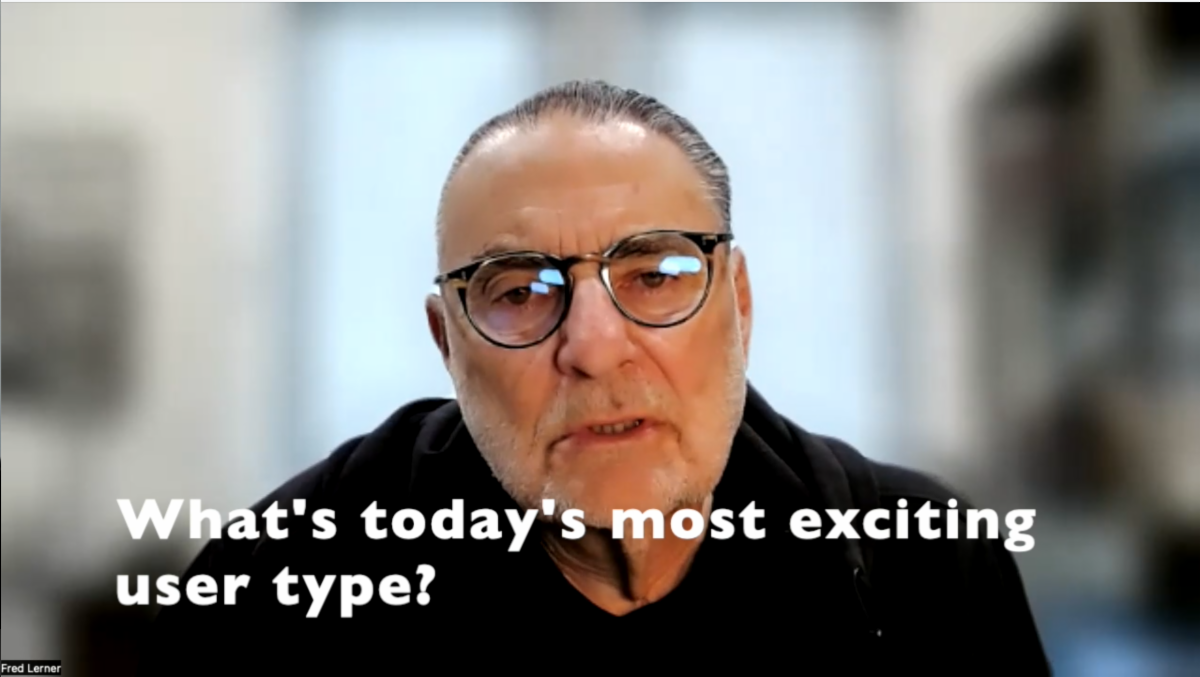
Check out our latest Visual 1st Flash Viewpoint with Fred Lerner, CEO & Co-founder of Mailpix:

2 questions, 3-minute video:


  • What's today's most exciting user type?


  • If you had a magic wand, what would you like to see from the Apple and Google app stores? 


Previous Photo Print

Flash Viewpoint:

Andrew Laffoon, CEO & Co- founder of Mixbook

Mixbook. Upping photo curation. Aimed at making it easier to find the appropriate photos to tell a visual story that could turn into a photobook, Mixbook’s updated app uses machine learning to scan – on the user’s device to safeguard privacy – photo content and metadata and select, label, and group photos in a way that goes up and above the average camera roll. In short, the app can create a visual story of a particular prompt — like a Mother’s Day party at the beach — and help turn that into a series of photos that tell a cohesive story without getting too hands-on with a user’s personal information or their biometric data.


MyHeritage. One app to bring all these old photos to life. You’ve probably seen MyHeritage’s Photo Enhancer app in the past, which uses deep learning tech to turn blurry or faded family photos into sharp images, or its Deep Nostalgia AI app that turns still photos into moving portraits. MyHeritage’s new Reimagine iOS and Android app combines all of the company’s offerings into a single app: it lets you use your phone to scan whole album pages at a time, enhance individual photos, colorize them, animate them, repair scratches, restore faded colors, and allow for easy sharing. The app costs $7.99 per month or up to $49.99 per year.


BeReal. Keep on diversifyin’. Just in time or too late? Even with still 20M daily active users according to the company, BeReal has seen the signs on the wall: you can’t be a single-feature app forever, in particular when that feature is easily copied. Their latest move: testing a private chat feature, called RealChat. RealChat users can only message each other if they’re already friends on the platform and it will launch with blocking and reporting features for additional privacy.


Best,


Hans Hartman


Visual 1st Sponsors to date:

Super Early Bird: $100 off until June 15 – see you there!


Archive & Subscribe | Share your news with us | Connect on LinkedIn