WWUH 91.3 FM Newsletter

Program Guide October 2026

Broadcasting as a Community Service of

The University of Hartford.

GM Report


It may not be apparent but everyone you hear on the air here at WWUH is a volunteer. In fact, the station would not exist if it weren't for our dedicated volunteers and in this issue I want to acknowledge (and thank!) two station volunteers who are celebrating no less than 50 years on the air. That's not a typo. They each have spend 5 decades producing programming at WWUH! Talk about commitment! Each of these two men have produced over 2500 programs and contributed over 7500 volunteer hours to the station. Simply incredible!


You can read about these two amazing individuals below.


John Ramsey

ramsey@hartford.edu


Maurice D. Robertson

50 Years on WWUH!


Greetings Everyone!


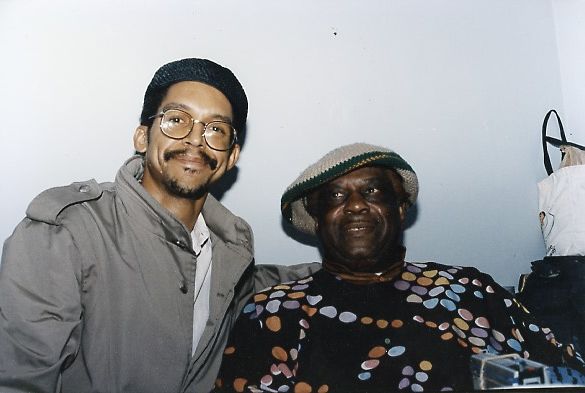
This is Maurice D. Robertson and thanks for the many years of listening and support of my radio show , Accent on Creative Music.


This October, I am celebrating my 50th anniversary as a volunteer. I was enlisted in October of 1976, by then WWUH staffers, Melonae McLean and Jackie Pearl to fill a Thursday slot. I was also then a volunteer with WRTC at Trinity College, part of the Thought Power crew 1975- 1988. A couple of years afterwards, I was moved over to Wednesday night's to make room for historic jazz radio, impressario Mort Fega. Since then it's been an invigorating musical journey, presenting America's greatest cultural contribution to the world and interviewing some of the giants, such as Ron Carter, Chick Corea, Gary Bartz, Dee Dee Bridgewater, Archie Shepp, McCoy Tyner, Sun Ra, Don Cherry and other vital music makers. Plus, keeping the music lovers aware of where to hear the music and be supportive. At this point, I stay on way past midnight on Wednesday night's and hope to continue to serve you up weekly with exciting music, interviews and information on the current standard bearers and their illustrious predecessors .


Cheers to WWUH for allowing me this opportunity. Keep on keeping on! Maurice D. Robertson


Maurice D Robertson


Wayne Jones

Celebrating Five Decades of

Rock N Roll Memory Machine


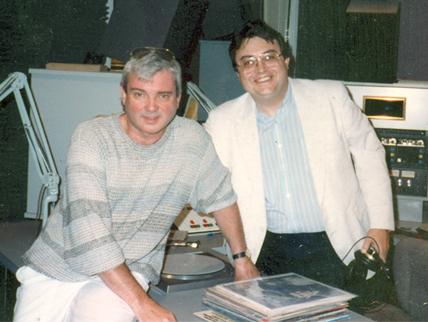
Wayne Jones aka ‘Wild’ Wayne, is celebrating 50 years on the air at WWUH! He is a lifelong Connecticut resident and has been a fixture on Connecticut Radio for over fifty years. Wayne is a graduate of the Connecticut School of Broadcasting having graduated from their second class ever in 1965. 


Initially, Wayne co-hosted an Oldies radio program on WFCS in New Britain, Ct beginning in January 1975 through August 1976. From there, he began a new Oldies show on WWUH radio in November of 1976 called ‘The Rock & Roll Memory Machine’. Now in his 50th year, ‘Wild’ Wayne has not only entertained his listeners with music from the Golden Age of Rock & Roll (1950s and 1960s), but has also educated them with background information on the artists and songs from that era . Many of those artists have also appeared as guests on his program over the years including Rock & Roll Hall of Fame including Rock & Roll Hall of Fame inductees Les Paul, Hank Ballard, Brenda Lee, Ronnie Spector, Lloyd Price.    


Having been born and raised in Rockville, Ct, he became good friends with fellow Rockville native and Rock & Roll Hall of Fame inductee Gene Pitney. That friendship resulted in a record nine guest appearances on his program.


Wayne is also a voting member in the prestigious Rock & Roll Hall of Fame. Additionally, because of his expertise on this era of music, he has been a contributor to books on Bobby Darin, James Dean, Buddy Holly, Gene Pitney and others.


He has also served on the Executive Board of The Buddy Holly Memorial Society and the Gene Pitney Commemorative Committee.


Between1980 –1983, he was hired as a music consultant for the syndicated television show Sha Na Na and was a frequent contributor to GOLDMINE magazine for 10 years.


The following are some of the special recognitions he has received:


On November 30th, 1986, East Hartford Mayor Robert McNulty proclaimed it ‘Wild’ Wayne Day in the city of East Hartford marking his 10th anniversary of his radio show. 


On November 25th 2001, on his 25th anniversary of his radio program, Governor John Rowland proclaimed it to be ‘Wild’ Wayne Day in Connecticut".That same year, he received a note of congratulations from Dick Clark as well.


On November 26th, 2006, on his 30th anniversary of his show, he was further honored by both the State of Connecticut and The United States Congress.

In November of 2016, Mayor Marcia Leclerce of East Hartford honored him with a proclamation on his 40th anniversary.


Wayne's Website


Image below: Wayne with Gene Pitney.


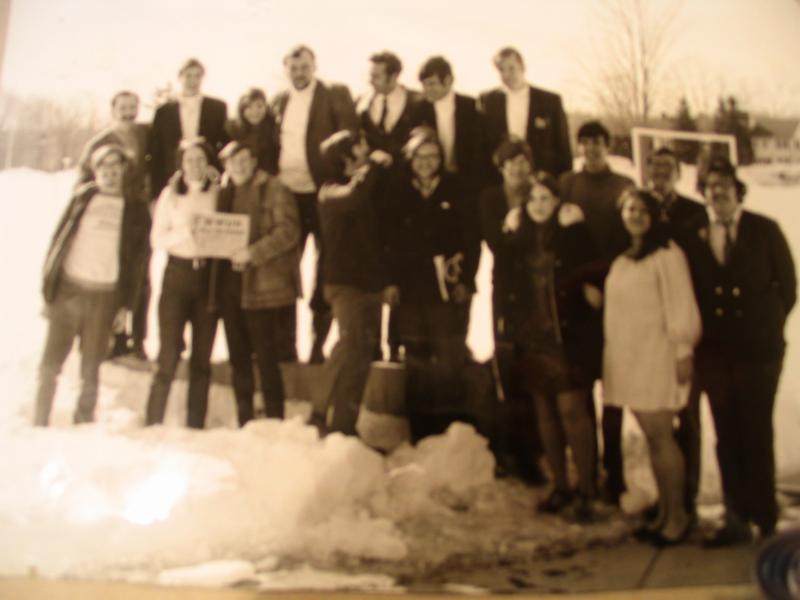
WWUH History: 1970/71


In this installment of our continuing series on the history of WWUH, we look at 1970/71 school year.


Fall 1970


In October of 1970, Brian Lord was voted in as Program Director at a special election. The discussion about whether the station should produce a monthly Program Guide continued. One issue could be produced for $70, which included 1,000 copies but no photographs, and the staff would have to do the formatting and typing. It was hoped that the cost would be underwritten by selling ads in the new guide.

In November Anne Harte, formally student personnel director of WWUH, was named Black Affairs Director and as such she was in charge of coordinating “all black programming, as well as any public affairs programs having to do with the black community.” (Quote from at Nov. ’70 station press release).

In December of 1970, the ECOM decided that the WWUH-AM could find personnel from outside of the student population.

    Plans were discussed to install 150 feet of Christmas lights and a peace symbol on the WWUH tower on Gengras for the holiday season.

$4,000 was spent on two, new Scully 280B 1/2 track reel-to-reel machines for use in the station’s production studio. This was nearly one-third of the station’s total budget at the time, but was justified as the machines would allow the station to greatly expand its production department and facilitate the broadcast of pre-recorded concerts. These state-of-the-art machines, the "pride" of the station, remained in use until 1989.

Audio processing at this date consisted of a CBS Labs Audimax and Volumax pair. The transmitter was controlled by a custom extension-metering panel, on the over bridge above the air console. This panel was designed and built by station engineers and allowed all applicable transmitter readings to be taken while in the on-air studio, and allowed for filament and plate on/off switching and power adjustment.

The air studio equipment consisted of a 5-channel Sparta console, two QRK turntables with Microtrack arms, two Spotmaster stereo cart decks and two Ampex 354 reel-to-reel machines. The announcer spoke into two AKG D-200 microphones connected for stereo, which meant that the listener would hear the announcers voice moving between their speakers as the DJ turned to one side or another while speaking.

WWUH-AM utilized transmitters in each of the five dorms. The WWUH AM studio was the small "booth" next to the air studio.


1971


Results from the February, 1971 election: Ken Kalish - General Manager; John Michael, John Eppler - Station Manager; Brian Lord - Program Director; Philip Cabot - Business Manager; Charles Allen - Chief Engineer; Michael Joy - AM Sales; Sherman Novoson, Michael Ditkoff - Members-at-Large.

Partial list of staff: Charles Allen, Philip Cabot, Tom Canaday, William Grant, Charlie Horowitz, Bob Katz, Michael Joy, John LaBella, Brian Lord; Ken Kalish, John Michael, Marilyn Nabors, Roger Stuass, Rob Weitz

 Advisor: Chuck Wansley

WWUH alum Charlie Horwitz was Program Director during some of the time period (‘69-71), and he submitted this recollection of one of his shows in the early seventies.

“One of my favorite recollections was one I shared alone. It was the time when Hartford's connection to the sea and whales in particular was getting air airplay and local ink. In fact, a local group had recorded a sea chant of sorts that we played and I think the station had done an interview with them. Their name escapes me.

“Well one night, after my Gothic Blimp Works show, I was determined to incorporate that song into a PSA about Saving the Whales. I put in several hours to get 60 seconds of moderately coherent information and put the whole project to bed on a nice new cart. Leaving the Gengras Center just before dawn, I was struck by the sounds of whales whistling down the empty hallways. Now I know that it was just the wind whistling through the opened doors and not the voices of thankful whales but I checked those doors and there were all properly closed. So, I went outside and meditated with the ghosts of those voices and have felt very in tune with their song ever since”.

“I had spent 3 years hanging around the station; watching it being built and seeing my friends go on the air. I almost auditioned for a folk music show, but got involved in the theater department and never followed up. I was supposed to graduate in June 1971, but had one more semester to go. As I always had a work-study job, I managed to get assigned to WWUH for the summer. I was there the Friday of Memorial Day weekend 1971 working on cataloging the classical library, all pre-computer of course. I'm not sure who came in, but I think it was Ken Kalish who asked me if I ever thought I could do a female, easy listening type of program. I said if I did a show it wouldn't be easy listening and he said, great, you go on in 15 minutes. YIKES! I learned the 5-channel Sparta board pretty quickly and since I had spent many hours hanging around, I had a sense of what was supposed to happen. Ken assured me (as there was NO ONE ELSE in the building at the time) that he would be there if I had any problems. SO off I go. My first song at 11:00 AM was Stage Fright by the Band. And except for forgetting to turn off the mike (but potting it down) and taking off my headphones and thinking I was sending dead air out when I wasn't, I did OK. UNTIL, about 25 minutes into my show, when Ken came in and said a tower light went out and since it was a top blinking one, he had to go to the tower ASAP to change it. I was doing great, so I said, see ya! Of course, about 10 minutes later, I lost cue in the right-hand turntable and spent the rest of my shift only playing the first cut of the record because I could see to cue it up. Brian Lord was program director that summer. And for some strange reason, he liked what he heard and offered me middays for the summer. I still have my play lists and I will e-mail a sample day to you at another time. 

“I have an old air check from my second week on the air and I have NO IDEA why Brian put me on the air! 

“My most memorable day on the air was the day the draft lottery numbers were announced. I remember playing long cuts so we could gather the info from the wire to read on the air. That was the year my kid brother was in the lottery... imagine how I felt when his birthday came up as number 8....and I still had to be professional and read the rest of the dates. (He turned out to be 4-F from an old skiing injury, but that's another story for another place).”

A special series of programs produced by Pacifica was broadcast in February. This included “Dissent and Alternatives in Israel,” “Politics and Televsion,” “National Liberation Front,” “Pornograhy, Obscenity and the Law,” “Law and Order,” “Consciousness in Plants,” “TV and the Minorities” and “A Case of Dallas Justice”.

The ECOM frequently discussed funding sources during the early years of the station. The station needed $15,000 for operating expenses over the next 12 months, and while the F.C.C. required the station to be on the air 36 hours a week, the ECOM determined that it would need to be on the air 48 weeks a year to qualify for any grants, so steps were taken to expand the station’s broadcast day by adding more shows.

The ECOM also discussed the possibility of and requirements for qualifying for Federal Corporation for Public Broadcasting grants. They voiced concerns about the possible loss of student power and participation that might occur if “outsiders” were allowed to run the shows. There was also much discussion about whether a paid staff would be in keeping with the purpose of the station.

Marilyn Nabors was appointed as Program Guide Editor, and a decision was made not to have advertising in the first issue. 

The station also planned for a fund-raising Marathon in April, the first on WWUH, with a goal of $1,700. The programming department would use this money for tape decks, tapes and records. It was later postponed until the spring of ’72.

The station held is annual staff banquet at Valle's Steak House in Hartford on May 14. The cost was $6.50 per person, which included dinner. The speaker was the News Director of WWDC in Washington, DC, one of the top news stations in the country.

The ECOM voted to draft a letter to the Federal Communications Commission outlining the station's position on recent FCC concerns about the mention of drugs in the lyrics of songs. The station felt that any restrictions based on the lyrics of a song would be a clear violation of the first amendment by the federal government.

The topic of changing the station’s constitution was discussed. A proposal was made to change the section that said "a person must be actively involved in the station and also be a student in order to be an active member." Discussion centered on changing the policy so that people who were not students could become active members. The staff at the 3/9/71 General Staff meeting ratified this change.


Fall 1971


The ECOM voted that “dope” was prohibited in the studio, and that guests needed prior permission to visit. 

   The station acquired a large safe, nicknamed Hector. No one can recall where it came from, but several reliable sources said that the elevator cables were stretched after the heavy safe was brought up to the third floor of the student union.  No one has been able to say what was originally kept in the safe or why it was kept in the office, it was too large and gave people the feeling that they weren’t to be trusted, although tools and equipment had a way of disappearing. It was finally moved down the hall. 

In September, the ECOM met and focused on ways to convince Mr. Patricelli, General Manager of Hartford’s WTIC, to offer WWUH space on its Avon Mountain tower to place WWUH’s antenna. Moving the station’s antenna from the campus to the top of Avon Mountain would dramatically increase the station’s coverage area. There would also be substantial costs involved.

   The ECOM also decided not to pursue Connecticut Public Broadcasting qualifications for fear of losing student interest by hiring a paid professional.  

   Staton perational costs had increased to about $15,000 a year. The ECOM stated that it was looking for a more definite commitment for financing from the University, along with a request for more space in the Gengras Student Union as the station was growing. 

To increase funds, members made efforts to sell underwriting at the rate of $5 per hour, with commissions for the Salesman, Business Manager, and Underwriting Coordinator totaling 15%. Underwriters would be acknowledged twice per hour on the air. The staff also made a decision not to use national PSAs unless they applied to the local area, nor PSAs that asked for money.

Chuck Wansley was appointed by the Black Peoples Union as an advisor to WWUH.

A constitutional change was made on October 14 to remove the AM Sales Manager position from the ECOM, to be replaced by a Second At Large member. Tom Canaday and Rob Weitz were elected to these positions. Brian Lord undertook a study of the feasibility of having Spanish language programming on WWUH.


The new programming schedule featured the following weekday programs:

7:00 – 9:00 AM - Light music

9:00 – 11:00 AM - Classics 

11:00 – 11:15 AM - Children’s Corner 

11:15 – 2:00 PM – Recess Rock

2:00 – 5:00 PM – Afternoon Roll

5:00 – 8:00 PM - "Stereo Classics" 

8:00 – 8:30 PM - UH Presents 

8:30 – 9:00 PM - NPR or Pacifica programs 

9:00 – 12 Midnight - Accent on Jazz 

12:00 – 3:00 AM - Gothic Blimp Works


Specialty shows were:

5:00 – 8:00 PM Fridays – Folk

8:00 – 12:00 Midnight Friday and Saturday - Soul

5:00 – 8:00 PM Saturday- The "Katz Meow," featuring engineering Guru Bob Katz.

1:00 – 2:00 PM Sunday - Composer’s Forum from NPR

2:00 – 5:00 PM Sunday - Contemporary and Modern Music 

5:00 – 6:30 Sunday - Radio Theatre

6:30 – 9:00 PM Sunday - Opera 


SPECIAL EVENTS:

Live remotes from the Suisman lounge featured the Hartt Jazz Band.  In March the station’s Opera Masterpieces program broadcast the Thomson-Stein Opera.

ENGINEERING:


In May, the engineering department discovered that the present stereo generator and exciter would not pass the mandated FCC proof-of-performance. The ECOM allocated $3,200 for replacements. At this time, the station purchased a state-of-the-art Wilkinson solid-state FM exciter to replace the old tube type RCA unit. It also purchased a Wilkinson stereo generator. When installed, these units greatly improved the sound and reliability of the station's signal. The ECOM also approved $120 for speakers and mikes, $600 for a portable reel machine, and $350 for five AM transmitters to be installed in the dorms for WWUH-AM.


SPECIAL EVENTS:

Live remotes from the Suisman lounge featured the Hartt Jazz Band. 


Major News Stories during 1971:

Nixon ends the US trade embargo against China. (Apr. 14); US Supreme Court rules unanimously that busing of students may be ordered to achieve racial desegregation (April 20); Pentagon Papers published (June 13); twenty-sixth Amendment to US Constitution lowers voting age to 18. (June 30).


Spring 1972


Philip Cabot was elected General Manager in March. Also elected were: Robert Weitz – Station Manager, Thomas Cadaday – Program Director, Charles Allen – Chief Engineer, Michael Ditkoff - Business Manager, Anne Harte – At Large Member, and David Radka - At Large Member.

Staff (partial) incuded: Charles Allen, Tricia Beatty, Phil Cabot, Tom Canady, Michael Ditkoff, Anne Harte, Alex Leslie, Dawn Magi, Mel Peppers, Dave Radka, Roger Stauss, Robert Weitz. Faculty Advisors: Dr. Ummuna, Ed Nelson and Louis Sampliner.

WWUH, in a testament to the professionalism of the staff and programming, was invited to “move Mother to the Mountain” by WTIC Radio.  Raising the height of the antenna to almost 500 feet above average terrain and moving it to the top Avon Mountain increased the station’s reliable coverage from five miles to nearly 20 miles. Charles Allen, Chief Engineer, did all of the leg work in preparing the transmitter to move to the mountain, but was unable to finish the project due to a work conflict. The project was passed to engineer, Larry Titus, who, along with volunteers Stu Yeager and Steve Shore, presided over the actual move.

The station raised money for the move in its first fund-raising marathon that spring. The two-week Marathon raised $7,200. This move was a major step for the station, and it necessitated the purchase of a new antenna and studio to transmitter microwave equipment. It was also was the first time the station had to pay for the transmitter's electricity, which, at about $100 per month, a significant budget line item.  

To help fund the move, Alex Leslie put together the first Program Guide which was published in April to help raise funds and reward those who had donated to the station. 

Station management had their hands full running the FM side of the station so a decision was made to concentrate on the FM and allow the AM to fall by the wayside. While the original intent was to operate the AM station as a training ground for students interested in getting on the FM, running two stations had become just too much work, and everyone wanted to be on the FM so that they could broadcast to the whole community and not just the campus.

    The Student Association donated $2,000 to enlarge the station’s record library.  

Election of officers on February 29, 1972: General Manager: Phil Cabot, Station Manager: Robert Weitz, Program Director: Tom Canady, Business Manager: Michael Ditkoff, Chief Engineer: Charles Allen, Members-at-large: Anne Harte and Dave Radka. Faculty Advisors: Dr. Ummuna and Ed Nelson

Staff (partial): Charles Allen, Marc Andrews, Art Barlow, Joe Barone, Tricia Beatty, Phil Cabot, Tom Canady, Bob Carlin, Michael Ditkoff, Bob Dunkley, Pete Godoff, Anne Harte, Patrick Hill, Mike Joseph, Bob Katz, Dawn Magi, Timm Muldoon, Nel, Mel Peppers, Mark Persky, Bud Pyatak, Dave Radka, Cliff Scheley, Jim Shanahan, Bonnie Sinclair, Bob Smolen, Joe Soya, Roger Stauss, Leslie Terry, Joe Terzo, Ifekandu Umunna, Uncle Dave, Bob Walker, Robert Weitz, Maceo Woods, Joe Young,  

The station’s first Marathon was planned for midnight April 7 to midnight April 23. Donors received a subscription to the Program Guide for a $5 donation. Announcers were asked to mention the Marathon once every 15 minutes during the 16-day event. The goal was set at $7,200, earmarked for the transmitter move. Hourly totals were posted on a blackboard.

A Black Coalition, formed within the radio station, demanded more black programs on the air. Their concern was that soul and jazz were being neglected, and that there were not enough albums. A separate library was set up for black records and programs. 

  The station began a series of programs on Youth and Draft counseling.

Two new programs aimed at minorities were created:

“African Worlds” was started by UH Professor Ifekandu Umunna, director of UH’s Black Studies Program and “Minority Viewpoint,” which aired on Monday evenings at 8:30 p.m. Fourteen “Minority Viewpoint” programs were produced by Joan R. Singer in conjunction with the Anti-Defamation League of B’nai B’rith. Programs dealt with such issues as “Russian Jewry”, “Puerto Ricans Among Us”, “Inner City Problems” and “Anti-Semitism”.

Show hosts in 1972 were as follows:

Morning Rock: Marc Andrews, Timm Muldoon, 

Morning Classics: Tricia Beatty, Mike Joseph, Mike Ditkoff, Anne Harte, Leslie Terry, 

Afternoon Rock: Bob Smolen, Joe Young, Uncle Dave, Nel, Joe Soya, Rob Weiss, Bob Walker, Bob Carlin, 

Dinnertime Classics: Patrick Hill, Dawn Magi, Joe Barone, Patrick Hill, Bonnie Sinclair, 

Accent on Jazz: Bob Dunkley, Art Barlow, Cliff Scheley, 

Soul: Maceo Woods, 

Gothics Blinp Works: Jim Shanahan, Pete Godoff, Bob Katz, Rob Weitz and Roger Stauss.

God Presents: Mark Persky.

Opera: Joe Terzo.

A program called “Gothic Annix” was added in the fall which ran from 3am to 7 am on Saturday mornings. The host was Bud Pyatak.

News compiled by the WWUH News Department was heard Weekdays at noon and 5 p.m and announced by Alex Leslie, Bob Cleary, Steve Goldberg, Dave Radka, Lois Jacobs and Mike Joseph. WWUH also carried programs from National Public Radio via tape.

Michael Ditkoff recalled:

I remember one year, the station's exec committee went to the CBA's spring convention, conference, whatever in Groton, CT. The conference included a trip to General Boat or General Dynamics shipyard for the launching of the submarine Batfin. Senator Lowell Weicker, gave the keynote address. The conference was helpful for smoozing. Jon Eppler drove his car, a former Connecticut state police car, to the conference. I remember we stopped after a toll so we could ensure nobody got lost. He said through the car's loud speaker "Get back in the car, Mike." In April or May 1972, several station members attended the NAB (National Association of Broadcasters) convention in Washington, DC. Sometime during the smoozing, GM Phil approached the President, GM, whatever of

WTIC, Leonard Patricelli, and asked if we could put attach our antenna to the WTIC weather tower. This is how we got permission. The gang of us stayed at the Windsor Park hotel, which today is the Chinese embassy. For a few minutes, I got to interview FCC Commissioner Nicholas Johnson, who was considered a rebel commissioner and took the license renewal procedure very seriously and encouraged public comment on renewals. He wrote the book How to talk back to your television set.

Staff awards presented at the Banquet to: Mel Peppers, Tricia Beatty, Dawn Magi, Roger Stauss, Anne Harte and Michael Ditkoff, with a special award to Louis Sampliner.


In Central CT and Western MA, WWUH can be heard

at 91.3 on the FM dial. 


Our programs are also carried on:

WDJW, 89.7, Somers, CT


You can also Listen Online using your PC, tablet or

smart device.


We also recommend that you download the free app TuneIn to your mobile device for ease of listening. 


You can also access on demand any WWUH program which has aired in the last two weeks using our newly improved Program Archive.


Amazing Tales CT


We encourage you to tune in to our newest program, Amazing Tales CT which airs Sunday afternoons at 4:30 right after the Opera.

Amazing Tales uses a story-telling format to focus on historically significant people, places, and events from Connecticut’s past. Host Mike Allen interviews subject matter experts on a variety of historical topics.

Host Mike Allen specializes in bringing local history to life, by using his journalism and story-telling skills with podcasting and public speaking. For 15 years, Mike worked as a radio journalist, both at NPR’s Boston affiliate WBUR and as News Director at i-95 (WRKI-FM) in western Connecticut. He subsequently worked in government and corporate before retiring and starting his podcast. As a resident of Connecticut for more than 50 years, Mike also makes public appearances throughout the state, speaking on topics of local history


AMAZING TALES SCHEDULE

Sundays, 4:30pm


October 4th


This Hero Stayed on a Sinking Sub to Save a Man


He could have abandoned ship, just like everyone else. After all, the sub sank in just one minute. Everyone was scrambling. But he didn’t. A fellow submariner was still onboard.


October 11th


John Hancock: The Giant Signature that Fanned the Flames of Revolution


Three families, from the same town. Did they start the American Revolution? John Hancock and his friends (the Adams and Quincy’s) fanned the flames. Hancock, meanwhile, married childhood sweetheart Dolly Quincy, after a love triangle involving Aaron Burr


October 18th


The Tiny Worm Behind an Enormous Industry


The Cheney brothers invented a process for mastering nature’s magical creation of silk, driving their business to the #1 position globally. They made the parachutes used on D-Day. They also introduced corporate paternalism, providing employees with housing, schools, and more.


October 25th


He was the Last Person Executed in CT; She Knew Him Best ‘Til the Day he Died


Michael Ross was the last person executed in CT. He raped and murdered 8 women. His doctors said he was mentally ill and shouldn’t have been executed. A journalist got to know him well for his final 10 years and shares her insights.


I hope you can join us, Sunday afternoon at 4:30, right after the opera here on UHart Radio.


Never Miss Your Favorite WWUH Programs Again!
The WWUH Archive!
We are very excited to announce that our archive has been completely upgraded so that it is usable on most if not all devices. The archive allows you to listen to any WWUH program aired in the last two weeks on-demand using the "Program Archive" link on our home page.


WWUH Classical Programming

October 2026


Evening Classics – Weekdays 4:00 to 7:00/8:00 PM

Drake's Village Brass Band – Mondays 7:00 to 8:00 PM


Week of September 27


Thursday, October 1

–     Kabalevsky: Colas Breugnon Overture Op. 24

–     Telemann: Oboe d’amore Concerto in A TWV 51:A2

–     Ravel: Sonatine

–     Copland: Rodeo-Four Dance Episodes

–     Berlioz: Le Carnaval Romain Overture Op. 9

–     Vivaldi: Flute Concerto in D Op. 10 No. 3 RV 428 “Il gardellino”

–     Mozart: Symphony No. 39 in E Flat Major K543

–     Scarlatti: Keyboard Sonata in D Major, K. 491

–     Arnold: The Padstow Lifeboat Op. 94

–     Cherubini: Anacreon Overture

–     Tchaikovsky: Variations on a Rococo Theme Op. 33

–     Beethoven: Violin Sonata No. 2 in A Op. 12 No. 2

–     Dvorak: Slavonic Dance Op 72 No 7

–     Grieg: Two Nordic Melodies, Op. 63 - Peasant Dance

–     Vaughan Williams: The Wasps Overture

–     Chopin: Ballade No. 1 in g minor Op. 23

–     Jenkins: Fantasia Suite in D Major

Friday, October 2

–     National Dance Week starts today. Let’s go to the ballet

Week of October 4

Sunday, October 4

–     Paisiello, La Finta Amante

Monday, October 5

–     Bach — Air on the G String

–     Mozart — Piano Concerto No. 21, Andante

–     Debussy — Clair de Lune

–     Vivaldi — The Four Seasons: Spring

–     Schubert — Impromptu in G-flat major, Op. 90 No. 3

–     Ravel — Pavane pour une infante défunte

–     Handel — Water Music: Air

–     Chopin — Nocturne Op. 9 No. 2

–     Haydn — String Quartet Op. 76 No. 3

–     Rachmaninoff — Vocalise

–     Bach — Cello Suite No. 1: Prelude

–     Tchaikovsky — Swan Lake: Scene

–     Satie — Gymnopédie No. 1

–     Mozart — Clarinet Concerto: Adagio

–     Dvořák — Serenade for Strings: Largo

Tuesday, October 6

–     Villa-Lobos: String Quartet #12

–     Hadley: Piano Quintet in A Minor, Op. 50

–     Bristow: Symphony #4 “Arcadian”

Drake’s Village Brass Band – Jeffrey Silberschlag – The American Trumpet

Wednesday, October 7

–     Host’s choice

Thursday, October 8

–     Antonio Palella: Flute Concerto No. 2 in G Major

–     Thrane: Fjeldeventyret Overture

–     Westergaard: Wind Quintet No. 2 Op. 15

–     Kiel: Piano Quartet No. 1 in a minor Op. 45

–     Woyrsch: Hamlet Overture Op. 56

–     Caccini: Amarilli mia bella, Ave Maria

–     Sauer: Piano Concerto No. 1 in e minor

Classical Comforts

–     Satie: Gymnopédie No. 1

–     Rachmaninoff: Rhapsody on a theme of Paganini Op 43 - Variation 18

–     Schubert: Rosamunde – Entr’acte No. 2

–     Elgar: Salut d’Amour

–     Bruch: Violin Concerto No. 1 in g minor Op. 26 – Adagio

–     Bach/Gounod: Ave Maria

Friday, October 9

–     Celebrating two birthdays 22 years


Week of October 11


Sunday, October 11

–     Saint-Saens, Henry VIII, Acts One & Two

Monday, October 12

–     Bach — Air on the G String

–     Mozart — Piano Concerto No. 21, Andante

–     Debussy — Clair de Lune

–     Vivaldi — The Four Seasons: Spring

–     Schubert — Impromptu in G-flat major, Op. 90 No. 3

–     Ravel — Pavane pour une infante défunte

–     Handel — Water Music: Air

–     Chopin — Nocturne Op. 9 No. 2

–     Haydn — String Quartet Op. 76 No. 3

–     Rachmaninoff — Vocalise

–     Bach — Cello Suite No. 1: Prelude

–     Tchaikovsky — Swan Lake: Scene

–     Satie — Gymnopédie No. 1

–     Mozart — Clarinet Concerto: Adagio

–     Dvořák — Serenade for Strings: Largo

Tuesday, October 13

–     Anne Sophie Mutter - American Tunes

–     Joshua Rifkin - Rags and Tangos

–     Converse: American Sketches

Drake’s Village Brass Band – Heritage of America Band – American Originals

Wednesday, October 14

–     Host’s choice

Thursday, October 15

–     Hastings: Rock of Ages

–     Nietzsche: Piano Sonata in G Major

–     Strauss: Also Sprach Zarathustra Op. 30

–     Posse: Variations on ‘The Carnival of Venice’

–     Stucken: O Come with Me in the Summer Night

–     Crusell: Clarinet Concerto No. 2 in f minor Op. 5

–     Wirén: Serenade for string orchestra Op. 11

Classical Comforts

–     Chopin: Nocturne No. 8 in D flat major Op. 27 No. 2

–     Dvořák: Cello Concerto in b minor Op 104 – Adagio

–     Bach: Cantata BWV 147- Jesus bleibet meine Freude

–     Grieg: Peer Gynt - Morning Mood

–     Brahms: Wiegenlied (Lullaby) Op. 49 No. 4

–     Schubert/Liszt: Ständchen D. 957 No. 4

Friday, October 16

–     Yesterday was “World Students Day”

Week of October 18


Sunday, October 18

–     Saint-Saens, Henry VIII, Acts Three & Four, Massenet, La Navarraise

Monday, October 19

–     Grieg — Morning Mood

–     Handel — Music for the Royal Fireworks

–     Beethoven — Symphony No. 7: II. Allegretto

–     Tchaikovsky — Piano Concerto No. 1

–     Vivaldi — The Four Seasons: Winter

–     Schubert — Symphony No. 8 “Unfinished”: I

–     Ravel — Boléro

–     Bach — Chaconne from Violin Partita No. 2

–     Mozart — Symphony No. 40: I

–     Dvořák — Symphony No. 9 “From the New World”: II

–     Stravinsky — The Firebird Suite

–     Brahms — Symphony No. 3: III

–     Shostakovich — Symphony No. 5: IV

–     Chopin — Étude Op. 10 No. 3

–     Mahler — Adagietto from Symphony No. 5

Tuesday, October 20

–     Charles Ives Birthday Celebration – Music of Ives and Ruggles

Drake’s Village Brass Band – London Gabrieli Brass Ensemble – From the Steeples and the Mountains American Music for Brass

Wednesday, October 21

–     Host’s choice

Thursday, October 22

–     Logroscino: Flute Concerto in G Major

–     Ricci: Crispino e la comare: Io non sono più l’Annetta

–     Labitzky: Die Orientalen Waltz, Erinnerung an Gieshübel Op. 103

–     Liszt: Les Préludes symphonic poem No. 3 S. 97, Piano Concerto No. 1 in E Flat Major S. 124

–     Manfredini: String Quartet No. 3 in A Major

–     Steibelt: Piano Concerto No. 3 in E Major ‘L’orage’ Op. 33

Classical Comforts

–     Beethoven: Piano Sonata No. 14 in c sharp minor Op 27 No. 2 “Moonlight” Adagio

–     Delibes: Lakmé - Flower Duet

–     Mozart: Ave verum corpus

–     Rachmaninoff: Prelude in G Major Op. 32 No. 5

–     Vaughan Williams: Fantasia on a Theme by Thomas Tallis

Friday, October 23

–     Music of Shulamit Ran


Week of October 25


Sunday, October 25

–     Argento, The Voyage of Edgar Allan Poe

Monday, October 26

–     Bach — Adagio from Concerto in D minor

–     Mozart — Clarinet Concerto: Adagio

–     Debussy — La Mer

–     Schubert — Ave Maria

–     Rachmaninoff — Symphony No. 2: III. Adagio

–     Vivaldi — Concerto for Two Violins in A minor

–     Brahms — Intermezzo Op. 118 No. 2

–     Ravel — Le Tombeau de Couperin: Menuet

–     Beethoven — Moonlight Sonata: I

–     Arvo Pärt — Spiegel im Spiegel

–     Tchaikovsky — Serenade for Strings: Élégie

–     Satie — Gymnopédie No. 3

–     Bach — Sheep May Safely Graze

–     Rachmaninoff — Vocalise

–     Holst — The Planets: Neptune

–     Pärt — Fratres

Tuesday, October 27

Tuesday Night at the Movies

–     Williams: Essay for Strings, Sinfonietta for Wind Ensemble

–     Herrmann: Souvenirs de Voyage

–     Body in Motion

–     Williams Conducts - The Hollywood Sound

Drake’s Village Brass Band – Summit Brass – Paving the Way

Wednesday, October 28

–     Host’s choice

Thursday, October 29

–     Beethoven: String Quartet No. 3 in D Major Op. 18 No. 3

–     Emmett: Dixie

–     Bondeville: Gaultier-Garguille

–     Ravel: Ma mère l’oye (Mother Goose)

–     Bruckner: Symphony No. 9 in d minor

Classical Comforts

–     Mozart: Piano Concerto No. 21 in C Major, K. 467 – Andante

–     Khachaturian: Spartacus - Adagio of Spartacus & Phrygia

–     Ravel: Pavane for a Dead Princess

–     Allegri: Miserere mei Deus

–     Chopin: Nocturne No. 20 in c sharp minor Op. post.

Friday, October 30

–     Horror movies for Halloween


______________________________________________________________


SUNDAY AFTERNOON AT THE OPERA

your "lyric theater" program

with Keith Brown


Programming for October 2026


SUNDAY AFTERNOON AT THE OPERA

your "Lyric Theater" program

with Keith Brown 


SUNDAY OCTOBER 4TH Paisiello, La Finta Amante Giovanni Paisiello (1740-1816) was an elder contemporary of Mozart with an internationally established reputation. Paisiello was a prolific composer of Italian opera. He wrote at least eighty lyric stageworks, mostly comic, compared with Mozart's total of twenty two. His "Barber of Seville" (1782) was wildly popular long before Rossini came along with his new "Barber" in 1816. Even after Rossini's "Barber" overtook its predecessor in popularity, some opera lovers continued to prefer Paisiello's earlier version. The Italian opera buffa was Paisiello's specialty. One excellent specimen of Paisiello's works is La Finta Amante ("The Girl Who Pretended To Be in Love," 1780). It was written for the imperial Russian court of Catherine The Great at St. Petersburg, where the Neapolitan maestro lived and worked for about seven years. The world premiere recording of La Finta Amante was released on CD through Naxos Records in 2024. It had been revived in 2009 for the 39th Baroque Festival of Viterbo in Italy. The subsequent studio recording was made in St. Petersburg in 2019. This comic opera is an intimate affair, scored for three solo singers backed by a modest chamber orchestra. The Estrin Orchestra employed here is an offshoot performing group of the St. Petersburg Philharmonic. Stefano Parisse directs the instrumentalists in true eighteenth fashion from the harpsichord.


SUNDAY OCTOBER 11TH Saint-Saens, Henry VIII, Acts One and Two With this monumental lyric stagework Camille Saint-Saens (1835-1912) carried forward the traditions of the French romantic grand opera, established by Mehul and Meyerbeer, into the second half of the nineteenth century. It premiered quite successfully at the Paris Opera in 1883 and was revived there repeatedly up to 1918 and was produced in other opera houses elsewhere in France and Europe generally well into the twentieth century: Brussels in 1935 and again there in the twenty first century (2021), also Barcelona in 2002. The American premiere took place in San Diego in 1983. Henry VIII remained second only in popularity next to Samson et Dalila (1877). It was given in concert performance by Odyssey Opera, as recorded in Jordan Hall, Boston in 2019. Gil Rose conducts the Odyssey Opera Orchestra and Chorus. Baritone Michael Chioldis is heard in the title role, but the actual story of the opera has to do not with King Henry but with his reigning queen Catherine of Aragon, who is soprano Ellie Dehn, and her rival, the king's new favorite, Anne Boleyn, sung by mezzo Hilary Ginther. Of course we all know what happened to poor Anne, but the opera ends well before her beheading. It's Catherine who dies without revealing an incriminating letter in her possession.


SUNDAY OCTOBER 18TH Saint-Saens, Henry VIII, Acts Three and Four, Massenet, La Navarraise Following the conclusion of Saint-Saens grand opera there's time remaining for a short complete opera by Saint-Saens slightly younger colleague, Jules Massenet (1842-1912), who was for a time the leading French composer for the lyric stage.Massenet's La Navarraise (1894) sets forth in two brief acts a tragic tale of love in wartime. The scene is the Basque Country in Northern Spain at the time of a nineteenth century Spanish internal conflict. Amid all the bloodshed of battle "The Girl from Navarre" commits a murder for the love of her soldier boy. We have two recordings of La Navarraise in our WWUH classical music record library. I chose the one on a single 1975 RCA Red Seal LP for broadcast on Sunday, September 18, 1988. It featured the American mezzo Marilyn Horne as the girl, opposite superstar tenor Placido Domingo. Then our station acquired a 2018 Warner Classics compact disc which stars tenor Roberto Alagna as Sargent Araquil, opposite soprano Aleksandra Kurzak as Anita. Alberto Veronesi directs the Opera Orchestra of New York and the New York Choral Ensemble. Massenet's orchestral scoring for La Navarraise is very colorful and calls for various special effects. The opera opened to much applause in London, not Paris, as you might expect. But enthusiasm for it dwindled every time it reappeared in staged productions in the years leading up to World War One. The great Geraldine Ferrar had it revived one last time at the Met in 1921 as a vehicle for her vocal artistry. Like so many other Massenet operas, this one passed into oblivion thereafter. You listeners can now rediscover for a second time the beauty and passion of this Episode Lyrique by Massenet, a little gem of the French romantic operatic heritage. I last broadcast the Warner Classics CD recording of La Navarraise on Sunday, October 3, 2021. 


SUNDAY OCTOBER 25TH Argento, The Voyage of Edgar Allan Poe It's now the season for "Once upon a midnight dreary..." The American author Edgar Allan Poe (1809-49) is indeed a Halloween type of guy. Wouldn't you know there's an operatic treatment of Poe's biography, which is conceived here as a voyage upon which he witnesses a series of hallucinatory flashbacks- scenes from his life, these taking place during an actual voyage- a teamboat trip he took from Richmond, Virginia to Baltimore near the end of his life in 1849. The University of Minnesota/Minnesota Opera commissioned composer Dominick Argento (1927-2012) to write this macabre work in commemoration of the US Bicentennial in 1976. Odyssey Opera /the Boston Modern Orchestra Project revived it in a period costumed stage production in 2024. The opera was recorded live in performance at Boston's Huntington Theatre. Gil Rose conducted the musical proceedings. The Voyage of Edgar Allan Poe was issued on compact disc through the orchestra's proprietary BMOP Sound label in 2025. As for Argento's music, record reviewer David DeBoer Canfield writes "...this gripping opera may be his masterpiece." (Fanfare,May/June, 2026.) I 

broadcast the recording of a similar macabre opera, Peter Hammill's The Fall of the House of Usher (1991), based on a story by Poe, on Sunday, October 30, 2022.                        '


keithsbrown1948@gmail.com


Boomer's Paradise


Monday's 1-4 PM with your host, The Turtle Man


October is a wonderful month of seasonal transition and there's no better way to enjoy it than listening to music on Boomers Paradise with your host, The Turtle Man.


Kicking off the month we once again celebrate with tracks from albums release 50 years ago in October 1976. You'll be amazed at the diversity of musical styles in this period of the 1970s. Along with that we stay on the theme of time with songs that reference "time" in the song titles.


We next move on to music coming out of the San Francisco Bay area and song that reference various degrees of wind movement in their song titles.


We next move on to the world of power ballads, songs whose titles reference verbal communication (e.g. speaking, talking, telling, saying) and music from a dynamic period of rock and roll, 1964-1966.


Finally, we end the month with a variety of music from the new wave, power pop, punk and pub rock genres


Enjoyable variety is what you'll find each Monday from 1-4 PM on Boomers Paradise with your host, The Turtle Man on WWUH 91.3 FM/wwuh.org, 1-4PM. See you then.


.


Tune in on the radio (91.3 FM) or streaming online at wwuh.org.

Listening to WWUH
Real Alternative News
For over 54 years WWUH has aired a variety of unique community affairs programs.


Here is our current schedule:


Monday: Noon–1 p.m. Democracy Now

8 p.m.–9 p.m. Radio Ecoshock


Tuesday: Noon–1 p,m, Democracy Now

8 p.m.–9 p.m. Alternative Radio


Wednesday: Noon–1 p,m, Democracy Now

8:00-8:30 p.m. Nutmeg Chatter

8:30-9 p.m. T.U.C. Radio


Thursday: Noon–1 p,m, Democracy Now

7:30-8 p.m. 51 Percent

8:00 p.m.–8:30 p.m. This Way Out

8:30 p.m.–9:00 p.m. Gay Spirit


Friday: Noon–1 p,m, Democracy Now

Friday: 7:00 to 7:30 p.m. Counterspin


Sunday: 4:30 p.m.–5 p.m. Amazing Tales About History

Alternative Radio you have an idea for a radio program?


If you have an idea for a radio program and are available to volunteer late at night, please let us know.


We may have some midnight and/or 3am slots available later this year. Email station manager John Ramsey to find out more about this unique and exciting opportunity for the right person.


Qualified candidates will have access to the full WWUH programmer orientation program so no experience is necessary. He/she will also need to attend the monthly WWUH staff meetings (held on Tuesday or Sunday evenings) and do behind the scenes volunteer work from time to time. This is a volunteer position.


After completing this process, we will review the candidate's assets and accomplishments and they will be considered for any open slots in our schedule.

The WWUH Scholarship Fund
In 2003 WWUH alums Steve Berian, Charles Horwitz and Clark Smidt helped create the WWUH Scholarship Fund to provide an annual grant to a UH student who is either on the station's volunteer Executive Committee or who is in a similar leadership position at the station. The grant amount each year will be one half of the revenue of the preceding year. 

To make a tax deductible donation
either send a check to:

WWUH Scholarship Fund
c/o John Ramsey
Univ. of Hartford
200 Bloomfield Ave.
W. Hartford, CT 06117 

Or call John at 860.768.4703 to arrange for a one-time
or on-going donation via charge card.

If you would like more information please contact us at wwuh@hartford.edu

Leaving Your Legacy


Have you ever considered making a planned gift to UHart Radio? Those that do so provide vital support to ensure the future of WWUH while securing benefits for themselves and their loved ones now.


Some of the types of planned giving include:


Bequests - A gift made through your estate, which can provide estate tax and capital gains savings.


Charitable gift annuities - An irrevocable contract where an annual payment is received for life in exchange for a gift to the station. 


Charitable remainder trusts - A gift that allows you to maintain income while providing a tax deduction for the future IRAs or qualified plans. A charitable bequest funded with an IRA or retirement plan can be made with pre-tax dollars. 


Donor-advised funds (DAFs) - A DAF can be used to give now or later, or both, and can include a succession plan for members of your family. 


With a variety of options to choose from, your gift can offer the advantages of an income stream or tax savings. UHart has a team that is here to guide you through your options and can help tailor a plan to your interests and philanthropic goals. You can contact then today at founders@hartford.edu or by calling 860.768.2400.

PARTNER ORGANIZATIONS
Connecticut Symphony Orchestra


The mission of the Connecticut Symphony Orchestra is to provide opportunities for advanced musicians and emerging professionals to perform a high level of repertoire while engaging and collaborating with diverse communities in mutual growth through the joy

of making music.


https://connecticutsymphony.org


Manchester Symphony Orchestra and Chorale


Coming Up


Pietro Mascagni: Cavalleria Rusticana

Friday, October 30, 2026 at 7:30 pm

Bailey Auditorium, Manchester High School

134 Middle Turnpike East, Manchester, CT


Tickets can be purchased at the door. For further information, visit the MSOC Web site at www.msoc.org or the Manchester Symphony Orchestra and Chorale Facebook page.


http://www.msoc.org

Farmington Valley Symphony Orchestra


Farmington Valley Symphony Orchestra is one of Connecticut’s premier community orchestras dedicated to promoting musical excellence. We believe that classical music provides a magical experience that inspires, delights, and brings our community together.

Founded in 1981, the Farmington Valley Symphony Orchestra performs 6-7 concerts each season with a variety of classical, romantic and popular holiday favorites. The orchestra serves Farmington, Canton, Avon, Simsbury, Burlington, Bloomfield, West Hartford & Hartford, as well as Greater Hartford and the Connecticut River Valley. We are your local, civic orchestra and look forward to seeing you at one of our concerts!


Coming Up


French Connections: Dukas, Gounod, Fauré & Saint-Saëns!

Saturday, October 24, 2026 – 3:00 p.m.

Hoffman Auditorium, University of St. Joseph, West Hartford

On Saturday October 24th, FVSO will present four enthralling pieces from four French composers of the 19th century. L'Apprenti sorcier (The Sorcerer's Apprentice) by Paul Dukas, the ballet suite from Charles Gounod's interpretation of Faust, Gabriel Fauré's Pavane featuring the Farmington High School Chamber Choir, and Cello Concerto No. 1 by Camille Saint-Saëns, played by Farmington High alumnus and returning cello soloist, Lillian Yim. This concert will be the second given in memoriam of Janet Fantozzi, late music educator of Farmington.

The concert will be held at Hoffman Auditorium on the campus of the University of St. Joseph in West Hartford, beginning at 3 o' clock.


Visit http://www.fvso.org for ticket information


Further information is available at FVSO.org or by calling 800-975-FVSO.


fvso.org


www.fvso.org


West Hartford Symphony Orchestra


Learn more at WHSO.org

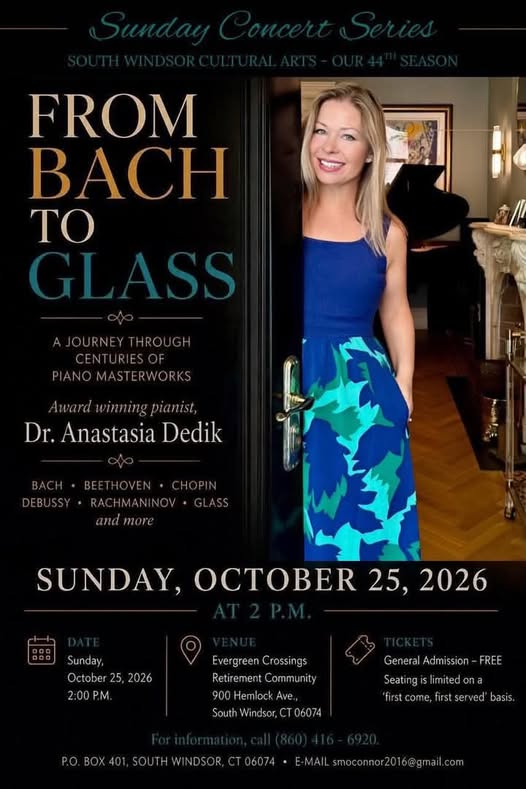
So Windsor 10/26

South Windsor Cultural Arts


https://www.facebook.com/SouthWindsorCulturalArts


Celebrating 58 Years of Public Alternative Radio

Our programming can also be heard on:

WDJW - Somers, 89.7 MHz


wwuh@hartford.edu

WWUH.org

Facebook  Twitter