|
Has the NHS lost its collective memory?
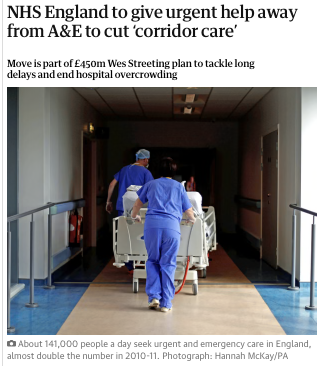
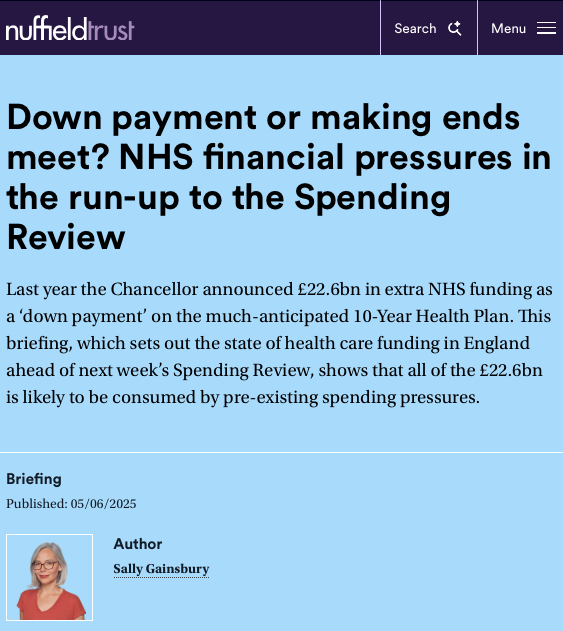
Last Friday, hidden by the headlines of the Trusk, big-beautiful-bust-up, the DH+ pushed out yet another emergency-care winter plan…
… £350m for new urgent treatment centres, mental health facilities, IT connections for ambulances and by the way, 500 new ambulances.
I think this money was originally allocated in the 2022 Autumn Statement. Part of a wider £1bn capital funding envelope for urgent and emergency care infrastructure over 2023/25.
It’s been sitting on Treasury spreadsheets for over a year. What’s new is the announcement, not the money.
In October 2023 the plan was to deliver 5,000 additional permanent, fully staffed hospital beds.
Prior to that in August 2023… £250 million announced to boost NHS capacity with 900 new beds.
Earlier, in January 2023, NHSE and DHSC jointly published the Urgent and Emergency Care Recovery Plan, which committed to investing in beds, SDEC units, and ambulance hubs.
Confused? So am I.
Here’s what’s important…
… the new money is capital, not people. The real bottleneck in winter isn't square footage, or wheels, or things on a screen, it’s:
- Workforce shortages in hospitals and the community.
- Increases in demand and delayed discharges due to lack of social care capacity.
- Primary and community care gaps that leave patients with no option but to call 999.
National urgent care director Sarah-Jane Marsh has been putting a bit of stick about. She said;
'Our inability ... in some exceptional circumstances, unwillingness to work more coherently across different service providers ... and social care has led to a deterioration in performance ... unimaginable a decade ago.'
Far be it from me to disagree with her ladyship but I think the root cause of her angst is...
… there are around 1.9 million vulnerable people not receiving the social care support they need because Local Authorities short of money, have upped their eligibility criteria… don’t take my word for it … listen to Age UK and the Health Foundation.
The Kings Fund report;
‘… From 2015/16 to 2021/22, despite rising requests for support, there was an overall fall in the number of people receiving publicly funded long-term care…’
As far back as before Covid, these facts were highlighted by the Red Cross and the figure then, was 900,000.
Underfunding local authorities; workforce, high vacancies, turnover and the lack of sustainable reform or a long-term funding settlement.
This is where the principle demand is coming from and why corridors are full of polite, silver-hair ladies bewildered and marooned.
This announcement completely omits social care. The root-cause of hospitals silting up. Regardless of how many new beds or new ambulances we buy.
Extra beds might help in theory but in practice the capacity-paradox will insist they’ll be blocked, if patients can’t be discharged safely…
... if there are no timely care-packages or care home places available and daytime discharges can’t be achieved because relatives are at work.
Investments in ambulance hubs and SDEC/UTC units are positive, but...
... they are part of a hospital-centric model. If upstream and downstream care services aren’t fixed, you’ll just blue-light the journey into a bottleneck.
If 500 new ambulances make it easier to get people into hospital, you’d better have a plan to get them out.
This is a hospital plan. There’s no joined-up system view, where social care is treated as part of the emergency care pathway and people are kept out of hospital in the first place.
This winter plan majors on where patients arrive. This is not a resilience plan, it’s a reaction plan… lopsided.
Giving granny an iPad sounds techie and snazzy, but it's unlikely to be cheaper and needs high levels of supervision and oversight.
They would be unnecessary if simple, light touch care packages could keep her safe, winter... and summer, spring and autumn.
We’ve seen this movie before. Different winter, same script.
Our problems aren’t about capacity.
They’re about flow… which doesn’t start or end in a hospital ward. It starts in someone’s living room and ends in their living room.
Capital is easy. It buys things. Buildings. Vehicles. Machines. It makes for good photos and hard hats.
Revenue… money for people, is messy, recurring. Jobs, training, teams, and… social care.
Read the release for yourself. You'll see, towards the end, the quotes. The great and good are mesmerised and gormless... with one exception, the Confed’s Matthew Taylor, he says;
‘… collaboration between health partners and with local government to improve discharges … will also be key to progress.’
He is not just right, he is dead right.
You can build all the hospital beds you want, buy ambulances, create virtual wards and real hubs but...
... without social care you’re just building waiting rooms.
|